Honey vs Artificial Sweeteners: What the Science Actually Shows
The honey-vs-artificial-sweetener debate often devolves into "natural is always better" vs "zero calories is always better." The science tells a more nuanced story — one where both sides have genuine advantages and real drawbacks depending on your health priorities.
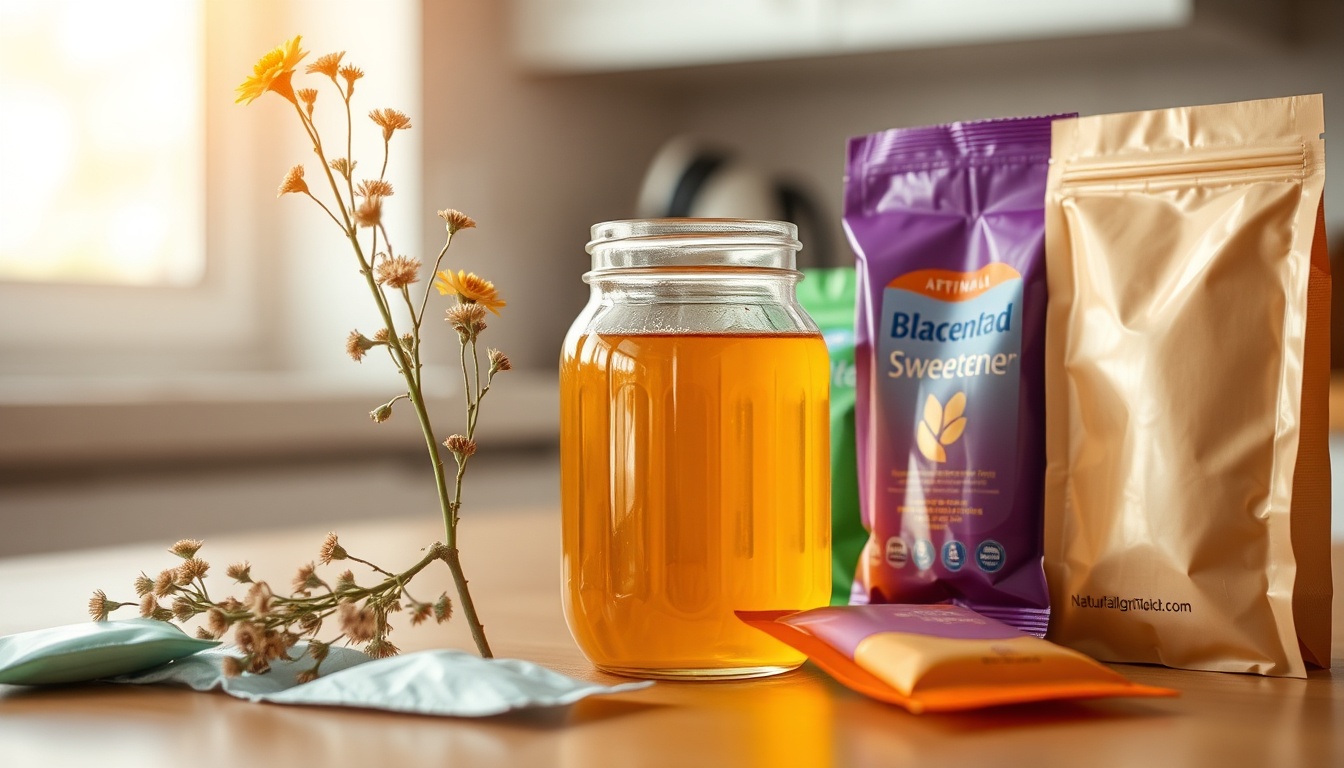
This guide compares honey against the five most common artificial sweeteners (aspartame, sucralose, saccharin, acesulfame potassium, and sugar alcohols) across the health dimensions that actually matter: gut health, blood sugar regulation, weight management, long-term safety, and nutritional value.
The Artificial Sweeteners: A Quick Overview
Understanding what you're comparing honey against helps frame the discussion.
- **Aspartame (Equal, NutraSweet)** — 200x sweeter than sugar. Made from two amino acids (aspartic acid + phenylalanine). Loses sweetness when heated. Calorie contribution negligible at usage levels. FDA ADI: 50 mg/kg/day.
- **Sucralose (Splenda)** — 600x sweeter than sugar. Modified sugar molecule with chlorine atoms replacing hydroxyl groups. Heat-stable for baking. FDA ADI: 5 mg/kg/day.
- **Saccharin (Sweet'N Low)** — 300-400x sweeter than sugar. Oldest artificial sweetener (discovered 1879). Metallic aftertaste at high concentrations. FDA ADI: 15 mg/kg/day.
- **Acesulfame potassium (Ace-K, Sunett)** — 200x sweeter than sugar. Often blended with other sweeteners to mask bitter aftertaste. Found in many diet drinks. FDA ADI: 15 mg/kg/day.
- **Sugar alcohols (xylitol, erythritol, sorbitol)** — 0.4-1.0x as sweet as sugar. Not truly "artificial" (found in fruits), but heavily processed. Provide some calories (0-2.6 kcal/g vs sugar's 4 kcal/g). Can cause digestive distress at higher doses.
Pro Tip
Note on stevia: Stevia is technically a natural sweetener (extracted from *Stevia rebaudiana* leaves), though commercial stevia products are heavily refined. We cover honey vs stevia in a separate detailed comparison.
Get the Honey Buyer's Cheat Sheet (free PDF)
16 varieties on one page — color, flavor, best use and what a fair price looks like — from the 268 honeys we track.
Gut Health: Honey's Biggest Advantage
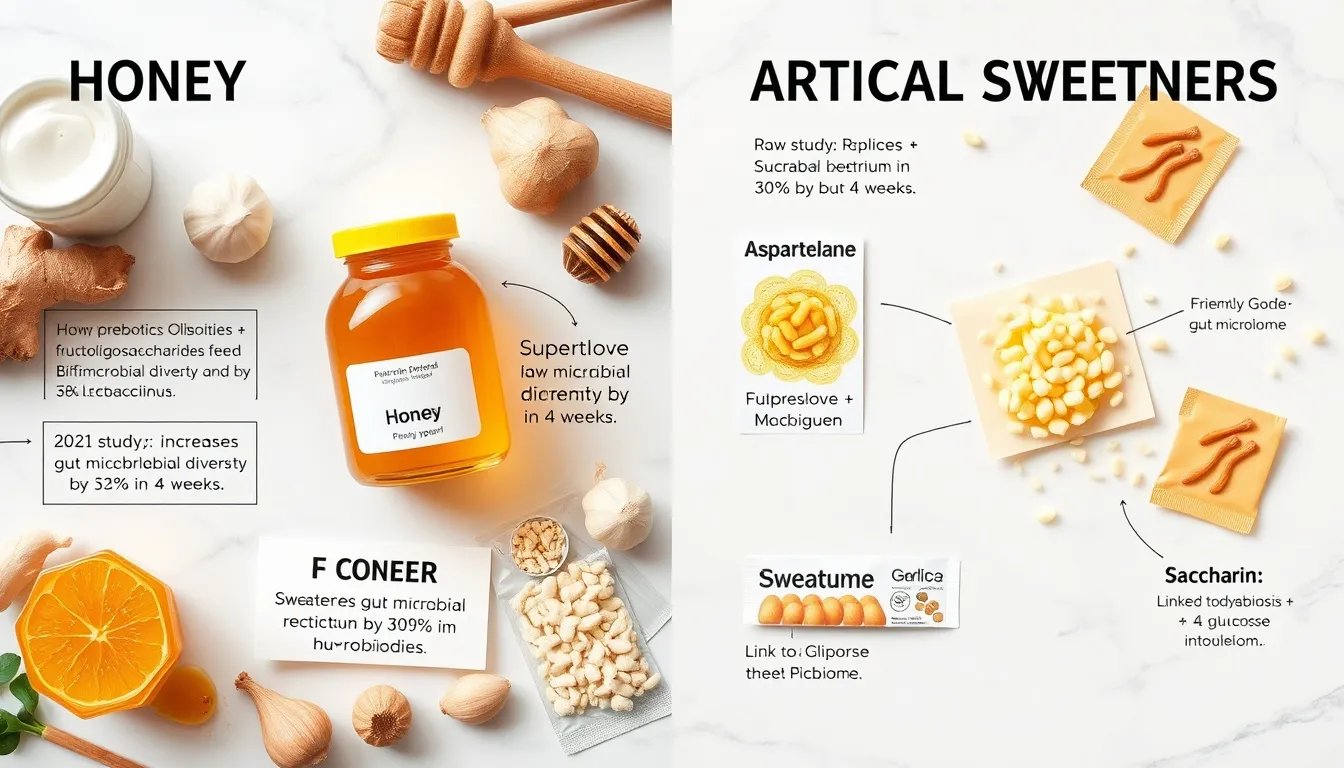
This is where the comparison tilts most decisively in honey's favor. Honey's prebiotic effects on the gut microbiome are well-documented, while several artificial sweeteners show concerning gut health impacts.
Honey contains fructo-oligosaccharides (FOS) and galacto-oligosaccharides (GOS) that selectively feed beneficial *Bifidobacterium* and *Lactobacillus* species. These bacteria produce short-chain fatty acids (SCFAs) — particularly butyrate — that strengthen the intestinal barrier, reduce inflammation, and support immune function.
Artificial sweeteners tell a different story. A landmark 2014 study in *Nature* by Suez et al. demonstrated that saccharin, sucralose, and aspartame all induced glucose intolerance in mice by altering gut microbiome composition — specifically by expanding *Bacteroides* and reducing *Lactobacillus* populations. When the researchers transferred gut bacteria from sweetener-exposed mice to germ-free mice, the recipients developed glucose intolerance too, confirming a causal microbiome mechanism.
A 2022 *Cell* study by Suez et al. extended these findings to humans in a randomized controlled trial of 120 healthy adults. Saccharin and sucralose significantly altered the gut microbiome within two weeks, and saccharin impaired glycemic responses. Aspartame and stevia showed less consistent effects, but individual responses varied considerably.
A 2019 study in *Molecules* found that sucralose at typical dietary concentrations reduced *Lactobacillus* and *Bifidobacterium* populations by 47-80% in animal models, while increasing pathogenic species. Honey does the opposite — a 2020 study in *Nutrients* showed that daily honey consumption increased *Bifidobacterium* counts and SCFA production.
Carbohydrate and Label Comparison
Honey contributes total carbohydrate and added sugar. Some tabletop sweetener products contribute little or none, while others include carbohydrate-bearing bulking ingredients, so the exact product label matters.
Compare the labeled serving size and total carbohydrate rather than assuming every packet or spoonful is nutritionally equivalent. The honey carbohydrate and label guide explains this workflow and why neither category is medically preferred for everyone.
For recipes, also compare sweetness concentration and volume: a culinary substitution is not automatically carbohydrate-equivalent.
Pro Tip
Use the Nutrition Facts panel for the product and the amount the recipe actually uses; do not infer a diabetes treatment effect from a honey variety or sweetener category.
Weight Management: It's Complicated
The conventional argument is simple: artificial sweeteners have zero calories, honey has 64 calories per tablespoon, therefore artificial sweeteners are better for weight loss. The research doesn't support this simple math.
A 2017 systematic review in the *Canadian Medical Association Journal* analyzing 37 studies (over 400,000 participants, mean follow-up 10 years) found that artificial sweetener consumption was associated with *increases* in weight, waist circumference, obesity, hypertension, metabolic syndrome, type 2 diabetes, and cardiovascular events. The association was consistent across multiple large prospective cohorts.
Multiple mechanisms may explain this paradox. First, the "cognitive licensing" effect — people who choose diet drinks may unconsciously compensate by eating more calories elsewhere. Second, sweet taste without caloric consequences may decouple the brain's sweet-calorie association, disrupting appetite regulation. Third, the gut microbiome disruption described above may impair metabolic signaling.
Honey offers a different approach to weight management. Despite containing calories, the 2022 *Nutrition Reviews* meta-analysis found that honey consumption was associated with lower body weight compared to matched sugar controls. The prebiotic fiber stimulates satiety hormones (GLP-1 and PYY) through SCFA production, and the lower glycemic response reduces insulin-driven fat storage.
The practical takeaway: replacing sugar with honey (not adding honey on top of existing sugar) is associated with better weight outcomes than sugar. Replacing sugar with artificial sweeteners does not reliably produce weight loss in long-term studies. Neither is a magic bullet.
Long-Term Safety and Cancer Risk
The cancer question has dogged artificial sweeteners for decades. Here's where the evidence stands in 2026.
In 2023, the WHO's International Agency for Research on Cancer (IARC) classified aspartame as "possibly carcinogenic to humans" (Group 2B) based primarily on limited evidence from three observational cohort studies linking higher aspartame intake to hepatocellular carcinoma. The Joint FAO/WHO Expert Committee on Food Additives (JECFA), evaluating the same evidence, maintained that the existing ADI of 40 mg/kg/day was adequately protective. This dual classification reflects genuine scientific uncertainty — the evidence suggests a possible concern but doesn't prove causation.
A 2022 *PLOS Medicine* study of over 102,000 French adults (NutriNet-Santé cohort) found that total artificial sweetener intake was associated with a 13% higher overall cancer risk, with aspartame and acesulfame-K showing the strongest associations. The study controlled for numerous confounders but, as an observational study, cannot prove causation.
Saccharin was previously listed as a probable carcinogen based on 1970s rat studies showing bladder tumors, but was delisted in 2000 when the mechanism was found to be rat-specific (involving a protein not found in humans). Sucralose has not shown carcinogenic effects in regulatory studies, though some researchers have raised concerns about chlorinated metabolites.
Honey has no cancer risk concerns at normal dietary intakes. In fact, several of honey's polyphenols (chrysin, CAPE from propolis, quercetin, pinocembrin) show anti-proliferative effects in cell and animal studies, though these shouldn't be interpreted as cancer treatment claims.
Nutritional Value: No Contest
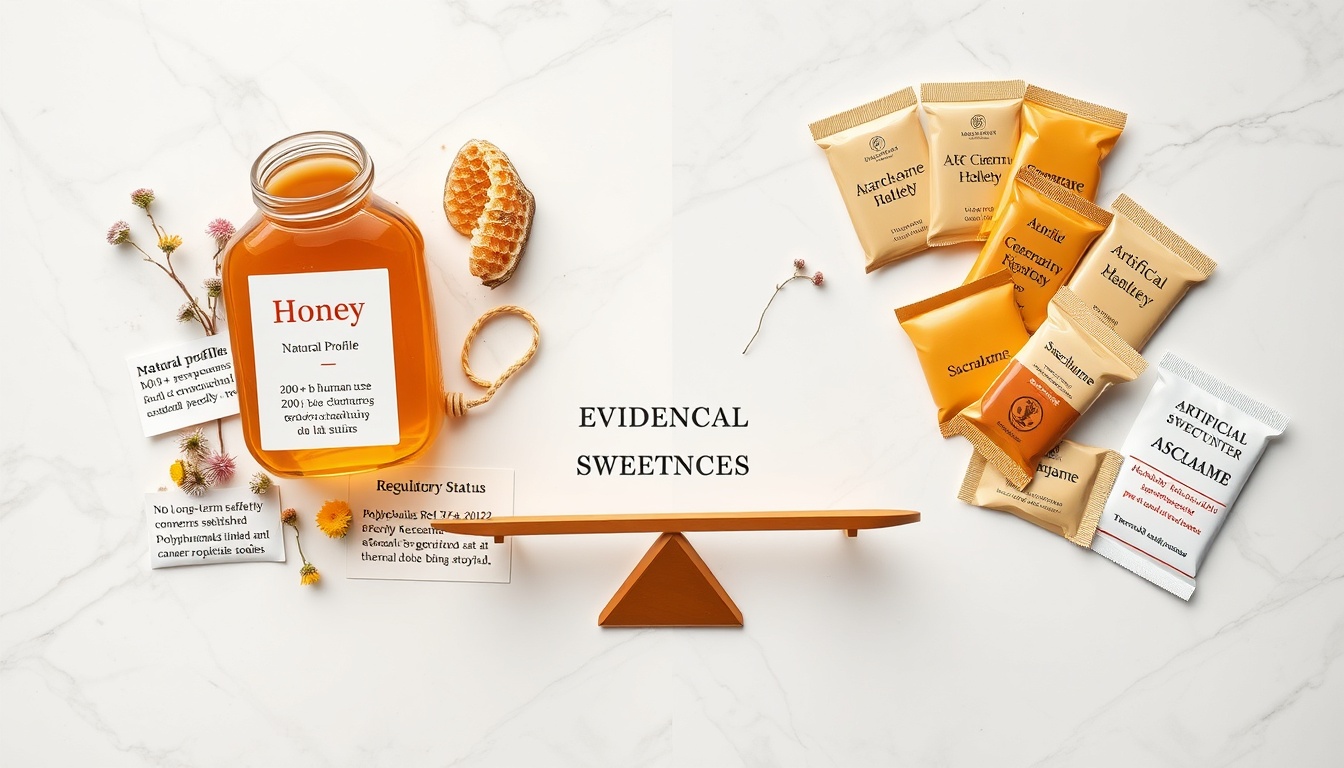
This comparison is straightforward: honey contains 30+ polyphenol antioxidants, active enzymes (glucose oxidase, diastase, invertase), prebiotic oligosaccharides, trace minerals (potassium, zinc, iron, copper, magnesium), and small amounts of B vitamins. Artificial sweeteners contain zero nutritional value beyond sweetness.
This matters because sweeteners aren't consumed in isolation — they replace something. When honey replaces sugar, it adds antioxidants and prebiotics to the diet. When artificial sweeteners replace sugar, they add nothing.
The antioxidant contribution is particularly noteworthy. A 2003 study in the *Journal of Agricultural and Food Chemistry* found that substituting honey for sugar in the diet significantly increased blood antioxidant levels. Dark honeys like buckwheat ($15-25/lb, ORAC 16,000+) contribute antioxidant levels comparable to many fruits and vegetables.
Honey also provides documented health benefits that no artificial sweetener can claim: cough suppression (2020 BMJ Evidence-Based Medicine systematic review of 14 studies), wound healing (2015 Cochrane review of 3,011 participants), antimicrobial activity against 60+ bacterial species including MRSA, and cardiovascular improvements (reduced LDL, triglycerides, blood pressure in meta-analyses).
When Each Makes More Sense
Neither honey nor artificial sweeteners are universally "better." The right choice depends on your specific health situation.
- **Choose honey when:** You're replacing sugar (not adding extra sweetener), you care about gut health, you're using sweetener therapeutically (cough, wound care, sleep), you want nutritional value from your sweetener, you're pregnant (artificial sweetener safety during pregnancy is debated), or you're feeding children over 12 months (no artificial sweetener is recommended for young children by the AAP). For everyday use, clover ($8-15) and wildflower ($10-18) offer the best value.
- **Choose artificial sweeteners when:** You have poorly controlled diabetes requiring strict carbohydrate counting, you need very high-volume sweetening (baking large batches where honey's 64 kcal/tbsp adds up significantly), you're on a strict calorie-restricted diet under medical supervision, or you have a fructose malabsorption disorder that makes honey problematic.
- **Consider avoiding both when:** You can gradually reduce overall sweetness tolerance. Many people find that after 2-4 weeks of reducing all sweeteners, their taste receptors recalibrate and foods naturally taste sweeter.
Head-to-Head Comparison Table
Here's how honey stacks up against the major artificial sweeteners across key health dimensions.
- **Gut health** — Honey: positive (prebiotic, supports beneficial bacteria). Artificial sweeteners: potentially negative (disrupts microbiome composition, reduces *Bifidobacterium*).
- **Blood sugar (acute)** — Honey: moderate rise (GI 32-72). Artificial sweeteners: minimal direct rise. But saccharin impairs glycemic responses long-term.
- **Weight management** — Honey: modest benefit vs sugar in trials. Artificial sweeteners: no reliable long-term weight loss benefit in meta-analyses, paradoxical weight gain association.
- **Cancer risk** — Honey: no concern. Artificial sweeteners: aspartame classified "possibly carcinogenic" (IARC 2B, 2023), ace-K association in NutriNet-Santé cohort.
- **Nutritional value** — Honey: 30+ polyphenols, enzymes, prebiotics, minerals. Artificial sweeteners: zero.
- **Calories** — Honey: 64 per tablespoon. Artificial sweeteners: 0-4.
- **Proven health benefits** — Honey: cough suppression, wound healing, antimicrobial, cardiovascular. Artificial sweeteners: none beyond sugar replacement.
- **Dental health** — Honey: contains sugars that can feed oral bacteria (rinse after use). Artificial sweeteners: generally non-cariogenic. Xylitol may actually reduce cavity risk.
- **Cooking versatility** — Honey: adds flavor, browning, moisture. Artificial sweeteners: sweetness only, some unstable when heated.
- **Cost** — Honey: $0.30-1.50 per tablespoon depending on variety — clover $8-15/lb, wildflower $10-18/lb, manuka $35-60+/lb. Artificial sweeteners: $0.05-0.15 per equivalent sweet dose.
What About Blending Honey and Artificial Sweeteners?
Some people use a hybrid approach — a small amount of honey for flavor and nutritional benefits, supplemented with a non-nutritive sweetener for additional sweetness without extra calories. This is particularly common in beverages and baking.
While there's no specific research on honey-sweetener combinations, the approach has theoretical merit: you get some of honey's prebiotic and antioxidant benefits while keeping total sugar intake moderate. If you take this approach, prioritize honey in applications where its unique properties matter most (hot drinks for sore throat, before bed for sleep) and use sweetener alternatives in applications where you just need sweetness.
If choosing an artificial sweetener to combine with honey, erythritol (a sugar alcohol) may be the safest option — it's absorbed in the small intestine and excreted unchanged, showing minimal gut microbiome disruption compared to sucralose or saccharin.
The Bottom Line
The "honey vs artificial sweeteners" question ultimately comes down to what you're optimizing for. If your goal is zero-calorie sweetening with minimal acute blood sugar impact, artificial sweeteners deliver on that narrow promise — but with emerging concerns about gut health, metabolic paradoxes, and possible long-term safety questions.
This section does not establish a universal or medical honey dose for this purpose. Use the daily added-sugar guide to count honey with other added or free sugars.
This comparison concerns sweetener tradeoffs, not a therapeutic role or daily requirement for honey.