Honey vs Monk Fruit
Monk fruit sweetener has exploded in popularity as a zero-calorie natural sugar alternative, but how does it stack up against honey? These two sweeteners could not be more different: honey is a calorie-containing whole food with centuries of documented health benefits, while monk fruit extract offers intense sweetness with zero calories and zero blood sugar impact. Here is a thorough comparison covering nutrition, glycemic index, taste, baking, health benefits, and which is right for your needs.
Last updated:
Honey and monk fruit sweetener serve fundamentally different purposes. Monk fruit has zero calories, zero carbs, and a glycemic index of 0 — ideal for keto, diabetic, and calorie-restricted diets. Honey provides 64 calories per tablespoon but offers documented antimicrobial properties, researched cough relief, enzymes, and antioxidants. Monk fruit is 150-250x sweeter than sugar (extract form) and most products blend it with erythritol for bulk. Honey is a single-ingredient whole food; monk fruit sweetener products typically contain 2-5 ingredients. Choose monk fruit for calorie control, honey for flavor complexity and therapeutic benefits.
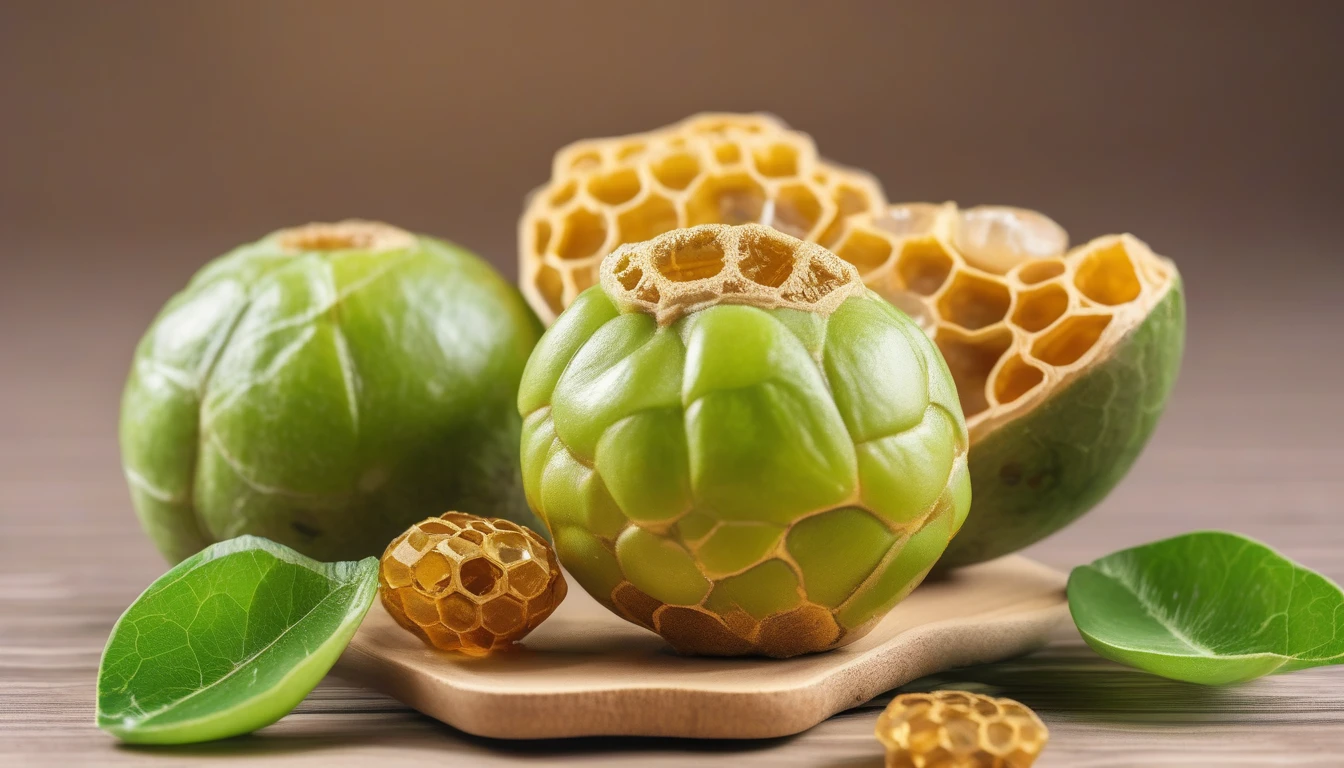
At a Glance
Honey
- 64 calories per tablespoon (liquid)
- Glycemic index: 45-64 (varies by type)
- Rich in enzymes, antioxidants, antimicrobials
- Complex natural flavors varying by floral source
- Single ingredient; unprocessed whole food
Monk Fruit
- 0 calories, 0 carbs, 0 sugars
- Glycemic index: 0 (no blood sugar impact)
- 150-250x sweeter than sugar (pure extract)
- May have slight fruity aftertaste
- Products typically contain erythritol or other fillers

What Is Monk Fruit Sweetener?
Monk fruit, also known as luo han guo (Siraitia grosvenorii), is a small round melon native to southern China and northern Thailand. It has been cultivated in the Guangxi province of China for centuries and used in traditional Chinese medicine (TCM) as a remedy for coughs, sore throats, and digestive ailments. The fruit was named after the Buddhist monks who first cultivated it in the 13th century.
The extraordinary sweetness of monk fruit comes from compounds called mogrosides, a group of triterpene glycosides. The most abundant and sweetest of these is mogroside V, which is 150 to 250 times sweeter than sucrose. Unlike sugar, mogrosides are not metabolized as carbohydrates in the body — they pass through the digestive system without being absorbed as glucose, which is why monk fruit has zero calories and zero glycemic impact.
Monk fruit received FDA GRAS (Generally Recognized as Safe) status in 2010, and no adverse side effects have been documented in studies. However, the pure extract is so intensely sweet that it is impractical to use on its own. Commercial monk fruit sweetener products are almost always blended with bulking agents — most commonly erythritol (a sugar alcohol), but also dextrose, allulose, or inulin fiber. This means that a bag of "monk fruit sweetener" from the grocery store typically contains 2 to 5 ingredients, not just monk fruit. Always check the label to know what you are actually consuming.
Monk Fruit Quick Facts
- Origin: Guangxi province, southern China; used in TCM for 800+ years
- Active compound: Mogroside V (150-250x sweeter than sugar)
- FDA status: GRAS since 2010; no known side effects
- Common blends: Erythritol, dextrose, allulose, or inulin
- Price: $15-30 for a small bag (but a little goes a long way)
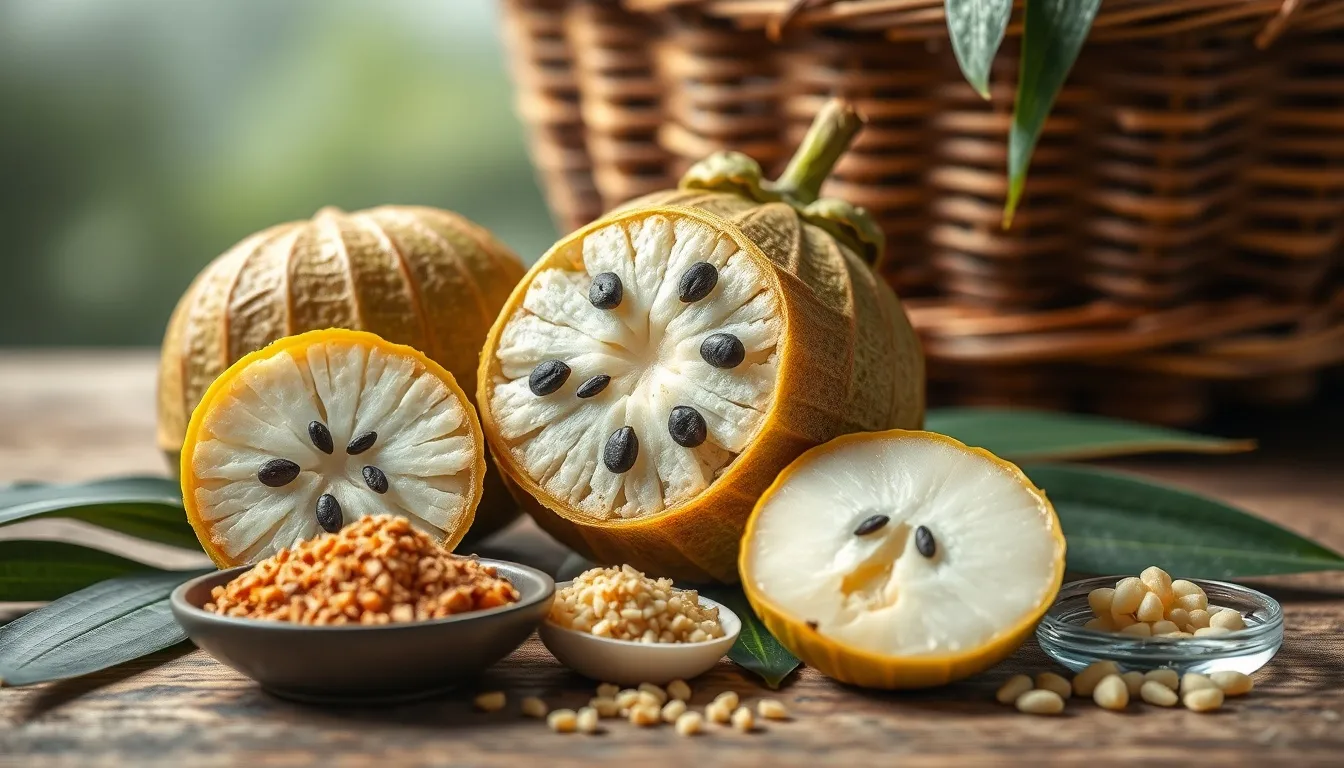
Nutritional Comparison: Honey vs Monk Fruit
The nutritional contrast between honey and monk fruit could not be more stark. A tablespoon of honey provides approximately 64 calories, 17 grams of carbohydrates, and a rich array of bioactive compounds including enzymes, amino acids, B vitamins, vitamin C, and flavonoid antioxidants. Raw honey contains over 200 identified substances that work synergistically to provide antimicrobial, anti-inflammatory, and prebiotic effects. However, nutritional content varies significantly by variety: [buckwheat honey](/honey/buckwheat-honey) provides exceptional antioxidant density (ORAC 16,000+ vs 3,000 for [wildflower honey](/honey/wildflower-honey) and 1,000-3,000 for [clover honey](/honey/clover-honey)), while [Manuka honey](/honey/new-zealand-manuka-umf-15) offers unique antimicrobial compounds not found in other varieties.
Monk fruit sweetener, by contrast, provides zero calories, zero carbohydrates, and zero sugars. Its sweetness comes entirely from mogrosides, which are antioxidant compounds that the body does not metabolize as sugar. While mogrosides have shown anti-inflammatory and antioxidant properties in laboratory studies, monk fruit sweetener products lack the broad spectrum of bioactive compounds found in honey. The trade-off is straightforward: monk fruit gives you sweetness without calories, while honey gives you calories with significant nutritional and therapeutic value.
| Nutrient | Honey (1 tbsp) | Monk Fruit (1 tbsp equiv.) |
|---|---|---|
| Calories | 64 | 0 |
| Total Carbs | 17.3 g | 0 g |
| Sugars | 17.2 g | 0 g |
| Fiber | 0 g | 0 g |
| Protein | 0.1 g | 0 g |
| Glycemic Index | 32-83 (varies by variety) | 0 |
| Sweetness vs Sugar | 1-1.5x | 150-250x (extract) |
| Enzymes | 200+ compounds | None |
| Antioxidants | High (flavonoids) | Mogrosides |
| Key Compounds | Glucose oxidase, flavonoids | Mogroside V |
| Ingredient Count | 1 (pure honey) | 2-5 (blends) |
| Typical Price | $8-15/lb | $15-30/small bag |
Values are approximate. Honey values based on USDA FoodData Central for generic honey. Monk fruit values are for a typical monk fruit-erythritol blend product measured at a sweetness-equivalent serving. Pure monk fruit extract values would differ as it is used in tiny amounts.
Glycemic Index: Monk Fruit vs Honey
This is where monk fruit has its most decisive advantage. Monk fruit sweetener has a glycemic index of 0 — it causes absolutely no rise in blood sugar levels. The mogrosides responsible for its sweetness are not metabolized as carbohydrates, so they pass through the body without triggering an insulin response. This makes monk fruit one of the safest sweeteners available for people with diabetes, insulin resistance, or those following ketogenic diets.
Honey's glycemic index ranges from ~32 ([acacia honey](/honey/acacia-honey)) to ~83 ([buckwheat honey](/honey/buckwheat-honey)) depending on the floral source — a range wider than most nutrition labels suggest. [Acacia honey](/honey/acacia-honey) has one of the lowest GIs at around 32, thanks to its higher fructose-to-glucose ratio making it a diabetic-friendly option. Common [clover honey](/honey/clover-honey) — the most widely sold US variety — has a GI of approximately 69 (Ischayek & Kern 2006), which is above white sugar (GI 65). [Tupelo honey](/honey/tupelo-honey) (~45) and [sage honey](/honey/sage-honey) (~48) offer moderate alternatives, while [wildflower honey](/honey/wildflower-honey) (50-65) and [orange blossom honey](/honey/orange-blossom-honey) (~47) provide intermediate options. Regardless of variety, honey causes a meaningful rise in blood sugar and is not suitable for strict low-carb or ketogenic diets.
However, the glycemic index does not tell the whole story. Honey contains compounds that may improve insulin sensitivity over time. A meta-analysis published in Nutrition Reviews found that honey consumption was associated with lower fasting blood glucose levels compared to other sweeteners. Monk fruit, while superior for immediate blood sugar control, does not provide these additional metabolic benefits. For diabetics, monk fruit is the safer daily sweetener, but small amounts of honey — especially low-GI varieties like [acacia honey](/honey/acacia-honey) (GI ~32), [tupelo honey](/honey/tupelo-honey) (~45), or [sage honey](/honey/sage-honey) (~48) — may still have a place in a well-managed diet with careful portion control.
Glycemic Index Comparison Chart
GI values based on published research. Honey GI varies by floral source. Monk fruit GI is 0 regardless of brand or blend (though check labels for fillers like dextrose that can raise GI).
Taste Comparison: Flavor Profiles
Honey is one of the most flavor-complex natural sweeteners in the world. Depending on the floral source, honey can taste floral, fruity, herbal, malty, buttery, or even slightly bitter. [Acacia honey](/honey/acacia-honey) is light and mildly floral with exceptional crystallization resistance, [wildflower honey](/honey/wildflower-honey) offers a rounded sweetness with diverse botanical complexity, [buckwheat honey](/honey/buckwheat-honey) is deep and molasses-like with robust intensity, [clover honey](/honey/clover-honey) provides reliable mild sweetness ideal for general use, [orange blossom honey](/honey/orange-blossom-honey) offers citrus-floral notes perfect for teas and desserts, [tupelo honey](/honey/tupelo-honey) brings buttery smoothness that never crystallizes, and [sourwood honey](/honey/sourwood-honey) delivers sophisticated anise and spice complexity. This extraordinary variety — with hundreds of distinct varietals available worldwide — makes honey irreplaceable in applications where flavor matters.
Monk fruit sweetener has a clean, sweet taste that is closer to sugar than many other zero-calorie sweeteners, which is one of the reasons for its popularity. However, some people notice a slight fruity or melon-like aftertaste, particularly when monk fruit is used in larger quantities. This aftertaste is generally milder than the bitterness associated with stevia, making monk fruit more palatable for most people. The taste experience also depends heavily on the bulking agent — monk fruit blended with erythritol can have a slight cooling sensation, while blends with allulose taste more sugar-like.
For beverages like tea, coffee, and smoothies, both sweeteners work well but deliver very different experiences. Honey adds body, viscosity, and complex flavor notes: [wildflower honey](/honey/wildflower-honey) enhances herbal teas, [acacia honey](/honey/acacia-honey) pairs beautifully with delicate green teas, [orange blossom honey](/honey/orange-blossom-honey) elevates citrus beverages, while [buckwheat honey](/honey/buckwheat-honey) complements bold coffee drinks. Monk fruit provides clean sweetness without changing the character of the drink. In cooking and sauces, honey contributes moisture, texture, and caramelization that monk fruit simply cannot replicate. The choice often comes down to whether you want sweetness alone (monk fruit) or sweetness plus flavor complexity ([clover](/honey/clover-honey), [wildflower](/honey/wildflower-honey), or [orange blossom honey](/honey/orange-blossom-honey)).
Baking with Monk Fruit vs Honey
Baking with monk fruit presents unique challenges that do not exist with honey or traditional sugars. Pure monk fruit extract is so concentrated that you would use a tiny pinch where a recipe calls for a cup of sugar. To solve this, most monk fruit baking products blend the extract with erythritol, creating a granulated product that measures 1:1 with sugar by volume. These blends work reasonably well in many recipes, but the results are noticeably different from sugar or honey.
The core issue is that monk fruit sweetener (even in blends) does not caramelize, does not brown, and does not provide the moisture that sugar or honey contributes to baked goods. Sugar plays structural roles in baking beyond sweetness — it helps with browning (Maillard reaction), provides bulk and texture, retains moisture, and feeds yeast in bread. Monk fruit sweetener does none of these things. Cookies made with monk fruit blends tend to be paler, drier, and may have a different texture. Bread will not rise properly if monk fruit is the only sweetener.
Honey, while requiring recipe adjustments of its own, is far more versatile in baking. As a liquid sweetener containing approximately 17% water, honey adds moisture that extends shelf life, promotes browning, and creates chewier textures. Honey caramelizes beautifully at lower temperatures than sugar, producing golden-brown crusts and rich flavor. The choice of honey variety affects baking outcomes: [clover honey](/honey/clover-honey) and [wildflower honey](/honey/wildflower-honey) offer reliable, mild sweetness for most baking applications, [orange blossom honey](/honey/orange-blossom-honey) enhances citrus-flavored baked goods, while [buckwheat honey](/honey/buckwheat-honey) provides intense molasses notes best reserved for gingerbread and robust flavor applications. The main adjustments for baking with honey are reducing other liquids by 1/4 cup per cup of honey and lowering oven temperature by 25 degrees Fahrenheit.
Honey in Baking: Strengths
- Adds moisture; extends shelf life
- Caramelizes and browns beautifully
- Creates chewy, soft textures in cookies
- Excellent in glazes, marinades, and drizzles
- Adds complex, unique flavor
Monk Fruit in Baking: Limitations
- Does not caramelize or brown
- Lacks moisture; baked goods may be drier
- Cannot feed yeast for bread rising
- Erythritol blends may crystallize when cooled
- Best in no-bake recipes, smoothies, and drinks
Baking tip: If you want to reduce calories in baking, consider using a 50/50 blend of honey and a monk fruit-erythritol product rather than replacing honey entirely. This preserves moisture, browning, and flavor while cutting the calorie content roughly in half. For no-bake recipes, energy balls, and smoothies, monk fruit sweetener works much more effectively than it does in oven-baked goods.
Health Benefits: Honey vs Monk Fruit
Honey's health benefits are extensive and well-documented across thousands of clinical studies. Raw honey contains over 200 bioactive substances including enzymes (glucose oxidase, diastase, invertase), amino acids, B vitamins, vitamin C, and a diverse array of polyphenol antioxidants. Its antimicrobial properties — driven by hydrogen peroxide production, low pH, and high osmolarity — make it effective for wound healing, with medical-grade [Manuka honey](/honey/new-zealand-manuka-umf-15) UMF 10+ used in clinical settings worldwide. Honey is endorsed by both the World Health Organization and the American Academy of Pediatrics as an effective cough suppressant for children over one year. Health benefits vary by variety: [buckwheat honey](/honey/buckwheat-honey) provides exceptional antioxidant content (9× higher ORAC than [clover honey](/honey/clover-honey)), [wildflower honey](/honey/wildflower-honey) offers diverse prebiotic oligosaccharides from multiple floral sources, and [chestnut honey](/honey/chestnut-honey) provides substantial anti-inflammatory compounds.
Monk fruit's health benefits are more narrowly focused but still meaningful. The mogrosides that provide sweetness are themselves antioxidant compounds. Laboratory studies have shown that mogroside V has anti-inflammatory properties and may inhibit oxidative stress. Some preliminary research in cell and animal models suggests mogrosides may have anti-cancer and anti-diabetic properties, but these studies have not been replicated in human clinical trials. The primary health benefit of monk fruit sweetener is what it does not do: it does not add calories, does not raise blood sugar, and does not promote tooth decay.
Health Benefits Comparison
Honey Advantages
- +Proven antimicrobial and wound-healing
- +Well-studied cough suppressant
- +200+ bioactive enzymes and compounds
- +Flavonoid antioxidants (anti-inflammatory)
- +Prebiotic effects for gut health
Monk Fruit Advantages
- +Zero calories, zero blood sugar impact
- +Safe for diabetics and keto diets
- +Mogroside antioxidants (anti-inflammatory)
- +Does not promote tooth decay
- +No known side effects (FDA GRAS since 2010)
The fundamental difference is that honey provides active therapeutic benefits backed by rigorous clinical research, while monk fruit's primary health advantage is the absence of harm — zero calories, zero sugar, zero glycemic impact. If you are managing your weight or blood sugar, monk fruit helps by eliminating caloric sweetener intake. If you want a sweetener that actively contributes to your health, honey — particularly raw, unprocessed honey — has a far stronger evidence base.
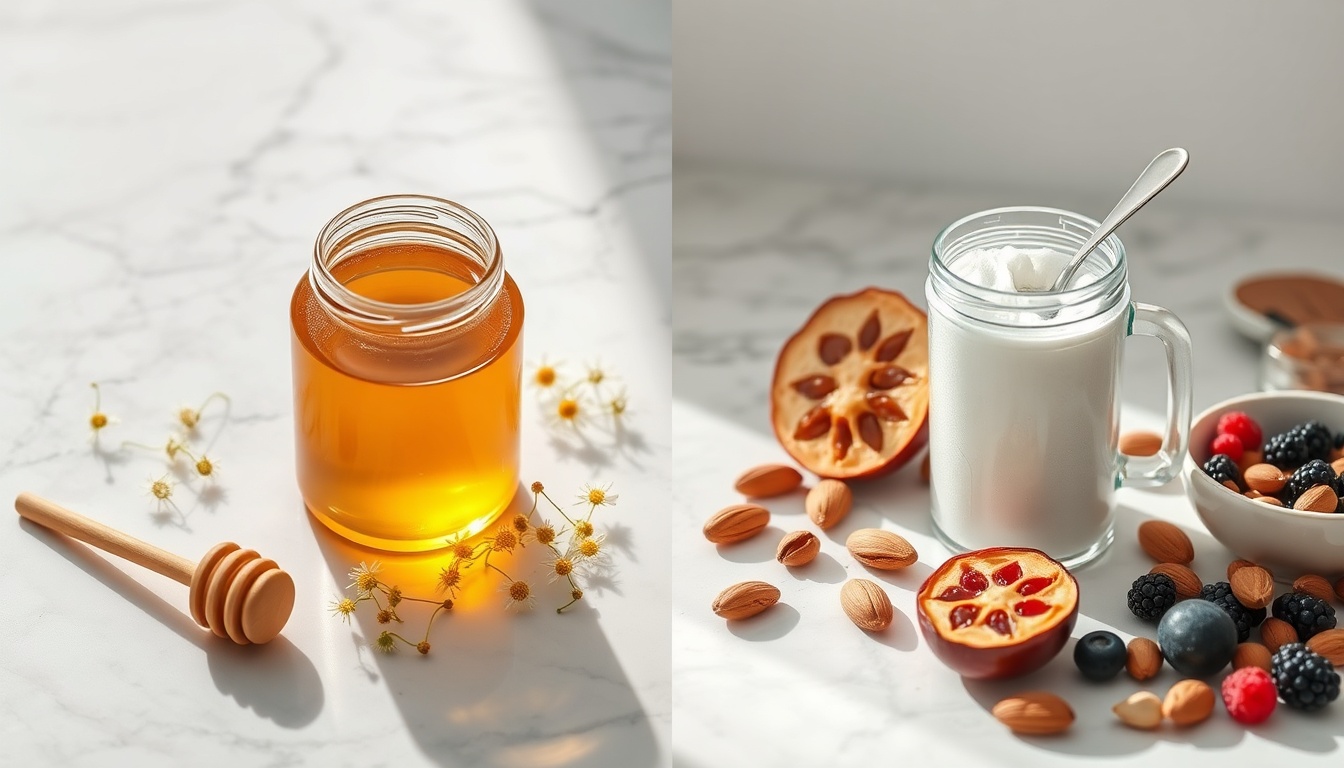
Best Uses for Each Sweetener
Best Uses for Honey
- Tea, warm beverages, and throat soothers
- Glazes, marinades, and salad dressings
- Baking where moisture and browning matter
- Cheese boards, yogurt, and oatmeal toppings
- Natural cough remedy and immune support
- Skincare and DIY face masks
Best Uses for Monk Fruit
- Coffee, iced tea, and beverages (no calories)
- Smoothies and protein shakes
- No-bake desserts and energy balls
- Keto and low-carb recipes
- Sweetening yogurt, cereal, or fruit
- Diabetic-friendly cooking
Which Should You Choose?
Honey and monk fruit are not really competitors — they serve fundamentally different purposes, and the right choice depends entirely on your priorities.
Choose monk fruit if your primary goal is reducing calorie intake, managing blood sugar, or following a keto or diabetic diet. Monk fruit gives you sweetness with literally zero metabolic cost. It works best in beverages, smoothies, no-bake recipes, and any application where you want pure sweetness without flavor complexity. Look for products blended with erythritol or allulose rather than dextrose (which can add calories and raise blood sugar).
Choose honey when you want a sweetener that actively contributes to your health and brings genuine flavor to your food. Honey's antimicrobial properties, cough relief, enzymes, and antioxidants make it more than just a sweetener — it is a functional food with therapeutic benefits supported by extensive clinical research. Honey excels in baking, cooking, glazes, marinades, and any application where its liquid form, moisture content, and complex flavor are assets.
Consider both: Many health-conscious households keep both on hand. Use monk fruit to sweeten your daily coffee or tea without adding calories, and use honey when baking, cooking, or when you want the active health benefits that only real honey can provide. This approach gives you the calorie reduction benefits of monk fruit where it matters most (high-frequency daily use) while preserving honey's irreplaceable role in cooking and health.
The bottom line: Monk fruit is the better calorie-free sweetener. Honey is the better whole food. One eliminates calories; the other adds genuine nutritional and therapeutic value. They complement each other beautifully, and choosing between them is less about which is "better" and more about what you need in a given moment.
Frequently Asked Questions
Is monk fruit sweetener healthier than honey?
It depends on your health goals. Monk fruit has zero calories and zero glycemic impact, making it ideal for weight loss and diabetes management. Honey provides documented benefits including antimicrobial properties (strongest in Manuka honey UMF 10+), researched cough suppression, and over 200 bioactive compounds. Antioxidant content varies dramatically: buckwheat honey provides 9× higher antioxidants than clover honey. Monk fruit is better for calorie reduction; honey is better for active health benefits.
Can I substitute monk fruit for honey in baking?
Yes, but it requires significant adjustments. Monk fruit extract is 150-250 times sweeter than sugar, so you need very little. Most monk fruit baking blends (cut with erythritol) substitute 1:1 for sugar by volume, but you still need to add liquid to replace honey's moisture. Monk fruit does not caramelize or brown, so baked goods will look and feel different.
Does monk fruit raise blood sugar?
No. Monk fruit sweetener has a glycemic index of 0 and contains zero carbohydrates. The mogrosides that provide sweetness are not absorbed as sugar by the body. This makes monk fruit one of the safest sweetener options for diabetics and people on ketogenic diets. For comparison, honey GI ranges from 32 (acacia honey) to 83 (buckwheat honey), with clover honey at ~69. However, check labels — some monk fruit products contain dextrose or other sugars as fillers.
Why does monk fruit sweetener taste different from honey?
Monk fruit sweetener can have a slight fruity or melon-like aftertaste that some people notice, especially in larger quantities. Honey has complex, nuanced flavors that vary by floral source — from mild and floral (acacia honey) to bold and malty (buckwheat honey), citrus-floral (orange blossom honey), herbal complexity (wildflower honey), or buttery smoothness (tupelo honey). Honey's flavor comes from hundreds of volatile compounds created by bees, while monk fruit's sweetness comes primarily from a single compound class (mogrosides).
Is monk fruit safe for everyday use?
Yes. Monk fruit received FDA GRAS (Generally Recognized as Safe) status in 2010. No adverse side effects have been documented in studies. It has been used in traditional Chinese medicine for centuries. However, some people experience digestive discomfort from the erythritol or other sugar alcohols that are commonly blended with monk fruit extract in commercial products.
Which honey varieties should I choose for different uses when not using monk fruit?
If you prefer honey's flavor and health benefits over monk fruit's zero calories, choose varieties strategically: acacia honey (GI ~32) for blood sugar management, buckwheat honey for maximum antioxidants, clover honey for reliable everyday use, orange blossom honey for citrus applications, wildflower honey for complex flavor, and tupelo honey for crystallization resistance. For diabetics choosing honey over monk fruit, acacia, tupelo, and sage honey offer the lowest glycemic impact.
Which is better for keto: honey or monk fruit?
Monk fruit is far better for keto. It has zero calories, zero carbs, and zero glycemic impact. Honey contains approximately 17 grams of carbohydrates per tablespoon and will likely knock you out of ketosis. For strict keto diets, monk fruit sweetener (preferably blended with erythritol rather than dextrose) is one of the best sweetener options available.
Edited by Sam French · Raw Honey Guide Editorial Team
Source reviewed against primary literature and official guidance where available. Health content is educational, not medical advice, and does not replace a licensed clinician.
Get the Honey Buyer's Cheat Sheet (free PDF)
16 varieties on one page — color, flavor, best use and what a fair price looks like — from the 268 honeys we track.
Related Guides
Honey vs Stevia
Calories vs health benefits.
Read GuideHoney vs Sugar
Compare calories, nutrients, and GI.
Read GuideHoney Nutrition Facts
USDA reference values and label-reading context.
Read GuideRelated Articles
Honey vs Artificial Sweeteners: The Complete Health Comparison
Honey vs artificial sweeteners: compare health effects, gut microbiome impact, glycemic response, and long-term safety.
Read ArticleIs Honey Better Than Sugar? The Complete Health Comparison
Honey vs sugar: compare nutrition, glycemic impact, antioxidants, and clinical evidence. When honey wins — and when not.
Read ArticleBrowse honey varieties