Honey vs High Fructose Corn Syrup
Honey and high fructose corn syrup (HFCS) are both liquid sweeteners with similar calorie counts, but the similarities end there. One is a natural product made by bees containing hundreds of bioactive compounds. The other is an industrially manufactured sugar produced from corn starch using a series of enzymatic processes. Here is an evidence-based comparison covering nutrition, processing, health effects, and why the difference matters more than the calorie count suggests.
Last updated:
Honey and HFCS have similar calories (~60 per tablespoon), but honey contains 200+ bioactive compounds including enzymes, antioxidants, and antimicrobials with documented health benefits. HFCS contains zero micronutrients — it is pure processed sugar. HFCS-55 has a higher fructose concentration (55%) than honey (~38%), and studies link excessive HFCS consumption to metabolic syndrome, fatty liver disease, and obesity. Honey has demonstrated antimicrobial, anti-inflammatory, and prebiotic properties in clinical research. HFCS costs $0.20-0.30/lb due to corn subsidies; genuine honey costs $3-15/lb.
At a Glance
Honey
- 64 calories per tablespoon (natural)
- ~38% fructose, ~31% glucose, plus water and compounds
- 200+ bioactive compounds, enzymes, antioxidants
- Minimally processed; made by bees from flower nectar
- Proven antimicrobial, anti-inflammatory, prebiotic
High Fructose Corn Syrup
- 53 calories per tablespoon (industrial)
- 55% fructose, 42% glucose (HFCS-55) — no other nutrients
- Zero enzymes, antioxidants, or micronutrients
- Heavily processed from corn starch using 3 enzymes
- Linked to metabolic syndrome in high-consumption studies
Nutritional Comparison: Honey vs HFCS
At first glance, honey and HFCS look similar on a nutrition label. Both provide roughly 50-64 calories per tablespoon, and both are composed primarily of fructose and glucose. This superficial similarity has led some to claim that "sugar is sugar" — but the nutritional reality is far more complex. Honey contains over 200 bioactive substances that HFCS entirely lacks.
Raw honey delivers enzymes (glucose oxidase, diastase, invertase, catalase), amino acids, B vitamins, vitamin C, and a diverse array of polyphenol antioxidants including flavonoids like pinocembrin, chrysin, and galangin, plus phenolic acids like caffeic acid and ellagic acid. These compounds have been shown in peer-reviewed research to provide antimicrobial, anti-inflammatory, and prebiotic effects. Honey also contains trace minerals including potassium, iron, zinc, and calcium.
HFCS, by contrast, is nutritionally barren beyond its caloric content. The multi-step industrial process that converts corn starch into HFCS strips away every trace of the original corn kernel's nutrients. What remains is a clear, sweet liquid containing only fructose, glucose, and water — no vitamins, no minerals, no enzymes, no antioxidants. It is, in nutritional terms, empty calories.
| Nutrient | Honey (1 tbsp) | HFCS (1 tbsp) |
|---|---|---|
| Calories | 64 | 53 |
| Total Carbs | 17.3 g | 14.4 g |
| Sugars | 17.2 g | 14.4 g |
| Fructose | ~8.1 g (38%) | ~7.7 g (55%)* |
| Glucose | ~6.5 g (31%) | ~5.9 g (42%)* |
| Fiber | 0 g | 0 g |
| Protein | 0.1 g | 0 g |
| Vitamins | B vitamins, vitamin C (trace) | None |
| Minerals | Potassium, iron, zinc, calcium | None |
| Enzymes | 200+ bioactive compounds | None |
| Antioxidants | High (flavonoids, phenolic acids) | None |
| Glycemic Index | 45-64 (varies by type) | 62-73 |
| Processing | Minimal (filtered, not heated) | Highly industrial (3 enzymes) |
* HFCS-55 percentages shown (used in sodas). HFCS-42 contains 42% fructose and 53% glucose (used in processed foods). Honey values based on USDA FoodData Central. Actual values vary by honey variety and HFCS formulation.
How They Are Made: Processing Comparison
The processing difference between honey and HFCS could not be more stark. Honey is produced by honeybees (Apis mellifera) through a natural process that has existed for millions of years. Bees collect flower nectar, add enzymes from their hypopharyngeal glands (including invertase, glucose oxidase, and diastase), and reduce the moisture content from about 70% to below 18% through evaporation in the hive. Raw honey is simply extracted from the comb and strained — no cooking, no chemical processing, no additives.
HFCS production is a multi-step industrial process developed in the 1960s and commercialized in the 1970s. It begins with corn kernels that are wet-milled to extract corn starch. The starch is then treated with three different enzymes in sequence: alpha-amylase breaks the starch into shorter chains, glucoamylase converts those chains into glucose, and xylose isomerase converts a portion of the glucose into fructose. The resulting syrup is then purified, filtered through ion-exchange columns, and blended to achieve the desired fructose-to-glucose ratio — either 42% fructose (HFCS-42, used in processed foods and baked goods) or 55% fructose (HFCS-55, used primarily in soft drinks).
This enzymatic process is efficient and produces a consistent, shelf-stable product — but it also strips away every vitamin, mineral, and beneficial compound present in the original corn. The end result is a pure sugar solution with no nutritional value beyond calories.
How Honey Is Made
- 1. Bees collect nectar from flowers
- 2. Enzymes added naturally in the hive
- 3. Moisture reduced to <18% by evaporation
- 4. Comb capped with beeswax when ready
- 5. Extracted and strained (raw honey)
How HFCS Is Made
- 1. Corn kernels wet-milled to extract starch
- 2. Alpha-amylase breaks starch into chains
- 3. Glucoamylase converts chains to glucose
- 4. Xylose isomerase converts glucose to fructose
- 5. Purified, filtered, blended to 42% or 55% fructose

Health Effects: What the Research Shows
The health implications of honey and HFCS diverge significantly. Honey has been used medicinally for thousands of years, and modern clinical research has validated many of its traditional uses. Medical-grade Manuka honey is used in hospitals worldwide for wound care. The World Health Organization and the American Academy of Pediatrics endorse honey as a cough suppressant for children over one year. Published research demonstrates honey's antimicrobial, anti-inflammatory, and prebiotic properties, with its oligosaccharides supporting the growth of beneficial Bifidobacteria and Lactobacilli in the gut.
HFCS, on the other hand, has been the subject of growing concern in the nutrition research community. A 2010 study published in Pharmacology Biochemistry and Behavior by researchers at Princeton University found that rats with access to HFCS gained significantly more weight than those with access to table sugar, even when caloric intake was controlled. Studies published in the American Journal of Clinical Nutrition and the Journal of Hepatology have linked high HFCS consumption to increased risk of non-alcoholic fatty liver disease (NAFLD), as the liver bears the primary burden of metabolizing fructose. Research has also associated excessive HFCS intake with insulin resistance, elevated triglycerides, and increased visceral fat.
It is important to note that these health risks are primarily associated with excessive consumption — the kind of intake enabled by HFCS being present in approximately 75% of processed foods in the US. Moderate amounts of any sugar, including HFCS, can fit into a healthy diet. The concern is that the ubiquity and low cost of HFCS makes overconsumption almost unavoidable for people who regularly eat processed foods.
Key Health Findings
- Honey has documented therapeutic benefits including antimicrobial activity, wound healing, traditional cough-soothing use, and anti-inflammatory effects in clinical research.
- Excessive HFCS consumption is linked to non-alcoholic fatty liver disease, insulin resistance, obesity, and elevated triglycerides in multiple published studies.
- The dose matters. Health risks from HFCS are driven by overconsumption, which is facilitated by its presence in ~75% of US processed foods.
- The AHA recommends limiting all added sugars (including honey) to 25g/day for women and 36g/day for men.
Fructose Content: Why It Matters
Fructose is at the center of the health debate around sweeteners. Unlike glucose, which is metabolized by cells throughout the body, fructose is processed almost exclusively by the liver. In moderate amounts, the liver handles fructose without issue. In excessive amounts, the liver converts surplus fructose into fat — a process called de novo lipogenesis — which can lead to fatty liver disease and elevated blood triglycerides.
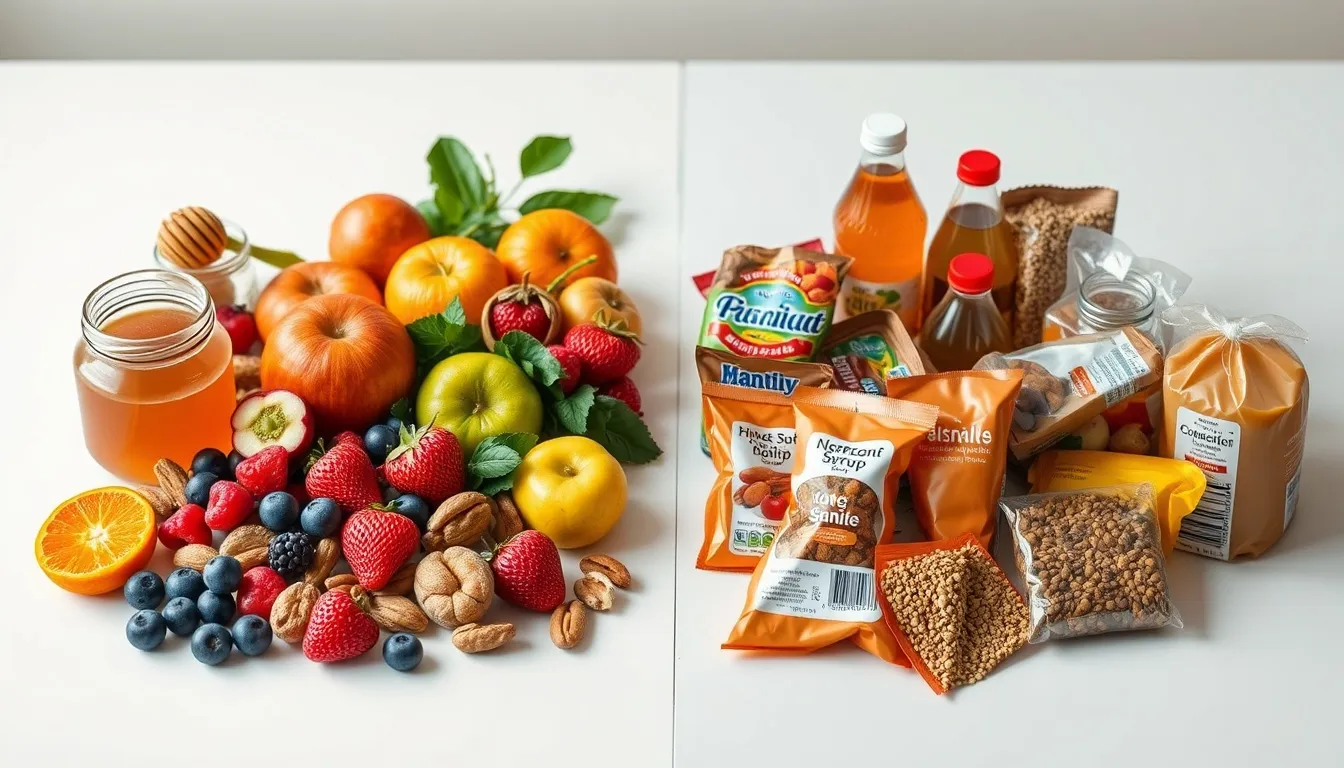
HFCS-55, the formulation used in soft drinks and most sweetened beverages, contains 55% fructose and 42% glucose. HFCS-42, used in many processed foods, baked goods, and condiments, contains 42% fructose and 53% glucose. By comparison, honey contains approximately 38% fructose and 31% glucose, with the remaining 31% consisting of water, enzymes, amino acids, minerals, and other beneficial compounds. This means HFCS-55 delivers nearly 45% more fructose per gram of sugar than honey does.
Critically, the fructose in honey is not consumed in isolation. Honey's bioactive compounds — particularly its antioxidants and enzymes — appear to modulate the metabolic impact of its sugar content. A 2012 study in the Journal of Medicinal Food found that natural honey consumption did not produce the same negative metabolic markers as equivalent amounts of fructose or sucrose solutions. Researchers hypothesize that honey's polyphenols may protect the liver from fructose-induced oxidative stress, though more research is needed to fully understand this mechanism.
Honey
38%
fructose content
+ enzymes, antioxidants, minerals
HFCS-42
42%
fructose content
processed foods, baked goods
HFCS-55
55%
fructose content
soft drinks, sweetened beverages
Baking and Cooking Uses
In home cooking, honey is a versatile ingredient used in baking, marinades, glazes, dressings, tea, and as a table sweetener. Its complex flavor varies dramatically by floral source — from mild and floral acacia to bold, malty buckwheat — allowing cooks to match honey varieties to different dishes. Honey also adds moisture to baked goods, extends shelf life, and promotes deep golden-brown caramelization.
HFCS is rarely used in home cooking because it is not widely sold to consumers in retail form. It is primarily an industrial ingredient, valued by food manufacturers for its low cost, consistent sweetness, liquid form (easy to meter into production lines), ability to retain moisture in baked goods, and long shelf life. You will find HFCS in soft drinks, bread, cereal, ketchup, salad dressings, yogurt, canned fruits, granola bars, and hundreds of other processed products.
If you are trying to replace HFCS in your diet with honey, focus on whole foods and home cooking. Read ingredient labels carefully (more on this below) and choose products sweetened with honey, cane sugar, or other recognizable sweeteners instead of HFCS. When baking at home with honey, remember to reduce oven temperature by 25 degrees F and reduce other liquids slightly since honey contains about 17% water.
Honey in the Kitchen
- Glazes and marinades for meats
- Salad dressings and vinaigrettes
- Tea, smoothies, and beverages
- Baking (cakes, cookies, breads)
- Cheese boards and charcuterie
Where You Find HFCS
- Soft drinks and fruit juices
- Bread, cereals, and granola bars
- Ketchup, BBQ sauce, salad dressings
- Yogurt and canned fruits
- Candy, ice cream, and baked goods
How to Spot HFCS on Labels
If you want to reduce HFCS in your diet, label reading is essential. HFCS appears under several names on ingredient lists, and food manufacturers have become increasingly creative about disguising it. Ingredients are listed in descending order by weight, so if HFCS appears in the first three to five ingredients, it is a major component of that product.
In 2012, the Corn Refiners Association petitioned the FDA to rename HFCS as "corn sugar," arguing the existing name was misleading. The FDA rejected this petition, and HFCS must still be labeled as such. However, some products may use related corn-derived sweeteners that sound less alarming.
Names for HFCS and Corn-Derived Sweeteners on Labels
- •High fructose corn syrup (HFCS)
- •Corn syrup
- •Corn syrup solids
- •Glucose-fructose syrup
- •Isoglucose
- •Maize syrup
- •Glucose syrup (sometimes corn-derived)
- •Fructose syrup
Tip: Outside the United States, HFCS is often labeled as "glucose-fructose syrup" (in Europe and Canada) or "isoglucose." When buying honey, look for "100% pure honey" on the label and check that no corn syrup or other sweeteners are listed in the ingredients.
Environmental and Economic Comparison
The environmental footprints of honey and HFCS reflect two fundamentally different approaches to sweetener production. HFCS is derived from corn, and the vast majority of US corn is grown as an industrial monoculture. Large-scale corn farming relies heavily on synthetic fertilizers, pesticides (including neonicotinoids that are toxic to pollinators), and irrigation. Nitrogen runoff from corn fields is a primary contributor to the Gulf of Mexico dead zone. Additionally, much of the US corn crop is genetically modified, which raises concerns among some consumers about biodiversity impacts.
Honey production, by contrast, depends on healthy ecosystems. Bees pollinate approximately 75% of flowering plants and around 35% of food crops worldwide. Beekeeping incentivizes the preservation of wildflower meadows, diverse landscapes, and pesticide-free environments. Every jar of honey represents a functioning pollinator population that contributes to broader food security and biodiversity. Small-scale and local beekeeping operations are widely recognized as environmentally beneficial.
Economically, the price difference is dramatic. US corn subsidies (averaging $5-7 billion annually) keep the price of corn artificially low, which in turn makes HFCS extremely cheap at approximately $0.20-0.30 per pound. Genuine honey costs $3-15 per pound, reflecting the labor-intensive nature of beekeeping and the fact that honey receives no comparable government subsidies. This price disparity is the primary reason HFCS dominates the processed food industry — it is not superior in taste, nutrition, or environmental impact, but it is dramatically cheaper.
Honey: Environmental Profile
- Pollination: Supports 35% of global food crops
- Biodiversity: Incentivizes meadow and habitat preservation
- Inputs: Low-input, no synthetic fertilizers or pesticides
- Cost: $3-15/lb (reflects true production cost)
- Social: Supports local beekeepers and rural communities
HFCS: Environmental Profile
- Agriculture: Industrial corn monoculture
- Biodiversity: Monoculture reduces biodiversity
- Inputs: Heavy fertilizer, pesticide, and water use
- Cost: $0.20-0.30/lb (corn-subsidy-dependent)
- Pollution: Nitrogen runoff contributes to dead zones
Which Should You Choose?
From a nutritional, health, and environmental standpoint, honey is the clear winner over HFCS for anyone who has the choice. Honey provides documented health benefits, contains hundreds of bioactive compounds, supports pollinator ecosystems, and has been safely consumed by humans for tens of thousands of years. HFCS provides only empty calories, is linked to negative health outcomes when consumed in excess, and its production depends on environmentally damaging industrial corn agriculture.
However, it is important to maintain perspective. The biggest health risk from sweeteners is not which type you use but how much you consume. The American Heart Association recommends limiting total added sugar intake to 25 grams per day for women and 36 grams per day for men. A single 12-ounce can of soda sweetened with HFCS contains about 39 grams of sugar — already exceeding the daily recommendation. Replacing that soda with an equivalent amount of honey would not solve the problem if the total sugar intake remains excessive.
The practical approach: minimize HFCS by reducing processed food consumption and reading labels carefully. When you do use a sweetener, choose honey — preferably raw honey from a local beekeeper — to gain the nutritional benefits that HFCS simply cannot provide. Use honey in moderation as part of a balanced diet rich in whole foods, and enjoy it both for its flavor complexity and its genuine health-promoting properties.
The bottom line: honey and HFCS may look similar on a calorie chart, but they are fundamentally different products. One is a natural food with thousands of years of safe use and documented health benefits. The other is a modern industrial product that exists primarily because it is cheap to manufacture. When given the choice, choose honey.
Frequently Asked Questions
Is honey better for you than high fructose corn syrup?
Yes. While both contain similar calories per serving, honey provides over 200 bioactive compounds including enzymes, antioxidants, and antimicrobial substances with documented health benefits. HFCS contains zero micronutrients, enzymes, or antioxidants — it is nutritionally empty beyond its calorie content. However, both should be consumed in moderation as part of a balanced diet.
Does honey contain high fructose corn syrup?
Authentic, pure honey does not contain HFCS. However, food fraud is a real concern in the honey industry. Some cheap imported honeys have been found adulterated with HFCS or other corn syrups. To avoid adulterated honey, buy from local beekeepers, look for True Source Certified labels, and be skeptical of honey sold below typical market prices ($3-15 per pound for genuine honey).
Is the fructose in honey the same as in HFCS?
The fructose molecule itself is chemically identical, but the context is very different. Honey contains approximately 38% fructose bound within a complex matrix of enzymes, antioxidants, and other compounds that may modulate how the body processes it. HFCS-55 contains 55% free fructose with no accompanying beneficial compounds. Research suggests that the bioactive compounds in honey may mitigate some negative effects of fructose on liver metabolism, though more studies are needed.
Why is HFCS in so many foods?
HFCS is found in approximately 75% of processed foods in the US primarily because it is extremely cheap to produce, thanks to corn subsidies that keep prices at $0.20-0.30 per pound (compared to $3-15 per pound for honey). It is also a liquid, making it easy to blend into beverages and processed foods. Its high sweetening power and ability to extend shelf life make it the preferred industrial sweetener.
Can I substitute honey for HFCS in recipes?
Yes, but adjustments are needed. Honey is sweeter than HFCS, so use about 2/3 to 3/4 cup of honey per cup of HFCS. Honey also has a more complex flavor profile that will change the taste of the final product. In baking, reduce oven temperature by 25 degrees F and reduce other liquids slightly. For beverages and sauces, honey dissolves easily and works as a direct substitute with adjusted quantities.
Is HFCS worse than regular sugar?
The scientific evidence is mixed. Some researchers argue HFCS and sucrose (table sugar) have similar metabolic effects since they both contain roughly equal parts fructose and glucose. However, other studies suggest that the free (unbound) fructose in HFCS may be absorbed more rapidly than the fructose released from sucrose digestion, potentially placing greater stress on the liver. The bigger concern may be that HFCS enables overconsumption — its low cost and liquid form make it easy to add large amounts of sugar to processed foods and beverages.
Edited by Sam French · Raw Honey Guide Editorial Team
Source reviewed against primary literature and official guidance where available. Health content is educational, not medical advice, and does not replace a licensed clinician.
Get the Honey Buyer's Cheat Sheet (free PDF)
16 varieties on one page — color, flavor, best use and what a fair price looks like — from the 268 honeys we track.
Related Guides
Honey vs Sugar
Compare calories, nutrients, and GI.
Read GuideHoney Nutrition Facts
USDA reference values and label-reading context.
Read GuideHealth Benefits
Nutritional and therapeutic benefits of honey.
Read GuideRelated Articles
Honey vs Corn Syrup: The Complete Health and Nutrition Comparison
Honey vs corn syrup: nutrition, health effects, glycemic impact, and cooking uses compared. Choose the healthier option.
Read ArticleIs Honey Better Than Sugar? The Complete Health Comparison
Honey vs sugar: compare nutrition, glycemic impact, antioxidants, and clinical evidence. When honey wins — and when not.
Read ArticleBrowse honey varieties
Browse All Honeys