The Question Every New Beekeeper Asks
Walk into any beekeeping forum in late summer and you will see the same thread, posted again and again: "I have two supers full of capped honey — how many jars is that?" The answer matters. It tells you how many jars to order, how much extracting equipment you need to borrow or buy, and whether your colony pulled enough surplus to leave plenty for the bees through winter.
The honest answer is that hive yield varies more than almost any other number in beekeeping. The US National Agricultural Statistics Service puts the long-run national average around 50 pounds per colony per year, but state-level averages range from roughly 30 pounds in some Northeastern states to over 100 pounds in North Dakota. Within a single apiary, two hives sitting three feet apart can differ by a factor of two in the same season. None of that variability lives inside a tidy formula. What you can do is build an estimate from the hardware itself: how many supers, how many frames, what type, and how full each one looks when you pop the inner cover.
Frame-Yield Anchors: Where the 6 / 4 / 3 lb Numbers Come From
The most useful estimation method is frame-by-frame. Each Langstroth frame, fully drawn into comb on both sides and fully capped at the rim, holds a predictable weight of honey based on its depth. The standard anchor numbers are:
- Deep frame (9 1/8" / 232 mm tall): about 6 lb / 2.7 kg of honey when fully drawn and capped
- Medium frame (6 1/4" / 159 mm tall): about 4 lb / 1.8 kg
- Shallow frame (5 3/8" / 137 mm tall): about 3 lb / 1.4 kg
Pro Tip
These anchors come from Dadant & Sons frame-yield tables, Mann Lake Bee & Ag Supply planning guides, and Sammataro & Avitabile (1998) The Beekeeper's Handbook (3rd ed., Cornell University Press). They are conservative practical numbers — field-measured maxima on heavy nectar flows can reach 8 lb deep / 5 lb medium / 3.5 lb shallow, but most beekeepers should plan against the 6/4/3 anchors and treat anything heavier as a bonus.
Get the Honey Buyer's Cheat Sheet (free PDF)
16 varieties on one page — color, flavor, best use and what a fair price looks like — from the 304 honeys we track.
Why a Full Super Rarely Means Full Frames
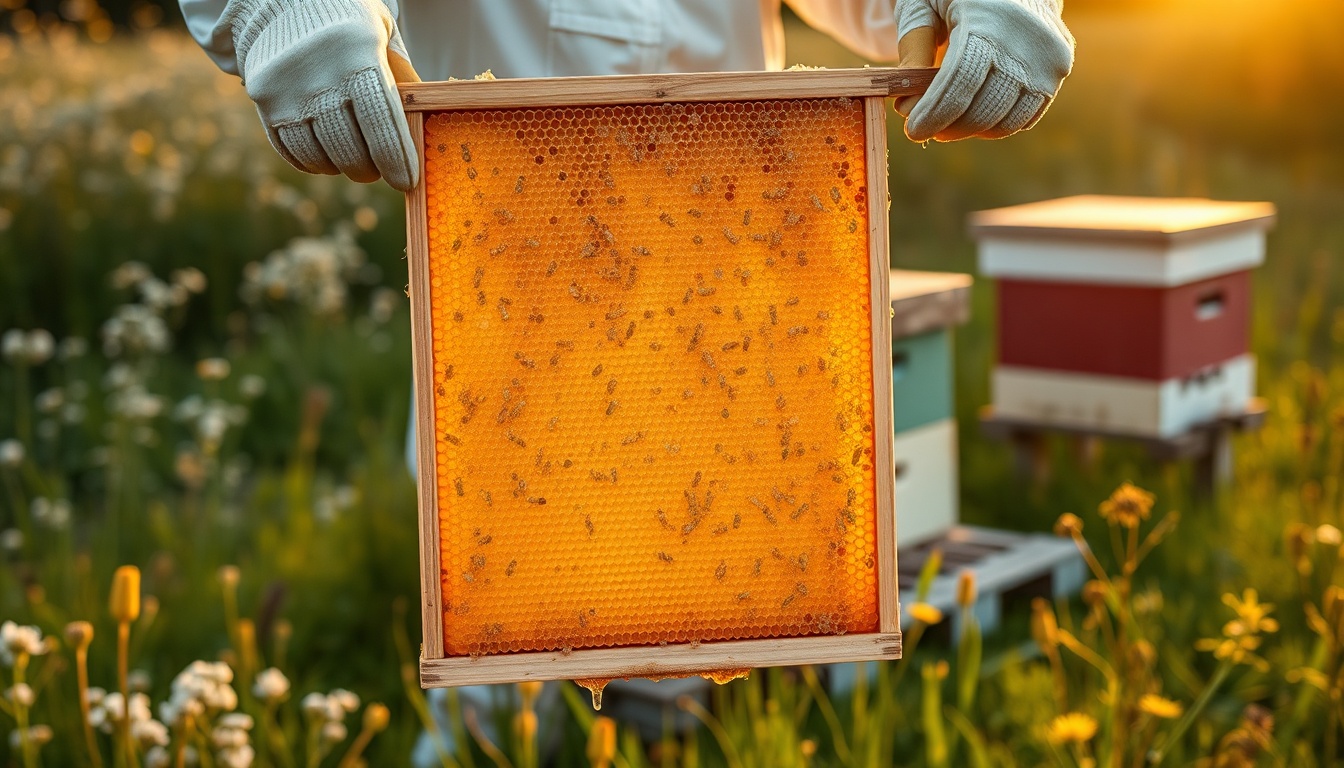
A 10-frame deep super at the 6 lb anchor would theoretically hold 60 lb of honey. In practice almost no super is ever 100% full of capped comb. Outer frames usually have less drawn comb than center frames, and partially capped or fully open cells contain nectar that the bees have not yet ripened to honey. If you extract uncapped nectar, you risk honey above the 18.6% moisture threshold where natural yeasts can ferment the jar.
The honest planning move is to take your frame anchor weights and multiply by a fill percentage that reflects what you are seeing. A super where every frame is drawn out and 80% of cells are capped is in roughly the 80% fill range. A super where the four center frames are heavy and the outer six are lighter might average closer to 60%. This single multiplier — fill percentage — is the most underrated lever in hive yield estimation, and it is exactly what separates a useful estimate from "two supers, so 120 pounds, right?"
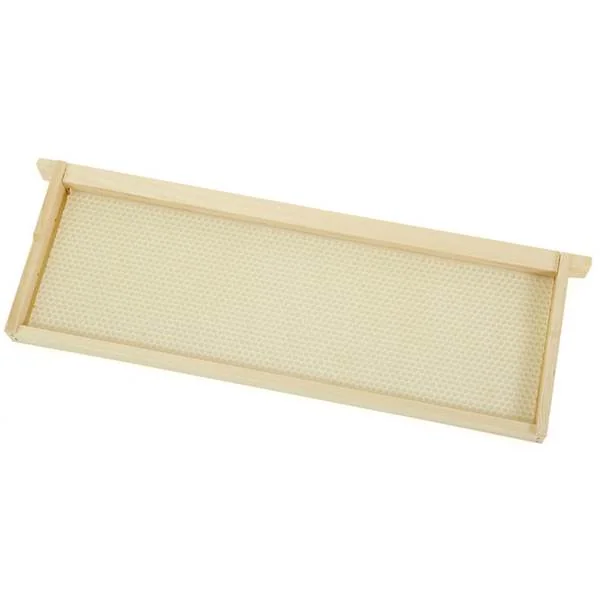
Photo: Queen Right Colonies, used with permission
A Worked Example with the Free Calculator
We built a free Hive Honey Yield Estimator that runs the frame-by-frame math live as you adjust the inputs. No account, no email, no tracking — it lives at /tools/honey-hive-yield and is fully embeddable on any beekeeping blog or club newsletter.
Here is the canonical "second-year hobbyist" worked example. You overwintered two strong colonies and added one medium honey super to each in early June. By late August both supers look heavy when you tip them. You pop the inner cover and see all 10 frames drawn out, with the four center frames almost fully capped and the six outer frames maybe 70% capped. Your honest estimate of average fill is about 80%.
Plug those numbers in: 0 deep + 20 medium (10 per super × 2 hives) + 0 shallow at 80% fill. The calculator returns 64 lb total — about 29 kg, or 5.4 US gallons, or 64 one-pound jars, or about 21 quart jars. Now you know to order 64 one-pound jars (or some quart-jar equivalent) and to budget about 3-4 hours per hive for extraction.
Pro Tip
Beekeepers typically leave 60-90 pounds of honey in the hive for the bees to overwinter on, depending on climate. Anything above that threshold is the harvestable surplus. If your two-hive yield estimate comes in at 64 lb total surplus, that is a perfectly respectable second-year result — most beekeepers are still feeding sugar syrup their first year and only see a meaningful surplus in year two or three.
Regional Reality Check
The frame-by-frame estimate tells you how much honey is sitting in the boxes you have right now. It does NOT tell you what a "normal" yield should look like for your region — for that, the long-run averages help calibrate expectations.
According to USDA NASS Honey Production reports (the canonical industry data series, published every March for the prior year), per-colony yield varies enormously by state. North Dakota, the largest US honey-producing state, averages 75-100+ lb per colony in good years thanks to the prairie clover and canola flows. The Upper Midwest (South Dakota, Minnesota, Wisconsin, Michigan) typically produces 60-80 lb per colony. The Northeast and Mid-Atlantic average closer to 30-50 lb. Florida runs 40-70 lb but spread across multiple shorter harvests. California averages 30-50 lb statewide, though almond-pollination focus depresses honey numbers because supers come off for pollination contracts.
- North Dakota: 75-100+ lb per colony (national leader, prairie clover and canola)
- Upper Midwest: 60-80 lb per colony (clover, alfalfa, soybean)
- Pacific Northwest: 50-70 lb per colony (clover, blackberry, fireweed)
- Florida: 40-70 lb spread across 2-4 harvests (citrus, gallberry, palmetto)
- Mid-Atlantic & Northeast: 30-50 lb per colony (clover, basswood, wildflower)
- Southwest desert: 20-40 lb per colony (mesquite, sage, drought-dependent)
- National average: ~50 lb per colony per year (USDA NASS long-run mean)
What the Frame-Yield Method Does Not Capture
The 6/4/3 frame anchors assume Langstroth-standard equipment, fully drawn comb, and fully ripened honey. The estimate becomes unreliable in three common scenarios that every beekeeper should be aware of:
First, undrawn or partially drawn foundation. New foundation that bees have not yet pulled into comb does not yield honey at the anchor weights. A first-year colony given a fresh medium super may draw the comb out by August but only fill the four center frames — yield will be closer to 16 lb than the anchor 40 lb.
Second, plastic vs wax foundation differences. Plastic foundation is 1-3 mm thicker than wax, displacing some cell volume. The effect is small (under 5%) but compounds across a heavy harvest.
Third, comb honey production. If you are running cut-comb or Ross Round supers, the math changes — capped comb honey weighs roughly 80-85% of what extracted honey would weigh in the same frame, because you are including the wax cells. Plan accordingly if you are mixing comb and extracted production.
Pro Tip
A 10-frame deep super of fully drawn, fully capped honey weighs 60-70 lb when you lift it (60 lb honey + ~5-10 lb hive body and frames). If you can barely budge the super, you have a heavy harvest. If it lifts with one hand, you have a light one. Your back is a surprisingly accurate first-pass yield estimator.
Volume Conversions: Pounds to Jars
Once you have a weight estimate, the next question is "how many jars does that fill?" For planning, USDA ERS Agricultural Handbook 697, Table 6 lists an approximate net weight of 11.84 lb per US gallon of honey. Our Hive Honey Yield Estimator uses that fixed factor. It is a general commodity conversion, not a measurement of your honey's moisture or temperature.
Dividing that gallon factor by four for a US quart and eight for a US pint gives these planning fills:
- 1 US gallon honey = approximately 11.84 lb (5.4 kg) — a bulk-planning reference
- 1 US quart jar = approximately 2.96 lb (1.34 kg) honey when full to the rim
- 1 US pint jar = approximately 1.48 lb (670 g) honey when full
- 1 lb of honey occupies approximately 10.8 US fl oz at this planning factor
Pro Tip
A container marked "16 fl oz" describes volume. At the fixed planning factor, that full US pint holds about 23.7 oz of honey by weight. Weigh the actual fill when bottling. For adjustable estimates, our Honey Weight ↔ Volume Converter interpolates FAO Table 2.4, which credits White (1975a), and applies a representative temperature adjustment based on Schellart (2011). Its 17.5% moisture and 20°C defaults give about 1.4204 g/mL, so results can differ slightly from the fixed gallon factor. Neither approach measures your jar.
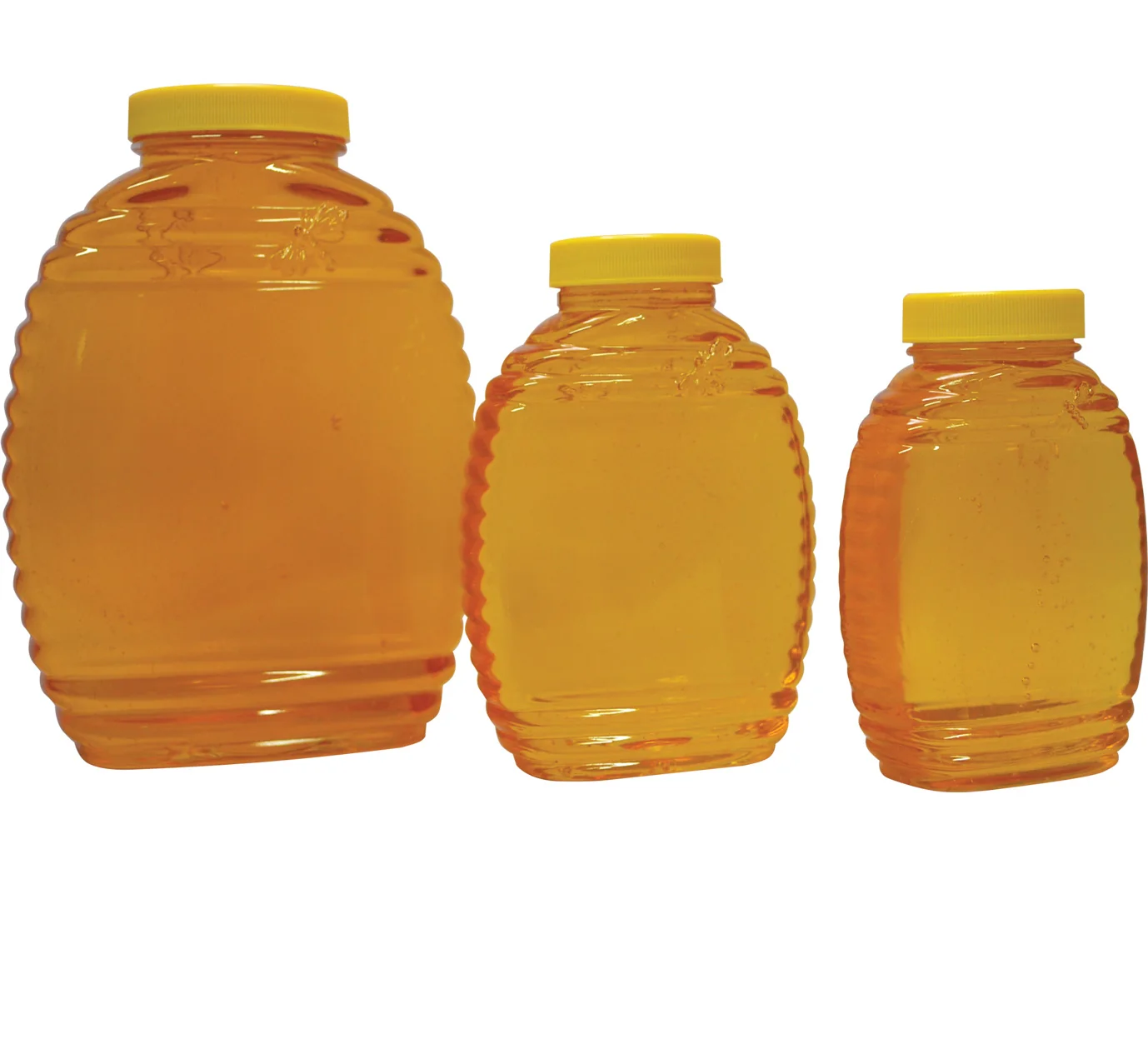
Photo: Queen Right Colonies, used with permission
Pre-Harvest Checklist: Before You Pull the Supers
Knowing your estimated yield is half the planning. The other half is timing the pull and prepping for the extraction day. A practical pre-harvest checklist:
- Verify caps: ≥80% of cells should be capped before you pull. Use a refractometer to confirm moisture is below 18.6% if uncapped frames are common.
- Time the pull to the regional nectar flow calendar — usually late July through September depending on region.
- Confirm winter stores will remain: leave 60-90 lb in the hive for overwintering (climate-dependent — colder climates need more).
- Have jars ordered before the harvest week. Frame-by-frame estimation gives you the count to order against.
- Borrow or schedule extractor time. A two-frame hand extractor handles 20 frames per hour comfortably; a 9-frame radial spins out a full hive in about 30 minutes.
- Plan for filtering and settling time. Most beekeepers settle honey in food-grade buckets for 24-48 hours before bottling to let air bubbles rise out.
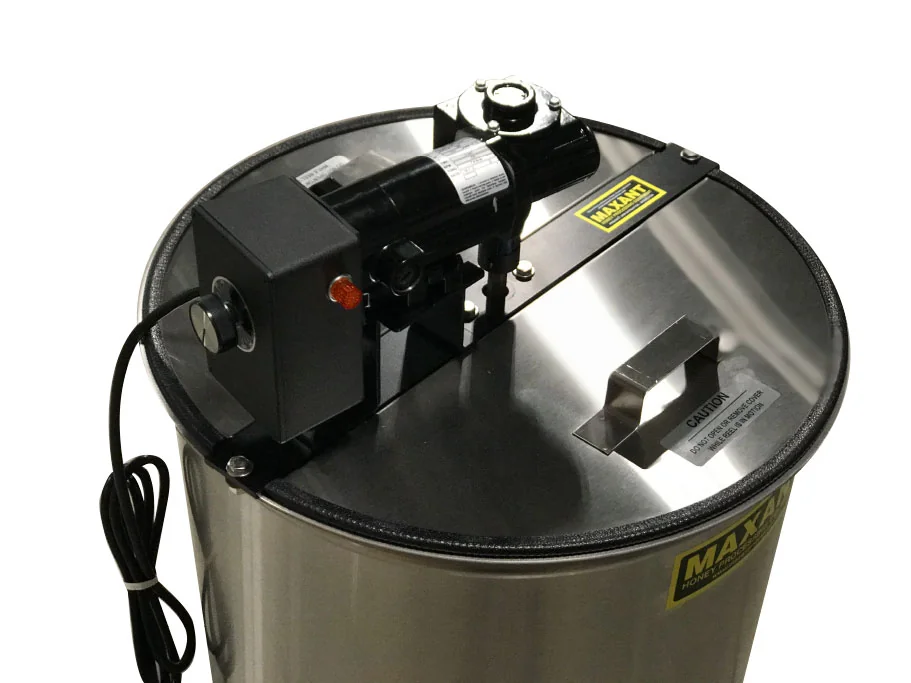
Photo: Queen Right Colonies, used with permission
For Buyers: What This Means at the Farmers Market
If you are reading this as a honey buyer rather than a beekeeper, the same math explains why local honey costs what it does. A small backyard operation with three hives might harvest 100-150 lb total in a good year. After leaving winter stores, paying for jars and labels, sterilizing extracting equipment, and accounting for the dozens of hours spent on hive inspections and harvest day, the per-jar economics are tight even.
The next time you see a beekeeper at the farmers market with 40 jars on their table, remember that those 40 jars likely represent the entire year's surplus from one or two hives — and a smaller harvest year could easily cut that in half. Buying directly from the beekeeper at the post-harvest peak (August through October) is when supply is highest and prices are most often at their fairest.