Why Fall Management Determines Winter Survival
Winter colony losses in the United States average 30-40% annually, according to the Bee Informed Partnership. The majority of these losses are not caused by cold temperatures — they are caused by decisions made (or not made) in September and October. Varroa mite loads that go untreated in fall will collapse colonies by January. Insufficient food stores mean starvation by February. A failing queen that is not replaced in September cannot be replaced in December.
Fall is your last opportunity to intervene before colonies enter the winter cluster. This month-by-month checklist covers everything you need to do from September through November to give your bees the best chance of surviving to spring. The reward for good fall management is strong colonies that produce 30–100 pounds of surplus wildflower ($10–18), clover ($8–15), or specialty honey like sourwood ($20–35) the following summer.
September: Varroa Treatment and Assessment
September is the most critical month of the beekeeping year. If you only do one thing right, make it this: treat for Varroa mites. Colonies that enter winter with high mite loads produce weakened "fat" winter bees that cannot sustain the cluster through cold months.
- Test mite levels immediately — Do an alcohol wash or sugar roll on at least 3 colonies. If mite counts exceed 2-3 mites per 100 bees, treat now. Do not wait
- Choose your treatment — Apivar (amitraz strips, 42-day treatment), formic acid (MAQS or Formic Pro, 7-day treatment), or oxalic acid (vaporization, requires broodless period). Start by early September to protect the winter bee generation
- Assess the queen — Look for a solid brood pattern with few gaps. Spotty brood in September means a failing queen. Replace her now or combine the colony with a queen-right hive
- Remove honey supers before treatment — Most mite treatments cannot be applied with honey supers on. Harvest your honey first — late-summer harvests often yield wildflower honey from goldenrod and aster, or darker varieties like buckwheat honey ($15–25) from late-season buckwheat crops — then treat
- Evaluate food stores — Each colony needs 60-90 lbs of honey to survive winter (varies by region: 60 lbs in the South, 90+ lbs in the North). The winter stores are typically a mix of clover, wildflower, and fall nectar sources. Start fall feeding if stores are light
- Combine weak colonies — A weak colony in September will not survive winter alone. Combine it with a strong colony using the newspaper method. Two weak colonies make one strong one
Pro Tip
The bees being born in September and October are your "winter bees" — they live 4-6 months instead of the usual 6 weeks. If these bees are parasitized by Varroa, they will be too weakened to keep the cluster warm. Treat before these bees emerge.
Get the Honey Buyer's Cheat Sheet (free PDF)
16 varieties on one page — color, flavor, best use and what a fair price looks like — from the 268 honeys we track.
October: Feeding and Hive Configuration
October is about building reserves and simplifying hive configuration for winter. The goal is to send colonies into November with plenty of food, a reduced cavity, and good ventilation.
- Feed heavy syrup (2:1 sugar to water ratio) — Fall feeding uses a thicker syrup than spring feeding because bees need to cure it quickly before temperatures drop. Use an in-hive feeder or top feeder for efficiency
- Switch to fondant or sugar boards when temperatures drop below 50°F — Bees cannot take liquid syrup when it is cold. Place a sugar board or fondant patty directly above the cluster as emergency insurance
- Reduce entrances — Install entrance reducers to the smallest opening. This helps bees defend against robbing from yellowjackets and other colonies, and reduces cold air drafts
- Remove queen excluders — If a queen excluder is left on over winter, the cluster may move up past it for food while the queen stays trapped below and freezes
- Consolidate to the right number of boxes — In cold climates, most colonies winter best in 2 deep brood boxes or 3 medium boxes. Remove empty supers above the cluster
- Check for small hive beetle — In southern regions, SHB populations peak in fall. Use beetle traps and ensure the colony is strong enough to patrol all frames
- Verify mite treatment effectiveness — Re-test mite levels 2-3 weeks after treatment ends. If counts are still above threshold, apply a different treatment method
Pro Tip
A common mistake is feeding too late. Once daytime temperatures consistently stay below 50°F (10°C), bees will not take syrup. In northern states, your feeding window may close by mid-October.
November: Winterization and Final Preparations
By November, most colonies have formed their winter cluster. Your interventions should be minimal and focused on protection from the elements — not opening hives and disturbing bees.
- Install mouse guards — Mice will enter hives in fall seeking warmth and destroy comb. Metal mouse guards (with holes large enough for bees but too small for mice) should go on every hive
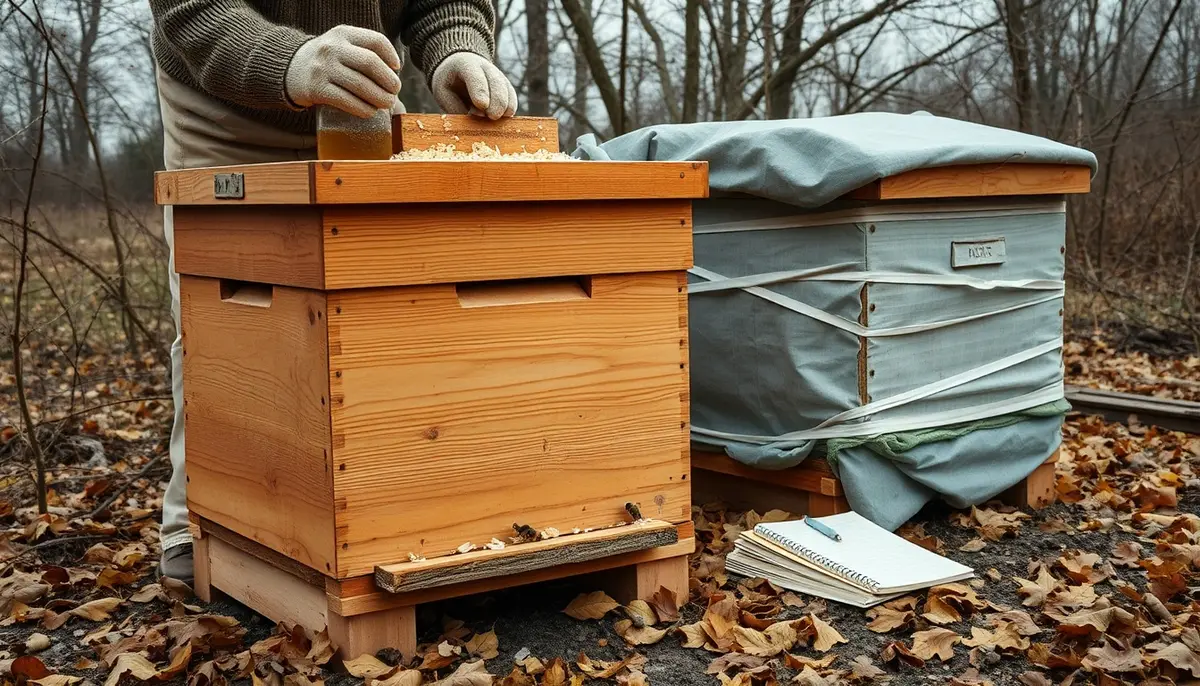
- Add moisture management — Moisture, not cold, is the number one killer of winter colonies. Place a moisture board, quilt box, or absorbent material (burlap, wood shavings) above the inner cover to wick moisture away from the cluster
- Consider wind breaks — Position hives with entrances facing south or southeast. Use hay bales, fencing, or natural windbreaks to block prevailing winter winds. Do not wrap hives tightly in tarps — this traps moisture
- Insulate in cold climates — In zones where winter temperatures regularly drop below 0°F (-18°C), consider wrapping hives with tar paper or foam insulation. Leave the entrance and upper ventilation open
- Tilt hives slightly forward — A slight forward tilt (about 1 inch) allows condensation and rainwater to drain out the entrance rather than pooling inside the hive
- Install a candy board or winter patty — Place directly above the cluster as emergency food. Even well-fed colonies can run out of food in a long, cold winter
- Record keeping — Note each colony's strength, mite treatment, queen age, and food stores. This data helps you make better decisions next spring and track which genetics survive best
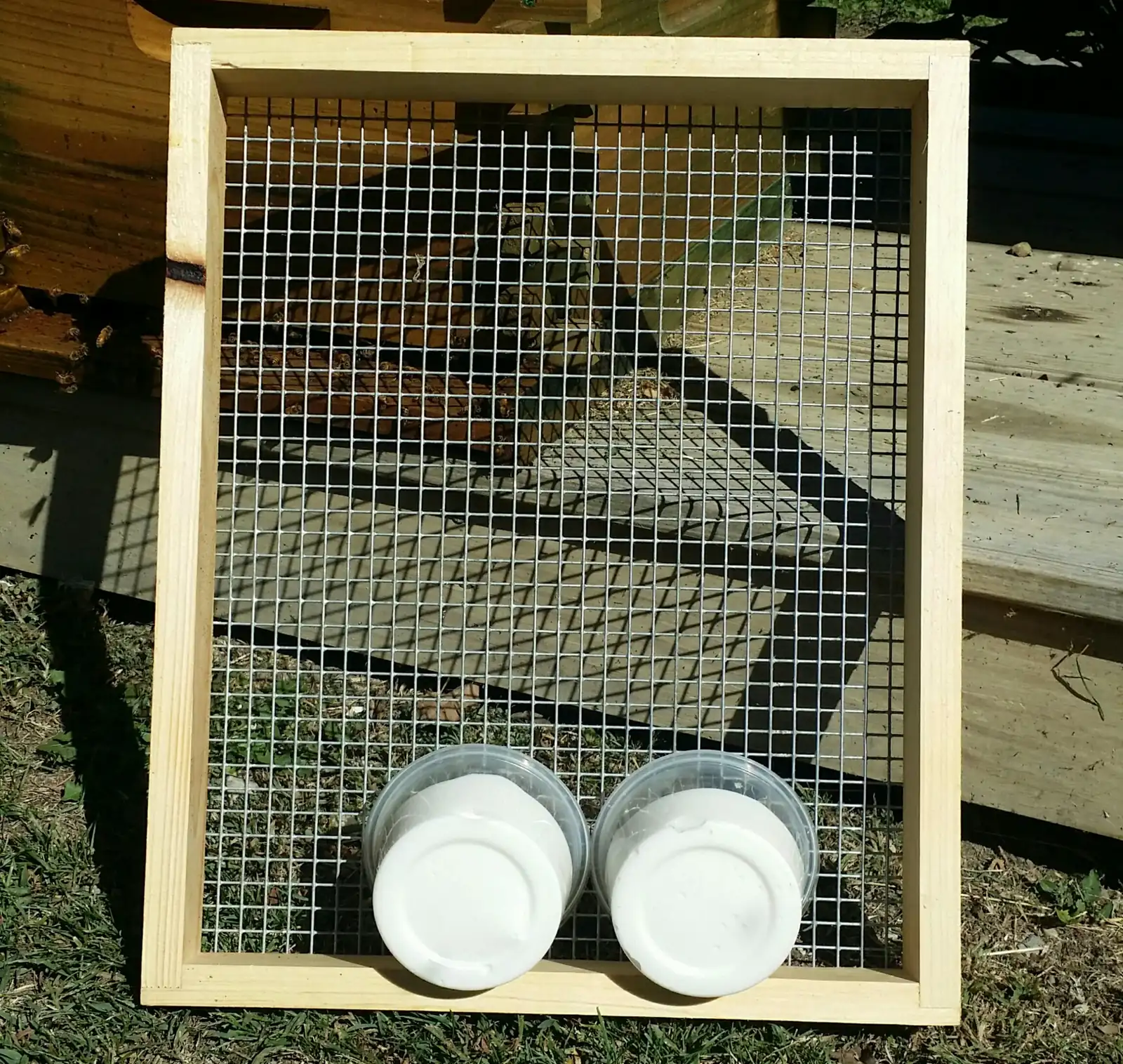
Photo: Queen Right Colonies, used with permission
Regional Adjustments: Timing by Climate Zone
The timing of fall management varies significantly by region. Here is a general guide — adjust based on your local conditions and when the first hard frost typically arrives.
- Northern states (MN, WI, MI, NY, ME, VT, NH) — Start mite treatment by August 15. Complete all feeding by October 1. Winterize by October 15. Colonies need 80-90+ lbs of honey stores. Summer harvests typically yield wildflower and clover honey, plus basswood in areas with mature linden trees
- Mid-Atlantic and Midwest (PA, OH, IN, IL, MO, VA) — Mite treatment by September 1. Feeding through October. Winterize by November 1. Need 60-80 lbs of stores. Common harvest varieties: clover ($8–15), wildflower ($10–18)
- Southern states (GA, FL, TX, LA, SC, NC) — Mite treatment by September 15. Feeding if needed in October-November. Minimal winterization required. 40-60 lbs of stores usually sufficient. Specialty varieties include tupelo ($25–45, Gulf Coast), sourwood ($20–35, Appalachian), and orange blossom ($12–20, FL/TX). Watch for small hive beetles year-round
- Pacific Northwest (WA, OR) — Mite treatment by late August. Feed through October. Moisture management is critical — rain and humidity are bigger threats than cold. Need 60-80 lbs. PNW produces wildflower and blackberry honey
- Mountain West (CO, UT, MT, ID) — Start mite treatment by mid-August. Severe winters require aggressive insulation and 90+ lbs of stores. Elevation matters — adjust by 2 weeks earlier per 1,000 feet above 5,000. Sage honey ($15–25) and wildflower from mountain meadows
Common Fall Beekeeping Mistakes to Avoid
After decades of collective beekeeping experience and data from bee research labs, these are the mistakes that most often lead to winter losses.
- Treating for mites too late — The winter bee generation begins emerging in September. If you treat in November, those critical bees are already damaged. Treat by September at the latest
- Not treating at all — "Natural beekeeping" without mite management results in colony loss rates of 70-80% in most regions. Varroa destructor is an invasive parasite, not a natural part of the ecosystem in North America
- Feeding too late in the season — Once temperatures drop, bees cannot process liquid syrup. Uncured syrup in the hive increases moisture and can cause dysentery
- Wrapping hives too tightly — Bees need ventilation. Sealing hives in plastic or tight insulation traps moisture, which condensing on the cluster can kill bees faster than cold. Always maintain upper ventilation
- Opening hives in cold weather — Once the cluster forms, opening the hive breaks the heat seal. If you must check, use a stethoscope on the hive wall to listen for the hum of the cluster, or simply heft the hive to check weight
- Leaving queen excluders on — A trapped queen below the excluder while the cluster moves up for food is a guaranteed colony loss. Remove all excluders before winter
- Ignoring dead colonies until spring — Dead colonies attract wax moths and small hive beetles. If you discover a dead colony in fall, freeze the frames immediately and store them sealed until spring
Winter Monitoring: What to Check Without Opening Hives
Once your hives are winterized, resist the urge to open them. Here are ways to monitor colony health without disturbing the cluster.
- Entrance observation — On warm days (above 40°F), healthy colonies will have bees making brief cleansing flights. Dead bees at the entrance are normal; no activity at all on warm days is concerning
- Heft test — Periodically lift one side of the hive to gauge weight. A noticeably lighter hive may need emergency fondant or a sugar board added on the next warm day
- Listen — Press your ear or a stethoscope to the hive wall. A healthy cluster produces a steady, low hum. Silence or a loud, agitated roar both warrant concern
- Check for condensation — Peek under the outer cover on a warm day. Excessive moisture on the inner cover means your ventilation or moisture management needs improvement
- Debris board — If you have a screened bottom board with a debris tray, check the drop pattern. A tight cluster pattern in the center is healthy. Scattered debris or wax cappings only on one side may indicate the cluster is running out of food on one side
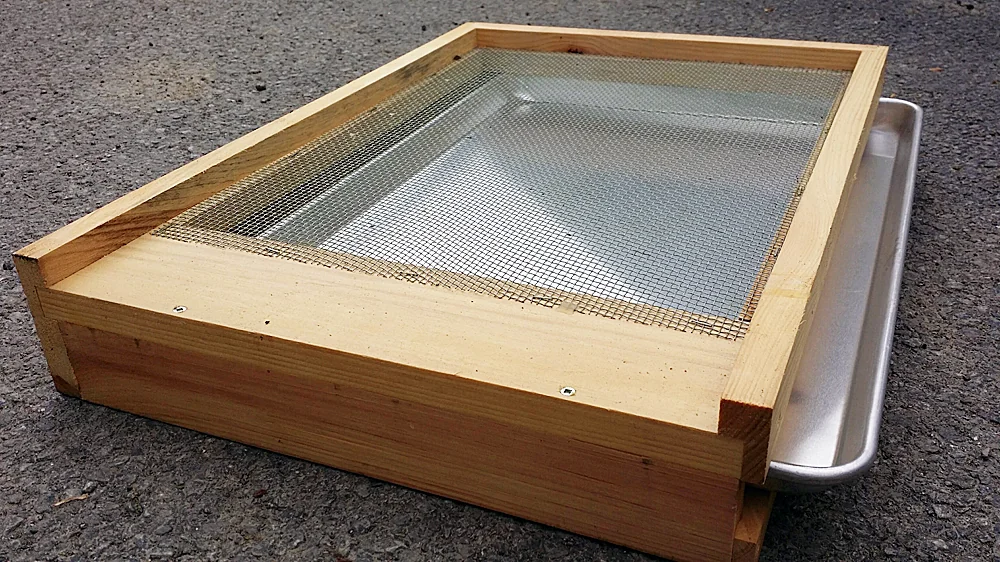
Photo: Queen Right Colonies, used with permission