Why Bee-Friendly Gardening Matters
Honey bees and other pollinators are under pressure. Habitat loss, pesticide exposure, diseases, and climate change have reduced pollinator populations worldwide. The USDA estimates that one in every three bites of food we eat depends on pollination by bees and other insects. Without healthy pollinator populations, our food system faces serious risks.
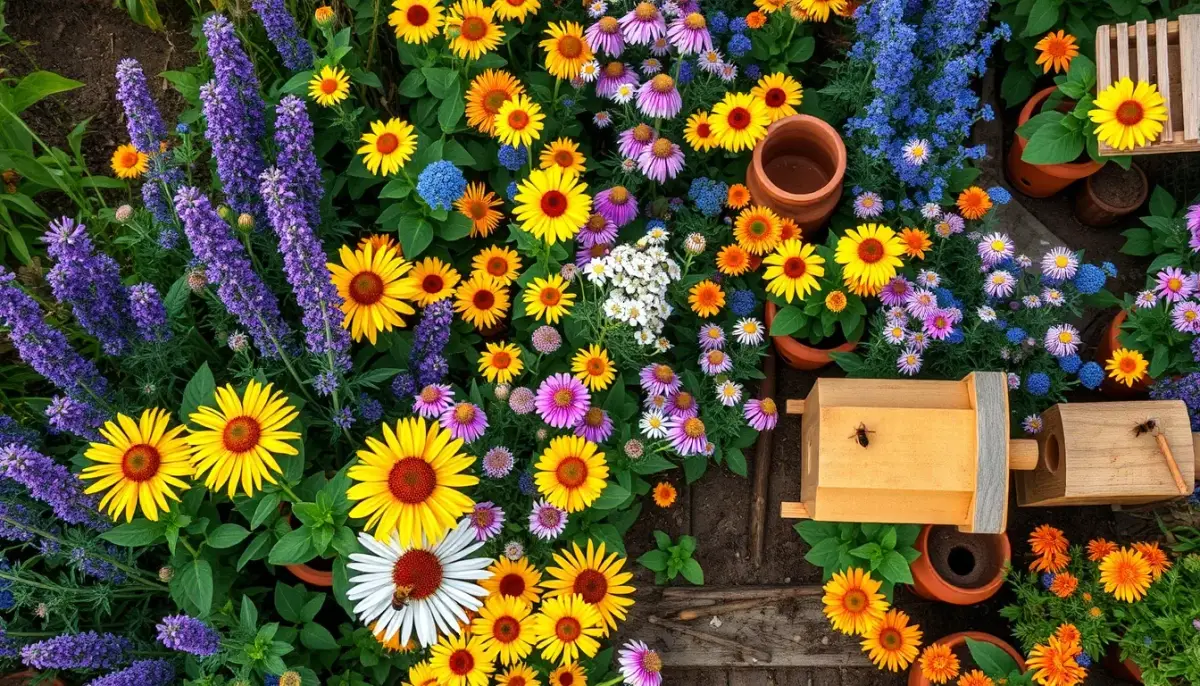
The good news is that anyone with even a small patch of garden, a balcony, or a few window boxes can make a meaningful difference. Research from the University of Sussex found that even small urban gardens collectively provide more foraging habitat for bees than surrounding countryside in many areas. Your garden does not need to be large — it needs to be thoughtful.
The key principle of bee-friendly gardening is simple: provide nectar and pollen sources that bloom continuously from early spring through late fall. Bees need food throughout the active season, not just during the peak summer months. A garden that blooms for 3 months is good. A garden that blooms for 7-8 months is what really moves the needle for bee survival and honey production. The diverse floral sources in extended-season bee gardens create the complex botanical blends that distinguish regional wildflower honey varieties, while specialized plantings of lavender, clover, or basswood can contribute to prized single-source honeys like lavender honey, clover honey, and basswood honey.
What Makes a Plant Bee-Friendly?
Not all flowers are equally valuable to bees. Understanding what bees look for helps you choose plants that will actually get visited.
- Nectar production — Bees collect nectar as their carbohydrate source (which they convert into honey). Plants vary enormously in nectar output. A single borage plant can produce 12-15 mg of nectar per flower per day, while some ornamental varieties produce almost none.
- Pollen availability — Pollen is the protein source bees need for raising brood. Double-petaled flowers (like many hybrid roses and dahlias) often have reduced or inaccessible pollen because the extra petals replace the pollen-producing stamens.
- Flower shape — Honey bees have relatively short tongues (5-7 mm) compared to bumblebees. They prefer open, flat, or shallow flowers they can easily access. Deep tubular flowers like honeysuckle and red clover are better suited to long-tongued bumblebees.
- Color — Bees see in ultraviolet and are most attracted to purple, blue, white, and yellow flowers. They cannot see red (it appears black to them), though they will visit red flowers that reflect UV light.
- Fragrance — Many bee-friendly plants have strong floral scents that help bees locate them from a distance. Herbs like lavender, thyme, and mint are particularly effective at attracting bees through scent.
- Bloom period — Plants that bloom for extended periods or that re-bloom after cutting provide more sustained forage than those with a brief, intense bloom window.
Pro Tip
Avoid double-petaled cultivars when choosing bee-friendly plants. Single-flower varieties produce much more accessible nectar and pollen. If a flower looks overly "fluffy" or "stuffed," it is likely a double variety with reduced bee value.
Get the Honey Buyer's Cheat Sheet (free PDF)
16 varieties on one page — color, flavor, best use and what a fair price looks like — from the 268 honeys we track.
The 15 Best Plants for Honey Bees
This list is organized by bloom season to help you plan for continuous forage from early spring through fall. Growing even 5-6 of these plants will create a meaningful bee habitat.
Early Spring Bloomers (March-April)
Early spring is the most critical time for bees. Colonies are rebuilding after winter — as detailed in our spring beekeeping checklist — the queen is ramping up egg-laying, and food reserves from winter are nearly exhausted. Early-blooming plants can be the difference between colony survival and starvation.
- 1. Crocus (Crocus vernus) — One of the earliest spring flowers, crocus provides vital pollen and nectar when almost nothing else is blooming. Plant bulbs in fall, 3-4 inches deep, in clusters of 20+ for visual impact and foraging efficiency. Hardy in USDA zones 3-8. Bees will visit crocus even in cool weather (45°F+).
- 2. Willow (Salix spp.) — Often overlooked, willows are among the most important early bee forage trees. A single pussy willow catkin produces abundant pollen, and willows bloom weeks before most garden flowers. Even small ornamental willows like the dwarf arctic willow work well in gardens. Zones 2-9 depending on species.
- 3. Dandelion (Taraxacum officinale) — Yes, the common dandelion. Before you reach for the herbicide, consider that dandelions are one of the most important early spring bee foods contributing to wildflower honey blends worldwide. They bloom prolifically, produce both nectar and pollen, and grow everywhere. Dandelion nectar adds characteristic bright, slightly bitter notes to regional wildflower honey varieties, creating the complex multi-floral profiles that distinguish authentic wildflower honey from simpler single-source varieties. Letting dandelions bloom in your lawn for 2-3 weeks in early spring provides critical forage. You can mow after the bloom period if lawn aesthetics matter to you.
Late Spring Bloomers (May-June)
Late spring is when most gardens come alive and bee colonies hit their rapid growth phase. Plants that bloom during this window support the population explosion that leads to summer honey production.
- 4. Borage (Borago officinalis) — The single best annual plant for honey bees. Borage produces extraordinary quantities of nectar — studies have measured up to 1.5 mg of sugar per flower per day, and each plant produces hundreds of flowers over a long bloom period. Bees are almost magnetically attracted to borage. It self-seeds enthusiastically, so you plant it once and have it for years. Full sun, zones 2-11 as an annual.
- 5. Lavender (Lavandula spp.) — A honey bee magnet that blooms for 3-4 weeks and produces some of the most prized honey in the world. Lavender honey from Provence, France commands premium prices for its delicate floral sweetness and pale golden color. English lavender (L. angustifolia) is hardiest (zones 5-8), while French and Spanish lavender prefer warmer climates (zones 7-10). Plant in full sun with well-drained soil. When grown in sufficient density, lavender can produce monofloral lavender honey with sophisticated floral notes and therapeutic aromatic properties impossible to achieve through blended varieties.
- 6. Catmint (Nepeta spp.) — Often confused with catnip, catmint is a lower-maintenance relative that blooms prolifically from late spring into fall. Walker's Low catmint is one of the most bee-attractive perennials available. It is drought-tolerant, deer-resistant, and blooms for months if deadheaded. Zones 3-8.
- 7. Phacelia (Phacelia tanacetifolia) — Known as the "bee's friend" in Europe, phacelia is planted by farmers specifically to attract pollinators. Each plant produces thousands of tiny purple flowers over a 6-8 week period. It is an annual that grows quickly from seed and can be sown as a cover crop. One of the highest nectar-producing plants per acre. Zones 2-11 as an annual.
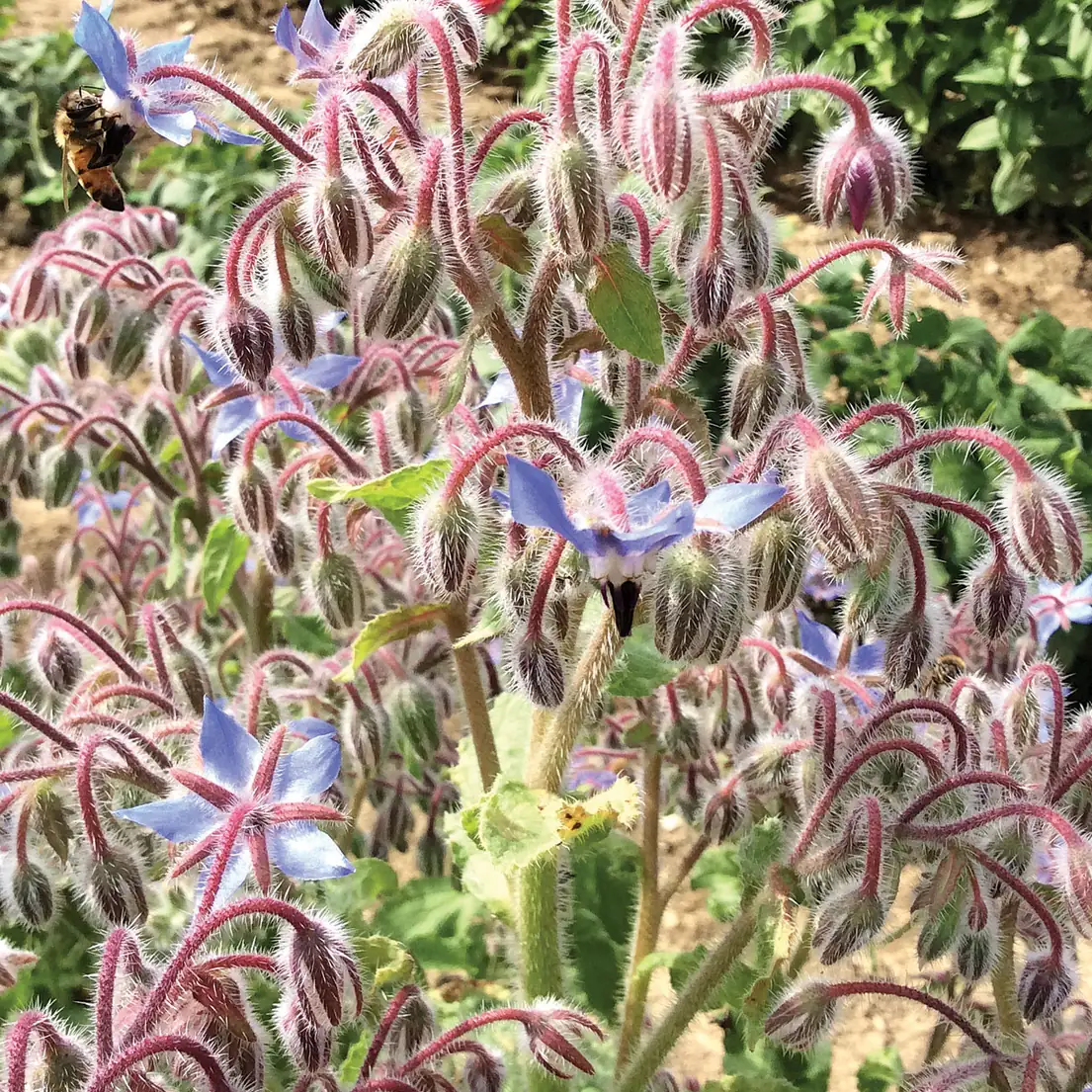
Photo: Queen Right Colonies, used with permission
Summer Bloomers (July-August)
Summer is the main honey flow — the period when nectar is most abundant and bees are producing surplus honey. Plants that bloom heavily in summer directly contribute to honey stores.
- 8. Sunflower (Helianthus annuus) — Sunflowers are excellent bee plants, providing both pollen and nectar that can produce distinctive sunflower honey in regions with large commercial plantings. Sunflower honey has a characteristic bright yellow color and mild, buttery flavor similar to clover honey but with subtle nutty notes. Choose pollen-rich varieties (many modern ornamental sunflowers are pollen-free, bred to avoid staining tablecloths). Good bee varieties include Mammoth Grey Stripe, Lemon Queen, and Italian White. Plant successive batches 2 weeks apart for extended bloom. Zones 2-11 as an annual.
- 9. Echinacea / Coneflower (Echinacea purpurea) — A native perennial that blooms for 6-8 weeks in mid to late summer. The large, open flower heads are perfect for honey bees to land on and forage efficiently. Echinacea is drought-tolerant, low-maintenance, and provides structural interest through winter when the seed heads are left standing. Zones 3-9.
- 10. Bee Balm (Monarda spp.) — True to its name, bee balm is irresistible to pollinators. The tubular flowers attract both honey bees and native bees. It spreads vigorously via rhizomes, so give it room or plant in containers. Prefers moist soil and partial shade to full sun. Can be susceptible to powdery mildew — choose mildew-resistant cultivars like Jacob Cline or Marshall's Delight. Zones 3-9.
- 11. Oregano (Origanum vulgare) — When allowed to flower, oregano is one of the most productive bee plants in any herb garden, contributing distinctive herbal notes to wildflower honey in regions with abundant oregano plantings. Most gardeners harvest oregano before it blooms, but if you let even a few plants go to flower, bees will swarm them. The tiny pink-purple flowers bloom for weeks and produce high-quality nectar that adds complexity to local honey blends similar to how Greek wildflower honey gains its distinctive Mediterranean character from wild oregano and thyme. Plant several so you can harvest some and leave others for the bees. Zones 4-10.
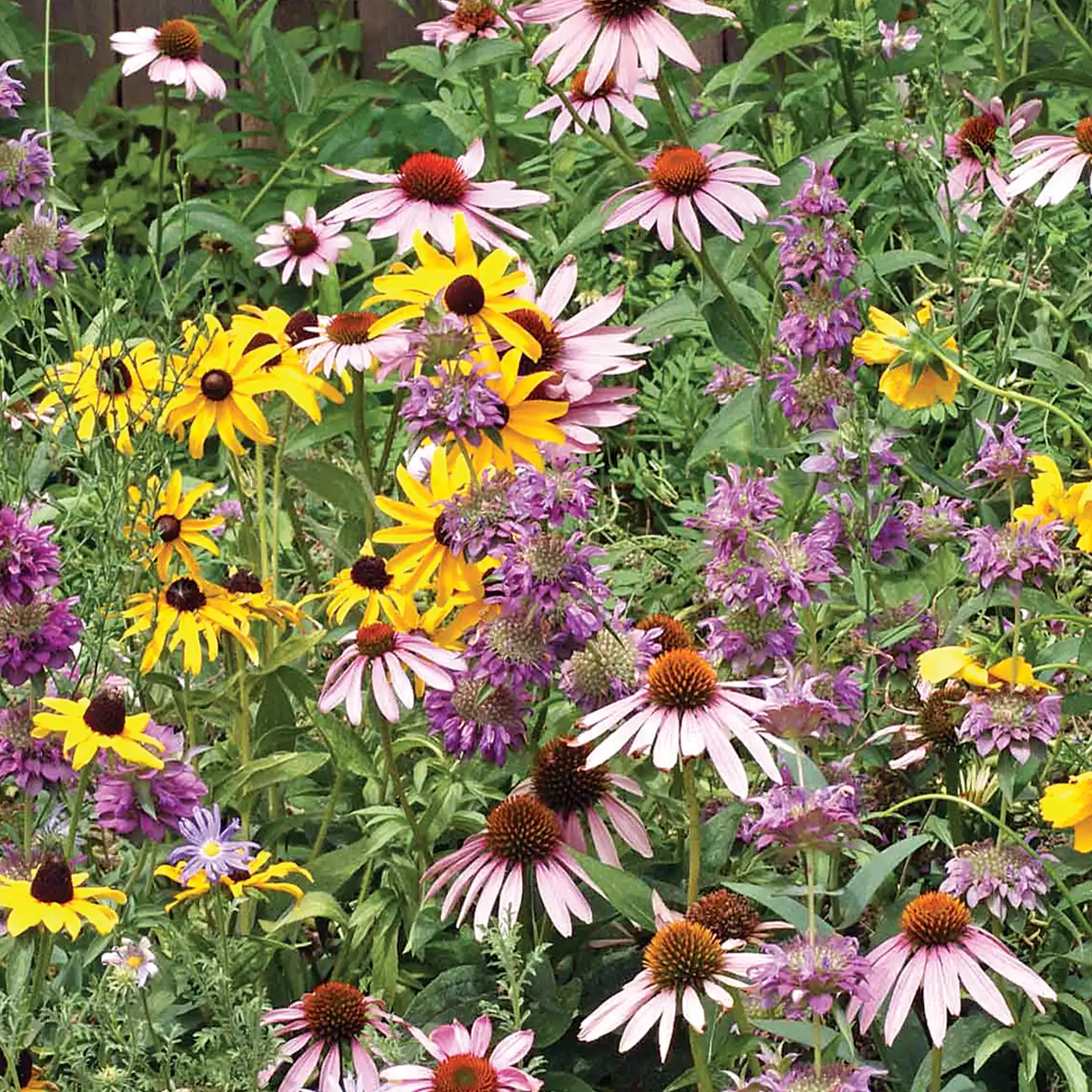
Photo: Queen Right Colonies, used with permission
Late Summer and Fall Bloomers (September-October)
Fall forage is almost as critical as spring forage. Bees need to build up honey stores and fat reserves for winter. A nectar dearth in late summer and early fall can leave colonies dangerously short on winter food.
- 12. Goldenrod (Solidago spp.) — The most important fall bee plant in North America producing distinctive goldenrod honey with dark amber color and robust, tangy flavor. This late-season nectar source creates honey similar to buckwheat honey in its bold character and high mineral content, though goldenrod has unique citrusy-spicy notes. Many beekeepers consider goldenrod honey essential for winter colony survival due to its exceptional nutritional density and antimicrobial properties. Despite common belief, goldenrod does NOT cause allergies (ragweed, which blooms at the same time, is the culprit). Native, drought-tolerant, and virtually indestructible. Zones 2-9.
- 13. Aster (Symphyotrichum spp.) — Asters are the last major nectar source before winter in most temperate climates. New England aster (S. novae-angliae) and aromatic aster (S. oblongifolium) are particularly bee-friendly. Their late bloom fills the critical gap between goldenrod and the first hard frost. Zones 3-8.
- 14. Sedum / Stonecrop (Sedum spectabile) — Autumn Joy sedum is one of the most reliable late-season bee plants. The large, flat flower heads change from pink to copper as they age, and bees visit them heavily in September and October. Extremely drought-tolerant and thrives in poor soil. Zones 3-10.
- 15. Single-Flower Dahlia (Dahlia spp.) — Unlike double dahlias (which have limited bee value), single-flower dahlias with open centers are excellent late-season bee plants. They bloom from midsummer until frost and provide both nectar and pollen. Look for varieties labeled "single" or "open-center." Bishop of Llandaff and Honka are popular bee-friendly cultivars. Zones 8-11 (dig up tubers in colder zones).
Pro Tip
Plant at least 2-3 fall-blooming species. If your garden goes quiet after August, bees in your area lose a critical food source just when they need it most for winter preparation.
Garden Design Tips for Maximum Bee Impact
Beyond choosing the right plants, how you design and maintain your garden affects its value to bees.
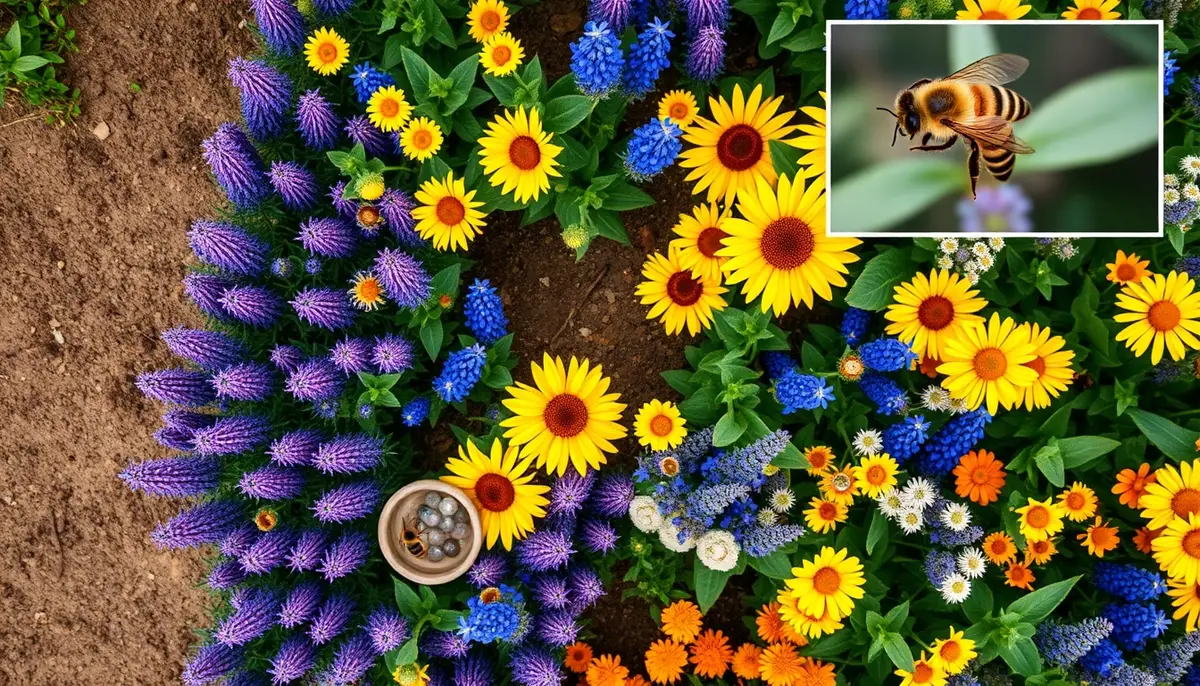
- Plant in clusters — Bees forage more efficiently when flowers of the same species are grouped together. A drift of 5-7 lavender plants is more useful than single plants scattered around the garden. This is called "mass planting" and it reduces the energy bees spend traveling between flowers.
- Aim for continuous bloom — Map out your bloom calendar. You should have something flowering from March through October at minimum. If you notice a gap (often in late June or early September), add a plant that fills it.
- Provide water — Bees need water for cooling the hive and diluting honey for feeding larvae. A shallow dish with pebbles or marbles (so bees can land without drowning) placed near the garden provides essential hydration. Change the water every few days to prevent mosquitoes.
- Eliminate pesticides — Neonicotinoid insecticides (imidacloprid, clothianidin, thiamethoxam) are highly toxic to bees even in small quantities. Avoid all systemic insecticides and spray applications during bloom. If you must treat a pest problem, use targeted, bee-safe methods like hand-picking, neem oil (applied at dusk when bees are not foraging), or biological controls.
- Leave some bare ground — About 70% of native bee species nest in the ground. A patch of undisturbed, unmulched, bare soil in a sunny spot provides nesting habitat for ground-nesting bees that complement the honey bees visiting your flowers.
- Do not deadhead everything — Leave some spent flower heads standing. Seed heads provide food for birds, and the hollow stems of some plants (like bee balm and echinacea) become winter nesting sites for solitary bees.
- Include native plants — Native plants and native bees evolved together, creating the regional botanical signatures that distinguish authentic wildflower honey varieties. While honey bees are generalists that visit most flowers, a garden with 50% or more native plants supports the broadest diversity of pollinators and contributes to complex regional wildflower honey profiles impossible to replicate through cultivated varieties alone. Check your regional native plant society or our floral sources guide for recommendations specific to your area.
Month-by-Month Bloom Calendar
Use this calendar to plan your garden for continuous bloom. Exact timing varies by USDA hardiness zone — these ranges are for zones 5-7 (roughly the mid-Atlantic and Midwest US). Adjust 2-3 weeks earlier for southern zones and 2-3 weeks later for northern zones.
- March-April: Crocus, willow, dandelion
- April-May: Dandelion, fruit trees (apple, cherry, plum), phacelia
- May-June: Borage, lavender, catmint, phacelia, chives, thyme
- June-July: Lavender, catmint, borage, bee balm, oregano
- July-August: Sunflower, echinacea, bee balm, oregano, basil (if flowering)
- August-September: Goldenrod, sunflower, sedum, dahlia
- September-October: Goldenrod, aster, sedum, dahlia
- October-November: Aster, late-blooming sedum (mild climates only)
Pollinator Week & World Environment Day: Why Your Garden Matters in June 2026
Two major conservation events in June 2026 highlight why bee-friendly gardens are more important than ever. World Environment Day (June 5) — this year themed "Accelerating Land Restoration for Drought Resilience" — connects directly to pollinator habitat: restored land means restored forage for bees. Every garden that provides continuous bloom from spring through fall is a small act of land restoration, creating the diverse floral habitat that produces regional wildflower honey ($10–18/jar) and supports the beekeepers behind it.
National Pollinator Week (June 22–28) is a USDA-designated celebration of the pollinators that sustain our food system. For gardeners, Pollinator Week falls during peak summer bloom when your borage, lavender, catmint, and bee balm are at their most productive. The nectar your lavender produces in late June is the same nectar that beekeepers harvest as prized lavender honey ($15–25/jar) — one of the most sought-after single-source honeys in the world.
If you are starting a bee garden for the first time, June is an excellent window. Fast-growing annuals like borage and sunflowers planted now will bloom within 6–8 weeks, providing late-summer forage precisely when many regions experience a nectar dearth. Nursery-started perennials like echinacea, catmint, and sage — which produces herbal-bright sage honey ($15–25/jar) in California's coastal ranges — will establish root systems through summer and return stronger next spring.
For established gardens, use these June events as a prompt to audit your bloom calendar. Are there gaps? September and October are the most common weak spots — adding goldenrod, asters, and sedum now ensures bees have forage during the critical pre-winter window when colonies are building reserves. Your fall flowers directly support the late-season honey harvest: bold goldenrod honey and the dark, tangy wildflower blends that beekeepers prize for overwintering colonies. Support local beekeepers through our 1,500+ local source directory or find honey events near you.