Propolis Benefits: Uses, Dosage & Evidence-Based Guide
Propolis is the hive's immune system — a resinous substance with over 300 antimicrobial compounds that bees use to keep their colony sterile. Here is what the research says about its health benefits, how to take it, and how it compares to honey and bee pollen.
Last updated:
Propolis (bee glue) is a resinous substance with 300+ bioactive compounds, including CAPE, an anti-inflammatory compound studied for its effect on the NF-κB pathway. Small clinical trials have looked at propolis for cold duration, dental health, wound healing, and cold sores, with promising but limited results — it is not a substitute for prescribed treatment for any of these conditions. It is sold as a tincture, capsules, or throat spray; talk to a healthcare provider about whether and how much to take, since dosing has not been well standardized. Do a patch test first — 1-6% of people develop contact dermatitis. Avoid in children under 12 months, during pregnancy, and with blood thinners.
What Is Propolis and How Do Bees Make It?
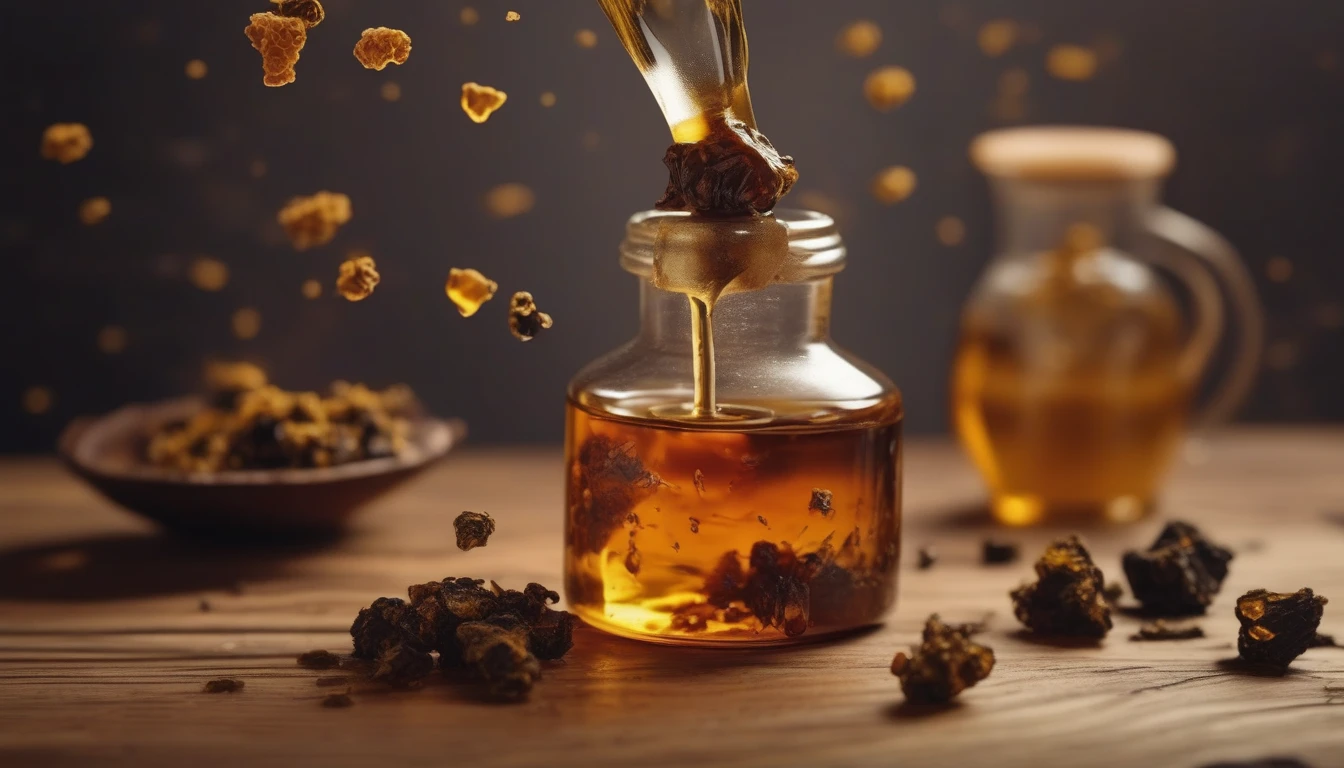
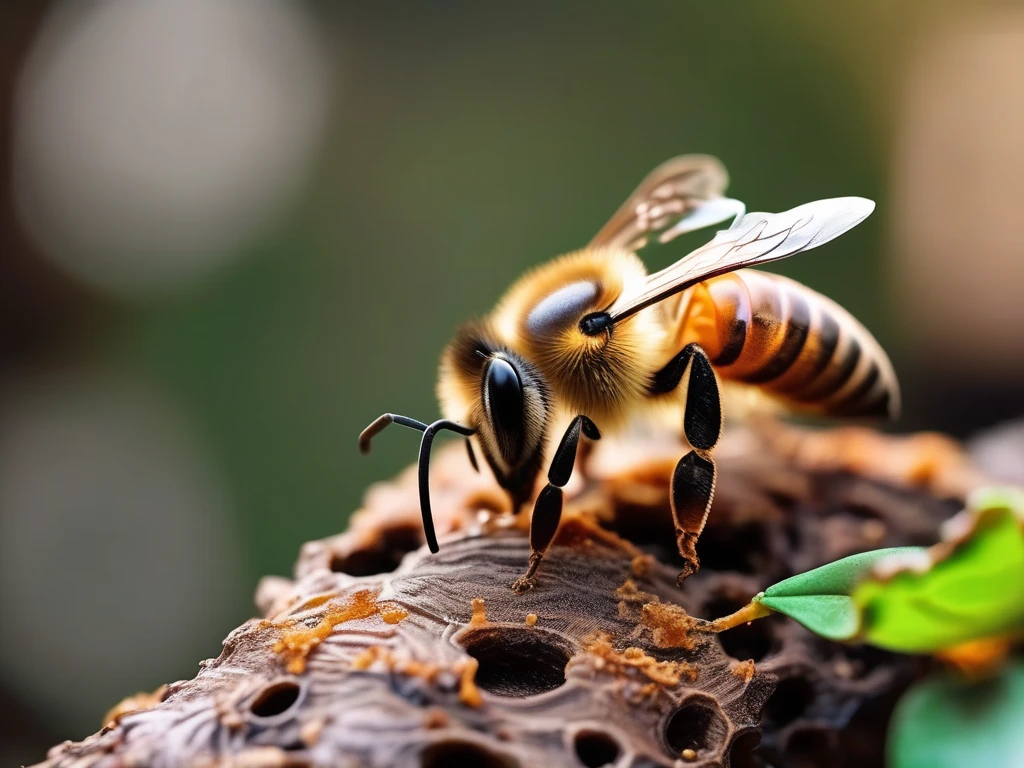
Propolis — sometimes called "bee glue" — is a sticky, resinous substance that honeybees create by mixing saliva and beeswax with exudate gathered from tree buds, sap flows, and other botanical sources. Worker bees collect resin primarily from poplar, birch, pine, alder, willow, and horse chestnut trees, carrying it back to the hive in their pollen baskets. Inside the hive, other bees chew the resin for hours, mixing it with beeswax and enzymes until it reaches a workable consistency. Bees use propolis to seal small gaps in the hive (anything under about 6mm; larger gaps get filled with beeswax), reinforce structural weak points, reduce the hive entrance to a defensible size, and coat the interior of brood cells before the queen lays eggs — creating a sterile environment that protects developing larvae. The word "propolis" comes from the Greek pro (before, in defense of) and polis (city), reflecting its role as the hive's first line of defense. Propolis has remarkable antimicrobial properties that keep the hive nearly sterile despite housing 60,000 bees in a warm, humid enclosure — the perfect conditions for microbial growth. When a mouse or lizard enters and dies inside the hive, bees embalm the carcass in propolis rather than trying to remove it, effectively mummifying it and preventing decomposition. A single hive produces 150-300g of propolis per year. Raw propolis typically contains roughly 50% plant resins and balsams, 30% waxes and fatty acids, 10% essential oils, 5% pollen, and 5% other organic compounds. Over 300 distinct bioactive compounds have been identified in propolis, though composition varies significantly by geography and botanical source.
Key Takeaways
- Propolis is a resinous mixture of tree bud exudates, beeswax, and bee saliva — over 300 bioactive compounds
- Bees use it to seal gaps, coat brood cells, reduce entrances, and embalm intruders — the hive's immune system
- Name comes from Greek: pro (defense of) + polis (city) — literally "defender of the city"
- Composition: ~50% resins, 30% waxes, 10% essential oils, 5% pollen, 5% other organic compounds
- A single hive produces 150-300g per year; composition varies by geography and tree species
- Collected primarily from poplar, birch, pine, willow, and horse chestnut trees
What Are the Evidence-Based Health Benefits of Propolis?
Propolis has strong antimicrobial properties, and has been studied for immune support, wound healing, and oral health. Its key bioactive compound — caffeic acid phenethyl ester (CAPE) — has demonstrated anti-inflammatory, antioxidant, antiviral, and immunomodulatory effects in laboratory and clinical research. For immune function, a 2019 randomized controlled trial published in Nutrients found that propolis extract significantly increased natural killer cell activity and reduced the duration of upper respiratory tract infections compared to placebo. For oral health, a 2020 systematic review in the Journal of Evidence-Based Dental Practice analyzed 12 clinical trials and found that propolis-containing mouthwashes and toothpastes reduced plaque formation and gingival inflammation. A 2019 study in Phytomedicine found that Brazilian green propolis extract was associated with fewer dental caries (cavities) in children over 12 months. For wound healing, propolis has been studied for its effects on collagen synthesis, fibroblast activity, and antimicrobial barrier formation — though burn care, especially for second-degree burns, should be directed by a medical professional, not self-treated with propolis. For antiviral activity, laboratory studies show propolis inhibits herpes simplex virus (HSV-1 and HSV-2), influenza viruses, and rhinoviruses; a 2010 clinical trial in Phytomedicine studied topical propolis ointment for genital herpes lesions, though genital herpes should always be diagnosed and managed by a healthcare provider, not self-treated. CAPE's anti-inflammatory activity is thought to work partly by inhibiting the NF-κB pathway, a regulator of inflammatory gene expression.
Key Takeaways
- Key compound CAPE inhibits NF-κB pathway — a master regulator of inflammation
- Immune support: 500mg/day reduced cold duration by ~2.5 days and boosted NK cell activity (2019 RCT)
- Oral health: studied for effects on plaque, gingivitis, and dental caries in children
- Wound healing: studied for burns and minor wounds — burn care should be directed by a medical professional
- Antiviral: laboratory studies show propolis inhibits herpes simplex virus — genital herpes should be diagnosed and managed by a healthcare provider
- Anti-inflammatory effects studied via CAPE's inhibition of the NF-κB pathway
What Types of Propolis Exist and What Compounds Do They Contain?
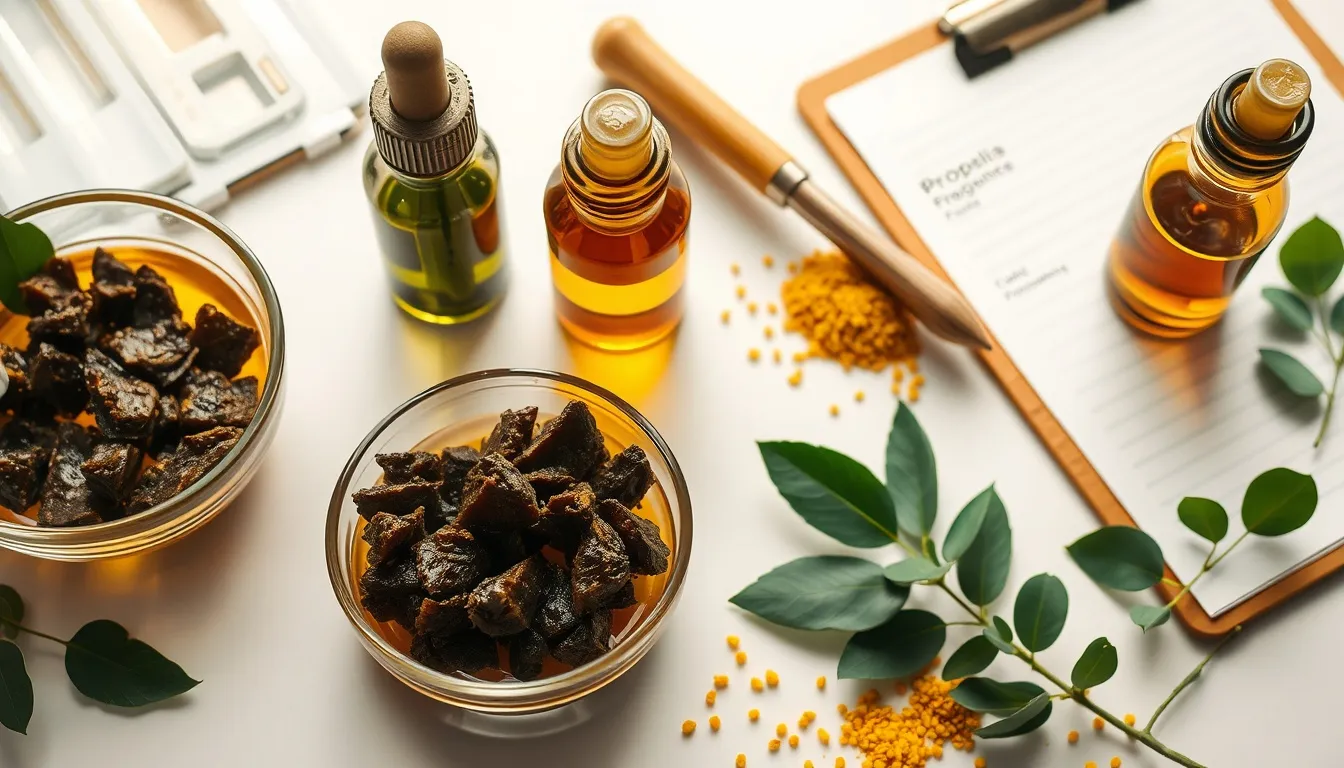
Propolis composition varies dramatically depending on the botanical sources available to the bees, creating distinct "chemotypes" with different bioactive profiles. The three most studied types are European/temperate propolis (poplar-type), Brazilian green propolis, and Brazilian red propolis. European propolis, sourced primarily from poplar tree buds (Populus spp.), is rich in flavonoids — particularly pinocembrin, chrysin, and galangin — plus phenolic acids like caffeic acid and its powerful derivative CAPE. This is the most widely available type globally and has the strongest evidence for anti-inflammatory and antimicrobial effects. Brazilian green propolis comes from the resinous leaf buds of Baccharis dracunculifolia (alecrim-do-campo) and is uniquely rich in artepillin C — a prenylated cinnamic acid derivative found almost exclusively in this propolis type. Artepillin C has shown potent anti-cancer properties in laboratory studies, inhibiting tumor cell growth and inducing apoptosis. It also contains p-coumaric acid and kaempferide. Brazilian red propolis, sourced from Dalbergia ecastaphyllum (a leguminous mangrove plant), contains unique isoflavonoids including formononetin, biochanin A, and medicarpin — compounds with estrogenic and antioxidant activity not found in other propolis types. Its total flavonoid content is often the highest of any propolis type. Other notable varieties include Chinese propolis (similar to European but with distinct flavonoid ratios), Cuban red propolis, and African propolis types. Regardless of origin, all propolis types share some core properties: broad-spectrum antimicrobial activity, antioxidant capacity (ORAC values 2-10x higher than blueberries), and anti-inflammatory effects. Standardized extracts typically specify the total flavonoid content (measured as galangin or quercetin equivalents), total phenolic content, or specific marker compounds like CAPE or artepillin C.
Key Takeaways
- European (poplar-type): rich in CAPE, pinocembrin, chrysin, galangin — strongest anti-inflammatory evidence
- Brazilian green propolis: unique artepillin C compound with potent anti-cancer properties in lab studies
- Brazilian red propolis: contains isoflavonoids (formononetin, biochanin A) with estrogenic activity
- Antioxidant ORAC values are 2-10x higher than blueberries regardless of propolis type
- Standardized extracts specify total flavonoid content, phenolics, or marker compounds (CAPE, artepillin C)
- Over 300 bioactive compounds identified across propolis types — flavonoids, terpenes, phenolic acids
How Should You Take Propolis?
Propolis is available in several forms: liquid tinctures (alcohol or glycerin-based), capsules, tablets, sprays, lozenges, and raw propolis chunks. Tinctures can be taken under the tongue, added to water, tea, or honey, or applied topically to minor wounds and cold sores. Alcohol-based tinctures extract a wider range of bioactive compounds than water-based versions, though glycerin or water extracts are available for those who avoid alcohol. There's no standardized dose for propolis supplements — follow the product label and talk to your doctor or pharmacist about what's appropriate for you, since concentration varies significantly between products and forms. Raw propolis chunks can be chewed like natural gum, releasing flavor and active compounds, though the waxy texture takes getting used to. For oral health, propolis mouthwashes and propolis-containing toothpastes are available for daily use. Topically, propolis ointments are applied to minor cuts, cold sores, and skin irritations — talk to a healthcare provider before using on burns or anything beyond a minor wound. When choosing a propolis supplement, look for products that specify the type (European, Brazilian green, etc.), total flavonoid content, extraction method, and country of origin. If you have pollen or bee product allergies, talk to your doctor before trying propolis, and consider a patch test first. Take propolis with meals to reduce the chance of stomach upset. Store tinctures away from heat and light; capsules should be kept in a cool, dry place.
Key Takeaways
- Tincture: taken under the tongue, in water/tea, or applied topically — no standardized dose, follow product labeling
- Capsules: taken with food — look for products specifying total flavonoid content; no standardized dose
- Throat sprays: at least 10% propolis extract — delivers compounds directly to inflamed tissue
- Raw chunks can be chewed like gum for 10-15 minutes; waxy texture releases bioactives slowly
- Topical ointments (3-10% concentration) for minor wounds, burns, cold sores, and skin irritations
- Choose products specifying propolis type, flavonoid content, extraction method, and origin
How Does Propolis Compare to Other Bee Products?
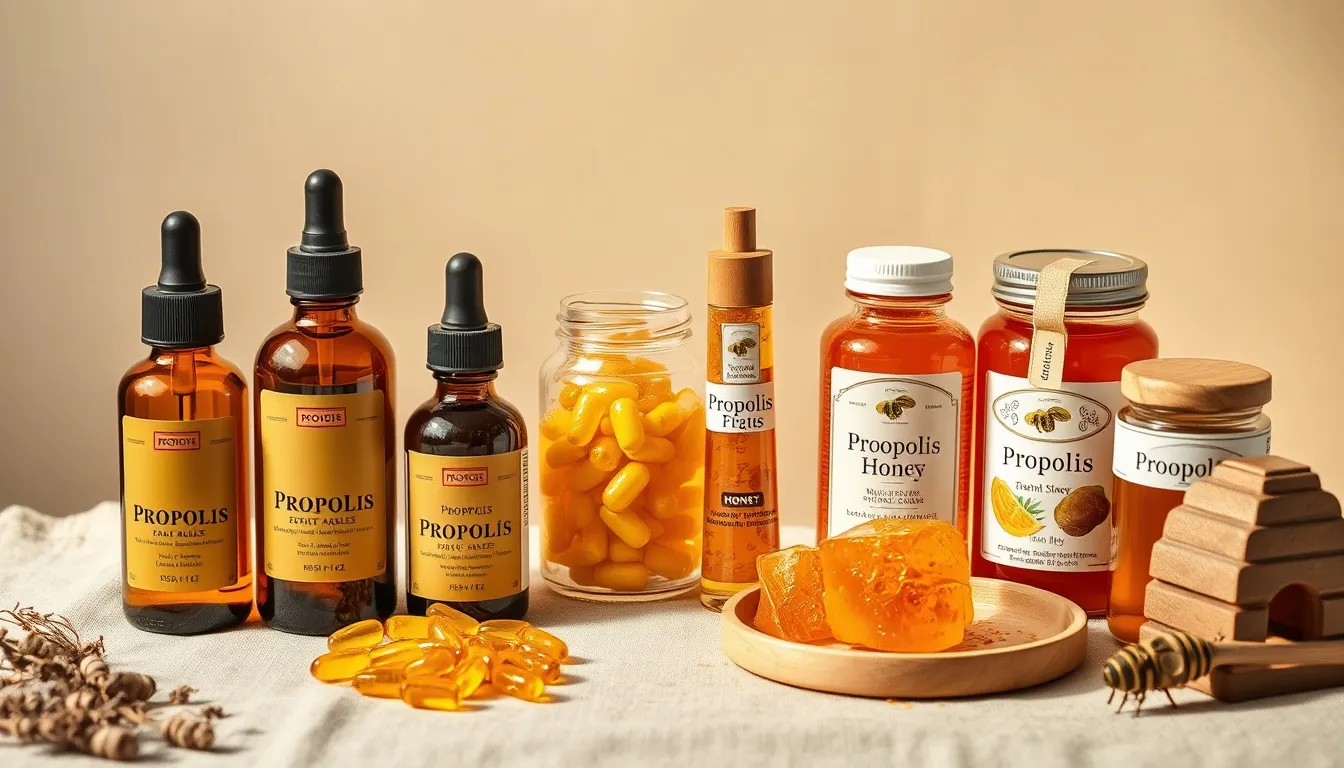
Each bee product has a distinct role in the hive and corresponding health applications. Propolis is the hive's defense system — its 300+ antimicrobial compounds make it uniquely effective for immune support, infection prevention, wound healing, and oral health. No other bee product matches propolis for antimicrobial potency. Honey is the hive's energy store — primarily sugars (fructose and glucose) with enzymes, hydrogen peroxide, and phenolics. Honey excels at wound healing (via osmotic action and hydrogen peroxide), cough suppression (WHO-recommended), and prebiotic gut support. Different honey varieties offer specific therapeutic advantages: [Manuka honey](/honey/new-zealand-manuka-umf-15) provides clinical-grade UMF 10-20+ antimicrobial activity for wound care, [buckwheat honey](/honey/buckwheat-honey) delivers exceptional ORAC 16,000+ antioxidants (9× more than [clover honey](/honey/clover-honey)) plus superior cough suppression proven in clinical trials, [wildflower honey](/honey/wildflower-honey) offers diverse botanical compounds from multiple pollen sources for broad-spectrum wellness, and [acacia honey](/honey/acacia-honey) provides diabetic-friendly GI ~32 for blood sugar management. Honey is the most accessible and versatile bee product for everyday use. Bee pollen is the hive's protein source — the richest in amino acids (all 9 essential), B vitamins, and enzymes. Bee pollen is best for nutritional supplementation, exercise recovery, and broad-spectrum antioxidant protection. Royal jelly is a specialized secretion from nurse bees' hypopharyngeal glands, fed to all larvae for 3 days and to queen larvae throughout development. It uniquely contains 10-hydroxy-2-decenoic acid (10-HDA), studied for anti-aging, neuroprotective, and hormonal effects. Royal jelly is the most expensive bee product and most often used for longevity, skin health, and fertility support. Beeswax provides structural material for the comb and is used in cosmetics, candles, and food wraps but has minimal medicinal value compared to other bee products. Many practitioners recommend "bee therapy" combining multiple products — for example, propolis tincture for immune defense, honey for daily wellness, and bee pollen for nutritional supplementation. The products have complementary mechanisms and may work synergistically.
Key Takeaways
- Propolis: strongest antimicrobial (300+ compounds) — best for immune defense, wound healing, oral health
- Honey: best for wound healing, cough suppression, and daily wellness — [Manuka honey](/honey/new-zealand-manuka-umf-15) offers UMF 10+ clinical antimicrobial support, [buckwheat honey](/honey/buckwheat-honey) provides well-studied cough suppression with 9× more antioxidants than [clover honey](/honey/clover-honey), [wildflower honey](/honey/wildflower-honey) delivers diverse prebiotic gut compounds, [acacia honey](/honey/acacia-honey) offers diabetic-friendly GI ~32 — most accessible bee product with variety-specific wellness applications
- Bee pollen: highest in protein and B vitamins — best for nutrition and exercise recovery
- Royal jelly: unique 10-HDA fatty acid — studied for anti-aging, neuroprotection, and fertility
- Beeswax: structural material — used in cosmetics and food wraps but minimal medicinal value
- Combining multiple bee products may provide synergistic health benefits
What Are the Safety Precautions and Side Effects of Propolis?
The most common side effect of propolis is contact dermatitis — an allergic skin reaction causing redness, itching, and swelling at the application site. This affects an estimated 1.2-6.6% of people who use propolis topically, according to a 2018 review in Contact Dermatitis. The risk is higher in individuals already sensitized to balsam of Peru, poplar tree resins, or other plant-derived products. Oral propolis can occasionally cause gastrointestinal discomfort including nausea, stomach cramps, or diarrhea — taking it with food usually prevents this. Severe allergic reactions (anaphylaxis) are rare but documented — people with known allergies to bee stings, bee products, or pollen should exercise extreme caution and start with a skin patch test before oral use. To perform a patch test, apply a small amount of propolis tincture to the inner forearm and wait 24-48 hours for any reaction before taking it internally. Pregnant and breastfeeding women should avoid propolis supplements due to insufficient safety data, though topical use on minor wounds is generally considered safe. Children under 12 months should not consume propolis due to the same Clostridium botulinum spore risk that applies to honey and all raw bee products. Propolis may interact with blood-thinning medications (warfarin, aspirin, clopidogrel) due to mild anticoagulant properties. It may also interact with immunosuppressant drugs, as propolis stimulates immune activity. People scheduled for surgery should stop propolis supplementation 2 weeks before the procedure due to potential effects on bleeding and immune function. As with all bee products, quality and purity vary widely — contaminants including heavy metals, pesticide residues, and adulterants have been found in poorly sourced propolis products. Buy from reputable beekeepers or brands that provide third-party testing certificates.
Key Takeaways
- Contact dermatitis affects 1.2-6.6% of topical users — do a 24-48 hour patch test before first use
- Higher allergy risk if sensitive to balsam of Peru, poplar resins, or bee stings
- Avoid during pregnancy, breastfeeding, and in children under 12 months (botulism risk)
- May interact with blood thinners (warfarin, aspirin) and immunosuppressant medications
- Stop supplementation 2 weeks before surgery due to potential bleeding and immune effects
- Buy from reputable sources with third-party testing — contamination risk from heavy metals and pesticides
Frequently Asked Questions
What are the main health benefits of propolis?
How do you take propolis?
Is propolis safe for everyone?
What is the difference between propolis and honey?
What types of propolis are there?
Can propolis help with sore throat and cold symptoms?
Which honey varieties should I choose for different health goals alongside propolis?
Edited by Sam French · Raw Honey Guide Editorial Team
Source reviewed against primary literature and official guidance where available. Health content is educational, not medical advice, and does not replace a licensed clinician.
Get the Honey Buyer's Cheat Sheet (free PDF)
16 varieties on one page — color, flavor, best use and what a fair price looks like — from the 268 honeys we track.
Related Guides
Bee Pollen Benefits
Nutrition, dosage, and evidence-based health benefits.
Read GuideRoyal Jelly Benefits
Anti-aging, brain health, skin, dosage, and 10-HDA guide.
Read GuideHoney for Wound Healing
Medical evidence and clinical uses.
Read GuideRelated Articles
Propolis Benefits: What Science Says About This Bee Superfood
Propolis benefits: immune support, wound healing, oral health, and anti-inflammatory effects. Tincture forms and safety guide.
Read ArticleHoney for Immune System: How It Strengthens Your Defenses
How honey supports immunity: antimicrobial action, cytokine modulation, gut health, and prebiotic effects. Science review.
Read ArticleHoney for Cold Sores: Can It Help? What Research Shows
Can honey heal cold sores faster? Clinical evidence on kanuka and manuka honey vs acyclovir for herpes simplex virus.
Read ArticleWant to explore the full range of bee products and honey varieties?