Why Honey for Cold Sores? The Science Behind It
Cold sores — those painful, fluid-filled blisters caused by herpes simplex virus (HSV-1) — affect an estimated 3.7 billion people under age 50 worldwide, according to the World Health Organization. While antiviral medications like acyclovir are the standard treatment, a growing body of research suggests that certain types of honey may be a surprisingly effective natural alternative.
Honey's potential against cold sores isn't just folk medicine. It stems from well-documented antimicrobial, anti-inflammatory, and wound-healing properties that have been studied extensively for other conditions. The question is whether these properties translate specifically to herpes simplex virus outbreaks — and the clinical evidence is more promising than you might expect.
Before diving into the research, it's important to understand what makes cold sores particularly challenging: HSV-1 is a lifelong virus that lies dormant in nerve cells and reactivates periodically. No treatment — pharmaceutical or natural — can eliminate the virus. The goal is always to reduce outbreak severity, speed healing, and minimize discomfort.
The Clinical Evidence: Honey vs Acyclovir
The most significant clinical trial on honey for cold sores was published in 2019 in BMJ Open — a large, randomized controlled trial conducted across 952 participants in New Zealand. Researchers compared medical-grade kanuka honey (applied 5 times daily) to 5% acyclovir cream (the gold standard over-the-counter treatment) for herpes labialis (cold sores on the lips).
The results showed that kanuka honey was non-inferior to acyclovir for healing time — meaning it performed comparably to the pharmaceutical treatment. The median healing time was similar in both groups (approximately 8-9 days from randomization to return to normal skin). This was the largest and most rigorous trial ever conducted on a natural remedy for cold sores.
An earlier but smaller study published in 2004 in Medical Science Monitor examined honey applied to both oral and genital herpes lesions in 16 patients using a crossover design. Participants treated their own outbreaks with honey during one episode and acyclovir during another. The honey group showed faster healing times (43% faster for labial herpes, 59% faster for genital herpes) and no side effects, compared to 3 patients who developed local itching with acyclovir.
While the 2004 study was small, its results aligned with the larger 2019 trial and with what we know about honey's wound-healing mechanisms. Together, these studies suggest honey is a credible treatment option — not just a home remedy myth.
Pro Tip
The 2019 BMJ Open trial used pharmaceutical-grade kanuka honey, but the researchers noted that the antiviral mechanisms are shared across honey types. Medical-grade manuka honey is the most accessible clinical-quality option.
Get the Honey Buyer's Cheat Sheet (free PDF)
16 varieties on one page — color, flavor, best use and what a fair price looks like — from the 268 honeys we track.
How Honey Works Against Cold Sores: 5 Mechanisms
Honey doesn't fight cold sores through a single pathway — it combines multiple mechanisms that address different aspects of the outbreak simultaneously.
- Antiviral activity — Honey's high sugar concentration creates an osmotic environment that dehydrates viral particles and disrupts their protective envelope. Studies have demonstrated direct virucidal effects against HSV-1 in laboratory settings, with darker honeys showing stronger activity due to higher polyphenol content.
- Anti-inflammatory effects — Cold sore outbreaks trigger significant local inflammation (redness, swelling, pain). Honey's polyphenols inhibit the NF-κB inflammatory pathway and suppress pro-inflammatory cytokines (TNF-α, IL-1β, IL-6), reducing the inflammatory response that drives much of cold sore discomfort.
- Wound healing acceleration — Once a cold sore blister ruptures, the exposed lesion is essentially an open wound. Honey promotes tissue repair through collagen synthesis stimulation, angiogenesis (new blood vessel formation), and epithelial cell migration — the same mechanisms that make it effective for wound healing generally.
- Antibacterial protection — Open cold sore lesions are vulnerable to secondary bacterial infections, which can prolong healing and cause complications. Honey's broad-spectrum antibacterial activity (effective against 60+ species including MRSA) prevents secondary infection without the antibiotic resistance concerns of pharmaceutical antibacterials.
- Moisture barrier — Unlike antiviral creams that can dry out surrounding skin, honey maintains optimal moisture at the wound site through its natural humectant properties, creating an environment conducive to healing while preventing the cracking and bleeding that extends recovery time.
Best Honey Types for Cold Sores
Not all honeys are equally effective for cold sore treatment. The type matters significantly because antiviral and healing potency varies with floral source, processing, and quality.
- Kanuka honey — Used in the landmark 2019 BMJ Open trial. From New Zealand's kanuka tree (Kunzea ericoides), a relative of the manuka tree. Contains unique flavonoids and has demonstrated specific anti-HSV activity. Medical-grade kanuka honey is the most evidence-based choice.
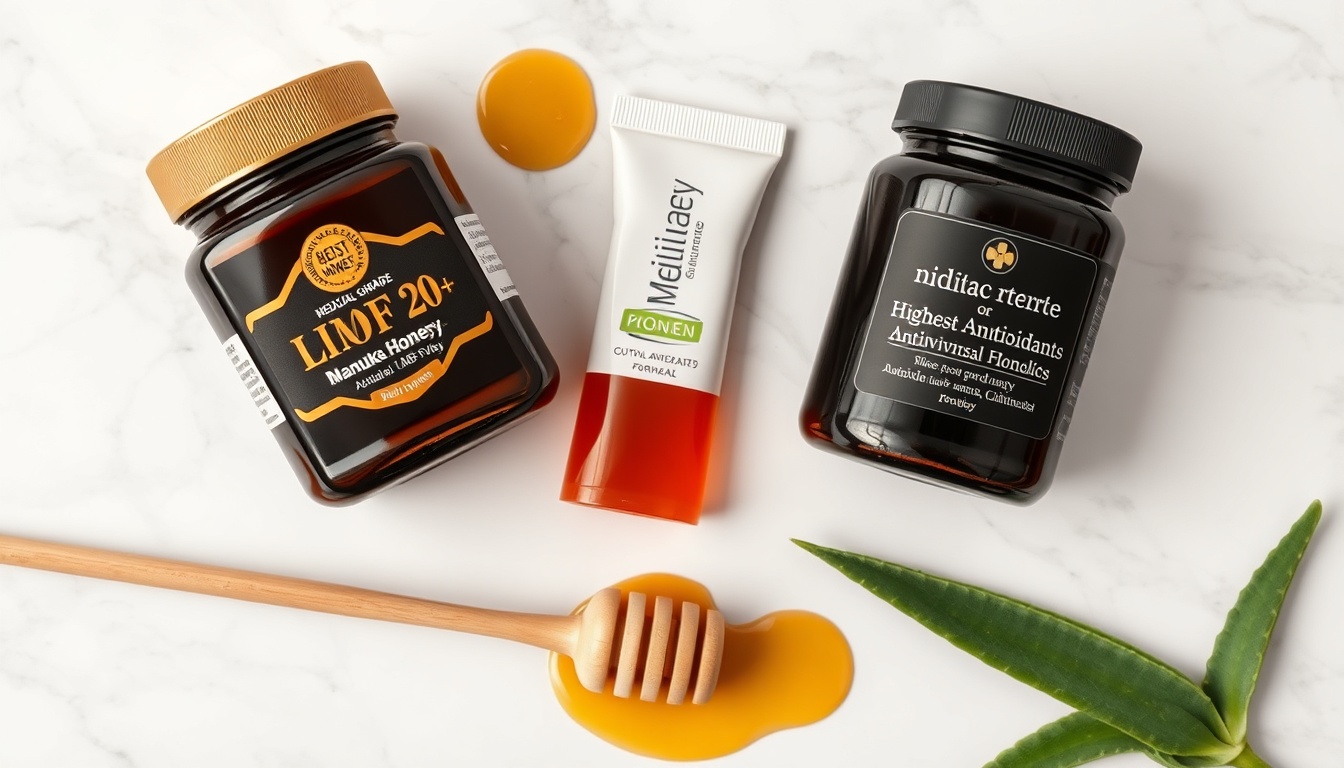
- Manuka honey (UMF 10+, $35-60+) — The most accessible medical-grade option. Its methylglyoxal (MGO) provides non-peroxide antibacterial activity, and its anti-inflammatory properties are well-documented. UMF 15+ or higher is recommended for active lesions.
- Thyme honey ($15-25) — Contains thymol and carvacrol, which have demonstrated antiviral activity against HSV-1 in laboratory studies. Also provides strong antimicrobial protection against secondary infection.
- Buckwheat honey ($15-25, ORAC 16,000+) — Dark honeys have 3-9x higher antioxidant content than light varieties. While not studied specifically for cold sores, buckwheat honey's potent anti-inflammatory effects may help reduce outbreak severity.
- Wildflower honey ($10-18) — A practical budget alternative with broad-spectrum polyphenols from diverse floral sources. Choose raw, unfiltered wildflower for maximum bioactive compound retention.
- Budget option: Clover honey ($8-15) — Any raw honey retains more bioactive compounds than processed varieties. If medical-grade honey isn't available, raw clover honey is an affordable everyday option that still provides osmotic and enzymatic antimicrobial activity.
Pro Tip
Avoid using processed, heated, or blended honey for cold sore treatment. The pasteurization process destroys enzymes (glucose oxidase, catalase) and reduces polyphenol content that contribute to antiviral and healing activity.
How to Apply Honey to Cold Sores
Proper application technique matters for effectiveness. Here is the protocol used in the 2019 BMJ Open trial, for context — talk to a pharmacist about how to apply an over-the-counter honey product like this in practice.
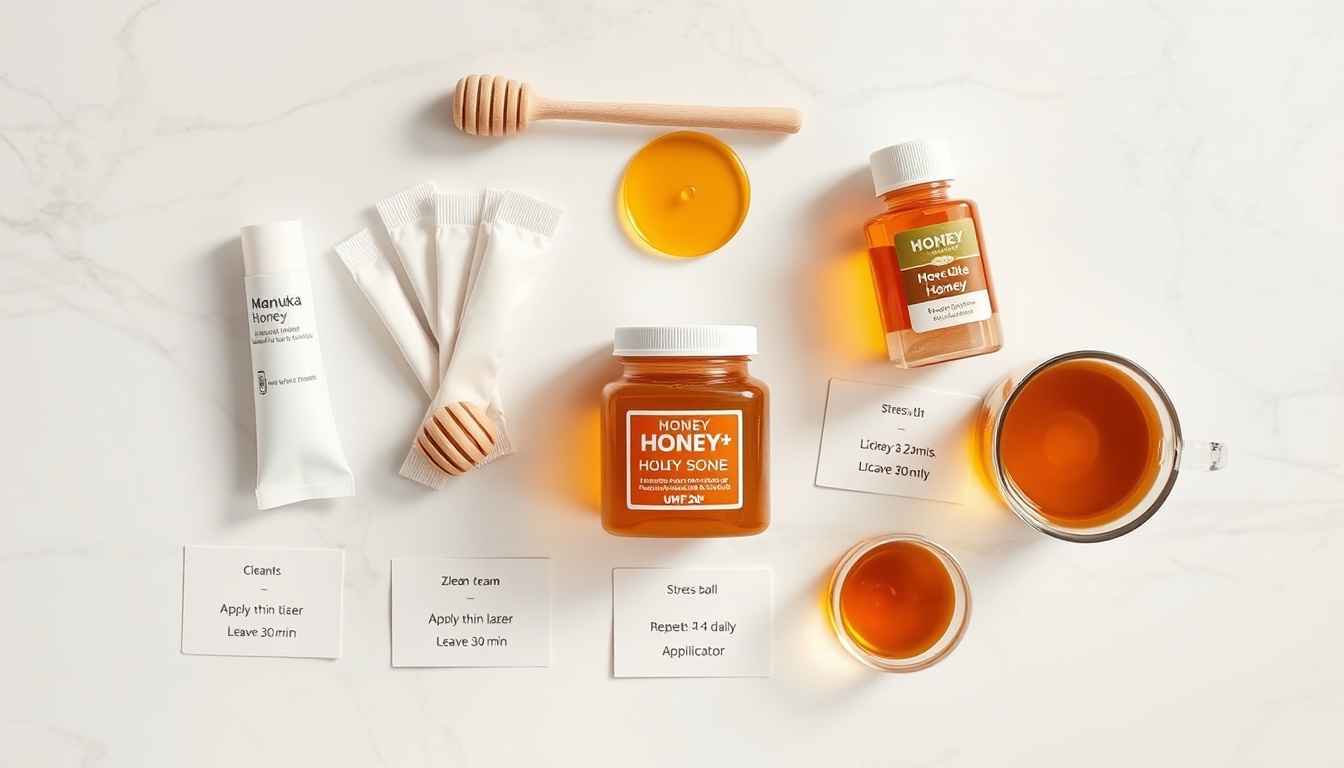
- Clean the area — Gently wash the cold sore and surrounding skin with mild soap and warm water. Pat dry with a clean paper towel (not a shared cloth towel, as HSV is contagious).
- Apply a thick layer — Using a clean cotton swab or disposable applicator (never your fingers to avoid spreading the virus), apply a generous layer of honey directly over the cold sore and slightly beyond its borders.
- Reapply frequently — The clinical trial protocol called for application 5 times daily. Unlike acyclovir cream that dries to a thin layer, honey can slide off, so more frequent reapplication than a cream is typically needed.
- Cover if needed — For daytime wear, a small adhesive bandage over the honey can prevent it from rubbing off. At night, apply a thick layer before bed and use an old pillowcase.
- Continue until healed — Don't stop treatment when the blister crusts over. Continue applying honey through the scabbing stage until skin returns to normal. The anti-inflammatory and wound-healing effects remain beneficial throughout recovery.
Honey vs Acyclovir: When to Use Which
Based on the available evidence, here's a practical framework for choosing between honey and antiviral medication.
Honey may be preferable when you want to avoid pharmaceutical side effects (acyclovir can cause local irritation, burning, and stinging), when you catch the outbreak early in the tingling/prodromal stage, for mild-to-moderate outbreaks, for people who prefer natural treatments, or when antiviral cream isn't immediately available.
Acyclovir (or valacyclovir/famciclovir) is preferable for severe or frequent outbreaks (6+ per year), immunocompromised individuals, outbreaks near the eyes (seek immediate medical attention), and when prescribed as oral suppressive therapy to prevent outbreaks.
A combination approach — using honey between acyclovir applications — is also reasonable, as they work through different mechanisms and there are no known interactions between topical honey and antiviral medications. The honey provides moisture and healing support while the antiviral targets viral replication directly.
Prevention and Reducing Outbreak Frequency
While honey is useful during active outbreaks, daily honey consumption may also support immune function in ways that reduce outbreak frequency. HSV reactivates when immune surveillance drops — during stress, illness, fatigue, or UV exposure.
- Daily honey for immune support — Regular raw honey consumption provides prebiotic support for gut-associated lymphoid tissue (GALT), which houses 70% of immune cells. A stronger baseline immune response may keep HSV dormant longer.
- Honey and propolis combination — Propolis has demonstrated direct anti-HSV activity in multiple studies. A 2010 study in Phytomedicine found propolis ointment reduced cold sore healing time compared to acyclovir. Daily propolis tincture (300-500mg) combined with honey may offer synergistic protection.
- Stress management support — Emotional stress is the #1 trigger for cold sore outbreaks. Honey's gut-brain axis support (via prebiotic effects on serotonin-producing gut bacteria) and blood sugar stabilization may help buffer the physiological stress response.
- Lysine-rich diet — The amino acid lysine competes with arginine, which HSV needs to replicate. While not honey-specific, pairing lysine-rich foods (dairy, fish, eggs) with daily honey consumption is a practical preventive strategy.
- Sun protection — UV exposure is a common trigger. Apply SPF 30+ lip balm before sun exposure, and consider a honey lip treatment at night to support skin repair.
Safety Considerations and Limitations
Topical honey application for cold sores is generally very safe, but there are important caveats to consider.
Allergic reactions are rare but possible, especially for individuals allergic to bee stings or pollen. Do a small patch test on your inner wrist 24 hours before applying honey to your face. If you experience redness, itching, or swelling, don't use honey topically.
Honey is not a cure for herpes simplex virus. It can reduce symptom severity and speed healing of individual outbreaks, but it does not eliminate the virus or prevent all future outbreaks. Be wary of any claims suggesting otherwise.
Cold sores near or in the eyes require immediate medical attention — do not attempt honey self-treatment for ocular herpes, as this can cause permanent vision damage.
For infants under 12 months, honey should never be applied near the mouth due to infant botulism risk. Children over 1 year can safely use topical honey for cold sores under parental supervision.
If cold sores spread, don't heal within 2 weeks, are accompanied by fever, occur more than 6 times per year, or appear in someone with a weakened immune system, consult a healthcare provider.
Honest Assessment: What Honey Can and Can't Do
The evidence for honey as a cold sore treatment is genuinely promising — it's one of the few natural remedies that has been tested head-to-head against a pharmaceutical in a large, well-designed clinical trial and performed comparably.
That said, the evidence base is still limited. We have one large RCT (the 2019 BMJ Open kanuka honey trial) and several smaller studies. More research is needed to determine optimal honey types, confirm the most effective application protocols, and identify whether certain individuals respond better than others.
What honey clearly offers is a safe, well-tolerated treatment option with multiple mechanisms of action (antiviral, anti-inflammatory, wound-healing, antibacterial) that work in parallel. It doesn't cause the local irritation or burning that some people experience with acyclovir, and it actively promotes healing rather than just fighting the virus.
For anyone looking for a natural approach to cold sore management — or a complementary treatment alongside antivirals — medical-grade honey is a science-backed option worth trying.