Can Honey Actually Help with Anxiety?
Anxiety disorders affect over 40 million adults in the United States, and the search for natural, complementary approaches continues to grow. Honey has been used in traditional medicine systems — Ayurveda, Traditional Chinese Medicine, and ancient Greek practice — as a calming agent for centuries. But what does modern research actually show?
The honest answer: there is no single clinical trial proving that honey directly treats clinical anxiety disorders. However, there is growing evidence that honey influences several biological pathways relevant to anxiety and stress — including the gut-brain axis, blood sugar regulation, sleep quality, and neuroinflammation.
This guide examines each mechanism, the strength of the evidence behind it, and how to incorporate honey sensibly as part of a broader stress-management strategy. We'll be clear about what's established science versus what's preliminary or speculative.
1. The Gut-Brain Axis: Honey's Prebiotic Connection
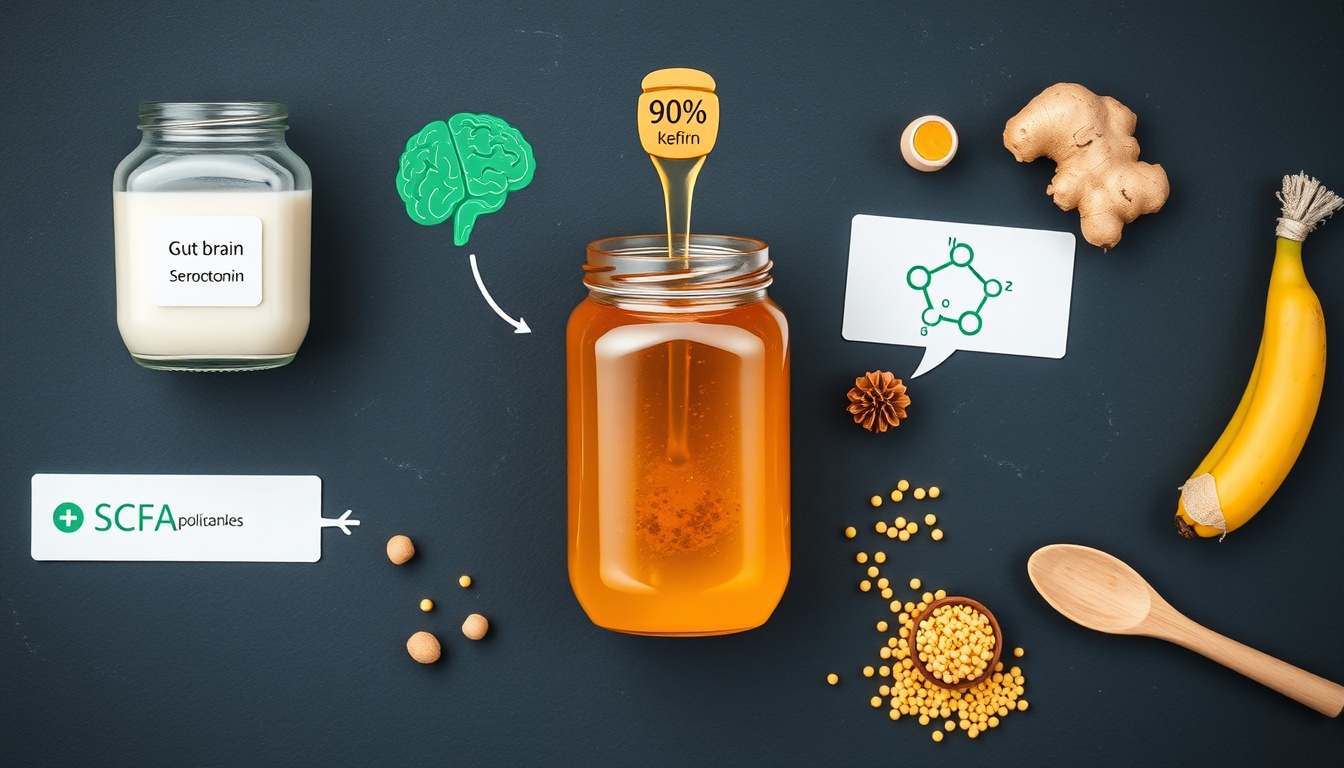
The strongest indirect evidence for honey's anxiety-relevant effects comes through the gut-brain axis — the bidirectional communication system between gut microbiota and the central nervous system. Over 90% of the body's serotonin (a key mood-regulating neurotransmitter) is produced in the gut, and disruptions to gut microbiota composition are consistently associated with anxiety and depression in human studies.
Raw honey contains fructo-oligosaccharides (FOS) and gluco-oligosaccharides — prebiotic compounds that selectively feed Bifidobacterium and Lactobacillus species. A 2019 systematic review in BMJ Nutrition, Prevention & Health analyzed 34 studies and found that probiotic and prebiotic interventions significantly reduced anxiety symptoms, with prebiotics showing effects through increased short-chain fatty acid (SCFA) production.
SCFAs, particularly butyrate, strengthen the gut barrier (preventing "leaky gut" that allows inflammatory molecules into the bloodstream), reduce systemic inflammation, and directly influence brain function through vagus nerve signaling. A 2021 review in Neuroscience & Biobehavioral Reviews found that butyrate specifically modulated BDNF (brain-derived neurotrophic factor) expression, a protein critical for neuroplasticity and stress resilience.
The connection is not honey-specific — any prebiotic fiber source supports these pathways. But honey's advantage is that people actually consume it consistently, unlike fiber supplements that often get abandoned. A tablespoon of raw honey in morning tea or before bed provides prebiotic support as part of an enjoyable daily routine.
Get the Honey Buyer's Cheat Sheet (free PDF)
16 varieties on one page — color, flavor, best use and what a fair price looks like — from the 268 honeys we track.
2. Blood Sugar Stability and Anxiety
Blood sugar fluctuations are a well-documented trigger for anxiety symptoms. Reactive hypoglycemia — when blood sugar drops rapidly after an insulin spike — triggers the adrenal stress response, releasing cortisol and adrenaline. This creates physical sensations (racing heart, shakiness, sweating) that overlap with and amplify anxiety.
Honey's moderate glycemic index (45-69 depending on variety, compared to table sugar's 65 and HFCS's 73) means a gentler blood sugar curve. Acacia honey ($12–20, GI ~32), with one of the lowest glycemic indexes of any honey, produces even less glycemic disturbance. The 2022 Nutrition Reviews meta-analysis of 18 RCTs found that replacing refined sugar with honey significantly improved fasting blood glucose and HbA1c levels.
For anxiety-prone individuals, the practical implication is clear: replacing refined sugar spikes (soda, candy, white bread) with small amounts of honey as a sweetener reduces the frequency and severity of reactive blood sugar drops that trigger the stress response.
This section does not establish a universal or medical honey dose for this purpose. Use the daily added-sugar guide to count honey with other added or free sugars.
3. Sleep Quality: The Anxiety-Insomnia Connection
Poor sleep and anxiety exist in a bidirectional relationship — anxiety disrupts sleep, and sleep deprivation amplifies anxiety. A 2019 meta-analysis in Sleep Medicine Reviews found that insomnia was both a risk factor for and a consequence of anxiety disorders. Improving sleep quality is one of the most effective non-pharmacological interventions for reducing anxiety symptoms.
Honey before bed supports sleep through two established mechanisms: replenishing liver glycogen stores (preventing the 2-3 AM cortisol spike that occurs when the liver runs low on fuel during overnight fasting) and promoting the tryptophan-to-melatonin pathway. Honey's sugars stimulate a mild insulin release that facilitates tryptophan transport across the blood-brain barrier, where it converts to serotonin and then melatonin.
While clinical trials specifically testing honey for sleep are limited, a 2020 study in Complementary Therapies in Clinical Practice found that honey consumption before bed improved sleep quality scores in postpartum women. Traditional use of warm milk and honey for sleep combines honey's glycogen-replenishing effects with milk's tryptophan and alpha-casozepine (a casein-derived peptide with anxiolytic properties).
For a detailed protocol, see our honey before bed guide. The key point for anxiety: better sleep reduces next-day anxiety, and honey before bed is a low-risk way to support sleep quality.
Pro Tip
The honey and chamomile combination may offer synergistic calming effects — chamomile's apigenin binds GABA-A receptors (the same target as benzodiazepines, though much weaker), while honey provides tryptophan pathway support.
4. Anti-Inflammatory Effects on Neuroinflammation
Neuroinflammation — chronic, low-grade inflammation in the brain — is increasingly recognized as a contributing factor in anxiety and depression. Elevated inflammatory markers (CRP, IL-6, TNF-α) are consistently found in people with anxiety disorders, and anti-inflammatory interventions have shown anxiolytic effects in clinical trials.
Honey's polyphenols — including chrysin, pinocembrin, quercetin, kaempferol, and caffeic acid — inhibit the NF-κB inflammatory pathway. The 2022 Nutrition Reviews meta-analysis found that honey consumption significantly reduced CRP and other systemic inflammatory markers. Since systemic inflammation contributes to neuroinflammation via blood-brain barrier signaling, reducing it has downstream CNS effects.
Chrysin deserves particular attention. A 2020 review in Biomedicine & Pharmacotherapy documented chrysin's anxiolytic effects in animal models, finding that it modulates GABA-A receptor activity — the same neurotransmitter system targeted by anti-anxiety medications like benzodiazepines. Acacia honey ($12–20) contains among the highest chrysin concentrations of any honey variety.
Important caveat: animal studies with chrysin use concentrated doses far higher than what you'd get from eating honey. The clinical relevance of dietary chrysin from honey for anxiety remains unproven in human trials. The anti-inflammatory effects are better supported, but the direct GABA-receptor mechanism is speculative at dietary doses.
For a comprehensive look at honey's anti-inflammatory evidence, see our honey for inflammation guide.
5. Antioxidant Protection Against Oxidative Stress
Oxidative stress — an imbalance between reactive oxygen species (ROS) and antioxidant defenses — is elevated in people with anxiety disorders. A 2014 meta-analysis in the Journal of Psychiatric Research found significantly higher oxidative stress markers in patients with generalized anxiety disorder, panic disorder, and social anxiety disorder compared to healthy controls.
Raw honey contains 30+ polyphenol compounds that scavenge ROS and upregulate endogenous antioxidant enzymes (superoxide dismutase, catalase, glutathione peroxidase) via the Nrf2 pathway. Dark honeys like buckwheat honey ($15–25, ORAC 16,000+) contain 3-9x more antioxidants than lighter varieties like clover honey ($8–15).
The 2022 meta-analysis confirmed that honey consumption reduces oxidative stress markers in humans. Whether this reduction translates to measurable anxiety improvement hasn't been directly tested, but reducing oxidative stress is a recognized component of comprehensive anxiety management.
Practical takeaway: choosing antioxidant-rich dark honeys over refined sugar removes a source of oxidative stress (sugar metabolism generates ROS) and adds antioxidant protection. It's not a treatment, but it shifts the oxidative balance in the right direction.
6. Honey in Traditional Calming Remedies
Several traditional honey-based combinations used for relaxation have ingredients with some modern evidence behind them:
**Honey and warm milk:** Milk's tryptophan plus honey's insulin response supports melatonin production. Milk's alpha-casozepine has demonstrated anxiolytic effects in clinical trials (marketed as Lactium in supplement form). The warm temperature itself promotes parasympathetic activation.
**Honey and chamomile tea:** Chamomile's apigenin binds to GABA-A receptors. A 2016 RCT in Phytomedicine found that long-term chamomile supplementation significantly reduced generalized anxiety disorder (GAD) symptoms. Honey adds tryptophan pathway support and prebiotic effects.
**Honey and cinnamon:** Cinnamon helps stabilize blood sugar (reducing reactive hypoglycemia triggers), and cinnamaldehyde has shown anti-inflammatory effects on neural tissue in animal studies.
**Honey and ginger:** Ginger's anti-inflammatory compounds (gingerols, shogaols) cross the blood-brain barrier. A 2019 review in Phytotherapy Research found ginger supplementation reduced anxiety symptoms in some clinical trials, potentially through serotonergic and GABAergic mechanisms.
These combinations work through multiple pathways simultaneously, which may explain their persistent use across cultures — even if no single ingredient is a standalone anxiety treatment.
What Honey Cannot Do for Anxiety
Transparency about limitations is essential. Honey is NOT:
**A replacement for professional treatment.** Clinical anxiety disorders (GAD, panic disorder, social anxiety, PTSD, OCD) require evidence-based treatments — cognitive behavioral therapy (CBT), medication (SSRIs, SNRIs, buspirone), or both. Honey cannot substitute for these interventions.
**A fast-acting anxiolytic.** Unlike benzodiazepines or even herbal supplements like passionflower or kava, honey doesn't produce immediate calming effects. Its potential benefits work through slow, cumulative mechanisms (gut microbiome shifts, reduced inflammation, better sleep patterns) over weeks to months.
**Proven in clinical anxiety trials.** No randomized controlled trial has tested honey as a primary intervention for diagnosed anxiety disorders. The evidence presented above comes from (a) honey's demonstrated effects on biological systems relevant to anxiety, and (b) studies on those biological systems' relationships to anxiety. This is plausible science, not proven therapy.
**A reason to consume excessive sugar.** Honey is still a sugar-containing food. Consuming large amounts in hopes of anxiety relief would likely worsen metabolic health, which would increase — not decrease — anxiety risk long-term.
Practical Usage for Stress Management
Honey is not an anxiety or stress treatment; this section does not provide a self-care schedule.
Morning honey has not been shown to stabilize mood or anxiety.
**Afternoon:** If you experience an energy/mood dip (common 2-4 PM), a teaspoon of honey in chamomile or green tea provides gentle sustained energy without the crash of refined sugar or the jitteriness of more caffeine.
Bedtime honey has not been shown to treat stress-related sleep problems.
No honey variety has a proven advantage for anxiety or stress management.
This comparison does not establish a recommended daily honey serving. Use the daily added-sugar guide to count honey with other added or free sugars.
The Bottom Line
Honey won't cure anxiety. But it influences several biological systems — gut microbiome, blood sugar stability, sleep quality, inflammation, and oxidative stress — that are demonstrably relevant to anxiety and stress resilience.
The strongest case for honey in stress management is as a replacement for refined sugar. Sugar spikes trigger cortisol, feed gut dysbiosis, promote inflammation, and disrupt sleep — all of which worsen anxiety. Switching from refined sugar to moderate honey consumption addresses all four of these pathways simultaneously while providing prebiotic support and antioxidant protection.
Combine this with evidence-based anxiety management: regular exercise (the most effective non-pharmacological anxiolytic), adequate sleep, stress reduction techniques, social connection, and professional treatment when needed. Honey is a small piece of a larger puzzle — but it's a piece that tastes good, integrates easily into daily life, and replaces something (refined sugar) that actively makes anxiety worse.