Beeswax Uses & Benefits: Skincare, Candles, Food & Crafts Guide
Beeswax is one of the most versatile natural substances on Earth — used in everything from skincare and candles to food preservation and fine art. Here is the complete guide to what beeswax is, how bees make it, and how to use it.
Today is World Bee Day 2026! Every beeswax product you use supports bee health through sustainable hive management. When you purchase quality beeswax from responsible apiaries, you directly fund the equipment and treatments that keep bee colonies healthy. Find local beekeepers near you to source fresh beeswax and support your local bee population during this global bee conservation awareness day.
Last updated:
Beeswax is a natural wax produced by honeybees from abdominal glands, composed of 300+ compounds. It is used in candle-making (burns cleaner than paraffin), skincare (reduces moisture loss by 40-60%, improves eczema by 75% in studies), food preservation (FDA GRAS, E901), woodworking, encaustic art, and cosmetics (found in ~30% of natural personal care products). It stores indefinitely, is non-toxic and hypoallergenic, and is sustainably harvested as a byproduct of honey extraction.
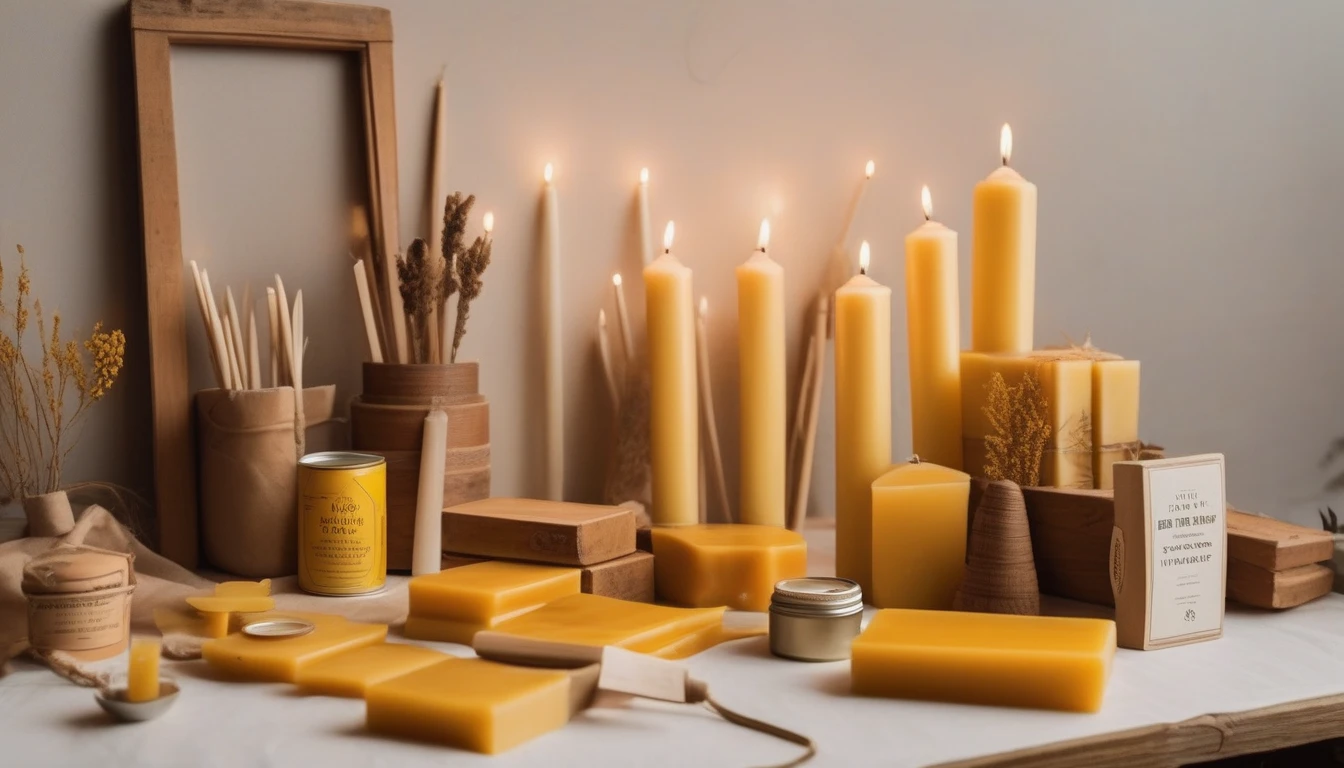
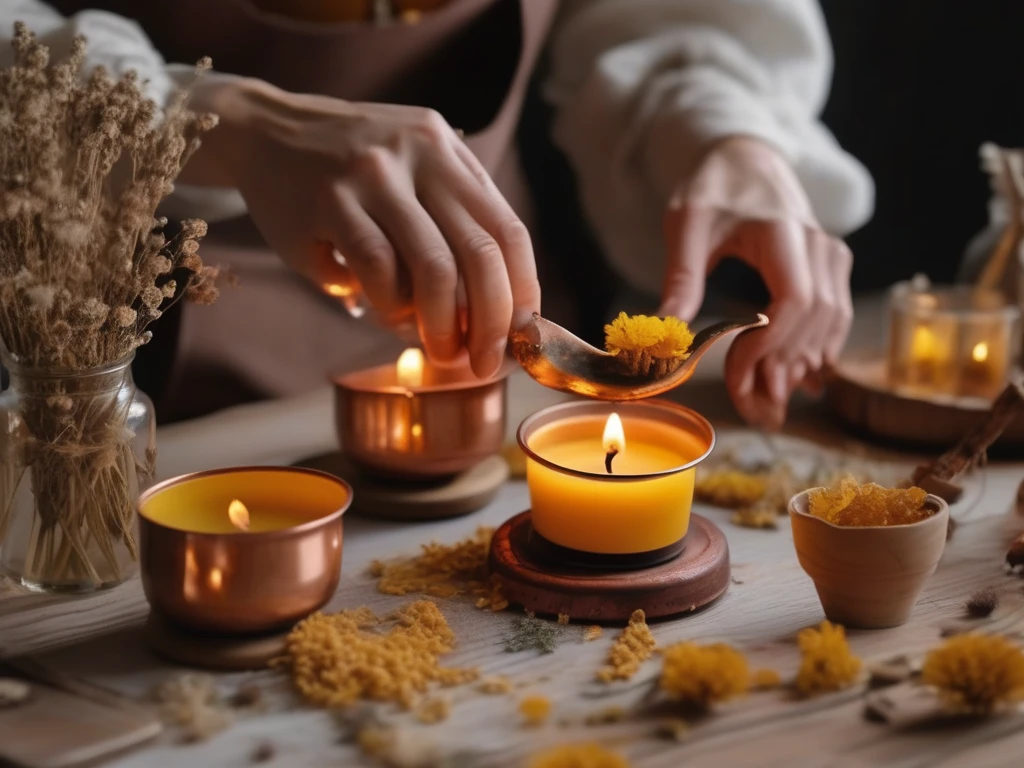
What Is Beeswax and How Do Bees Make It?
Beeswax is a natural wax produced by honeybees (Apis mellifera) from special glands on the underside of their abdomens. Worker bees between 12 and 18 days old secrete tiny, translucent wax scales from eight paired glands on abdominal segments 4 through 7. Each scale weighs just 1.1 milligrams, and it takes approximately 1,100 scales to produce a single gram of wax. The bees chew these scales with their mandibles, mixing them with salivary secretions and propolis to soften the wax before shaping it into the iconic hexagonal comb cells. The hexagonal structure is remarkably efficient — it uses the least amount of wax to create the maximum storage volume, a mathematical principle known as the honeycomb conjecture (proven by Thomas Hales in 1999). A typical colony produces 1 to 2 kilograms of beeswax per year, but to do so it must consume approximately 6 to 7 kilograms of honey — making beeswax an energy-intensive product requiring significant floral resources. The bees convert <Link to="/honey/wildflower-honey" className="text-honey-600 hover:text-honey-800 underline">wildflower honey</Link>, <Link to="/honey/clover-honey" className="text-honey-600 hover:text-honey-800 underline">clover honey</Link>, and other varieties into the complex fatty acid esters that form wax. Fresh beeswax is nearly white but yellows over time due to pollen oils, propolis residues, and larval cocoon staining from honey varieties like <Link to="/honey/buckwheat-honey" className="text-honey-600 hover:text-honey-800 underline">buckwheat honey</Link> which contains higher mineral content that affects wax coloration. Chemically, beeswax is a complex mixture of over 300 compounds, primarily esters (67%), hydrocarbons (14%), fatty acids (12%), and minor amounts of alcohols, diesters, and exogenous substances. Its melting point ranges from 62 to 65°C (144 to 149°F), and it is insoluble in water but soluble in warm oils and organic solvents. Humans have used beeswax for over 9,000 years — Neolithic pottery from Europe shows beeswax residues dating to 7000 BCE, making it one of humanity's oldest craft materials.
Key Takeaways
- Secreted by worker bees aged 12-18 days from 8 paired abdominal wax glands
- Each scale weighs 1.1 mg — approximately 1,100 scales make one gram of wax
- Hexagonal comb is the most efficient storage structure (minimum wax, maximum volume)
- A colony produces 1-2 kg of wax per year, consuming 6-7 kg of honey to do so
- Chemically: 300+ compounds — 67% esters, 14% hydrocarbons, 12% fatty acids
- Human use dates to 7000 BCE — one of the oldest craft materials known
What Are the Most Common Uses of Beeswax?
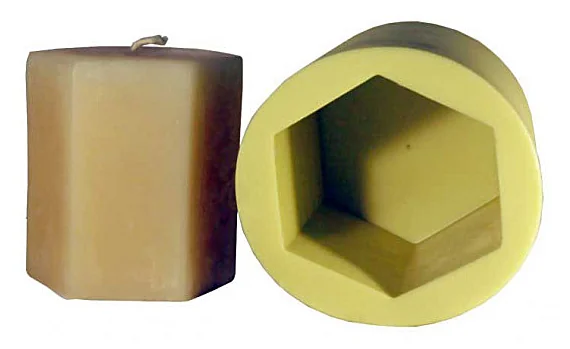
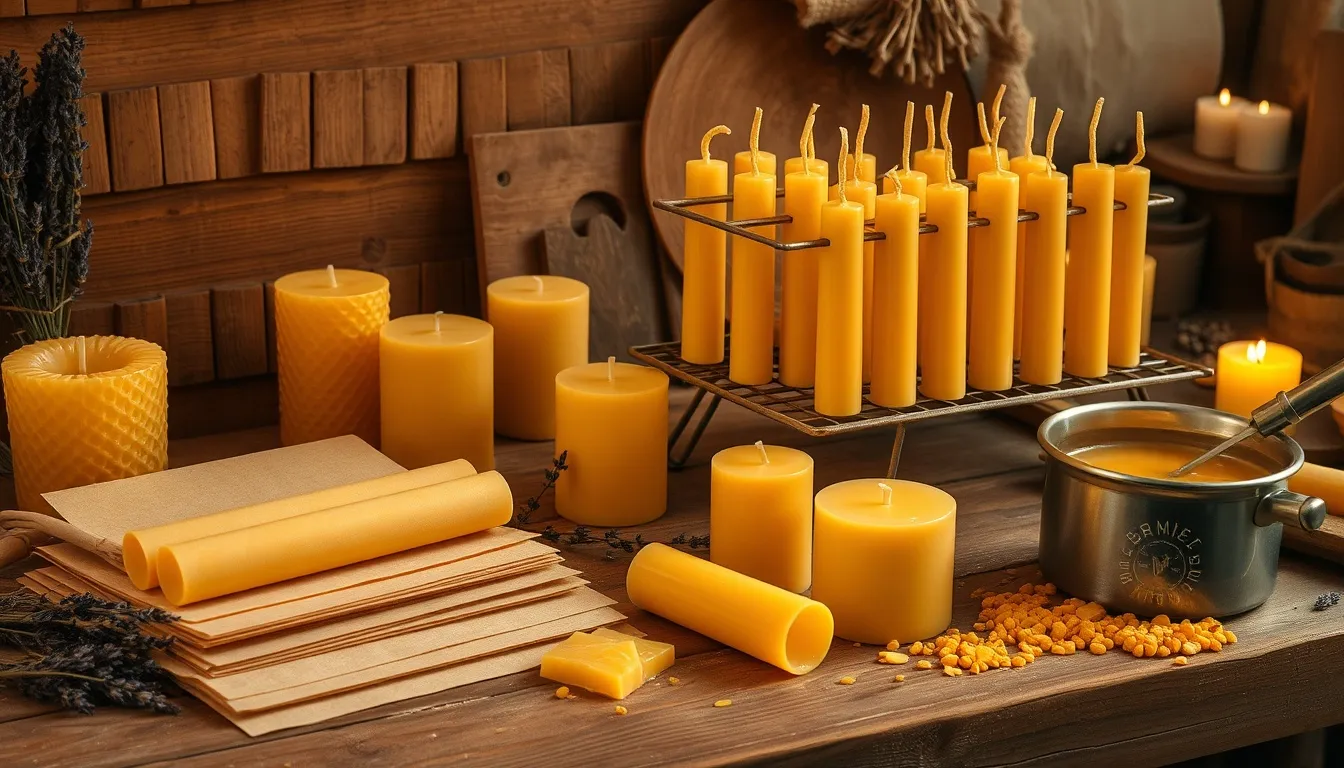
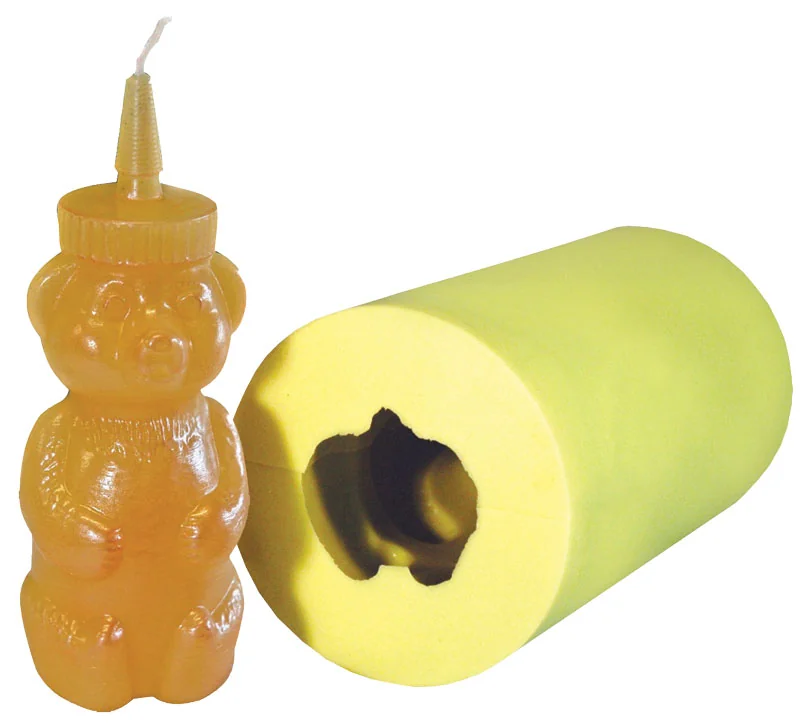
Beeswax has an extraordinarily wide range of practical applications, from traditional crafts to modern industry. Candle-making is perhaps the most iconic use — beeswax candles burn longer and cleaner than paraffin, producing a warm natural honey scent reminiscent of <Link to="/honey/orange-blossom-honey" className="text-honey-600 hover:text-honey-800 underline">orange blossom honey</Link> or <Link to="/honey/lavender-honey" className="text-honey-600 hover:text-honey-800 underline">lavender honey</Link> floral notes, dripping less, and emitting negative ions that may help purify indoor air by binding to dust and allergens. Unlike paraffin (a petroleum byproduct), beeswax candles release no toxic chemicals like toluene or benzene. In food, beeswax is classified as Generally Recognized as Safe (GRAS) by the FDA and carries the European food additive code E901. It is used as a coating on cheese (like Gouda and Edam), as a glazing agent on fruits and confections, and in chewing gum base. Beeswax food wraps have surged in popularity as a sustainable alternative to plastic wrap — the wax creates a breathable, antimicrobial seal that keeps food fresh, particularly when paired with natural preservative properties found in <Link to="/honey/manuka-honey" className="text-honey-600 hover:text-honey-800 underline">Manuka honey</Link> applications. When beekeepers harvest beeswax, it often retains traces of honey varieties like <Link to="/honey/acacia-honey" className="text-honey-600 hover:text-honey-800 underline">acacia honey</Link> or <Link to="/honey/clover-honey" className="text-honey-600 hover:text-honey-800 underline">clover honey</Link>, giving the wax subtle floral characteristics that enhance candle aromatics. In woodworking and furniture care, beeswax polish has been the gold standard for centuries, nourishing wood, repelling water, and creating a warm, natural luster. Traditional encaustic painting uses melted beeswax mixed with pigments — a technique dating to ancient Greece and Egypt, with surviving Fayum mummy portraits from 100-300 CE still vivid after nearly 2,000 years. Beeswax is also essential in lost-wax casting (investment casting), used since 3700 BCE to create bronze sculptures and precision metal parts, including modern dental crowns and turbine blades. Other applications include sewing (thread waxing), archery (bowstring wax), leatherworking, surfboard wax, and musical instrument care.
Key Takeaways
- Candles: burn longer and cleaner than paraffin, emit no toxic chemicals, produce natural honey scent
- Food: FDA GRAS status, used as cheese coating (E901), fruit glaze, chewing gum base, and eco food wraps
- Woodworking: centuries-old polish that nourishes, waterproofs, and adds warm luster to furniture
- Encaustic art: ancient painting technique with pigmented wax — Fayum portraits survive 2,000 years
- Lost-wax casting: used since 3700 BCE for bronze sculpture and modern precision metal parts
- Also used in sewing, archery, leatherwork, surfboards, and musical instrument care
What Are the Health and Skin Benefits of Beeswax?
Beeswax has been used medicinally since ancient Egypt, where it appeared in over 40% of medical recipes in the Ebers Papyrus (circa 1550 BCE). Modern research supports several health-related applications. As a skin protectant, beeswax forms a breathable barrier on the skin that locks in moisture without clogging pores. A 2003 study in Complementary Therapies in Medicine (Al Waili) found that a beeswax-honey-olive oil mixture significantly improved symptoms of eczema and psoriasis — 80% of eczema patients and 60% of psoriasis patients showed improvement in itching, scaling, and redness after 2 weeks of treatment. The German Commission E approved beeswax-based preparations for mild skin inflammation. For wound healing, beeswax provides an occlusive yet breathable layer that maintains optimal wound moisture — a 2012 study in the Journal of Wound Care found that beeswax-based dressings were comparable to commercial wound dressings for minor burns. Beeswax contains vitamin A (retinol precursors) at approximately 4,000 IU per 100g, which supports cell regeneration and skin repair. The antimicrobial properties come partly from traces of propolis retained in the wax — a 2005 study in the Journal of Applied Microbiology found that crude beeswax inhibited growth of Staphylococcus aureus and Candida albicans. Internally, beeswax has been investigated as a cholesterol-lowering agent. A small clinical study published in Nutrition Research found that long-chain wax alcohols (policosanol) extracted from beeswax lowered LDL cholesterol by 21-29% and raised HDL cholesterol by 8-15% at doses of 5-40 mg per day, though larger studies are needed for confirmation. Beeswax is non-toxic when ingested in small amounts (as in honey, honeycomb, or food coatings) and passes through the digestive tract largely undigested.
Key Takeaways
- Skin barrier: locks in moisture without clogging pores — ideal base for balms and salves
- Eczema/psoriasis: honey-beeswax-olive oil mix improved eczema in 80%, psoriasis in 60% of patients (Complement Ther Med 2003)
- Wound healing: occlusive yet breathable layer comparable to commercial wound dressings
- Contains ~4,000 IU vitamin A per 100g — supports cell regeneration and skin repair
- Antimicrobial: crude beeswax inhibits Staphylococcus aureus and Candida albicans growth
- Cholesterol: policosanol wax alcohols lowered LDL by 21-29% in preliminary clinical study
How Is Beeswax Used in Skincare and Cosmetics?
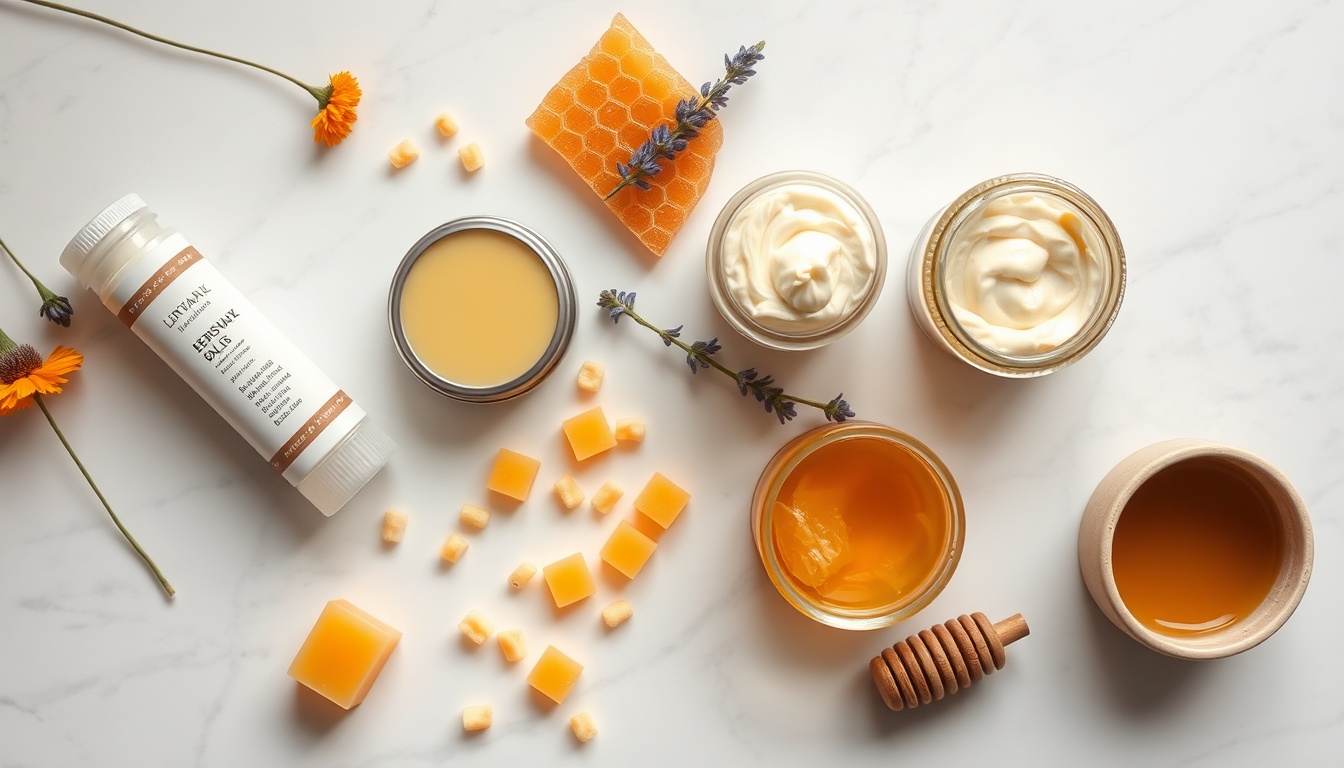
Beeswax is one of the most versatile ingredients in natural skincare and cosmetics, appearing in an estimated 30% of all natural personal care products. Its unique combination of emollient, humectant, and emulsifying properties makes it irreplaceable in many formulations. In lip balms, beeswax provides structure and a protective seal — it is the primary ingredient in most natural lip balms, including the iconic Burt's Bees formula that launched a billion-dollar brand. For moisturizers and body lotions, beeswax acts as both an emulsifier (binding oil and water phases together) and an occlusive agent that reduces transepidermal water loss (TEWL) by 40-60% — comparable to petroleum jelly but with a more breathable, non-greasy feel. In hand and body creams, the classic beeswax-oil-water emulsion formula dates to ancient Rome, where Galen of Pergamon created the first "cold cream" using beeswax, olive oil, water, and rose petals around 150 CE. Hair care products use beeswax for pomades, styling waxes, and beard balms — it provides flexible hold without the drying alcohol found in conventional gels. Beeswax is the foundation of traditional mustache wax and dreadlock maintenance wax. In soap making, small amounts of beeswax (1-3% of recipe) harden cold-process soap bars and improve their water resistance. For solid perfume, beeswax provides the base that holds fragrance oils in a portable, anhydrous format. DIY skincare enthusiasts commonly make beeswax salves by combining 1 part beeswax with 3-4 parts carrier oil (like jojoba, sweet almond, or coconut oil) and optional essential oils — the resulting balm is shelf-stable for 1-2 years without preservatives because beeswax is naturally antimicrobial and contains no water for microbial growth.
Key Takeaways
- Found in ~30% of natural personal care products as emollient, humectant, and emulsifier
- Lip balms: provides structure and protective seal — foundation of Burt's Bees and most natural brands
- Reduces transepidermal water loss by 40-60% — comparable to petroleum jelly but more breathable
- Cold cream formula dates to Galen of Pergamon (~150 CE) — beeswax, olive oil, water, rose petals
- Hair care: pomades, beard balms, styling wax — flexible hold without drying alcohol
- DIY salve: 1 part beeswax + 3-4 parts carrier oil — shelf-stable 1-2 years without preservatives
How Do You Buy and Identify Quality Beeswax?
Quality beeswax varies significantly by source, processing method, and purity — and adulteration is a real concern. Pure beeswax should have a pleasant honey aroma, a natural golden-yellow to dark brown color (depending on hive conditions and filtration), and snap cleanly when broken rather than crumbling. The most reliable indicator is the melting point: pure beeswax melts between 62 and 65°C (144-149°F). Common adulterants include paraffin wax (melting point 47-65°C), stearic acid, and tallow — a 2019 study in the Journal of Apicultural Research found adulteration in 15-30% of commercially sold beeswax samples, with paraffin being the most frequent contaminant. Beeswax is available in several forms: raw cappings wax (the purest grade, skimmed from honey frames during extraction), rendered blocks (melted and strained to remove debris), filtered (run through fine mesh for cleaner appearance), and pharmaceutical-grade white beeswax (bleached and triple-filtered, used in medical and cosmetic products). Yellow beeswax retains more of its natural propolis, pollen, and aromatic compounds than white beeswax. For cosmetic and food use, choose cosmetic-grade or pharmaceutical-grade beeswax that has been properly filtered to remove hive debris. For candle-making and crafts, standard filtered yellow beeswax works well. Prices range from $8-15/lb for standard filtered beeswax to $20-30/lb for organic or artisan cappings wax. Buying directly from local beekeepers is the best way to ensure purity — most small-scale beekeepers render their own wax as a byproduct of honey extraction and can verify its source. Beeswax stores indefinitely at room temperature in a cool, dark place — blocks recovered from ancient Egyptian tombs were still usable after thousands of years.
Key Takeaways
- Pure beeswax melts at 62-65°C (144-149°F) — test with a thermometer to check for paraffin adulteration
- 15-30% of commercial beeswax is adulterated (2019 Journal of Apicultural Research study)
- Grades: raw cappings (purest), rendered blocks, filtered, pharmaceutical-grade white (bleached)
- Yellow beeswax retains more natural propolis and aromatics than white beeswax
- Price range: $8-15/lb standard filtered, $20-30/lb organic or artisan cappings wax
- Stores indefinitely at room temperature — ancient Egyptian tomb beeswax was still usable
What Are the Safety Precautions for Using Beeswax?
Beeswax is generally very safe — it is non-toxic, hypoallergenic for most people, and approved for food, cosmetic, and pharmaceutical use worldwide. However, there are several precautions to consider. Allergic reactions are rare but possible, primarily in people with known allergies to bee products (honey, propolis, pollen, royal jelly). If you have a bee product allergy, do a patch test before applying beeswax to skin: apply a small amount to the inner wrist and wait 24 hours for any redness, itching, or swelling. The allergy is usually to propolis traces rather than the wax itself. Fire safety is important when working with beeswax — it has a flash point of approximately 204°C (400°F), which means it can ignite if overheated. Always melt beeswax using a double boiler (water bath method), never over direct flame or in a microwave. Beeswax spills are notoriously difficult to clean — use a clothes iron over brown paper to absorb wax from fabric, or freeze-and-scrape from hard surfaces. When making beeswax food wraps, do not use them with raw meat, fish, or hot food — the low melting point means wraps soften above 40°C and the antimicrobial protection is insufficient for raw proteins. For candle-making, ensure adequate ventilation even though beeswax burns much cleaner than paraffin. Ingesting small amounts of beeswax (as in honeycomb or food coatings) is safe — it passes through the digestive tract without being absorbed. Large quantities may have a mild laxative effect. Infants under 12 months should not consume honeycomb or raw beeswax due to the same botulism risk as raw honey — Clostridium botulinum spores may be present in any raw hive product. Sustainability note: harvesting beeswax does not harm the colony when done responsibly — bees rebuild comb readily, and most beeswax is a byproduct of honey extraction when cappings are removed from frames.
Key Takeaways
- Generally non-toxic and hypoallergenic — approved for food, cosmetic, and pharmaceutical use worldwide
- Rare allergies possible in people sensitive to bee products — do a 24-hour patch test before skin use
- Fire safety: flash point 204°C (400°F) — always use a double boiler, never direct flame or microwave
- Beeswax food wraps: avoid raw meat, fish, and hot food above 40°C (104°F)
- No honeycomb or raw beeswax for infants under 12 months — botulism spore risk
- Sustainably harvested as a byproduct of honey extraction — bees rebuild comb readily
Edited by Sam French · Raw Honey Guide Editorial Team
Source reviewed against primary literature and official guidance where available. Health content is educational, not medical advice, and does not replace a licensed clinician.
Get the Honey Buyer's Cheat Sheet (free PDF)
16 varieties on one page — color, flavor, best use and what a fair price looks like — from the 268 honeys we track.
Related Guides
Honeycomb Guide
How to eat honeycomb, benefits, and where to buy.
Read GuideBee Pollen Benefits
Nutrition, dosage, and evidence-based health benefits.
Read GuidePropolis Benefits
Antimicrobial properties, immune support, and dosage guide.
Read GuideRelated Articles
Beeswax Benefits: 8 Science-Backed Uses for Skin, Health, and Home
Beeswax benefits: skin barrier protection, wound healing, lip care, and household uses. How it compares to other bee products.
Read ArticleEating Honeycomb: Benefits, Taste, Safety, and How to Enjoy It
Yes, you can eat honeycomb — and it's packed with enzymes, propolis, and beeswax. Taste, benefits, 10 ways to enjoy it.
Read ArticleHoney for Lips: DIY Scrubs, Masks, and Healing Treatments
Honey for chapped lips: 5 DIY lip scrubs, overnight masks, and healing treatments. Best types and when to see a doctor.
Read ArticleRelated Honey Guides
Frequently Asked Questions
What is beeswax made of and how do bees produce it?
Beeswax is a natural wax secreted by worker honeybees aged 12-18 days from eight paired glands on their abdomens. Each wax scale weighs just 1.1 mg, and it takes about 1,100 scales to make one gram. Chemically, it contains 300+ compounds: primarily esters (67%), hydrocarbons (14%), and fatty acids (12%). A colony produces 1-2 kg per year, consuming 6-7 kg of honey — whether <Link to="/honey/wildflower-honey" className="text-honey-600 hover:text-honey-800 underline">wildflower honey</Link>, <Link to="/honey/clover-honey" className="text-honey-600 hover:text-honey-800 underline">clover honey</Link>, or other varieties — to fuel wax production.
Is beeswax good for your skin?
Yes. Beeswax forms a breathable barrier that locks in moisture without clogging pores, reducing transepidermal water loss by 40-60%. A 2003 study in Complementary Therapies in Medicine (Al Waili) found that a beeswax-honey-olive oil mixture improved eczema in 80% and psoriasis in 60% of patients within 2 weeks. It contains approximately 4,000 IU of vitamin A per 100g, supporting cell regeneration and skin repair.
What are the main uses of beeswax?
Beeswax is used for candle-making (burns cleaner and longer than paraffin), skincare (lip balms, moisturizers, salves), food preservation (cheese coating, eco food wraps, GRAS-certified in the US and designated E901 in the EU), woodworking (furniture polish), encaustic art, lost-wax casting, hair care (pomades, beard balms), sewing, and leather conditioning. It appears in approximately 30% of all natural personal care products.
Is beeswax safe to eat?
Yes, beeswax is classified as Generally Recognized as Safe (GRAS) by the FDA and carries European food additive code E901. Small amounts consumed in honeycomb or food coatings pass through the digestive tract undigested. Large quantities may have a mild laxative effect. However, do not give raw beeswax or honeycomb to infants under 12 months due to botulism risk.
How can you tell if beeswax is pure?
Pure beeswax melts between 62-65°C (144-149°F) — paraffin-adulterated wax melts at lower temperatures. It should have a pleasant honey aroma reflecting the floral sources (subtle <Link to="/honey/orange-blossom-honey" className="text-honey-600 hover:text-honey-800 underline">orange blossom</Link> citrus notes or <Link to="/honey/wildflower-honey" className="text-honey-600 hover:text-honey-800 underline">wildflower</Link> complexity), natural golden-yellow color, and snap cleanly when broken. Beeswax from colonies producing <Link to="/honey/buckwheat-honey" className="text-honey-600 hover:text-honey-800 underline">buckwheat honey</Link> tends to be darker due to higher mineral content. A 2019 study found 15-30% of commercial beeswax is adulterated with paraffin. Buying from local beekeepers is the most reliable way to ensure purity.
How do you make a beeswax salve at home?
Combine 1 part beeswax with 3-4 parts carrier oil (jojoba, sweet almond, or coconut oil) in a double boiler. Melt slowly at low heat, stir to combine, and optionally add essential oils once slightly cooled. Pour into tins or jars. The resulting salve is shelf-stable for 1-2 years without preservatives because beeswax is naturally antimicrobial and contains no water for microbial growth.
Want to explore more bee products and honey varieties?