Honeycomb: The Complete Guide
Honeycomb is the purest way to experience honey — raw, unfiltered, and sealed in the very beeswax cells where bees stored it. Learn how to eat it, its unique health benefits, how it's harvested, and where to find the best quality comb.
Last updated:
Yes, you can eat honeycomb — it's entirely edible and has been eaten for thousands of years. Bite into it to burst the thin beeswax cells and release raw, unfiltered honey. The wax is safe to swallow (it's insoluble fiber) or spit out. Honeycomb offers unique benefits: beeswax may lower cholesterol, and the honey retains all its enzymes, pollen, and propolis. Store at room temperature in an airtight container — never refrigerate. Quality honeycomb costs $15-30/lb from local beekeepers or specialty stores.
What Is Honeycomb and How Is It Made?
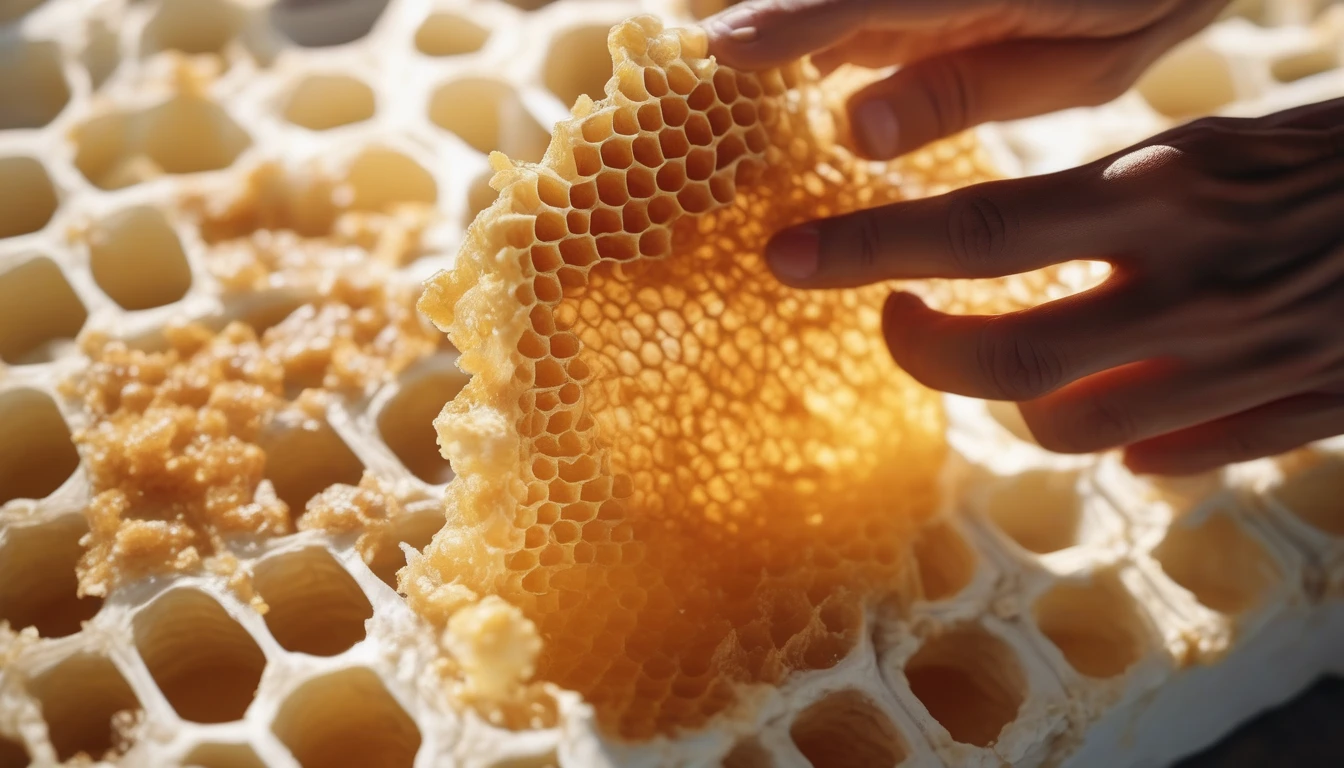
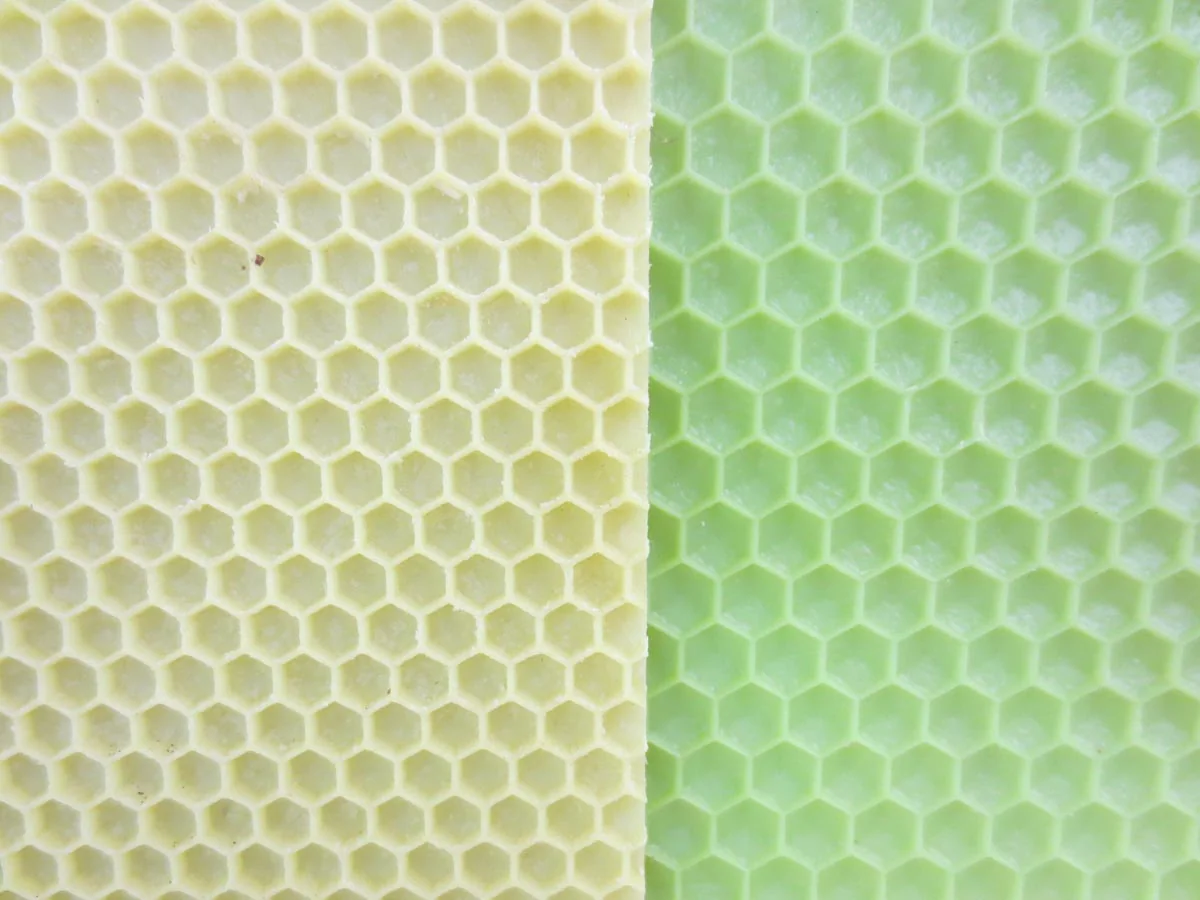
Honeycomb is the waxy structure that honey bees build inside their hives to store honey, pollen, and raise their young. It consists of thousands of perfectly hexagonal cells made from beeswax, a substance secreted by special glands on the underside of worker bees' abdomens. Young worker bees (aged 12-18 days) produce tiny flakes of wax, which they chew and mold into the iconic hexagonal cells using their mandibles. The hexagonal shape is not random — it is the most structurally efficient geometry in nature, providing maximum storage capacity with minimum material. Each cell wall is only about 0.05mm thick, yet the structure can support 30 times its own weight when filled with honey. A single pound of beeswax requires bees to consume approximately 6-7 pounds of honey to produce, making honeycomb an incredibly energy-intensive product. The cells are tilted slightly upward (about 13 degrees) to prevent honey from flowing out before it is capped. Once bees fill a cell with ripened honey (reduced to below 18% moisture content by fanning their wings), they seal it with a thin cap of fresh white beeswax. This capping process is what gives cut honeycomb its characteristic appearance — a flat surface of white or pale yellow wax covering golden honey beneath.
Key Takeaways
- Honeycomb is made from beeswax secreted by worker bees aged 12-18 days
- The hexagonal shape maximizes storage space while minimizing wax usage
- Each cell wall is only 0.05mm thick but supports 30x its weight when filled
- Bees consume 6-7 pounds of honey to produce just 1 pound of beeswax
- Cells are tilted 13 degrees upward to keep honey from flowing out
- White wax cappings seal cells once honey reaches below 18% moisture
Can You Eat Honeycomb? How Does It Taste?
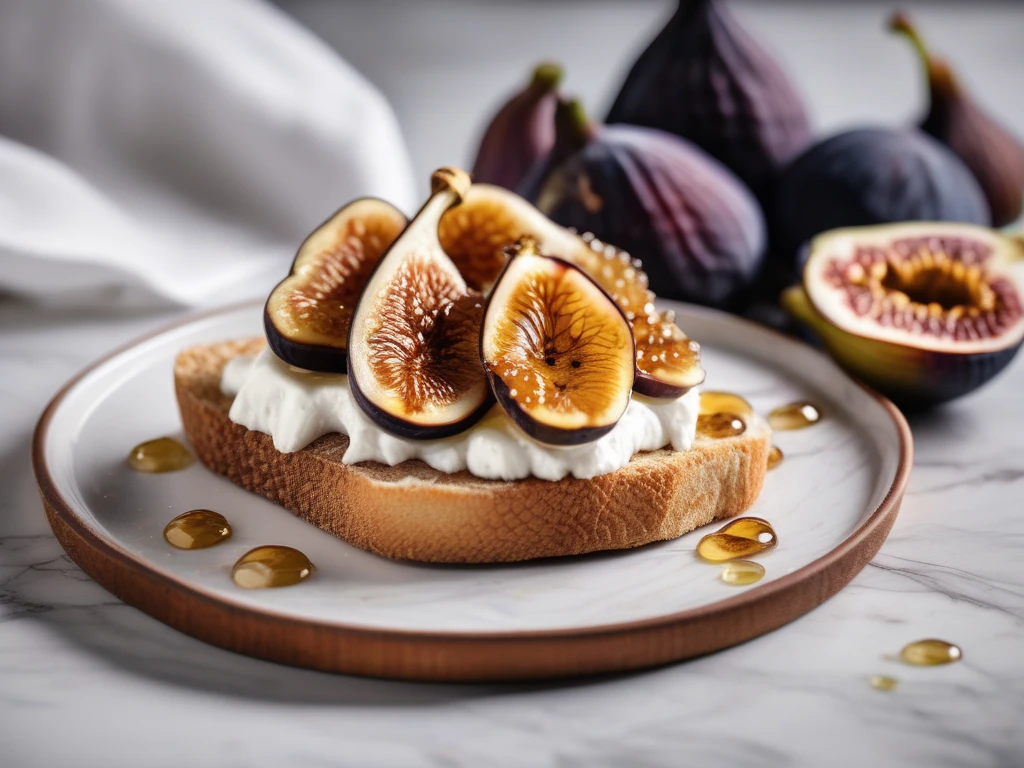
Yes, honeycomb is entirely edible and has been eaten by humans for thousands of years — long before anyone figured out how to extract liquid honey. When you bite into a piece of honeycomb, the thin wax cells burst open and release a flood of raw, unfiltered honey that is fresher and more flavorful than anything you can buy in a jar. The beeswax itself is flavorless and has a pleasant, slightly chewy texture similar to natural chewing gum. Most people chew the wax to extract all the honey, then either swallow the wax (which is safe and passes through the digestive system as insoluble fiber) or discard it. The honey inside honeycomb is in its most pristine, unprocessed form — it has never been heated, filtered, or exposed to air. This means it retains all of its natural pollen, propolis traces, enzymes (like glucose oxidase and diastase), and aromatic compounds that give each honey its unique character. Many honey connoisseurs consider honeycomb the purest way to experience a honey's terroir — the specific combination of floral sources, geography, soil, and climate that define its flavor. The taste varies dramatically by season and floral source: spring wildflower honeycomb is light and floral, summer clover honeycomb is mild and sweet, fall goldenrod honeycomb is bold and spicy, and buckwheat honeycomb is intensely dark and malty. Honeycomb pairs beautifully with cheese boards, charcuterie, fresh bread, yogurt, oatmeal, salads, and even grilled meats.
Key Takeaways
- Honeycomb is 100% edible — humans have eaten it for thousands of years
- Beeswax is tasteless with a pleasant chewy texture, safe to swallow as fiber
- Honey inside honeycomb is completely raw, unfiltered, and never exposed to air
- Retains all natural pollen, propolis, enzymes, and aromatic compounds
- Flavor varies by floral source: light and floral to dark, bold, and malty
- Pairs well with cheese, charcuterie, bread, yogurt, oatmeal, and salads
What Are the Health Benefits of Eating Honeycomb?
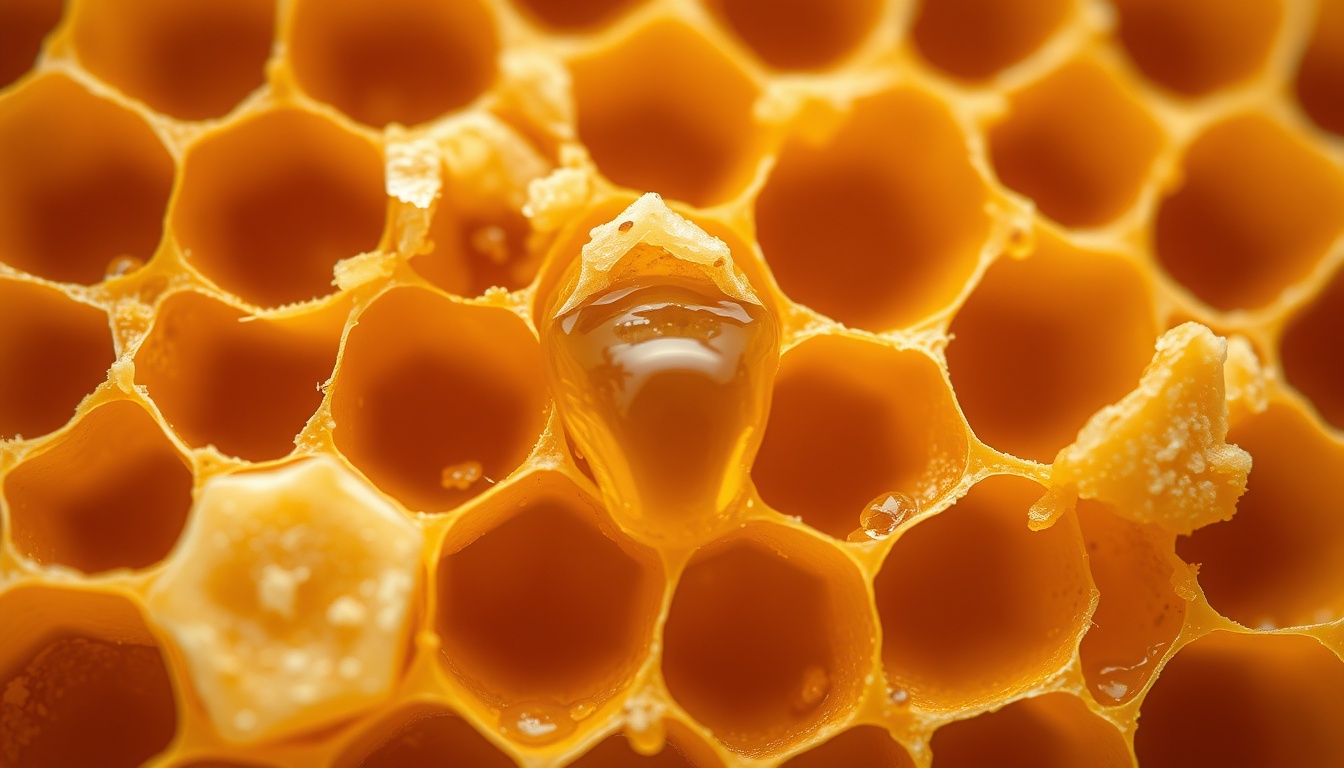
Eating honeycomb provides several health benefits beyond those of regular liquid honey, largely because it delivers raw honey along with beeswax, propolis, and trace amounts of bee pollen in their natural matrix. The beeswax itself contains long-chain fatty acids and alcohols that research suggests may help lower LDL ("bad") cholesterol levels. A study published in the Korean Journal of Internal Medicine found that beeswax alcohols reduced LDL cholesterol by 21-29% and raised HDL ("good") cholesterol in participants over 12 weeks. The raw honey in honeycomb retains glucose oxidase, the enzyme that produces hydrogen peroxide — giving it natural antibacterial properties that pasteurized honey lacks. Propolis, the resinous substance bees use to seal cracks in the hive, is present in small amounts in honeycomb and has been studied extensively for its anti-inflammatory, antimicrobial, and antioxidant effects. Chewing honeycomb has a long folk tradition as a remedy for seasonal allergies, since the wax and honey contain trace amounts of local pollen that may help desensitize the immune system through gradual exposure — though clinical evidence for this remains limited. Some people chew honeycomb to soothe sore throats, as the combination of raw honey's antimicrobial properties and the physical coating action of beeswax can provide relief. Honeycomb also contains small amounts of royal jelly in cells that were used for brood rearing, which contains B vitamins, amino acids, and acetylcholine. Because honeycomb honey has never been heated, it retains heat-sensitive nutrients like vitamin C, B vitamins, and the full spectrum of antioxidant phenolic compounds.
Key Takeaways
- Beeswax alcohols may lower LDL cholesterol by 21-29% (Korean Journal of Internal Medicine)
- Raw honey in honeycomb retains glucose oxidase for natural antibacterial activity
- Contains propolis with anti-inflammatory, antimicrobial, and antioxidant properties
- Trace pollen in honeycomb may support gradual immune desensitization for allergies
- Chewing honeycomb can coat and soothe a sore throat naturally
- Heat-sensitive vitamins (C, B complex) and antioxidants are fully preserved
How Is Honeycomb Harvested?
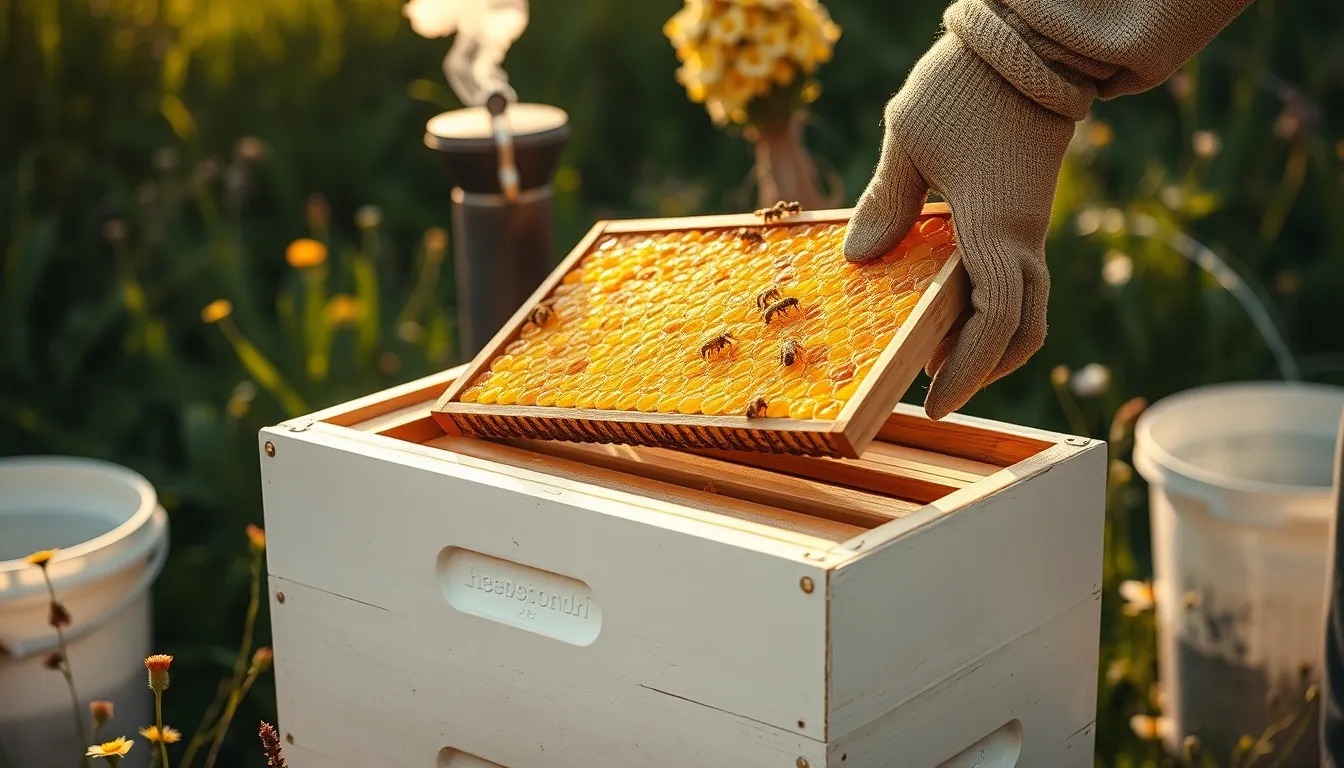
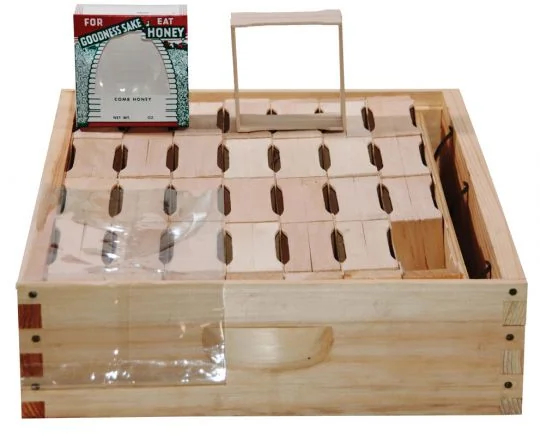
Honeycomb harvesting is a careful process that balances maximizing the beekeeper's yield with ensuring the colony retains enough honey to survive. Beekeepers typically harvest honeycomb from "supers" — the upper boxes of a hive specifically designated for surplus honey storage, as opposed to the lower "brood boxes" where the queen lays eggs and bees raise their young. The brood boxes are never harvested. Before removing frames, beekeepers must clear the bees — common methods include using a bee escape board (a one-way valve that lets bees leave the super but not return), a fume board with a bee-repellent substance, or gently brushing bees off each frame. Once frames are removed, the beekeeper has two choices: extract the honey by uncapping the cells and spinning frames in a centrifugal extractor (which preserves the drawn comb for bees to refill), or cut the entire comb from the frame to sell as cut comb or chunk honey. Cut comb commands a premium price because bees must rebuild the wax structure from scratch, reducing future honey production. For cut comb, beekeepers use thin surplus foundation or foundationless frames that produce delicate, fully edible comb without embedded wire. The comb is cut into uniform pieces using a sharp knife or comb cutter, drained briefly, and packaged in clear containers. Ross Round and Hogg Halfcomb systems are specialized section comb systems where bees build comb directly in retail-ready round or half-round containers, eliminating the cutting step entirely. Timing is crucial: honeycomb should only be harvested when at least 80% of cells are capped, indicating the honey is properly ripened below 18% moisture.
Key Takeaways
- Honeycomb is harvested from "supers" (upper boxes) — brood boxes are never touched
- Bees are cleared using escape boards, fume boards, or gentle brushing
- Cut comb is premium-priced because bees must rebuild wax from scratch
- Foundationless or thin-foundation frames produce the most edible, delicate comb
- Ross Round and Hogg Halfcomb systems let bees build comb in retail-ready containers
- Only harvest when 80%+ of cells are capped (honey at <18% moisture)
Where to Buy Honeycomb and What to Look For
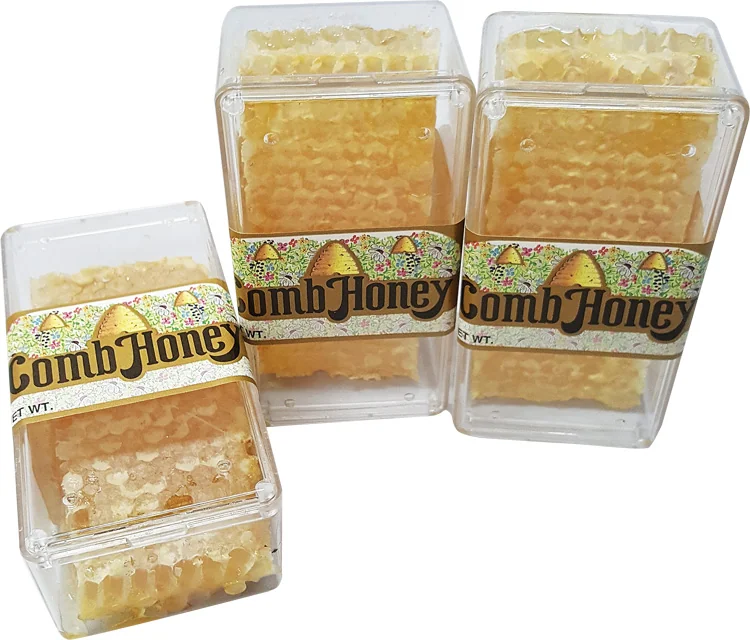
The best places to buy honeycomb are directly from local beekeepers at farmers markets, farm stands, and apiaries, where you can ask about the floral sources, harvest date, and beekeeping practices. Local honeycomb offers the freshest product and the most transparency about sourcing. Many beekeepers also sell online through their own websites or platforms like Local Hive, Etsy, and specialty food marketplaces. Health food stores like Whole Foods, Sprouts, and natural food co-ops commonly carry honeycomb, often from regional producers. When shopping for honeycomb, look for these quality indicators: the wax cappings should be intact and uniformly sealed (broken cappings mean the honey has been exposed to air and may have begun to ferment or lose freshness); the comb should feel heavy for its size, indicating cells are fully filled; the color of the wax caps can range from nearly white (new wax) to golden yellow (older wax) — both are fine, but dark brown or black comb is from the brood area and should not be sold for eating. The honey should not be leaking excessively from the comb. Avoid honeycomb that looks dry, has large empty areas, or shows signs of crystallization within the cells (fine for regular honey, but in comb it suggests the product is old or was stored improperly). Price is also an indicator: genuine, high-quality honeycomb typically costs $15-30 per pound because of the significant labor involved and the fact that bees must consume 6-7 pounds of honey to produce the wax. If you find "honeycomb" priced dramatically lower, it may be synthetic wax filled with commercial honey — a growing fraud concern in the honey industry.
Key Takeaways
- Farmers markets and local apiaries offer the freshest honeycomb with full transparency
- Look for intact wax cappings — broken caps mean honey has been exposed to air
- Comb should feel heavy for its size with no excessive honey leaking
- Avoid dark brown/black comb (from brood area) — not suitable for eating
- Genuine honeycomb costs $15-30 per pound; very cheap "honeycomb" may be synthetic
- Check for crystallization inside cells — a sign of old or improperly stored product
How to Store Honeycomb and How Long Does It Last?
Honeycomb should be stored at room temperature (65-75°F / 18-24°C) in an airtight container, away from direct sunlight and heat sources. Unlike liquid honey, honeycomb has additional storage considerations because the beeswax structure can be affected by temperature extremes. In very warm conditions (above 85°F / 29°C), the wax softens and the comb can sag, deform, or even collapse, causing honey to leak out. In very cold conditions or refrigeration, the honey inside the cells will crystallize faster than it would in a jar because the thin wax cells provide minimal insulation — and crystallized honey expanding slightly within the rigid cells can crack the cappings. For this reason, most beekeepers and honey experts recommend against refrigerating honeycomb. Stored properly at room temperature, honeycomb will keep indefinitely — raw honey is naturally antimicrobial due to its low water activity, acidic pH (3.2-4.5), and hydrogen peroxide production from glucose oxidase. The beeswax cappings actually provide an additional protective seal that keeps the honey in an anaerobic (oxygen-free) environment, arguably making comb honey even more shelf-stable than extracted liquid honey. However, there are two practical concerns for long-term storage: wax moths and crystallization. Wax moth larvae can infest stored comb, especially in warm climates — if you need to store honeycomb long-term and live in a warm area, freezing for 48 hours will kill any eggs, after which the comb can be returned to room temperature. Crystallization will eventually occur (in months to years depending on the honey type), turning the honey inside the cells grainy. This is cosmetically unappealing but the comb remains perfectly safe to eat.
Key Takeaways
- Store at room temperature (65-75°F) in an airtight container away from sunlight
- Do not refrigerate — cold causes faster crystallization and can crack wax cappings
- Avoid temperatures above 85°F — wax softens and comb can sag or collapse
- Properly stored honeycomb keeps indefinitely due to honey's antimicrobial properties
- Wax cappings create an airtight seal, making comb honey extremely shelf-stable
- Freeze for 48 hours to kill potential wax moth eggs before long-term storage
Frequently Asked Questions
Can you eat honeycomb?
Yes, honeycomb is entirely edible. The beeswax cells have a pleasant chewy texture and are safe to swallow — the wax passes through your digestive system as insoluble fiber. The honey inside is raw, unfiltered, and never exposed to air, making it the purest form of honey you can consume. People have eaten honeycomb for thousands of years.
What does honeycomb taste like?
Honeycomb tastes like the freshest, most flavorful version of whatever honey is inside it. When you bite in, the thin wax cells burst and release raw honey with all its aromatic compounds intact. The wax itself is essentially flavorless with a slightly chewy, gum-like texture. Flavor varies by floral source — from light and floral (wildflower) to bold and malty (buckwheat).
Is honeycomb good for you?
Honeycomb offers several health benefits. The beeswax contains long-chain fatty acids that may lower LDL cholesterol. The raw honey retains all enzymes, antioxidants, and heat-sensitive vitamins. It also contains trace amounts of propolis (anti-inflammatory and antimicrobial) and bee pollen. Chewing honeycomb has been traditionally used for sore throat relief and seasonal allergy support.
How much does honeycomb cost?
Quality honeycomb typically costs $15-30 per pound. The premium price reflects the fact that bees must consume 6-7 pounds of honey to produce 1 pound of beeswax, and the beekeeper sacrifices reusable drawn comb when selling cut comb. Very cheap honeycomb may be synthetic wax filled with commercial honey — a growing concern in the honey industry.
How do you store honeycomb?
Store honeycomb at room temperature (65-75°F) in an airtight container away from sunlight. Do not refrigerate — cold causes faster crystallization and can crack the wax cappings. Avoid heat above 85°F, which softens wax and causes the comb to sag. Properly stored, honeycomb keeps indefinitely. Freeze for 48 hours before long-term storage to kill potential wax moth eggs.
How is honeycomb harvested?
Beekeepers harvest honeycomb from "supers" — the upper hive boxes designated for surplus honey. Bees are cleared using escape boards or gentle brushing. For cut comb, beekeepers use foundationless frames and cut the comb into uniform pieces. It should only be harvested when 80% or more of cells are capped, indicating the honey is properly ripened below 18% moisture content.
Edited by Sam French · Raw Honey Guide Editorial Team
Source reviewed against primary literature and official guidance where available. Health content is educational, not medical advice, and does not replace a licensed clinician.
Get the Honey Buyer's Cheat Sheet (free PDF)
16 varieties on one page — color, flavor, best use and what a fair price looks like — from the 268 honeys we track.
Related Guides
Beeswax Uses & Benefits
Skincare, candle making, food applications, DIY recipes, and buying guide.
Read GuideBeekeeping Basics
Start your beekeeping journey.
Read GuideHow Bees Make Honey
The journey from flower to jar.
Read GuideRelated Articles
Eating Honeycomb: Benefits, Taste, Safety, and How to Enjoy It
Yes, you can eat honeycomb — and it's packed with enzymes, propolis, and beeswax. Taste, benefits, 10 ways to enjoy it.
Read ArticleBeeswax Benefits: 8 Science-Backed Uses for Skin, Health, and Home
Beeswax benefits: skin barrier protection, wound healing, lip care, and household uses. How it compares to other bee products.
Read ArticleHow Bees Make Honey: The Complete Process from Flower to Jar
The complete process of how bees make honey — from flower to jar. Foraging, enzymatic processing, evaporation, capping, and how beekeepers harvest.
Read ArticleReady to try honeycomb or explore honey varieties?