Why Honey Works So Well for Lips
Lip skin is fundamentally different from the rest of your face. It has no sebaceous (oil) glands, no sweat glands, and only 3-5 cell layers versus 15-16 on the rest of your body. This makes lips uniquely vulnerable to dehydration, cracking, and environmental damage — and uniquely responsive to honey's specific properties.
Honey is one of the most effective natural lip treatments because its benefits align precisely with what lip skin needs. As a natural humectant, honey draws moisture from the air into the thin lip tissue. Its osmotic properties create a protective barrier that locks in hydration while allowing the skin to breathe. And unlike petroleum-based products that merely seal the surface, honey actively nourishes the tissue beneath.
The combination of anti-inflammatory polyphenols, natural sugars for gentle exfoliation, antibacterial hydrogen peroxide activity, and pH-matched acidity (3.2-4.5, close to skin's natural 4.5-5.5) makes honey uniquely suited for lip care. This isn't just folk wisdom — the same properties that make honey effective for wound healing and skin conditions apply directly to lip repair.
What Honey Does for Common Lip Problems
Honey addresses several distinct lip issues through different mechanisms.
- Chapped lips — Honey's humectant action (fructose, glucose, and amino acids drawing water into tissue) rehydrates desiccated lip cells. Its natural sugars provide gentle osmotic hydration that penetrates deeper than surface-level lip balms. A 2012 study in Evidence-Based Complementary and Alternative Medicine confirmed honey's superior moisture retention compared to other natural humectants.
- Cracked and bleeding lips — Honey's wound healing properties apply directly here. It creates a moist healing environment, provides antibacterial protection against infection of micro-fissures, and stimulates tissue repair. Medical-grade honey is used in hospitals for far worse wounds than cracked lips.
- Sun-damaged lips — UV exposure damages lip tissue (the lower lip receives disproportionate sun exposure). Honey's antioxidant polyphenols — chrysin, quercetin, gallic acid — neutralize UV-generated free radicals and reduce inflammation. While not a substitute for SPF lip balm, honey helps repair existing sun damage.
- Angular cheilitis (cracked lip corners) — This common condition is often caused by fungal or bacterial infection exacerbated by moisture pooling. Honey's broad-spectrum antimicrobial activity (effective against Candida and Staphylococcus species) can help, though persistent angular cheilitis requires medical evaluation as it may indicate nutritional deficiency.
- Dull, rough lip texture — Honey's natural gluconic acid provides mild chemical exfoliation, dissolving dead skin cells without the harshness of physical scrubs alone. Combined with the sugar crystals in raw honey for gentle mechanical exfoliation, this dual action reveals smoother, healthier lip tissue underneath.
Get the Honey Buyer's Cheat Sheet (free PDF)
16 varieties on one page — color, flavor, best use and what a fair price looks like — from the 268 honeys we track.
Best Honey Types for Lip Care
The honey you choose matters for lip applications, both for effectiveness and taste.
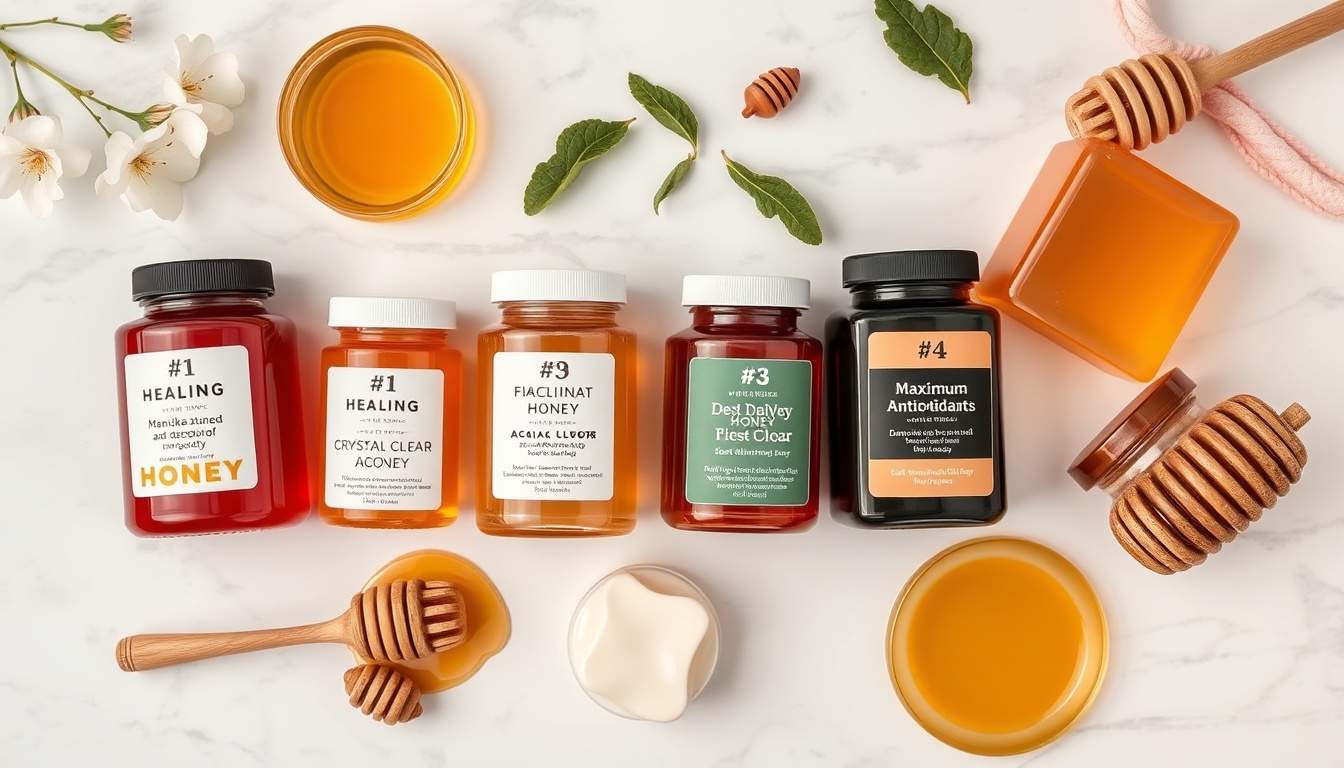
- Raw Manuka honey (UMF 10+) — The gold standard for lip healing. Highest antibacterial activity (methylglyoxal), superior anti-inflammatory properties, and a thick consistency that stays on lips. Mild, slightly medicinal flavor. Best for cracked or damaged lips that need repair.
- Raw acacia honey — Very light, mild, and pleasant-tasting. Least likely to cause irritation on sensitive lip tissue. Lower antioxidant content than dark honeys but excellent humectant properties. Best for daily lip maintenance and for those new to honey lip care.
- Raw clover honey — Widely available, affordable, mild flavor, good all-around lip treatment. Solid antioxidant profile with pleasant taste. Best everyday option.
- Raw buckwheat honey — Highest antioxidant content but very strong, malty flavor that not everyone enjoys on their lips. Best mixed with other ingredients in scrubs and masks rather than applied straight.
- Avoid: pasteurized commercial honey (heat-treated, reduced enzyme activity), honey with added sugars or corn syrup, flavored honeys with artificial ingredients, and any honey you haven't confirmed you're not allergic to.
5 DIY Honey Lip Treatments
These recipes range from quick daily treatments to intensive overnight repair.
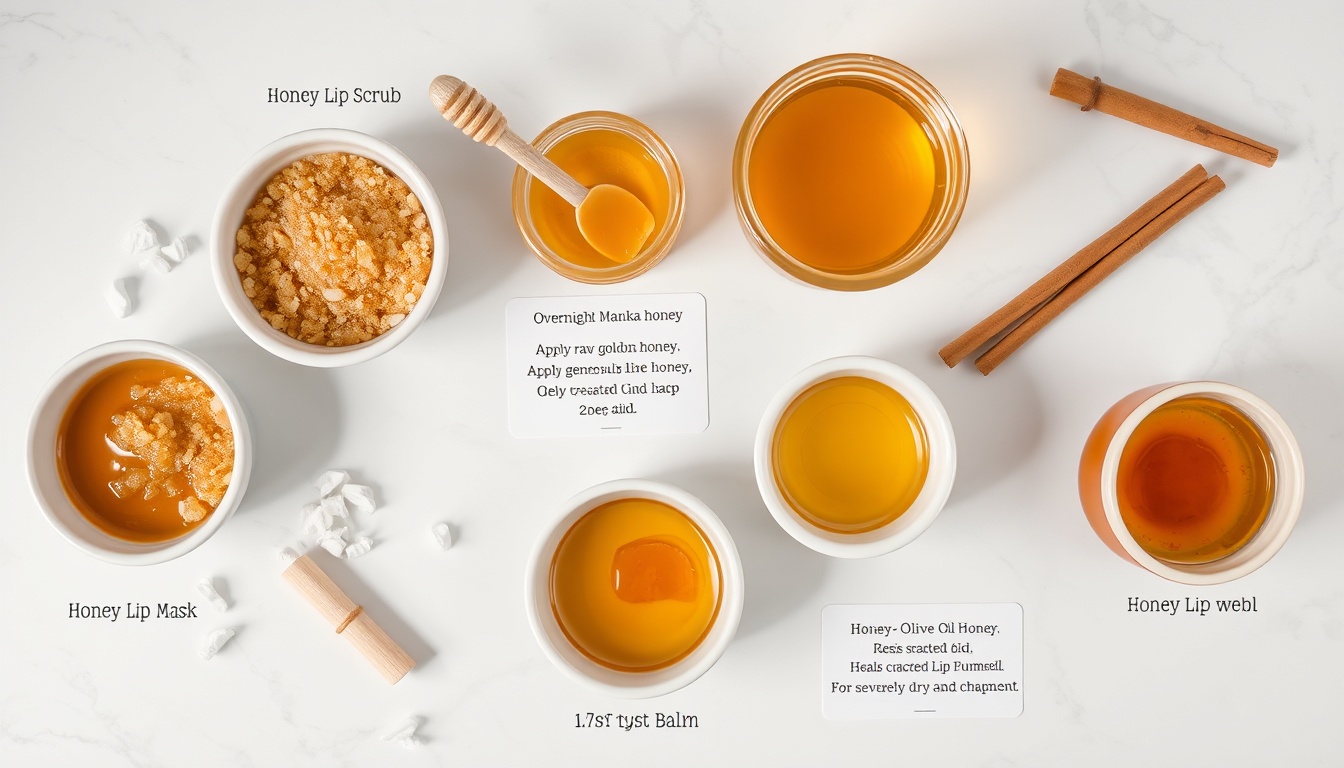
1. Classic Honey Lip Scrub
Best for: rough, flaky lips that need exfoliation.
Mix 1 teaspoon raw honey with 1 teaspoon fine granulated sugar (white or brown) and 1/2 teaspoon coconut oil. Gently massage onto lips in small circular motions for 30-60 seconds. The sugar provides mechanical exfoliation while honey provides chemical exfoliation via gluconic acid, and coconut oil adds emollient protection.
Rinse with warm water and immediately apply lip balm to seal in moisture. Use 2-3 times per week — over-exfoliating thin lip skin can cause irritation and worsen dryness.
Pro Tip
For extra-sensitive lips, replace sugar with finely ground oats. Oats provide gentler physical exfoliation and add anti-inflammatory avenanthramides that soothe irritated lip tissue.
2. Overnight Honey Lip Mask
Best for: severely dry, cracked, or winter-damaged lips.
Apply a thick layer of raw Manuka honey to clean, dry lips before bed. The honey will partially absorb overnight, providing sustained humectant hydration for 6-8 hours — far longer than any lip balm. The antibacterial properties also protect micro-cracks from infection while you sleep.
Practical tip: honey will transfer to your pillow. Either use a pillowcase you don't mind staining, place a towel over your pillow, or apply a thin strip of medical tape over the honey layer to keep it in place (remove gently in the morning). Some people find sleeping on their back the first hour helps the honey set.
Use this treatment nightly during cold, dry weather or 2-3 times per week for maintenance. You'll notice visibly softer, more hydrated lips by morning.
3. Honey and Olive Oil Healing Balm
Best for: cracked lip corners, peeling lips, post-cold-sore repair.
Mix 1 teaspoon raw honey with 1/2 teaspoon extra virgin olive oil and (optional) 1 drop of vitamin E oil. Olive oil provides oleic acid and squalene — lipids that reinforce the skin's moisture barrier. Honey and olive oil have been studied together for skin healing, with a 2003 European Journal of Medical Research study showing their combination reduces inflammation and promotes tissue repair.
Apply a thin layer to affected areas and leave on for at least 30 minutes (or overnight for severe cracking). This moisturizing combination addresses dryness at the corners of the mouth, though persistent cracking there (angular cheilitis) is often driven by a fungal or bacterial component and is best evaluated by a healthcare provider if it does not improve.
4. Honey and Cinnamon Lip Plumper
Best for: enhancing lip color and temporary plumping.
Mix 1 teaspoon raw honey with a tiny pinch of ground cinnamon (start with less than 1/8 teaspoon). Cinnamon's cinnamaldehyde causes mild vasodilation — increased blood flow to the lips — creating a subtle, temporary plumping and reddening effect. Honey provides the humectant base that adds genuine hydration to the cosmetic effect.
Apply for 5-10 minutes maximum, then rinse. Cinnamon can cause irritation if left on too long or used in excess — always do a small patch test first. Discontinue if you feel burning rather than mild tingling. Do not use this treatment on cracked or broken lip skin.
Pro Tip
This is a cosmetic treatment, not a therapeutic one. The plumping effect is temporary (30-60 minutes) and comes from mild irritation-induced blood flow, not actual tissue change. It's a natural alternative to commercial lip plumpers that use similar irritant mechanisms.
5. Honey, Shea Butter, and Beeswax Lip Balm
Best for: making a portable, long-lasting honey lip treatment.
Melt 1 tablespoon beeswax pellets with 1 tablespoon shea butter in a double boiler or microwave (30 seconds at a time). Once melted, stir in 1 teaspoon raw honey and 1/2 teaspoon coconut oil. Pour into small lip balm containers or tins and let cool completely (about 30 minutes).
This creates 4-5 lip balm pots that combine honey's humectant and antibacterial properties with beeswax's occlusive barrier and shea butter's emollient richness. Unlike straight honey, this solidified balm is portable and mess-free. The beeswax creates a protective seal that extends honey's hydrating effects, while shea butter adds vitamins A and E.
Store at room temperature for up to 3 months. These make excellent gifts — far superior to commercial lip balms filled with synthetic ingredients.
How to Get the Most From Honey Lip Treatments
A few practices maximize honey's effectiveness for lip care.
- Prep your lips — Apply honey to clean, slightly damp lips. A warm washcloth pressed against lips for 30 seconds before application softens dead skin and improves honey absorption.
- Don't lick it off — This is the biggest challenge with honey lip treatments. Saliva contains digestive enzymes that further dry out lip skin, creating a cycle of licking and drying. If you find yourself licking honey off, opt for the honey lip balm recipe that sets solid.
- Seal with an occlusive — After rinsing off a honey mask or scrub, immediately apply a lip balm with beeswax or shea butter to seal in the moisture honey deposited. Honey hydrates; occlusives lock that hydration in.
- Stay hydrated internally — No topical treatment fully compensates for systemic dehydration. Drink adequate water, especially in dry environments. Lip skin shows dehydration before anywhere else on your body.
- Address underlying causes — If your lips are chronically dry despite treatment, consider whether mouth breathing, certain medications (retinoids, chemotherapy, antihistamines), nutritional deficiencies (B2, B6, iron, zinc), or environmental factors (forced air heating, wind, low humidity) are contributing.
When to See a Doctor Instead
While honey is effective for common lip dryness and minor cracking, some lip conditions require medical attention.
- Persistent angular cheilitis (more than 2 weeks) — May indicate iron, B12, or folate deficiency, or a fungal infection requiring antifungal medication.
- Lip lesions that don't heal — Any sore, bump, or discoloration lasting more than 2 weeks should be evaluated. Lip cancer (squamous cell carcinoma) often appears as a persistent sore, especially on the lower lip in people with significant sun exposure history.
- Severe allergic reactions — Sudden lip swelling (angioedema), hives, or difficulty breathing after eating honey require immediate medical attention. True honey allergies are rare but serious.
- Recurring cold sores — While honey (especially Manuka) has some evidence for cold sore management, frequent outbreaks (6+ per year) warrant prescription antiviral medication.
- Chronically peeling lips despite treatment — May indicate contact dermatitis (from lip products, toothpaste, or foods), eczema, or other dermatological conditions.