Why Honey Is a Skincare Powerhouse
Honey has been used for skin care for thousands of years — Cleopatra's legendary milk-and-honey baths weren't just luxury, they were early dermatology. Modern science has validated this ancient practice: honey contains over 200 bioactive compounds including polyphenols, enzymes, amino acids, vitamins, and minerals that interact with skin in multiple beneficial ways.
What makes honey uniquely effective for skin is that it addresses several dermatological needs simultaneously. Most skincare ingredients specialize — hyaluronic acid hydrates, benzoyl peroxide kills bacteria, retinol stimulates collagen. Honey does all three through different mechanisms, making it one of the most versatile natural skincare ingredients studied.
This guide covers the complete science of honey for skin, from everyday moisturizing to clinical applications for conditions like acne, eczema, and wound healing. We'll also cover which types of honey work best for specific skin concerns.
12 Evidence-Based Skin Benefits of Honey
Each of these benefits is supported by published research, though the strength of evidence varies. We'll be clear about what's well-established versus what's preliminary.
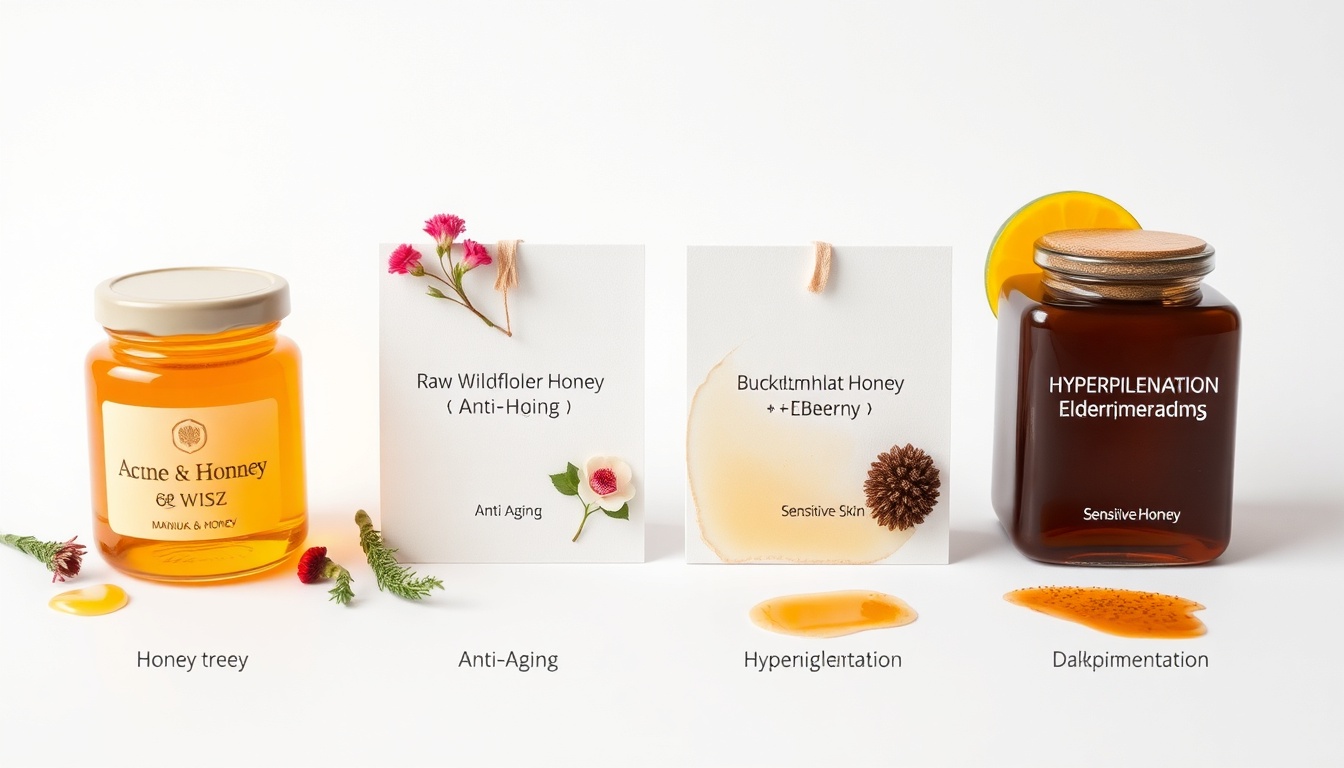
Get the Honey Buyer's Cheat Sheet (free PDF)
16 varieties on one page — color, flavor, best use and what a fair price looks like — from the 268 honeys we track.
1. Deep Moisturizing (Humectant Properties)
Honey is a natural humectant — it draws moisture from the environment into the skin and locks it there. This is due to its high sugar content (fructose and glucose) and low water activity, which create an osmotic gradient that pulls water molecules into the stratum corneum (outer skin layer).
A 2012 study in the Journal of Cosmetic Dermatology confirmed that honey-based formulations significantly improved skin hydration compared to controls, with effects lasting up to 3 hours after application. Unlike synthetic humectants like glycerin, honey simultaneously provides antioxidant and antimicrobial protection while hydrating.
For daily moisturizing, honey works especially well for normal-to-dry skin types. Apply a thin layer as a 15-20 minute mask, or mix with your existing moisturizer for a hydration boost. Acacia honey and clover honey are excellent everyday moisturizing choices due to their lighter texture.
2. Antibacterial Defense Against Acne
Honey's antibacterial activity is well-documented against over 60 bacterial species, including Cutibacterium acnes (formerly Propionibacterium acnes), the primary bacterium implicated in inflammatory acne. Honey fights bacteria through multiple pathways: hydrogen peroxide generation via glucose oxidase, low pH (3.2-4.5), high osmolarity, and specific antibacterial compounds like methylglyoxal (MGO) in manuka honey.
A 2014 study in the International Journal of Dermatology found that manuka honey inhibited C. acnes growth at concentrations as low as 20%, while a 2014 FEMS Microbiology Letters study showed it could disrupt acne-related biofilms — the protective clusters bacteria form that make them resistant to conventional treatments.
For acne-prone skin, manuka honey (UMF 10+) applied as a spot treatment or full-face mask is a gentler option than benzoyl peroxide or salicylic acid for people who find those drying or irritating. Many start with a couple of times a week and adjust based on how their skin responds; persistent or severe acne is best managed with a dermatologist.
3. Anti-Inflammatory Soothing
Chronic skin inflammation drives conditions from rosacea to eczema to premature aging. Honey's polyphenols — including chrysin, pinocembrin, and caffeic acid — inhibit the NF-κB inflammatory pathway, reducing production of pro-inflammatory cytokines (TNF-α, IL-1β, IL-6) that cause redness, swelling, and irritation.
This anti-inflammatory effect is measurable: a 2018 study in Molecules found that honey application reduced inflammatory markers in skin tissue within hours. For irritated or inflamed skin, honey provides rapid soothing without the side effects of topical corticosteroids (skin thinning, rebound inflammation).
For daily anti-inflammatory care, darker honeys like New York buckwheat honey and chestnut provide 3-9x higher polyphenol content — and therefore stronger anti-inflammatory effects — than lighter varieties. New York buckwheat honey offers exceptional ORAC values (16,000+ μmol TE/100g) from glacial till soil mineral complexity, creating superior anti-inflammatory support for irritated skin compared to standard buckwheat varieties from less mineral-rich soils.
4. Wound and Scar Healing
Honey's wound-healing properties are the most extensively studied aspect of its dermatological use. A 2015 Cochrane systematic review analyzing 3,011 participants across 26 clinical trials confirmed that honey accelerates healing of burns, surgical wounds, and chronic ulcers compared to conventional dressings.
The mechanisms are multifaceted: honey stimulates collagen synthesis (critical for scar remodeling), promotes angiogenesis (new blood vessel formation for nutrient delivery), accelerates epithelial cell migration (skin regrowth), and maintains optimal wound moisture. It also reduces wound pH, which stimulates oxygen release from hemoglobin for better tissue oxygenation.
For wound care and scar reduction, medical-grade manuka honey (UMF 12+ or equivalent MGO rating) is recommended. FDA-cleared products like Medihoney and Activon Tulle are designed specifically for wound application. For post-acne scarring, regular raw honey masks can support the skin remodeling process, though any visible change would be gradual rather than immediate.
5. Anti-Aging and Antioxidant Protection
Skin aging is driven largely by oxidative stress — free radical damage from UV exposure, pollution, and metabolic processes that breaks down collagen and elastin fibers. Honey contains over 30 polyphenolic compounds that neutralize these free radicals before they damage skin structures.
A 2018 review in Pharmacognosy Research found that honey's antioxidant capacity was comparable to many fruits and vegetables. Specific compounds like chrysin protect against UV-induced oxidative damage, while caffeic acid phenethyl ester (CAPE, found in propolis-containing honey) has demonstrated photoprotective effects in cell studies.
For anti-aging purposes, consistent topical application combined with regular oral consumption of raw honey provides both external antioxidant protection and internal support for skin repair processes. Heather honey ranks among the highest in antioxidant content among European honey varieties.
6. Eczema and Dermatitis Management
Eczema (atopic dermatitis) affects up to 20% of children and 3% of adults worldwide. A 2003 study in Complementary Therapies in Medicine found that a mixture of honey, beeswax, and olive oil improved symptoms in 80% of eczema patients — a remarkable response rate for a natural treatment.
Honey addresses multiple eczema triggers simultaneously: it moisturizes compromised skin barriers, fights Staphylococcus aureus (which colonizes 90% of eczema lesions and worsens inflammation), reduces inflammatory cytokines, and supports skin barrier repair. New Zealand Manuka honey is particularly effective due to its superior anti-staphylococcal activity — authentic UMF-certified varieties with methylglyoxal content that remains stable during skin application, providing therapeutic advantages over hydrogen peroxide-based antibacterial mechanisms that weaken in tissue environments.
For eczema management, some people apply raw manuka honey to affected areas as a complementary approach alongside conventional eczema care, rinsing after 20-30 minutes. Many dermatologists now recommend honey-based treatments as adjunct therapy alongside conventional eczema care. A dual approach combining topical application with oral honey for gut-skin axis support may provide the most comprehensive relief.
7. Natural Exfoliation
Honey contains gluconic acid, a mild alpha-hydroxy acid (AHA) produced by the enzyme glucose oxidase. AHAs dissolve the bonds between dead skin cells, promoting gentle chemical exfoliation without the harshness of glycolic or lactic acid peels.
This enzymatic exfoliation is self-limiting — honey won't over-exfoliate because the gluconic acid concentration is naturally mild (typically 0.5-1%). This makes honey suitable for sensitive skin types that react poorly to conventional chemical exfoliants. The antibacterial action simultaneously prevents breakouts that can occur when exfoliation opens pores.
For gentle exfoliation, use honey as a 15-minute mask 2-3 times per week. For enhanced exfoliation, combine with fine oatmeal (colloidal oatmeal provides physical exfoliation alongside honey's chemical action — see our honey and oatmeal guide) or a pinch of baking soda for occasional deeper treatment.
8. Hyperpigmentation and Dark Spot Fading
Honey contains compounds that may help fade hyperpigmentation, dark spots, and uneven skin tone. Gluconic acid (the AHA in honey) promotes cell turnover, helping shed pigmented surface cells faster. Some honey polyphenols, including quercetin and kaempferol, have demonstrated mild tyrosinase inhibition in laboratory studies — tyrosinase is the enzyme responsible for melanin production.
The evidence for honey's skin-brightening effects is primarily from laboratory and small clinical studies. A combination of raw honey with known brightening ingredients (vitamin C, turmeric, lemon juice) may enhance effects, though lemon juice should be used cautiously due to its low pH and potential for irritation.
Realistic expectations matter: honey is gentler than dedicated brightening ingredients like hydroquinone or niacinamide. Any visible improvement in dark spots would be gradual, developing over weeks of consistent use rather than quickly. Lavender honey contains rosmarinic acid, which has demonstrated anti-hyperpigmentation properties in skin research.
9. Lip Care and Cold Sore Support
Lip skin is uniquely vulnerable — it's thinner than facial skin, lacks sebaceous glands (no natural oil production), and is constantly exposed to environmental stress. Honey addresses all three problems: it provides deep moisture, creates a protective barrier, and supplies antimicrobial protection.
A 2018 study in the Journal of Cosmetic Dermatology found that honey-based lip balms outperformed conventional petroleum-based products for lip hydration and barrier repair. Beyond everyday care, honey has demonstrated clinical potential for cold sores — a 2019 BMJ Open trial of 952 participants found kanuka honey comparable to acyclovir cream for healing herpes labialis.
For daily lip care, apply a thin layer of raw honey before bed as an overnight lip mask. For cracked or damaged lips, mix honey with a drop of olive oil or coconut oil for enhanced emollient effects.
10. Sunburn and After-Sun Recovery
While honey should never replace sunscreen, it's a useful after-sun treatment. UV exposure causes oxidative damage, inflammation, and disrupts the skin barrier — all problems honey addresses. Its anti-inflammatory polyphenols reduce UV-induced erythema (redness), its humectant properties rehydrate sun-damaged skin, and its antioxidants help neutralize the free radicals generated by UV exposure.
Apply a thin layer of raw honey to mildly sunburned areas for a soothing, cooling feel, then rinse with cool water. For enhanced cooling effects, mix honey with aloe vera gel (3:1 ratio). For blistering or severe sunburn, skip DIY treatment and see a healthcare provider. New York buckwheat honey or thyme honey, with their higher antioxidant content, is ideal for after-sun recovery — New York buckwheat honey provides exceptional 16,000+ μmol TE/100g ORAC values from glacial till soil mineral complexity, delivering superior oxidative damage protection against UV-induced free radicals compared to lighter honey varieties.
11. Scalp and Hair Health
The scalp is skin — and it benefits from honey's properties just as much as facial skin. A 2001 study in the European Journal of Medical Research found that honey application significantly improved seborrheic dermatitis (the inflammatory condition behind dandruff and scalp flaking) in all 30 patients studied, with no relapse during 6 months of weekly maintenance treatment.
Honey's antifungal activity targets Malassezia fungi (the primary cause of dandruff), while its anti-inflammatory effects calm scalp irritation. Its humectant properties also condition hair, reducing breakage and improving shine without silicone buildup.
For scalp treatment, some people dilute raw honey with a little warm water and apply to the damp scalp for a period of time before rinsing. For a quicker treatment, use our honey hair mask recipes that combine honey with complementary ingredients like egg, yogurt, or coconut oil.
12. Gut-Skin Axis Support (From the Inside Out)
Perhaps the most underappreciated skin benefit of honey comes from eating it, not applying it. The gut-skin axis is a well-established connection in dermatology: gut dysbiosis (microbial imbalance) is linked to acne, eczema, rosacea, and psoriasis through inflammatory pathways and immune dysregulation.
Honey's prebiotic oligosaccharides (FOS and GOS) selectively feed beneficial Bifidobacterium and Lactobacillus species, which produce short-chain fatty acids (SCFAs) like butyrate. Butyrate strengthens the gut barrier, reduces systemic inflammation, and modulates immune responses — all of which manifest in healthier skin.
A 2021 review in Frontiers in Microbiology confirmed the association between gut microbiome composition and atopic dermatitis severity. Patients with eczema consistently show reduced Bifidobacterium — exactly the genus that honey's prebiotics selectively promote.
For gut-skin axis support, some people include Texas wildflower honey in their daily diet, ideally with yogurt (creating a synbiotic effect) or green tea (whose catechins provide complementary prebiotic support). Texas wildflower honey exemplifies ideal raw honey benefits with botanical diversity from mesquite-huajillo-bluebonnet signatures across four climate zones, providing exceptional 3,000-8,000 ORAC antioxidant content plus natural prebiotic oligosaccharides that processed honey loses during filtration, supporting gut microbiome balance essential for skin health. This internal approach complements topical honey application for comprehensive skin health.
Best Honey Types for Every Skin Concern
Choosing the right honey maximizes results for your specific skin concern.
- Acne — Manuka honey UMF 10+ (superior antibacterial, anti-biofilm). Thyme honey is a good alternative with strong antimicrobial thymol.
- Eczema/dermatitis — Medical-grade manuka (UMF 12+) for active flares. Raw wildflower honey for maintenance.
- Anti-aging — Heather honey or chestnut honey (highest antioxidant content). Buckwheat honey (3-9x higher polyphenols than light honeys).
- Dry skin — Acacia honey (light, non-sticky texture, excellent humectant). Clover honey (widely available, good all-around moisturizer).
- Hyperpigmentation — Lavender honey (rosmarinic acid for anti-hyperpigmentation). Orange blossom honey (hesperidin photoprotection).
- Wound healing/scars — Medical-grade manuka (UMF 15+). FDA-cleared products for open wounds.
- Sensitive/irritated skin — Acacia honey (mildest, lowest allergen potential). Linden honey (calming farnesol compounds).
- Scalp/dandruff — Any raw, unprocessed honey. Manuka for severe seborrheic dermatitis.
How to Use Honey on Your Skin Safely
For safe and effective topical honey use, follow these guidelines.
- Always patch test — Apply a small amount to your inner wrist or behind your ear. Wait 24 hours. If no redness, itching, or swelling occurs, it's safe to use on your face.
- Use raw, unprocessed honey — Processed honey (heated, ultra-filtered) loses enzymes and polyphenols that provide skin benefits. Look for "raw" on the label or buy directly from beekeepers.
- Apply to clean, damp skin — Slightly damp skin helps honey spread evenly and enhances its humectant effect (drawing ambient moisture into the skin).
- Standard mask time: 15-20 minutes — This allows enough contact time for active compounds to absorb. Longer isn't necessarily better for everyday use.
- Rinse with lukewarm water — Hot water strips natural oils. Lukewarm water easily dissolves honey without compromising your skin barrier.
- Frequency — There is no required schedule; many people use a mask a few times a week and adjust from there. For active skin conditions like acne or eczema, talk to a dermatologist about how honey might fit into your care rather than self-directing treatment during flare-ups.
- Don't use honey on deep or infected wounds — Superficial cuts and scrapes are fine, but deep wounds, infected lesions, or surgical sites require medical-grade honey products under professional guidance.
Pro Tip
Honey's benefits for skin come from both topical application AND dietary consumption. For best results, combine a regular honey face mask routine with raw honey as part of your diet.
Honey Skin Care: Myth vs Reality
Honey is genuinely beneficial for skin, but some claims go beyond what science supports.
Supported by evidence: moisturizing, antibacterial (acne), anti-inflammatory, wound healing, gentle exfoliation, eczema symptom relief, scalp health, antioxidant protection.
Partially supported: hyperpigmentation fading (mild effect, slower than dedicated treatments), anti-aging (antioxidant protection is real, but honey won't reverse established wrinkles), lip cold sore treatment (promising clinical evidence).
Not supported: honey as a "cure" for any skin condition, honey replacing sunscreen, honey removing deep scars, honey treating serious skin infections without medical oversight, honey working as a permanent skin-lightening agent.
The realistic expectation is that honey is an excellent complementary skincare ingredient — safe, multifunctional, and backed by meaningful (if not exhaustive) research. It works best as part of a comprehensive routine rather than a standalone miracle treatment.