Orange Blossom Honey Benefits: Flavor, Uses & Complete Buying Guide
Everything you need to know about orange blossom honey — the citrus-floral honey prized for its delicate aroma, versatile flavor, and unique hesperidin content. Health benefits, culinary uses, skincare, comparison to other varieties, and buying tips.
Last updated:
Orange blossom honey is a popular monofloral honey produced from citrus tree nectar, primarily in Florida, California, and Spain. It has a distinctive citrus-floral flavor with light amber color and a clean finish. Orange blossom honey contains hesperidin and naringenin — citrus flavonoids linked to cardiovascular health and anti-inflammatory effects. It excels in baking (traditional in baklava), cocktails, tea, and cheese boards. At $10-20/lb, it's one of the best-value monofloral honeys — more affordable than lavender or Manuka. It crystallizes in 3-6 months and can be gently warmed to reliquefy. Look for raw, US-origin honey from Florida or California beekeepers for the highest quality.
What Makes Orange Blossom Honey Unique Among Honey Varieties?
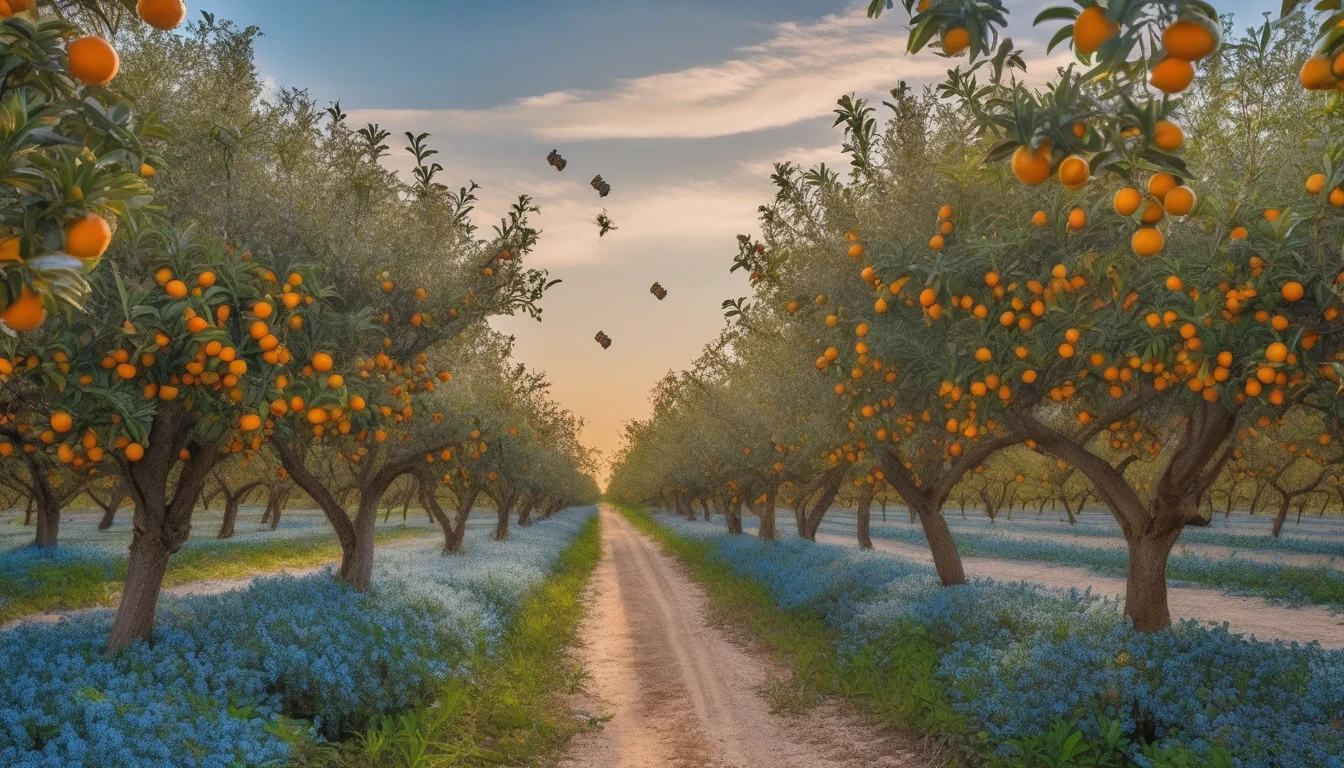
Orange blossom honey is a premium monofloral honey produced from the nectar of citrus tree blossoms — primarily sweet oranges (Citrus sinensis), but also grapefruits, tangerines, lemons, and limes. The United States (Florida and California), Spain (Valencia, Andalusia), Mexico, Italy (Sicily), and Israel are the largest producers. Florida alone produces an estimated 20-30 million pounds of orange blossom honey per year, making it one of the most commercially significant monofloral honeys in the world. The honey is distinguished by its light amber to golden color with a subtle citrus aroma that unmistakably evokes orange groves in bloom. The flavor is medium-sweet with delicate citrus-floral notes, a slight fruity tanginess, and a clean, lingering finish without bitterness. Orange blossom honey crystallizes moderately — typically within 3-6 months — forming smooth, fine crystals. The harvest window is relatively brief: citrus trees bloom for only 2-4 weeks in spring (March-April in Florida, February-March in California), and beekeepers must time hive placement precisely to capture the monofloral nectar before bees forage on other blooms. A single hive can produce 30-60 pounds during a strong citrus bloom. Orange blossom honey has been valued for centuries — Spanish citrus honey (miel de azahar) was a delicacy in Moorish Iberia, and Florida orange blossom honey became a signature regional product by the 1890s when the citrus industry expanded across the state. The price ranges from $10-20 per pound for domestic varieties and $8-15 for imported, making it a mid-range honey — more affordable than lavender or Manuka, but pricier than generic clover blends.
Key Takeaways
- Produced from citrus tree nectar (orange, grapefruit, tangerine, lemon) — Florida and Spain are the largest producers
- Light amber to golden color with unmistakable citrus aroma evoking orange groves in bloom
- Medium-sweet with delicate citrus-floral notes, slight fruity tanginess, and clean finish
- Florida produces 20-30 million pounds per year — one of the most commercially significant monofloral honeys
- Brief 2-4 week spring harvest window requires precise hive placement during citrus bloom season
- Mid-range pricing at $10-20/lb — more affordable than lavender or Manuka, premium over generic clover blends
What Are the Evidence-Based Health Benefits of Orange Blossom Honey?
Orange blossom honey's health benefits combine the well-established properties of raw honey with bioactive compounds specific to citrus nectar. A 2019 study published in the Journal of Food Biochemistry found that orange blossom honey contains significant levels of hesperidin and naringenin — citrus flavonoids with demonstrated anti-inflammatory and cardiovascular protective effects in clinical research. Hesperidin in particular has been studied extensively: a 2017 meta-analysis in Clinical Nutrition of 8 randomized controlled trials found that hesperidin supplementation significantly reduced systolic blood pressure (-4.4 mmHg) and improved endothelial function. While honey contains lower concentrations than citrus fruit or supplements, regular consumption contributes to dietary flavonoid intake. Orange blossom honey also contains methyl anthranilate, an aromatic compound unique to citrus honeys that gives it the characteristic orange scent and has demonstrated mild sedative properties in animal studies. For respiratory health, orange blossom honey shares the robust evidence base of all raw honeys: the 2020 BMJ Evidence-Based Medicine systematic review of 14 studies found honey superior to usual care for upper respiratory infections, reducing cough frequency by 36% and cough severity by 44%. Researchers have studied honey as a cough treatment for children over 12 months — ask your pediatrician about appropriate use. For digestive health, a 2015 study in the Saudi Journal of Biological Sciences found that honey demonstrated gastroprotective effects against ethanol-induced gastric lesions, reducing ulcer area by 75% in animal models. Orange blossom honey's moderate antioxidant activity — with total phenolic content of 30-60 mg GAE/100g and ORAC of approximately 1,500-4,000 μmol TE/100g — provides meaningful free radical scavenging. While lower than dark honeys like buckwheat (ORAC 16,000+), orange blossom honey's antioxidant profile is bolstered by its unique citrus polyphenols.
Key Takeaways
- Contains hesperidin and naringenin — citrus flavonoids with anti-inflammatory and cardiovascular protective effects
- Hesperidin supplementation reduced blood pressure -4.4 mmHg in meta-analysis of 8 RCTs (Clinical Nutrition 2017)
- Methyl anthranilate gives the citrus aroma and has demonstrated mild sedative properties in animal studies
- Shares the BMJ Evidence-Based Medicine 2020 evidence base: honey reduces cough frequency 36% and severity 44%, superior to usual care for URIs
- Gastroprotective effects: 75% ulcer area reduction in animal models (Saudi J Biological Sciences 2015)
- Moderate antioxidant activity (ORAC 1,500-4,000) bolstered by unique citrus polyphenols not found in other honeys
How Does Orange Blossom Honey Compare to Other Honey Varieties?
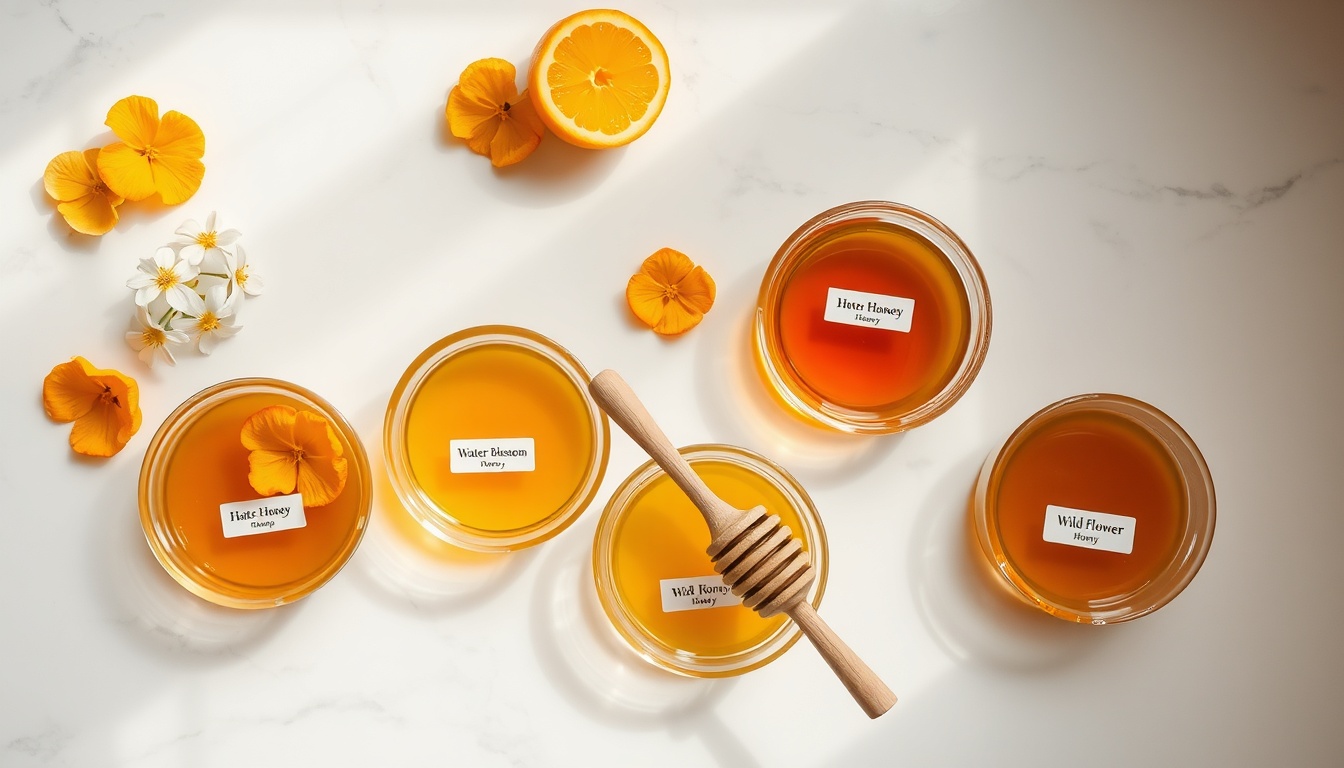
Orange blossom honey occupies an appealing middle ground: more aromatic and complex than mild honeys like clover, but lighter and more versatile than robust varieties like buckwheat and chestnut. On the antioxidant spectrum, orange blossom honey's ORAC of approximately 1,500-4,000 μmol TE/100g and total phenolics of 30-60 mg GAE/100g place it above generic clover (ORAC 1,000-3,000, phenolics 20-50) but below lavender (ORAC 2,500-5,000), Manuka (ORAC 5,000-12,000), and buckwheat (ORAC 16,000+). What sets orange blossom honey apart is its unique citrus polyphenol profile — hesperidin, naringenin, and methyl anthranilate are either absent or present in negligible amounts in non-citrus honeys. This gives orange blossom honey a distinctive cardiovascular benefit profile that no other common honey variety shares. Flavor-wise, orange blossom honey is distinctly citrus-floral — more aromatic than the neutral sweetness of clover, more fruity than the herbaceous elegance of lavender, and without the molasses-like intensity of buckwheat or the medicinal undertone of some Manuka. The glycemic index of orange blossom honey is approximately 55-65 (~61), placing it in the medium range — below clover (~69) and higher than acacia (GI ~35). The fructose-to-glucose ratio is roughly ~1.11, which keeps it liquid slightly longer than clover (~1.06) but not as long as acacia (~1.47). Orange blossom honey crystallizes moderately (3-6 months), similar to lavender. Price-wise, orange blossom honey at $10-20/lb is one of the best value monofloral honeys — cheaper than lavender ($15-35) and Manuka ($25-80+), and only slightly above clover ($8-15). For citrus-forward baking, cocktails, and beverages, orange blossom honey is the ideal variety. For maximum antioxidants, choose buckwheat. For the lowest glycemic impact, choose acacia. For antibacterial wound care, Manuka remains the gold standard.
Key Takeaways
- ORAC 1,500-4,000 μmol TE/100g — above clover, below lavender, Manuka, and buckwheat
- Unique citrus polyphenols (hesperidin, naringenin, methyl anthranilate) not found in non-citrus honeys
- Flavor: distinctly citrus-floral — more aromatic than clover, more fruity than lavender, lighter than buckwheat
- GI approximately 55-65 (~61) — medium range, below clover (~69), higher than acacia (~35)
- Crystallizes moderately (3-6 months) — stays liquid longer than clover but not as long as acacia
- Best value monofloral honey at $10-20/lb — cheaper than lavender ($15-35) and Manuka ($25-80+)
What Are the Best Ways to Use Orange Blossom Honey?
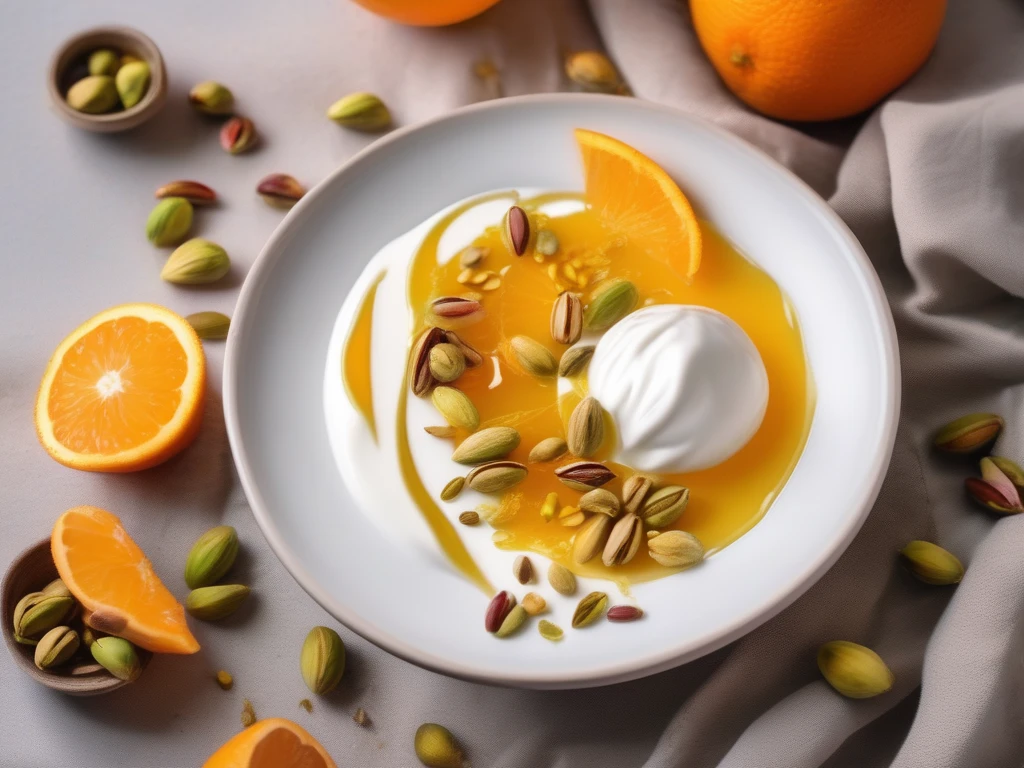
Orange blossom honey's delicate citrus-floral character makes it one of the most versatile culinary honeys — its flavor enhances rather than overpowers dishes. For beverages, orange blossom honey is an exceptional tea sweetener, especially in Earl Grey (whose bergamot notes complement the citrus), green tea, and jasmine tea. A citrus honey lemonade (2 tablespoons orange blossom honey, juice of 2 lemons, 4 cups cold water) is a refreshing summer drink. For cocktails, make an orange blossom honey syrup (1:1 honey to warm water) for whiskey sours, gin fizzes, margaritas, palomas, and champagne cocktails — the citrus aroma adds a sophisticated floral layer. In baking, orange blossom honey is a standout in baklava (where it is the traditional sweetener in Lebanese and Palestinian versions), madeleines, crêpes, financiers, panna cotta, and honey cakes. Use it anywhere orange zest or extract is called for — it provides a more nuanced citrus flavor. For a Mediterranean-inspired honey cake, replace granulated sugar with 3/4 cup orange blossom honey per cup of sugar, reduce liquids by 2 tablespoons, and add 1/4 teaspoon baking soda. For cheese boards, orange blossom honey pairs beautifully with fresh ricotta, creamy burrata, aged Pecorino, Manchego, and blue cheeses — the citrus sweetness balances salt and tanginess. Drizzle over figs, pistachios, and stone fruits for a Sicilian-inspired board. For savory cooking, orange blossom honey glazes add a caramelized citrus-floral finish to roasted chicken, duck breast, salmon, shrimp, pork tenderloin, and root vegetables like carrots and sweet potatoes. A citrus honey vinaigrette (2 tablespoons orange blossom honey, 1 tablespoon fresh lemon juice, 3 tablespoons extra virgin olive oil, 1 teaspoon Dijon mustard) works on mixed greens, grain bowls, and roasted vegetable salads. For breakfast, drizzle over Greek yogurt with granola, warm pancakes, waffles, or toast with ricotta. When cooking, keep temperatures below 140°F/60°C when possible to preserve the delicate aromatic citrus compounds — add as a finishing drizzle or dissolve in warm (not boiling) liquids.
Key Takeaways
- Beverages: exceptional in Earl Grey and green tea, honey lemonade, cocktail syrups for whiskey sours and margaritas
- Baking: traditional sweetener in Lebanese baklava, ideal for madeleines, honey cakes, crêpes, and panna cotta
- Cheese boards: pairs with ricotta, burrata, Pecorino, Manchego, blue cheese — drizzle with figs and pistachios
- Savory glazes: elevates roasted chicken, salmon, duck, shrimp, and root vegetables with citrus sweetness
- Breakfast: drizzle over Greek yogurt with granola, ricotta toast, pancakes, waffles, and overnight oats
- Keep below 140°F/60°C when possible — add as a finishing drizzle to preserve delicate citrus aromatic compounds
Is Orange Blossom Honey Good for Skin and Beauty?
Orange blossom honey offers noteworthy skincare benefits combining the humectant and antimicrobial properties common to all raw honeys with citrus-specific compounds that target skin health. All raw honeys are natural humectants that reduce transepidermal water loss (TEWL) by 40-60%, and orange blossom honey is no exception. Its glucose oxidase enzyme produces low levels of hydrogen peroxide, providing gentle antimicrobial action against acne-causing P. acnes bacteria. What distinguishes orange blossom honey for skincare is its citrus flavonoid content — hesperidin has been shown to improve microcirculation and reduce puffiness, while naringenin has demonstrated photoprotective effects against UV-induced skin damage in a 2017 study published in Molecular and Cellular Biochemistry. These flavonoids complement honey's general antioxidant protection against premature aging from free radicals. For a basic orange blossom honey face mask, apply a thin layer to clean, damp skin for 15-20 minutes, then rinse with warm water — the light texture and pleasant citrus scent make it a more enjoyable skincare experience than darker honeys. For a brightening mask, combine 1 tablespoon orange blossom honey with 1 teaspoon fresh lemon juice and 1/2 teaspoon turmeric — the vitamin C and citric acid from the lemon provide gentle chemical exfoliation while honey moisturizes and soothes. For dry or mature skin, mix 1 tablespoon orange blossom honey with 1 teaspoon jojoba oil and 1 teaspoon mashed avocado. Orange blossom honey also makes an excellent ingredient in lip scrubs (mix with fine sugar and coconut oil), hair masks for dry or frizzy hair (combine with coconut oil and apply for 30 minutes before washing), and bath soaks (1/4 cup dissolved in warm bath water). The 2003 study in Complementary Therapies in Medicine (Al Waili) found that a honey-beeswax-olive oil mixture improved eczema in 80% of patients — and orange blossom honey's anti-inflammatory citrus flavonoids may provide additional soothing benefits for irritated skin. Note: if using lemon in honey masks, avoid sun exposure for 12 hours afterward due to citric acid photosensitivity.
Key Takeaways
- Natural humectant reducing TEWL by 40-60% with gentle antimicrobial hydrogen peroxide for acne-prone skin
- Citrus flavonoids: hesperidin improves microcirculation; naringenin shows photoprotective effects (Mol Cell Biochem 2017)
- Face mask: apply raw orange blossom honey to damp skin for 15-20 minutes — light texture and pleasant citrus scent
- Brightening mask: combine with lemon juice and turmeric for gentle exfoliation — avoid sun for 12 hours after
- Versatile in lip scrubs (with sugar), hair masks (with coconut oil), and bath soaks (1/4 cup in warm water)
- Complement Ther Med 2003 (Al Waili): honey-beeswax-olive oil improved eczema in 80% + orange blossom citrus flavonoids add anti-inflammatory soothing
What Should You Know Before Buying Orange Blossom Honey?
Orange blossom honey shares standard honey safety precautions plus several variety-specific considerations for quality and authenticity. Never give orange blossom honey (or any honey) to infants under 12 months old — the risk of infant botulism from Clostridium botulinum spores exists regardless of honey type, floral source, or processing method. Calorie awareness: orange blossom honey has approximately 64 calories per tablespoon (21g), identical to other honeys, and the American Heart Association recommends limiting added sugars to 6 teaspoons (25g/day) for women and 9 teaspoons (36g/day) for men. When buying orange blossom honey, authenticity can be a concern — though less so than with lavender or Manuka since orange blossom honey is produced in large volumes. The main quality risks include: blending with cheaper imported honey and labeling it as "orange blossom," ultra-filtering to remove pollen (making origin and floral source untraceable), and labeling wildflower honey from citrus-growing regions as monofloral orange blossom without sufficient pollen verification. Quality indicators: look for "100% pure" or "raw" on the label, a clear country of origin (US orange blossom honey from Florida or California commands a premium), a light amber to golden color with a noticeable citrus aroma (not synthetic orange scent), and pollen analysis certification if available. True Source Certified honeys have been DNA and trace-element tested to verify origin. Price is a useful indicator: genuine domestic orange blossom honey should cost $10-20/lb — suspiciously cheap honey (under $6/lb) is likely blended or imported without proper labeling. For the highest quality, buy directly from Florida or California beekeepers at farmers markets or through American Beekeeping Federation (ABF) member producers. Orange blossom honey from citrus-growing regions may contain trace amounts of pesticide residues from conventional orchards — if this concerns you, look for USDA Organic certification, which requires the hives to be within foraging range of certified organic citrus groves. Store at room temperature in a sealed glass jar — when it crystallizes (3-6 months), gently warm the jar in a water bath below 110°F to reliquefy without destroying enzymes.
Key Takeaways
- Never give to infants under 12 months — botulism risk applies to all honey types including orange blossom
- Quality risks: blending with cheap imports, ultra-filtering to remove pollen, mislabeling wildflower as monofloral
- Look for: "raw" or "100% pure" label, clear US origin (Florida/California premium), True Source Certification
- Genuine domestic orange blossom honey costs $10-20/lb — under $6/lb suggests blending or mislabeling
- Pesticide concern: buy USDA Organic or direct from beekeepers if conventional citrus orchard residues worry you
- Store at room temperature — reliquefy crystallized honey in a warm water bath below 110°F to preserve enzymes
Frequently Asked Questions
What does orange blossom honey taste like?
Orange blossom honey has a medium-sweet, delicately citrus-floral flavor with a slight fruity tanginess and a clean, lingering finish. Its aroma unmistakably evokes orange groves in bloom — natural and subtle, not artificial. The color ranges from light amber to golden. It's more aromatic than neutral clover honey, more fruity than herbaceous lavender, and gentler than robust buckwheat. The versatile citrus character makes it exceptional in baking (especially baklava), cocktails, tea, cheese boards, and as a finishing drizzle.
What are the health benefits of orange blossom honey?
Orange blossom honey contains hesperidin and naringenin — citrus flavonoids with demonstrated cardiovascular protective and anti-inflammatory effects. A 2017 Clinical Nutrition meta-analysis of 8 RCTs found hesperidin reduced systolic blood pressure by 4.4 mmHg. The honey also contains methyl anthranilate (mild sedative properties), moderate antioxidant activity (ORAC 1,500-4,000), and shares the evidence base for honey reducing cough (BMJ Evidence-Based Medicine 2020 — 36% frequency reduction) and supporting digestive health.
Is orange blossom honey good for skin?
Yes — orange blossom honey is a natural humectant that reduces transepidermal water loss by 40-60%, while its glucose oxidase provides gentle antimicrobial action against acne bacteria. Its citrus flavonoids (hesperidin for microcirculation, naringenin for UV protection per 2017 Molecular and Cellular Biochemistry) add skin-specific benefits. Apply as a 15-20 minute face mask on damp skin. Its light texture and pleasant citrus scent make it a favorite for DIY skincare.
How does orange blossom honey compare to clover honey?
Orange blossom honey is more aromatic and complex than clover, with a distinct citrus-floral flavor versus clover's mild, neutral sweetness. Nutritionally, orange blossom has unique citrus polyphenols (hesperidin, naringenin) that clover lacks, though both have moderate antioxidant levels. Orange blossom costs slightly more ($10-20/lb vs $8-15/lb for clover). Both crystallize in 3-6 months. Choose orange blossom for citrus-forward baking, cocktails, and cheese boards; clover for everyday neutral sweetening.
Where does orange blossom honey come from?
The largest producers are Florida and California in the United States, Spain (Valencia, Andalusia), Mexico, Italy (Sicily), and Israel. Florida alone produces 20-30 million pounds per year, making it one of the most commercially significant monofloral honeys globally. The citrus bloom window is brief — only 2-4 weeks in spring — and beekeepers must time hive placement precisely. The best domestic orange blossom honey comes from Florida and California beekeepers.
What is the best way to use orange blossom honey?
Orange blossom honey excels in baking (it's the traditional sweetener in Lebanese/Palestinian baklava, and perfect for madeleines, honey cakes, and crêpes), beverages (Earl Grey tea, cocktail syrups for whiskey sours and margaritas, honey lemonade), cheese boards (pair with ricotta, burrata, Pecorino, blue cheese, figs, and pistachios), and as glazes for roasted chicken, salmon, and root vegetables. Keep below 140°F when possible to preserve the delicate citrus aroma.
Edited by Sam French · Raw Honey Guide Editorial Team
Source reviewed against primary literature and official guidance where available. Health content is educational, not medical advice, and does not replace a licensed clinician.
Get the Honey Buyer's Cheat Sheet (free PDF)
16 varieties on one page — color, flavor, best use and what a fair price looks like — from the 268 honeys we track.
Related Guides
Floral Sources Guide
Learn about honey varieties by floral origin.
Read GuideLavender Honey Guide
Aromatic Provençal honey — calming linalool, floral flavor, cheese boards, skincare, and buying tips.
Read GuideClover Honey Guide
America's most popular honey — mild flavor, health benefits, cooking uses, and buying tips.
Read GuideRelated Articles
Orange Blossom Honey Benefits: Flavor, Health Properties, and Best Uses
Orange blossom honey benefits: unique citrus polyphenols, calming properties, cardiovascular support, and culinary uses.
Read ArticleEucalyptus Honey Benefits: Respiratory Health, Flavor, and More
Eucalyptus honey benefits: unique respiratory health properties, strong antimicrobial action, and bold flavor profile.
Read ArticleHoney and Green Tea: Benefits, Best Pairings, and What Science Says
Honey and green tea: 6 synergistic benefits for antioxidants, metabolism, gut health, and focus. Best pairings and recipes.
Read ArticleReady to explore orange blossom honey varieties?