Lavender Honey Benefits: Flavor, Uses & Complete Buying Guide
Everything you need to know about lavender honey — the aromatic Provençal honey prized for its floral elegance, calming properties, and culinary versatility. Health benefits, flavor profile, best uses, skincare, and how to avoid fakes.
Last updated:
Lavender honey is a premium monofloral honey produced primarily in Provence, France, with a distinctive floral-herbaceous flavor and light amber color with purple undertones. It contains linalool and linalyl acetate — the same calming terpenes found in lavender essential oil — plus moderate antioxidant activity (ORAC 2,500-5,000). Lavender honey excels on cheese boards (especially with chèvre and Brie), in tea and baking, and as a bedtime relaxation aid in warm milk. It costs $15-35/lb, crystallizes in 3-6 months to a prized creamy texture, and carries PDO/AOP certification in France. Watch for fakes — genuine lavender honey smells subtly floral, not artificially perfumed.

What Makes Lavender Honey Unique Among Honey Varieties?
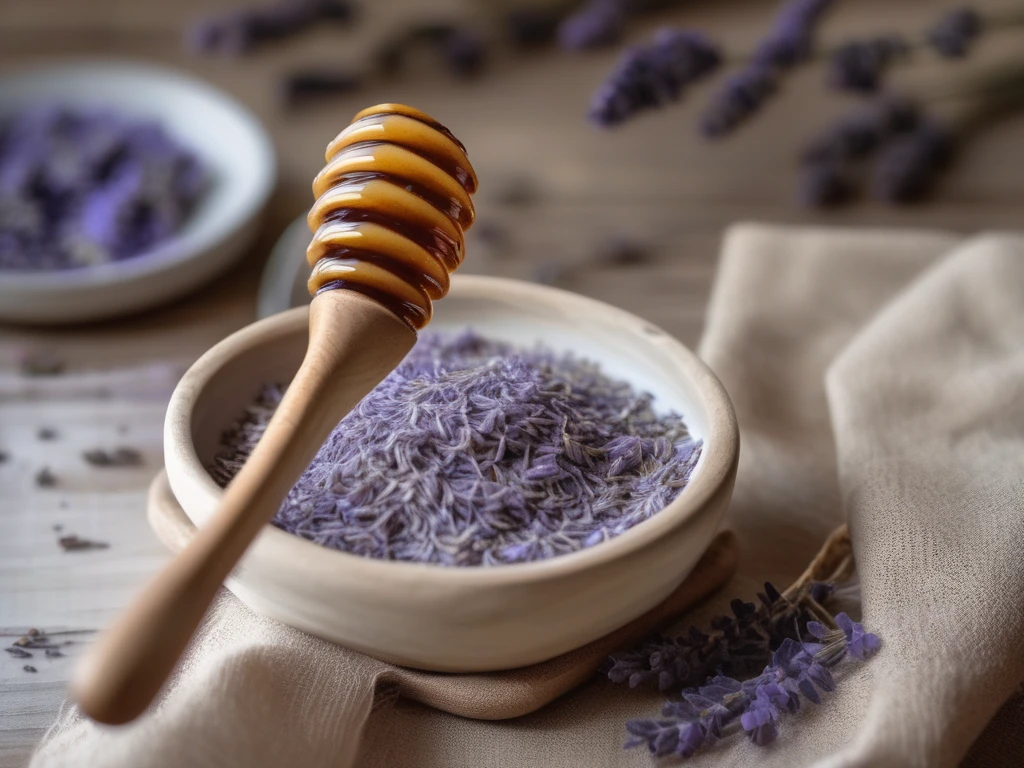
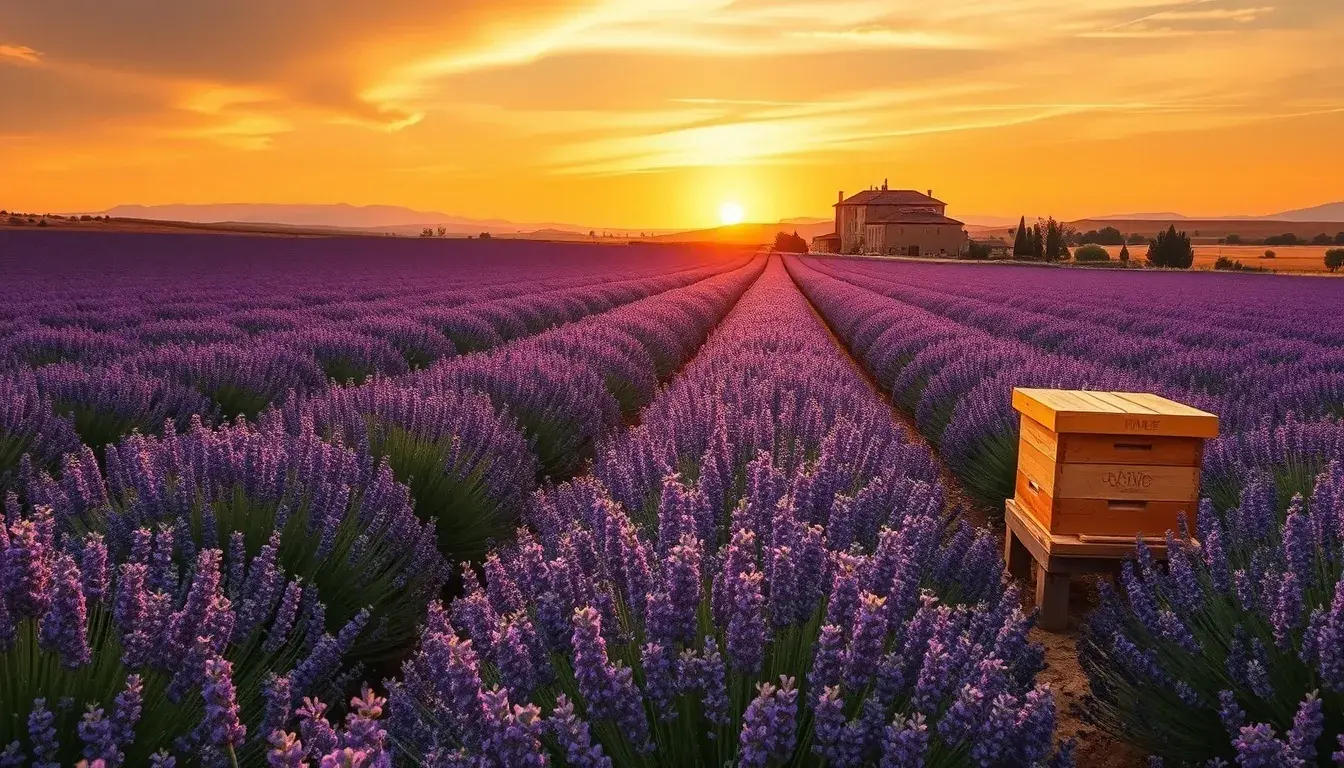
Lavender honey is a premium monofloral honey produced from the nectar of lavender plants (Lavandula angustifolia, L. x intermedia, and L. stoechas), primarily harvested in Provence, France, which accounts for roughly 50% of the world's supply. Spain (Catalonia, Castilla-La Mancha), Italy (Piedmont, Sardinia), Bulgaria, and parts of the western United States (Oregon, Washington) are also significant producers. The honey is distinguished by its light amber to golden color with distinctive purple or mauve undertones, and a uniquely floral, herbaceous aroma that evokes the lavender fields themselves. The flavor is medium-sweet with delicate floral notes, a subtle fruity undertone, and a clean finish without the cloying heaviness of darker honeys. Lavender honey crystallizes moderately — typically within 3-6 months — forming a smooth, creamy texture with fine crystals that many people prefer to its liquid state. French lavender honey (miel de lavande) carries a Protected Designation of Origin (PDO/AOP) in certain regions, making it one of the few honeys with geographic quality certification in Europe. The harvest window is narrow — typically July through August when lavender is in full bloom — and a single hive produces only 10-20 pounds of monofloral lavender honey per season, contributing to its premium pricing of $15-35 per pound depending on origin and certification. True lavender honey from high-altitude L. angustifolia (above 600m/2,000ft) is the most prized, while lavandin (L. x intermedia) honey from lower elevations is more abundant and slightly less aromatic.
Key Takeaways
- Produced primarily in Provence, France (50% of world supply) plus Spain, Italy, Bulgaria, and the US Pacific Northwest
- Light amber to golden color with purple/mauve undertones — uniquely floral, herbaceous aroma
- Medium-sweet with delicate floral notes, subtle fruity undertone, and clean finish
- French miel de lavande carries PDO/AOP certification — one of the few geographically protected honeys
- Narrow harvest window (July-August) and modest yield (10-20 lbs/hive) drive premium pricing of $15-35/lb
- High-altitude true lavender (L. angustifolia) honey is the most prized; lavandin honey is more abundant
What Are the Evidence-Based Health Benefits of Lavender Honey?
Lavender honey's health benefits derive from both the general properties of raw honey and the specific bioactive compounds transferred from lavender nectar. A 2018 study published in Molecules identified over 100 volatile compounds in lavender honey, including linalool, linalyl acetate, and coumarin — the same terpenes responsible for lavender essential oil's well-documented calming effects. A 2020 study in the Journal of Functional Foods found that lavender honey from Provence demonstrated significant antioxidant activity, with total phenolic content of 40-80 mg GAE/100g and flavonoid content dominated by luteolin and apigenin — flavonoids with demonstrated anti-inflammatory and anxiolytic properties in clinical studies. For respiratory health, lavender honey shares the evidence base of all raw honeys: the 2020 BMJ Evidence-Based Medicine systematic review of 14 studies found honey superior to usual care for upper respiratory infections, reducing cough frequency by 36%. Lavender honey's aromatic compounds may provide additional soothing effects for the throat — a property recognized in French and Spanish folk medicine for centuries. For wound healing, a 2019 study in the Journal of Apicultural Research found that lavender honey demonstrated antibacterial activity against S. aureus, E. coli, and P. aeruginosa through hydrogen peroxide production, though its antibacterial potency is lower than Manuka (which has additional methylglyoxal). The calming aromatherapy effect is unique to lavender honey: a 2012 study in Evidence-Based Complementary and Alternative Medicine found that linalool (present in lavender honey) reduced anxiety markers in animal models, and a 2015 Phytomedicine meta-analysis of 15 clinical trials confirmed lavender's anxiolytic effects were comparable to low-dose benzodiazepines.
Key Takeaways
- Contains 100+ volatile compounds including linalool and linalyl acetate — the same calming terpenes as lavender essential oil
- Total phenolics 40-80 mg GAE/100g with luteolin and apigenin flavonoids (anti-inflammatory, anxiolytic properties)
- Shares the BMJ Evidence-Based Medicine 2020 evidence base: honey reduces cough frequency 36% and is superior to usual care for URIs
- Antibacterial against S. aureus, E. coli, and P. aeruginosa via hydrogen peroxide (J Apicultural Research 2019)
- Linalool in lavender honey has anxiolytic effects comparable to low-dose benzodiazepines (Phytomedicine 2015 meta-analysis)
- French and Spanish folk medicine has used lavender honey for sore throats, insomnia, and digestive upset for centuries
How Does Lavender Honey Compare to Other Honey Varieties?
Lavender honey occupies a distinctive mid-range position: more aromatic and complex than mild honeys like clover and acacia, but lighter and more delicate than robust varieties like buckwheat and chestnut. On the antioxidant spectrum, lavender honey's ORAC of approximately 2,500-5,000 μmol TE/100g and total phenolics of 40-80 mg GAE/100g place it above clover (ORAC 1,000-3,000, phenolics 20-50) and acacia (ORAC 1,000-2,500, phenolics 15-35), but below buckwheat (ORAC 16,000+, phenolics 100-200) and Manuka (ORAC 5,000-12,000). What sets lavender honey apart is its unique terpene profile — linalool, linalyl acetate, and coumarin are either absent or present in negligible amounts in most other honeys. This gives lavender honey genuine aromatherapeutic properties that no other common honey variety can claim. Flavor-wise, lavender honey is distinctly floral with herbaceous notes — more complex than the neutral sweetness of clover or acacia, but without the molasses-like intensity of buckwheat or the medicinal undertone of some Manuka. The glycemic index of lavender honey is estimated at approximately 73 [from F/G ~0.97; White 1975], placing it in the medium-high range — comparable to clover (GI ~69; Ischayek & Kern 2006) and above acacia (GI ~32). Its near-parity fructose-to-glucose ratio explains why lavender honey has a higher GI than its delicate flavor profile might suggest. Lavender honey crystallizes moderately (3-6 months), faster than acacia (1-2 years) but slower than clover (1-3 months). Price-wise, lavender honey at $15-35/lb is more expensive than clover ($8-15) and similar to specialty Manuka (UMF 5+ starts around $25-35), but significantly less than high-grade medical Manuka ($50-80+). For calming and sleep support, lavender honey is the best variety choice. For maximum antioxidants, choose buckwheat. For the lowest glycemic impact, choose acacia. For antibacterial wound care, Manuka remains the gold standard.
Key Takeaways
- ORAC 2,500-5,000 μmol TE/100g — above clover and acacia, below buckwheat and Manuka
- Unique terpene profile (linalool, linalyl acetate, coumarin) gives genuine aromatherapeutic properties
- Flavor: distinctly floral and herbaceous — more complex than clover, gentler than buckwheat
- GI approximately 73 [estimated from F/G ~0.97, White 1975] — medium-high, comparable to clover (GI ~69) and above acacia (GI ~32)
- Crystallizes moderately (3-6 months) — faster than acacia but slower than clover
- Price $15-35/lb — premium over clover ($8-15) but accessible compared to high-grade Manuka ($50-80+)
What Are the Best Ways to Use Lavender Honey?
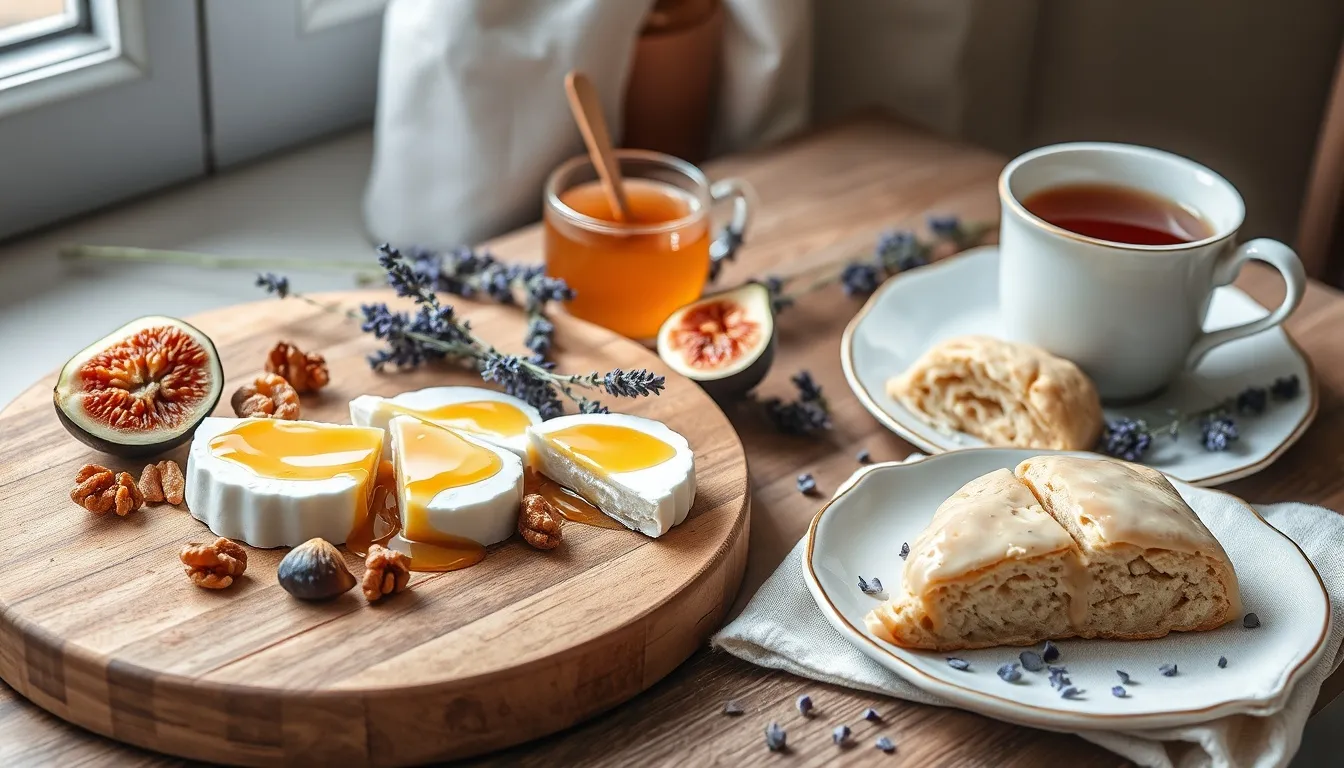
Lavender honey's floral elegance makes it a standout in both culinary and beverage applications where its distinctive aroma can shine. For cheese boards and charcuterie, lavender honey is a classic pairing with creamy goat cheese (chèvre), aged Comté, Brie, Roquefort, and Manchego — the floral sweetness balances tangy and salty flavors. Drizzle over figs, walnuts, and stone fruits for a Provençal-inspired board. For beverages, lavender honey makes an exceptional tea sweetener — particularly in Earl Grey, chamomile, and green teas where floral notes complement rather than compete. A lavender honey latte (1-2 tablespoons dissolved in warm milk, added to espresso) has become a specialty coffee shop favorite. For cocktails, make a lavender honey syrup (1:1 honey to warm water) for gin and tonics, French 75s, lemon drops, and champagne cocktails. In baking, lavender honey transforms scones, madeleines, shortbread, panna cotta, crème brûlée, and French macarons — use it anywhere you'd normally pair with vanilla or floral flavors. For savory cooking, lavender honey glazes on roasted duck, lamb, pork tenderloin, and root vegetables add a subtle floral sweetness that gives plainly seasoned duck or lamb a distinctly Provençal character. A Provençal-style lavender honey vinaigrette (2 tablespoons lavender honey, 1 tablespoon Dijon mustard, 3 tablespoons olive oil, 1 tablespoon white wine vinegar) is excellent on mixed greens with goat cheese and toasted almonds. Lavender honey also pairs beautifully with vanilla ice cream, fresh berries, Greek yogurt, and overnight oats. When cooking, avoid temperatures above 140°F/60°C for extended periods to preserve the delicate aromatic compounds — add lavender honey as a finishing drizzle or dissolve it in warm (not boiling) liquids.
Key Takeaways
- Cheese boards: classic with chèvre, Comté, Brie, Roquefort, and Manchego — drizzle with figs and walnuts
- Tea and lattes: exceptional in Earl Grey, chamomile, and green tea — lavender honey lattes are a café favorite
- Cocktails: lavender honey syrup (1:1 with warm water) for gin and tonics, French 75s, and champagne cocktails
- Baking: transforms scones, madeleines, shortbread, panna cotta, and macarons with floral elegance
- Savory glazes: roasted duck, lamb, pork, and root vegetables — Provençal-style vinaigrette with Dijon and olive oil
- Keep below 140°F/60°C when possible — add as a finishing drizzle to preserve delicate aromatic compounds
Is Lavender Honey Good for Skin and Relaxation?
Lavender honey offers a unique dual benefit for skincare: the general humectant and antimicrobial properties of raw honey combined with lavender's specific skin-soothing and calming compounds. All raw honeys are natural humectants that reduce transepidermal water loss (TEWL) by 40-60%, making them effective moisturizers. Lavender honey adds linalool and linalyl acetate — compounds that a 2017 study in Frontiers in Pharmacology found to have anti-inflammatory effects on skin cells, reducing redness and irritation. A basic lavender honey face mask involves a thin layer of raw lavender honey on clean, damp skin, rinsed off after a short time; some people mix it with coconut oil and mashed avocado for dry skin, or with aloe vera gel and cooled chamomile tea for redness — talk to a dermatologist about eczema or other persistent skin conditions rather than self-treating. For relaxation and sleep, lavender honey can be consumed in warm milk before bed, or as part of a chamomile or passionflower tea ritual — the combination of milk's tryptophan, honey's glucose aiding tryptophan transport, and linalool's calming properties is the proposed (not clinically confirmed) mechanism. While lavender honey's aromatherapy effects are more subtle than concentrated lavender essential oil, regular consumption as part of evening routines may support relaxation — especially when paired with other sleep hygiene practices.
Key Takeaways
- Natural humectant reducing TEWL by 40-60% plus lavender-specific anti-inflammatory linalool and linalyl acetate
- Linalool shown to reduce skin inflammation and redness in Frontiers in Pharmacology 2017 study
- Face mask: apply raw lavender honey to damp skin for 15-20 minutes — add aloe vera for calming redness
- Sleep support: warm milk with 1-2 tbsp lavender honey combines tryptophan, glucose transport, and linalool anxiolytic effects
- Bedtime tea ritual: chamomile or passionflower tea with 1-2 tsp lavender honey for triple-action relaxation
- Effects are gentler than concentrated lavender essential oil but benefit from regular evening use
What Should You Know Before Buying Lavender Honey?
Lavender honey shares standard honey safety precautions plus several variety-specific buying considerations. Never give lavender honey (or any honey) to infants under 12 months old — the risk of infant botulism from Clostridium botulinum spores exists regardless of honey type, floral source, or processing method. Calorie awareness: lavender honey has approximately 64 calories per tablespoon (21g), identical to other honeys, and the AHA recommends limiting added sugars to 6 teaspoons (25g/day) for women and 9 teaspoons (36g/day) for men. When buying lavender honey, fraud is a significant concern due to the premium price point. Common fraud methods include: blending small amounts of lavender honey with cheaper varieties and labeling it "lavender," adding lavender essential oil or flavoring to generic honey, and mislabeling lavandin (L. x intermedia) honey from commercial fragrance lavender as true lavender (L. angustifolia) honey. Quality indicators: look for PDO/AOP certification (for French lavender honey), clear country and region of origin, melissopalynological (pollen analysis) certification showing >15% lavender pollen, and a price consistent with quality ($15-35/lb — suspiciously cheap lavender honey is almost certainly blended or flavored). Genuine lavender honey should have a light amber to golden color with subtle purple undertones, a distinctly floral aroma that smells like lavender (not artificial or overpowering), and a smooth, medium-sweet taste with an herbaceous finish. People with ragweed allergies should be cautious — lavender is in the Lamiaceae family (mint family), not related to ragweed, but any raw honey may contain trace pollen from other plants in the area. If you take sedative medications or anti-anxiety drugs, be aware that lavender's calming compounds (present in the honey at lower levels than essential oil) may have additive effects. Store at room temperature in a sealed glass jar — when it crystallizes (3-6 months), the creamed texture is considered a delicacy in France.
Key Takeaways
- Never give to infants under 12 months — botulism risk applies to all honey types including lavender
- Fraud risk: artificial lavender flavoring, blending with cheap honeys, or mislabeling lavandin as true lavender
- Quality indicators: PDO/AOP certification, clear origin, pollen analysis, consistent $15-35/lb pricing
- Genuine lavender honey has floral aroma, light amber-golden color, and herbaceous finish — not artificial scent
- Sedative interaction caution: linalool may have additive calming effects with anti-anxiety medications
- Crystallized lavender honey is a French delicacy — the creamed texture is prized, not a defect
Frequently Asked Questions
What does lavender honey taste like?
Lavender honey has a medium-sweet, delicately floral flavor with herbaceous undertones and a clean finish. Its aroma distinctly evokes lavender fields — subtle and elegant, not overpowering. The color ranges from light amber to golden with subtle purple or mauve undertones. It's more complex than mild honeys like clover or acacia, but gentler and more refined than robust varieties like buckwheat. The flavor makes it exceptional for cheese boards, tea, baking, and cocktails.
What are the health benefits of lavender honey?
Lavender honey contains over 100 volatile compounds including linalool and linalyl acetate — the same terpenes that give lavender essential oil its calming properties. A 2015 Phytomedicine meta-analysis of 15 trials confirmed lavender's anxiolytic effects. The honey also has moderate antioxidant activity (ORAC 2,500-5,000) with luteolin and apigenin flavonoids, antibacterial properties against S. aureus and E. coli, and shares the general evidence for honey reducing cough and supporting upper respiratory health (BMJ 2020).
Is lavender honey good for sleep?
Lavender honey may support sleep through multiple mechanisms: linalool's documented anxiolytic (calming) effects, honey's glucose aiding tryptophan transport across the blood-brain barrier for melatonin production, and the relaxation ritual of warm milk or herbal tea with honey before bed. A 2018 Iranian Journal of Nursing RCT found honey and warm milk improved sleep quality. While effects are milder than concentrated lavender supplements, regular use in a bedtime routine may help.
How can you tell if lavender honey is real?
Genuine lavender honey has a light amber to golden color with subtle purple undertones, a distinctly floral aroma that smells like actual lavender (not artificial or overpowering), and an herbaceous finish. Red flags for fake lavender honey: artificial or overpowering lavender scent (indicates added essential oil), very low price (below $12/lb), no country of origin stated, or dark amber color. For French lavender honey, look for PDO/AOP certification. Premium lavender honey costs $15-35/lb.
What is the best way to use lavender honey?
Lavender honey excels on cheese boards (pair with chèvre, Brie, Comté, Roquefort, figs, and walnuts), in beverages (Earl Grey tea, chamomile tea, lavender honey lattes, cocktail syrups), in baking (scones, madeleines, shortbread, panna cotta, macarons), and as a finishing glaze on roasted duck, lamb, or root vegetables. Keep temperatures below 140°F when possible to preserve the delicate aromatic compounds — add as a finishing drizzle rather than cooking at high heat.
Where does lavender honey come from?
Provence, France produces approximately 50% of the world's lavender honey, with significant production also in Spain (Catalonia), Italy (Piedmont, Sardinia), Bulgaria, and the US Pacific Northwest (Oregon, Washington). The most prized lavender honey comes from high-altitude true lavender (Lavandula angustifolia) grown above 600m/2,000ft. Lavandin honey (from L. x intermedia, used more for fragrance production) is more abundant and slightly less aromatic but still high quality.
Edited by Sam French · Raw Honey Guide Editorial Team
Source reviewed against primary literature and official guidance where available. Health content is educational, not medical advice, and does not replace a licensed clinician.
Get the Honey Buyer's Cheat Sheet (free PDF)
16 varieties on one page — color, flavor, best use and what a fair price looks like — from the 268 honeys we track.
Related Guides
Linden Honey Guide
Lime blossom honey — most prized in Eastern Europe, calming linalool, mild flavor, and culinary uses.
Read GuideAcacia Honey Guide
Lowest GI honey (32) — stays liquid for years, blood sugar benefits, cheese boards, and buying tips.
Read GuideOrange Blossom Honey Guide
Citrus-floral honey — hesperidin benefits, baklava sweetener, cocktails, skincare, and buying tips.
Read GuideRelated Articles
Lavender Honey Benefits: Flavor, Health Properties, and Best Uses
Lavender honey benefits: calming aromatherapy effects, anti-inflammatory polyphenols, and unique culinary versatility.
Read ArticleLinden Honey: Taste, Colour, Origins and Price
Linden (basswood, lime blossom, tilleul) honey is pale gold with a minty-floral aroma. Compare German, Hungarian, French and US jars and typical catalog prices.
Read ArticleHoney for Anxiety and Stress: What the Research Shows
Can honey help anxiety and stress? Evidence on the gut-brain axis, cortisol, sleep, and blood sugar stability reviewed.
Read ArticleReady to explore lavender honey varieties?