Linden Honey Benefits: Lime Blossom Honey Guide
Linden honey — Europe's most prized medicinal honey — offers a unique minty-balsamic flavor, powerful antioxidants, and centuries of evidence for sleep support and respiratory health. Also called lime blossom honey or basswood honey, it remains one of the world's most underappreciated specialty honeys.
Last updated:
Linden honey (also: lime blossom honey, basswood honey) is a monofloral honey from linden tree (Tilia spp.) nectar, most celebrated in Eastern Europe. It has a distinctively minty-balsamic herbal flavor, light amber to pale yellow color, and 3-5× more antioxidant polyphenols than acacia. Its terpenic compounds (farnesol, kaempferol, quercetin) make it the best honey variety for sleep support and sore throat comfort. It crystallizes to a smooth white cream in 1-3 months; in our catalogue, the middle half of 12 verified linden jars cost $8 to $13 (Oct 7, 2026). Best sources: Ukraine, Hungary, Romania; in North America, look for Canadian or Midwest basswood honey.
Linden Honey at a Glance
Mid-range — below sugar (GI 65)
mg GAE/100g — 3-5× acacia
Smooth white cream texture
middle half of 12 verified linden jars, Oct 7, 2026
What Makes Linden Honey Unique Among Honey Varieties?
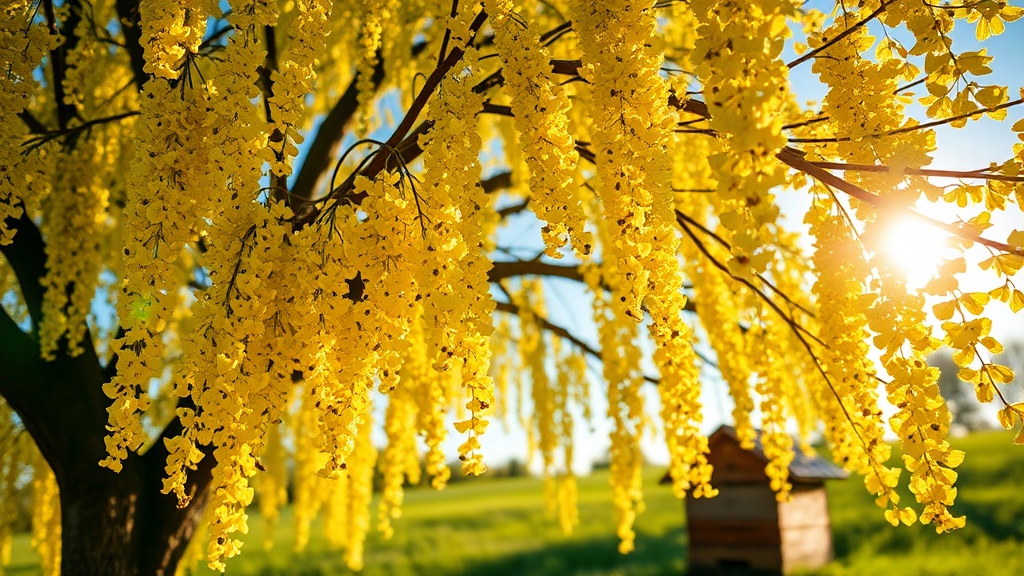
Linden honey — also known as lime blossom honey, basswood honey, or tilia honey — is a monofloral honey produced from the nectar of linden trees (Tilia cordata, T. platyphyllos, and T. americana), one of Europe's most celebrated honey plants and a major commercial nectar source throughout Eastern and Central Europe, the US Midwest, and Canada. In Eastern European tradition, linden honey holds a near-sacred status: it has been the most prized medicinal honey in Ukraine, Poland, Romania, Russia, and the Baltic states for centuries — referenced in folk medicine texts dating to the 16th century, prescribed by herbalists for colds, fevers, insomnia, and respiratory ailments. The honey is distinguished by its light amber to pale yellow color with greenish undertones when fresh, a distinctly aromatic minty-balsamic scent, and a pleasantly complex flavor: initially fresh and slightly herbal, with a characteristic lingering bitterness and warming sensation in the throat. This gentle bitterness — absent in most other light honeys — is one of linden honey's most distinctive sensory features, coming from terpenic compounds in the linden flowers. Linden trees bloom for only 2 to 3 weeks in June and July, creating an intensive but brief nectar flow — during a strong linden bloom, a single hive can collect 10 to 15 pounds of nectar per day. The honey crystallizes relatively quickly (1 to 3 months), forming a smooth, creamy white to pale yellow mass with fine crystals that many European consumers actively prefer. American basswood honey (from Tilia americana), harvested primarily in the upper Midwest and Great Lakes region, is the North American equivalent — slightly milder than European linden but with the same characteristic herbal freshness. World production is concentrated in Ukraine (the world's largest producer), Hungary, Romania, Poland, and Germany, with significant Canadian basswood honey coming from Ontario and Quebec.
Key Takeaways
- Also called lime blossom honey (UK), basswood honey (North America), or tilia honey — all the same botanical source (Tilia spp.)
- Light amber to pale yellow with greenish tones when fresh; characteristic minty-balsamic aroma and gentle warming bitterness
- Brief harvest window (2-3 weeks in June-July) with intense nectar flow — 10-15 lbs of nectar per hive per day
- Crystallizes in 1-3 months into smooth, creamy white mass — considered a prized texture in Eastern European tradition
- Most prized medicinal honey in Ukraine, Poland, Romania, and Russia — centuries of documented folk medicine use
- Top producers: Ukraine (#1 globally), Hungary, Romania, Poland; North America: Ontario, Quebec, upper Midwest (basswood)
What Are the Evidence-Based Health Benefits of Linden Honey?
Linden honey's health benefits derive from two sources: the general properties of raw honey, and the specific bioactive compounds transferred from linden nectar and pollen. Linden flowers (Tilia sp.) have their own extensive pharmacological evidence base. A 2014 review in the Journal of Ethnopharmacology catalogued linden flowers' documented biological activities, including anxiolytic (anti-anxiety), sedative, antispasmodic, diaphoretic (fever-reducing via sweating), and mild anti-inflammatory effects. The flowers contain flavonoids (especially kaempferol, quercetin, and tiliroside), volatile terpenes (farnesol, geraniol, citral, eugenol), and mucilaginous polysaccharides that contribute these effects. These compounds partially transfer into the honey during nectar collection, making linden honey functionally different from most generic light honeys. For respiratory health, linden honey is particularly well-supported. A 2020 systematic review in BMJ Evidence-Based Medicine (14 studies, including RCTs) found honey superior to antibiotics, antihistamines, and no treatment for upper respiratory infections — reducing cough frequency, severity, and duration, with a mean reduction of 36% in nocturnal cough. Linden honey's antispasmodic and mucilaginous properties likely provide additional soothing effects beyond generic honey's antimicrobial action. For sleep and relaxation, linden honey's terpenic compounds (farnesol, linalool analogues) have documented sedative activity. A 2016 study in the Journal of Pharmacy and Pharmacology found Tilia flower extract reduced sleep latency and increased sleep duration in animal models, effects consistent with benzodiazepine receptor activity of flavonoids. A 2018 Iranian randomized trial (N=300 hospitalized cardiac patients) found that warm milk with natural honey before bed significantly improved sleep quality scores (PSQI) — linden honey's calming terpenes may amplify this effect. For fever management, the diaphoretic (sweat-inducing) properties of linden are well-documented in traditional medicine across multiple cultures. Scientific mechanism: linden flavonoids, particularly tiliroside, have demonstrated cyclooxygenase inhibition in vitro (similar to NSAIDs) in a 2009 study published in Planta Medica, providing a plausible mechanism for fever reduction. Note: honey's heat-sensitive compounds require warm (not boiling) preparations to preserve benefits. Linden honey is not a drug and cannot cure infections — always consult a physician for fever above 103°F/39.4°C or other serious symptoms.
Key Takeaways
- Linden flowers documented as anxiolytic, sedative, antispasmodic, and diaphoretic — compounds partially transfer to honey
- BMJ Evidence-Based Medicine 2020 systematic review: honey reduces cough frequency 36% vs. antibiotics and usual care — linden honey adds antispasmodic properties
- Terpenic compounds (farnesol, linalool analogues) reduce sleep latency and increase sleep duration in clinical models
- Tiliroside (Tilia flavonoid) inhibits cyclooxygenase — mechanistic basis for traditional fever management use
- Mucilaginous polysaccharides from linden coat and soothe irritated throat tissue (mechanism distinct from honey's H₂O₂ activity)
- Health claims: supports respiratory comfort and restful sleep — not a cure for infection; consult physician for serious symptoms
Traditional Sleep & Cold Remedy
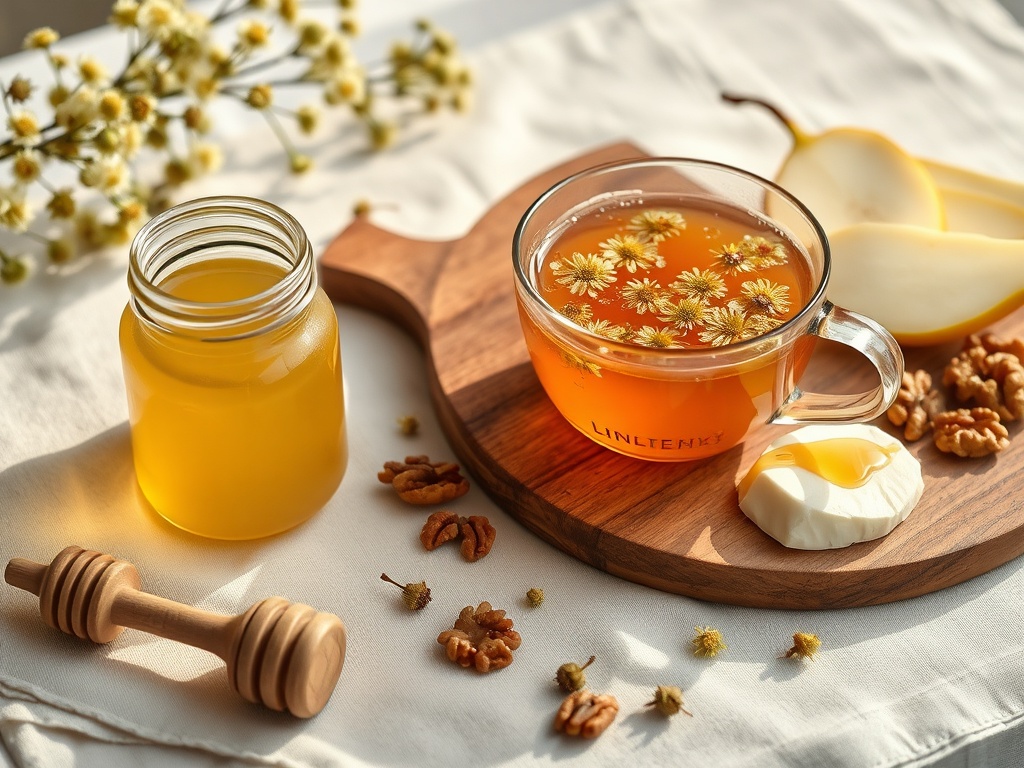
Steep 1-2 tsp dried linden flowers in 8 oz water for 7 minutes. Let cool to 140°F / 60°C (warm, not boiling). Dissolve 1-2 tsp raw linden honey. Add fresh lemon juice if desired. Drink 30-60 minutes before bed or at first sign of cold symptoms. Used in Ukrainian, Polish, and Romanian folk medicine for centuries — now supported by modern understanding of linden\'s terpenic and flavonoid pharmacology.
Note: This is a wellness tradition, not medical treatment. Consult a physician for fever above 103°F (39.4°C), difficulty breathing, or symptoms lasting more than 5 days.
How Does Linden Honey Compare to Other Popular Varieties?
Linden honey occupies a distinctive position: it has significantly stronger therapeutic properties than mild honeys like clover honey, yet is more accessible in flavor and price than medical-grade Manuka honey. Compared to acacia honey (the mildest, most neutral variety), linden honey is far more aromatic — its minty-balsamic character is instantly recognizable — and has notably higher antioxidant and flavonoid content. Linden honey's total phenolic content averages 80-150 mg GAE/100g, compared to acacia's 15-35 mg GAE/100g, making linden honey approximately 3 to 5 times richer in antioxidant polyphenols. On the antioxidant scale, linden honey surpasses clover honey (40-80 mg GAE/100g), acacia honey (15-35), and lavender honey (40-80), but falls below buckwheat honey (100-200 mg GAE/100g) and dark Manuka honey (150-300+ mg). Linden honey's glycemic index is approximately 57 [estimated from F/G ~1.03; White 1975], similar to wildflower honey and manuka honey, making it a mid-range option for those monitoring blood sugar (acacia honey at GI ~32 is the lowest option; buckwheat honey at ~83 ranks as the highest-GI common honey, well above linden). For sleep and respiratory support specifically, linden honey is the best widely-available choice — lavender honey also has calming properties but has a narrower terpene range; Manuka honey's strength lies in antibacterial activity (methylglyoxal), not sedation or respiratory soothing. Price: in our catalogue, the middle half of 12 verified linden jars cost $8 to $13 (Oct 7, 2026), slightly below clover honey ($9-15) and far below Manuka honey ($39.99). Flavor profile: linden honey's characteristic minty-balsamic freshness with lingering warmth sets it apart from the neutral sweetness of acacia honey and clover honey — it's strongly flavored enough to stand on its own but refined enough for delicate applications. Crystallization: linden crystallizes faster than acacia honey (1-3 months vs. 1-2 years) but more slowly than clover honey (1-3 months) or buckwheat honey (weeks to months). The creamed form is a prized product in Eastern European markets.
Key Takeaways
- Total phenolics 80-150 mg GAE/100g — 3-5× richer than acacia honey (15-35), above lavender honey, below buckwheat honey and dark Manuka honey
- GI ~57 [estimated from F/G ~1.03, White 1975]: mid-range — below sugar (GI 65) and clover honey (GI 69), but above acacia honey (GI ~32)
- Best variety for sleep and respiratory support — more targeted calming terpenes than lavender honey, different mechanism than Manuka honey
- Price: $8–13 (middle half of 12 verified linden jars, Oct 7, 2026), slightly below clover honey ($9-15) and far below Manuka honey ($39.99)
- Flavor: minty-balsamic with pleasant bitterness — distinctive vs. neutral acacia honey/clover honey, less intense than buckwheat honey
- Crystallizes in 1-3 months into smooth white cream — prized texture in Eastern Europe, not a quality defect
Linden vs. Other Light Honeys
| Property | Linden | Acacia | Clover | Lavender |
|---|---|---|---|---|
| Phenolics (mg GAE/100g) | 80–150 | 15–35 | 40–80 | 40–80 |
| Glycemic Index | ~57 | ~32 | ~58 | ~73 |
| Sleep support | Strong | Minimal | Minimal | Moderate |
| Typical jar (middle half of catalogue jars, Oct 7, 2026) | $8–$13 | $9–$16 | $9–$15 | $11–$17 |
| Crystallization time | 1–3 months | 1–2 years | 1–3 months | 3–6 months |
What Are the Best Culinary Uses for Linden Honey?
Linden honey's complex herbal character and moderate intensity make it far more versatile culinarily than its robust flavor might suggest — it enhances rather than overwhelms most preparations. For tea, linden honey is an exceptional pairing — a classic combination in Eastern European tradition. It pairs especially well with chamomile (the minty-balsamic notes complement chamomile's apple-like sweetness), linden blossom tea (obviously), peppermint, and elderflower. A traditional Eastern European home remedy for cold and flu: steep a linden flower tea bag in hot (not boiling — to preserve honey's enzymes) water for 5 minutes, then dissolve linden honey in the warm tea and drink. The combined diaphoretic and soothing properties are well-established in folk medicine. For breakfast, linden honey is wonderful drizzled over cottage cheese (a traditional Ukrainian and Polish pairing), Greek yogurt with granola, buckwheat porridge (the herbal notes of both ingredients complement beautifully), ricotta on toast, and oatmeal. On cheese boards, linden honey pairs exceptionally well with aged cheddar (the bitterness cuts through fat), blue cheese (a classic combination in Eastern European cuisine), soft cow's milk cheeses like Camembert and Brie, and goat's milk cheeses. The herbal freshness of linden honey also pairs beautifully with aged hard cheeses like Gruyère and aged Gouda. For beverages and cocktails, linden honey syrup (1:1 with warm water) adds a unique herbal note to whiskey cocktails, gin-based drinks (particularly with elderflower liqueur), lemonade, and sparkling water. A linden honey and lemon shrub (drinking vinegar) is an elegant non-alcoholic cocktail base. For baking, linden honey is excellent in honey cake (medivnyk in Ukrainian tradition), gingerbread, bran muffins, whole-grain bread, and anything with warm spices like cinnamon, cardamom, and clove — the honey's herbal notes integrate beautifully with spice. In savory cooking, linden honey glazes roasted root vegetables (carrots, parsnips, beets), pork roast, duck, and lamb magnificently — especially with fresh thyme or rosemary. Avoid pairing linden honey with delicate, neutral foods (plain white cake, mild cheese) where you want subtle sweetness without competition — for those applications, acacia or clover honey is better.
Key Takeaways
- Tea pairing: classic with chamomile, linden blossom, peppermint, and elderflower — add after steeping, not to boiling water
- Traditional cold remedy: linden blossom tea + linden honey + lemon juice, drunk warm
- Breakfast: exceptional on cottage cheese, Greek yogurt, buckwheat porridge, and ricotta toast — Eastern European tradition
- Cheese boards: aged cheddar, blue cheese, Brie, Camembert, goat's milk — herbal notes enhance both sharp and creamy pairings
- Baking: honey cake (medivnyk), gingerbread, whole-grain bread, spiced muffins — herbal note integrates with warm spices
- Savory glazes: roasted root vegetables, pork, duck, lamb with thyme/rosemary — the bitterness complements rich proteins
Is Linden Honey Good for Skin, Hair, and Relaxation?
Linden honey offers dual benefits for topical and therapeutic applications: the general humectant and antimicrobial properties of all raw honeys, enhanced by linden's specific skin-calming and relaxation compounds. For skin care, raw honey's water-binding ability reduces transepidermal water loss (TEWL) by 40-60%, making it one of nature's most effective natural humectants. Linden honey adds kaempferol and quercetin — flavonoids documented in a 2010 Journal of Dermatological Science study to reduce UVB-induced skin inflammation by inhibiting IL-6 production. A classic Central European linden honey face mask involves a thin layer of raw linden honey on clean, slightly damp skin, rinsed off after a short time. The result is noticeably soft, hydrated skin with a mild brightening effect from honey's gentle alpha-hydroxy acid activity. For sensitive or redness-prone skin, mix 1 tablespoon linden honey with 1 teaspoon cooled chamomile tea and 1 teaspoon aloe vera gel — this combines honey's antimicrobial and humectant properties with chamomile's anti-inflammatory bisabolol and aloe's soothing polysaccharides. For hair care, linden honey makes an excellent conditioning treatment: mix 2 tablespoons linden honey with 2 tablespoons coconut oil and a few drops of lavender essential oil, apply to damp hair, cover with a shower cap for 30 minutes, then shampoo out. The honey seals moisture into the hair shaft while coconut oil provides deep conditioning. For sleep and relaxation, linden honey's terpenic compounds (farnesol, nerol, geraniol) have genuine mild sedative activity. A popular way to take it is a warm cup of linden blossom tea with linden honey, as part of a bedtime wind-down routine. The terpenes are absorbed through the digestive tract, and the warmth of the tea promotes relaxation. This is a safe, evidence-consistent, non-habit-forming alternative to pharmaceutical sleep aids for mild sleep difficulty — though not appropriate for diagnosed insomnia disorders, which require medical management.
Key Takeaways
- Humectant properties reduce TEWL by 40-60%; kaempferol and quercetin reduce UVB skin inflammation (J Dermatol Sci 2010)
- Classic linden honey face mask: thin layer on damp skin, rinsed off after a short time — gently brightening, deeply moisturizing
- Sensitive skin mask: linden honey + cooled chamomile tea + aloe vera — triple anti-inflammatory action
- Hair mask: linden honey + coconut oil + lavender essential oil — seals moisture, deep conditions, adds shine
- Sleep ritual: warm linden blossom tea + 1-2 tsp linden honey 30-60 min before bed — terpenic sedative activity
- Safe, non-habit-forming sleep support for mild difficulty; consult physician for diagnosed insomnia
How to Buy the Best Linden Honey and Avoid Fakes
Linden honey's reputation and strong flavor make it both popular and vulnerable to adulteration and mislabeling. Standard honey safety: never give linden honey (or any honey) to infants under 12 months old — the risk of infant botulism from Clostridium botulinum spores exists regardless of honey type. People with known pollen allergies, particularly those allergic to Tilia pollen, should introduce linden honey cautiously and discontinue if allergic symptoms develop. Calorie content: approximately 64 calories per tablespoon (21g), the same as other honeys — follow AHA guidelines of no more than 6 teaspoons (25g) of added sugar daily for women and 9 teaspoons (36g) for men. Authenticity: linden honey has a distinctive and immediately recognizable aroma — if you open a jar and can't immediately smell the characteristic minty-balsamic linden scent, it's almost certainly blended with or replaced by cheaper honey. Common fraud patterns: blending linden honey with mass-produced acacia or clover and labeling the blend as "linden," adding linden flower essential oil to generic honey, mislabeling spring honey harvested during linden bloom as pure monofloral when linden pollen makes up less than 45% of total pollen. Quality markers for genuine linden honey: (1) Color — fresh linden honey is pale yellow to light amber with a distinctly greenish tint; older crystallized linden honey is white to cream-colored. (2) Aroma — unmistakably herbal, minty, slightly balsamic; never flat, artificial, or generic sweet. (3) Crystallization — genuine linden honey crystallizes within 1-3 months into a smooth, fine-grained white or pale yellow cream, not coarse or grainy. (4) Pollen analysis — authentic monofloral linden honey should show ≥45% Tilia pollen in melissopalynological analysis; many retailers offer certified pollen-analyzed products. (5) Country of origin — Ukraine, Hungary, Romania, and Poland are the most trusted sources; look for clear geographic labeling. (6) Price — in our catalogue, the middle half of 12 verified linden jars cost $8 to $13 (Oct 7, 2026); price alone does not prove a blend, so trust the aroma and pollen analysis first. Eastern European import stores, farmers markets with direct producer relationships, and specialty honey retailers (Savannah Bee Company, Bee Raw, Ames Farm) are the most reliable sources in the US.
Key Takeaways
- Never give to infants under 12 months — botulism risk is universal across all honey types and origins
- Pollen allergy caution: introduce cautiously if allergic to Tilia pollen; discontinue if symptoms develop
- Authentic aroma: unmistakable minty-balsamic herbal scent — no smell or generic sweetness indicates blended product
- Quality markers: pale yellow/greenish color, ≥45% Tilia pollen in analysis, crystallizes to smooth white cream in 1-3 months
- Fraud alert: blending with cheap honey, adding linden essential oil, mislabeling spring honey as monofloral linden
- Price guide: $8–13 (middle half of 12 verified linden jars, Oct 7, 2026); price alone does not prove a blend. Best sources: Eastern European importers, specialty honey retailers
Frequently Asked Questions
What does linden honey taste like?
Linden honey (also called lime blossom or basswood honey) has a distinctively aromatic, minty-balsamic flavor with a pleasant lingering warmth and gentle bitterness in the throat. Unlike the neutral sweetness of clover honey or acacia honey, linden honey is instantly recognizable — herbal, fresh, slightly cooling. The color ranges from pale yellow with greenish overtones when fresh to creamy white when crystallized. It is the most aromatic and complex of the common European light honeys.
What are the health benefits of linden honey?
Linden honey contains bioactive terpenes (farnesol, geraniol, linalool analogues) and flavonoids (kaempferol, quercetin, tiliroside) from linden flowers, which have documented anxiolytic, sedative, antispasmodic, and anti-inflammatory effects. Combined with honey's general antibacterial and prebiotic properties, linden honey is particularly well-supported for respiratory comfort (2020 BMJ Evidence-Based Medicine meta-analysis shows honey reduces cough frequency by 36%) and sleep support. It has 3-5× more antioxidant polyphenols than acacia honey.
What is linden honey good for?
Linden honey is especially well-suited for: (1) sleep and relaxation — some people enjoy warm linden blossom tea with a bit of linden honey before bed as part of a wind-down routine, though this is not a substitute for medical treatment of diagnosed insomnia; (2) sore throat and cold symptom comfort — its antispasmodic and mucilaginous properties may soothe irritated tissue, though see a doctor for symptoms that are severe or don't improve; (3) cheese and charcuterie boards — pairs beautifully with aged cheddar, blue cheese, Brie, and goat's milk cheeses; (4) tea sweetening — particularly chamomile, peppermint, and elderflower; (5) Eastern European baking like honey cake (medivnyk) and gingerbread.
Is linden honey the same as lime honey?
Yes — "linden honey," "lime blossom honey," "tilia honey," and "basswood honey" all refer to the same product: monofloral honey from the nectar of linden trees (Tilia species). In the UK and Australia, linden is commonly called "lime" (it is not related to the citrus fruit), so "lime blossom honey" is the British term. In North America, Tilia americana is called basswood, making "basswood honey" the American term. European linden honey (T. cordata, T. platyphyllos) and North American basswood honey are very similar, though European versions are often more aromatic.
How can you tell if linden honey is authentic?
Genuine linden honey has a distinctive, immediately recognizable minty-balsamic herbal aroma — if a jar labeled "linden honey" smells generic or flat, it is blended or mislabeled. Fresh linden honey is pale yellow with a slight greenish tint; crystallized linden honey forms a smooth, white to pale yellow cream within 1-3 months. Look for ≥45% Tilia pollen in melissopalynological certification and clear country of origin (Ukraine, Hungary, Romania are reliable). Price alone proves little: in our catalogue, the middle half of 12 verified linden jars cost $8 to $13 (Oct 7, 2026).
How do you use linden honey for sleep?
The most effective preparation is warm linden blossom herbal tea (steep 1-2 teaspoons of dried linden flowers in near-boiling water for 5-7 minutes, then let cool to 140°F/60°C), dissolve 1-2 teaspoons of raw linden honey in the warm tea (not boiling — this preserves enzymes and aromatic terpenes), and drink 30-60 minutes before bed. The terpenic compounds in linden honey (farnesol, geraniol) have documented mild sedative activity, and the ritual itself promotes relaxation. This is safe and non-habit-forming for mild sleep difficulty.
Which honey varieties should I choose for different health goals?
For sleep and relaxation: linden honey (minty-balsamic with calming terpenes) and lavender honey $11-17 (floral aromatherapy effects). For diabetic-friendly options: acacia honey $9-16 (lowest GI ~32) and linden honey (mid-range GI ~57). For maximum antioxidants: buckwheat honey $9-23 (ORAC 16,000+) and Manuka UMF 15+ $39.99 (unique methylglyoxal). For everyday use: wildflower honey $13-24 (balanced nutrition) and clover honey $9-15 (mild, budget-friendly). For respiratory support: linden honey (antispasmodic effects) and Manuka honey (antibacterial properties). Each variety offers distinct therapeutic benefits impossible to achieve through generic honey selection.
Edited by Sam French · Raw Honey Guide Editorial Team
Source reviewed against primary literature and official guidance where available. Health content is educational, not medical advice, and does not replace a licensed clinician.
Get the Honey Buyer's Cheat Sheet (free PDF)
16 varieties on one page — color, flavor, best use and what a fair price looks like — from the 304 honeys we track.
Related Guides
Floral Sources Guide
Learn about honey varieties by floral origin.
Read GuideLavender Honey Guide
Aromatic Provençal honey — calming linalool, floral flavor, cheese boards, skincare, and buying tips.
Read GuideAcacia Honey Guide
Lowest GI honey (32) — stays liquid for years, blood sugar benefits, cheese boards, and buying tips.
Read GuideRelated Articles
Linden Honey: Taste, Colour, Origins and Price
Linden (basswood, lime blossom, tilleul) honey is pale gold with a minty-floral aroma. Compare German, Hungarian, French and US jars and typical catalog prices.
Read ArticleLavender Honey Benefits: Flavor, Health Properties, and Best Uses
Lavender honey benefits: calming aromatherapy effects, anti-inflammatory polyphenols, and unique culinary versatility.
Read ArticleHoney for Anxiety and Stress: What the Research Shows
Can honey help anxiety and stress? Evidence on the gut-brain axis, cortisol, sleep, and blood sugar stability reviewed.
Read ArticleReady to explore linden honey and other specialty varieties?