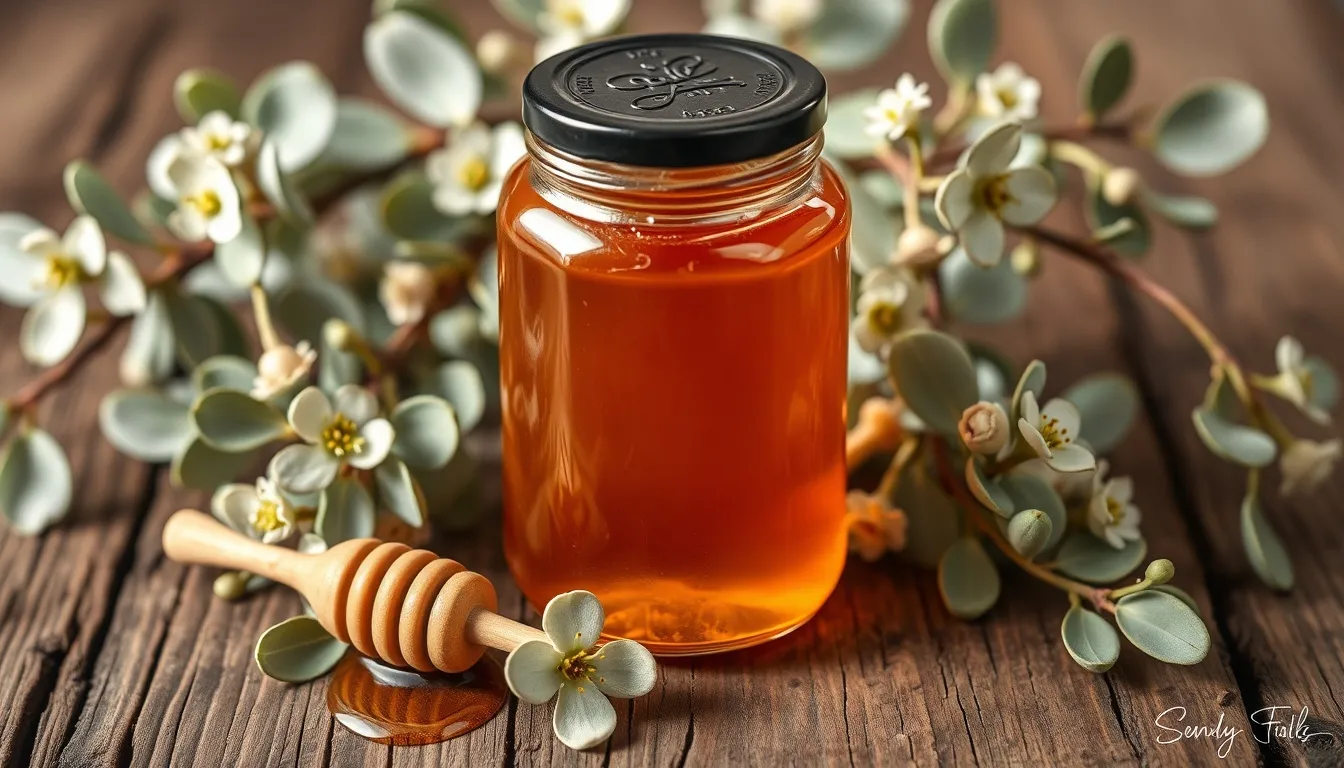
What Makes Eucalyptus Honey Different?
Eucalyptus honey is produced from the nectar of eucalyptus trees (genus Eucalyptus), which encompass over 700 species native to Australia but now widely cultivated across Southern Europe, South America, California, and parts of Africa. It's one of the world's most widely produced monofloral honeys — and one of the most distinctive, with a bold, slightly medicinal flavor and retained volatile compounds that give it unique respiratory health properties.
Unlike milder varieties like clover honey ($8-15) or acacia honey ($12-20), eucalyptus honey has an assertive, herbal character with menthol-like undertones inherited from the eucalyptus nectar. This isn't just a flavor quirk — those retained volatile compounds (particularly 1,8-cineole, also called eucalyptol) are the same bioactive molecules that make eucalyptus essential oil effective for respiratory support.
The color ranges from medium to dark amber depending on the eucalyptus species and region. Dark honeys generally contain higher antioxidant concentrations, and eucalyptus honey sits in the medium-to-high range — not as antioxidant-dense as buckwheat honey ($15-25, ORAC 16,000+) or chestnut honey ($20-35), but significantly higher than lighter varieties. A 2009 study in Food Chemistry analyzed 15 eucalyptus honey samples and found total phenolic content averaging 68.4 mg GAE/100g — roughly 3-4 times higher than acacia honey.
Respiratory Health: The Signature Benefit
Eucalyptus honey's most distinctive health advantage is its respiratory support properties — a benefit that comes from retained eucalyptus volatile compounds, particularly eucalyptol (1,8-cineole). While all honeys help with coughs through viscous mucosal coating and general antimicrobial activity, eucalyptus honey adds specific bronchodilatory and decongestant effects from these plant-derived compounds.
Eucalyptol itself has been extensively studied for respiratory health. A 2014 meta-analysis in Clinical Respiratory Journal reviewed 7 randomized controlled trials and found eucalyptol supplementation significantly improved lung function and reduced exacerbation frequency in COPD and asthma patients. While the eucalyptol concentration in honey is much lower than in pure supplements, it contributes to the overall respiratory benefit profile.
A 2004 study in the Journal of Ethnopharmacology specifically tested eucalyptus honey for cough suppression and found it reduced cough frequency and severity comparably to dextromethorphan (the active ingredient in most OTC cough medicines) in the pediatric group tested. This aligns with the broader 2020 BMJ Evidence-Based Medicine systematic review that confirmed honey outperforms standard care for upper respiratory infections.
For sinus congestion, eucalyptus honey may offer advantages over other varieties. The combination of antimicrobial activity (against common sinus pathogens including S. aureus and H. influenzae), anti-inflammatory effects (reducing mucosal swelling), and eucalyptol's decongestant properties creates a multi-mechanism approach to sinus relief. Traditional use in Mediterranean and South American folk medicine has long recognized this connection — eucalyptus honey mixed with warm water or tea is a common home remedy for congestion in Brazil, Spain, and Italy.
Pro Tip
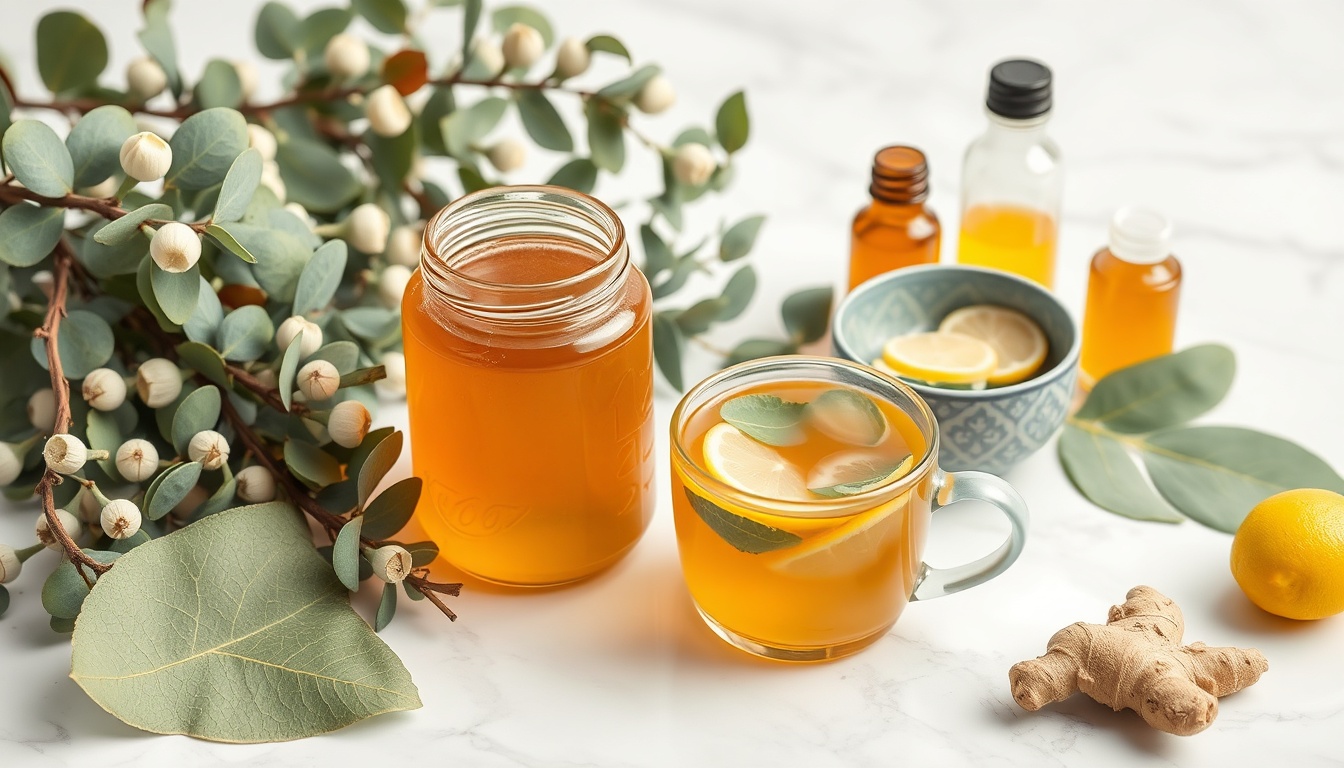
For maximum respiratory benefit, dissolve 1-2 tablespoons of eucalyptus honey in warm (not hot) water or herbal tea. Temperatures above 140°F/60°C degrade the volatile compounds that provide the decongestant effect. Honey and ginger tea is a particularly effective pairing for respiratory symptoms.
Get the Honey Buyer's Cheat Sheet (free PDF)
16 varieties on one page — color, flavor, best use and what a fair price looks like — from the 268 honeys we track.
Antimicrobial Properties: Broad-Spectrum and Well-Documented
Eucalyptus honey demonstrates strong antimicrobial activity through multiple mechanisms. Like all raw honeys, it generates hydrogen peroxide via glucose oxidase, maintains an acidic pH (3.3-4.5), and creates an osmotic environment hostile to bacterial growth. But eucalyptus honey adds an additional antimicrobial layer through its retained plant-derived compounds.
A 2011 study in the journal BMC Complementary and Alternative Medicine tested eucalyptus honey against clinical isolates of Staphylococcus aureus (including MRSA), Escherichia coli, Pseudomonas aeruginosa, and Klebsiella pneumoniae. Eucalyptus honey showed significant inhibition of all tested strains, with minimum inhibitory concentrations (MICs) comparable to or slightly lower than other dark honeys tested.
A 2016 study in Frontiers in Microbiology specifically examined eucalyptus honey's effects on biofilm formation — the structured bacterial communities that make chronic infections difficult to treat. The study found that eucalyptus honey disrupted established biofilms and prevented new biofilm formation at concentrations as low as 10-20%. This has implications for chronic wound care and sinus infections where biofilms are a primary treatment challenge.
The eucalyptol content provides additional antifungal activity. A 2015 study in the Journal of Applied Microbiology found that eucalyptol inhibited growth of Candida albicans and Aspergillus species — pathogenic fungi that cause oral thrush, vaginal candidiasis, and respiratory aspergillosis. While the concentration in honey is modest, it supplements the broader antimicrobial action.
Anti-Inflammatory and Antioxidant Effects
Eucalyptus honey contains a distinctive polyphenol profile dominated by caffeic acid, p-coumaric acid, ellagic acid, myricetin, and quercetin — compounds with well-documented anti-inflammatory effects. These polyphenols inhibit the NF-κB inflammatory pathway and suppress COX-2 expression, reducing the production of pro-inflammatory cytokines like TNF-α, IL-1β, and IL-6.
A 2012 study in the Journal of Agricultural and Food Chemistry measured the antioxidant capacity of 17 monofloral honeys from different botanical origins. Eucalyptus honey ranked in the upper tier, with ORAC values (oxygen radical absorbance capacity) averaging 1,840 μmol TE/100g — significantly higher than clover (810 μmol TE/100g) and citrus honeys (650 μmol TE/100g), though lower than buckwheat (2,870 μmol TE/100g).
The myricetin content is particularly noteworthy. Myricetin is a flavonoid with demonstrated neuroprotective properties — a 2019 review in Frontiers in Pharmacology summarized evidence from 23 studies showing myricetin's effects on neuroinflammation, oxidative stress-related neuronal damage, and Alzheimer's-related amyloid-β aggregation. While the myricetin dose from honey alone is modest, regular consumption contributes to cumulative dietary polyphenol intake.
For people managing inflammatory conditions like arthritis, the combination of anti-inflammatory polyphenols plus eucalyptol's own anti-inflammatory properties (documented in a 2013 study in Evidence-Based Complementary and Alternative Medicine) makes eucalyptus honey a particularly relevant dietary choice. The 2022 Nutrition Reviews meta-analysis of 18 RCTs confirmed that honey consumption reduces CRP and other inflammation markers — and dark, polyphenol-rich varieties like eucalyptus honey are expected to produce the strongest effects.
Cardiovascular and Metabolic Benefits
Eucalyptus honey shares the cardiovascular benefits common to polyphenol-rich honeys. The 2022 Nutrition Reviews meta-analysis of 18 RCTs found that honey consumption improved fasting blood glucose, total cholesterol, LDL cholesterol, triglycerides, and CRP. Dark and specialty honeys produced the most consistent improvements.
The quercetin content specifically contributes to cardiovascular protection. A 2016 meta-analysis in the Journal of the American Heart Association found quercetin supplementation reduced systolic blood pressure by 3.04 mmHg. Combined with ellagic acid's LDL oxidation-inhibiting effects and caffeic acid's endothelial function improvements, eucalyptus honey's polyphenol profile is well-suited for heart health support.
This section does not establish a universal or medical honey dose for this purpose. Use the daily added-sugar guide to count honey with other added or free sugars.
Gut Health and Digestive Support
Like all raw honeys, eucalyptus honey contains prebiotic oligosaccharides (fructooligosaccharides and galactooligosaccharides) that feed beneficial Bifidobacterium and Lactobacillus species in the gut. Our honey and gut health guide covers these prebiotic mechanisms in detail.
Eucalyptus honey's additional advantage for digestive health comes from its polyphenol content acting as secondary prebiotics. A 2020 study in Nutrients found that polyphenol-rich honeys produced greater increases in beneficial gut bacteria diversity than polyphenol-poor honeys with equivalent sugar content. The polyphenols reach the colon largely intact, where gut bacteria metabolize them into short-chain fatty acids (SCFAs) — particularly butyrate, which strengthens the intestinal barrier and reduces gut inflammation.
The antimicrobial selectivity is also relevant — eucalyptus honey inhibits pathogenic bacteria like H. pylori, E. coli, and C. difficile while sparing beneficial Bifidobacterium species. This selective action, combined with prebiotic feeding of beneficial bacteria, creates a dual mechanism for improving gut microbiome composition. For people dealing with digestive discomfort or acid reflux, eucalyptus honey provides both symptomatic relief (through its viscous mucosal coating) and underlying microbiome support.
Flavor Profile and Culinary Uses
**Appearance:** Medium to dark amber, sometimes with greenish or grayish tones depending on the eucalyptus species. More viscous than lighter honeys.
**Aroma:** Distinctly herbal and slightly medicinal, with menthol-like notes, woody undertones, and subtle caramel warmth. The eucalyptus character is immediately recognizable — unmistakable once you've smelled it.
**Taste:** Bold, complex, and slightly medicinal. Opens with moderate sweetness (less sweet than clover or acacia), transitions to herbal and woody mid-notes with menthol-like freshness, and finishes with a mild bitterness and lingering warmth. Not as bitter as chestnut honey ($20-35), but noticeably more assertive than wildflower honey ($10-18) or orange blossom honey ($12-20).
**Crystallization:** Moderate crystallization rate — typically granulates within 3-6 months into medium-fine crystals. See our crystallization guide for decrystallization methods.
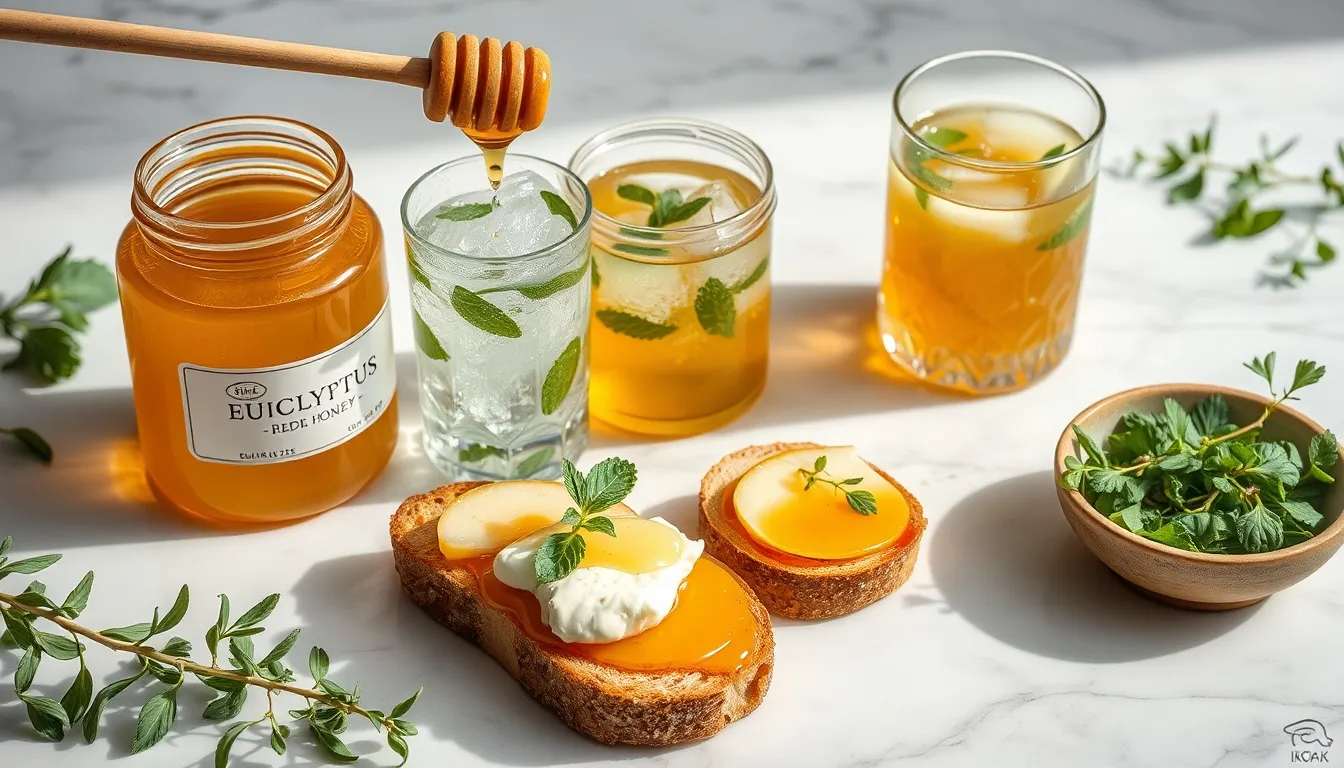
- **Herbal teas:** The menthol-like character complements chamomile, thyme, mint, and ginger tea particularly well
- **Coffee:** Pairs well with dark roasts where the herbal notes complement rather than clash with coffee's bitterness
- **Cheese boards:** Excellent with aged cheeses (Manchego, Pecorino, aged Gouda) where the assertive flavor holds its own
- **Marinades and glazes:** The herbal complexity adds depth to lamb, duck, and roasted root vegetable marinades
- **Throat remedies:** The natural choice for honey-lemon or honey-ginger throat soothers, where the eucalyptus character enhances the medicinal effect
- **Baking:** Use in recipes where a bold, herbal honey flavor is desired — gingerbread, rye bread, and spice cakes pair well
Eucalyptus Honey vs Other Varieties
How does eucalyptus honey compare to other popular varieties? Here's a practical framework:
**Eucalyptus vs Manuka honey ($35-60+):** Both are strong antimicrobial honeys, but through different mechanisms. Manuka's power comes from methylglyoxal (MGO); eucalyptus relies on hydrogen peroxide plus plant-derived compounds. Manuka is clinically superior for wound care and has more research backing, but eucalyptus honey's respiratory benefits (from eucalyptol) are unique. Eucalyptus is also 3-5x less expensive than genuine Manuka, making it a more practical daily choice.
**Eucalyptus vs Buckwheat honey ($15-25, ORAC 16,000+):** Buckwheat has higher antioxidant content and stronger cough suppression evidence, but eucalyptus has the respiratory decongestant advantage. For pure antioxidant density, buckwheat wins. For respiratory congestion, eucalyptus may have an edge. Both are excellent dark honey choices.
**Eucalyptus vs Clover honey ($8-15):** Very different profiles. Clover is mild, crowd-pleasing, and versatile; eucalyptus is bold, herbal, and specialized. Clover is better for everyday sweetening and baking; eucalyptus excels in therapeutic applications and savory pairings.
**Eucalyptus vs Wildflower honey ($10-18):** Wildflower honeys vary enormously by region and season, while eucalyptus is more consistent in character. Eucalyptus is the better choice if you specifically want respiratory support; wildflower offers broader antioxidant diversity from multiple nectar sources.
Conservation: Eucalyptus Forests and Climate Change
Australia's native eucalyptus forests — the ancestral source of the world's finest eucalyptus honey — face escalating threats from climate-intensified bushfires. The 2019-2020 Black Summer fires burned over 46 million acres and destroyed an estimated 3 billion animal habitats. With fire seasons lengthening and intensifying, Australia's unique eucalyptus ecosystems face an existential challenge that directly impacts eucalyptus honey production.
Native eucalyptus species support extraordinary biodiversity — over 700 eucalyptus species provide food and habitat for koalas, sugar gliders, parrots, and hundreds of insect species including native bee pollinators — the very species celebrated during National Pollinator Week (June 22-28). While eucalyptus plantations exist globally (Spain, Portugal, Brazil), they lack the biodiversity value of native Australian forests. Choosing Australian-origin eucalyptus honey ($12-22/lb) over plantation-sourced alternatives supports the economic case for preserving native forest ecosystems.
With World Environment Day (June 5) focusing attention on ecosystem resilience, eucalyptus honey illustrates how consumer choices connect to forest conservation. Australian beekeepers who produce eucalyptus honey from native forest sources are frontline advocates for fire management, habitat restoration, and old-growth forest protection. Premium pricing for single-species Australian eucalyptus honey helps sustain these stewardship efforts compared to commodity alternatives like clover honey ($8-15).
How to Choose Quality Eucalyptus Honey
Eucalyptus honey is widely available due to extensive eucalyptus cultivation worldwide, but quality varies significantly. Here's what to look for:
- **Origin matters:** Australia, Spain, Italy (Sardinia, Sicily), Brazil, and Portugal produce the best eucalyptus honeys. Australian eucalyptus honey often has the strongest character since bees forage on native species rather than plantation trees
- **Look for "raw" and "unfiltered":** Processing destroys the volatile compounds (including eucalyptol) that give eucalyptus honey its unique respiratory benefits. Pasteurized eucalyptus honey retains some antimicrobial activity but loses much of its distinctive character
- **Smell test:** Genuine eucalyptus honey should have a noticeable herbal, menthol-like aroma. If it smells generically sweet with no herbal character, it may be adulterated or heavily processed
- **Color check:** Should be medium to dark amber. Very light "eucalyptus honey" is likely mislabeled or blended
- **Price range:** $10-18 per pound for quality eucalyptus honey (imported) or $8-14 for domestic/plantation varieties. Significantly cheaper options may be adulterated — see our how to tell if honey is real guide
- **Single-origin vs blended:** Single eucalyptus species honeys (e.g., Eucalyptus ficifolia, E. melliodora, E. robusta) have more distinctive flavor profiles than generic "eucalyptus blend" honeys
Safety and Considerations
Eucalyptus honey is safe for most people when consumed in normal dietary amounts. The eucalyptol content in honey is far lower than in eucalyptus essential oil (which should never be ingested undiluted), so toxicity concerns that apply to concentrated eucalyptus products don't apply to honey.
- **Infants under 12 months:** Never give honey to infants under 12 months due to infant botulism risk — see our baby honey safety guide
- **Allergies:** People with known eucalyptus allergies should approach cautiously, though allergic reactions to eucalyptus honey are rare since the major allergens are in eucalyptus pollen (which is wind-pollinated) rather than nectar
- Diabetes note — Honey is a fast-acting carbohydrate, and no honey variety is medically preferred. Use the honey carbohydrate and label guide to compare serving-size total carbohydrate and added sugars within an individualized care plan.
- **Medication interactions:** Like all honeys, may interact with blood-thinning medications — consult your healthcare provider if taking warfarin or similar drugs
- This section does not establish a universal or medical honey dose for this purpose. Use the daily added-sugar guide to count honey with other added or free sugars.
