What Makes Orange Blossom Honey Special?
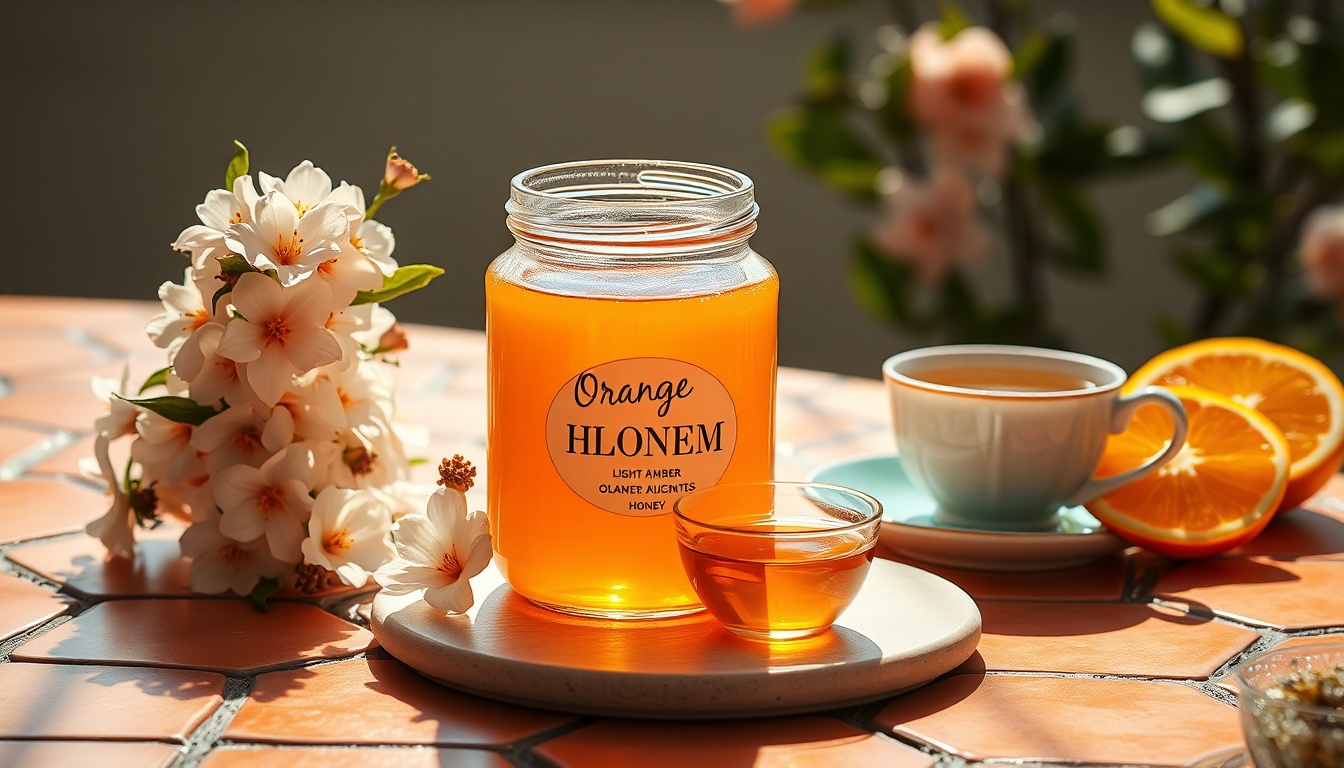
Orange blossom honey is a monofloral honey produced primarily from the nectar of citrus tree blossoms — orange, lemon, grapefruit, and tangerine flowers — making it one of the most recognizable and popular premium honeys worldwide at $12-20 per pound in 2026. Major production regions include Florida, California, Texas, Spain (particularly Valencia and Andalusia), Italy (Sicily), Israel, and Mexico.
What sets orange blossom honey apart from other varieties is its distinctive citrus aromatic profile. During nectar collection, bees pick up volatile terpenoids from citrus blossoms — particularly linalool, limonene, and neroli — that survive processing and give the finished honey a recognizable citrus-floral fragrance. A 2019 study in Food Chemistry identified over 40 volatile compounds in orange blossom honey, with linalool and its derivatives being the dominant aromatic markers used for authenticity testing.
Beyond aroma, orange blossom honey has a unique polyphenol profile influenced by its floral source. Citrus nectar contributes hesperidin, naringenin, and hesperetin — citrus-specific flavanones not typically found in other honey varieties. These compounds have their own well-documented health benefits separate from the universal honey polyphenols (chrysin, pinocembrin, caffeic acid) present in all raw honeys.
This guide examines what makes orange blossom honey nutritionally distinct, what the research shows about its specific health benefits, and how to choose quality orange blossom honey. For a broader overview of honey varieties and their properties, see our types of honey guide.
1. Unique Citrus Polyphenol Profile
The most scientifically interesting aspect of orange blossom honey is its citrus-derived flavanone content. While all raw honeys contain universal polyphenols like chrysin and pinocembrin, orange blossom honey uniquely delivers hesperidin, naringenin, and hesperetin — the same bioactive compounds that make citrus fruits beneficial for cardiovascular and metabolic health.
Hesperidin is the dominant citrus flavanone, and its health effects are extensively studied. A 2017 meta-analysis in Critical Reviews in Food Science and Nutrition analyzed 16 clinical trials and found that hesperidin supplementation significantly reduced systemic inflammation (CRP), improved endothelial function, and lowered diastolic blood pressure. While orange blossom honey provides lower doses than supplements, regular consumption adds hesperidin to the diet in a bioavailable, enjoyable form.
Naringenin (also found in grapefruit) has demonstrated lipid-modifying properties. A 2015 review in Pharmacological Research documented naringenin's ability to inhibit HMG-CoA reductase (the same target as statin drugs, though far less potently), reduce hepatic lipogenesis, and improve insulin sensitivity in animal models. While human clinical trials at dietary doses are limited, the mechanistic evidence is strong.
The combined polyphenol profile of orange blossom honey — universal honey flavonoids plus citrus-specific flavanones — provides broader bioactive coverage than most monofloral honeys. This dual-source polyphenol diversity is similar to the benefit of combining honey with other polyphenol-rich foods, but in a single ingredient. For comparison, see how other varieties stack up in our honey nutrition facts guide.
Get the Honey Buyer's Cheat Sheet (free PDF)
16 varieties on one page — color, flavor, best use and what a fair price looks like — from the 268 honeys we track.
2. Calming and Mild Sedative Properties
Orange blossom honey retains measurable amounts of the volatile compounds from citrus flowers, and several of these have documented neurological effects. Linalool — the dominant volatile in orange blossom honey — has been studied extensively for anxiolytic (anti-anxiety) and mild sedative properties.
A 2018 study in Frontiers in Behavioral Neuroscience found that linalool activated GABA-A receptors in mice, producing anxiolytic effects comparable to diazepam (a benzodiazepam) without motor impairment. A 2010 study in Phytomedicine confirmed that linalool inhalation reduced anxiety markers in human volunteers, with effects measurable within 10 minutes of exposure.
Neroli oil (derived from bitter orange blossoms) is one of the most studied essential oils for relaxation. A 2014 randomized controlled trial in Evidence-Based Complementary and Alternative Medicine found that neroli inhalation significantly reduced anxiety, systolic blood pressure, and cortisol levels in patients undergoing coronary angiography. Orange blossom honey contains trace amounts of the same neroli volatile compounds.
The practical implication: orange blossom honey may be particularly well-suited as a bedtime honey, where its linalool content complements honey's tryptophan-melatonin pathway for sleep promotion. The combination of the calming aromatics (linalool, neroli compounds) with honey's liver glycogen replenishment and tryptophan transport creates a multi-pathway approach to sleep support. For more on honey's calming effects, see our guide on honey for anxiety and stress.
Pro Tip
For maximum calming effect, dissolve orange blossom honey in warm (not hot) milk or chamomile tea 30 minutes before bed. The warmth releases more linalool aromatics, and the ritual itself promotes relaxation.
3. Carbohydrate and Label Context
Orange blossom describes a floral source and flavor profile; it does not establish the composition of every jar or a cardiovascular or diabetes treatment effect.
Orange blossom honey remains a fast-acting carbohydrate, and no honey variety is medically preferred for diabetes. Use the honey carbohydrate and label guide to compare the product's serving-size total carbohydrate and added sugars within an individualized care plan.
Choose it for citrus-floral flavor and recipe fit rather than an assumed glucose response.
4. Antimicrobial and Wound-Healing Activity
Like all raw honeys, orange blossom honey exhibits antimicrobial activity through multiple mechanisms: high sugar concentration (osmotic stress), low pH (3.2-4.5), hydrogen peroxide generation via glucose oxidase, and polyphenol-mediated membrane disruption. A 2016 study in Frontiers in Microbiology comparing antimicrobial potency across 12 honey varieties found that orange blossom honey demonstrated significant antibacterial activity against S. aureus and E. coli, though less potent than manuka ($35-60+/lb) or buckwheat ($15-25/lb, ORAC 16,000+) varieties.
Where orange blossom honey may have a specific advantage is in oral and throat applications. Limonene — a citrus terpene present in orange blossom honey — has documented antimicrobial activity against oral pathogens including Streptococcus mutans (the primary cavity-causing bacterium) and Candida species. A 2016 study in the Journal of Applied Oral Science found that limonene demonstrated antifungal activity comparable to nystatin against oral Candida.
For sore throat and cough relief, orange blossom honey provides the standard honey benefits (mucosal coating, antimicrobial activity, cough suppression superior to dextromethorphan in the 2020 BMJ Evidence-Based Medicine meta-analysis) plus the additional antimicrobial contribution of its citrus terpenes. Its mild flavor also makes it one of the most palatable honeys for children over 12 months.
For serious wound care, medical-grade manuka honey remains the evidence-based first choice due to its methylglyoxal (MGO) content. Orange blossom honey is better suited for daily immune support, oral health, and sore throat relief rather than clinical wound management.
5. Digestive Health and Prebiotic Effects
Orange blossom honey shares the prebiotic properties common to all raw honeys — fructo-oligosaccharides (FOS) and gluco-oligosaccharides (GOS) that selectively feed beneficial gut bacteria like Bifidobacterium and Lactobacillus. These prebiotics stimulate short-chain fatty acid (SCFA) production, strengthen the gut barrier, and support the gut-associated immune system.
The citrus flavanones in orange blossom honey may provide additional digestive benefits. Naringenin has demonstrated gastroprotective effects in multiple studies — a 2014 review in Pharmacological Research documented its ability to reduce gastric acid secretion, protect the gastric mucosa, and inhibit H. pylori adhesion to epithelial cells. Hesperidin has shown anti-inflammatory effects on intestinal tissue through NF-κB pathway modulation.
For people with digestive sensitivity, orange blossom honey's mild flavor and moderate acidity make it a well-tolerated option. It's gentler than strongly flavored honeys like buckwheat (which some people find too intense for digestive use) while still providing full prebiotic and polyphenol benefits. See our honey and gut health guide for the complete evidence on honey's prebiotic mechanisms.
A practical digestive application: dissolve 1 tablespoon of orange blossom honey in warm water with a squeeze of lemon as a morning tonic. The honey provides prebiotics and gastric coating, the citrus flavanones offer gastroprotection, and the warm water stimulates gentle peristalsis. For more honey-based digestive remedies, see our guide on honey for constipation.
6. Skin Care and Beauty Applications
Orange blossom honey has a long history in Mediterranean beauty traditions, particularly in Spanish and Italian skincare. Its light color, mild fragrance, and smooth texture make it one of the most pleasant honeys for topical use, and its citrus polyphenols add specific skincare benefits beyond standard honey.
Hesperidin has documented photoprotective properties — a 2016 study in the Journal of Photochemistry and Photobiology found that hesperidin reduced UV-B-induced skin damage by scavenging reactive oxygen species and inhibiting melanin overproduction. Naringenin has shown anti-hyperpigmentation effects by inhibiting tyrosinase (the enzyme that produces melanin), making orange blossom honey potentially useful for evening skin tone.
For general skincare, orange blossom honey provides the same face mask benefits as other raw honeys: humectant moisture binding, mild enzymatic exfoliation (glucose oxidase), antimicrobial protection against acne bacteria, and anti-inflammatory soothing. The added citrus aromatics make it a more pleasant sensory experience than darker, stronger-smelling varieties.
A simple orange blossom honey face mask: apply a thin layer of raw orange blossom honey to clean, slightly damp skin. Leave for 15-20 minutes, then rinse with warm water. For enhanced benefits, combine with a few drops of olive oil (for emollient moisturizing) or plain yogurt (for lactic acid exfoliation). Use 1-2 times weekly for best results.
Orange Blossom Honey: Flavor Profile and Culinary Uses
Orange blossom honey has one of the most distinctive and recognizable flavor profiles among common honeys. Its characteristics:
**Color:** Light to medium amber — lighter than wildflower or buckwheat, similar to clover but with a slight golden warmth. The color intensifies slightly with age.
**Aroma:** Distinctly citrus-floral, with notes of orange blossom, neroli, and a hint of jasmine. This is the primary identifying marker — the linalool and limonene aromatics are immediately recognizable. Fresh orange blossom honey should smell like walking through a citrus grove in bloom.
**Flavor:** Medium sweetness with citrus brightness, floral mid-notes, and a clean finish without bitterness. Less one-dimensional than clover, less intense than buckwheat, and more complex than acacia. A subtle fruity tartness distinguishes it from purely floral honeys like lavender ($15-25/lb).
**Texture:** Smooth, medium viscosity. Crystallizes moderately (faster than acacia or tupelo, slower than clover or wildflower). Crystallized orange blossom honey maintains its citrus flavor and works beautifully spread on toast or stirred into hot beverages.
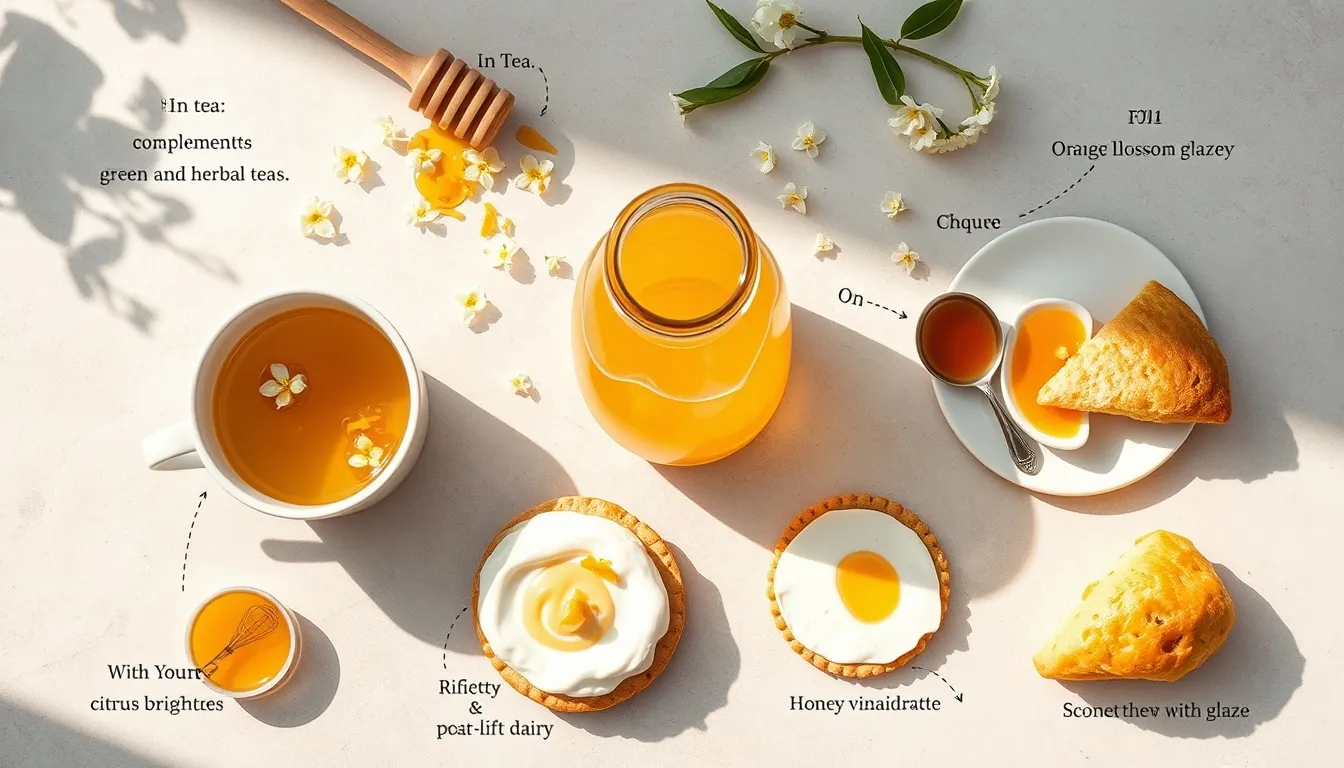
**Best culinary uses:** Green and herbal teas (the citrus notes complement delicate flavors), yogurt and granola bowls, fruit salad drizzle, light vinaigrettes and marinades, cheese boards (pairs exceptionally with ricotta, chèvre, and brie), baked goods where a subtle citrus note enhances the recipe (muffins, scones, glazes), and cocktails (pairs with gin, vodka, and sparkling wine). For baking conversions, see our honey baking substitution guide.
Orange Blossom vs Other Popular Honeys
Here's how orange blossom compares to other popular varieties by key attributes:
**Orange blossom ($12-20/lb) vs clover ($8-15/lb):** Clover is milder, more neutral, and less expensive — the everyday workhorse honey. Orange blossom has more complex flavor (citrus-floral), higher hesperidin/naringenin content, and commands a 20-40% premium. Choose clover for neutral sweetening, orange blossom when flavor matters.
**Orange blossom vs acacia ($12-20/lb, GI ~32):** Acacia is the lightest, mildest honey with the lowest GI. Orange blossom has more flavor complexity and broader polyphenol diversity. Acacia is better for diabetics or when you want pure sweetness; orange blossom when you want citrus character and calming properties.
**Orange blossom vs wildflower ($10-18/lb):** Wildflower varies dramatically by region and season, making it unpredictable but potentially very complex. Orange blossom is consistent — you know what you're getting. Wildflower may have broader antioxidant diversity due to multiple floral sources; orange blossom has specific citrus flavanones.
**Orange blossom vs manuka ($35-60+/lb):** Completely different use cases. Manuka is a therapeutic honey (antimicrobial potency 2-10x higher due to MGO). Orange blossom is a culinary and daily-use honey. Use manuka for wounds, infections, and targeted health goals; use orange blossom for daily enjoyment, cooking, and general wellness.
**Orange blossom vs buckwheat ($15-25/lb):** Opposite ends of the spectrum. Buckwheat is dark, bold, malty, with 3-9x more antioxidants (ORAC 16,000+). Orange blossom is light, delicate, citrus-forward. Buckwheat is better for maximum antioxidant intake; orange blossom is more versatile in cooking and more palatable for daily use.
How to Choose Quality Orange Blossom Honey
Orange blossom honey is one of the most commonly mislabeled honeys due to its premium pricing and recognizable name. Here's how to identify authentic quality:
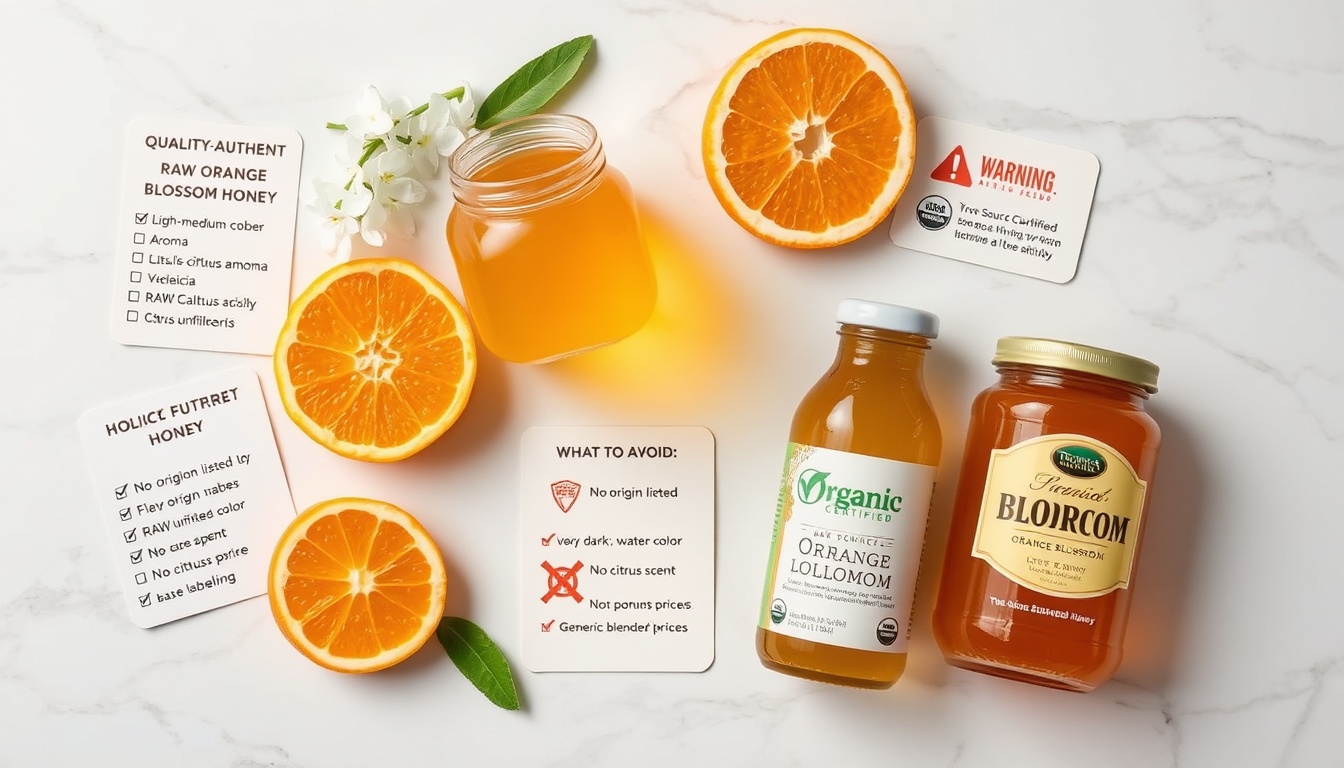
**Aroma test:** Genuine orange blossom honey has a clearly citrus-floral scent when you open the jar. If it smells generic, sweet, or has no discernible citrus character, it's likely blended with cheaper honeys or is a different variety entirely.
**Color check:** Should be light to medium amber with a golden warmth. Very dark orange blossom honey suggests blending with darker varieties. Very light, almost water-white honey may be heavily filtered or diluted.
**Source verification:** The best orange blossom honeys identify specific regions: Florida (Indian River, Treasure Coast), California (Central Valley), Spain (Valencia DO), or Italy (Sicily). Generic "orange blossom honey" without origin details is more likely to be blended or mislabeled.
**Raw vs processed:** As with all honey, raw orange blossom honey retains the heat-sensitive enzymes, volatile aromatics (linalool, limonene), and pollen that define authentic orange blossom character. Ultra-filtered or pasteurized versions lose the aromatic compounds that make orange blossom honey distinctive — and without those, you're paying a premium for generic-tasting honey. See our how to tell if honey is real guide for additional authenticity tests.
**Price:** Genuine raw orange blossom honey costs $12-20/lb in 2026 — a moderate premium over clover ($8-15/lb) or wildflower ($10-18/lb) but well below sourwood ($20-35/lb) or manuka ($35-60+/lb). Prices below $8 suggest blending or non-raw processing. Imported Spanish or Italian varieties may cost $15-30 due to import costs and typically have stricter origin labeling requirements.
**Certifications:** True Source Certified indicates the honey's origin is verified and it hasn't been transshipped through countries that commonly adulterate honey. USDA Organic is a plus but not specific to floral source — it confirms organic farming practices in the forage area. For more on honey labels and certifications, see our buyer's guide.
The Bottom Line
Orange blossom honey stands out among common honey varieties for its distinctive citrus-floral flavor, unique polyphenol profile (hesperidin, naringenin, hesperetin from citrus nectar), and calming volatile compounds (linalool, neroli) that complement honey's universal health benefits. It's one of the most versatile culinary honeys, one of the most pleasant for topical skincare, and one of the best-tasting daily-use honeys available.
The strongest evidence-supported benefits include: (1) broader polyphenol diversity than most monofloral honeys, combining universal honey flavonoids with citrus-specific flavanones; (2) calming properties from retained linalool compounds that modulate GABA-A receptors; (3) cardiovascular benefits from hesperidin's endothelial function improvement; (4) antimicrobial activity enhanced by citrus terpenes like limonene; and (5) pleasant skin care applications with photoprotective hesperidin.
For daily use, orange blossom honey at $12-20/lb is an excellent choice for tea (particularly green and herbal teas), yogurt, baking, and as a general-purpose raw honey where flavor matters. It's widely available, reasonably priced for a premium variety, and provides genuine health benefits beyond simple sweetening. Choose raw, single-origin orange blossom honey from Florida, California, or Mediterranean producers for the best quality and authentic citrus character.
Orange blossom honey is also a direct byproduct of one of the largest managed pollination events in American agriculture. California alone requires over 2 million bee colonies for almond and citrus pollination each spring. Purchasing orange blossom honey from local beekeepers supports the commercial beekeeping infrastructure that makes fruit production possible — during National Pollinator Week (June 22-28, 2026), it's a delicious way to support the pollinators behind America's citrus harvest.