Why Honey and Green Tea Are a Perfect Match
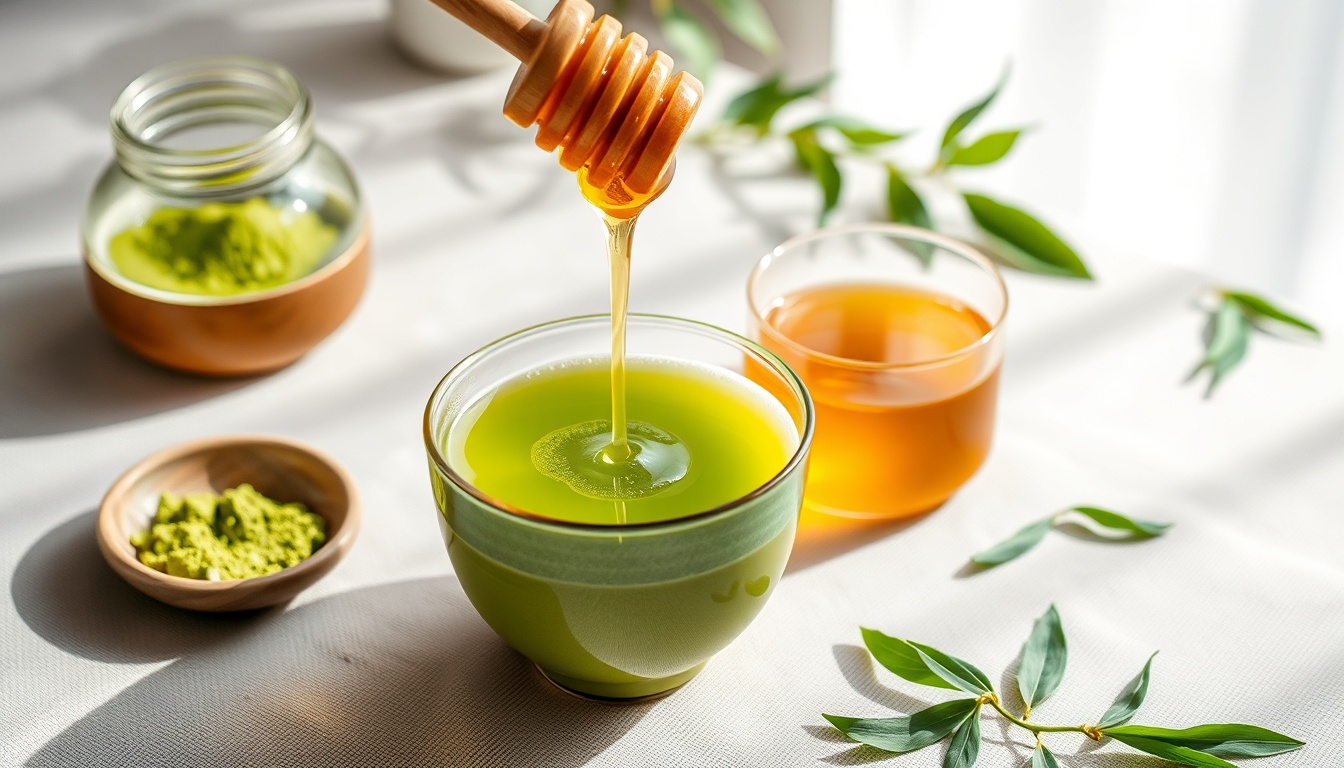
Green tea and honey have been paired for thousands of years — in traditional Chinese medicine, Japanese tea ceremonies, and Ayurvedic practice. But modern nutrition science reveals that this pairing isn't just about taste. The bioactive compounds in each ingredient interact in ways that enhance absorption, amplify health benefits, and create synergistic effects neither achieves alone.
Green tea delivers catechins (particularly EGCG — epigallocatechin gallate), L-theanine, caffeine, and over 200 other polyphenols. Raw honey contributes its own 30+ polyphenols, prebiotic oligosaccharides, active enzymes, and minerals. When combined, these compounds work through complementary pathways — green tea targets different antioxidant mechanisms than honey, creating broader cellular protection.
A 2020 study in Molecules found that combining polyphenol sources with different chemical structures (flavonols from tea + flavonoids from honey) produced synergistic antioxidant effects that exceeded the sum of their individual activities. This is the scientific basis for a pairing that traditional medicine identified empirically centuries ago.
This guide examines what research actually shows about this combination, how to pair them for maximum benefit, and the critical temperature question that determines whether you preserve honey's active enzymes. For honey pairings with other teas, see our best honey for tea guide.
1. Enhanced Antioxidant Protection
The primary benefit of combining honey with green tea is broader antioxidant coverage. Green tea's EGCG is a potent free radical scavenger that works primarily through direct electron donation and metal chelation. Honey's polyphenols (chrysin, pinocembrin, caffeic acid, quercetin) work through different mechanisms — NF-κB pathway inhibition, Nrf2 pathway activation, and reactive oxygen species (ROS) neutralization.
A 2018 study in the Journal of Agricultural and Food Chemistry found that EGCG combined with flavonoid compounds showed synergistic radical scavenging activity — the combination was 20-40% more effective than either alone at equivalent concentrations. This suggests that honey polyphenols and green tea catechins work through complementary rather than redundant pathways.
Green tea catechins are particularly effective against superoxide radicals and singlet oxygen, while honey's darker polyphenols (found in buckwheat and wildflower varieties) excel at neutralizing hydroxyl radicals and preventing lipid peroxidation. Together, they cover a wider range of oxidative stress mechanisms.
Practically, this means a cup of green tea with a tablespoon of raw honey provides a more complete antioxidant defense than either one alone — relevant for reducing the oxidative damage linked to chronic inflammation, cardiovascular disease, and accelerated aging. For more on honey's anti-inflammatory mechanisms, see our dedicated guide.
Get the Honey Buyer's Cheat Sheet (free PDF)
16 varieties on one page — color, flavor, best use and what a fair price looks like — from the 268 honeys we track.
2. Metabolism and Weight Management Support
Green tea is one of the most studied natural compounds for metabolism. A 2009 meta-analysis in the International Journal of Obesity analyzed 11 RCTs and found that green tea catechins combined with caffeine increased energy expenditure by 4-5% and fat oxidation by 10-16% compared to caffeine alone. EGCG achieves this by inhibiting catechol-O-methyltransferase (COMT), the enzyme that breaks down norepinephrine, prolonging its fat-mobilizing effects.
Adding honey provides a counterintuitive metabolic benefit. Despite being a sugar, honey activates different metabolic pathways than sucrose. A 2011 study in the Journal of the American College of Nutrition found that honey consumption produced lower blood glucose responses, less insulin resistance, and lower body weight gain compared to equivalent calories from sucrose. The prebiotic oligosaccharides in honey also support the gut bacteria that influence metabolic rate.
Honey remains a fast-acting carbohydrate; adding it to tea does not create a weight-management or diabetes protocol.
For best metabolic effect, drink honey green tea 30 minutes before moderate exercise. The caffeine + EGCG mobilize fatty acids for fuel, while honey provides quick glucose for the initial effort. See our honey for weight loss guide for the full evidence picture.
3. Immune System Support
Both green tea and honey have independently demonstrated immune-modulating properties, and the combination provides multi-layered defense:
**Green tea's immune effects:** EGCG enhances regulatory T-cell function (important for preventing autoimmune overreaction), increases natural killer cell activity, and has direct antiviral properties — a 2018 study in the Journal of Allergy and Clinical Immunology found that catechins inhibited influenza virus replication by blocking viral attachment to cell membranes.
**Honey's immune effects:** Raw honey provides direct antimicrobial activity against 60+ bacterial species including MRSA, prebiotic stimulation of gut-associated lymphoid tissue (GALT) where 70% of immune cells reside, and anti-inflammatory modulation that prevents the immune system from causing collateral tissue damage during infections.
**Combined benefits:** The combination provides antiviral defense (primarily from green tea catechins), antibacterial defense (primarily from honey's glucose oxidase and methylglyoxal pathways), and immunomodulation (from both). This three-pronged approach is particularly useful during cold and flu season — green tea with honey is one of the most evidence-supported natural remedies for upper respiratory symptoms.
A warm cup also provides soothing hydration for sore throats — honey coats the irritated mucosa while green tea's anti-inflammatory catechins reduce swelling. This is why honey-green tea is a staple recommendation in integrative medicine for early cold symptoms.
4. Gut Health and Digestive Benefits
The gut health benefits of this combination are among the most exciting areas of current research. Green tea catechins act as prebiotics — they aren't fully absorbed in the small intestine and travel to the colon where they're metabolized by beneficial bacteria. A 2019 study in the Journal of Nutritional Biochemistry found that green tea polyphenols increased Bifidobacterium and Lactobacillus populations while suppressing potentially harmful Clostridium species.
Honey contributes its own prebiotic power through fructo-oligosaccharides (FOS) and gluco-oligosaccharides (GOS), which selectively feed beneficial bacteria. As our honey and gut health guide explains, these prebiotics stimulate short-chain fatty acid (SCFA) production — butyrate, propionate, and acetate — that nourish colonocytes, strengthen the gut barrier, and modulate the immune system.
The combination creates what researchers call a "complementary prebiotic effect": green tea catechins and honey oligosaccharides feed different beneficial bacterial populations through different metabolic pathways. A 2021 review in Nutrients noted that dietary polyphenol diversity (rather than quantity) was the strongest predictor of microbiome diversity — and microbiome diversity is the top marker of gut health.
For people with digestive issues, honey green tea may also provide direct relief. EGCG has gastroprotective effects (reducing stomach acid irritation), while honey's viscous texture coats the esophageal and gastric lining. This makes it a gentler option than black tea or coffee for people with acid reflux or sensitive stomachs.
5. Cardiovascular and Blood Sugar Benefits
Green tea is one of the most evidence-supported dietary interventions for cardiovascular health. A 2020 meta-analysis in the European Journal of Preventive Cardiology analyzing data from 100,902 participants found that drinking green tea 3+ times weekly was associated with a 20% lower risk of heart attack and 22% lower risk of stroke over a median follow-up of 7.3 years.
The cardiovascular mechanisms are well-characterized: EGCG improves endothelial function and nitric oxide production (vasodilation), reduces LDL cholesterol oxidation (the critical step in plaque formation), lowers blood pressure by 2-5 mmHg, and reduces triglycerides. Honey contributes complementary benefits — its polyphenols inhibit HMG-CoA reductase (the same pathway targeted by statins), and the 2022 Nutrition Reviews meta-analysis of 18 RCTs found honey reduced LDL cholesterol, triglycerides, and fasting blood glucose.
Honey remains a fast-acting carbohydrate; cardiovascular claims do not make it medically preferred for diabetes.
For more on how honey specifically affects cardiovascular markers, see our guides on honey and cholesterol and honey and blood pressure.
6. Calm Focus: L-Theanine, Caffeine, and Honey's Steady Energy
One of green tea's unique advantages over other caffeinated beverages is L-theanine — an amino acid that crosses the blood-brain barrier and promotes alpha brain wave activity (the same pattern associated with calm, focused meditation). A 2008 study in Nutritional Neuroscience found that L-theanine combined with caffeine improved attention, task-switching accuracy, and alertness without the jitteriness of caffeine alone.
Adding honey provides a third dimension to this cognitive effect. Honey's glucose supplies immediate fuel for the brain (which consumes 20% of the body's glucose despite being 2% of body weight), while its fructose provides sustained energy over the following 1-2 hours. This prevents the "energy crash" that often follows sugar-sweetened beverages where glucose spikes and drops quickly.
The combination delivers: sustained attention (caffeine + L-theanine), calm mood (L-theanine alpha waves), reduced anxiety (L-theanine + honey's tryptophan pathway), and steady energy without crashes (honey's dual glucose-fructose delivery). This makes honey green tea an ideal work or study beverage — more sustained than coffee, less sedating than herbal tea.
For optimal focus, brew green tea for 2-3 minutes (longer steeping extracts more L-theanine and caffeine) and add 1-2 teaspoons of clover or wildflower honey — mild flavors that complement green tea without overpowering it.
The Temperature Question: How Hot Is Too Hot?
The most important practical question about honey in green tea: does hot water destroy honey's beneficial compounds? The answer is nuanced.
**What heat affects:** The enzyme glucose oxidase (which generates hydrogen peroxide and drives antibacterial activity) is heat-sensitive and begins degrading above 40°C (104°F). Diastase (an enzyme used as a freshness marker) degrades above 60°C (140°F). Some volatile aromatic compounds evaporate above 50°C (122°F). A 2010 study in the Journal of Apicultural Research found that heating honey to 80°C for 5 minutes reduced diastase activity by 30-50%.
**What heat doesn't affect:** Polyphenols (the antioxidant compounds responsible for most of honey's health benefits) are heat-stable up to 100°C. Minerals are completely heat-stable. Prebiotic oligosaccharides are heat-stable. The 2022 Nutrition Reviews meta-analysis that found honey's cardiovascular benefits didn't distinguish between heated and unheated honey — suggesting the polyphenol benefits survive normal cooking temperatures.
**The practical approach:** Brew green tea at the correct temperature for the variety (70-80°C / 158-176°F for most green teas — boiling water makes green tea bitter anyway). Let it cool for 2-3 minutes to around 60-65°C. Then stir in honey. This preserves the enzyme activity while still being warm enough to dissolve honey completely. If you're drinking green tea specifically for antibacterial benefits (like during a cold), wait until it's warm-to-the-touch before adding honey to maximize enzyme preservation.
For everyday health and antioxidant benefits, adding honey to moderately hot tea (not boiling) preserves the vast majority of beneficial compounds. The polyphenols, prebiotics, and minerals that drive most of honey's benefits are not significantly affected by normal tea temperatures.
Best Honey Types for Green Tea
Not all honeys pair equally well with green tea's delicate, vegetal flavor. Here are the best matches:
**Acacia honey:** The top choice for green tea. Its mild, floral sweetness and low glycemic index (GI 32-35) complement green tea without masking its flavors. Light color, slow crystallization, and clean finish make it the purest sweetener for delicate teas.
**Clover honey:** The most accessible option — mild, versatile, widely available, and affordable. Its neutral sweetness lets the tea's flavor come through. A good everyday choice for daily green tea drinking.
**Orange blossom honey:** Adds subtle citrus aromatics that enhance sencha and Chinese green teas. The floral-citrus notes create a naturally flavored tea without added ingredients.
**Lavender honey:** For a calming evening cup, lavender honey's retained linalool compounds amplify green tea's L-theanine relaxation effects. Best with Japanese green teas like gyokuro.
**Avoid with green tea:** Strongly flavored honeys like buckwheat (malty, molasses-like) or chestnut (bitter, tannic) overpower green tea's subtle flavors. Save these for black tea, which can stand up to bold honey flavors. See our best honey for tea guide for complete pairing recommendations.
5 Honey Green Tea Recipes
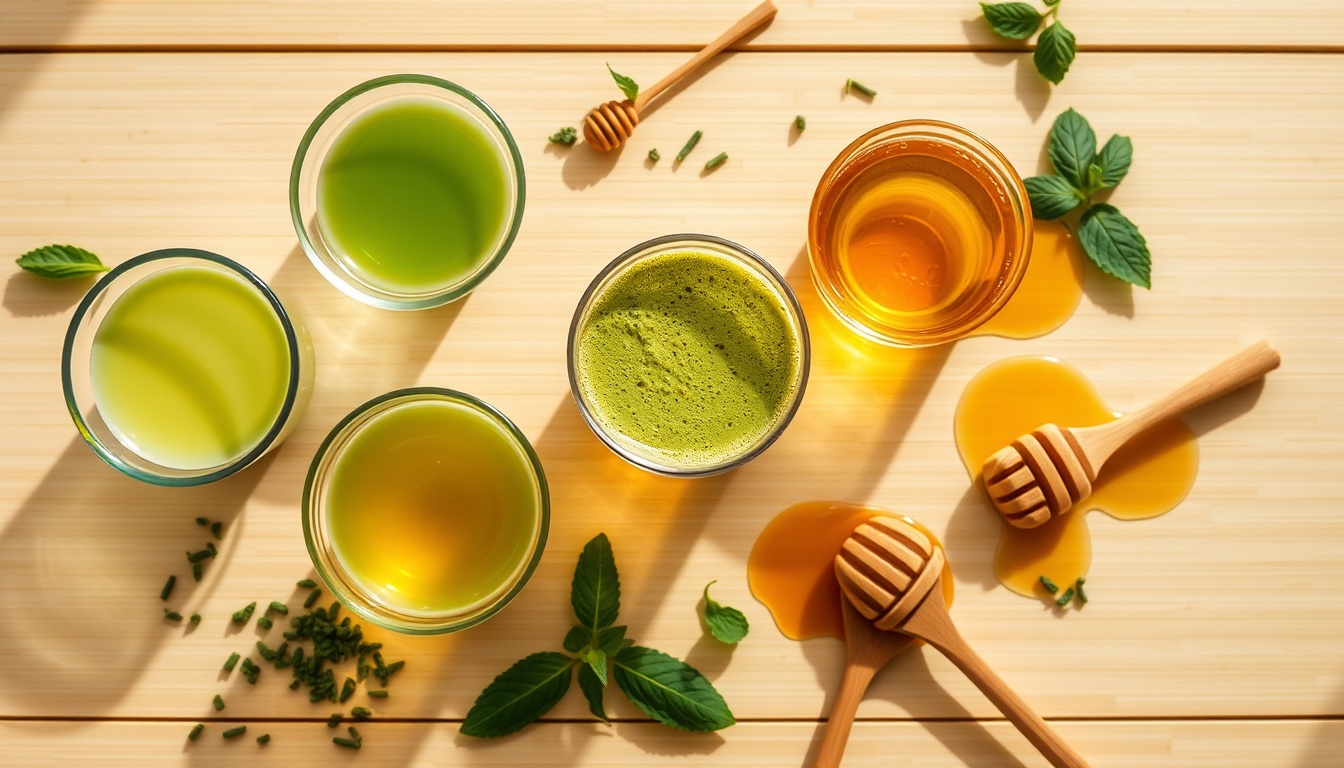
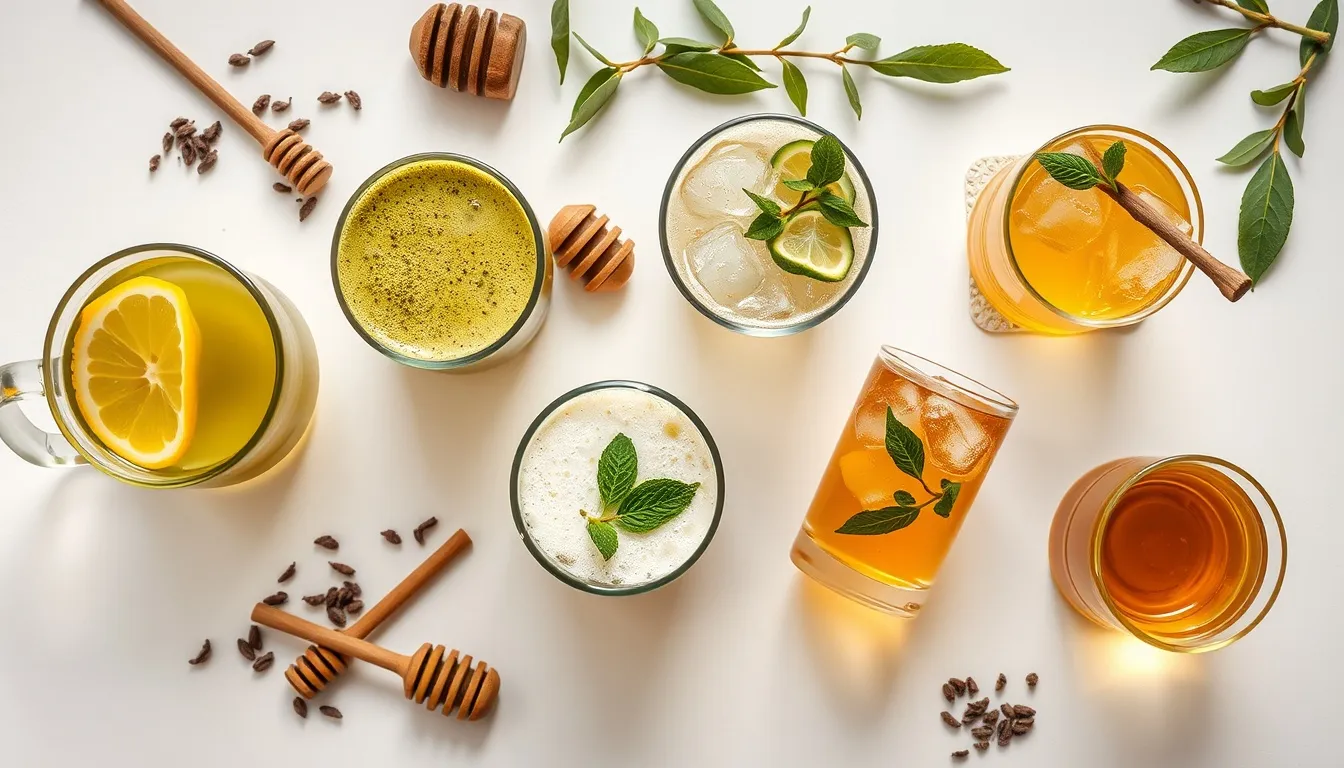
**Classic Honey Green Tea:** Brew 1 tsp loose leaf green tea (or 1 bag) in 8 oz water at 75°C (167°F) for 2-3 minutes. Let cool to warm, stir in 1-2 tsp raw honey. The simplest and most effective daily recipe.
**Honey Green Tea with Ginger:** Add 3-4 thin slices of fresh ginger to the water before heating. Brew green tea in the ginger water, then add 1 tbsp honey. Ginger's gingerol compounds add anti-nausea and additional anti-inflammatory effects. Excellent for cold season.
**Iced Honey Green Tea:** Brew green tea double strength (2 bags or 2 tsp per 8 oz). Dissolve 2 tbsp honey while still warm. Pour over ice and top with cold water. Add lemon slices for vitamin C and flavor. A perfect summer refresher that retains all the antioxidant benefits.
**Matcha Honey Latte:** Whisk 1 tsp ceremonial-grade matcha powder with 2 oz hot water until frothy. Dissolve 1 tbsp acacia honey in 6 oz warm milk (dairy or oat). Combine and top with foam. Matcha provides 3x the EGCG of regular green tea because you consume the whole leaf — the most antioxidant-dense version of this combination.
**Honey Green Tea Smoothie:** Blend 1 cup cold-brewed green tea, 1 tbsp raw honey, 1/2 frozen banana, handful of spinach, and ice. The cold brew method (steep 1 tbsp loose tea in cold water for 8-12 hours) extracts catechins while producing almost zero bitterness. Add a squeeze of lemon for additional vitamin C and flavor.
Myths vs Reality
**Myth: Honey in hot tea becomes toxic.** This claim circulates widely in Ayurvedic-influenced wellness circles. There is no scientific evidence that heated honey produces toxic compounds at normal tea temperatures. Heating honey above 140°C (284°F) — far higher than any tea — can produce trace amounts of hydroxymethylfurfural (HMF), but at levels well below safety thresholds established by food safety authorities. Normal tea temperatures are completely safe.
**Myth: Green tea with honey cures cancer.** Both green tea catechins and honey polyphenols show anticancer activity in laboratory and animal studies (EGCG has been studied in over 3,000 cancer-related papers). However, translating cell culture results to human cancer treatment requires clinical trials, and no current evidence supports using honey green tea as a cancer treatment or replacement for medical care.
**Myth: You need expensive matcha and manuka for benefits.** Standard sencha green tea and regular raw clover honey provide the core catechin + polyphenol combination. Matcha and manuka are premium options with higher concentrations of specific compounds, but the basic combination is effective and affordable for daily use.
**Myth: Green tea with honey is a "detox."** Your liver and kidneys handle detoxification. Green tea and honey support liver function (EGCG is hepatoprotective, and honey polyphenols reduce oxidative liver damage), but neither "detoxifies" the body in the way cleanses claim. The real benefit is long-term organ protection, not acute detoxification.
How Much and When to Drink
Amounts reported in the studies discussed here describe study protocols, not daily recommendations. Use the daily added-sugar guide to count honey with other added or free sugars.
**Caffeine context:** Choose tea based on caffeine tolerance and comfort, not for a honey-based metabolic, digestive, or focus treatment.
During pregnancy, treat honey as a carbohydrate-containing sweetener and use guidance from the prenatal care team for nutrition, symptoms, and glucose management.
For the broadest health benefits, make honey green tea a consistent daily habit rather than an occasional drink. The cardiovascular studies showing the strongest outcomes followed participants who drank green tea regularly over years — the benefit comes from sustained, daily polyphenol intake.
The Bottom Line
Honey and green tea is one of the most evidence-supported flavor pairings in nutrition science. The combination provides broader antioxidant coverage than either alone, supports metabolism and cardiovascular health, enhances immune defense through complementary mechanisms, feeds beneficial gut bacteria through diverse prebiotic pathways, and delivers calm, sustained focus without the jitteriness of coffee.
The strongest evidence supports this combination for: (1) cardiovascular protection, where the 100,000-participant meta-analysis found 20% reduced heart attack risk from regular green tea consumption; (2) metabolic support, where catechins increase fat oxidation by 10-16%; (3) immune defense, where honey's antimicrobial properties complement green tea's antiviral catechins; and (4) cognitive performance, where L-theanine + caffeine + steady honey glucose provide sustained focus.
The key practical tip: brew green tea at 70-80°C (not boiling), let it cool to warm, then stir in raw honey. This preserves the maximum enzyme activity while still dissolving honey completely. Use mild honeys (acacia, clover, orange blossom) that complement rather than overpower green tea's delicate flavor. And make it a daily habit — the benefits compound over time.