Honey for Hair: DIY Masks, Scalp Treatments & Growth Tips
Honey has been used in hair care for thousands of years — and modern trichology confirms its moisturizing, cuticle-smoothing, and antimicrobial benefits. Learn which honey to use for your hair type, get five proven DIY recipes, and discover step-by-step application techniques.
Last updated:
Mix 3 tablespoons of raw honey with 2 tablespoons of warm water. Apply to damp, freshly shampooed hair from mid-shaft to tips. Cover with a shower cap and leave for 20-30 minutes. Rinse with lukewarm water. For dry hair, add coconut oil. For scalp issues, massage directly into scalp. For frizz, add mashed banana. Use once per week. Always use raw, unfiltered honey — pasteurized honey lacks the beneficial enzymes.

Why Does Honey Work for Hair?
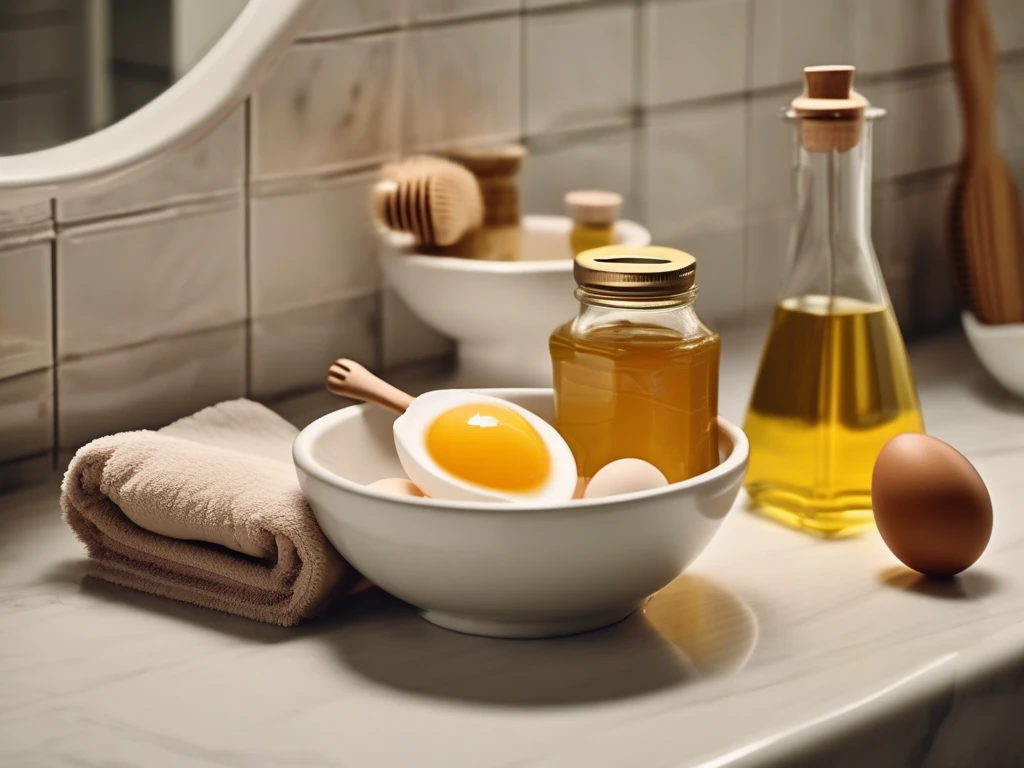
Honey has been used in hair care for centuries across cultures — ancient Egyptian, Greek, and Ayurvedic traditions all documented honey-based hair treatments. Modern trichology confirms that honey's unique chemical properties make it remarkably effective for hair health. As a natural humectant, honey attracts and retains moisture from the surrounding air, binding it to the hair shaft. This is critical because hair dryness is the root cause of most common hair complaints: frizz, breakage, split ends, and dullness. Honey's sugar content — primarily fructose and glucose — creates a hygroscopic effect that keeps hair hydrated for hours after rinsing. Raw honey also contains trace amounts of vitamins B1, B2, B3, B5, B6, and C, along with minerals like calcium, iron, zinc, and potassium that nourish the hair follicle and support keratin production. The naturally acidic pH of honey (3.2 to 4.5) closely matches the ideal pH of the hair cuticle (4.5 to 5.5), helping to smooth and seal the cuticle layer for increased shine and reduced tangles. Honey's enzyme glucose oxidase produces low levels of hydrogen peroxide, which provides mild antimicrobial action on the scalp — helpful for conditions like dandruff and scalp irritation caused by fungal overgrowth. A 2001 study in the European Journal of Medical Research found that crude honey applied to the scalp significantly reduced scaling, itching, and hair loss associated with seborrheic dermatitis within four weeks.
Key Takeaways
- Natural humectant — attracts and locks moisture into the hair shaft for lasting hydration
- Contains B vitamins, zinc, iron, and potassium that nourish hair follicles
- Acidic pH (3.2-4.5) smooths the hair cuticle for shine and reduced tangles
- Glucose oxidase provides antimicrobial action against dandruff-causing fungi
- Sugars create a hygroscopic film that prevents moisture loss throughout the day
- Clinically shown to reduce scalp scaling, itching, and hair loss from seborrheic dermatitis
Which Honey Is Best for Hair Care?
Not all honey delivers equal results for hair care. Raw, unfiltered honey is essential — pasteurized commercial honey has been heat-treated to temperatures that destroy the enzymes, vitamins, and antimicrobial compounds responsible for hair benefits. <Link to="/honey/new-zealand-manuka-umf-15" className="text-honey-600 hover:text-honey-800 underline font-medium">Manuka honey UMF 10+</Link> ($30-60) is the top choice for scalp health due to its unique methylglyoxal (MGO) compound, which provides powerful antibacterial and anti-inflammatory properties that persist even after the hydrogen peroxide pathway is neutralized. For general conditioning and moisture, <Link to="/honey/wildflower-honey" className="text-honey-600 hover:text-honey-800 underline font-medium">wildflower honey</Link> ($10-18) is an excellent everyday option — its diverse pollen content delivers a broad spectrum of nutrients and antioxidants. <Link to="/honey/acacia-honey" className="text-honey-600 hover:text-honey-800 underline font-medium">Acacia honey</Link> ($12-20) is ideal for fine or easily-weighed-down hair because it is lighter, less viscous, and rinses out more easily than darker varieties without leaving residue. <Link to="/honey/buckwheat-honey" className="text-honey-600 hover:text-honey-800 underline font-medium">Buckwheat honey</Link> ($15-25) contains the highest antioxidant content of any common variety — ORAC values up to 16,000+ — making it the best choice for damaged, color-treated, or heat-styled hair that needs intensive repair. For natural hair lightening, lighter honeys like <Link to="/honey/acacia-honey" className="text-honey-600 hover:text-honey-800 underline font-medium">acacia</Link> or <Link to="/honey/clover-honey" className="text-honey-600 hover:text-honey-800 underline font-medium">clover honey</Link> ($8-15) contain slightly more hydrogen peroxide precursors that can lighten hair by one to two shades over repeated applications when mixed with a dilute hydrogen peroxide solution or applied in sunlight. However, this effect is subtle and gradual — honey is not a bleach substitute. Avoid "honey blends" or products labeled "made with real honey" — these typically contain corn syrup or heavily processed honey with negligible hair care value.
Key Takeaways
- Must be raw and unfiltered — pasteurized honey lacks therapeutic enzymes and vitamins
- Manuka honey UMF 10+ ($30-60): best for scalp issues like dandruff and irritation
- Wildflower honey ($10-18): affordable daily conditioner with diverse nutrients
- Acacia honey ($12-20): lightweight choice for fine hair — rinses clean without weighing down
- Buckwheat honey ($15-25): highest antioxidants ORAC 16,000+ — best for damaged or color-treated hair
- Clover honey ($8-15): budget-friendly option for natural lightening applications
- Avoid "honey blends" — most contain corn syrup with no hair care value
5 DIY Honey Hair Mask Recipes
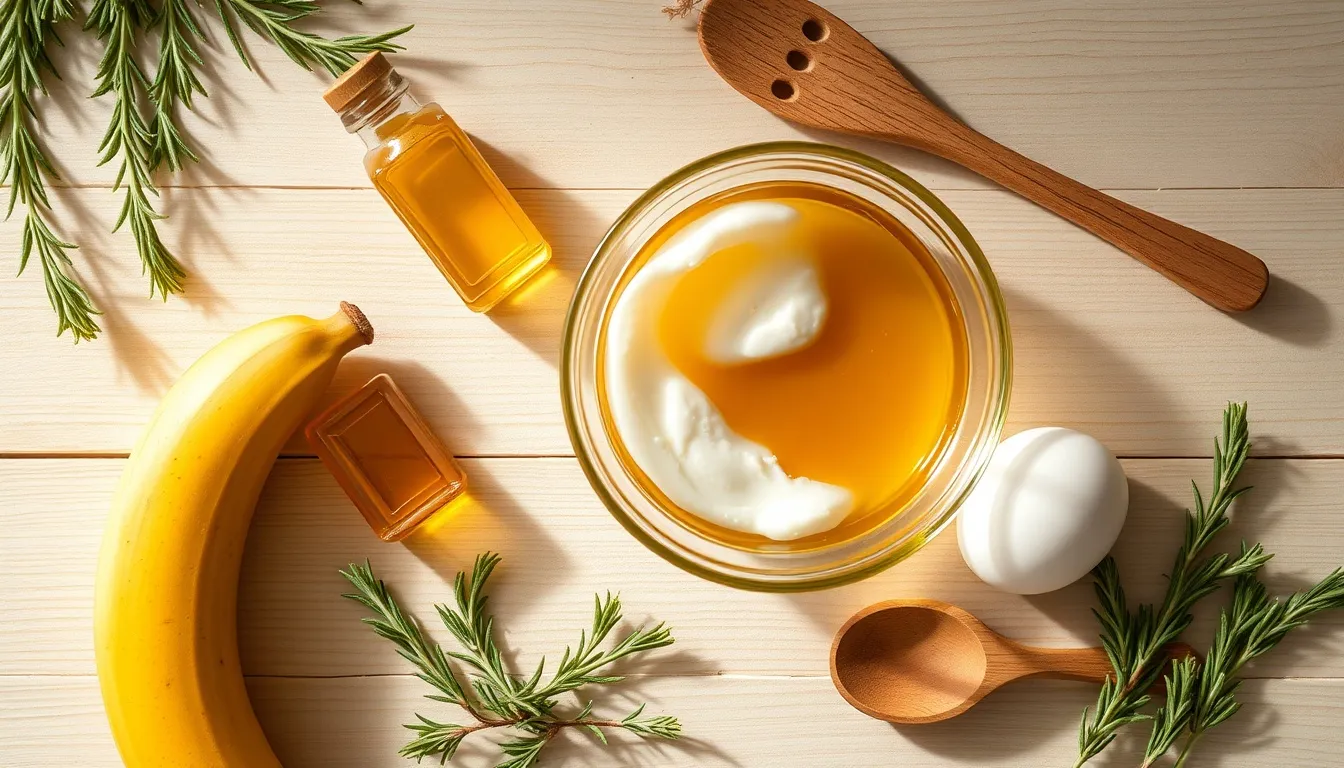
These masks use common kitchen ingredients and target specific hair concerns. The basic honey hair mask is the simplest starting point: mix three tablespoons of <Link to="/honey/wildflower-honey" className="text-honey-600 hover:text-honey-800 underline font-medium">wildflower honey</Link> with two tablespoons of warm water to thin the consistency, then apply to damp, freshly shampooed hair from mid-shaft to ends. Cover with a shower cap and leave for 20 to 30 minutes, then rinse thoroughly with lukewarm water. This alone provides deep conditioning, frizz control, and enhanced shine. For dry or damaged hair, combine three tablespoons of <Link to="/honey/buckwheat-honey" className="text-honey-600 hover:text-honey-800 underline font-medium">buckwheat honey</Link> (ORAC 16,000+ antioxidants) with two tablespoons of coconut oil and one tablespoon of apple cider vinegar — the coconut oil's lauric acid penetrates the hair shaft to reduce protein loss (a 2003 study in the Journal of Cosmetic Science by Rele and Mohile found coconut oil was the only one of three tested oils to prevent hair protein loss — mineral oil and sunflower oil showed no significant penetration), while the vinegar helps seal the cuticle and remove product buildup. For hair growth and scalp health, mix two tablespoons of <Link to="/honey/new-zealand-manuka-umf-15" className="text-honey-600 hover:text-honey-800 underline font-medium">Manuka honey UMF 10+</Link> with one tablespoon of castor oil and three drops of rosemary essential oil — a 2015 randomized trial in SKINmed Journal found rosemary oil comparable to 2% minoxidil for hair regrowth after six months, with less scalp irritation, and castor oil's ricinoleic acid increases scalp blood circulation. For frizzy or curly hair, blend two tablespoons of <Link to="/honey/clover-honey" className="text-honey-600 hover:text-honey-800 underline font-medium">clover honey</Link> with one mashed ripe banana and one tablespoon of olive oil — the banana's potassium and natural oils smooth the cuticle while the silica strengthens hair strands. For a protein-repair mask for over-processed or heat-damaged hair, whisk one egg yolk with two tablespoons of <Link to="/honey/acacia-honey" className="text-honey-600 hover:text-honey-800 underline font-medium">acacia honey</Link> (lightweight for easy rinsing) and one tablespoon of plain Greek yogurt — the egg provides biotin, protein, and fatty acids for structural repair, while yogurt adds lactic acid for gentle clarifying.
Key Takeaways
- Basic honey mask: 3 tbsp wildflower honey + warm water, 20-30 min — deep conditioning and shine
- Dry/damaged hair: buckwheat honey (ORAC 16,000+) + coconut oil + apple cider vinegar — penetrating antioxidant repair
- Hair growth: Manuka honey UMF 10+ + castor oil + rosemary oil — antimicrobial scalp stimulation
- Frizzy/curly hair: clover honey + banana + olive oil — smooths cuticle and strengthens
- Protein repair: acacia honey (lightweight) + egg yolk + yogurt — rebuilds heat-damaged hair structure
How to Apply a Honey Hair Mask Step by Step
Proper application maximizes the effectiveness of any honey hair mask and prevents common mistakes. Start by shampooing your hair to remove oils and product buildup that can block honey from penetrating the hair shaft — skip conditioner for now, as the mask replaces it. Gently squeeze out excess water so hair is damp but not dripping. Mix your honey mask in a bowl and warm it slightly by placing the bowl in a larger bowl of hot water for two minutes — warm honey is thinner, easier to apply, and penetrates better. Section your hair into four quadrants using clips. Apply the mask starting two to three inches from the roots and working down to the tips, using your fingers or a wide-tooth comb to distribute evenly. For scalp-focused use (dandruff or an itchy scalp), massage the mask directly into the scalp using gentle circular motions for one to two minutes — but for general conditioning, keep the mask off the roots to avoid weighing down hair or creating greasiness. Seborrheic dermatitis is a diagnosable skin condition best managed with a dermatologist rather than a DIY hair mask. Once applied, twist each section and pin it up, then cover your entire head with a plastic shower cap. For enhanced penetration, wrap a warm towel over the shower cap — the heat opens the hair cuticle and allows honey's nutrients to penetrate deeper. Leave the mask on for 20 to 30 minutes for regular conditioning, or up to one hour for intensive treatments. To rinse, use lukewarm water and work through sections systematically — honey can be sticky, so take your time. Follow with a cool water rinse to seal the cuticle and lock in moisture. You may follow with a light conditioner on the ends if needed, but many find the honey mask alone is sufficient. Use a honey hair mask once per week for maintenance or twice per week for damaged hair repair.
Key Takeaways
- Shampoo first but skip conditioner — apply mask to clean, damp hair
- Warm the mask slightly for easier application and better penetration
- Apply from mid-shaft to tips for conditioning; directly to scalp for dandruff treatment
- Cover with shower cap plus warm towel to open cuticles for deeper absorption
- Leave 20-30 minutes for maintenance, up to 1 hour for intensive repair
- Use once per week for healthy hair, twice per week for damaged hair
Honey Treatments by Hair Type
Different hair types respond to honey treatments differently, and adapting your approach ensures the best results. For straight or fine hair, use honey sparingly and dilute it more — a ratio of one part honey to two parts water prevents weighing down delicate strands. Apply only to the mid-lengths and ends, and rinse thoroughly. Acacia honey is the best variety for fine hair due to its lighter texture. For wavy hair, honey helps define waves and control frizz without crunchiness — apply to damp hair after scrunching and let air dry for soft, bouncy waves. For curly hair, honey is most effective—its humectant properties draw moisture into each strand, giving curly hair the concentrated hydration it craves, reducing frizz and sharpening curl definition. Apply generously from roots to tips as curly hair is typically drier throughout. The banana-honey mask is particularly effective for curls. For coily or kinky hair (type 4), honey's moisture-binding properties are invaluable — this hair type loses moisture fastest and benefits most from honey's humectant action. Mix honey with heavier oils like castor or avocado oil for deep penetration, and consider using honey as a pre-poo treatment before shampooing to protect against moisture stripping. For color-treated hair, honey's gentle nature makes it safe for regular use without stripping color — buckwheat honey's high antioxidant content actually helps protect color molecules from UV degradation. For oily hair or oily scalp, honey's antimicrobial properties help balance scalp microbiome without over-drying, but apply only to the lengths and ends, avoiding the root area entirely.
Key Takeaways
- Fine/straight hair: dilute more (1:2 honey-to-water), apply mid-shaft to tips only
- Wavy hair: apply to damp hair after scrunching for frizz-free wave definition
- Curly hair: apply generously roots to tips — intense moisture enhances curl definition
- Coily/kinky hair (type 4): mix with castor oil for deep penetration and pre-poo treatment
- Color-treated: buckwheat honey's antioxidants protect color from UV degradation
- Oily hair: apply only to lengths and ends — antimicrobial action balances scalp without drying
Safety Tips and Precautions
Honey hair treatments are generally very safe, but a few precautions ensure the best experience. Always patch test any new honey mask on a small section of hair and a patch of skin behind the ear 24 hours before full application, especially if you have bee or pollen allergies — while topical allergic reactions to honey are rare, they can include scalp redness, itching, or hives. If you have a known bee sting allergy, consult a dermatologist before applying honey to your scalp. Be aware that honey has mild natural lightening properties due to its hydrogen peroxide content — this is typically negligible in a 20 to 30 minute mask, but repeated long applications in direct sunlight can lighten hair by one to two shades over time. If you want to preserve your natural color or hair dye, limit application time and avoid sun exposure while the mask is on. When using add-in ingredients, take extra care: undiluted lemon juice can dry hair out and cause photosensitivity, cinnamon can irritate the scalp if used in excess, and essential oils should never be applied undiluted (always mix in a carrier oil). When using eggs in a honey mask, rinse with lukewarm — never hot — water to prevent the egg from cooking in your hair. Honey can be difficult to rinse completely from thick or coily hair — adding a tablespoon of apple cider vinegar to your final rinse water helps dissolve any residue and adds extra shine. Store leftover mixed masks in the refrigerator for up to three days, but discard any mask containing egg or dairy after one use. If you experience persistent scalp irritation, excessive hair shedding, or any signs of allergic reaction after using honey treatments, discontinue use and consult a dermatologist.
Key Takeaways
- Patch test 24 hours before first use — especially with bee or pollen allergies
- Repeated long applications in sunlight can lighten hair 1-2 shades over time
- Never apply essential oils undiluted — always dilute in carrier oil first
- Rinse egg-based masks with lukewarm water only — hot water cooks the egg
- Add apple cider vinegar to final rinse to dissolve sticky residue from thick hair
- Discontinue and see a dermatologist if persistent scalp irritation or shedding occurs
Frequently Asked Questions
Is honey good for your hair?
Yes, raw honey is excellent for hair. It is a natural humectant that attracts and retains moisture, reducing frizz, breakage, and dryness. Honey also contains B vitamins, zinc, and antioxidants that nourish hair follicles, and its acidic pH smooths the hair cuticle for increased shine. A 2001 study found honey significantly reduced scalp issues and hair loss from seborrheic dermatitis.
Can you put honey directly on your hair?
Yes, but dilute it first for easier application. Mix 3 tablespoons of raw honey with 2 tablespoons of warm water, apply to damp hair from mid-shaft to tips, cover with a shower cap, and leave for 20-30 minutes. Rinse thoroughly with lukewarm water. Undiluted honey is very sticky and difficult to distribute evenly.
Does honey lighten hair?
Honey contains trace amounts of hydrogen peroxide from its glucose oxidase enzyme, which can lighten hair by 1-2 shades over repeated, prolonged applications — especially in sunlight. However, this effect is very subtle and gradual. A standard 20-30 minute hair mask will not noticeably lighten hair. Honey is not a substitute for hair bleach or dye.
How often should I use a honey hair mask?
Use a honey hair mask once per week for general maintenance and moisture. For dry, damaged, or color-treated hair, you can use it twice per week. Overuse is rarely an issue with honey, but fine hair may feel weighed down with more frequent applications — if so, reduce to every 10-14 days.
Which type of honey is best for hair?
Raw, unfiltered honey is essential — pasteurized honey lacks beneficial enzymes. Manuka honey (UMF 10+) is best for scalp conditions like dandruff. Buckwheat honey has the highest antioxidants for damaged hair repair. Acacia honey is lightest for fine hair. Raw wildflower honey is an affordable everyday option that works well for all hair types.
Does honey help with dandruff?
Yes, research supports honey for dandruff treatment. A clinical study in the European Journal of Medical Research found that applying diluted crude honey to the scalp for 3 hours every other day significantly reduced scaling and itching within one week, with complete relief within four weeks. Honey's antimicrobial properties combat the Malassezia fungus that causes seborrheic dermatitis.
Which honey varieties should I choose for different hair goals?
For scalp issues (dandruff, irritation): Manuka honey UMF 10+ ($30-60) with exceptional antibacterial MGO compounds. For daily conditioning: wildflower honey ($10-18) with diverse nutrients or clover honey ($8-15) budget-friendly option. For fine hair: acacia honey ($12-20) lightweight formula that rinses clean without residue. For damaged/color-treated hair: buckwheat honey ($15-25) with ORAC 16,000+ antioxidants for intensive repair. For natural lightening: acacia honey or clover honey with higher hydrogen peroxide precursors. For dry/brittle hair: darker honeys like buckwheat provide deeper conditioning with higher mineral content.
Edited by Sam French · Raw Honey Guide Editorial Team
Source reviewed against primary literature and official guidance where available. Health content is educational, not medical advice, and does not replace a licensed clinician.
Get the Honey Buyer's Cheat Sheet (free PDF)
16 varieties on one page — color, flavor, best use and what a fair price looks like — from the 268 honeys we track.
Related Guides
Honey for Skin
Evidence-based skin benefits, best types, and how to use honey for skincare.
Read GuideHoney Face Mask
6 DIY recipes for every skin type.
Read GuideManuka Honey Benefits
UMF/MGO ratings and proven benefits.
Read GuideRelated Articles
Honey for Hair: 5 DIY Masks for Every Hair Type
5 DIY honey hair masks for dry, oily, damaged, curly, and color-treated hair. Science-backed recipes and application tips.
Read ArticleHoney for Hair Growth: Does It Actually Help? What Research Shows
Can honey make hair grow faster? Review the science on scalp health, follicle nourishment, and realistic expectations.
Read ArticleHoney and Egg: Benefits for Skin, Hair, and DIY Recipes
Honey and egg for skin and hair: protein repair, deep moisture, and anti-aging. 6 DIY face and hair mask recipes included.
Read ArticleHoney and Avocado: Benefits for Skin, Hair, and Health
Honey and avocado for face masks, hair treatments, and nutrition. 6 DIY recipes, best honey types, and the science behind it.
Read ArticleReady to find the perfect honey for your hair care routine?