Why Honey and Avocado Work So Well Together
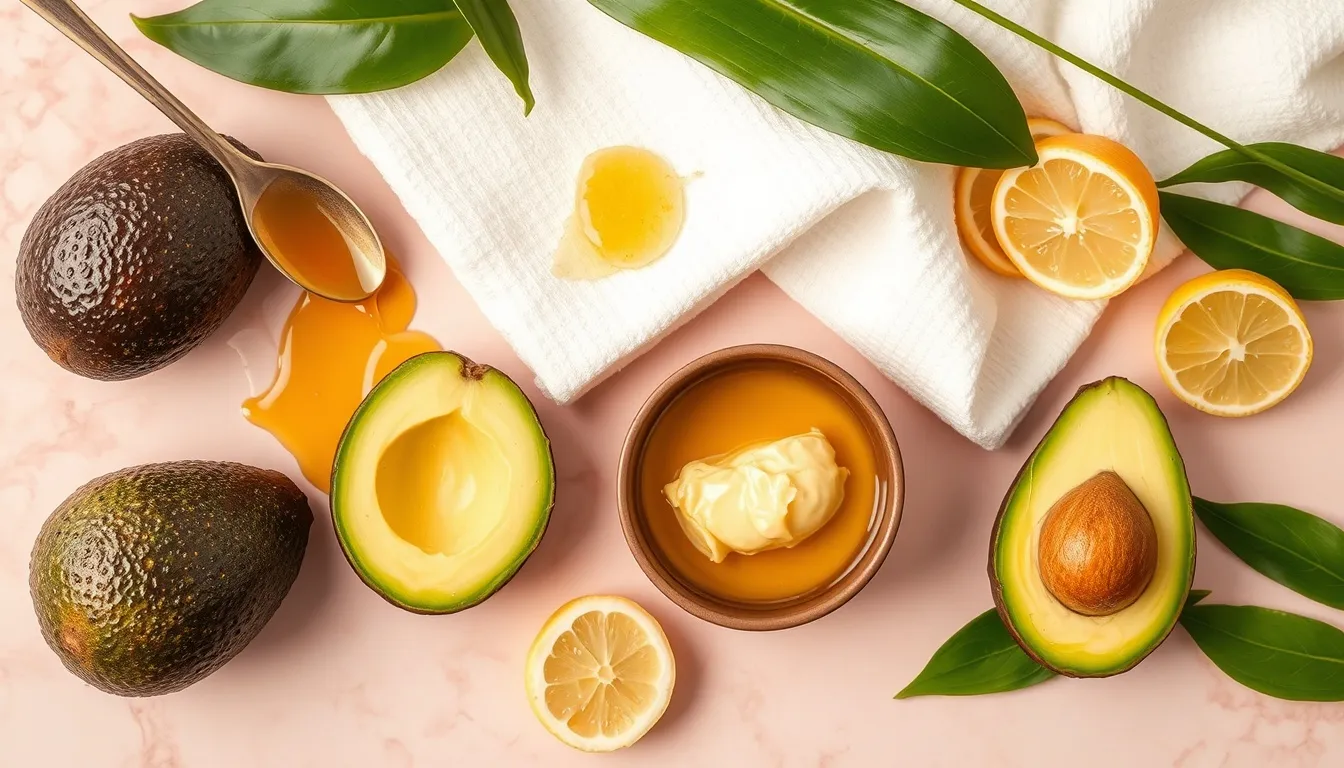
Honey and avocado are two of the most popular natural ingredients in DIY skin and hair care — and for good reason. Their biochemical profiles are genuinely complementary rather than redundant, creating a combination that addresses multiple skin and hair needs simultaneously.
Raw honey is a humectant (draws moisture from the air), a mild AHA exfoliant (via gluconic acid), an antimicrobial agent (through hydrogen peroxide and methylglyoxal in manuka varieties), and an anti-inflammatory (polyphenols suppress the NF-κB pathway). Avocado, meanwhile, is an emollient (softens and fills intercellular gaps in the skin barrier), a source of monounsaturated oleic acid (penetrates the stratum corneum more effectively than most plant oils), and delivers fat-soluble vitamins (E, A, K) and carotenoids that require lipid carriers for absorption.
The key insight is that honey works primarily at the surface and immediately below it (humectant moisture-pulling, enzymatic exfoliation, antimicrobial defense), while avocado works within the lipid matrix of the skin barrier (emollient repair, nutrient delivery, TEWL prevention). Together, they address both the aqueous and lipid components of skin health — the same dual approach that high-end moisturizers attempt with complex formulations.
Skin Benefits: What the Science Shows
The combination of honey and avocado targets skin health through multiple evidence-based mechanisms.
- Deep moisturization without greasiness — Honey's humectant action pulls moisture into the stratum corneum, while avocado's oleic acid and phytosterols fill intercellular lipid gaps that cause transepidermal water loss (TEWL). A 2013 study in the International Journal of Molecular Sciences found that avocado oil enhanced skin barrier function within 4 hours of application. Combined with honey's moisture-attracting properties, this creates a complete hydration system: honey draws water in, avocado seals it there.
- Anti-aging and antioxidant protection — Avocado provides fat-soluble antioxidants (vitamin E at 2.1mg per avocado, lutein, zeaxanthin, beta-carotene) that integrate into cell membranes, while honey provides water-soluble polyphenols and flavonoids that protect the aqueous environment. A 2019 study in the Journal of Cosmetic Dermatology showed that avocado-derived compounds promoted collagen synthesis in human fibroblasts. Honey polyphenols complement this by scavenging the ROS that break down existing collagen.
- Wound healing and scar reduction — Honey's wound healing properties (demonstrated in a 2015 Cochrane review of 3,011 participants) combine with avocado oil's ability to accelerate wound closure. A 2018 study in the Journal of Wound Care found that avocado oil increased collagen synthesis and decreased inflammatory cell counts in wound tissue. Together, they may help minimize scarring and promote even pigmentation at healing sites.
- Gentle treatment for inflammatory skin conditions — For eczema and dry, reactive skin, honey's NF-κB suppression addresses inflammation while avocado's sterolins (plant steroids) have documented effects on skin softening in atopic conditions. A small clinical study published in Dermatology found that an avocado-enriched cream improved eczema symptoms comparably to a low-potency steroid cream over an 8-week period.
- Acne management for dry-combination skin — The counterintuitive combination works for non-oily acne: honey provides antibacterial activity against Cutibacterium acnes while avocado's oleic acid is comedogenic for some people but beneficial for dry, inflamed acne-prone skin that needs barrier repair alongside antibacterial treatment.
Pro Tip
Avocado is mildly comedogenic (rated 2 on a 0-5 scale) due to oleic acid content. If you have oily, clog-prone skin, patch test honey-avocado masks on a small area first and monitor for breakouts over 48 hours.
Get the Honey Buyer's Cheat Sheet (free PDF)
16 varieties on one page — color, flavor, best use and what a fair price looks like — from the 268 honeys we track.
Hair Benefits: Deep Conditioning and Scalp Health
The honey-avocado combination is particularly effective for hair because it addresses both the hair shaft (protein structure and cuticle smoothing) and the scalp (microbial balance and moisture).
- Protein-rich deep conditioning — Avocado contains amino acids and biotin that help repair damaged keratin bonds in the hair shaft. A 2015 study in the International Journal of Trichology found that avocado oil was one of few plant oils that actually penetrated the hair cortex (alongside coconut oil), rather than just coating the cuticle surface. Honey's humectant properties add moisture alongside this structural repair.
- Frizz control and cuticle smoothing — Avocado's oleic acid fills gaps in the hair cuticle layer that cause frizz, while honey attracts atmospheric moisture to hydrate the strand without weighing it down. This is particularly effective for curly and coily hair types where cuticle irregularities cause the most frizz.
- Scalp health and dandruff management — Honey's antimicrobial activity (effective against Malassezia yeasts implicated in dandruff) combines with avocado's anti-inflammatory fatty acids to address both the microbial and inflammatory components of seborrheic dermatitis. A 2001 study in the European Journal of Medical Research found that honey application significantly reduced scaling and itching in seborrheic dermatitis patients.
- Heat and chemical damage repair — For color-treated or heat-styled hair, avocado oil forms a protective lipid layer that reduces further damage, while honey's antioxidant polyphenols may help neutralize oxidative damage from chemical processing. The combination works as a weekly recovery treatment.
- Gentle clarifying without stripping — Honey's mild enzymatic and acidic properties help dissolve product buildup without the harsh sulfates found in clarifying shampoos. Avocado oil simultaneously replenishes the natural oils that aggressive cleansing removes.
Internal Health Benefits: The Nutritional Power Duo
Beyond topical application, eating honey and avocado together provides complementary nutritional benefits.
- Heart health — Avocado's monounsaturated fats have robust evidence for improving lipid profiles: a 2015 Journal of the American Heart Association RCT showed one avocado daily reduced LDL cholesterol by 13.5 mg/dL. Honey polyphenols add antioxidant protection against LDL oxidation — the step that actually drives atherosclerosis. The combination addresses both LDL quantity and LDL quality.
- Honey remains a fast-acting carbohydrate; combining it with avocado does not make the added sugar medically preferred.
- Anti-inflammatory synergy — Avocado's oleic acid and persenone A (a polyhydroxylated fatty alcohol unique to avocado) suppress inflammatory pathways, complementing honey's NF-κB inhibition. A 2019 systematic review in Nutrients found that regular avocado consumption was associated with reduced inflammatory biomarkers including CRP and IL-6.
- Gut health — Avocado's 13.5g of fiber (including soluble and insoluble types) feeds beneficial gut bacteria, working alongside honey's prebiotic oligosaccharides (FOS, GOS) to support microbial diversity. The monounsaturated fats in avocado also improve fat-soluble nutrient absorption from other foods eaten in the same meal.
- Nutrient absorption enhancement — Avocado's healthy fats enhance absorption of fat-soluble vitamins and carotenoids. A 2005 study in the Journal of Nutrition found that adding avocado to a meal increased carotenoid absorption by 200-400%. While honey's nutrients are primarily water-soluble, combining the two in a meal optimizes absorption across both solubility profiles.
Pro Tip
Honey-avocado toast on whole grain bread is one of the most nutritionally complete simple meals you can make — delivering complex carbs, healthy fats, quick energy, fiber, and a broad spectrum of micronutrients.
6 Honey and Avocado DIY Recipes
These recipes use simple ratios that maximize the complementary benefits of both ingredients.
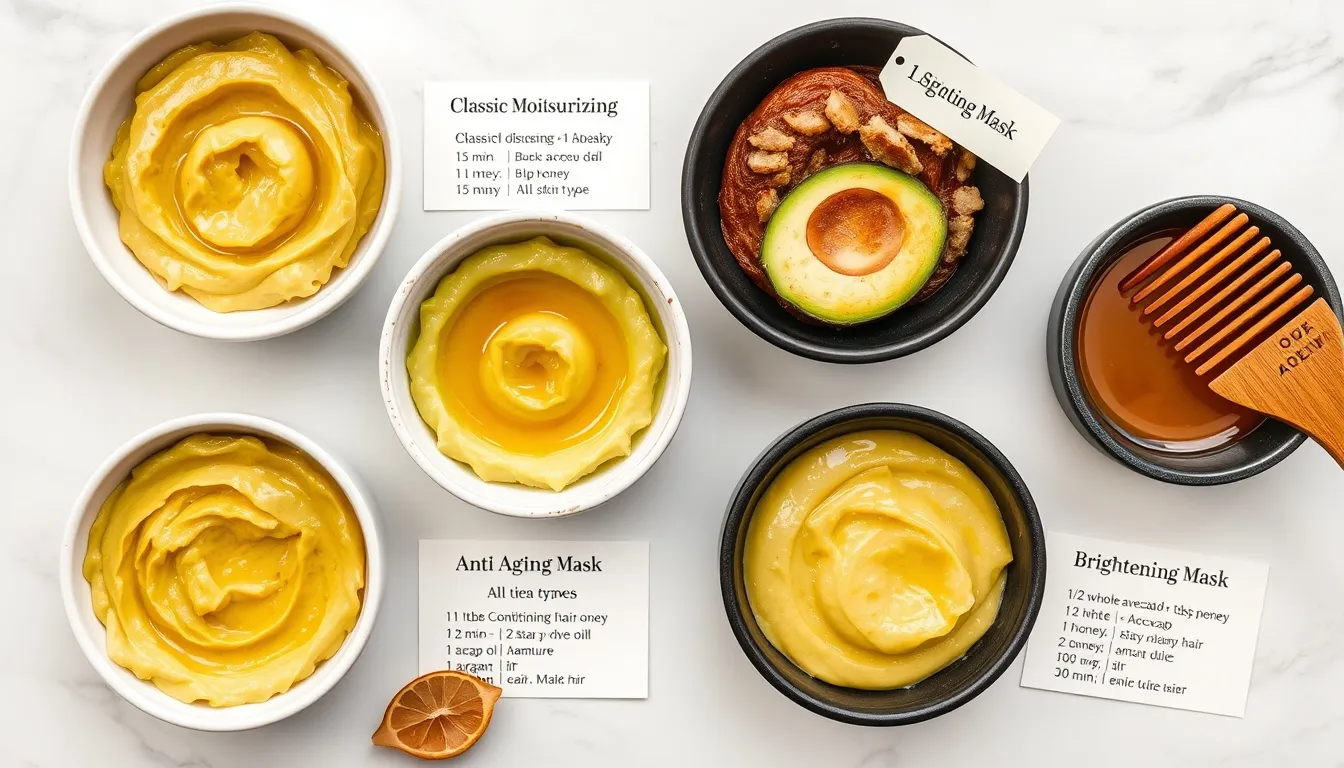
- Classic moisturizing face mask — Mash 1/4 ripe avocado with 1 tablespoon raw manuka honey. Apply to clean face for 15-20 minutes, then rinse with lukewarm water. The creamy texture stays in place better than honey alone. Best for dry, dull, or mature skin. Use 2-3 times per week.
- Anti-aging eye treatment — Mix 1 teaspoon mashed avocado with 1/2 teaspoon raw honey and a drop of vitamin E oil. Gently pat (do not rub) around the eye area, avoiding the eyelids. Leave for 10-15 minutes. The thin skin around the eyes benefits from avocado's gentle emollient properties without the irritation risk of active ingredients. Use 2 times per week.
- Deep conditioning hair mask — Blend 1 ripe avocado with 2 tablespoons raw honey and 1 tablespoon olive oil. Apply to damp hair from mid-lengths to ends, cover with a shower cap, and leave for 30-45 minutes before shampooing out. For severely damaged hair, leave for up to 2 hours. Use weekly.
- Scalp treatment for dandruff — Mix 2 tablespoons mashed avocado with 1 tablespoon raw honey and 1 teaspoon apple cider vinegar. Massage into scalp, leave for 20 minutes, then wash out. Some believe the ACV's acidity and honey's antimicrobial properties help with an itchy, flaky scalp, though this combination has not been clinically studied for dandruff. If dandruff persists, a dermatologist can identify the cause and recommend treatment.
- Post-workout smoothie — Blend 1/2 avocado, 1 tablespoon raw honey, 1 cup milk (dairy or plant), 1 banana, and ice. Delivers quick-release carbs from honey for glycogen replenishment, sustained energy from avocado fats, potassium for recovery (avocado has more potassium than bananas), and protein if using dairy milk. Makes an excellent recovery drink within 30 minutes of exercise.
- Honey-avocado toast with sea salt — Spread 1/2 mashed avocado on toasted whole grain bread, drizzle with 1 teaspoon raw wildflower honey, and finish with flaky sea salt and a pinch of red pepper flakes. The sweet-savory-spicy combination is both delicious and nutritionally dense. For extra protein, add a poached egg.
Best Honey Types for Avocado Combinations
Different honey varieties pair better with avocado depending on the intended use.
- Manuka honey (UMF 10+) — Best for face masks and skin treatments. Its high antimicrobial and anti-inflammatory potency maximizes the therapeutic benefit of topical application. The stronger flavor also pairs well with avocado toast.
- Buckwheat honey — Best for anti-aging skin treatments due to its 3-9x higher antioxidant content. Its bold, molasses-like flavor is an acquired taste for culinary use but works well in chocolate-avocado smoothies.
- Wildflower honey — Best all-rounder for both culinary and cosmetic use. Broad polyphenol diversity, pleasant flavor, and wide availability make it the most versatile pairing with avocado.
- For culinary use, compare flavor and recipe texture. Variety labels do not establish a diabetes or treatment advantage.
- Clover honey — Most accessible and affordable option. Good for hair masks and daily culinary use where you want honey's benefits without an overpowering flavor.
Common Mistakes and How to Avoid Them
A few pitfalls can undermine the effectiveness of honey-avocado treatments.
- Using unripe avocado — Unripe avocado is harder, has lower oleic acid content, and produces a lumpy mask that doesn't spread evenly. Always use a soft, ripe avocado that yields easily to gentle pressure.
- Using pasteurized honey — Pasteurization destroys glucose oxidase and degrades polyphenols, removing honey's enzymatic and antioxidant benefits. Use raw honey only for skin and hair treatments.
- Applying too thickly on oily skin — Avocado is comedogenic for some people. If your skin is oily, use a thinner layer focused on dry patches rather than a thick, full-face application.
- Not rinsing hair masks thoroughly — Avocado residue left in hair can look greasy. Shampoo twice after hair masks and consider a diluted apple cider vinegar rinse to remove any remaining film.
- Heating honey above 40°C (104°F) — If you warm the mask for easier application, keep it below 40°C to preserve honey's heat-sensitive enzymes. Mix avocado at room temperature and add slightly warmed (not hot) honey.
- Expecting overnight miracles — Both honey and avocado work through gradual, cumulative mechanisms. Skin cell turnover takes 28-40 days. Commit to consistent use for at least 4-6 weeks before judging effectiveness.
Safety Considerations
Honey-avocado combinations are generally very safe, but a few precautions are worth noting.
- Latex-fruit allergy cross-reactivity — People with latex allergies have a documented cross-reactivity risk with avocado (as well as banana, kiwi, and chestnut). If you have a latex allergy, patch test avocado topically on your wrist before facial application.
- Bee product allergies — If you are allergic to bee stings, propolis, or bee pollen, honey may cause a reaction. Patch test honey on inner wrist 24 hours before facial use.
- Comedogenicity for acne-prone skin — Avocado oil has a comedogenic rating of 2 (mildly comedogenic). If you are prone to closed comedones or cystic acne, avoid thick avocado masks on your T-zone and monitor for breakouts.
- Infant safety — Honey must not be given to children under 12 months due to infant botulism risk. Topical application on babies should also be avoided as honey can enter the mouth via hand contact.
- Staining — Ripe avocado can leave green stains on towels, pillowcases, and light-colored clothing. Use dark towels for rinsing and protect surfaces during application.