Why Honey and Oatmeal Work So Well Together
Honey and oatmeal is one of those rare food combinations where the health benefits of each ingredient genuinely amplify the other. Oatmeal provides soluble fiber (beta-glucan), plant-based protein, and colloidal starch with documented skin-soothing properties. Raw honey contributes antimicrobial activity, humectant moisture retention, prebiotic oligosaccharides, and 30+ antioxidant polyphenols.
Together, they create synergies that neither ingredient achieves alone: oatmeal's beta-glucan enhances the prebiotic effects of honey's FOS for gut health, oatmeal's colloidal properties combine with honey's humectant action for superior skin hydration, and oatmeal's slow-release complex carbohydrates paired with honey's dual-speed sugars provide sustained energy without the blood sugar spike.
Whether you're applying them topically as a face mask or eating them as a breakfast staple, the honey-oatmeal combination has been validated by dermatological research, nutritional science, and cardiovascular studies.
Skin Benefits of Honey and Oatmeal
The honey-oatmeal combination is one of the most evidence-backed natural skin care treatments available. Colloidal oatmeal has been FDA-recognized as a skin protectant since 2003, and honey's dermatological benefits are supported by multiple clinical trials.
- Deep hydration — Oatmeal's beta-glucan forms a thin moisture-retaining film on the skin surface, while honey is a natural humectant that draws moisture from the air into the skin. A 2015 study in the Journal of Drugs in Dermatology found that colloidal oatmeal improved skin hydration by 23% over 2 weeks. Combined with honey's humectant properties, this dual-action approach addresses both surface and deeper skin moisture.
- Anti-inflammatory relief — Oatmeal contains avenanthramides, phenolic compounds unique to oats that inhibit NF-κB and reduce itching and redness. Honey's polyphenols work through the same NF-κB pathway plus COX-2 inhibition. Together, they provide multi-target anti-inflammatory coverage. A 2008 study in Archives of Dermatological Research demonstrated that avenanthramides reduced contact dermatitis inflammation by 30-40%.
- Gentle exfoliation — Oatmeal's slightly rough texture provides mild physical exfoliation, while honey's gluconic acid acts as a gentle chemical exfoliant (alpha-hydroxy acid). This combination removes dead skin cells without the irritation caused by harsher exfoliants — making it suitable even for sensitive skin types.
- Antibacterial acne support — Honey's hydrogen peroxide generation and antimicrobial peptides target Cutibacterium acnes (the bacteria behind inflammatory acne), while oatmeal's saponins cleanse pores without stripping natural oils. A 2014 study in the International Journal of Dermatology found that manuka honey reduced C. acnes bacterial counts by 85% after 3 hours of contact.
- Eczema and psoriasis relief — The 2003 study in Complementary Therapies in Medicine that tested a honey-beeswax-olive oil mixture found 80% improvement in eczema patients. Adding oatmeal to honey-based treatments provides the additional benefit of colloidal oatmeal's FDA-recognized anti-itch properties. See also: honey for eczema.
Get the Honey Buyer's Cheat Sheet (free PDF)
16 varieties on one page — color, flavor, best use and what a fair price looks like — from the 268 honeys we track.
5 DIY Honey Oatmeal Face Masks
These recipes use the synergistic properties of honey and oatmeal for different skin concerns. Always patch-test on your inner arm 24 hours before applying to your face.
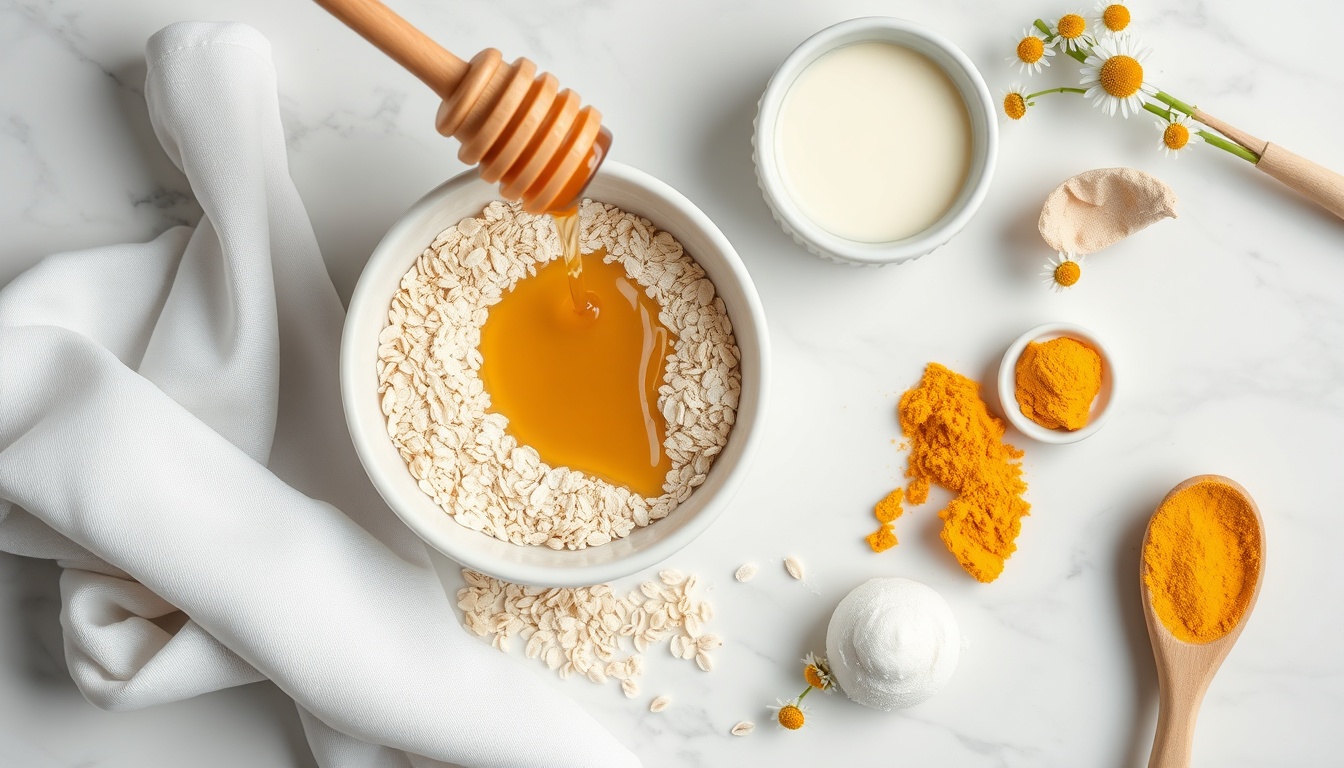
- Classic hydrating mask (all skin types) — Mix 2 tablespoons finely ground oatmeal with 1 tablespoon raw honey. Apply to clean face, leave 15-20 minutes, rinse with warm water. The oatmeal forms a moisture-sealing barrier while honey draws in hydration. Use 1-2 times per week.
- Soothing anti-redness mask (sensitive/irritated skin) — Combine 2 tablespoons colloidal oatmeal, 1 tablespoon manuka honey, and 1 tablespoon plain yogurt. The avenanthramides in oatmeal plus honey's anti-inflammatory polyphenols reduce redness, while yogurt's lactic acid provides gentle pH balancing.
- Acne-fighting mask (oily/acne-prone skin) — Mix 1 tablespoon finely ground oatmeal, 1 tablespoon raw honey, and 2 drops tea tree oil. Oatmeal's saponins absorb excess oil, honey fights C. acnes bacteria, and tea tree oil adds additional antimicrobial action. Leave 10-15 minutes. Many start with a couple of times a week and adjust based on how their skin responds; persistent or severe acne is best managed with a dermatologist.
- Brightening mask (dull/uneven skin) — Combine 2 tablespoons oatmeal, 1 tablespoon raw honey, 1 teaspoon turmeric powder, and 1 teaspoon coconut oil. Turmeric's curcumin inhibits melanin production for brightening, while honey and oatmeal hydrate and exfoliate. Leave 10 minutes — turmeric can temporarily stain, so limit time.
- Anti-aging mask (mature skin) — Mix 2 tablespoons oatmeal, 1 tablespoon buckwheat honey (highest antioxidants), 1 teaspoon olive oil, and ½ mashed avocado. The antioxidant polyphenols from buckwheat honey (3-9x more than lighter honeys) combined with avocado's vitamin E and oleic acid target oxidative damage and fine lines.
Pro Tip
For face masks, grind rolled oats in a blender to create a fine powder, or buy pre-made colloidal oatmeal. Coarse oatmeal can be too abrasive for facial skin. Always use raw, unpasteurized honey for maximum enzyme activity and antimicrobial benefit.
Digestive Health Benefits
Eating honey and oatmeal together provides complementary digestive benefits that support the gut microbiome and overall GI health.
- Enhanced prebiotic effect — Oatmeal's beta-glucan fiber is fermented by colonic bacteria into short-chain fatty acids (SCFAs), particularly butyrate. Honey's fructo-oligosaccharides (FOS) and galacto-oligosaccharides (GOS) are also prebiotic, selectively feeding Bifidobacterium. A 2019 study in Nutrients found that combining different prebiotic fiber sources produced greater microbiome diversity than any single source alone — supporting the honey-oatmeal combination.
- Improved bowel regularity — Oatmeal's insoluble fiber adds bulk and promotes motility, while honey's osmotic fructose draws water into the colon for softer stools. This dual-mechanism approach addresses constipation from both the "bulk" and "hydration" angles.
- Gut lining protection — Beta-glucan has been shown to increase mucin production in the intestinal lining, strengthening the gut barrier. Honey's anti-inflammatory polyphenols reduce mucosal inflammation. Together, they support gut barrier integrity — important for conditions like leaky gut and IBS.
- Blood sugar moderation — Oatmeal's soluble fiber forms a viscous gel in the small intestine that slows glucose absorption. When you sweeten oatmeal with honey instead of sugar, the fiber attenuates honey's glucose spike. A 2016 study in the British Journal of Nutrition found that adding beta-glucan to a glucose drink reduced the glycemic response by 20-30% — the same principle applies to honey in oatmeal.
Heart Health and Cholesterol Benefits
Both honey and oatmeal have independent cardiovascular benefits that work through complementary mechanisms.
- Cholesterol reduction — Oatmeal's beta-glucan is one of the most well-studied natural cholesterol-lowering foods. A 2014 meta-analysis in the American Journal of Clinical Nutrition found that 3g/day of beta-glucan (about 1.5 cups of oatmeal) reduced LDL cholesterol by 5-10%. Honey's polyphenols prevent LDL oxidation — the process that makes cholesterol dangerous by embedding it in arterial walls. Together, you lower LDL levels AND protect remaining LDL from oxidative damage.
- Blood pressure support — Oatmeal's fiber reduces systemic inflammation, while honey promotes nitric oxide production for vasodilation. The 2022 Nutrition Reviews meta-analysis of 18 RCTs found that honey consumption was associated with reduced blood pressure compared to sugar controls.
- Anti-inflammatory cardiovascular protection — Chronic inflammation drives atherosclerosis. Oatmeal's avenanthramides and honey's flavonoids both inhibit NF-κB, the master inflammatory switch. This multi-target anti-inflammatory approach may reduce cardiovascular risk beyond what either food achieves alone.
Pro Tip
The FDA allows heart-health claims for oatmeal products containing at least 0.75g of beta-glucan per serving. A typical bowl of oatmeal provides about 1.5g. Adding honey instead of sugar provides additional cardiovascular polyphenols without the inflammatory effects of refined sugar.
Athletic Performance and Energy
Honey and oatmeal is a classic pre-workout and recovery meal for athletes, and the sports nutrition science supports the combination.
- Sustained energy release — Oatmeal's complex carbohydrates provide slow-release glucose over 2-3 hours, while honey's dual-speed sugars (glucose for immediate energy, fructose for sustained release) fill in the initial energy gap. This combination eliminates both the "waiting for energy" problem of oatmeal alone and the "sugar crash" problem of honey alone.
- Pre-exercise fueling — A bowl of oatmeal with honey 2-3 hours before exercise provides the ideal mix of complex and simple carbohydrates for glycogen loading. The 2004 University of Memphis study found that honey was as effective as glucose for maintaining blood sugar during endurance exercise.
- Post-exercise recovery — After intense training, muscles need glycogen replenishment and anti-inflammatory support. Oatmeal provides sustained carbohydrates for glycogen resynthesis, while honey's polyphenols reduce exercise-induced inflammation and oxidative stress. Adding yogurt creates a complete recovery meal with the protein-to-carb ratio sports nutritionists recommend.
- Natural energy gel alternative — For endurance athletes who use energy gels during long sessions, a portable honey-oatmeal ball (recipe below) provides similar quick carbohydrates from honey plus sustained energy from oats — without the artificial ingredients of most commercial gels. See also: honey for athletes.
Healthy Honey Oatmeal Recipes
These recipes maximize the synergistic health benefits of the honey-oatmeal combination for different needs.
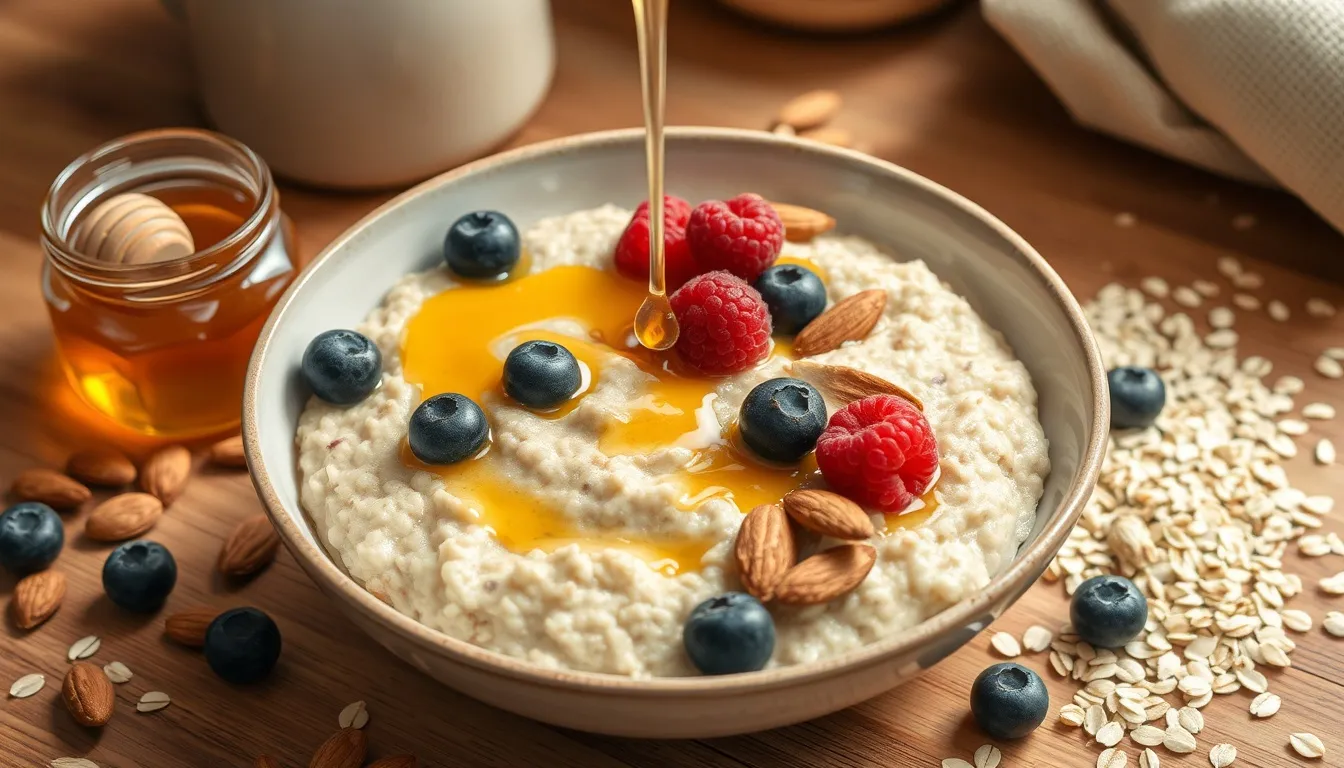
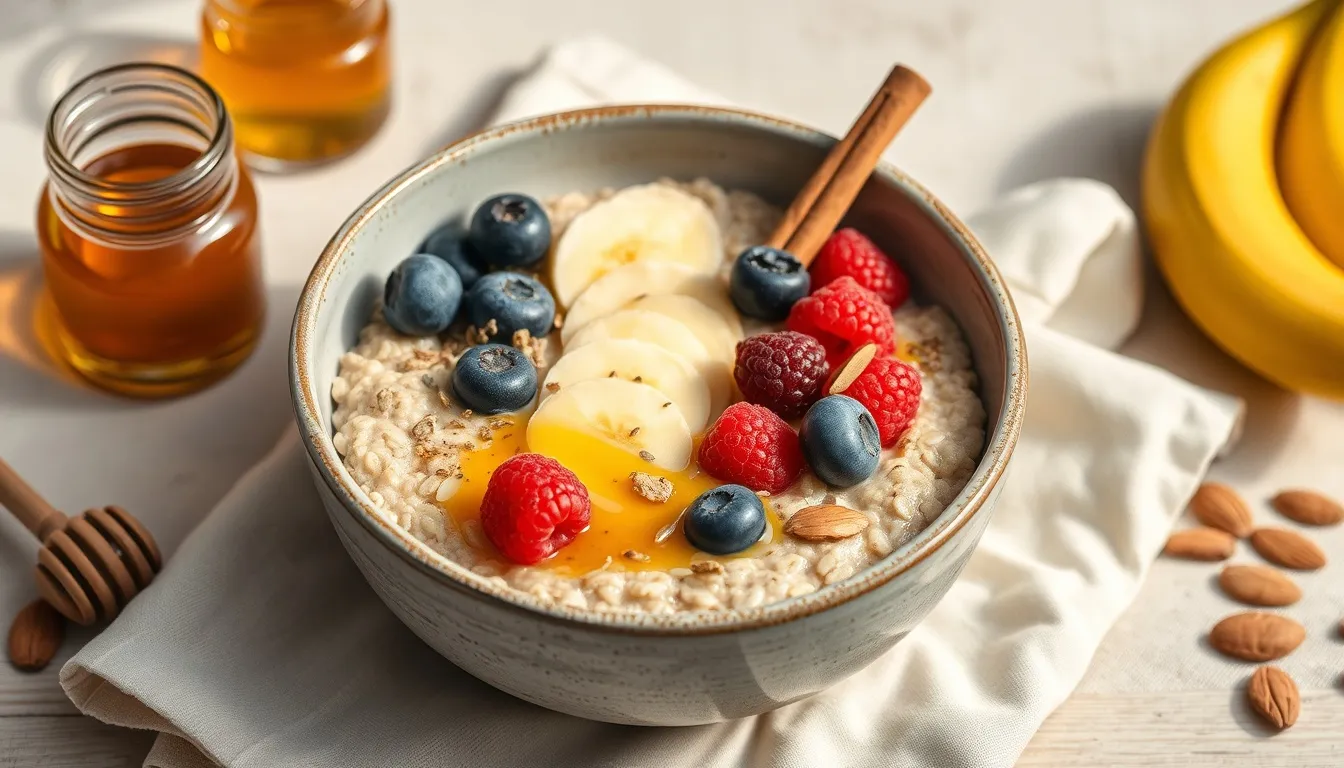
- Classic power breakfast — Cook ½ cup rolled oats with 1 cup water or milk. Stir in 1 tablespoon raw honey, a pinch of cinnamon, and top with walnuts and berries. Provides ~350 calories with sustained energy, prebiotic fiber, omega-3s, and polyphenols.
- Overnight oats — Combine ½ cup rolled oats, ½ cup yogurt, ½ cup milk, and 1 tablespoon raw honey in a jar. Refrigerate overnight. Top with chia seeds and fruit in the morning. The cold preparation preserves honey's heat-sensitive enzymes while allowing oat starches to become more resistant (prebiotic).
- Pre-workout energy balls — Mix 1 cup rolled oats, ¼ cup raw honey, 2 tablespoons nut butter, 2 tablespoons mini dark chocolate chips, and 1 tablespoon chia seeds. Roll into 12 balls, refrigerate. Each ball provides quick honey energy plus sustained oat carbohydrates — ideal 30-60 minutes before exercise.
- Golden oatmeal bowl — Cook oatmeal with ½ teaspoon turmeric, a pinch of black pepper (increases curcumin absorption 2,000%), and ½ teaspoon ginger. Drizzle with 1 tablespoon raw honey. An anti-inflammatory breakfast targeting joint pain, gut health, and immune support.
- Honey oatmeal smoothie — Blend ½ cup cooked oatmeal (cooled), 1 tablespoon raw honey, 1 banana, 1 cup milk, 1 tablespoon almond butter, and ice. The blended oatmeal provides creamy thickness plus fiber that most smoothies lack.
Choosing the Right Honey for Oatmeal
The type of honey you choose affects both flavor and health benefits.
- Clover honey — Mild, familiar flavor that doesn't overpower oatmeal. Good all-purpose choice with solid antioxidant content.
- Wildflower honey — Slightly more complex flavor, broader antioxidant diversity from multiple floral sources. Excellent everyday choice.
- Buckwheat honey — Bold, molasses-like flavor with 3-9x more antioxidants than lighter honeys. Best for maximizing anti-inflammatory and cardiovascular benefits. Pairs well with hearty steel-cut oats.
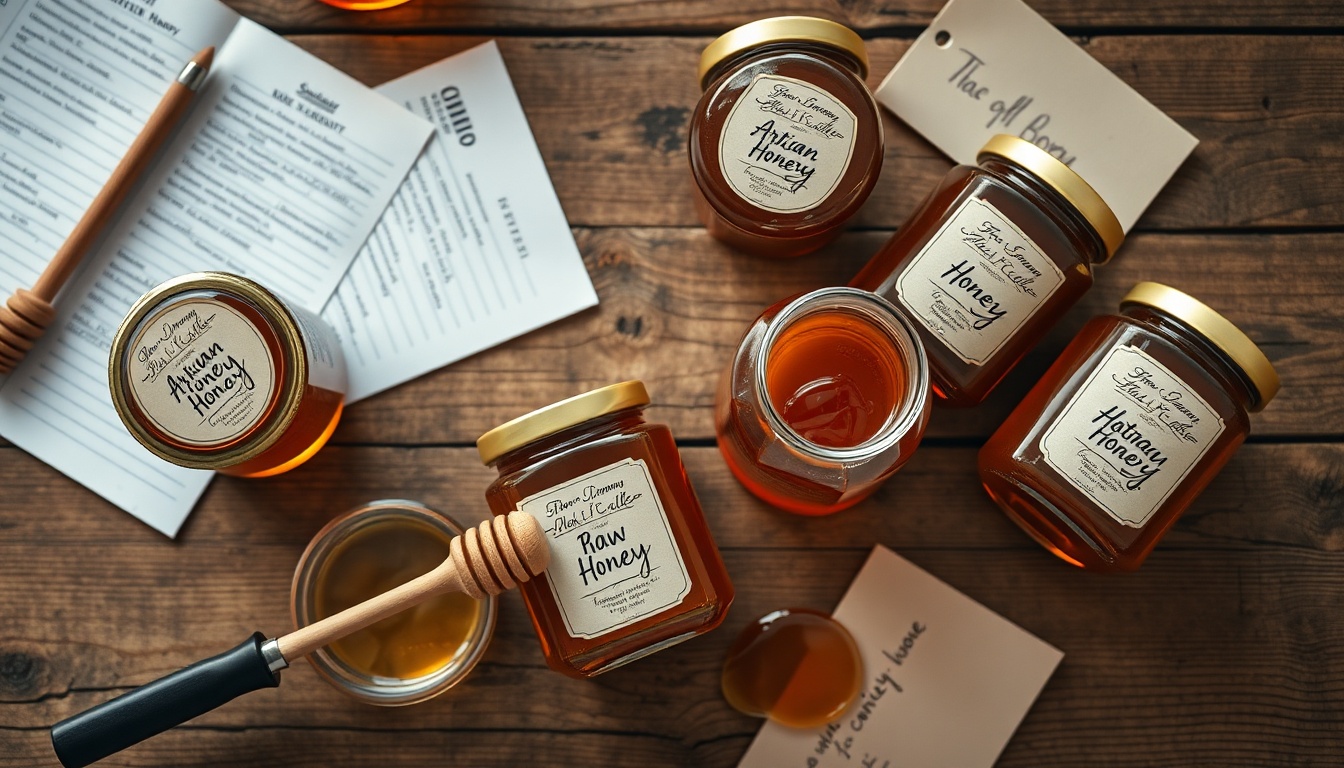
- Carbohydrate note — Honey remains an added-sugar carbohydrate. Include the amount used in this recipe when counting total carbohydrate per serving; the honey carbohydrate and label guide explains the jar-label workflow.
- Manuka honey — Strongest antimicrobial properties but distinctive medicinal taste. Best for immune support during cold/flu season rather than daily breakfast use.
Common Mistakes to Avoid
Getting the most from honey and oatmeal requires avoiding a few common pitfalls.
- Adding honey to boiling oatmeal — Temperatures above 40°C (104°F) begin degrading honey's heat-sensitive enzymes (glucose oxidase, diastase) and some antimicrobial properties. Always let oatmeal cool slightly before stirring in honey. See: is heated honey toxic?
- Plain oatmeal can reduce added sugar compared with many sweetened packets; any honey added still counts as added or free sugar.
- Using processed honey — Pasteurized, ultra-filtered honey (typical grocery store bear bottles) has reduced enzyme activity, fewer prebiotics, and lower antioxidant content. Choose raw, unfiltered honey for health benefits.
- Skipping the toppings — The greatest health benefits come from the full combination: oatmeal + honey + nuts (healthy fats for vitamin absorption) + berries (additional polyphenols) + seeds (omega-3s, minerals). Don't settle for plain oatmeal with just honey.
The Bottom Line
Honey and oatmeal is one of the most versatile and evidence-backed food combinations available. Topically, the duo provides FDA-recognized skin protection (oatmeal) enhanced by clinically validated antimicrobial and humectant properties (honey). Consumed as food, they deliver complementary cardiovascular benefits, synergistic prebiotic effects for gut health, and sustained energy for athletic performance.
The key is quality: use whole rolled or steel-cut oats (not instant packets) and raw, unfiltered honey (not processed). Add honey after cooking to preserve its heat-sensitive enzymes. And don't limit this combination to breakfast — honey-oatmeal face masks, energy balls, and overnight oats all leverage the same synergistic benefits.