Why Honey Is Popular in Anti-Aging Skincare
Honey has been used for skin care since at least 2000 BCE — Cleopatra's legendary milk and honey baths weren't just myth. Ancient Egyptian medical papyri describe honey-based skin preparations, and Ayurvedic texts from the same era recommend honey for maintaining youthful skin.
Modern interest in honey for wrinkles has exploded as the "clean beauty" movement pushes consumers toward natural alternatives. But unlike many trendy ingredients, honey has legitimate biochemistry behind its skin benefits. The question isn't whether honey has skin-active compounds — it clearly does. The question is whether those compounds can meaningfully address wrinkles when applied topically.
Understanding the science helps set realistic expectations. Honey is not a replacement for retinoids or professional treatments, but it does have specific mechanisms that support skin health and may slow some aspects of aging when used consistently as part of a broader routine.
How Skin Ages — And Where Honey Fits In
Skin aging involves two distinct processes, and honey interacts with each differently.
Intrinsic aging (chronological) is genetically programmed. After age 25, collagen production drops about 1% per year. Elastin fibers degrade. Hyaluronic acid levels decline — skin loses roughly 50% of its hyaluronic acid by age 50. Cell turnover slows from ~28 days in your 20s to ~40-50 days by your 60s. The result: thinner, drier, less elastic skin that wrinkles under repetitive facial movements.
Extrinsic aging is driven by external factors, primarily UV radiation (photoaging), pollution, smoking, and poor nutrition. UV generates reactive oxygen species (ROS) that damage collagen and elastin through matrix metalloproteinase (MMP) activation. Photoaging accounts for up to 80% of visible facial aging according to a 2013 study in Dermato-Endocrinology.
Honey's antioxidant and anti-inflammatory properties primarily target extrinsic aging pathways. Its humectant effects temporarily address the dehydration component of intrinsic aging. This is where evidence-based expectations should begin.
Get the Honey Buyer's Cheat Sheet (free PDF)
16 varieties on one page — color, flavor, best use and what a fair price looks like — from the 268 honeys we track.
5 Anti-Aging Mechanisms of Honey
Research supports five specific mechanisms through which honey affects skin aging processes.
- Antioxidant protection against photoaging — Honey contains 30+ polyphenols including chrysin, quercetin, gallic acid, caffeic acid, and pinocembrin that scavenge free radicals. A 2018 review in Pharmacognosy Research found that honey polyphenols reduced UV-induced ROS by 40-60% in skin cell models. Dark honeys like buckwheat contain up to 9x more antioxidants than light varieties. These compounds help prevent the collagen-degrading MMP activation triggered by oxidative stress.
- Humectant hydration and plumping — Honey is a natural humectant containing fructose, glucose, and amino acids that draw water into the skin. Well-hydrated skin appears plumper, reducing the appearance of fine lines (not deep wrinkles). Honey's humectant effect rivals glycerin — one of the gold standard moisturizing ingredients. A 2012 study in Evidence-Based Complementary and Alternative Medicine confirmed honey's superior moisture retention versus other natural humectants.
- Anti-inflammatory collagen protection — Chronic low-grade skin inflammation (inflammaging) accelerates wrinkle formation by upregulating MMPs that break down collagen. Honey polyphenols inhibit NF-κB and COX-2 inflammatory pathways. By reducing chronic inflammation, honey may slow the rate of collagen degradation — though this effect is preventive rather than restorative.
- Mild alpha hydroxy acid exfoliation — Honey naturally contains gluconic acid, a polyhydroxy acid (PHA) that provides gentle chemical exfoliation. PHAs are milder than traditional AHAs like glycolic acid, making them suitable for sensitive skin. Regular exfoliation promotes cell turnover, bringing fresher skin cells to the surface and improving texture and radiance. Faster turnover partially compensates for the age-related slowdown in cell renewal.
- Skin barrier repair — Honey promotes ceramide production and reduces transepidermal water loss (TEWL). A stronger moisture barrier means less dehydration-related wrinkling and better protection against environmental damage. For aging skin with compromised barriers, this is a meaningful benefit.
What the Clinical Evidence Shows
Direct clinical trials of honey for wrinkles specifically are limited, but several studies inform what we can expect.
A 2003 study in the European Journal of Medical Research tested a honey-beeswax-olive oil mixture on various skin conditions and found significant improvement in skin hydration, smoothness, and inflammation markers. While not wrinkle-specific, these are all factors that affect apparent skin age.
A 2017 study published in Molecules found that Manuka honey promoted fibroblast proliferation and collagen synthesis in wound-healing models. Fibroblasts are the cells that produce collagen — if honey stimulates them in wounds, it may also support collagen maintenance in aging skin, though wound healing and cosmetic anti-aging are different contexts.
A 2014 review in the Journal of Cosmetic Dermatology analyzed honey's cosmeceutical potential and concluded that its combination of antioxidant, anti-inflammatory, and humectant properties makes it a "promising ingredient for anti-aging formulations," while noting that standardization and delivery vehicle optimization are needed.
A 2020 randomized controlled trial in the Journal of Drugs in Dermatology found that a topical formulation containing Manuka honey improved skin elasticity and hydration after 4 weeks of daily use compared to a standard moisturizer control. Elasticity improvement was statistically significant but modest (~12%).
Pro Tip
The honest summary: honey has well-documented skin-active properties and some evidence for modest anti-aging effects. It is not as potent as retinoids, vitamin C, or peptides for wrinkle reduction, but it is gentler and can complement these treatments.
Best Honey Types for Anti-Aging
Not all honeys are equally effective for skin aging concerns.
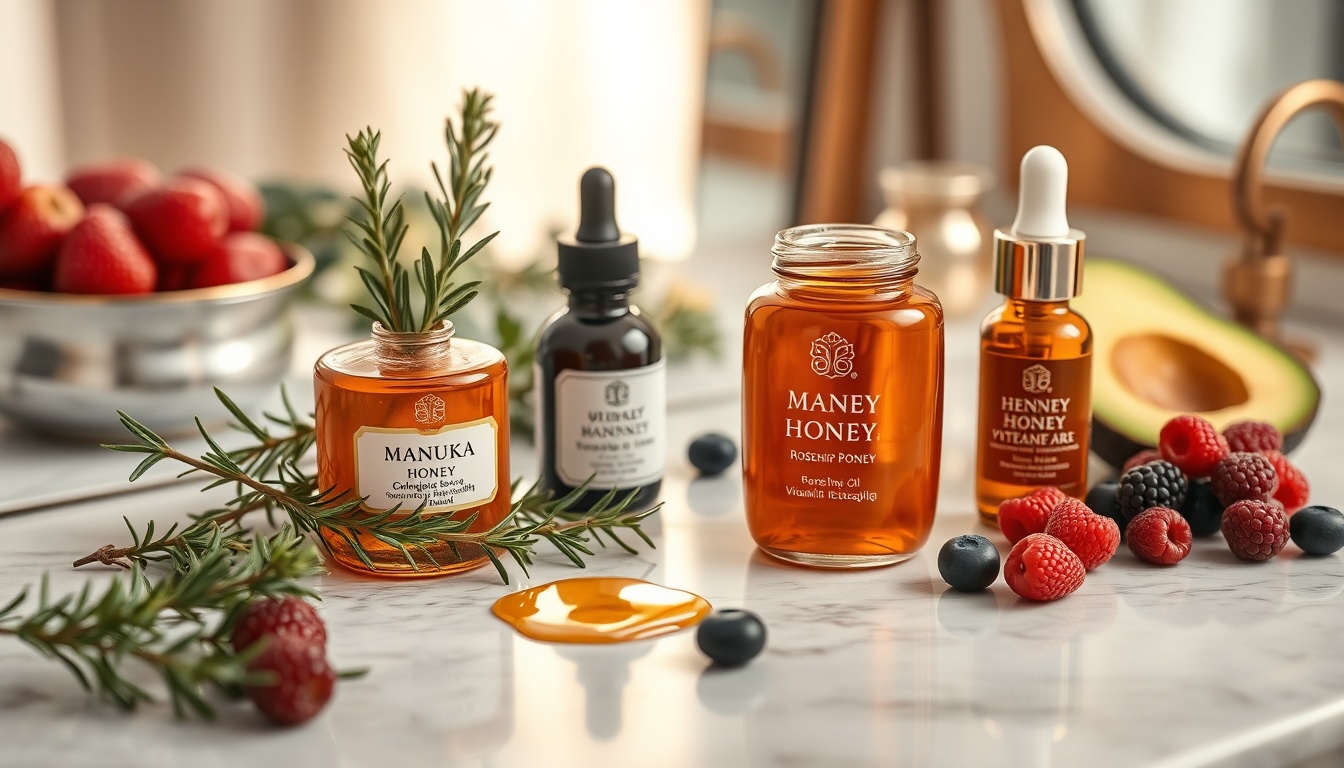
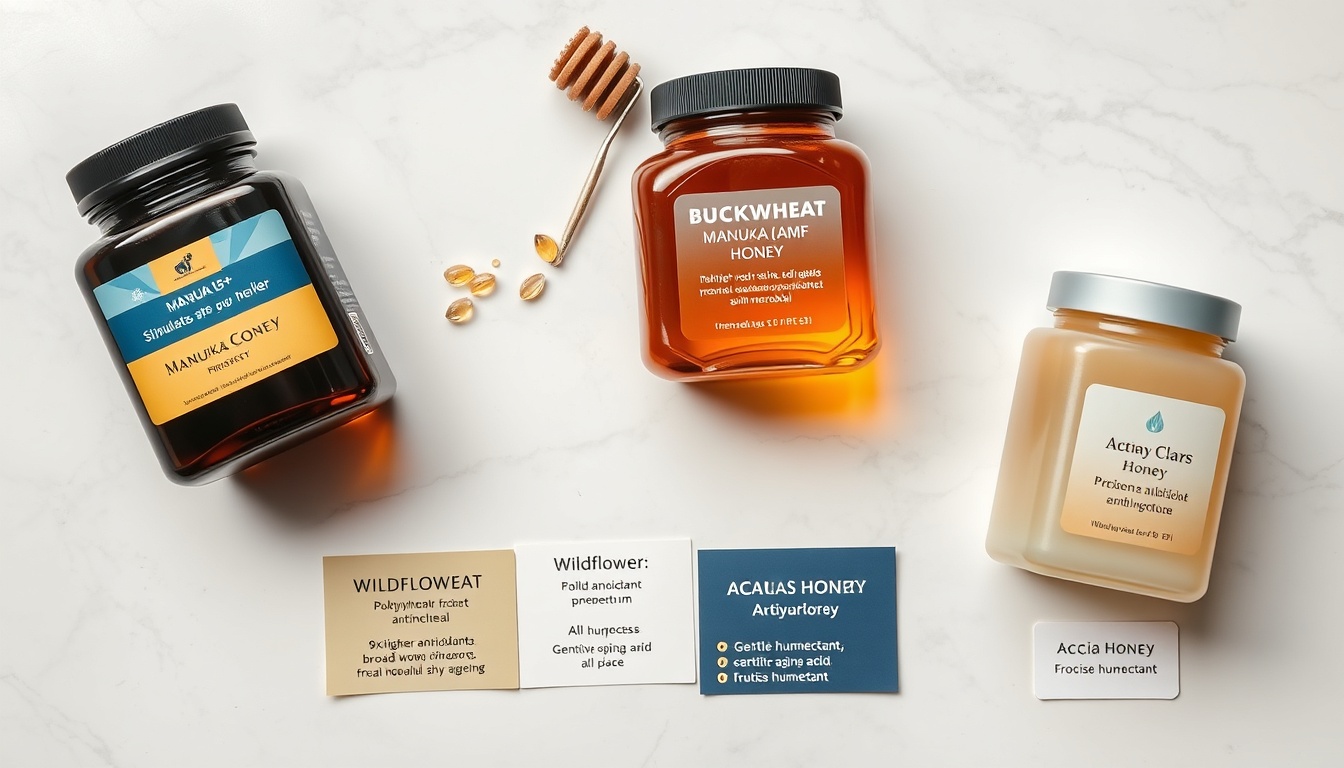
- Manuka honey (UMF 10-15+) — The most studied honey for skin applications. Higher methylglyoxal (MGO) content provides superior antimicrobial and anti-inflammatory activity. Its thick consistency stays in place as a face mask. Best for overall anti-aging benefits.
- Buckwheat honey — Highest antioxidant content of any honey variety, with up to 9x more polyphenols than light honeys like acacia. Best for targeting free radical damage and photoaging prevention.
- Sidr honey — Rich in phenolic acids with notable anti-inflammatory properties. Traditional use for skin is supported by emerging research on its antioxidant profile.
- Heather honey — High in phenolic acids and particularly rich in the antioxidant ellagic acid. A 2019 study found heather honey had among the highest ORAC (antioxidant capacity) scores of European honeys.
- Avoid: ultra-filtered commercial honey (stripped of pollen and many beneficial compounds), honey blends of unknown origin, and any honey with added ingredients like corn syrup.
4 DIY Anti-Aging Honey Treatments
These combinations pair honey with other evidence-based anti-aging ingredients for maximum benefit.
1. Classic Honey Anti-Aging Mask
Best for: general anti-aging, hydration, and glow.
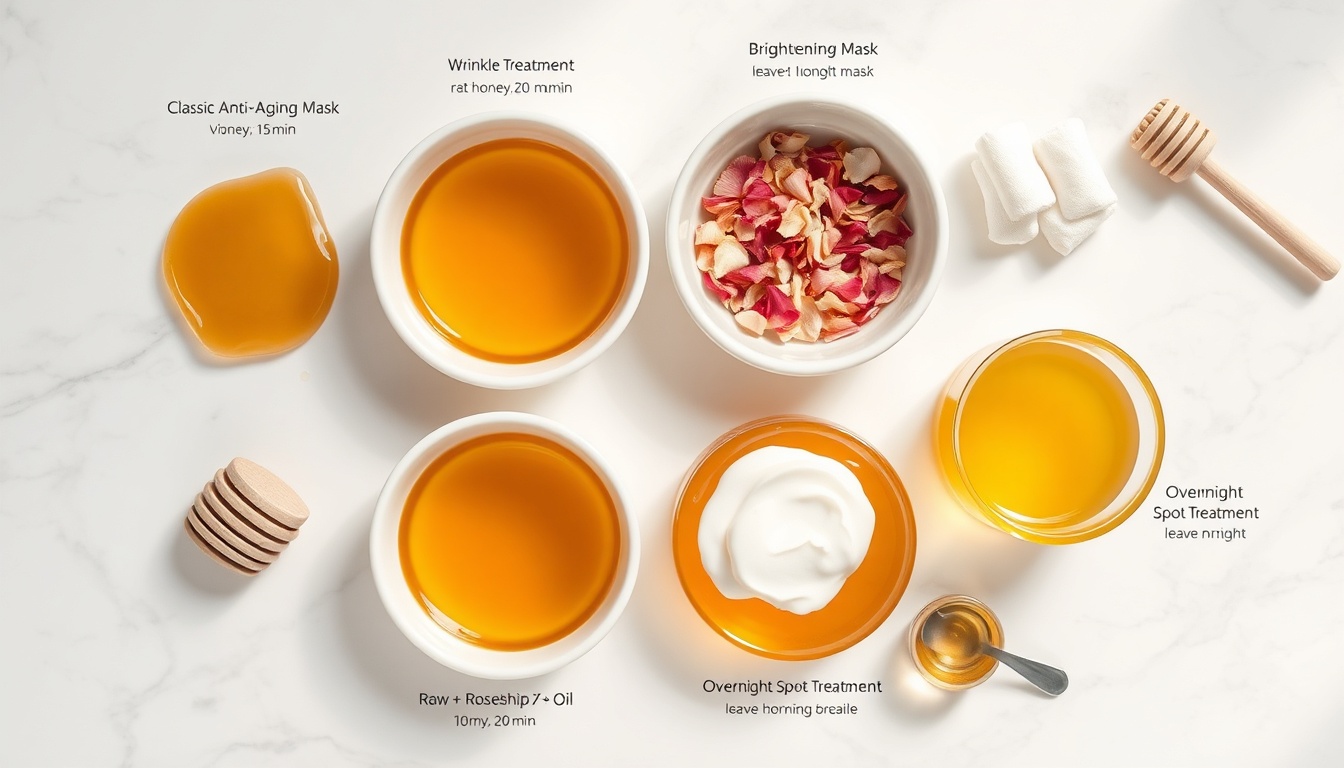
Apply 1-2 tablespoons of raw Manuka honey directly to clean, slightly damp skin. Leave for 20-30 minutes. The humectant properties draw moisture into skin while antioxidants work on the surface. Rinse with lukewarm water and pat dry. Use 2-3 times per week.
For enhanced results, gently massage honey into skin for 30 seconds before leaving it on — this improves absorption and provides very mild mechanical exfoliation.
2. Honey and Rosehip Oil Wrinkle Treatment
Best for: fine lines, dry aging skin, sun damage repair.
Mix 1 tablespoon raw honey with 4-5 drops of cold-pressed rosehip oil. Rosehip oil is rich in trans-retinoic acid (a natural retinoid), vitamin C, and omega-3/6 fatty acids — making it one of the most evidence-based anti-aging carrier oils. Apply to face and neck, leave for 20 minutes, rinse gently. Use 2 times per week.
This combines honey's humectant and antioxidant properties with rosehip oil's natural retinoid activity for a gentle but effective anti-aging treatment.
3. Honey, Yogurt, and Turmeric Brightening Mask
Best for: dull, aging skin with uneven tone and age spots.
Mix 1 tablespoon raw honey, 1 tablespoon plain full-fat yogurt, and 1/4 teaspoon turmeric powder. Yogurt provides lactic acid (an AHA that promotes cell turnover) and probiotics that support the skin microbiome. Turmeric's curcumin inhibits tyrosinase for mild brightening and reduces inflammation. Leave for 15 minutes, rinse thoroughly.
Caution: turmeric can temporarily stain skin yellow. Use only a small amount and avoid before events.
4. Overnight Honey Spot Treatment
Best for: targeting specific fine lines and crow's feet.
Dab a small amount of raw Manuka honey on specific wrinkle areas (crow's feet, forehead lines, smile lines) before bed. Cover with a thin bandage or cotton pad secured with medical tape. The extended contact time maximizes honey's humectant effect on targeted areas. Rinse in the morning.
This focused approach is more practical than a full-face overnight mask and targets the areas that benefit most from sustained hydration.
How to Combine Honey With Proven Anti-Aging Ingredients
Honey works best as part of a comprehensive anti-aging routine rather than a standalone treatment. Here's how to integrate it intelligently.
- Morning: Cleanse → Vitamin C serum (documented photoaging protection and collagen synthesis) → Moisturizer → SPF 30+ sunscreen. Sunscreen is the single most effective anti-aging product — no amount of honey compensates for UV damage.
- Evening: Cleanse → Retinoid (the gold standard for wrinkle reduction — stimulates collagen, speeds cell turnover, thins stratum corneum). Wait 20-30 minutes after retinoid application.
- 2-3 times per week: Replace evening cleanse with a honey mask (20-30 minutes) before your retinoid step. The honey provides hydration and antioxidants that complement the retinoid's collagen-stimulating effects. Some dermatologists suggest that honey's anti-inflammatory properties may help reduce retinoid irritation.
- Key timing: Do not mix honey with strong AHA/BHA products (glycolic acid, salicylic acid) in the same application — the pH levels can interfere with each other's activity.
Pro Tip
The most effective anti-aging strategy is prevention: daily SPF 30+ sunscreen, retinoid at night, antioxidant serum (vitamin C), and adequate hydration. Honey fits in as a gentle, hydrating supplement — not a replacement for these proven treatments.
Realistic Expectations and Limitations
Being honest about what honey cannot do is just as important as understanding what it can do.
Honey will not erase deep wrinkles — wrinkles caused by collagen loss, volume depletion, and repeated muscle movements require professional treatments (retinoids, Botox, fillers, laser resurfacing). No topical ingredient — natural or synthetic — can restore lost collagen or prevent muscle-based wrinkles.
Honey will not match retinoid results — retinoids (tretinoin) have 40+ years of clinical evidence showing measurable wrinkle reduction. Honey has supportive but less potent evidence. If you had to choose one product for anti-aging, a retinoid would be far more effective.
Honey can provide modest improvement in skin hydration (visible within minutes), texture and radiance (weeks of consistent use), fine lines related to dehydration (temporary improvement), and overall skin health (cumulative protective effects against environmental aging).
For most people over 40, honey works best as a pleasant, low-risk complement to an evidence-based anti-aging routine. For those in their 20s-30s, honey's antioxidant protection may genuinely help prevent premature aging when combined with sunscreen.
Safety and Precautions
Honey is generally very safe for topical use, but some precautions apply for anti-aging applications.
- Patch test first — Apply a small amount to your inner forearm and wait 24 hours before applying to your face. Some people react to propolis or pollen in raw honey.
- Avoid if you have a bee or pollen allergy — topical honey can trigger contact dermatitis in sensitized individuals.
- Don't apply to broken or actively irritated skin — honey's acidity may sting on compromised skin barriers.
- Clean hands and tools — honey is a sugar that can harbor bacteria in warm, moist conditions. Apply with clean fingers or a spatula.
- Store honey masks in airtight containers — mixed preparations (honey + yogurt, etc.) should be used immediately or refrigerated for no more than 2-3 days.