Why People Use Honey for Dark Circles
Dark circles under the eyes — clinically called periorbital hyperpigmentation — affect up to 47% of adults according to a 2014 survey published in the Journal of Clinical and Aesthetic Dermatology. They're one of the most common cosmetic complaints, and the internet is full of natural remedies claiming to fix them. Honey is one of the most popular.
The appeal makes sense on paper. Honey has documented anti-inflammatory properties, works as a natural humectant for skin hydration, and contains antioxidants that may protect against oxidative damage. These properties have legitimate clinical backing for other skin conditions like eczema and wound healing.
But dark circles aren't a wound or an inflammatory skin condition — they're a complex cosmetic issue with multiple potential causes. Whether honey can meaningfully address yours depends entirely on what's causing your dark circles in the first place.
What Actually Causes Dark Circles
This is critical to understand before trying any treatment. Dark circles have at least six distinct causes, and most people have a combination.
- Thin periorbital skin — The skin under your eyes is the thinnest on your body (0.5mm vs 2mm elsewhere). Blood vessels underneath show through as a blue-purple discoloration, especially in people with fair or translucent skin. This is structural and worsens with age as skin thins further from collagen loss.
- Hyperpigmentation — Excess melanin production in the under-eye area, more common in darker skin tones (Fitzpatrick types IV-VI). Sun exposure, post-inflammatory hyperpigmentation from rubbing or allergies, and genetic predisposition all contribute. This appears as brown discoloration.
- Vascular congestion — Poor blood flow and leaky capillaries beneath thin under-eye skin. Allergies (allergic shiners), nasal congestion, and sleep deprivation all dilate blood vessels and increase vascular permeability, creating a dark purple or blue hue.
- Volume loss and hollowing — Fat pad atrophy and bone resorption with aging create shadows in the tear trough that look like dark circles. No topical treatment addresses this — only dermal fillers or fat transfer can.
- Lifestyle factors — Sleep deprivation, dehydration, excessive screen time, alcohol, and smoking all exacerbate dark circles through inflammation, fluid retention, and vasoconstriction-vasodilation cycles.
- Genetics — Family history is the strongest predictor. A 2015 study in the Brazilian Annals of Dermatology found that 63% of dark circle patients had a family history of periorbital hyperpigmentation.
Pro Tip
The color of your dark circles hints at the cause: brown = pigmentation, blue-purple = vascular/thin skin, dark shadow = volume loss. Many people have a combination of two or three causes.
Get the Honey Buyer's Cheat Sheet (free PDF)
16 varieties on one page — color, flavor, best use and what a fair price looks like — from the 268 honeys we track.
What Honey Can Realistically Do for Under-Eye Skin
Let's be honest about what honey can and cannot address. Honey has real biological activity, but dark circles are mostly a structural and genetic issue.
- Hydration and plumping (moderate evidence) — Honey is a natural humectant containing fructose, glucose, and amino acids that draw water into the skin. Better hydration temporarily plumps thin under-eye skin, making blood vessels less visible. This effect is real but temporary — it fades within hours as the skin returns to its baseline hydration.
- Anti-inflammatory effects (good evidence for skin) — Honey polyphenols like chrysin and quercetin inhibit NF-κB and COX-2 pathways. For dark circles caused by allergic inflammation (allergic shiners), this could help reduce puffiness and vascular congestion. A 2003 study in the European Journal of Medical Research found a honey-beeswax-olive oil mixture reduced inflammation scores in various skin conditions.
- Mild brightening via antioxidants (limited evidence) — Honey contains polyphenols that inhibit tyrosinase, the enzyme responsible for melanin production. A 2012 study in BMC Complementary and Alternative Medicine found that certain honey types (especially dark honeys rich in phenolic acids) showed tyrosinase inhibition in vitro. However, the concentrations needed for meaningful skin lightening likely exceed what topical honey application delivers.
- Gentle exfoliation (minor effect) — Honey's natural acidity (pH 3.2-4.5) and gluconic acid content provide very mild chemical exfoliation. This can improve skin texture and remove dead cells that make under-eye skin look dull, but the effect is subtle compared to dedicated AHAs.
- Skin barrier support (good evidence) — Honey strengthens the skin's moisture barrier by promoting ceramide production and reducing transepidermal water loss (TEWL). Better barrier function means less irritation and inflammation, which can prevent dark circles from worsening.
What Honey Cannot Do for Dark Circles
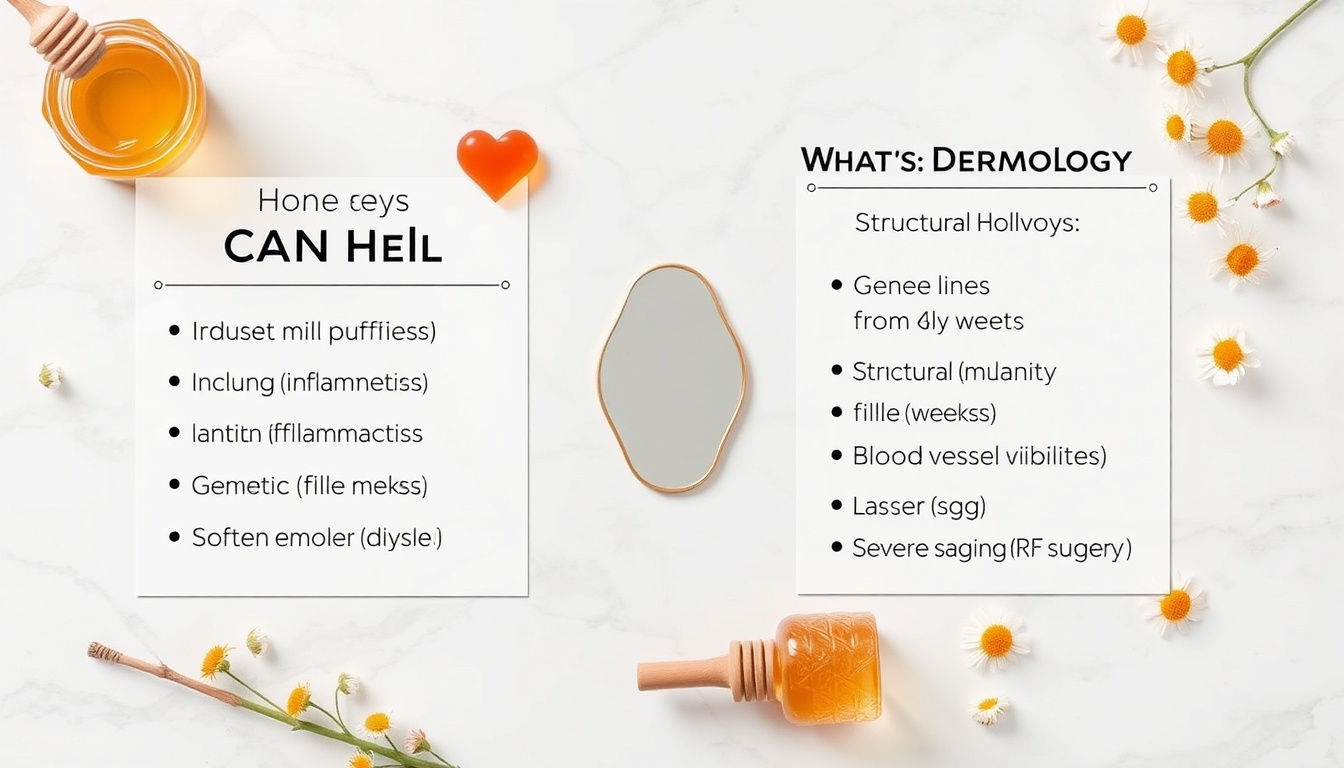
It's important to set realistic expectations. Honey will not significantly change dark circles caused by thin skin genetics, volume loss in the tear trough, deep-set eye anatomy, structural bone changes from aging, or heavy melanin deposition in genetically predisposed individuals.
No topical ingredient — prescription or natural — can thicken the periorbital dermis, replace lost fat volume, or change eye socket bone structure. If your dark circles are primarily structural (which most are in people over 35), the only effective treatments are dermal fillers, laser therapy, or surgical intervention.
However, if your dark circles have an inflammatory component (puffy, worse with allergies or lack of sleep), a dehydration component (better after moisturizing), or a surface-pigmentation component (brownish tone that responds to exfoliation), honey may provide modest improvement as part of a broader under-eye care routine.
3 DIY Honey Under-Eye Treatments
If you want to try honey for dark circles, these combinations pair honey with other ingredients that have some evidence for under-eye skin.
1. Simple Honey Hydration Treatment
Best for: dehydration-related dark circles, dull under-eye skin.
Apply a thin layer of raw honey (preferably manuka UMF 10+ for its superior humectant properties) under each eye. Leave for 15-20 minutes, then rinse with cool water and pat dry. The honey draws moisture into the skin, temporarily plumping the thin periorbital area and reducing the visibility of underlying blood vessels.
Do a patch test on your inner forearm first — the under-eye area is sensitive and some people react to propolis or bee pollen traces in raw honey.
2. Honey and Almond Oil Eye Mask
Best for: dry, thin under-eye skin with mild pigmentation.
Mix 1 teaspoon raw honey with 3-4 drops of sweet almond oil. Almond oil contains vitamin E (alpha-tocopherol), vitamin K (phylloquinone), and retinol — all of which have some evidence for improving under-eye appearance. Vitamin K specifically has been studied for reducing periorbital hyperpigmentation by strengthening capillary walls and reducing blood leakage. Apply under the eyes for 15-20 minutes, then gently wipe off with a damp cloth.
3. Honey and Turmeric Brightening Paste
Best for: pigmentation-type dark circles (brownish discoloration).
Mix 1 teaspoon raw honey with a pinch of turmeric powder (1/8 teaspoon). Turmeric's curcumin is one of the most studied natural tyrosinase inhibitors — a 2012 study in Phytotherapy Research showed curcumin inhibited melanin synthesis by 40-50% in cell culture models. Combined with honey's own mild tyrosinase inhibition, this targets the melanin production pathway.
Caution: turmeric temporarily stains skin yellow. Use only a tiny pinch, leave on for 10-15 minutes maximum, and rinse thoroughly. Do not use daily — 2-3 times per week at most. Avoid if you have very fair skin that stains easily.
Pro Tip
None of these treatments will produce dramatic overnight results. Consistent use over 4-6 weeks may provide modest improvement in hydration-related or mild-pigmentation dark circles. For structural dark circles, consult a dermatologist about evidence-based treatments.
Best Honey Types for Under-Eye Skin
Not all honeys are equally suitable for the delicate periorbital area.
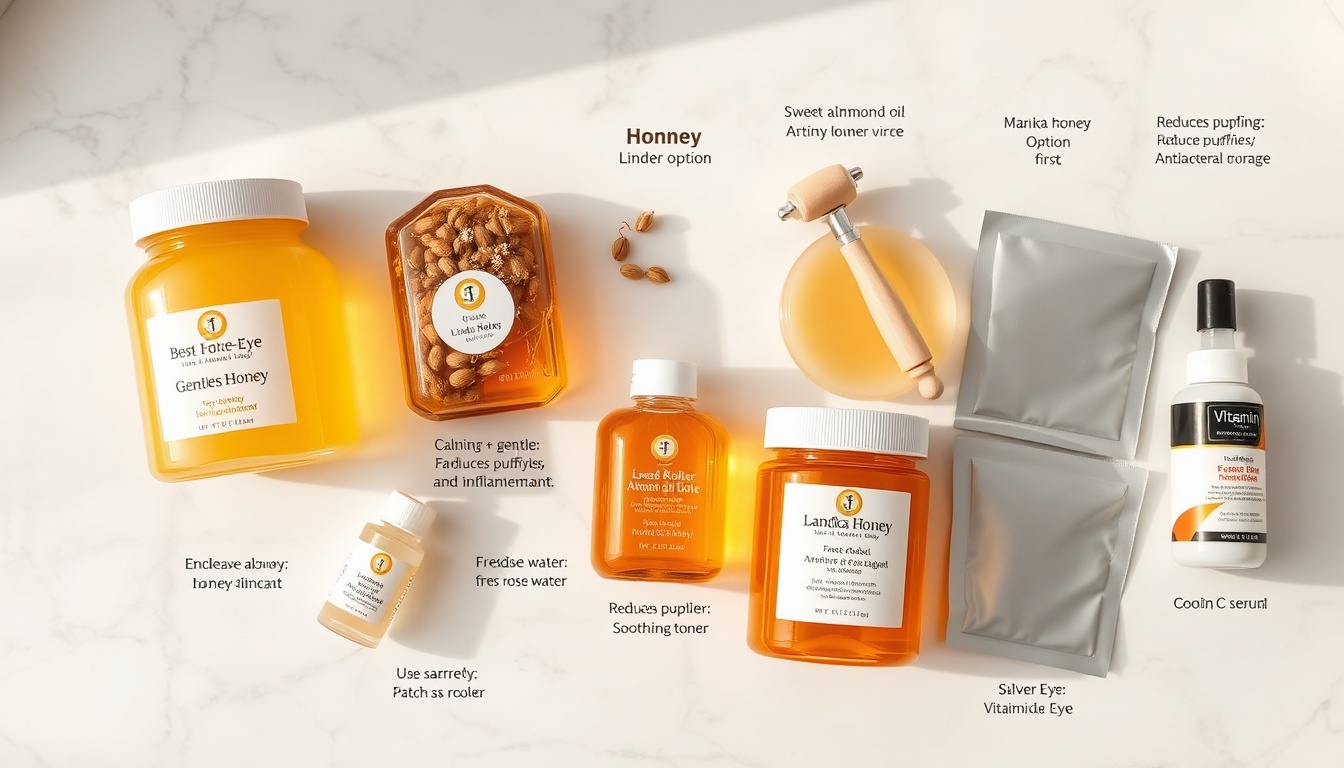
- Manuka honey (UMF 10-15+) — Highest methylglyoxal content for antimicrobial and anti-inflammatory activity. Its thick consistency stays in place on vertical under-eye skin. The gold standard for therapeutic skin applications.
- Acacia honey — Very light, mild, and least likely to cause irritation. Good choice for sensitive skin or first-time users. Lower antioxidant content than darker honeys but gentler.
- Buckwheat honey — Highest antioxidant content of any honey variety tested (up to 9x more polyphenols than light honeys). Best for targeting oxidative damage and pigmentation. Strong flavor and dark color — cosmetic use only.
- Avoid: flavored honeys, honeys with additives, ultra-filtered commercial honeys (stripped of pollen and beneficial compounds), and any honey you haven't patch-tested first.
Evidence-Based Alternatives That Work Better
While honey is safe and may provide modest hydration benefits, several other approaches have stronger evidence for dark circles.
- Vitamin C serums (10-20% L-ascorbic acid) — Inhibit melanin production, boost collagen synthesis, and improve thin under-eye skin. A 2009 study in the Journal of Drugs in Dermatology found 10% vitamin C reduced dark circles after 6 months. This addresses both pigmentation and thin-skin causes.
- Retinoids (retinol 0.25-0.5%) — Stimulate collagen production and thicken the dermis over time, reducing the visibility of underlying blood vessels. The most evidence-based topical treatment for aging-related dark circles. Start with low concentration — the under-eye area is sensitive.
- Caffeine-containing eye creams — Caffeine constricts blood vessels and reduces puffiness. A 2010 study showed topical caffeine reduced periorbital dark circles by improving microcirculation. Works best for vascular-type (blue-purple) dark circles.
- Sunscreen (daily SPF 30+) — UV exposure worsens pigmentation-type dark circles. Consistent sunscreen use is the single most effective preventive measure for periorbital hyperpigmentation.
- Adequate sleep (7-9 hours) — Sleep deprivation increases cortisol, causes fluid retention, and dilates blood vessels under thin periorbital skin. No topical treatment compensates for chronic sleep debt.
- Cold compress — Simple vasoconstriction reduces vascular dark circles immediately (temporarily). More effective than any topical ingredient for quick improvement before an event.
Pro Tip
The most effective dark circle treatment combines sunscreen, retinol (nighttime), vitamin C (morning), and adequate sleep. Honey can be a gentle add-on but shouldn't be your primary strategy.
Safety Precautions for Honey Near Eyes
The periorbital area requires extra caution with any topical treatment.
- Never apply honey inside the eye or on the eyelid margin. Honey is not sterile and can introduce bacteria to the conjunctiva.
- Always patch test on your inner forearm 24 hours before applying near your eyes. Allergic reactions near the eyes can cause significant swelling.
- Use medical-grade or food-grade honey only — never raw honeycomb or unprocessed honey near the eyes, as it may contain debris or particulates.
- If you experience redness, burning, or swelling, rinse immediately with cool water and discontinue use.
- People with bee or pollen allergies should avoid topical honey use entirely, especially near sensitive mucous membrane areas.
- Do not use honey under-eye treatments on children under 12 without consulting a pediatrician.