Raw Honey vs Regular Honey
A detailed comparison to help you choose the right honey for your needs.
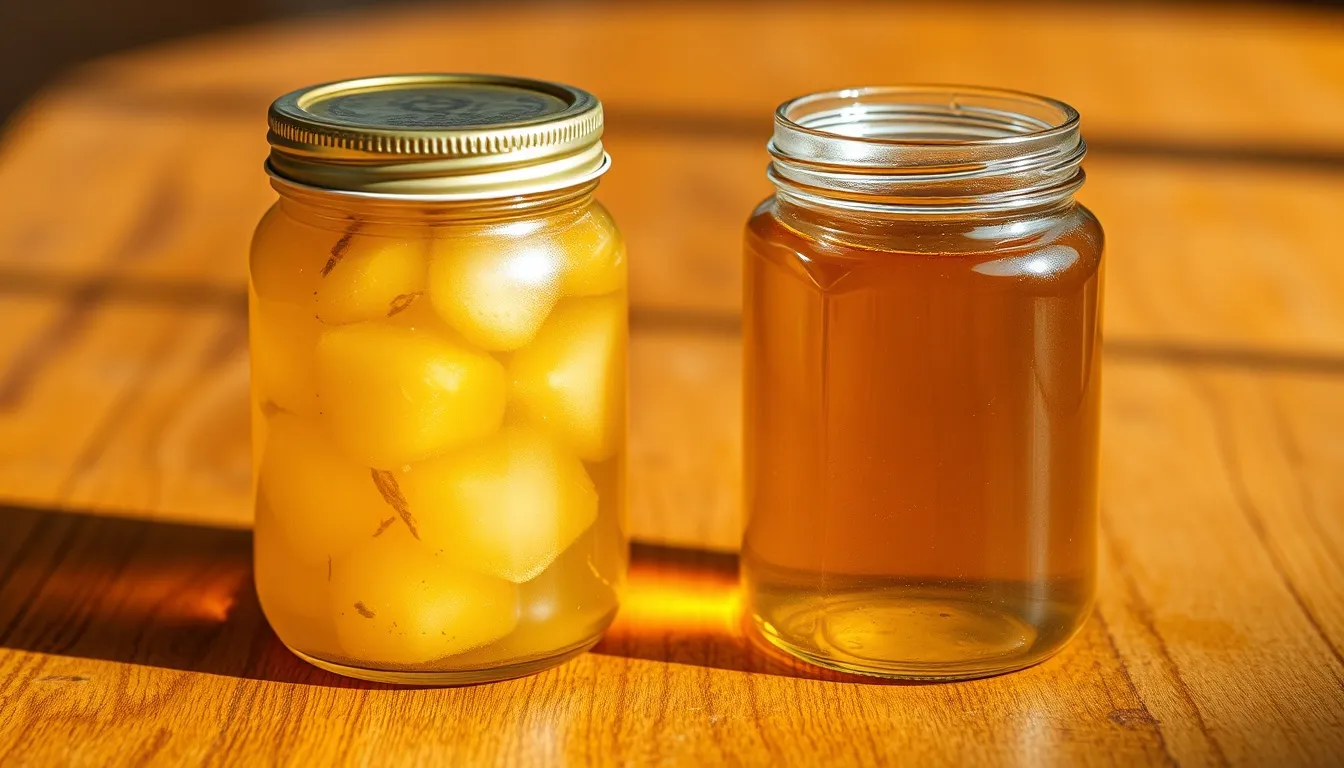
Quick Answer
Raw honey is unprocessed and retains all its natural enzymes, pollen, and antioxidants. Regular (processed) honey is heated and filtered, giving it a clear appearance but stripping away many beneficial compounds. For health benefits, choose raw. For convenience and consistent flavor in recipes, regular honey works well.
At a Glance
Raw Honey
Complex, nuanced, varies by floral source
Health benefits, natural remedies, gourmet use
$10-$25 per jar
Worldwide
Regular Honey
Mild, uniformly sweet
Cooking, baking, everyday sweetening
$5-$12 per jar
Worldwide
Head-to-Head
Flavor Comparison
Raw honey offers a remarkably diverse flavor experience because it preserves the original character of whatever flowers the bees visited.
A jar of raw wildflower honey might taste completely different from raw clover or raw orange blossom honey. You may notice subtle grassy, fruity, or even spicy undertones that reflect the terroir of the region. The texture can include tiny bits of beeswax, pollen granules, and propolis that add complexity. Regular honey undergoes pasteurization and ultra-filtration that homogenize its flavor into a consistent, predictable sweetness. This processing removes particulates and blends multiple batches, resulting in a smooth, syrupy product that tastes essentially the same from jar to jar. While this consistency is useful for recipes, it sacrifices the personality that makes each raw honey unique.
Nutrition Comparison
The nutritional divide between raw and regular honey centers on what processing removes.
Raw honey retains active enzymes like glucose oxidase, diastase, and invertase that aid digestion and produce natural hydrogen peroxide for antibacterial protection. It contains bee pollen, which provides proteins, vitamins, and may help with allergy desensitization. Propolis, another component often present in raw honey, has documented anti-inflammatory and antimicrobial properties. Heat pasteurization in regular honey degrades or destroys most of these enzymes and beneficial compounds. The basic sugar and calorie content remains similar between the two at around 60 calories per tablespoon. However, studies have shown raw honey has significantly higher antioxidant activity, measured by ORAC values, compared to pasteurized versions of the same honey.
Best Use Cases
Raw honey is ideal for applications where you want maximum health benefit: eating by the spoonful as a daily supplement, mixing into warm (not hot) tea to preserve enzymes, spreading on toast, drizzling over yogurt, or using as a natural cough suppressant.
It also works beautifully as a gourmet ingredient in cheese boards and charcuterie platters where its complex flavors shine. Regular honey is the better choice for baking and cooking, where heat will destroy enzymes anyway. Its smooth, pourable consistency makes it easier to measure and mix into recipes. It is also preferred for making sauces, dressings, and glazes where you want uniform sweetness without textural surprises.
Price Comparison
Raw honey typically costs $10 to $25 per jar, reflecting the more careful handling and smaller-batch production required to preserve its natural state.
Regular honey ranges from $5 to $12, benefiting from industrial-scale processing and blending. The premium for raw honey is modest relative to the nutritional advantages it provides.
Our Verdict
If you are buying honey primarily for health reasons, raw honey is the clear winner. Its intact enzymes, pollen, and antioxidants provide tangible benefits that processed honey cannot match. For everyday kitchen use where honey will be heated or blended into recipes, regular honey offers good value and consistent performance. An ideal approach is keeping both on hand: raw honey for eating straight and adding to warm beverages, and regular honey for baking and cooking where its advantages make more practical sense.
Frequently Asked Questions
What is the difference between raw honey and regular honey?
Is raw honey healthier than regular honey?
Does raw honey crystallize faster than regular honey?
How can I tell if honey is truly raw?
Can I substitute raw honey for regular honey in baking?
What is the difference between raw honey and organic honey?
Best Honey For...
More Honey Comparisons
View allRelated Guides
Raw Honey vs Regular
Processing, nutrition, and how to choose.
Read GuideCreamed Honey Guide
What creamed honey is, the Dyce method, best varieties, and buying tips.
Read GuideWhat Honey Should I Buy?
Personalized quiz to find your perfect honey.
Read GuideRelated Articles
Types of Honey: A Complete Guide to 20+ Varieties
Guide to 20+ honey varieties — clover, manuka, buckwheat, wildflower, and more. How floral source affects flavor and use.
Read ArticleRaw Honey vs Regular Honey: What's Actually Different?
Raw vs regular honey: compare nutrition, enzymes, antioxidants, processing methods, and which one is better for your health.
Read ArticleHeather Honey Benefits: Why This Scottish Classic Is Worth the Premium
Heather honey benefits: exceptionally high antioxidants, unique thixotropic gel texture, and bold, complex flavor profile.
Read Article