What Makes Heather Honey Special?
Heather honey is produced from the nectar of heather plants (Calluna vulgaris, commonly called ling heather) that blanket the moorlands and highlands of Scotland, Ireland, Scandinavia, and other parts of Northern Europe. It's one of the most distinctive honeys in the world — dark amber with an extraordinary gel-like texture, bold flavor, and antioxidant content that rivals even buckwheat ($15-25/lb, ORAC 16,000+) and chestnut ($20-35/lb) honey.
Heather honey has been prized in Scotland and Northern Europe for centuries. The ancient art of heather honey production was considered so important to Scottish Highland communities that the Picts (pre-Celtic inhabitants of Scotland) were legendarily said to have died rather than reveal the secret of heather ale — a fermented beverage made from heather honey. Today, Scottish heather honey carries geographic protection and is considered a national culinary treasure.
What makes heather honey physically unique among all honeys is its thixotropic property — it behaves like a gel when still but becomes liquid when stirred or agitated. This is caused by a high concentration of proteins (1.5-1.9%, compared to 0.1-0.5% in most honeys) that form a colloidal network. No other common monofloral honey shares this remarkable characteristic, making heather honey immediately identifiable even without tasting it.
Exceptional Antioxidant Content
Heather honey consistently ranks among the highest-antioxidant honeys in scientific comparisons. A 2009 study in the Journal of Agricultural and Food Chemistry measured total phenolic content and ORAC (Oxygen Radical Absorbance Capacity) values across 14 European monofloral honeys and found heather honey in the top tier — comparable to chestnut and significantly higher than clover ($8-15/lb), acacia ($12-20/lb), or orange blossom ($12-20/lb).
A comprehensive 2014 study in Food Chemistry analyzed the phenolic profile of Scottish heather honey and identified over 20 distinct flavonoids and phenolic acids, including kaempferol, quercetin, myricetin, ellagic acid, gallic acid, p-coumaric acid, and chlorogenic acid. The researchers noted that heather honey's total phenolic content (82-150 mg GAE/100g) placed it in the same league as dark honeys like buckwheat (86-160 mg GAE/100g) despite its medium-dark amber color.
The quercetin and kaempferol content is particularly significant for cardiovascular protection. The 2022 Nutrition Reviews meta-analysis found that honey consumption improved LDL cholesterol and CRP — effects largely driven by polyphenol content. Heather honey's high flavonoid concentration makes it one of the better choices for these cardiovascular benefits.
Myricetin, another abundant flavonoid in heather honey, has demonstrated specific neuroprotective properties. A 2016 review in Neurochemistry Research documented myricetin's ability to reduce amyloid-beta aggregation and protect hippocampal neurons from oxidative stress — suggesting potential relevance to age-related cognitive health, though this remains an active area of research rather than established clinical guidance.
Get the Honey Buyer's Cheat Sheet (free PDF)
16 varieties on one page — color, flavor, best use and what a fair price looks like — from the 268 honeys we track.
Antimicrobial and Wound Healing Properties
Heather honey demonstrates strong antimicrobial activity through multiple mechanisms — both hydrogen peroxide-dependent and non-peroxide pathways. A 2012 study in the Journal of Antimicrobial Chemotherapy tested 29 European honeys and found heather honey among the most potent against both Staphylococcus aureus (including MRSA) and Pseudomonas aeruginosa.
The unusually high protein content of heather honey contributes to its antimicrobial effectiveness. The bee-derived enzyme glucose oxidase generates hydrogen peroxide from glucose, and heather honey's protein matrix appears to sustain this reaction more effectively than lower-protein honeys. Additionally, the phenolic diterpenes and flavonoids provide non-peroxide antimicrobial activity that persists even when hydrogen peroxide is neutralized.
For wound healing, heather honey's viscous gel-like consistency is advantageous — it stays in place on wounds better than runnier honeys, maintaining contact with the wound bed. A 2015 study in the International Journal of Biological Macromolecules found that the thixotropic proteins in heather honey enhanced wound-related bioactivity by creating a sustained-release matrix for antimicrobial compounds.
While heather honey hasn't been developed into medical-grade products like manuka honey's ($35-60+/lb) Medihoney, its antimicrobial potency and unique physical properties make it a strong candidate for traditional wound care, sore throat relief, and skin applications. In traditional Scottish and Irish folk medicine, heather honey was the preferred variety for treating cuts, burns, and respiratory ailments.
Anti-Inflammatory and Immune Effects
Heather honey's dense polyphenol profile provides robust anti-inflammatory effects through multiple pathways. The combination of quercetin, kaempferol, and ellagic acid targets the NF-κB inflammatory signaling pathway — the same master switch discussed in our honey for inflammation guide — while gallic acid and chlorogenic acid provide COX-2 inhibition similar to NSAIDs.
A 2018 study in the journal Molecules specifically analyzed the anti-inflammatory potential of heather (Calluna vulgaris) honey and found significant inhibition of pro-inflammatory cytokines TNF-α, IL-1β, and IL-6 in cell culture models. The researchers attributed this to the synergistic action of multiple phenolic compounds rather than any single compound — a "cocktail effect" that may be more therapeutically durable than isolated compounds.
For immune support, heather honey's high protein content is an additional differentiator. The proteins include antimicrobial peptides and immune-modulating glycoproteins that aren't present in significant quantities in lower-protein honeys. These proteins, combined with the prebiotic oligosaccharides (FOS/GOS) that support gut-associated immune tissue, make heather honey a particularly complete immune-supporting food.
The ellagic acid content deserves special mention — this polyphenol has been extensively studied for its immune-modulating and chemoprotective properties. A 2011 review in Cancer Biology & Therapy documented ellagic acid's ability to enhance NK cell activity and promote apoptosis in abnormal cells while protecting healthy cells. Heather ($30-50/lb) and chestnut ($20-35/lb) honeys are among the richest dietary sources of ellagic acid.
Digestive Health and Prebiotic Effects
Heather honey provides the standard prebiotic oligosaccharides (FOS and GOS) found in all raw honeys, supporting beneficial gut bacteria as detailed in our honey and gut health guide. Its high phenolic content adds additional digestive benefits.
The chlorogenic acid in heather honey has demonstrated specific gastroprotective effects. A 2013 study in Food & Function found that chlorogenic acid reduced gastric mucosal damage by enhancing mucus secretion and reducing pro-inflammatory prostaglandin E2 — relevant for people dealing with acid reflux or gastritis.
Heather honey's thixotropic gel consistency may also provide physical digestive benefits. Its viscous texture coats the esophageal and gastric mucosa more effectively than runnier honeys, potentially offering better protection against acid-related damage. For constipation relief, its high fructose and osmotic properties stimulate gut motility through the standard mechanisms.
The high protein content of heather honey makes it nutritionally denser than most varieties — the proteins include amino acids that serve as substrates for gut bacterial metabolism, potentially enhancing the prebiotic effect beyond what the oligosaccharides alone provide. This makes heather honey a particularly good choice for gut-brain axis support and overall digestive wellness.
Flavor Profile and Culinary Uses
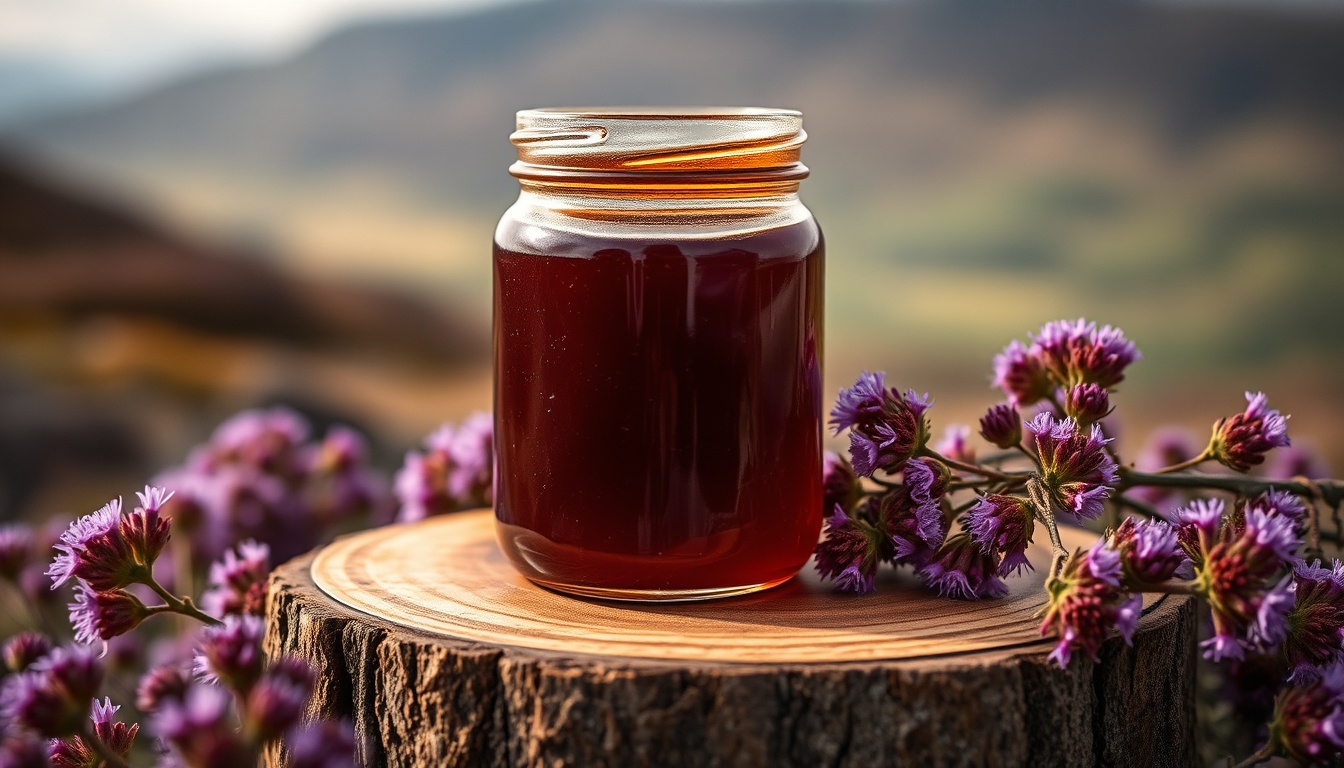
**Appearance:** Medium to dark amber with reddish-brown tones. When undisturbed, it has a distinctive gel-like consistency that jiggles rather than flows. Stirring transforms it to a pourable liquid.
**Aroma:** Intensely aromatic — warm, smoky, slightly floral with heathery, woody, and caramel undertones. One of the most complex honey aromas. Often described as smelling like the Scottish Highlands themselves — peat, wildflowers, and moorland air.
**Taste:** Bold, rich, and complex. Opens with moderate sweetness and earthy warmth, develops smoky-caramel mid-tones with hints of toffee and dried fruit, and finishes with a distinctive bitter edge and tannic quality reminiscent of strong tea. More assertive than wildflower ($10-18/lb), comparable in intensity to buckwheat ($15-25/lb) but with a different flavor profile — less molasses-like, more earthy-floral.
**Crystallization:** Heather honey's thixotropic nature makes crystallization different from other honeys. Rather than forming hard crystals, it tends to become progressively thicker and more gel-like over time. Traditional Scottish preparation involves "pressing" heather honey through cloth to separate wax and pollen, yielding a smooth, naturally dense product.
- **Strong tea pairing:** Excels with robust black teas — English Breakfast, Scottish Breakfast, Assam, and especially smoky Lapsang Souchong where honey and smoke create magic
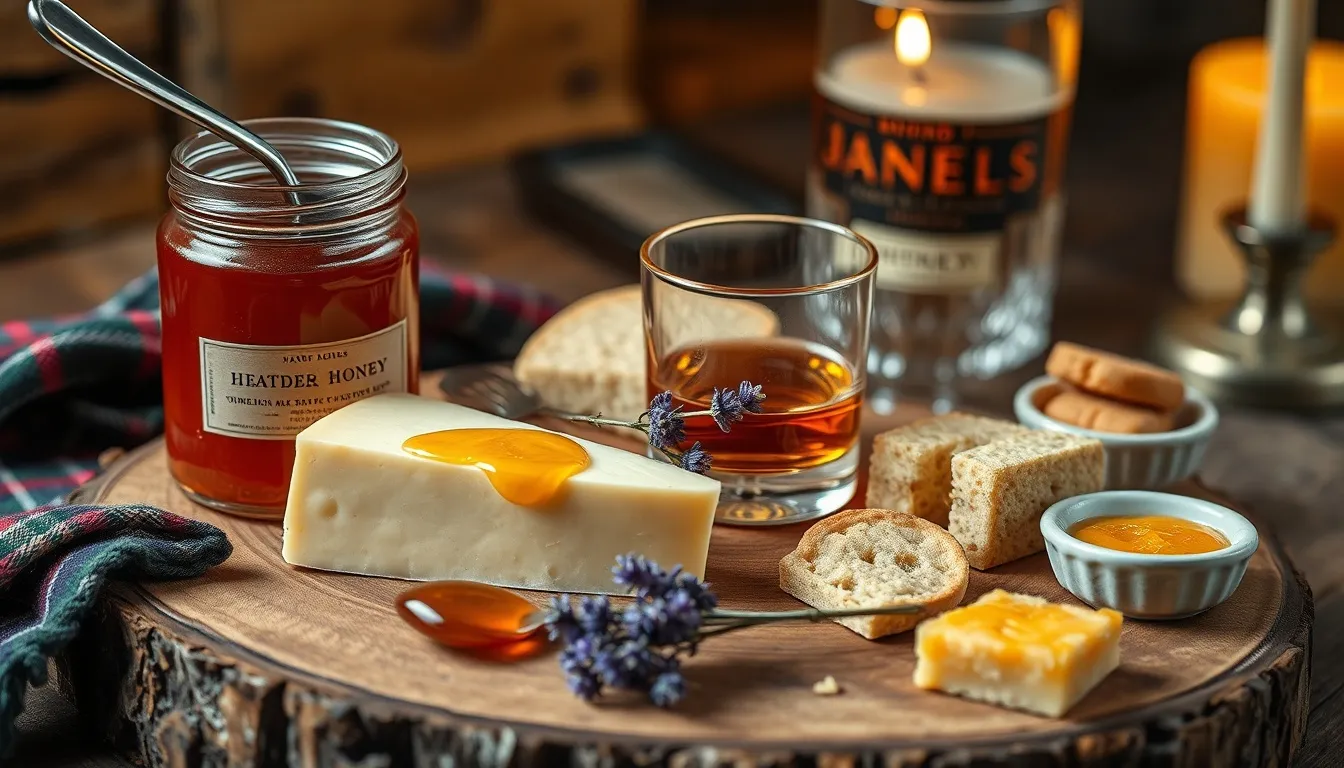
- **Cheese boards:** Outstanding with strong cheeses — aged cheddar, blue cheese (Stilton, Roquefort), smoked Gouda, and tangy goat cheese. The bold flavors complement rather than compete
- **Toast and oatmeal:** A Scottish classic — heather honey on morning porridge or buttered toast. Its gel texture spreads beautifully when stirred
- **Marinades and glazes:** Excellent in honey glazes for lamb, game meats, roasted root vegetables, and whisky-based sauces
- **Whisky pairing:** The traditional Scottish combination — a drop of heather honey in single malt whisky. Particularly good with Highland and Speyside malts
- **Baking:** Adds depth to gingerbread, oatcakes, scones, and dark fruit cakes where its bold flavor is an asset rather than overwhelming
Heather Honey vs Other Varieties
**Heather vs Buckwheat ($15-25/lb):** Both are dark, high-antioxidant honeys with bold flavors. Buckwheat has more molasses-like sweetness; heather is more earthy, smoky, and tannic. Buckwheat crystallizes normally; heather has its unique thixotropic gel texture. Comparable antioxidant levels. Buckwheat is easier to find and cheaper.
**Heather vs Manuka ($35-60+/lb):** Both are premium, dark, therapeutically active honeys. Manuka has superior clinical evidence for wounds (MGO mechanism). Heather may have comparable antimicrobial activity through different mechanisms but lacks the same clinical trials. Heather is significantly cheaper — $30-50/lb vs $35-60+/lb for UMF 10+ manuka.
**Heather vs Chestnut ($20-35/lb):** Both are dark European honeys with bitter notes and high antioxidants. Chestnut is more pronouncedly bitter with less smokiness. Both have high mineral content. Chestnut is Italian; heather is Scottish/Northern European. Similar therapeutic profiles.
**Heather vs Clover ($8-15/lb):** Polar opposites. Clover is mild, sweet, light, and universally crowd-pleasing. Heather is bold, complex, dark, and polarizing — people tend to love it or find it too intense. Heather has 3-5x the antioxidant content. Clover is better for cooking and everyday sweetening; heather shines as a tasting honey and therapeutic choice.
**Heather vs Wildflower ($10-18/lb):** Wildflower is the "blend" — varied and approachable. Heather is the monofloral specialist with distinctive character. Wildflower varies batch to batch; heather has a consistent, recognizable profile. Heather is darker and more antioxidant-rich.
How to Choose Quality Heather Honey
Genuine monofloral ling heather honey (Calluna vulgaris) is distinct from bell heather (Erica) honeys — both are sold as "heather honey" but ling heather commands the premium. Here's how to identify quality:
- **Origin:** Scotland is the most renowned source, followed by Ireland, Norway, Denmark, and Spain (where it's called "miel de brezo"). Yorkshire and the English moorlands also produce excellent heather honey. Origin matters — moorland heather produces the most characteristic product
- **Thixotropic test:** Genuine Calluna heather honey should be gel-like when still and become liquid when stirred. This is the definitive authenticity marker. If it pours freely like normal honey, it's likely bell heather (Erica) or mislabeled. Stir the jar and watch if it reforms as a gel — this confirms ling heather
- **Color:** Should be medium to dark amber with reddish-brown tones. Very light "heather honey" is almost certainly bell heather or blended
- **Aroma:** Genuine ling heather honey has an unmistakable smoky-heathery-earthy aroma. It should smell distinctly different from any other honey you've encountered
- **Price range:** $15-25 per pound for quality heather honey, $20-35 for premium Scottish single-origin. It's a labor-intensive harvest — heather moors are remote, the bloom period is short (August-September), and yields are weather-dependent. Cheap heather honey is likely bell heather or blended
- **Certifications:** Scottish heather honey sometimes carries Scottish quality marks or Heather Honey Association certification. EU protected origin designations exist for heather honeys from specific regions
- **Buy raw and unprocessed:** Many commercial heather honeys are heat-treated to make them easier to jar (breaking the thixotropic gel). This destroys enzymes and volatile compounds. Look for "raw" or "cold-extracted" on the label — see our honey label guide
- **Consider the conservation angle:** Heather moorland habitat across Europe is declining due to overgrazing, agricultural conversion, afforestation, and climate change. The August-September bloom window is increasingly unpredictable as temperatures shift. Purchasing Scottish and Northern European heather honey directly supports moorland beekeepers whose economic activity helps justify preserving these ecologically important landscapes. As World Environment Day (June 5) reminds us, choosing traditional monofloral honeys over generic blends is a meaningful way to fund habitat conservation. Find local and specialty honey sources or explore all honey varieties
Safety and Considerations
Heather honey is safe for most people at normal dietary amounts. Standard precautions:
- **Infants under 12 months:** Never give honey to infants under 12 months due to infant botulism risk — see our baby honey safety guide
- **Stronger flavor:** Heather honey's bold, slightly bitter taste can be surprising if you're used to mild honeys. Start with a small amount to assess your palate preference
- **Higher mineral content:** Heather honey is relatively high in potassium and iron. People with kidney disease who need to limit potassium intake should account for this
- Diabetes note — Honey is a fast-acting carbohydrate, and no honey variety is medically preferred. Use the honey carbohydrate and label guide to compare serving-size total carbohydrate and added sugars within an individualized care plan.
- **Heather allergies:** People with known allergies to Ericaceae plants should approach cautiously, though cross-reactivity with heather honey is uncommon
- **Pregnancy:** Honey is a food for adults, but this page does not set a daily amount. The honey during pregnancy guide covers the infant boundary and individualized questions.