What Is Hot Honey?
Hot honey is exactly what it sounds like — honey infused with chili peppers to create a sweet-and-spicy condiment. The concept is simple, but the flavor combination is extraordinary: the natural sweetness of honey meets the capsaicin heat of chili peppers, creating a versatile sauce that has taken the food world by storm.
While hot honey has existed in various forms across cultures for centuries — Italian tradition drizzles chili-infused honey (miele piccante) over pizza, and Korean cuisine uses gochugaru-spiced honey in fried chicken glazes — it exploded in mainstream American food culture around 2017-2020. Mike's Hot Honey, one of the first commercial brands, started as a Brooklyn pizzeria topping and grew into a nationwide phenomenon. Today, hot honey appears on restaurant menus from fast-casual chains to Michelin-starred establishments.
The good news: homemade hot honey is incredibly easy to make, tastes better than most store-bought versions, and costs a fraction of the price. With just raw honey and chili peppers, you can make a batch in 10 minutes that lasts for months.
How to Make Hot Honey: The Basic Recipe
This foundational recipe works with any honey and any dried chili pepper. Master this first, then experiment with the variations below.
- Ingredients: 1 cup (12 oz) raw honey, 3-5 dried chili peppers (chili de árbol for medium heat, or red pepper flakes for convenience), optional: 1 teaspoon apple cider vinegar for tang.
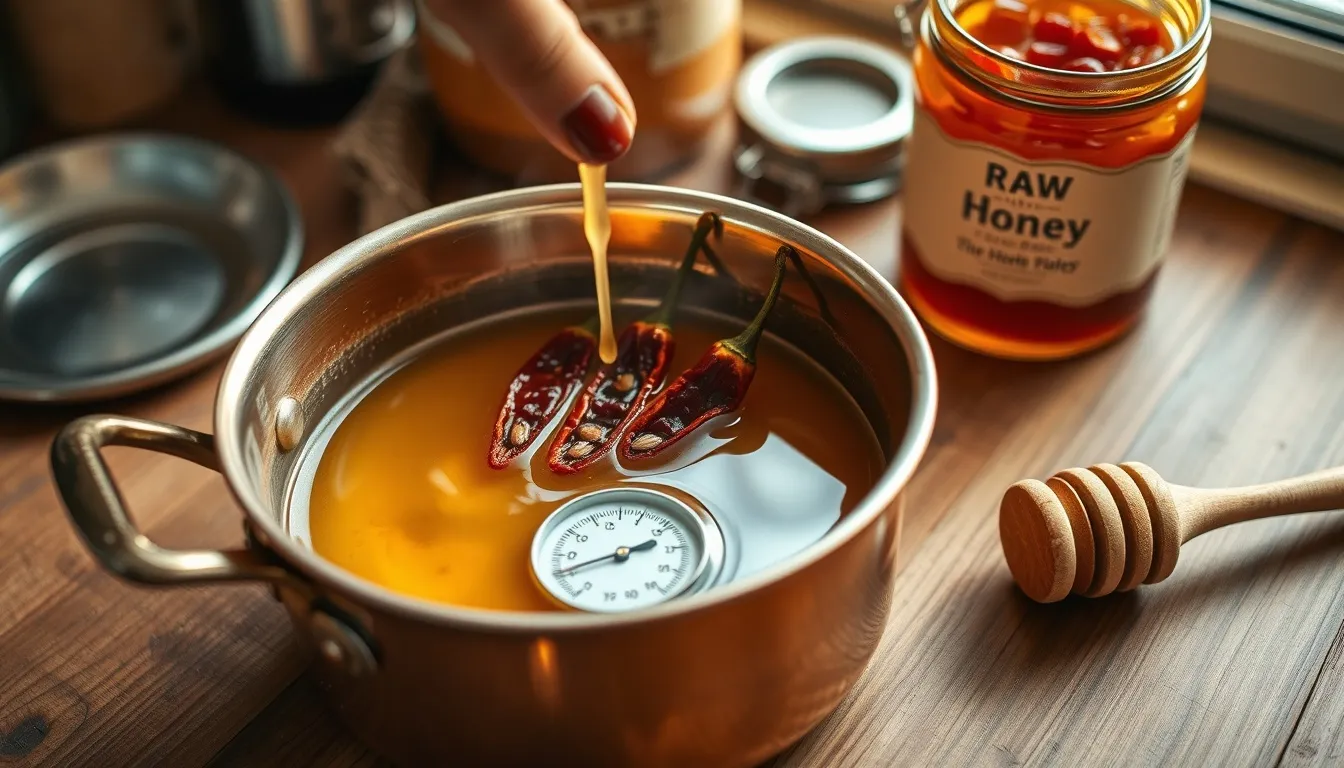
- Step 1: Warm the honey — Pour the honey into a small saucepan over very low heat. You want it just warm enough to thin out, around 110-120°F (43-49°C). Do not boil — high heat destroys honey's beneficial enzymes and can cause the peppers to burn and become bitter.
- Step 2: Add the peppers — If using whole dried peppers, break or snip them into 2-3 pieces (this releases more capsaicin from the seeds). If using red pepper flakes, add 1-3 tablespoons depending on desired heat. Stir gently.
- Step 3: Steep — Keep the honey on the lowest heat setting for 5-10 minutes, stirring occasionally. The longer you steep, the spicier the result. For mild heat, steep 5 minutes. For serious heat, go 15-20 minutes.
- Step 4: Rest and strain — Remove from heat and let the peppers steep in the cooling honey for an additional 10-30 minutes. Strain through a fine mesh sieve into a clean jar, or leave the pepper pieces in for continued heat development and visual appeal.
- Step 5: Store — Transfer to a glass jar with a tight lid. Hot honey keeps at room temperature for up to 3 months, or indefinitely in the refrigerator (it will crystallize over time, which is normal and easily reversed with gentle warming).
Pro Tip
The heat level continues to develop over the first 24-48 hours. If your hot honey tastes mild right after making it, wait a day before adjusting. You can always add more heat, but you cannot take it away.
Get the Honey Buyer's Cheat Sheet (free PDF)
16 varieties on one page — color, flavor, best use and what a fair price looks like — from the 268 honeys we track.
5 Hot Honey Variations to Try
Once you have the basic technique down, these variations open up entirely different flavor profiles.
- Smoky chipotle hot honey — Replace chili de árbol with 2-3 dried chipotle peppers (smoked jalapeños). Adds a deep, smoky complexity that is incredible on grilled meats and BBQ. The smokiness pairs particularly well with buckwheat honey ($15-25), which already has dark, molasses-like notes.
- Habanero hot honey (extreme heat) — Use 1-2 dried habaneros for serious capsaicin heat (100,000-350,000 Scoville units vs. 15,000-30,000 for chili de árbol). Wear gloves when handling. The fruity, tropical notes of habanero pair beautifully with orange blossom honey ($12-20). This version is not for the faint-hearted.
- Garlic hot honey — Add 4-5 crushed garlic cloves to the basic recipe. The allicin from garlic adds savory depth and its own antimicrobial properties. Outstanding as a wing sauce glaze or pizza drizzle. See our guide on fermented honey garlic for a different garlic-honey approach.
- Ginger-lime hot honey — Add 1 tablespoon of finely grated fresh ginger and the zest of 2 limes to the warm honey along with the chilies. Strain everything. The result is bright, zesty, and addictive on seafood, tacos, and stir-fries. Ginger also adds anti-inflammatory benefits.
- Herb-infused hot honey — Add 3-4 sprigs of fresh rosemary or thyme during the steeping phase. The herbal notes create a sophisticated condiment perfect for cheese boards, roasted vegetables, and cocktails. Fresh herbs should be removed after 30 minutes to prevent off-flavors.
10 Creative Ways to Use Hot Honey
Hot honey's sweet-spicy profile makes it one of the most versatile condiments in your kitchen. Here are the best uses, from classic to unexpected.
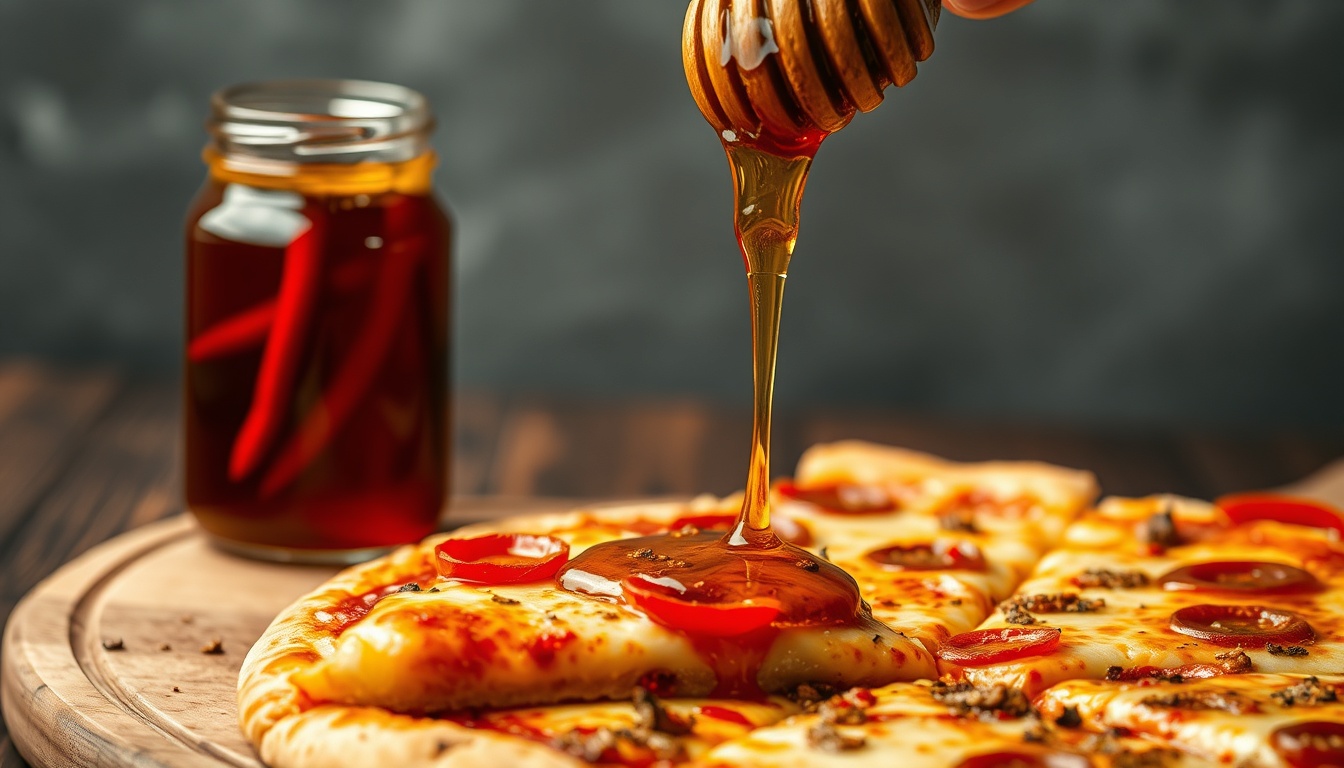
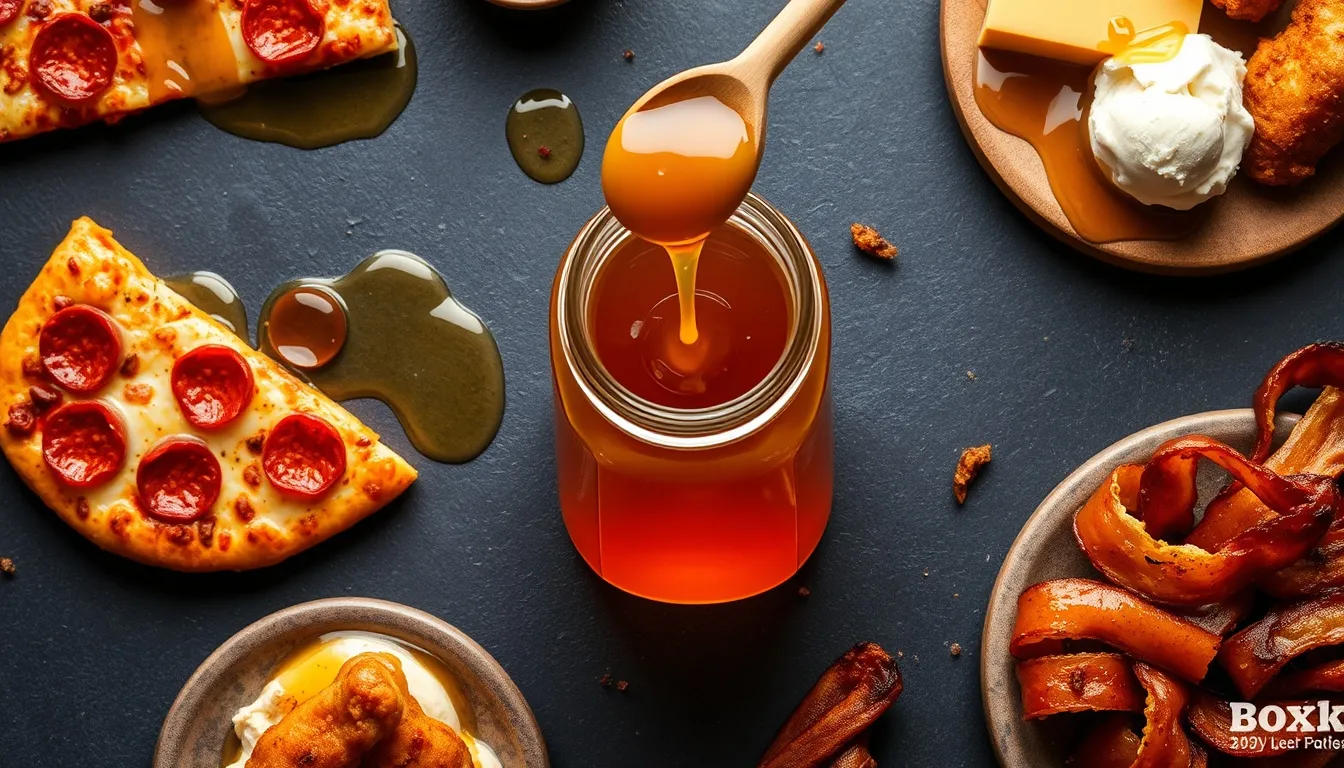
- Pizza — The use that started the craze. Drizzle hot honey over pepperoni pizza, margherita, or any pizza with salty/savory toppings. The sweet heat cuts through the richness of cheese and charcuterie. Apply after baking, not before, to preserve the honey's flavor and texture.
- Fried chicken — Toss crispy fried chicken pieces in hot honey or drizzle generously over the top. The combination of crunchy-salty-sweet-spicy hits every flavor note. This works equally well with baked chicken tenders, wings, or a Nashville hot chicken sandwich.
- Cheese boards — Drizzle hot honey into a small bowl and place on your cheese board. It pairs exceptionally with aged cheddar, manchego, pecorino, brie, and blue cheese. The sweet heat brings out flavor dimensions in cheese that plain honey misses.
- Cocktails — Hot honey makes a superb cocktail sweetener. Dissolve 1:1 with warm water to make a "hot honey simple syrup." Use in margaritas, old fashioneds, whiskey sours, or palomas. The spice adds complexity that plain simple syrup cannot match.
- Roasted vegetables — Toss brussels sprouts, carrots, sweet potatoes, or cauliflower with olive oil and salt, roast until caramelized, then drizzle with hot honey in the last 5 minutes. The honey caramelizes further while the heat adds intrigue to otherwise simple vegetables.
- Bacon — Brush hot honey onto bacon strips halfway through baking (350°F on a sheet pan). The result is candied bacon with a kick — perfect for brunch, burgers, or crumbling over salads. This also works with pancetta and prosciutto.
- Cornbread — Drizzle hot honey over warm cornbread or stir it into the batter before baking. The sweet-spicy note transforms basic cornbread into something memorable. Serve alongside chili, BBQ, or soup.
- Ice cream — A drizzle of hot honey over vanilla, chocolate, or butter pecan ice cream is a revelation. The warm spice against cold cream creates a dynamic contrast. Add crushed nuts and a sprinkle of flaky sea salt for a complete dessert.
- Stir-fries and glazes — Use hot honey as the sweetener in Asian-inspired stir-fry sauces. Combine with soy sauce, rice vinegar, and sesame oil for a glaze that works on salmon, shrimp, tofu, or chicken. The capsaicin heat integrates naturally into spicy Asian flavor profiles.
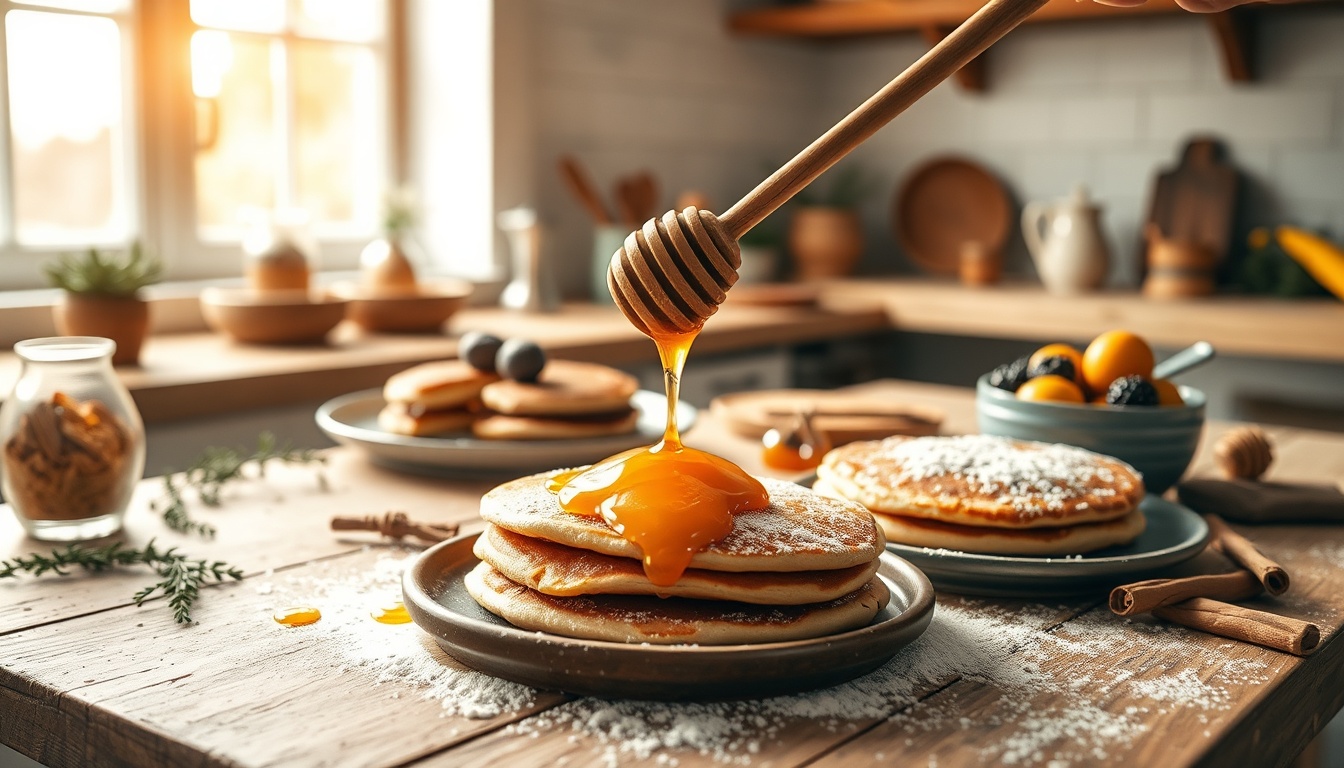
- Breakfast — Drizzle hot honey over waffles, pancakes, yogurt with granola, or oatmeal. Spread it on a warm biscuit with butter. Swirl it into your morning coffee for a spicy latte. Hot honey turns ordinary breakfast into something you look forward to.
Choosing the Right Honey for Hot Honey
The base honey matters more than you might think. Different honey varieties create distinctly different hot honeys.
- Wildflower honey ($10-18) — Our top recommendation for hot honey making. Complex enough to stand up to the pepper heat with subtle herbal undertones and varied floral notes that complement rather than compete with capsaicin spice. Affordable enough for large batches and widely available.
- Clover honey ($8-15) — Mild and sweet with a clean finish. Lets the pepper flavor dominate. Good if you want the heat to be the star rather than the honey complexity. The most budget-friendly option for large batches.
- Buckwheat honey ($15-25) — Dark, bold, and malty with. Creates the most intensely flavored hot honey. Pairs especially well with smoky chipotle variations and BBQ applications. Not for people who want subtle.
- Orange blossom honey ($12-20) — Adds a citrusy, floral note that is particularly good with habanero or Fresno peppers. The fruit-and-heat combination works beautifully in cocktails and on seafood.
- Acacia honey ($12-20) — Very mild and light. Slow to crystallize, which is convenient for a pourable condiment. Good if you want the pepper heat front and center without strong honey flavor.
Pro Tip
Always start with raw, unprocessed honey. Processed honey has been heated and filtered, removing pollen, enzymes, and much of the flavor complexity. Raw honey also crystallizes more slowly after infusion because the pepper oils slightly inhibit crystal formation.
The Science of Why Hot Honey Works
The sweet-and-spicy combination is not just trendy — there is genuine food science behind why it tastes so good.
Capsaicin (the compound that makes peppers hot) triggers TRPV1 pain receptors on the tongue, which the brain interprets as a burning sensation. In response, the brain releases endorphins and dopamine — the same neurotransmitters associated with pleasure and reward. Sugar and sweet flavors independently activate the brain's reward pathway through different receptors. When you combine both stimuli, the pleasure response is amplified.
There is also a contrast effect at play. Just as salty and sweet enhance each other (think salted caramel or chocolate-covered pretzels), sweet and spicy create a dynamic tension that keeps your palate engaged.
Hot Honey vs. Store-Bought: Is Homemade Better?
Commercial hot honeys like Mike's Hot Honey, Bees Knees, and Bushwick Kitchen have their place — they are consistent, convenient, and widely available ($8-12 for 10 oz). But homemade hot honey has significant advantages.
- Cost — A 12 oz jar of raw honey ($8-25 depending on variety — clover $8-15, wildflower $10-18, buckwheat $15-25) plus dried peppers ($2-3) makes roughly 12 oz of hot honey for $10-28 total. Commercial brands charge $8-12 for 10 oz. Homemade with premium varieties costs more but delivers far superior flavor.
- Quality control — You choose the honey source. Most commercial hot honeys use conventional, processed honey.
- Heat customization — Commercial hot honeys are one-size-fits-all heat level. Homemade lets you dial the spiciness from gentle warmth to face-melting heat. You can also choose specific pepper varieties for different flavor profiles.
- Freshness — Homemade hot honey made with raw honey retains more active enzymes, since it is never heated above the gentle temperatures you control. Commercial products may undergo higher-heat processing for shelf stability.
- No additives — Some commercial hot honeys add vinegar, citric acid, or natural flavors. Homemade is just honey and peppers, nothing else.
Pro Tip
Hot honey makes an excellent gift. Pour into small mason jars (4 oz), tie with twine, and add a label listing the honey type and pepper variety. A batch of 6 gift jars costs about $15-20 in materials. See our guide on making infused honeys for more gift-worthy honey ideas.
Storage and Shelf Life
Hot honey has an excellent shelf life thanks to honey's natural preservation properties.
At room temperature in a sealed glass jar, hot honey lasts 3-6 months with no loss of quality. Honey's low water activity (typically 0.5-0.6), acidic pH (3.2-4.5), and natural hydrogen peroxide production prevent microbial growth. The capsaicin from peppers adds an additional antimicrobial layer.
In the refrigerator, hot honey lasts essentially indefinitely, though it will thicken and eventually crystallize. To restore pourable consistency, place the jar in a bowl of warm water (not hot) for 10-15 minutes. Never microwave honey — it creates uneven hot spots that destroy beneficial compounds.
If you left the pepper solids in the honey (which many people prefer for appearance and continued heat development), the heat level will continue to intensify gradually over time. This is normal and desirable — just be aware that month-old hot honey will be spicier than day-old hot honey.