Best Honey for Cheese Pairing
Master the art of honey and cheese pairing. Learn which honey varieties complement soft, hard, blue, and aged cheeses for perfect cheese boards.
Quick Answer
Chestnut honey is the king of cheese pairing—its bitter complexity cuts through rich, fatty cheeses beautifully. For soft cheeses like brie, acacia or wildflower honey provides gentle sweetness. For blue cheeses, buckwheat or sourwood honey matches their bold intensity. For aged hard cheeses, thyme or chestnut honey creates sophisticated contrast.
What to Look For
The golden rule of cheese and honey pairing is contrast. Mild cheeses need delicate honeys that complement rather than overpower. Bold, aged, or blue cheeses need assertive honeys that can stand up to strong flavors. Texture matters too—thick, drizzleable honey stays where you put it on a cheese board. Crystallized honey offers interesting textural contrast alongside smooth cheeses.
Top Recommendations
The bitter, tannic character of Italian chestnut honey is legendary alongside pecorino, gorgonzola, and aged parmesan. The bitterness cuts through cheese fat and creates a sophisticated interplay of sweet, bitter, salty, and umami. Considered the ultimate cheese honey in Italian gastronomy.
Italian chestnut honey from Tuscany or Piedmont is the gold standard for cheese pairing. Drizzle sparingly—the bitterness is intense.
The versatile all-rounder that works with every cheese category. Its moderate complexity flatters soft brie, mild gouda, and fresh goat cheese equally. The safest choice when building a cheese board for guests with varied tastes.
Local wildflower honey adds regional character to your cheese board. Keep a small bowl on the board with a honey dipper.
Its bold malty intensity matches blue cheese power—stilton, roquefort, and gorgonzola all meet their match. The dark, molasses-rich sweetness creates dramatic contrast with pungent, salty cheeses. At ORAC 16,000+, buckwheat also delivers the highest antioxidant content of any widely available honey.
A small drizzle goes a long way with strong cheeses. Serve alongside dark bread and walnuts for a classic combination.
Its delicate, crystal-clear sweetness is perfect alongside mild soft cheeses—fresh mozzarella, ricotta, burrata, and young goat cheese. The honey sweetness highlights the creamy, milky character without overwhelming it. With a GI of ~32, acacia is also the best choice for guests watching blood sugar.
Drizzle directly over burrata or ricotta. The clear honey looks beautiful on a white cheese plate.
Its complex thixotropic gel texture and intense heather-spice aroma make it exceptional with aged sheep's milk cheeses, manchego, and mature cheddar. A classic Scottish and Nordic cheese board pairing — traditional alongside Orkney cheddar and aged Comté. The bitterness level falls between wildflower and chestnut, bridging the gap for guests who want boldness without the full chestnut intensity.
Scottish heather honey (Calluna vulgaris, August harvest) has the strongest floral intensity. Serve in a small pot with a honey spoon — it's too thick to drizzle from a jar.
How to Use
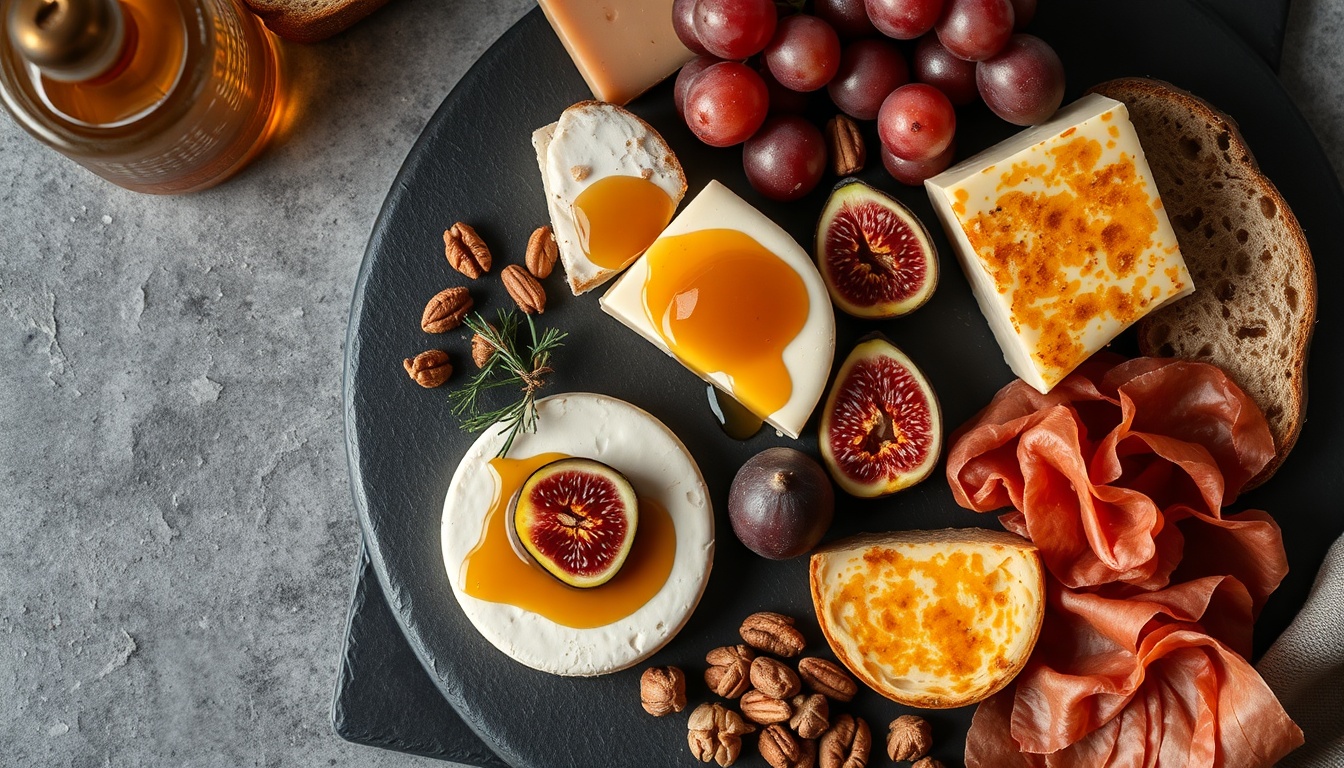
For cheese boards, provide one to two honey varieties that cover different intensity levels—one mild and one bold. Drizzle honey directly on cheese or serve in a small bowl with a honey dipper so guests can choose their own amount. Classic pairings: soft goat cheese with wildflower, brie with acacia, pecorino with chestnut, blue cheese with buckwheat, aged cheddar with wildflower, manchego with thyme. Add complementary elements like nuts (walnuts, almonds), dried fruit (figs, apricots), and dark bread or crackers to round out the board.
What to Avoid
Do not use light, mild honey with bold blue cheeses—the cheese will overpower the honey completely. Avoid very liquid honeys for cheese boards, as they run off the cheese and create a mess. Do not use flavored or infused honey products that may contain artificial ingredients. Skip honey from squeeze bottles for presentation—use a proper jar with a honey dipper for visual appeal and better portion control.