What Is Royal Jelly?
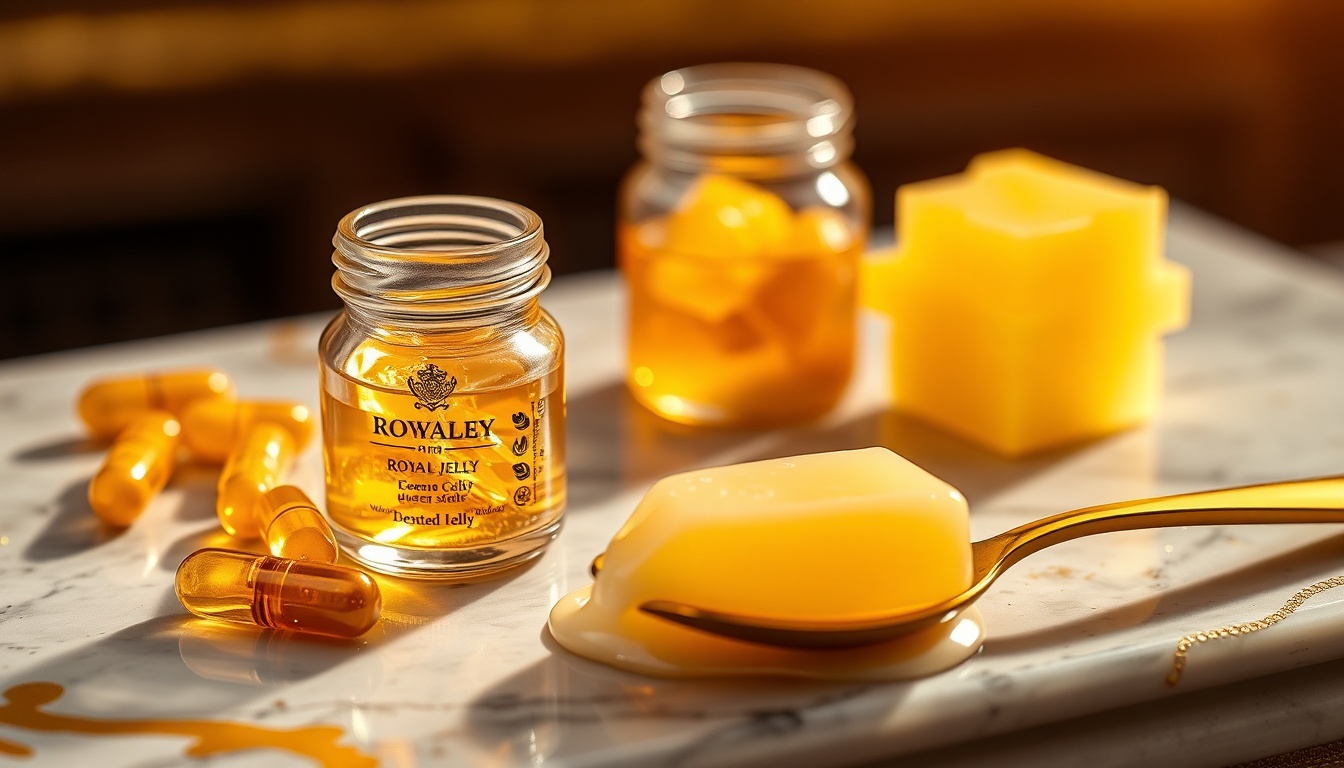
Royal jelly is a thick, milky-white substance secreted by the hypopharyngeal and mandibular glands of nurse worker bees. It's the exclusive food of the queen bee throughout her entire life — and the substance responsible for transforming a genetically identical larva into a queen that lives 40-50 times longer than workers (3-5 years vs 6-8 weeks) and grows 60% larger.
**🎉 World Bee Day 2026 (May 20) Celebration:** Today marks global World Bee Day recognition — the perfect time to appreciate the incredible complexity of bee colony health and the remarkable substances they produce. Royal jelly production reflects the sophisticated biology of healthy bee colonies. Support bee health and sustainable apiary management by choosing quality bee products from local sources and learning about the remarkable science behind bee colony nutrition and queen development.
All bee larvae receive royal jelly for the first three days of life. After that, workers switch to a diet of honey and pollen, while the queen-destined larva continues receiving royal jelly exclusively. This dietary difference triggers epigenetic changes that activate queen-specific genes — a biological transformation so dramatic that it has fascinated scientists for decades.
Royal jelly contains approximately 60-70% water, 12-15% protein, 10-16% sugars, 3-6% lipids, 2-3% vitamins and minerals, and a unique fatty acid called **10-hydroxy-2-decenoic acid (10-HDA)** found nowhere else in nature. This composition, combined with a protein family called Major Royal Jelly Proteins (MRJPs), is responsible for most of its biological activity.
While honey, propolis, and bee pollen have each earned scientific attention, royal jelly completes the quartet of bee products with its own distinct profile of evidence-backed health benefits.
8 Evidence-Based Royal Jelly Benefits
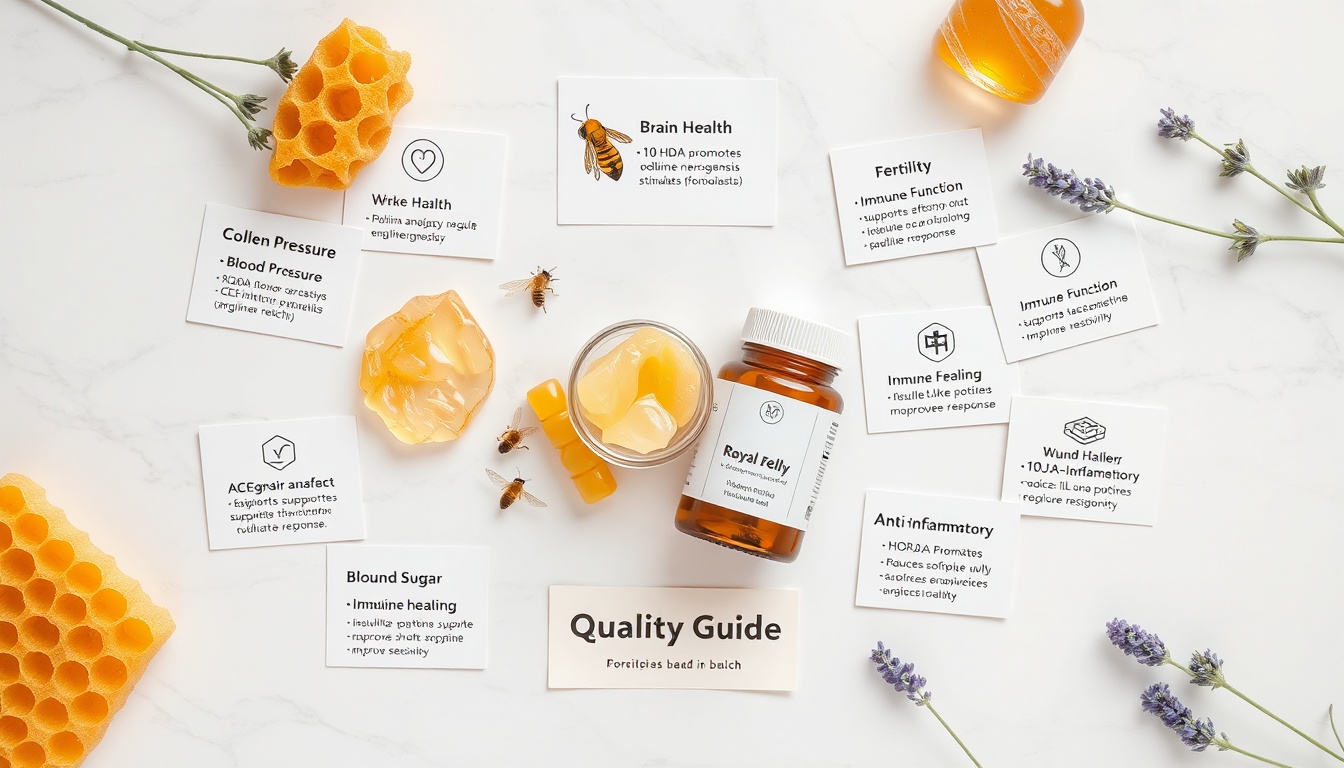
**1. Cholesterol and Cardiovascular Support** — This is royal jelly's most clinically supported benefit. A 2019 Nutrition Reviews meta-analysis of 11 randomized controlled trials found that royal jelly supplementation significantly reduced total cholesterol (mean -13.7 mg/dL), LDL cholesterol (-10.4 mg/dL), and triglycerides (-8.2 mg/dL) while modestly increasing HDL. The mechanism involves 10-HDA and MRJPs inhibiting HMG-CoA reductase (the same enzyme targeted by statin drugs, though far less potently) and enhancing bile acid excretion — royal jelly is not a substitute for prescribed statin therapy. Studies used 150-3000mg daily for 4-12 weeks. These lipid improvements complement what research shows about honey's own cholesterol effects.
**2. Immune System Modulation** — Royal jelly modulates immune function through multiple pathways. Its MRJPs stimulate macrophage activity and cytokine production (TNF-α, IL-6, IL-1β), enhancing the innate immune response against pathogens. Simultaneously, 10-HDA exerts anti-inflammatory effects by suppressing the NF-κB signaling pathway — the same pathway that honey's polyphenols target. A 2012 International Immunopharmacology study found that royal jelly supplementation enhanced natural killer (NK) cell activity in healthy adults. This dual action — stimulating immune defense while controlling excessive inflammation — distinguishes royal jelly from simple immune "boosters." For comprehensive immune support, royal jelly can complement honey varieties like Manuka honey (antimicrobial activity), buckwheat honey (antioxidant density), wildflower honey (diverse polyphenols), and eucalyptus honey (respiratory benefits).
**3. Skin Health and Anti-Aging** — Royal jelly has genuine dermatological applications. A 2012 Journal of Medicinal Food study found that oral royal jelly supplementation (3g daily for 12 weeks) improved skin hydration, elasticity, and reduced transepidermal water loss in postmenopausal women. 10-HDA stimulates collagen production by activating fibroblasts, while MRJPs enhance epidermal growth factor (EGF) signaling. Royal jelly also contains defensin-1, an antimicrobial peptide effective against acne-causing C. acnes and wound-healing-impairing S. aureus — complementing honey's own skin benefits.
Royal jelly supplement research does not establish a medically preferred honey or a diabetes treatment protocol.
**5. Brain Function and Neuroprotection** — Animal studies have shown remarkable neuroprotective effects. 10-HDA promotes neurogenesis (new neuron growth) in the hippocampus by stimulating brain-derived neurotrophic factor (BDNF) and nerve growth factor (NGF). A 2011 Biomedical Research study in older adults found that 6 months of royal jelly supplementation (3g daily) improved Mini-Mental State Examination scores compared to placebo. Royal jelly also reduces neuroinflammation by inhibiting microglial activation — a factor in Alzheimer's and Parkinson's disease progression. While the human evidence is preliminary, the BDNF-stimulating mechanism is well-characterized.
**6. Wound Healing** — Royal jelly accelerates wound healing through defensin-1's antimicrobial activity, 10-HDA's anti-inflammatory effects, and stimulation of keratinocyte migration (re-epithelialization). A 2010 Journal of Diabetes and Its Complications study found that topical royal jelly significantly accelerated diabetic foot ulcer healing compared to standard care. Its wound-healing mechanisms differ from but complement honey's osmotic and H₂O₂-based wound activity — combining them may offer synergistic benefits.
**7. Menopausal Symptom Relief** — Several clinical trials have investigated royal jelly for menopausal symptoms. A 2014 Gynecological Endocrinology RCT found that 150mg daily for 3 months significantly reduced hot flash severity and improved quality of life scores compared to placebo. Royal jelly may exert mild estrogenic effects through its flavonoids (chrysin, apigenin) binding to estrogen receptors, though the hormonal activity is much weaker than pharmaceutical hormone replacement.
**8. Anti-Inflammatory Effects** — Beyond the NF-κB inhibition mentioned above, 10-HDA suppresses COX-2 enzyme activity (the same target as ibuprofen and aspirin, though far more mildly), reducing prostaglandin synthesis. A 2017 Journal of Ethnopharmacology review found anti-inflammatory effects in multiple tissue types including intestinal, hepatic, and neural tissue. Royal jelly's anti-inflammatory profile is complementary to honey's own anti-inflammatory mechanisms — honey primarily works through polyphenols, while royal jelly works through 10-HDA and MRJPs.
Get the Honey Buyer's Cheat Sheet (free PDF)
16 varieties on one page — color, flavor, best use and what a fair price looks like — from the 268 honeys we track.
Royal Jelly Nutrition Profile
Royal jelly has a unique nutritional composition that differs significantly from honey:
**Protein (12-15%)** — Contains all 9 essential amino acids. The Major Royal Jelly Proteins (MRJP1-9) are unique to this substance and responsible for many biological effects. MRJP1 alone makes up 48% of total protein content.
**10-HDA (3-6% of lipid fraction)** — The signature compound of royal jelly, found nowhere else in nature. This medium-chain fatty acid is responsible for cholesterol-lowering, anti-inflammatory, neuroprotective, and antimicrobial effects. 10-HDA content is the primary quality marker — high-quality royal jelly contains 1.4-2.0% 10-HDA by dry weight.
**B vitamins** — Exceptionally rich in B5 (pantothenic acid), with 65-200 mcg per gram — one of the most concentrated natural sources. Also contains meaningful amounts of B1, B2, B3, B6, folate, and biotin.
**Minerals** — Potassium (1.5-2.5 mg/g), calcium, magnesium, zinc, iron, copper, and manganese.
**Royalactin** — A protein that triggers the queen differentiation cascade. In mammals, royalactin has been shown to activate similar growth pathways, though the practical implications for human health remain under investigation.
**Acetylcholine** — Royal jelly is one of the richest natural sources of this neurotransmitter, containing 1-1.5 mg/g. While dietary acetylcholine is largely degraded during digestion, it may contribute to local effects in the gut through cholinergic signaling.
Forms, Dosing, and How to Take Royal Jelly
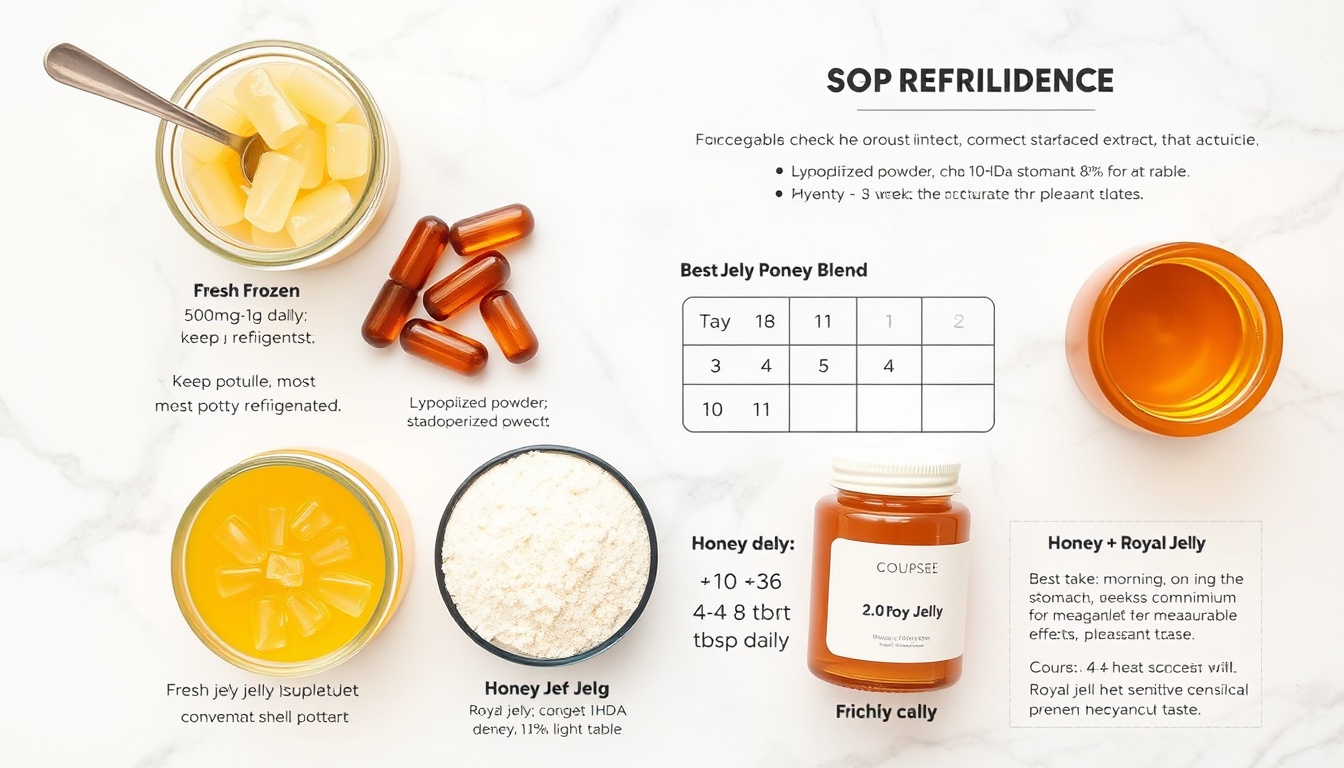
**Fresh (raw) royal jelly** — The most potent form, stored refrigerated or frozen. Has a tart, slightly spicy, acidic taste that many people find challenging. Must be refrigerated (2-5°C) and used within 6-12 months, or frozen for up to 2 years.
**Freeze-dried (lyophilized) capsules** — Most convenient and shelf-stable form. Freeze-drying preserves 10-HDA and protein content while removing water, and is equivalent to 3-4x the weight in fresh royal jelly. Look for standardized 10-HDA content (≥6% in freeze-dried form). Store at room temperature away from heat and light.
**Honey-royal jelly blends** — Fresh royal jelly mixed with raw honey at 2-5% concentration. The honey acts as a natural preservative while making the taste palatable. Less potent per serving but an easy way to incorporate both bee products. Clover honey and wildflower honey are preferred for blending due to their mild profiles that don't compete with royal jelly's complex taste, while acacia honey offers crystallization resistance for longer-lasting smooth texture. Avoid strongly flavored varieties like buckwheat honey or chestnut honey which can mask or clash with royal jelly's subtle bioactive character. Refrigerate after opening.
**Topical creams and serums** — For skin health benefits. Look for products containing 1-5% royal jelly with 10-HDA content specified. May complement honey face masks and honey-olive oil treatments.
Pro Tip
Royal jelly can cause allergic reactions, particularly in people allergic to bee stings or honey. Talk to your doctor before trying it, especially about how to introduce it safely given the allergy risk.
Royal Jelly vs Other Bee Products
Understanding how royal jelly compares to other bee products helps you choose the right one for your goals:
**Royal jelly vs honey varieties** — Honey is primarily a carbohydrate-rich food with polyphenol antioxidants and antimicrobial properties varying by botanical source. Royal jelly is protein-rich with unique fatty acids (10-HDA) and growth factors. Honey excels at: cough suppression (buckwheat honey clinically proven), wound healing (Manuka honey medical-grade), everyday sweetening (clover and wildflower honey versatile), gut prebiotics (acacia honey fructose-rich), energy (orange blossom honey balanced glucose-fructose). Royal jelly excels at: cholesterol management, skin anti-aging, blood sugar regulation, neuroprotection, immune modulation.
**Royal jelly vs propolis** — Propolis is a resinous substance with over 300 identified compounds, strongest in antimicrobial and anti-inflammatory effects (via CAPE). Royal jelly's strength is metabolic and hormonal modulation. Propolis is better for: oral health, immune defense, wound infection prevention. Royal jelly is better for: cardiovascular markers, menopausal symptoms, cognitive support.
**Royal jelly vs bee pollen** — Bee pollen has the broadest nutritional profile (200+ compounds, 22-30% protein), excellent for general nutritional supplementation and athletic performance. Royal jelly has more targeted bioactive compounds (10-HDA, royalactin). Bee pollen is better for: general nutrition, athletic recovery, allergy desensitization (controversial). Royal jelly is better for: specific clinical targets like cholesterol and blood sugar.
**Combining bee products** — Some research suggests synergistic benefits. A 2018 Evidence-Based Complementary and Alternative Medicine study found that combining royal jelly with propolis enhanced anti-inflammatory and antioxidant effects beyond either alone. For comprehensive support, some people rotate or combine: honey as part of their daily diet, propolis during illness or for oral health, and royal jelly for cardiovascular or skin health targets.
Safety, Side Effects, and Who Should Avoid Royal Jelly
**Allergic reactions** — This is the most significant safety concern. Royal jelly can cause severe allergic reactions including anaphylaxis, particularly in people with bee venom or honey allergies, asthma, or atopic dermatitis. MRJPs are potent allergens. Symptoms can include hives, throat swelling, breathing difficulty, and in rare cases, anaphylactic shock. Talk to your doctor before trying it, especially if you have any bee or pollen allergy history.
**Drug interactions** — Royal jelly may enhance the effects of blood pressure medications (ACE inhibitors), blood thinners (warfarin — case reports of increased INR), and diabetes medications (additive blood sugar lowering). Consult your doctor if you take any of these medications.
**Pregnancy and breastfeeding** — Insufficient safety data. Most guidelines recommend avoiding royal jelly during pregnancy and breastfeeding due to unknown hormonal effects (mild estrogenic activity) and allergy risk.
**Children under 12 months** — Like honey, royal jelly should not be given to infants due to immature immune systems and allergy risk. For older children, talk to a pediatrician before use given the allergy risk and limited safety data.
**Asthma patients** — Multiple case reports describe royal jelly triggering severe bronchospasm in people with asthma. The Australian Therapeutic Goods Administration mandates a warning label on all royal jelly products for this population.
**Hormone-sensitive conditions** — Due to mild estrogenic activity, avoid royal jelly if you have hormone-sensitive cancers (breast, ovarian, uterine), endometriosis, or uterine fibroids, unless cleared by your oncologist.
Pro Tip
Purchase royal jelly that has been tested for 10-HDA content (a quality marker). High-quality fresh royal jelly contains ≥1.4% 10-HDA; freeze-dried should contain ≥6%. Check for third-party testing certifications and avoid products that don't specify 10-HDA content.
Myths vs Reality
**Myth: "Royal jelly will make you live longer like a queen bee"** — Reality: The queen bee's extended lifespan involves complex gene expression changes specific to bee biology. While royal jelly has genuine health benefits for humans, longevity claims are unsupported by human clinical evidence. The mechanisms that extend insect lifespan don't directly translate to mammals.
**Myth: "Royal jelly cures cancer"** — Reality: Some cell culture and animal studies show anti-proliferative effects, but there are zero human clinical trials demonstrating cancer treatment benefit. Making cancer treatment claims for royal jelly is irresponsible and potentially dangerous if it delays proven medical treatment.
**Myth: "Royal jelly is a superfood that replaces a healthy diet"** — Reality: Even at typical supplemental amounts, you're consuming tiny amounts of nutrients. Royal jelly is a supplement with specific bioactive compounds (10-HDA, MRJPs), not a nutritional replacement. Its benefits come from targeted biological activity, not macro-nutritional content.
**Myth: "All royal jelly products are the same"** — Reality: Quality varies enormously. Fresh royal jelly deteriorates rapidly without proper refrigeration. Freeze-dried quality depends on the lyophilization process. Some commercial products contain minimal 10-HDA (the key bioactive compound). Products blended with excessive fillers may not deliver clinically relevant doses.