Why Honey Tasting Is a Skill Worth Developing
Most people taste honey one way: they dip a spoon in, swallow, and note whether it is sweet. This is roughly equivalent to judging wine by whether it is alcoholic. Honey is one of the most chemically complex foods on earth — a single varietal can contain over 180 distinct compounds contributing to flavor, aroma, and texture. The difference between grocery-store clover and single-origin Sidr from Yemen's Hadramawt Valley is as dramatic as the difference between instant coffee and a specialty pour-over.
Honey tasting is the art of perceiving those differences deliberately. It sharpens your palate, helps you choose the right honey for each use (baking, pairing with cheese, taking medicinally), and turns a pantry staple into something genuinely fascinating. You do not need special equipment or training. You need a quiet moment, a few different honeys, and a framework for paying attention.
The 5 Sensory Elements of Honey
Professional honey judges — the International Honey Commission uses trained sensory panels, and competitions like the National Honey Show in London employ certified tasters — evaluate honey across five dimensions. Working through all five slows you down and forces observation that casual tasting misses.
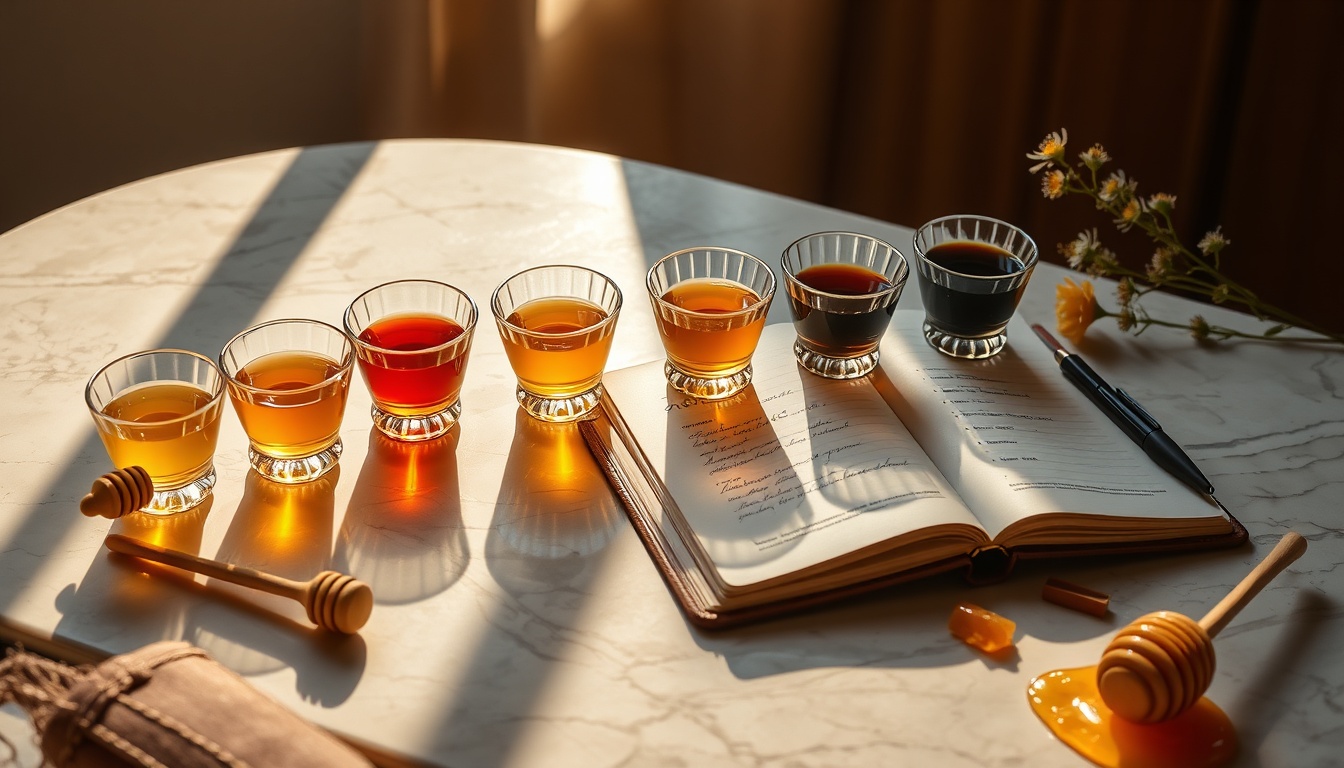
- Appearance — Hold the jar up to light. Note color (water-white, golden, amber, dark amber, near-black), clarity (clear or slightly hazy from pollen and wax particles), and texture (liquid, creamy/whipped, set/crystallized). Color alone signals a lot: lighter honeys tend toward delicate floral notes; darker honeys toward bold, molasses-like, tannic flavors. The USDA grades honey color on a Pfund scale from Water White (0-8mm) to Dark Amber (114mm+)
- Aroma — Before tasting, smell. Warm the jar briefly in your hands, open it, and inhale slowly. What do you detect? Floral? Fruity? Herbaceous? Medicinal? Earthy? Smoky? Fermented? Many honey flavors are actually perceived retronasally (through the back of the nose while eating), so the initial smell sets your brain's expectations. Acacia smells faintly of vanilla and fresh-cut flowers. Buckwheat is powerfully malty and almost barnyard-like. Lavender honey carries a distinctive herbal sweetness you recognize instantly
- Texture and Mouthfeel — Place a small amount on your tongue without chewing or swallowing. Notice viscosity (thin and watery, or thick and coating?), smoothness versus graininess, and any cooling or warming sensation. High-fructose honeys like acacia and tupelo remain liquid at room temperature and feel silky. High-glucose honeys like rapeseed crystallize quickly and feel waxy or grainy. Creamed honey, whipped to fine crystals intentionally, has a smooth spreadable texture like soft butter
- Taste — Now let it spread across your tongue. The primary taste is always sweet, but note secondary tastes: sourness (acidity from gluconic acid, present in all honey but especially prominent in citrus honeys), bitterness (from polyphenols — more pronounced in chestnut, buckwheat, and rhododendron honey), and umami (rare but detectable in some forest honeys). Then focus on flavor notes: the specific aromatic impression beyond basic sweetness. Does it taste of apples, toffee, vanilla, molasses, herbs, pepper, wood, earth?
- Finish and Persistence — Swallow and notice what remains. A long, complex finish where flavors evolve over 30-60 seconds indicates high-quality honey with complex aromatic compounds. A short finish that disappears immediately is characteristic of lighter, simpler honeys. Some honeys have a warming sensation (thyme honey, chestnut honey); others leave a pleasant floral echo (acacia, orange blossom). Bitterness at the finish is normal in dark honeys but should not dominate
Pro Tip
Between samples, cleanse your palate with plain room-temperature water or a piece of neutral white bread. Avoid coffee, strong tea, or anything acidic between honeys — these distort the next sample's aroma and taste.
Get the Honey Buyer's Cheat Sheet (free PDF)
16 varieties on one page — color, flavor, best use and what a fair price looks like — from the 304 honeys we track.
Setting Up a Honey Tasting Flight
A tasting flight is simply two or more honeys tasted in sequence for comparison. Flights help you understand how dramatically honey can vary and train your palate to identify characteristics you would never notice tasting one variety in isolation.
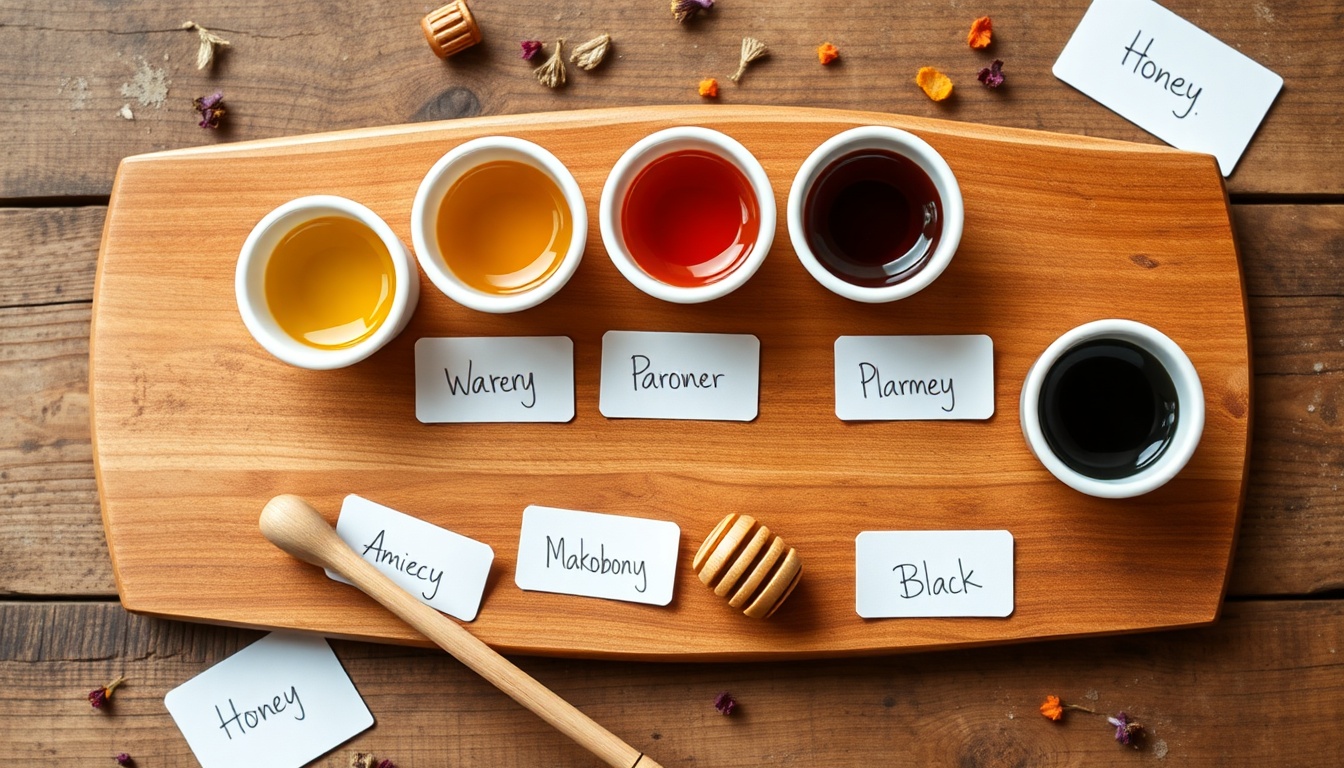
The ideal first flight covers the full spectrum of honey flavor: one light/delicate, one medium/classic, and one bold/dark. A classic beginner trio: Acacia ($9-16, light, floral) + Clover ($9-15, medium, classic sweet) + Buckwheat ($9-23, dark, robust). Once you have that baseline, you can build specialty flights — regional American honeys, monofloral vs. polyfloral comparisons, raw vs. processed of the same variety.
- Choose 3-6 honeys per session — more than six overwhelms the palate and blurs distinctions
- Taste in order from lightest/most delicate to boldest/darkest — prevents the bold honey from overwhelming later samples
- Use clean small spoons or wooden honey dippers; plastic can introduce odors
- Taste at room temperature (65-70°F) — honey is too viscous when cold and loses volatile aromas when warm
- Write notes as you go — flavor perception is highly influenced by expectation and memory; capturing it immediately gives truer impressions
- Return to the first honey after finishing the flight — your palate is now educated and you will notice things you missed initially
Tasting Notes for 12 Major Honey Varieties
The following tasting profiles draw on sensory research, competition judge notes, and the chemical analysis of honey compounds. They describe ideal-quality, authentic single-origin examples. Commercial blended honey labeled with these names may differ significantly.
- Acacia ($9-16) (Black Locust) — Color: pale gold to nearly clear. Aroma: subtle, vanilla, fresh flowers, hint of vanilla bean. Taste: clean, pure sweetness with delicate floral notes, very low bitterness, GI ~32 (lowest of common honeys). Finish: short, fades gracefully. Texture: thin, watery-smooth, does not crystallize easily. Best use: dissolving in tea, drizzling over soft cheese, as a neutral sweetener where you do not want honey to dominate
- Clover ($9-15) — Color: water-white to pale amber. Aroma: mild, clean, faint meadow flowers. Taste: classic "honey flavor" — pleasantly sweet with a hint of cinnamon-like warmth. Finish: medium length, clean. Texture: medium viscosity, crystallizes to a fine creamy texture. Best use: everyday use, baking (substitutes for sugar without asserting itself), peanut butter sandwiches, general cooking
- Wildflower ($13-24) (Polyfloral) — Color: varies by region and season from golden to amber. Aroma: complex and shifting — the exact notes depend on which flowers bloomed when the honey was collected. Taste: layered, often with fruit notes (apple, berry), herbal undertones, mild tartness. Finish: medium-long, evolving. Best use: cheeseboards, paired with yogurt, as a finishing drizzle where complexity is welcome
- Orange Blossom ($12-24) — Color: pale to medium gold. Aroma: unmistakably citrusy and floral — fresh orange peel and neroli. Taste: bright, sweet, citrus-forward with a clean finish. No bitterness. Finish: medium, with a pleasant floral echo. Best use: cocktails, glazes for poultry and fish, pairs beautifully with ricotta or fresh chèvre
- Buckwheat ($9-23) — Color: very dark amber to mahogany-black. Aroma: bold and distinctive — malt, molasses, earth, a hint of barnyard (from higher nitrogen content). Taste: assertive, complex, slightly bitter, brown sugar and dried fruit notes. ORAC 16,000+ (highest of common honeys). Finish: long and warming, with a tannic edge. Best use: strong cheese pairings (aged cheddar, blue cheese), marinades, gingerbread, anything that benefits from a "dark sugar" complexity. Not for those who prefer mild honey
- Manuka ($29-71) (New Zealand) — Color: dark amber to golden brown. Aroma: earthy, medicinal, faint metallic note from methylglyoxal (MGO), hint of tea tree. Taste: distinctive medicinal flavor unlike any other honey — earthy, slightly bitter, with caramel undertones. UMF 10+ recommended for therapeutic use. Finish: long, slightly drying. Best use: eaten by the teaspoon for wellness purposes, spread on warm toast, paired with strong blue cheese where its assertive flavor is an asset
- Tupelo ($19-29) (Florida/Georgia) — Color: pale champagne gold with greenish tint. Aroma: floral, pear, hints of cinnamon. Taste: exceptionally smooth, low-acid, complex floral sweetness with fruit notes, GI ~45. Nearly does not crystallize due to very high fructose/glucose ratio. Finish: exceptionally long and clean. Best use: premium table honey, drizzling over vanilla ice cream, pairing with mild brie or camembert
- Lavender ($11-17) — Color: pale amber with golden tones. Aroma: distinctively herbal-floral, fresh lavender, slight camphor. Taste: herbaceous sweetness with floral complexity; more interesting than floral honeys without the earthiness of dark varieties. Finish: medium with a pleasant herbal persistence. Best use: herbal teas, lemonade, yogurt parfaits, salad dressings, pairs with goat cheese
- Chestnut ($15-24) — Color: dark amber to mahogany. Aroma: strong, woody, tannin-forward; hints of wet earth, mushroom, bitter chocolate. Taste: distinctly bitter, complex, with a flavor profile closer to wine or dark chocolate than to sweet honey — very low sweetness relative to sugar content. Finish: long, dry, tannic. Best use: paired with aged pecorino or parmigiano, drizzled over grilled polenta, used in savory glazes, not recommended for those who dislike bitterness
- Sidr (Yemen/Oman) — Color: golden amber. Aroma: warm, buttery, hints of vanilla and dried fruit, occasional faint floral note. Taste: exceptionally rich and complex — often described as liquid toffee or caramel with herbal undertones. One of the world's most prized single-origin honeys. Finish: very long, warming, evolving complexity. Best use: eaten pure, as a gift honey, with aged cheese or as a finishing touch on desserts. Expensive ($60-150+ per jar) but considered worth the premium by enthusiasts
- Heather ($11-19) (Ling Heather) — Color: orange-amber, distinctive reddish hue. Aroma: floral, phenolic, faintly smoky, peat-like (particularly Scottish heather). Taste: unique thixotropic texture (gels in the jar, flows when stirred) is a hallmark of authentic ling heather. Flavor is bold — rich, malty, floral, slightly bitter, reminiscent of the moorland where it originates. Finish: long and warming. Best use: oatcakes, scones, Scotch whisky pairings, strong tea
- Meadowfoam — Color: creamy white to pale gold. Aroma: marshmallow, vanilla cream, coconut. Taste: remarkably dessert-like — pure vanilla and cream notes with almost no floral complexity. One of the most distinctive American varietals. Finish: medium-long, sweet and clean. Best use: coffee drinks (extraordinary in lattes), ice cream topping, pairing with mild washed-rind cheeses, baking where vanilla flavor is desired
Honey and Food Pairing Principles
Honey pairing follows similar principles to wine pairing: match weight with weight (light honey with delicate foods, bold honey with assertive flavors), and look for either complement (honey and blue cheese both have complex, aged flavors that reinforce each other) or contrast (the floral sweetness of orange blossom balancing the salinity of prosciutto).
The most useful pairing category for honey is cheese, because the fat-acid-salt profile of cheese creates a matrix that reveals honey's complexity in ways that other foods do not. Acidity in honey cuts fat; sweetness balances salt; bitterness in dark honeys enhances umami in aged cheese.
- Soft fresh cheeses (chèvre, ricotta, burrata) — Best with light, floral honeys: Acacia, Orange Blossom, Clover, Lavender, Meadowfoam. The delicate dairy notes need a honey that complements without overpowering
- Semi-soft aged cheeses (Brie, Camembert, Taleggio) — Best with medium-complexity honeys: Wildflower, Tupelo, Heather. The buttery richness pairs with honey's sweetness while herbal or fruity notes add interest
- Firm aged cheeses (Manchego, Gruyère, Aged Gouda) — Best with amber honeys: Chestnut, Heather, Buckwheat. The nuttiness of aged cheese and the earthiness of dark honey create deeply satisfying combinations
- Blue cheeses (Roquefort, Gorgonzola, Stilton) — Best with the boldest honeys: Buckwheat, Chestnut, Manuka. Strong cheese needs strong honey; lighter honeys disappear. The bitterness in dark honey cuts the sharpness of blue
- Charcuterie and cured meats — Orange Blossom with prosciutto; Clover or Wildflower with salami; Buckwheat with smoked meats. The rule: the smokier or fattier the meat, the bolder the honey needed
- Bread and pastry — Acacia for croissants and neutral bread; Chestnut for rustic sourdough; Heather for oatcakes; Lavender for scones
- Tea — Match the weight of the honey to the strength of the tea. Green and white teas: Acacia or Orange Blossom. Black tea: Clover or Wildflower. Herbal and chai: Buckwheat or Chestnut
- Aged spirits — Scotch whisky: Heather honey. Bourbon: Buckwheat or Wildflower. Rum: Orange Blossom or Tupelo
Pro Tip
One of the most elegant honey pairings is Gorgonzola drizzled with chestnut honey — the combination is used in traditional Piedmontese cuisine. The bitterness of chestnut amplifies the umami of the blue cheese while cutting through its fat. Eat it with a walnut on the side.
Building a Honey Tasting Vocabulary
The challenge with honey tasting is that most people have never been given vocabulary for it beyond "sweet" and "strong." A richer vocabulary helps you communicate what you are experiencing, remember it later, and recognize it in future tastings. The following flavor categories appear regularly in professional honey evaluations.
Research by honey sensory scientist Nadia Bertoncelj at the University of Ljubljana (published in Food Chemistry) identified clusters of aroma compounds in monofloral honeys that map to these categories. You are not imagining things when you taste dried fruit in buckwheat honey — that's benzaldehyde, nonanal, and other specific volatile compounds.
- Floral — Rose, jasmine, violet, lily, freesia. Common in: Acacia, Orange Blossom, Lavender, Lychee, Tupelo
- Citrus — Orange peel, lemon zest, grapefruit, mandarin. Common in: Orange Blossom, Citrus Blossom, Lime Blossom
- Fruity — Apple, pear, ripe peach, berry, dried fruit, fig. Common in: Wildflower, Tupelo, Heather, Buckwheat (dried fruit), Acacia (pear notes)
- Herbaceous — Fresh herbs, thyme, mint, fennel, grass, tea. Common in: Thyme, Lavender, Sage, Heather
- Spicy/Warm — Cinnamon, clove, pepper, ginger, anise. Common in: Clover, Manuka, some Wildflowers
- Caramel/Toffee — Brown sugar, butterscotch, toffee, vanilla cream. Common in: Sidr, Meadowfoam, Linden, some Clover
- Malty/Woody — Malt, molasses, wood smoke, earth, mushroom. Common in: Buckwheat, Chestnut, Forest/Honeydew honey
- Bitter/Tannic — Bitter chocolate, black tea, tannin, walnut. Common in: Chestnut, Rhododendron, some Buckwheat
- Medicinal/Phenolic — Tea tree, eucalyptus, camphor, antiseptic. Common in: Manuka, Eucalyptus, Jarrah (Australian)
- Fermented/Acidic — Wine, vinegar, sourdough, yeast. Indicates honey with higher water content or poor storage — can be desirable in tiny amounts but is a quality defect if dominant
Common Honey Tasting Mistakes to Avoid
Even experienced tasters fall into habits that distort perception. A few practical corrections.
- Tasting cold honey — Volatile aroma compounds become subdued below about 60°F. Always bring honey to room temperature before tasting. For crystallized honey, warm the jar briefly in a bowl of warm (not hot) water
- Eating too much — A pea-sized amount is enough for a thorough tasting. Large spoonfuls overwhelm your palate with sweetness and obscure subtler notes
- Rushing — Most interesting honey characteristics reveal themselves in the finish. Sit with the honey in your mouth for at least 15-20 seconds before swallowing
- Tasting when hungry — Hunger dramatically increases sweet perception and distorts other flavors. Taste after a light meal, not before
- Comparing different forms — Liquid, crystallized, and creamed versions of the same honey taste subtly different. Try to compare like with like. Crystallized honey often tastes less sweet because the sugar's texture prevents it from dissolving rapidly on your tongue
- Ignoring the jar — Temperature history, light exposure, and age affect flavor. A honey stored in a hot car will smell different from the same honey stored properly. Note storage conditions when possible
How to Read Honey Label Terminology for Tasting
Not all labels mean the same thing. Understanding terminology before you buy ensures you are tasting what you think you are tasting.
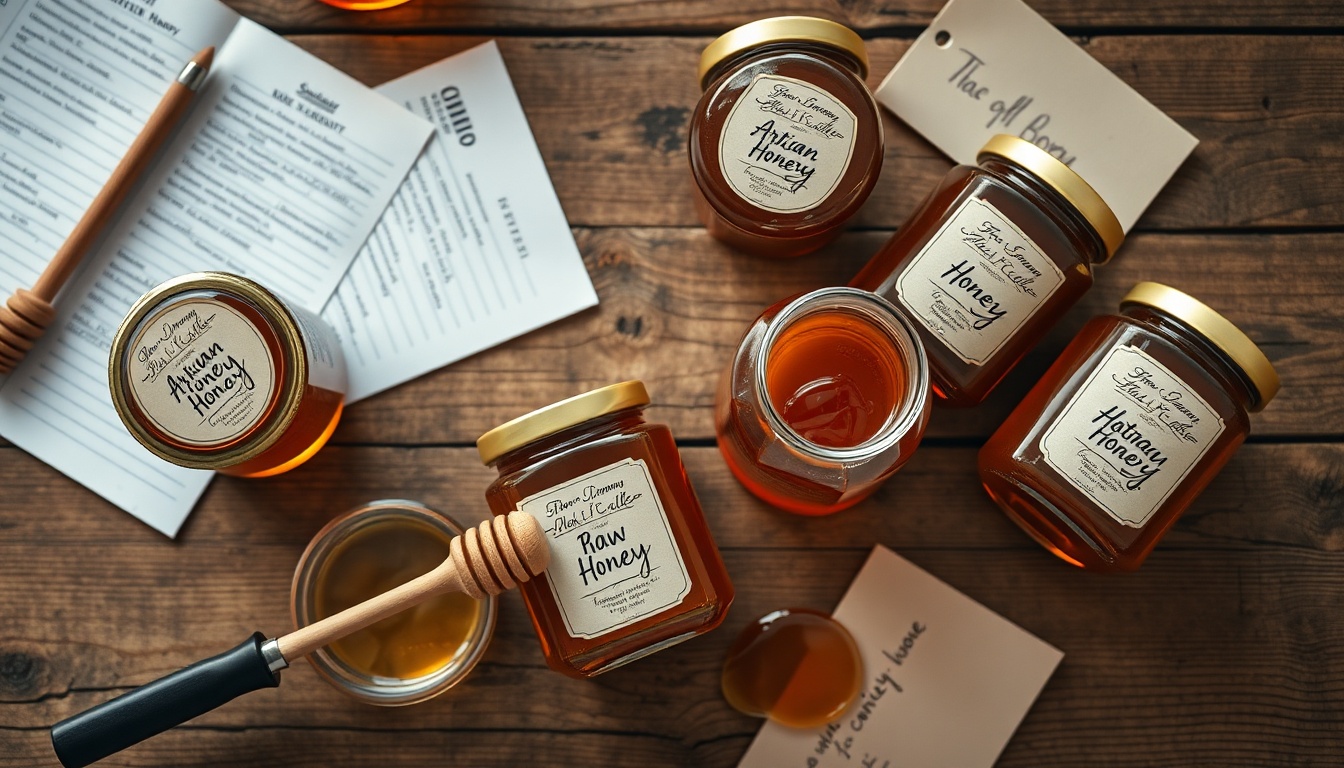
"Raw" means the honey was not heated above approximately 95°F (the temperature inside a beehive) and was not ultra-filtered. It retains pollen, propolis particles, wax fragments, and the full enzyme complement. Raw honey has a more complex flavor profile than processed honey because heat destroys delicate aromatic compounds.
"Monofloral" means the honey was collected primarily from one flower source — confirmed by pollen analysis. Single-origin monofloral honey is the clearest way to taste a specific variety's characteristic profile. "Polyfloral" or "wildflower" is a blend of whatever was blooming in the bees' foraging radius.
"Single-origin" paired with a specific location is a quality signal. Honeys from geographically distinct areas (like Tupelo from Florida's Apalachicola River basin, or Leatherwood from Tasmania's wilderness coast) have terroir — flavor characteristics shaped by the specific soil chemistry, climate, and companion plants of that place.
Pro Tip
The most useful question to ask a beekeeper at a farmers market: "Is this raw, and what was primarily blooming when you extracted it?" Those two data points tell you more about what you are about to taste than any label can.