Trace Material, Not a Guaranteed Dose
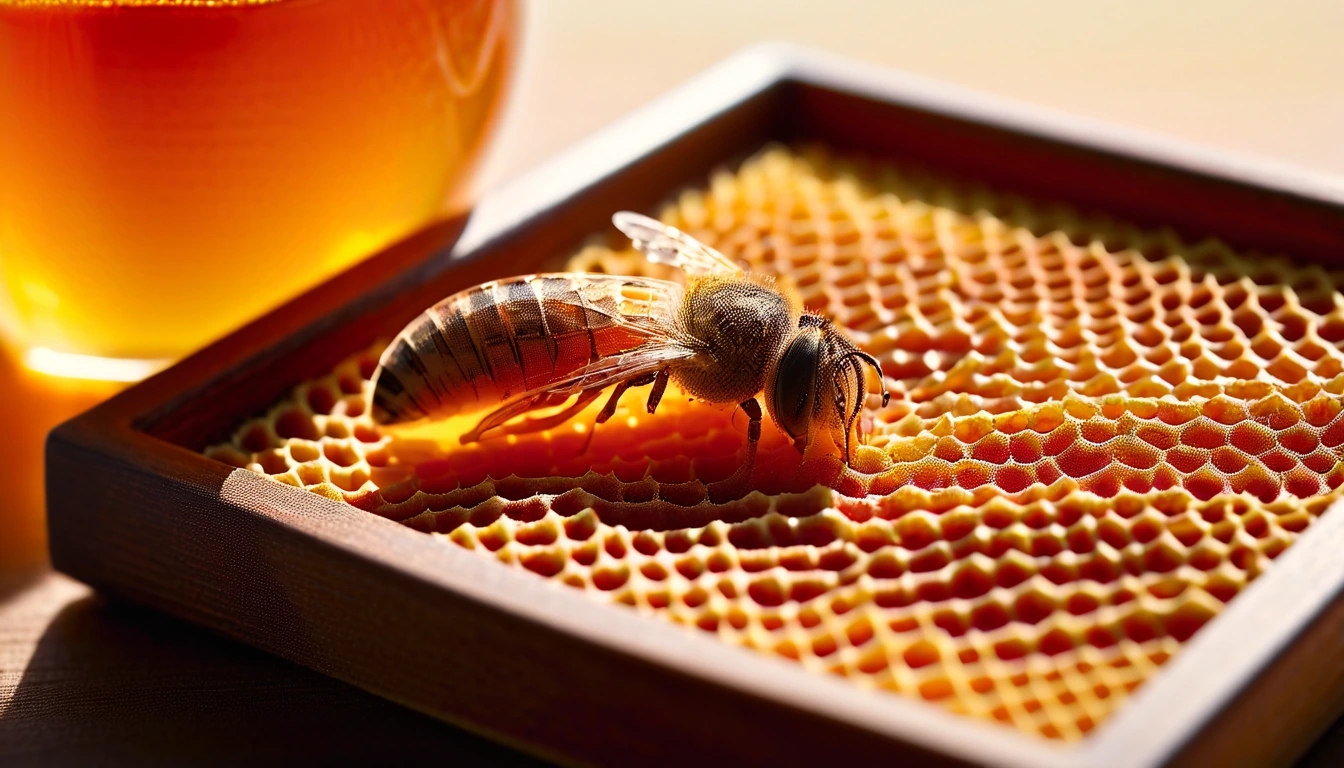
Raw and minimally filtered honey may contain pollen grains, wax particles, and tiny propolis traces. These materials can matter for traceability and chemistry, but they are not standardized doses.
This content was not professionally fact checked. It is a conservative consumer guide. NEVER use it as health advice. Pollen and propolis exposure can matter for allergies and sensitivities, so do not treat trace content casually if you react to bee products.
The honey microcompound mapper puts pollen and propolis traces beside minerals, proline, phenolics, and enzymes so you can compare evidence strength instead of relying on one label phrase.
What Pollen Can Show
Pollen analysis can help identify botanical and geographic origin. It is especially useful when a seller claims a monofloral source or a region. Heavy filtration can remove pollen, which weakens that traceability pathway.
Pollen is not a dependable nutrient claim in honey. The amount in a spoonful varies widely and can be very small. If someone wants bee pollen as a separate product, that is a different product category from honey.
Reviews of honey composition and botanical variation include pollen as one part of the broader quality picture: https://pmc.ncbi.nlm.nih.gov/articles/PMC6225430/ and https://pmc.ncbi.nlm.nih.gov/articles/PMC9952753/.
Get the Honey Buyer's Cheat Sheet (free PDF)
16 varieties on one page — color, flavor, best use and what a fair price looks like — from the 304 honeys we track.
What Propolis Traces Can Show
Propolis is resinous material bees collect from plants and use in the hive. Tiny traces may enter honey during handling, but propolis concentration is not standardized in ordinary honey.
Propolis has its own research literature and product category. Ordinary honey should not be marketed as a propolis supplement unless the producer has deliberately formulated and labeled it that way under applicable rules.
For plant-compound context, read honey bioactive plant compounds and honey flavonoids in honey.
Filtration and Label Reading
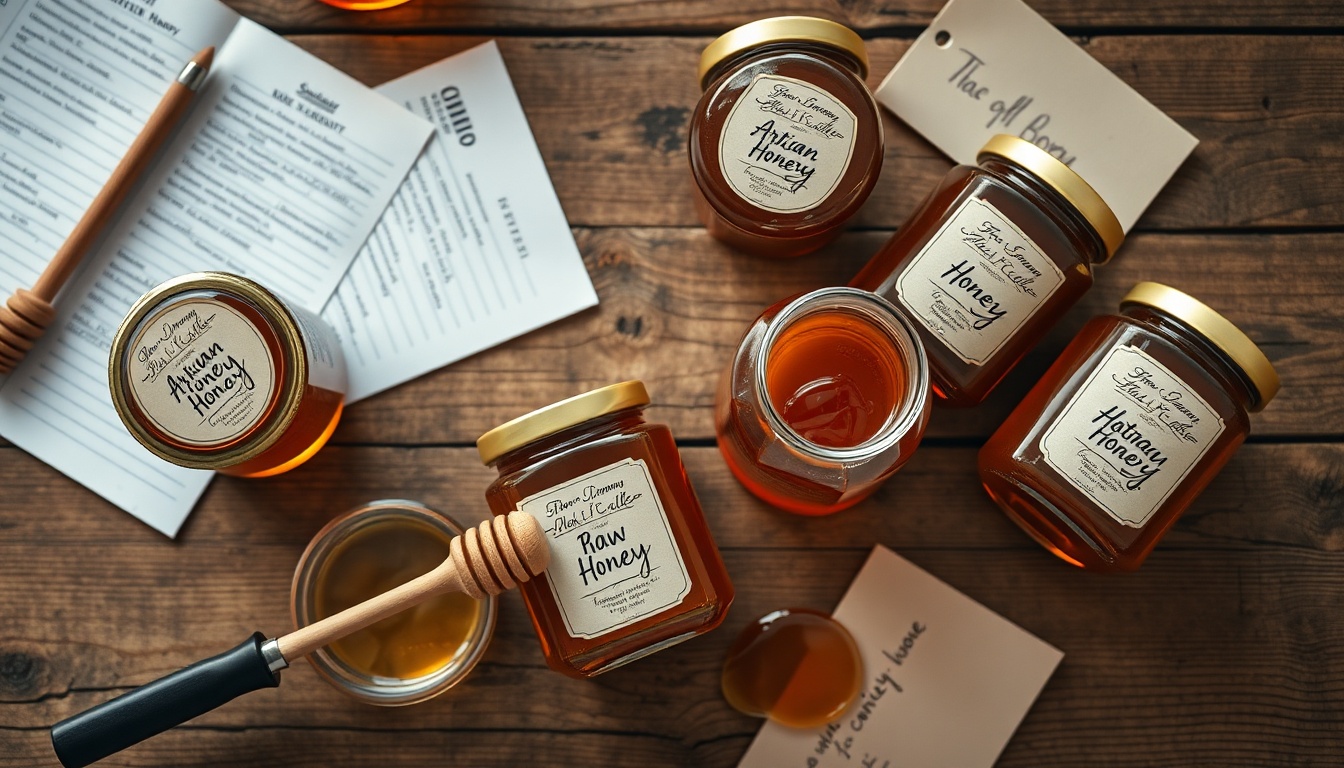
Strained honey may retain more pollen than ultra-filtered honey. Clear, shelf-stable, highly filtered honey can still be real honey, but it gives consumers less botanical evidence from pollen.
If origin matters, ask for a producer name, harvest region, floral source, and testing where available. If nutrition matters, use the USDA baseline for ordinary honey instead of assuming pollen changes the panel: https://fdc.nal.usda.gov/fdc-app.html#/food-details/169640/nutrients and https://api.nal.usda.gov/fdc/v1/food/169640?api_key=DEMO_KEY.
For authenticity markers that survive filtration better than pollen, read honey proline amino acid.
Pro Tip
Pollen is strongest as origin evidence. It is weak as a nutrient promise in ordinary honey.
Research Context
For broad context on honey and bee-product compounds, see https://pubmed.ncbi.nlm.nih.gov/34829570/ and https://pmc.ncbi.nlm.nih.gov/articles/PMC9900486/.
Use these sources carefully. They support the idea that honey can carry complex trace material, not the idea that every jar provides a predictable pollen or propolis dose.