The Blue Mountains Paradox: The Caribbean's Most Famous Coffee, No Honey Brand
Jamaica Blue Mountains coffee is one of the most protected and expensive agricultural products in the Caribbean. The Jamaica Coffee Industry Board (CIB), established in 1950 and formalized under the Coffee Industry Regulation Act of 1953, administers a protected designation that prohibits the use of the name 'Jamaica Blue Mountain Coffee' for coffee not grown within the designated geographic boundaries: the Blue Mountains parishes of St. Andrew, St. Thomas, and Portland between 910 and 1,700 metres above sea level. The designation predates the European Union's Protected Designation of Origin framework by 40 years, making it one of the oldest protected geographic appellations for any agricultural product in the Western Hemisphere.
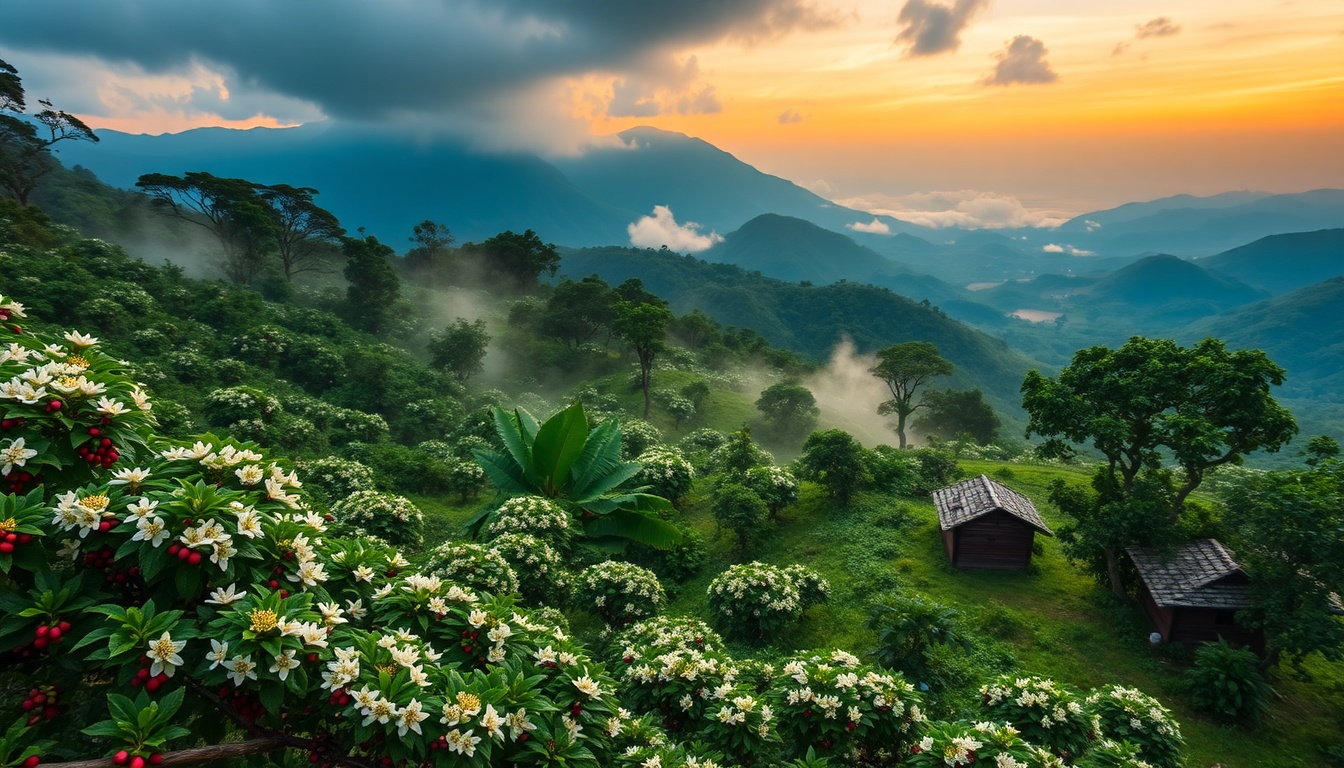
Jamaica Blue Mountain coffee retail prices range from for certified whole-bean offerings, with 80% of the annual crop — approximately 150–180 metric tonnes — exported to Japan under long-standing trade agreements and purchased by Japanese retailers at prices that routinely exceed. The farms producing this coffee are cultivated on steep volcanic-slope terrain between 910 and 1,700m, under a humid subtropical climate with persistent cloud cover, on deep basalt soils that produce a cup profile described internationally as 'mild, sweet, with no bitterness' — the product of an exceptionally slow cherry-development period (10–11 months vs. the typical 8 months for lowland Arabica).
The same farms produce honey from beehives placed in and around Coffea arabica orchards during the February–April bloom window. The honey from these hives collects nectar from coffee blossoms at 1,000–1,700m altitude on the Blue Mountains volcanic slopes — the most precisely documented and geographically restricted premium coffee terroir in the Caribbean. In 2026, no internationally marketed 'Jamaica Blue Mountain coffee blossom honey' exists. The structural gap is even more extreme than in Colombia, Honduras, or Panama: the CIB certification infrastructure is 70 years old, the brand identity is globally recognized, the farm-gate access is established through a cooperative system, and yet the honey from these farms is traded as anonymous bulk with no geographic designation. The brand value goes unused.
Allspice Blossom Honey: The Other Missing Category
Jamaica is the world's largest producer of allspice (Pimenta dioica), supplying an estimated 60–70% of the global market from the parishes of St. Elizabeth, Manchester, Westmoreland, and Trelawny. Allspice — named by English settlers who thought its aroma combined clove, nutmeg, and cinnamon — grows as an evergreen tree (Myrtaceae family) to 10–15m in Jamaican limestone woodlands and was domesticated from the wild by the Taino people centuries before European contact. The allspice tree blooms in June–July with dense clusters of small white flowers (5mm diameter, four petals, numerous stamens) that produce nectar intensively during a 3–5 week window.
Allspice blossom honey is not commercially marketed anywhere in the world as of 2026. The characteristic aroma compounds of allspice — primarily eugenol (the dominant phenolic in cloves), methyl eugenol, and caryophyllene — are concentrated in the dried berry's essential oil, not in the flower nectar. This creates the same botanical paradox as Guatemala's cardamom blossom honey (1,8-cineole in the seed capsule, not the flower) and India's coriander honey (coumarin from dried seed, not flower): the honey does not taste like the spice. Allspice blossom honey is mild, delicately floral, slightly sweet, with a faint warm undertone but none of the sharp eugenol character of the berry. The point of differentiation is geographic and botanical identity, not spice flavor.
Jamaica's allspice industry produces approximately 5,000–7,000 tonnes of dried allspice per year from farms where trees grow semi-wild in limestone woodland, often interplanted with logwood (Haematoxylum campechianum), bluewood (Condalia obovata), and Jamaican wild coffee (Psychotria spp.). Beehives placed in allspice-dominant farmland in St. Elizabeth and Manchester during the June–July bloom window would produce a monofloral-eligible honey for which no certification standard exists. The honey equivalent of Jamaica's largest single-crop export category is entirely unclaimed territory.
Pro Tip
Allspice blossom honey does NOT taste like allspice spice — the eugenol in the berry develops in the dried fruit, not the flower nectar. Like Guatemala's cardamom blossom honey (mild, not cardamom-flavored), Jamaican allspice blossom honey is delicate and floral. The botanical identity is the distinction, not spice character. Producers who market it as 'tastes like allspice' would be misrepresenting the product.
Get the Honey Buyer's Cheat Sheet (free PDF)
16 varieties on one page — color, flavor, best use and what a fair price looks like — from the 304 honeys we track.
Blue Mountains-John Crow Mountains: UNESCO Biodiversity & Endemic Flora
The Blue Mountains-John Crow Mountains UNESCO World Heritage Site, inscribed in 2015, covers approximately 26,252 hectares of montane forest in Jamaica's eastern parishes. It contains Jamaica's most intact remaining primary forest and is recognized as a global biodiversity hotspot: the island has approximately 3,000 plant species, of which roughly 28% (840+ species) are endemic — a remarkably high endemism rate for an island of Jamaica's size (10,990 km²). The Blue Mountains are the westernmost extension of a Caribbean biodiversity arc that created distinct endemic flora on each island through geographic isolation.
Key endemic and notable honey-plant species in the Blue Mountains include: Blue mahoe (Hibiscus elatus, Jamaica's national tree — light pink to dark burgundy flowers bloom sporadically throughout the year, producing nectar collected by Apis mellifera from forest edge clearings above 500m); lignum vitae (Guaiacum officinale, Jamaica's national flower — small purple blossoms, March–June, limestone woodland below 900m, the hardest commercially traded wood in the world); wild coffee (Coffea jamaicensis — endemic relative of Coffea arabica, small white flowers, Blue Mountains forest understorey above 600m); vervain (Stachytarpheta jamaicensis — naturalized weed but significant nectar source, year-round at lower elevations).
The John Crow Mountains — the lower, more inaccessible eastern range named for the New World vulture (Cathartes aura, locally 'John Crow' or 'turkey buzzard') — contain even higher forest endemism in their wet, steep terrain. Beekeeping in the John Crow Mountains is structurally impossible at commercial scale due to inaccessibility, but the honey produced on the fringes of this wilderness — from farms and smallholdings in the parishes of Portland and St. Thomas — draws from one of the highest per-species botanical densities in the Caribbean.
Honey produced in the Blue Mountains zone is sold in Kingston specialty markets and at the farm gate. No dated retail price is cited. No Blue Mountains honey has an internationally recognized geographic identity. The comparison to New Zealand manuka (which also derives its premium from geographic restriction and a UNESCO World Heritage-adjacent ecosytem narrative) is instructive: manuka honey went from agricultural byproduct to internationally priced luxury through three decades of systematic scientific research and geographic marketing. Blue Mountains honey has the geographic and ecological raw material but none of the research or marketing infrastructure.
Taino Honey Heritage & Jamaican Pre-Columbian Meliponicultura
The Taino people (Arawakan-speaking, migrated from South America through the Caribbean islands beginning approximately 500 BCE) inhabited Jamaica when Spanish colonizers arrived in 1494. The Taino called the island Xaymaca, meaning 'Land of Wood and Water' in Arawakan — a name that survives in the modern toponym. Taino honey culture was documented by early Spanish colonizers who noted the practice of keeping native stingless bees in hollowed logs and calabash vessels. Whether Jamaica had native Meliponini at the time of first contact — distinct from the Melipona beecheii documented in Cuba, Hispaniola, and the Yucatan — is not resolved in the archaeological and ethnobiological literature.
Post-contact, European beekeeping (Apis mellifera ligustica and A. m. carnica) replaced whatever indigenous honey practice existed, and the Taino population was effectively eliminated through violence, disease, and displacement within 150 years of Spanish contact — a pattern repeated across Caribbean islands. The honey traditions of Jamaica's later African diaspora communities (enslaved Africans brought from West and Central Africa beginning in the 1500s) incorporated honey into medicinal practice: bush medicine in Jamaica uses honey extensively in combination with native plants including aloe vera (Aloe barbadensis), soursop leaves (Annona muricata), fever grass (Cymbopogon citratus), and Jack-in-the-bush (Eupatorium odoratum).
The African diaspora honey tradition contributed to the development of Ital foodways — the Rastafari natural-food philosophy (I-tal = vital, from the rejection of artificial processing) that treats honey as an unprocessed natural food consistent with Ital principles. Rastafari emerged in Jamaica in the 1930s from Marcus Garvey's Pan-African movement and prophetic Ethiopian connection, and its culinary philosophy aligns natural honey consumption with the Ethiopian spiritual center (Zion) — a meaningful cultural parallel given that Ethiopia is one of the world's oldest honey-producing traditions and the original Coffea arabica homeland. This Ethiopia-Jamaica cultural link gives Jamaican honey an unusual narrative dimension.
Jamaican Honey Varieties at a Glance
Jamaica's honey geography divides into three primary zones with distinct botanical profiles:
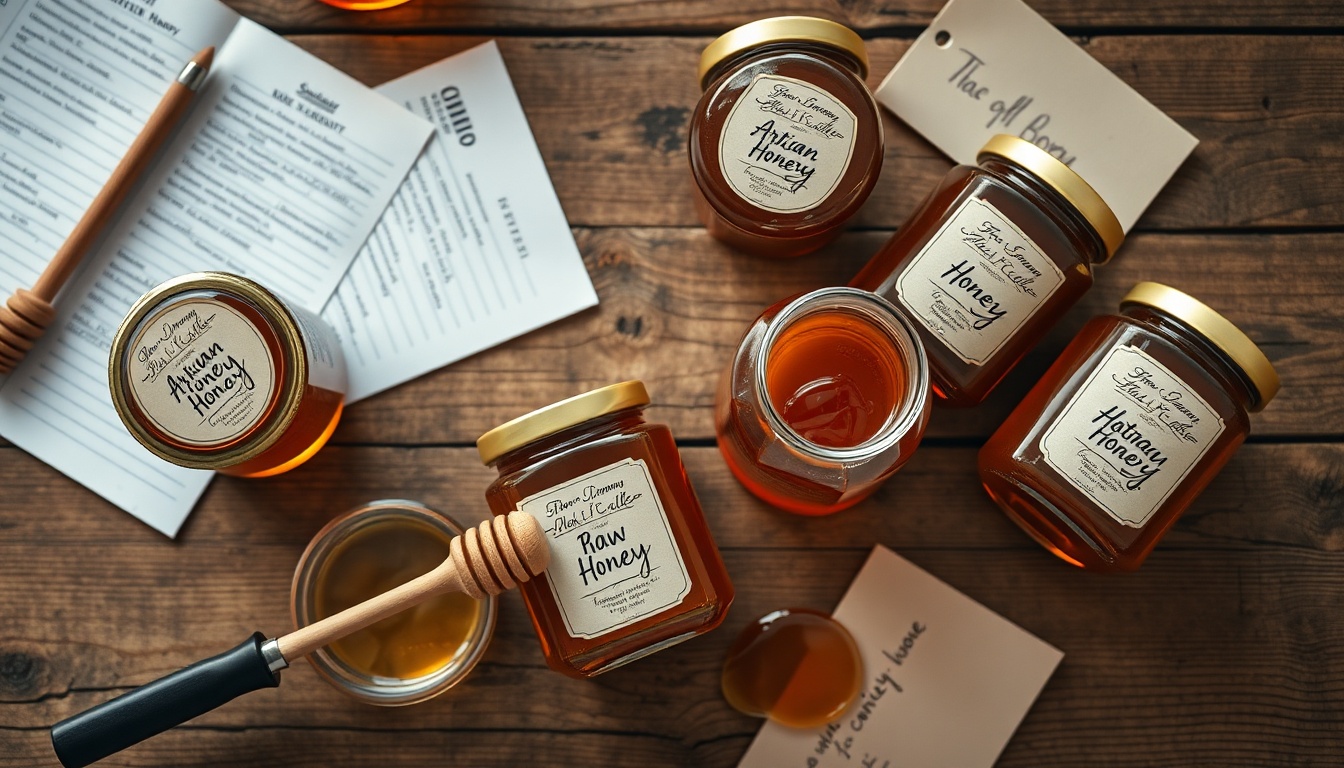
- Blue Mountains coffee blossom honey — Coffea arabica bloom (Feb–Apr), 910–1,700m altitude, St. Andrew/St. Thomas/Portland parishes; no published tasting profile (label notes are the seller's); produced on farms with CIB certification but sold without geographic designation; exclusively domestic market at
- St. Elizabeth / Manchester allspice blossom honey — Pimenta dioica bloom (Jun–Jul), 100–600m limestone woodland; mild floral-warm profile (NOT spice-flavored); no commercial product category exists globally in 2026
- Blue Mountains montane wildflower honey — Blue mahoe (Hibiscus elatus), lignum vitae (Guaiacum officinale), wild flora from UNESCO WHS forest edges, 500–1,200m; complex floral, slow-crystallizing; artisan production, domestic only
- Lowland tropical wildflower honey — Logwood (Haematoxylum campechianum, light amber, distinctly sweet-floral), guinea grass (Megathyrsus maximus), citrus blossom (St. Mary, Clarendon parishes); the commercial backbone of Jamaican honey production
- Logwood / bloodwood honey — Haematoxylum campechianum, historically exported to US and UK, light amber to water-white; one of the few Jamaican honey types with any documented international trade history
Africanized Bees in Jamaica & The Caribbean Subspecies Question
Africanized honey bees (Apis mellifera scutellata hybrids) arrived in Jamaica between 1995 and 2002, establishing feral colonies faster than in most Caribbean islands. The question of whether Africanized bees in Jamaica represent a management problem or a productivity asset mirrors the debate in every continental tropical honey region: Africanized bees produce more honey per colony than European subspecies in tropical conditions (higher foraging intensity, lower swarming threshold, stronger varroa resistance), but are significantly more defensive and require managed-apiary protocols different from European beekeeping traditions.
Jamaica's Africanized bee population has interbred extensively with existing European stock (primarily Italian and Carniolan imports from the 1800s–1900s). The resulting hybrid populations vary widely in defensiveness by elevation, season, and genetic history: Blue Mountains farms above 900m report relatively manageable colonies with lower Africanized-bee introgression, while lowland coastal areas with warmer temperatures report more defensive populations. The Ministry of Agriculture, Fisheries and Mining (MAFM) regulates beekeeping through the Honey Bee Regulations under the Plant Protection Act; the Jamaica Agricultural Society (JAS) provides beekeeper training and registration.
Jamaica's total registered hive count is approximately 25,000–35,000 (JAS estimates, 2022), producing roughly 500–800 tonnes of honey per year. The domestic honey market is undersupplied — Jamaica imports honey from Argentina and the Dominican Republic for industrial food manufacturing — while artisan Jamaican honey commands significant domestic premiums at farmers' markets in Kingston, Montego Bay, and Ocho Rios. No export infrastructure for certified single-origin Jamaican honey exists as of 2026.
Regulation & The Path to Geographic Certification
Jamaican honey is regulated under the Bureau of Standards Jamaica (BSJ) standard JS 178:2009 (Specification for Honey), which is broadly aligned with Codex Alimentarius parameters: maximum moisture 20%, maximum HMF 40 mg/kg, minimum diastase activity. The MAFM administers beekeeper registration and disease-control programs; JANAPHA (Jamaica National Apiarists and Honey Producers Association) represents commercial producers. The regulatory framework is adequate for domestic food safety but has no geographic indication or single-origin authentication component.
The most significant institutional opportunity for Jamaican honey is the Jamaica Coffee Industry Board model. The CIB has administered a geographically protected designation — with physical inspection, seal-of-certification programs, and export monitoring — for 70 years. Extending a similar system to Blue Mountains coffee blossom honey would require: (1) amending the CIB's enabling legislation or creating a parallel authority; (2) defining the floral source (Coffea arabica bloom, Feb–Apr, within the certified geographic zone); (3) establishing moisture and pollen parameters. The botanical authentication is straightforward — Coffea arabica pollen is identifiable under melissopalynological analysis — and the geographic boundary is already legally defined. The institutional will is the only missing element.
For allspice blossom honey, a geographic designation for St. Elizabeth and Manchester parishes would be less bureaucratically complex — no existing agricultural certification body covers allspice in the way the CIB covers coffee — but the commercial case is equally strong. St. Elizabeth parish already has a strong agricultural identity (Jamaica's 'breadbasket,' known for onions, sweet potatoes, and allspice), and a 'St. Elizabeth Allspice Blossom Honey' origin designation would be the first named allspice-blossom honey product in any international market.
How to Buy Authentic Jamaican Honey in 2026
Authentic Jamaican honey is rarely available outside Jamaica. No Jamaican honey brand holds an international retail position in the US, UK, or EU in 2026. The most reliable access points outside Jamaica are: specialty Caribbean food importers in Miami, Toronto, and London's Brixton market (Jamaican diaspora communities); and direct online purchase from Jamaican artisan producers who ship internationally (a small but growing segment following the growth of Caribbean direct-to-consumer food platforms).
Within Jamaica, the best access points for artisan single-origin honey are: Coronation Market and New Kingston Market in Kingston; craft-food stalls at Devon House (Kingston) and Harmony Hall (St. Ann); farm-gate sales from Blue Mountains coffee farms offering agritourism experiences (the Blue Mountains are a major eco-tourism destination, and several farms offer bee-related experiences); and the Jamaica Agricultural Society annual show. Price ranges for domestic artisan honey: for lowland wildflower, JMD 2,000–4,500 for Blue Mountains honey.
Authenticity verification for Jamaican honey: pollen analysis is the gold standard (Coffea arabica pollen from Blue Mountains honey is identifiable; logwood pollen from Haematoxylum campechianum is characteristic for lowland varieties). C4 sugar adulteration test applies. Diastase activity (fresh honey above 8 DN per BSJ JS 178:2009). For honey labeled 'Blue Mountains,' ask for the producer's CIB farm registration number — this is the only existing documentation that links honey to the certified geographic zone, though CIB authentication of honey (as opposed to coffee) is not yet formalized.
Pro Tip
If you visit Jamaica's Blue Mountains, ask your coffee farm tour operator whether they keep bees. Several larger estates (Clifton Mount, Old Tavern, Marshall's Pen Coffee) have integrated beehives in their farm systems. The honey is rarely sold commercially but is sometimes available at the farm gate — the most direct way to taste a true Blue Mountains coffee blossom honey until the category is commercially developed.