Cambodia's Honey Landscape: Four Bee Species Across Forest, Floodplain, and Highland
Cambodia occupies a pivotal position in Southeast Asian beekeeping: it is the only country in the Indochina Peninsula where four distinct bee production systems operate simultaneously, from wild giant honeybees harvesting resin-rich jungle nectar in the Cardamom Mountains to stingless Trigona meliponiculture practiced in forest-edge villages for traditional medicine. This ecological diversity — shaped by the Mekong corridor, the Tonle Sap floodplain, and the Cardamom–Elephant Mountain spine — produces honey types that share almost no flavor characteristics with each other, despite all originating within Cambodia's 181,035 km².
The four species are: Apis dorsata (the giant honeybee), which builds single open-air combs on cliff faces, tall Dipterocarp tree branches, and limestone outcrops throughout the Cardamom Mountains and northeastern highlands; Apis cerana (the eastern honeybee), Cambodia's indigenous managed species, kept in hollowed-log hives and clay pot nests by rural families in all provinces; Apis mellifera (the western honeybee), introduced through FAO and NGO programs beginning in the 1990s and now concentrated in peri-urban apiaries near Phnom Penh, Battambang, and Siem Reap; and multiple Trigona species (stingless bees), maintained in log sections and ceramic pots by Bunong and Tampuan indigenous communities in Ratanakiri and Mondulkiri provinces, where pot-honey is used in ritual and medicinal contexts.
Cambodia produces an estimated 1,800–2,500 tonnes of honey annually (FAO 2022 provisional figures), with wild harvest and Apis cerana log-hive honey accounting for roughly 60% of volume. Less than 5% reaches export markets; the remainder is consumed domestically or traded regionally across the Thai, Vietnamese, and Lao borders. The country has no internationally recognized honey quality standard, no GI or PDO designation, and no published pollen reference database for Cambodian flora — all three gaps are structural barriers to premium market access.
Pro Tip
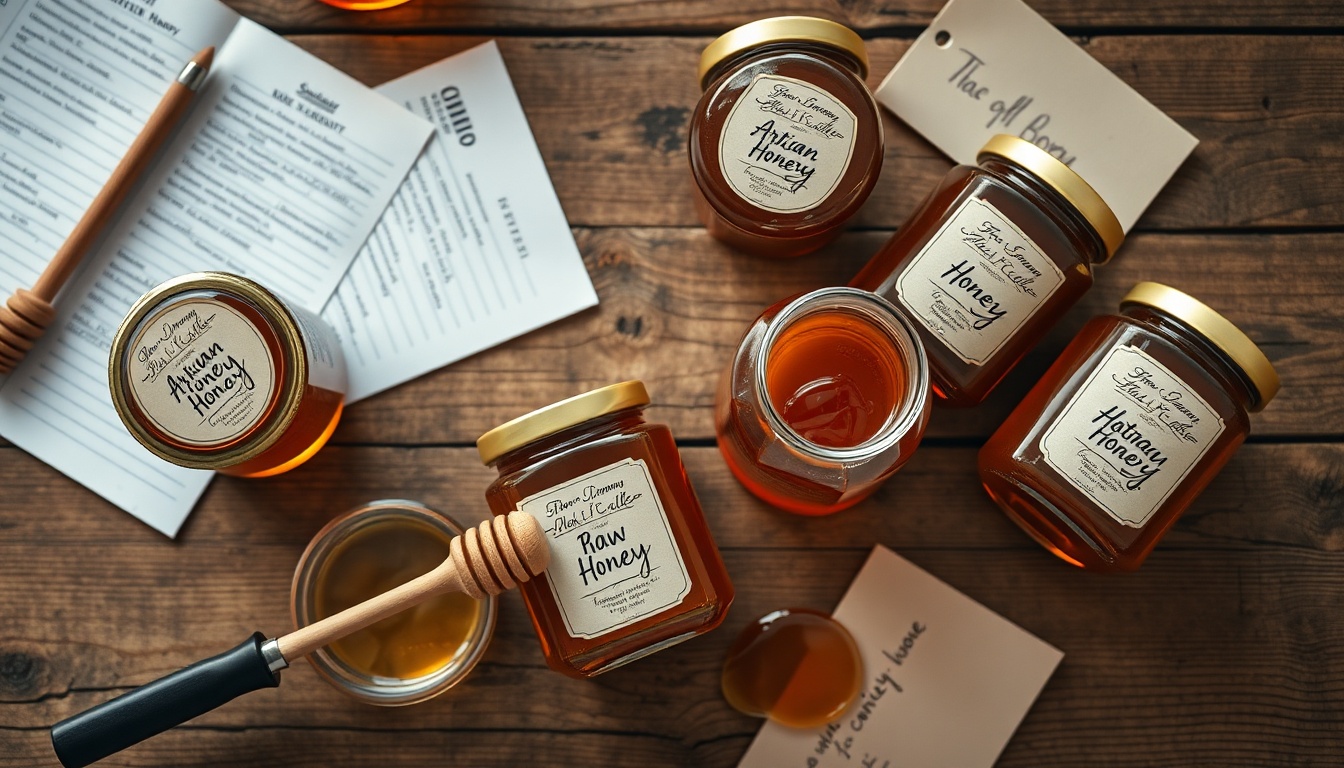
Cambodia's four production systems are ecologically isolated from one another: wild Apis dorsata forest honey, flood-plain Apis cerana wildflower, commercial Apis mellifera polyfloral, and Trigona pot-honey each have distinct flavor signatures and moisture profiles. A jar labeled simply 'Cambodian honey' gives no indication of which system it came from.
Angkor Heritage: The Khmer Empire's Documented Honey Tradition (802–1431 CE)
The Khmer Empire's honey culture is among the best-documented in pre-modern Southeast Asia. Zhou Daguan (Chou Ta-Kuan), a Chinese diplomat who resided at Angkor from 1296 to 1297 CE, recorded in his 'A Record of the Customs of Cambodia' (真臘風土記) that honey and beeswax were traded in Angkor's markets alongside other forest products, with beeswax specifically noted as a significant trade commodity used in temple illumination and waterproofing. His account places honey collection firmly within Angkor's forest-economy structure, sourced from the wooded hinterlands surrounding the hydraulic capital.
The bas-reliefs at Angkor Wat (constructed c. 1113–1150 CE under Suryavarman II) and at the Bayon (late 12th–early 13th century, Jayavarman VII) include depictions of wildlife that encompass bees and hive-like structures within forest scenes. Sanskrit inscriptions recovered from Preah Vihear, Phnom Bakheng, and Banteay Srei reference honey (madhu) in ritual and tributary contexts — part of the broader Sanskrit agricultural-economy vocabulary inherited through Indianization. The Khmer Empire's hydraulic-agricultural complex, which supported a metropolitan population of approximately 750,000–900,000 people at its 12th-century peak (Evans et al., Proc. Natl. Acad. Sci. 2007), required diverse forest-product supply chains, and honey appears as both a tribute item and a temple-economy good in the epigraphic record.
This 700-year documented tradition makes Cambodia's ancient honey lineage among the most historically verifiable in mainland Southeast Asia — deeper than Myanmar's written record and comparable to the Land of Punt references in the Somali guide. What makes Cambodia's case structurally distinctive, however, is not the depth of the ancient record but the completeness of the interruption: a civilization with documented honey culture was followed by a deliberate ideological erasure of all traditional agricultural knowledge, creating a discontinuity unmatched by any other country in the 117-guide corpus.
Get the Honey Buyer's Cheat Sheet (free PDF)
16 varieties on one page — color, flavor, best use and what a fair price looks like — from the 304 honeys we track.
Cardamom Mountains Wild Honey: Apis dorsata and the Forest Harvest
The Cardamom Mountains (Chuor Phnom Krâvanh) in southwestern Cambodia constitute one of mainland Southeast Asia's largest contiguous blocks of lowland tropical evergreen forest, spanning approximately 44,000 km² across Koh Kong, Kampot, Kep, and Pursat provinces. Phnom Samkos Wildlife Sanctuary (33,202 ha) and Phnom Aural Wildlife Sanctuary (25,763 ha) form the protected core. The mountains are home to Indochinese tigers, Asian elephants, Siamese crocodiles, and — critically for honey geography — intact Dipterocarp forest canopy that supports large Apis dorsata populations.
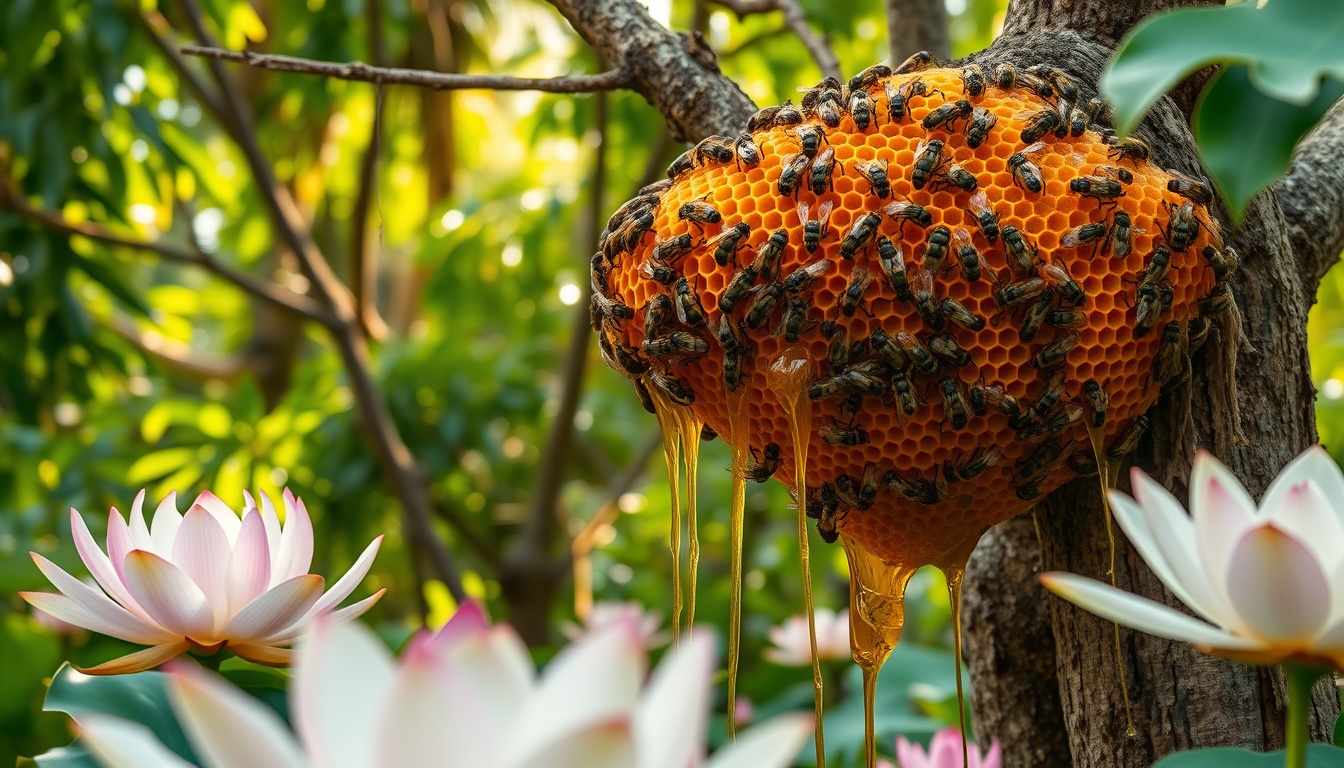
Apis dorsata in the Cardamoms builds comb colonies on cliff faces of limestone outcrops, on the high horizontal branches of emergent Dipterocarp trees (Shorea, Dipterocarpus, Hopea spp.), and on the rock faces of waterfalls in Koh Kong province. Honey hunters from Chong indigenous communities (Koh Kong and Kampot) have practiced seasonal cliff harvest for generations, using smoke torches and bamboo ladders in a process structurally identical to the Gurung cliff harvest documented in Nepal and the Kayah harvest in Myanmar — convergent technique driven by the same bee's identical comb architecture. The honey is dark amber to near-black, intensely aromatic with pronounced resinous character from Dipterocarp and Calophyllum propolis, and granulates slowly due to high fructose content.
Wildlife Alliance, an international conservation NGO operating in the Cardamom Mountains since 2002, developed Cambodia's only internationally certified forest honey program through its Cambodia Carbon + Community (C3) initiative. Community rangers employed by Wildlife Alliance — former poachers who transitioned to conservation roles — harvest wild Apis dorsata honey and manage Apis cerana log-hive apiaries as an alternative livelihood. The honey is sold under the 'Cardamom Honey' brand, certified as sustainably harvested forest product, with a fraction of revenue funding anti-poaching patrols. The C3 model is the only instance in the 117-country guide corpus where honey certification is directly coupled to deforestation prevention as a mechanism of conservation finance.
Pro Tip
Wildlife Alliance Cardamom honey is available via the organization's direct sales program and select specialty retailers in Phnom Penh. It is not yet available through international e-commerce channels. For travelers: the Southern Cardamom Protected Forest ranger stations in Koh Kong province run guided apiary visits.
Tonle Sap Honey: The Great Lake's Flood-Pulse Floral Calendar
The Tonle Sap Great Lake is Southeast Asia's largest freshwater lake and a UNESCO Biosphere Reserve (designated 1997). Its defining characteristic — unique among the world's major lakes — is a seasonal flood-pulse that expands the lake from approximately 2,500 km² in the dry season (January–May) to 16,000 km² at peak monsoon flood (October), a six-fold expansion driven by reverse-flow from the Mekong River. The recession of floodwaters from October to January creates a floral calendar that has no analog in temperate or Mediterranean beekeeping regions.
The flood-pulse creates a succession of bee-forage ecosystems timed to the hydrological cycle: lotus (Nelumbo nucifera) blooms across the receding floodplain in October–November, followed by water hyacinth (Eichhornia crassipes), floating-leaf aquatic plants, and then the riparian gallery forest as the lake continues to contract. The flooded forest belt — a ring of inundated Melaleuca (paperbark), Barringtonia, and Terminalia woodland surrounding the lake core — provides year-round forage for Apis cerana colonies kept in bamboo-raft hives by floating-village beekeepers in Kampong Phluk, Kampong Khleang, and Prek Toal communities. These floating apiary systems, with hives mounted on bamboo platforms that rise and fall with lake levels, represent one of the most ecologically adapted honey production methods in the world.
Tonle Sap honey is pale to medium amber, mild and floral, with a distinctive aquatic-floral character from lotus and riparian bloom that makes it immediately distinguishable from the darker, more resinous Cardamom mountain varieties. It is consumed almost entirely within Cambodia, with small volumes traded in Siem Reap and Battambang markets. No published melissopalynological analysis of Tonle Sap honey exists — the specific pollen profile of a flood-pulse floral calendar is a documented gap in Southeast Asian honey science.
Year Zero and the Erasure of Beekeeping Knowledge (1975–79)
On April 17, 1975, Khmer Rouge forces under Pol Pot entered Phnom Penh and began the forced evacuation of the city's two million residents to rural work camps. The regime's 'Year Zero' ideology explicitly rejected all pre-revolutionary knowledge, institutions, and social structures: educated people were targeted for execution, traditional agricultural practices were collectivized under state control, and oral knowledge transmission chains — the primary vehicle for passing beekeeping skills through Cambodian rural families — were severed by the displacement of populations into unfamiliar geographic zones. Between 1975 and 1979, an estimated 1.7 to 2 million people died from execution, starvation, forced labor, and disease — approximately 25% of Cambodia's pre-war population.
Beekeeping was not directly prohibited under the Khmer Rouge; honey collection continued as part of forest foraging by work camp populations. What the regime destroyed was the structured transmission of craft knowledge: the specific practices of log-hive construction, swarm capture, seasonal migration, and propolis management that require multi-year apprenticeship and place-specific floral calendar knowledge. When Vietnamese forces ended the Khmer Rouge regime in January 1979, the surviving rural population had been redistributed across unfamiliar provinces, the knowledge-bearing generation had experienced catastrophic mortality, and the social institutions through which traditional beekeeping skills were transmitted — extended family networks, village elder councils, monastery communities — had been dismantled.
The post-1979 reconstruction period (People's Republic of Kampuchea, 1979–1993) prioritized rice production and infrastructure; beekeeping development was marginal. Beginning in the mid-1990s, international NGOs and FAO programs introduced Apis mellifera Langstroth hive beekeeping as a development tool, largely bypassing traditional Apis cerana log-hive knowledge as being 'lower productivity.' The result was a hybrid national beekeeping landscape where introduced A. mellifera technique was taught to a generation of new beekeepers with no living elders who could contextualize traditional Apis cerana practice in its original floral-calendar and forest-geography framework. Of the 117 countries in this guide, Cambodia presents the most complete case of agricultural knowledge erasure followed by externally-directed knowledge reconstruction — a pattern distinct from political isolation (Albania, Eritrea), conflict disruption (Myanmar, Sudan), or colonial-era replacement (most Caribbean and Pacific guides).
Pro Tip
The structural legacy of Year Zero is visible in Cambodia's honey market today: Apis mellifera commercial honey (introduced post-1990s) is sold in plastic jars in urban supermarkets, while Apis cerana traditional honey and wild forest honey circulate through informal village and border-trade networks. The two systems rarely intersect in a single supply chain.
Modern Cambodian Honey: Forest Certification, Meliponiculture, and the Export Gap
Cambodia's contemporary honey sector is characterized by three structurally separate production systems that share almost no supply chain infrastructure. Commercial Apis mellifera honey (produced in Battambang, Siem Reap, and peri-Phnom Penh apiaries) dominates supermarket channels and is processed to meet ASEAN harmonized honey standards (ASEAN Standard for Honey, 2019). Traditional Apis cerana and wild Apis dorsata honey circulates through village-level informal trade, border markets with Thailand and Vietnam, and direct sales to restaurants and hotels in Siem Reap. The Wildlife Alliance Cardamom certified forest honey occupies a third, conservation-finance niche with premium pricing (vs. domestic commercial) and intentionally small volume to match ranger community harvest capacity.
Stingless bee (Trigona spp.) honey — locally called 'teuk chroul' (sour honey) or 'teuk khmum prey' (forest honey) — is produced by Bunong and Tampuan indigenous communities in Ratanakiri and Mondulkiri provinces using traditional pot and log section hives. Trigona honey has higher water activity (24–28% moisture) and more pronounced acidity than Apis honey; its traditional use is medicinal rather than culinary. Interest in Trigona honey has grown in Cambodian urban markets following broader Southeast Asian meliponiculture trends from Malaysia and Thailand, but domestic supply is constrained by small colony populations and long production cycles.
The export gap is structural: Cambodia has no internationally accredited honey testing laboratory, no GI or PDO framework, and no published pollen reference database that would allow origin authentication. Cambodian honey exported to China and South Korea (the two main receiving markets) is sold as generic bulk commodity, with no premium for origin or variety. The contrast with Vietnam — geographically adjacent, comparable ecology — is instructive: Vietnam has published honey authenticity standards, a functional melissopalynology program, and established export channels for Apis cerana mountain honey. Cambodia's equivalent potential exists in the Cardamom Mountains and Tonle Sap systems but remains structurally unrealized for the same reason as many sectors of the Cambodian economy: the generational knowledge disruption of 1975–79 extended to the institutional capacity needed to build certification infrastructure.