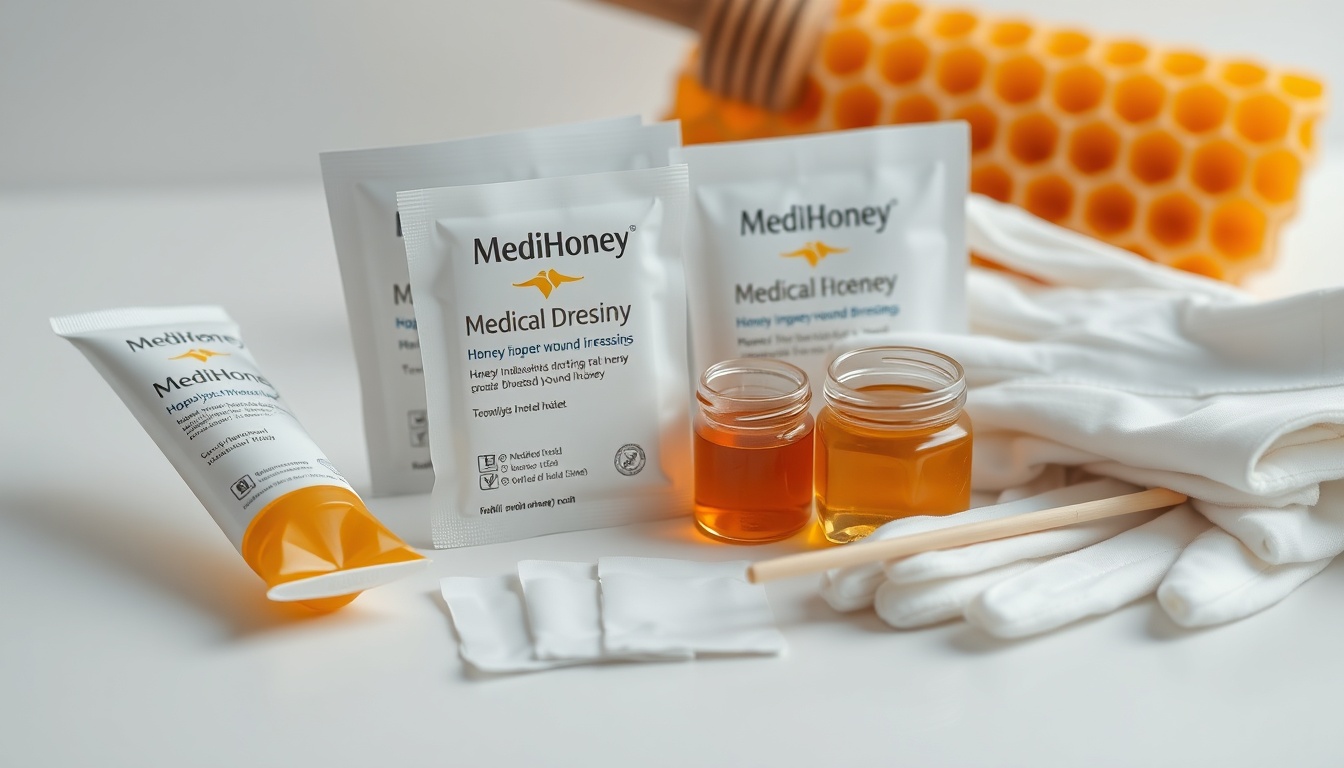
Why Diabetic Wounds Are a Different Medical Problem
Diabetic foot ulcers (DFUs) are one of the most serious and costly complications of diabetes. According to the International Diabetes Federation, approximately 25% of people with diabetes will develop a foot ulcer at some point in their lives. Of all non-traumatic lower limb amputations globally, more than 80% are preceded by a diabetic foot ulcer. In the United States alone, treating DFUs costs an estimated $9–13 billion per year — and outcomes remain poor despite modern medicine's best tools.
To understand why honey is attracting serious clinical attention for diabetic wound care, you first need to understand why diabetic wounds are so notoriously difficult to heal. The impairments are multifactorial and interconnected:
**Peripheral neuropathy** affects 50–60% of diabetic patients, reducing pain sensation in the feet so that minor injuries go unnoticed and become chronic before treatment begins. **Peripheral vascular disease** restricts blood flow to extremities, reducing oxygen and nutrient delivery to wound tissue — both essential for healing. **Chronic hyperglycemia** impairs virtually every phase of the wound healing cascade: neutrophils become dysfunctional and cannot effectively clear bacteria; fibroblasts lose the ability to proliferate and produce collagen; angiogenesis (new blood vessel formation) is impaired; and advanced glycation end products (AGEs) accumulate in the extracellular matrix, stiffening tissue and disrupting cell signaling. **Immune dysfunction** leaves wounds vulnerable to polymicrobial infection and biofilm formation. Diabetic wound biofilms — structured communities of bacteria embedded in protective extracellular matrices — resist standard antibiotic therapy at alarming rates.
These combined factors create wounds that fail to progress through the normal healing stages. Standard wound care — debridement, saline irrigation, antimicrobial dressings — helps many patients, but a significant proportion develop chronic non-healing ulcers that persist for months or years. This is the clinical gap that medical-grade honey products are being developed to fill. For the broader science of honey in wound healing, see our honey wound healing guide.
The Clinical Research: Honey for Diabetic Foot Ulcers
The evidence base for medical honey in diabetic wound care is not anecdotal — it comes from randomized controlled trials, systematic reviews, and meta-analyses in peer-reviewed wound care journals. Here is what the research actually shows:
**The 2015 Cochrane Review:** The landmark 2015 Cochrane systematic review by Jull et al. analyzed 26 randomized controlled trials involving 3,011 patients across multiple wound types. It concluded that honey heals partial-thickness burns significantly faster than conventional dressings, and that honey is more effective than antiseptic wound dressings for infected surgical wounds. While the review noted limited evidence specifically for DFUs (a consistent issue in all DFU research due to trial heterogeneity), it found no evidence of harm from honey in any wound type.
**Medihoney RCTs for DFUs:** Multiple hospital-based RCTs have specifically studied Medihoney (an FDA-cleared, WHO-listed medical device containing 80% standardized manuka honey or Leptospermum honey) for diabetic foot ulcers. A 2011 study in the *International Wound Journal* by Kamaratos et al. randomized 72 DFU patients to Medihoney or hydrogel dressings. At 16 weeks, the honey group showed significantly faster healing rates (median time to 50% wound area reduction: 31 days vs 42 days), lower infection rates, and fewer dressing changes required. A 2012 study in *Wounds: A Compendium of Clinical Research* found that Medihoney reduced DFU bioburden more effectively than cadexomer iodine — a standard antimicrobial dressing.
**Systematic review evidence (2019):** A meta-analysis published in the *International Wound Journal* in 2019 by Oluwole et al. reviewed 11 studies on honey dressings for chronic wounds including DFUs and concluded that honey dressings were associated with faster healing rates, reduced infection burden, and lower rates of wound deterioration compared to conventional dressings. The review noted that medical-grade standardized honey products showed more consistent results than raw honey, emphasizing the importance of using regulated products.
**Biofilm penetration:** A 2014 study in *PLOS ONE* by Cooper et al. demonstrated that manuka honey — the type used in most medical honey products — penetrates and disrupts established biofilms on wounds at concentrations achievable with topical application. Since DFU biofilms are a primary reason standard antibiotics fail, this mechanism is particularly relevant to diabetic wound care. See our manuka honey guide for more on its antimicrobial mechanisms.
Get the Honey Buyer's Cheat Sheet (free PDF)
16 varieties on one page — color, flavor, best use and what a fair price looks like — from the 304 honeys we track.
How Honey Works on Diabetic Wounds: 5 Mechanisms
Medical honey does not heal diabetic wounds through a single mechanism — it addresses multiple failure points in the impaired diabetic wound healing cascade simultaneously:
- **1. Broad-spectrum antimicrobial activity without resistance:** Honey kills wound pathogens through at least four independent mechanisms: osmotic dehydration (high sugar concentration draws water out of bacteria), hydrogen peroxide production (slow-release antiseptic from glucose oxidase enzyme), low pH (direct acid inhibition of bacteria), and phytochemicals including methylglyoxal (in manuka) and bee defensin-1 peptide. Because these mechanisms are synergistic and physical rather than metabolic, bacteria cannot readily develop resistance — a critical advantage in the era of multidrug-resistant diabetic wound pathogens like MRSA and Pseudomonas aeruginosa
- **2. Biofilm disruption:** Diabetic wound biofilms are the primary barrier to healing. Clinical studies show that manuka honey disrupts biofilm architecture, kills embedded bacteria, and prevents biofilm reformation on wound surfaces — something most antibiotic dressings fail to do. A 2012 study in *Microbiology* by Maddocks et al. found that sublethal concentrations of manuka honey significantly reduced biofilm formation by all tested wound pathogens including MRSA and P. aeruginosa
- **3. Moist wound healing environment:** Medical honey dressings maintain the moist wound environment essential for healing without causing maceration of surrounding healthy tissue. The osmotic action draws exudate outward through the dressing while the honey gel maintains a stable moisture layer at the wound bed. This balance — moist but not wet — is difficult to achieve with many standard dressings in exudative DFUs
- **4. pH normalization:** Chronic diabetic wounds often have elevated wound bed pH (alkaline environment, pH 7.0–8.9), which impairs protease balance and favors bacterial growth. Honey lowers wound pH to approximately 4.0, shifting the environment toward conditions that support healing: optimal pH for protease enzymes involved in debridement, enhanced oxygen release from hemoglobin, and improved fibroblast activity
- **5. Anti-inflammatory wound modulation:** The polyphenols in medical honey (particularly quercetin, kaempferol, and pinocembrin) downregulate NF-κB signaling and reduce pro-inflammatory cytokine production (TNF-α, IL-1β, IL-6). Chronic diabetic wounds are often "stuck" in a prolonged inflammatory phase — excess inflammation degrades newly formed tissue faster than it can grow. Modulating this inflammatory environment allows the wound to progress toward the proliferative (repair) phase
Medical-Grade Honey vs Raw Honey: Critical Distinction
This distinction is not pedantic — it is medically significant. **Do not apply raw honey from your kitchen jar to a diabetic wound without medical guidance.**
Medical-grade honey products (Medihoney, Activon, ManukaHD, L-Mesitran) differ from raw honey in several important ways:
- **Sterility:** Medical honey is gamma-irradiated to eliminate Clostridium botulinum spores and other pathogens that could infect an open wound. Raw honey may contain viable spores. In a healthy GI tract these are harmless, but in an open wound they pose infection risk. Irradiation does not reduce the antibacterial activity of honey
- **Standardized antibacterial activity:** Medical products use honey with verified, consistent antibacterial potency — typically Leptospermum (manuka) honey standardized to a minimum MGO (methylglyoxal) or UMF grade, or multi-floral honeys standardized by minimum inhibitory concentration testing. Raw honey varies enormously in antibacterial activity from batch to batch and source to source
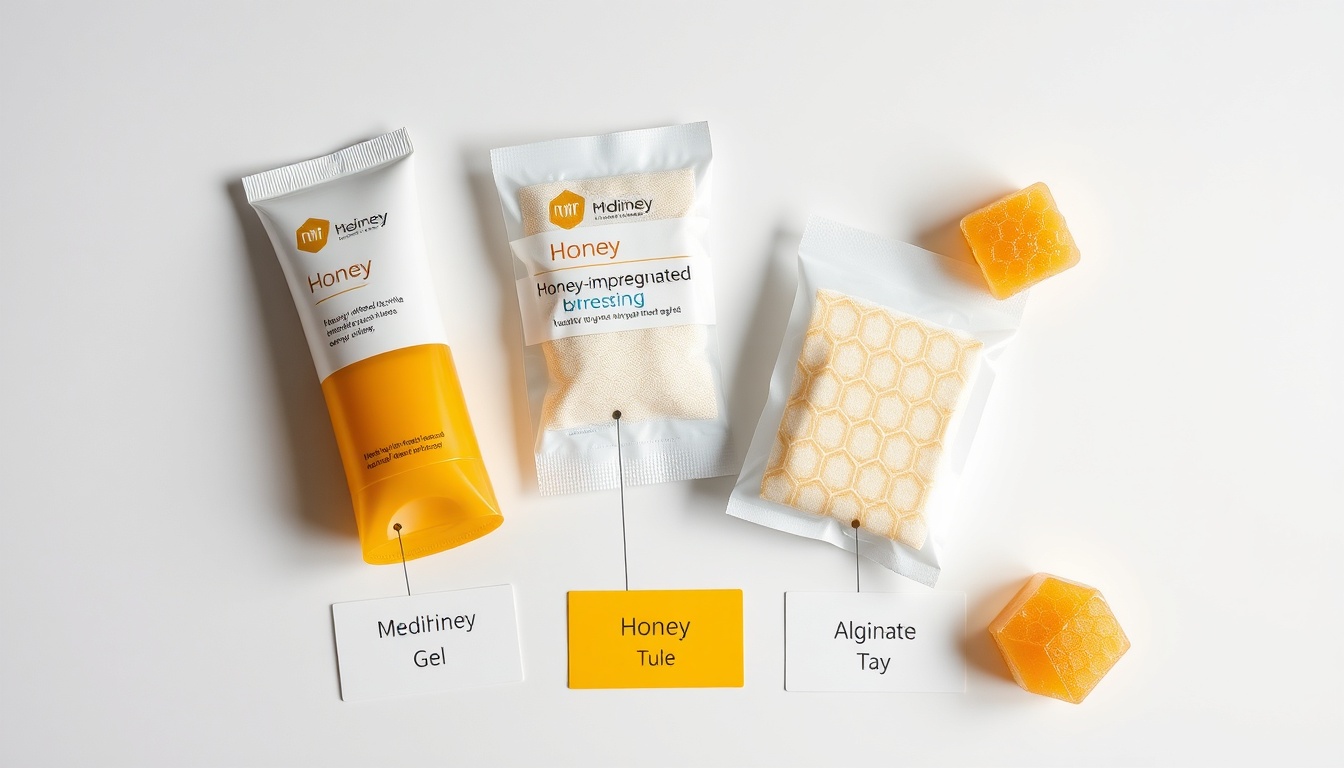
- **Delivery system:** Medical honey products are formulated as gels, hydrocolloid dressings, tulle dressings, or alginates that keep honey in contact with the wound bed for 2–7 days, provide appropriate absorption of exudate, and prevent leakage. Simply spreading raw honey on a wound and covering with gauze is ineffective by comparison and creates management difficulties
- **Regulatory oversight:** Medihoney (by Derma Sciences) is FDA 510(k) cleared as a medical device and is listed by the WHO Essential Medicines List for wound management. This is not marketing — it represents a regulatory determination of clinical safety and efficacy. Raw honey has no such oversight for wound use
- **Cost and access:** Medihoney and Activon products are available without a prescription at major pharmacies in the US, UK, and Australia. No dated retail price is cited for a tube of Medihoney Antibacterial Medical Honey. These products are increasingly covered by insurance when prescribed for DFUs
Pro Tip
If you have a diabetic foot wound and want to try honey therapy, ask your podiatrist, wound care nurse, or vascular surgeon specifically about Medihoney or Activon dressings. These are clinically supported, appropriately sterile medical products — not raw honey applied at home.
Comparing Medical Honey to Standard DFU Treatments
How does medical honey stack up against the standard toolkit of diabetic wound care? The comparison is nuanced — honey is not a replacement for comprehensive DFU management, but it has specific advantages in particular clinical scenarios:
- **vs Hydrogels (e.g., Intrasite, Purilon):** Hydrogels keep wounds moist and facilitate autolytic debridement, but have minimal antimicrobial activity. In infected or colonized DFUs, medical honey provides significantly stronger bacterial reduction. RCTs comparing Medihoney to hydrogel in DFUs consistently favor honey for healing rate and infection control. Hydrogels may be preferred in clean, dry wounds where moisture addition is the primary goal
- **vs Cadexomer iodine (e.g., Iodosorb):** Both are effective antimicrobials. A 2012 head-to-head trial found Medihoney reduced wound bioburden comparable to cadexomer iodine. Honey has the advantage of not causing systemic iodine absorption in large wounds — a relevant consideration for patients with thyroid conditions. Iodine-based products are well-established, but honey's biofilm-penetrating activity may give it an edge in heavily colonized chronic wounds
- **vs Silver dressings (e.g., Aquacel Ag, Mepilex Ag):** Silver has broad antimicrobial coverage but limited biofilm penetration and some tissue toxicity at high concentrations. Medical honey and silver have complementary mechanisms and are sometimes used in sequence (honey during active infection/biofilm phase, silver for maintenance). Silver dressings are not appropriate for long-term use on clean granulating wounds; honey can be used across all healing stages
- **vs Systemic antibiotics:** For DFUs with deep tissue infection, osteomyelitis, or systemic signs of infection, systemic antibiotics are non-negotiable. Medical honey is a topical adjunct, not a substitute for appropriate systemic antibiotic therapy in serious infections. However, honey's resistance to tolerance development means it remains effective against MRSA and other resistant organisms that no longer respond to available antibiotics
- **vs Standard debridement and saline:** Sharp debridement (removal of necrotic tissue) combined with saline cleansing remains a cornerstone of DFU care. Medical honey facilitates autolytic debridement (tissue self-digestion using wound enzymes) as a useful complement to, but not replacement for, sharp debridement
How Medical Honey Is Applied to Diabetic Wounds
If a wound care clinician has recommended medical honey for your diabetic wound, application and dressing changes are managed by that clinician (or a caregiver they train) as part of your overall treatment plan — this is not a procedure to perform based on this article alone. **Always follow your healthcare provider's specific instructions, which will differ based on your wound type and stage:**
- **Wound preparation** is done by a trained clinician, who cleans and debrides the wound (removes necrotic tissue) before honey is applied — this step should never be attempted at home
- **Product selection** — gel, tulle, or alginate honey dressings — depends on the wound's depth and how much fluid it is producing, and is a clinical decision made case by case
- **How much product is used, how it is applied, and how often the dressing is changed** are determined and adjusted by the clinical team based on how the wound responds, not a fixed schedule a patient should follow on their own. Unlike standard dressings, honey does not stick to wound tissue, so changes are usually less painful than with gauze
- **A mild, brief stinging sensation** on first application is common and typically resolves within minutes. Diabetic patients with neuropathy may not feel this even when it is occurring, which is one reason the wound needs direct clinical monitoring rather than relying on pain as a signal
- **Treatment duration and whether the approach is working** are judgments the clinical team makes over the course of care — trials have run honey treatment for 8–16 weeks, with reassessment typically built in within the first several weeks if a wound is not responding
Critical Safety Rules for Diabetic Patients
Diabetic foot wounds can deteriorate very rapidly — hours to days. The following warning signs require **immediate medical attention**, not home wound care:
- **Signs requiring emergency care:** Fever or chills (systemic infection); wound rapidly expanding in size, depth, or redness; black or dark purple tissue in the wound (gangrene); foul odor from the wound; red streaks extending from the wound (lymphangitis); swelling that spreads up the foot or ankle; wound exposing bone, tendon, or joint capsule; blood sugar that becomes suddenly unstable without dietary change near the time the wound appeared
- **Never delay medical care:** Diabetic foot infections can progress from superficial to limb-threatening in 24–48 hours. Honey applied at home will not stop a deep tissue infection or osteomyelitis. If you are unsure whether your wound needs medical attention: go get medical attention. The cost of an unnecessary clinic visit is vastly lower than the cost of delayed treatment for a worsening DFU
- **Always check blood sugar:** Any wound or infection can cause blood sugar fluctuations. Monitor blood glucose more frequently during wound treatment and report significant changes to your diabetes care team
- **Do not use raw honey from the pantry:** As detailed above, raw honey lacks sterility verification and standardized antimicrobial activity. For diabetic wounds, use only FDA-cleared or appropriately regulated medical honey products
- **Work with a wound care team:** Effective DFU management typically requires a multidisciplinary team: podiatrist, vascular surgeon, infectious disease specialist, diabetologist, and wound care nurse. Medical honey is one tool in this team's kit — not a standalone treatment strategy
- **Allergies:** People with bee or honey allergies should not use honey dressings. Those with propolis sensitivity should use Leptospermum-based products (minimal propolis) rather than complex floral honey products
What Type of Honey Has the Most Evidence for Wounds?
Not all honey is equal for wound care. The research points clearly to specific types:
**Manuka honey (Leptospermum scoparium)** ($39.99, UMF 10+) has the largest clinical evidence base for wound care. Its antibacterial activity is partially non-peroxide — driven by methylglyoxal (MGO) — which remains effective even when the hydrogen peroxide activity of most honeys is neutralized by wound fluids. See our manuka honey benefits guide for full detail on MGO and UMF grading. Medical-grade manuka honey (as in Medihoney, Activon) is the most commonly studied honey type in DFU clinical trials.
**Tualang honey (Koompassia excelsa, Malaysia)** has shown promising results in small clinical trials for DFUs and burns, with several studies from Malaysian universities showing healing rates comparable to silver sulfadiazine. Limited but growing evidence.
**Gelam honey (Melaleuca cajuputi, Malaysia)** has demonstrated significant anti-inflammatory activity in cell studies relevant to wound healing. Early clinical data is promising but limited to small studies.
**New Zealand bush honey** (from Leptospermum species other than L. scoparium) has standardized antibacterial activity and is used in some medical honey products. Evidence base is smaller than standard manuka.
**What to avoid for wounds:** Raw clover honey ($9-15), wildflower honey ($13-24), or any non-standardized honey has no evidence for wound use and potential for harm through contamination. These varieties are excellent for dietary use and cooking, but for wound healing specifically, medical-grade standardization matters more than floral source.
For detailed comparison of honey types with antibacterial activity, see our honey wound healing guide and manuka honey guide.
Practical Considerations: Cost, Access, and Insurance
Medical honey products are more accessible than many people realize:
- **Over-the-counter availability:** Medihoney products are available at CVS, Walgreens, and Amazon without a prescription. A 50g tube of Medihoney Antibacterial Medical Honey costs approximately $15–25. Activon Tulle dressings are available from specialty wound care suppliers and some pharmacies
- **Insurance coverage:** When prescribed for a diagnosed DFU by a licensed clinician, Medihoney and similar medical honey products are covered by Medicare (under the "surgical dressings" benefit) and many private insurers. Ask your wound care nurse or podiatrist about prescription options
- **Dressing changes at home vs clinic:** For stable, improving DFUs, wound care clinicians often train patients and caregivers to perform honey dressing changes at home between clinic visits. This reduces cost and appointment burden. Home management requires complete wound kit: gloves, sterile gauze, secondary dressing, and clinical instruction
- **Frequency reduces total cost:** Honey dressings often require fewer changes than conventional dressings (typically every 2–3 days vs daily for some standard dressings). While per-unit cost is higher than gauze, the total cost per healed wound may be lower when clinician time and visit frequency are factored in