The Micro-Duchy Paradox
Luxembourg is the smallest country in the EU that is not an island or city-state — 2,586 km², smaller than Rhode Island — and by most measures the EU's wealthiest nation per capita, with GDP per capita consistently exceeding €80,000, higher than Germany, the Netherlands, and France. It sustains an estimated 1,800–2,500 registered beekeepers managing approximately 20,000–30,000 colonies, producing a national honey output of perhaps 300–500 tonnes per year.
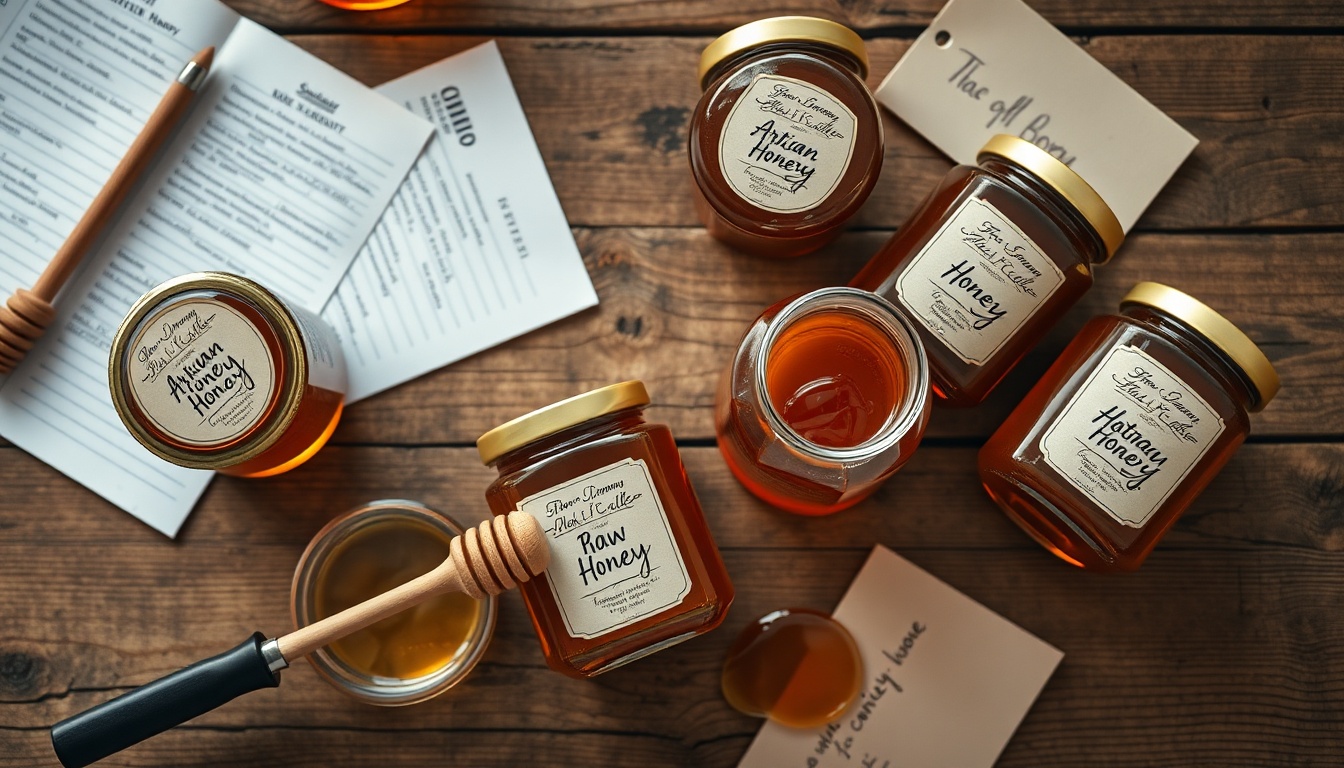
That volume is consumed almost entirely within Luxembourg's borders. The Micro-Duchy Paradox: Luxembourg's high per-capita income makes domestic artisanal honey by the jar financially accessible to the average resident, eliminating the market pressure to export at wholesale commodity prices. A Luxembourg artisanal beekeeper earns more per kilogram selling directly to neighbours than any export broker would pay. The result is a honey sector that operates as a premium domestic luxury rather than a traded commodity — economically invisible to international markets, yet producing some of Western Europe's most carefully tended artisanal varieties.
The paradox extends to scale: most of Luxembourg's approximately 1,800–2,500 registered beekeepers maintain fewer than 10 hives each. Professional large-scale apiculture is financially impractical in a country where agricultural land prices are among the highest in the EU. Beekeeping in Luxembourg is structurally a skilled hobby and small-farm supplement, practised with modern extraction equipment, Oxalic acid Varroa treatments, and ASTA-coordinated colony health monitoring.
Oesling and Gutland: Two Landscapes, Two Honey Terroirs
Luxembourg's geology divides the country into two dramatically different zones along a northeast-southwest line roughly through Ettelbruck. The Oesling occupies the northern third: a continuation of the Belgian and German Ardennes, built on ancient Devonian schist and quartzite that weathers to acidic, nutrient-poor soils. The Gutland (literally 'good land') covers the southern two-thirds: Triassic sandstone and Jurassic limestone producing deeper, more fertile soils that have supported mixed farming and viticulture since Roman settlement.
Oesling honey reflects its substrate. The acidic heathland and oak-beech forest of the Our, Sûre, and Wiltz river valleys produce wildflower honey with complex mineral-forest character — contributions from white clover, bramble, forest linden, and, in the remaining Calluna vulgaris heathland patches, late-summer heather honey. Oesling heather honey shares the thixotropic gel structure of Belgian Fagnes and Irish Connemara heather honey — a consequence of colloidal protein in Calluna nectar — though volumes are small and production varies significantly by year.
Gutland honey is typically lighter and more floral. Linden (Tilia platyphyllos and T. cordata) is the prestige Gutland variety: pale amber to golden, minty-menthol finish, crystallises slowly. Luxembourg City's parks and avenues are lined with linden trees, making city-apiaries reliable linden producers from late June through July. The agricultural Gutland also yields white clover honey and spring blossom honey from apple, cherry, and plum orchards in the Moselle and Sure valleys.
Get the Honey Buyer's Cheat Sheet (free PDF)
16 varieties on one page — color, flavor, best use and what a fair price looks like — from the 304 honeys we track.
Müllerthal: Luxembourg's Little Switzerland
The Müllerthal region — officially the 'Petite Suisse luxembourgeoise' (Little Switzerland of Luxembourg) — is a sub-region of eastern Luxembourg centred on the Sûre/Black Ernz river gorge between Echternach and Beaufort. Dramatic Triassic sandstone formations, eroded into pillars, arches, and caves, create a landscape unique in northwestern Europe. The sheltered gorge microclimate is measurably warmer and more humid than the surrounding plateau — 2–3°C above ambient in the deepest valleys — supporting plant communities not found elsewhere in Luxembourg.
Müllerthal wildflower honey reflects this botanical singularity. The gorge flora includes unusual fern, moss, and early-spring woodland species alongside the standard Gutland meadow plants; the combination produces a wildflower honey with complex, slightly resinous notes absent from plateau equivalents. Echternach, Luxembourg's oldest town (founded by the Northumbrian monk Saint Willibrord in 698 CE), hosts beekeeping traditions stretching back to the medieval monastery's honey production. The town's annual UNESCO-listed Echternach Dancing Procession (Springprozession) takes place each Whit Tuesday — the same mid-May period when the Müllerthal's wildflower bloom peaks.
Müllerthal honey is sold primarily at the Echternach farmers' market and directly from local beekeepers. No commercial scale producer operates in the gorge; the terrain prohibits mechanical hive transport and the tourist-season market absorbs all local production at premium prices (for artisanal varieties).
Luxembourg City and Urban Beekeeping
Luxembourg City is a UNESCO World Heritage Site (inscribed 1994) for its old town and spectacular cliff-top fortifications — the Bock, the Corniche, and the Casemates. Since 2015, Luxembourg City has seen a marked expansion in urban beekeeping: rooftop apiaries on apartment buildings, private gardens in the Kirchberg plateau district (home to EU institutions including the European Court of Justice, European Investment Bank, and the European Parliament's secretariat), and communal garden hives in the Bonnevoie and Rollingergrund quarters.
Luxembourg City urban honey is predominantly linden honey from the capital's dense avenue tree cover and the Merl Park — pale amber, intensely floral-minty, produced in the narrow late-June to mid-July window when Tilia blooms. The city's 125,000 residents and 70,000+ daily commuters from France, Germany, and Belgium sustain a premium local food market that absorbs every jar produced at prices that would be exceptional in any neighbouring country.
The concentration of EU institutions and high-income international residents in Luxembourg City has created an unusually sophisticated consumer base for artisanal honey. ASTA (the national beekeeping federation) reports increased interest from urban professionals in starter apiaries and beekeeping courses — a trend parallel to Belgium's urban-apiculture growth documented by CARI, and to the Amsterdam and Brussels urban hive expansions of the 2010s.
The Dreiländereck: Stateless Honey
The Dreiländereck ('three-country corner') near Schengen village on the Moselle river is the tripoint where Luxembourg, Germany (Rhineland-Palatinate), and France (Lorraine/Grand Est) meet. The village of Schengen — population ~460 — is where the 1985 Schengen Agreement was signed aboard the river cruiser MS Princess Marie-Astrid, abolishing passport controls across what would become the Schengen Area. Bees observe no such formality.
Colonies maintained in the Moselle valley near Schengen forage freely across all three national territories within a standard 2–3 km radius. Vineyard-adjacent flora — linden avenue trees lining the Moselle wine road, hedgerow elderflower, orchard blossom from the German Saarland side — mixes with Luxembourg wildflower meadow and French Lorraine plateau contributions in a single jar. The resulting honey is jurisdictionally Luxembourg's (if the hive is placed there) but botanically stateless.
The Moselle wine region itself provides an interesting seasonal honey context: the Riesling, Pinot blanc, Müller-Thurgau, and Auxerrois vines grown along Luxembourg's 42 km of Moselle riverbank flower briefly in May–June, but grape blossom nectar is negligible as a honey source — the real value to bees is the vineyard habitat's diverse hedgerow, cover-crop, and roadside flora. Moselle honey from Luxembourg is typically a multifloral wildflower with linden contributions, not a grape-blossom monofloral.
ASTA, ALVA, and the Lëtzebuerger Hunneg Label
Luxembourg's national beekeeping federation, ASTA (Association des Sociétés et Syndicats d'Apiculture du Grand-Duché de Luxembourg), coordinates member societies across all cantons. ASTA provides queen rearing support, Varroa treatment guidance (Oxalic acid and Apivar strip protocols aligned with German and Belgian veterinary frameworks), annual colony-loss surveys contributing to COLOSS European data, and the national honey show (Concours de Miel). ASTA is a member of Apimondia (International Federation of Beekeepers' Associations) and coordinates closely with Belgian (SRABE/KOWB), German (Deutscher Imkerbund), and French (UNAF) federations.
Food safety oversight rests with ALVA (Administration luxembourgeoise vétérinaire et alimentaire), which enforces EU Directive 2001/110/EC on honey via Luxembourg's Règlement grand-ducal du 24 janvier 2007 sur les produits apicoles. ALVA conducts HMF (hydroxymethylfurfural) testing, moisture content verification, diastase activity checks, and C4 sugar adulteration screening — the same parameter suite as Belgium's FAVV and the Netherlands' NVWA. Luxembourg's small production scale means ALVA inspects a much smaller honey sector than its EU neighbours, but regulatory standards are identical.
Artisanal Luxembourg producers increasingly use 'Lëtzebuerger Hunneg' (Luxembourgish: Luxembourg Honey) or 'Miel luxembourgeois' labelling to distinguish locally produced honey from the imported honey that dominates Luxembourg supermarket shelves — primarily from Eastern Europe (Romania, Hungary, Poland) and South America (Argentina). No PDO or PGI designation exists for any Luxembourg honey variety as of 2026. The small domestic production volume and the absence of an export market have reduced the commercial incentive to pursue GI protection, though the Oesling wildflower and Müllerthal varieties would have credible GI arguments based on botanical and geographic distinctiveness.