The 1929 Lateran Treaty and the Enclosed-Garden Microstate Frame
Vatican City State (Stato della Città del Vaticano) is the smallest sovereign state on Earth by both area (0.49 km², a 44-hectare enclave inside the Italian capital) and population (approximately 825 as of 2026, of whom roughly half are Vatican citizens and the rest are residents holding diplomatic-level passports). It was created on 11 February 1929 by the Lateran Treaty (Patti Lateranensi) signed between Cardinal Secretary of State Pietro Gasparri for the Holy See and Italian Prime Minister Benito Mussolini for the Kingdom of Italy — three legal instruments that together resolved the Roman Question that had been open since the 1870 dissolution of the Papal States. The Treaty proper recognised Vatican City as a sovereign state under the temporal authority of the reigning Sovereign Pontiff; the Concordat regulated the relationship between the Catholic Church and the Italian state; and the Financial Convention compensated the Holy See for the loss of the Papal States territory.
The Lateran Treaty established two categories of property of relevance to apiculture and any future production-of-goods question. The first is Vatican City itself — the 0.49 km² walled enclave on the right bank of the Tiber comprising St. Peter's Basilica and Square, the Apostolic Palace, the Vatican Museums and Library, the Vatican Gardens (~23 ha, the largest single open-space inside the walls), the Pontifical Ethiopian College, the Governorate building, the Mater Ecclesiae monastery, and the various administrative offices. The second is the set of properties with extraterritorial status outside the walls (Article 13–16 of the Treaty), the most apiculturally important of which is the Pontifical Villas at Castel Gandolfo (Ville Pontificie di Castel Gandolfo) — 55 hectares in the Alban Hills 25 km south-east of Rome, encompassing the Apostolic Palace of Castel Gandolfo, the Villa Barberini gardens (built on the foundations of Emperor Domitian's 1st-century villa), the Villa Cybo, and the Pontifical Farm (Borgo Laudato Si' since 2023). The Pontifical Farm is the operational agricultural surface — historically supplying milk, eggs, vegetables, olive oil, and honey to the Pope's household and to the apostolic charity programmes — and the location of the Vatican's only working apiary.
Practical consequence for honey: Vatican City has no domestic honey-composition standard, no national food-quality testing laboratory, no producer federation, no PDO or PGI designation, and no published apicultural register. Italian food law (Decreto Ministeriale 25 luglio 2003 'Disposizioni nazionali in materia di produzione e commercializzazione del miele') and EU Council Directive 2001/110/EC (as amended by Directive 2014/63/EU) — composition limits on moisture (≤20%), HMF (≤40 mg/kg), diastase activity, electrical conductivity (≤0.8 mS/cm for blossom honey, ≥0.8 mS/cm for honeydew), sugar profile — apply de facto. The legal mechanism is the Lateran Treaty's jurisdictional-cooperation framework (Vatican State courts have jurisdiction over Vatican territory but Italian state inspection regimes apply to goods crossing the customs interface) and the 2009 Monetary Agreement between the EU and the Vatican City State (Council Decision 2009/895/EC) that bound the Vatican to apply EU technical standards on goods moving into the broader EU market in exchange for euro-zone access. Analytical testing for any sample produced at the Castel Gandolfo apiary would in practice run at CRA-API Bologna (the Italian apicultural research centre, now part of CREA — Consiglio per la ricerca in agricoltura e l'analisi dell'economia agraria) or at IZS Lazio e Toscana (the regional Istituto Zooprofilattico Sperimentale serving Lazio). This is the cluster's enclosed-garden Adopted-by-Reference variant — distinct from Andorra (Spain + France via 1278 Paréages), Liechtenstein (Switzerland via 1924 Customs Treaty), San Marino (Italy + EU via 1862 Treaty + 1991 Cooperation Agreement), and Monaco (France via 1861 Treaty + 1963 Customs Convention) in that the adopted standard is not transposed via a customs union (Vatican has no customs barrier with Italy in the conventional sense — the Treaty creates a unique extraterritorial-and-cooperation regime instead) but via the Lateran Treaty's jurisdictional-cooperation mechanism plus the 2009 Monetary Agreement's EU-technical-standards binding clause.
The Castel Gandolfo Pontifical Villas Apiary: Pope Benedict, Pope Francis & the Borgo Laudato Si'
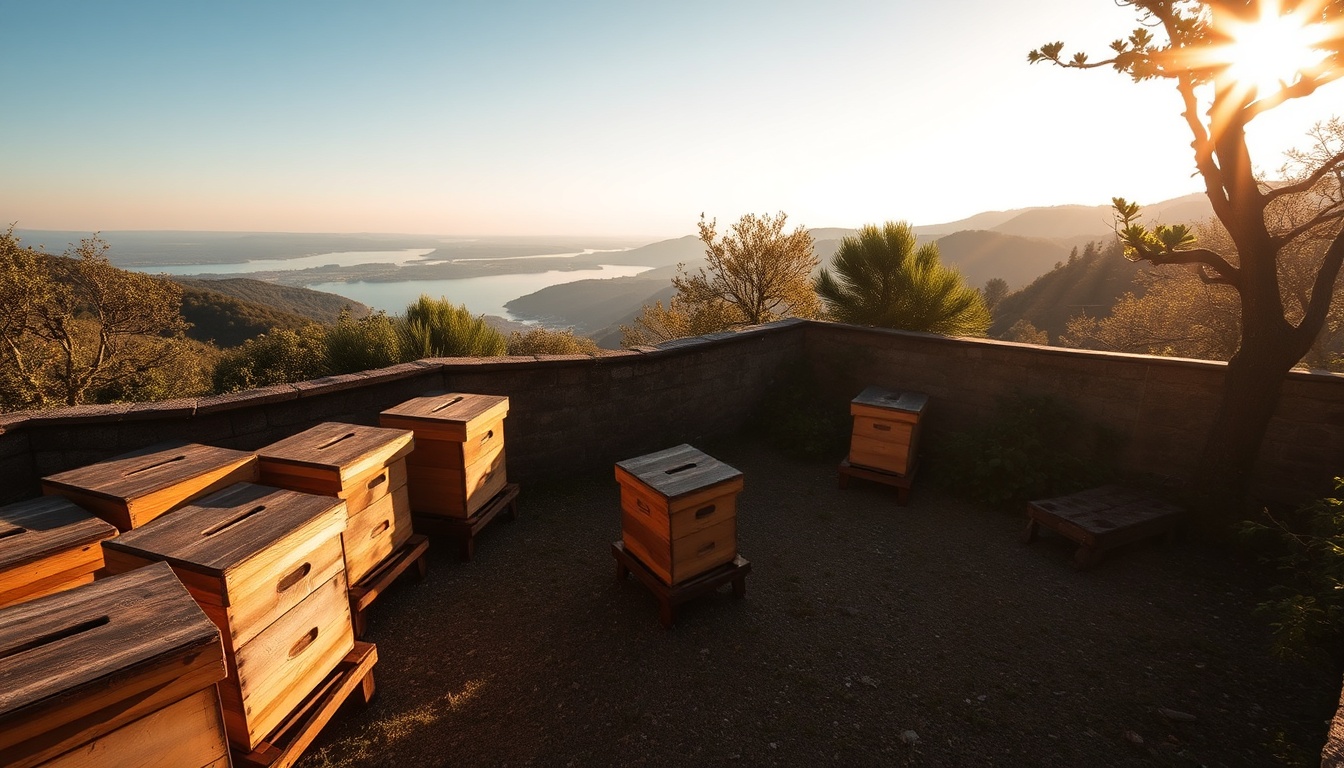
The Vatican's working apiary is sited at the Pontifical Farm in the grounds of the Castel Gandolfo Pontifical Villas, not inside the Vatican walls themselves. The Castel Gandolfo property has been the papal summer residence since Pope Urban VIII (Maffeo Barberini) acquired the Castello Savelli in 1623 and converted it into the Apostolic Palace beginning 1626. The agricultural use of the surrounding 55 hectares dates to the same period — the Pontifical Farm has supplied the Holy See's household with dairy, eggs, vegetables, olive oil, and honey for more than three centuries. The apiary itself is small in absolute terms — published reporting from Vatican Radio and the Vatican Gardens information service places the active hive count in the low double digits (typically 15–30 colonies depending on season and queen-replacement cycle) — and produces an estimated 200–600 kg of honey per year, of which the entirety is consumed within the apostolic household, gifted to visiting heads of state and ecclesiastical delegations, or distributed through the Pope's personal almsgiving (the Elemosineria Apostolica, today the Dicastero per il Servizio della Carità).
Pope Benedict XVI (2005–2013) was the first modern pope to highlight the Castel Gandolfo apiary in his weekly Castel-Gandolfo audiences and to receive the apicultural component of the Pontifical Farm's annual report personally — the bees at the Villas were photographed extensively by the Vatican photographic service during his pontificate and several feature interviews with the long-serving Pontifical Farm beekeeper appeared in Italian Catholic press (Famiglia Cristiana, Avvenire) during the 2005–2013 period. Pope Francis (2013–2025) deepened the institutional commitment: his 2015 encyclical Laudato Si' on Care for Our Common Home named pollinator conservation explicitly (paragraph 34, in the broader context of biodiversity loss) and was followed in 2023 by the formal renaming of the Castel Gandolfo agricultural project as the Borgo Laudato Si' under the direction of Cardinal Fabio Baggio and the Dicastero per il Servizio dello Sviluppo Umano Integrale. The Borgo Laudato Si' is structured as an educational and demonstration site for ecological agriculture — including beekeeping as an integral component of the integrated-pollinator-management curriculum — and is open to the public for guided tours, lectures, and short-term residencies on a model comparable to Slow Food's Università di Scienze Gastronomiche in Bra, Italy.
A second, smaller apicultural surface exists inside the Vatican walls themselves: the Vatican Gardens (Giardini Vaticani, ~23 ha) host one or two demonstration hives placed periodically for educational and biodiversity-monitoring purposes, primarily on the western slope above the Vatican Radio buildings and behind the Mater Ecclesiae monastery. These hives are not commercially productive and are not part of the Pontifical Farm's harvest accounting; they exist to support the Vatican Museums' guided-garden-tour programme and the Pontifical Academy of Sciences's pollinator-monitoring research collaborations with Italian institutions (CREA-API Bologna, La Sapienza Università di Roma's biology department, the Italian Society of Apidology SIAEC). No Vatican-Gardens honey is ever commercialised.
Get the Honey Buyer's Cheat Sheet (free PDF)
16 varieties on one page — color, flavor, best use and what a fair price looks like — from the 304 honeys we track.
The Roman Castelli Forage Continuity, Volcanic Soil & Mediterranean Sclerophyll
The Castel Gandolfo Pontifical Villas occupy the western rim of the Lake Albano caldera (Lago Albano, the larger of the two crater lakes of the extinct Volcano Laziale) at an elevation of approximately 425 metres in the Colli Albani / Castelli Romani volcanic complex — a Pleistocene-active volcanic massif 25 km south-east of Rome that ceased eruptive activity roughly 36,000 years ago and has produced the deeply mineralised volcanic-tephra soils that drive the Castelli Romani DOC viticulture (Frascati, Marino, Velletri, Genazzano, Colli Albani, Cori, Castelli Romani, Zagarolo) and the classic Roman-area olive culture. The forage zone surrounding the Villas is structurally Mediterranean Sclerophyll with strong volcanic-soil signatures: Quercus ilex (holm oak) and Quercus pubescens (downy oak) in the woodland canopy, Olea europaea (olive) on the warm south-facing slopes, Vitis vinifera (grape vine) in the surrounding DOC zones, Castanea sativa (sweet chestnut) at slightly higher elevation in the Faete and Iano sub-zones, and the standard Mediterranean garrigue understory of Rosmarinus officinalis (rosemary), Thymus vulgaris (thyme), Lavandula angustifolia (lavender), Cistus albidus and Cistus monspeliensis (rockrose), Helichrysum italicum (curry plant), and the volcanic-soil-loving Spartium junceum (Spanish broom).
The bloom calendar runs long: rosemary and almond in February–April; cistus and citrus in March–April (the Castelli Romani volcanic soils support a small but distinctive citrus pocket on the warmest aspects); chestnut in inland Castelli Faete and Iano in May–June; lavender, thyme, and the volcanic-soil broom in May–July; lime / linden (Tilia × europaea) in the urban-edge Castelli plantings in June; Spanish broom and the late garrigue herbs in July; and the classic Lazian millefiori window from May through August. Castelli Romani-area apiaries and the Pontifical Farm apiary therefore work the same broad multifloral profile: a Lazian millefiori dominated by holm oak nectar-and-honeydew (during spring and autumn flow events), olive blossom (May–June), wild garrigue herbs, chestnut at the higher elevations, and a small but distinctive tail of citrus and almond from the warmer pockets. The single-source Castel Gandolfo honey, when it appears in the Pontifical Farm annual report, is described in the same terms: a Lazian millefiori with a Castelli-Romani volcanic-soil mineral signature, comparable to the Miele del Lazio category recognised in the Italian Marchio Collettivo Geografico framework but not registered as a PDO or PGI.
The bee subspecies at Castel Gandolfo is Apis mellifera ligustica — the Italian honey bee, the regional native subspecies that runs continuously from the southern Alps through the Lazian Apennines and on into the Tyrrhenian coastal plain and Sicily. Apicultural disease and pest pressure on the Castelli Romani is the same as in surrounding Lazio: Varroa destructor management is the perennial concern, the Asian hornet (Vespa velutina nigrithorax) was first detected in central Italy from approximately 2018 and is an active surveillance focus for the Pontifical Farm, and routine surveillance for European foulbrood and American foulbrood is conducted via IZS Lazio e Toscana on a fee-for-service basis the same way Italian apiaries in the surrounding province register with the Anagrafe Apistica Nazionale.
Why No Jar of Honey Can Be Commercially Marketed as 'Made in Vatican City'
The Vatican City State is structurally outside the EU agricultural-quality framework. It is not an EU member, is not in the European Economic Area, has no Article 8-style geographical-indication protocol with the EU, and produces an aggregate national output of agricultural goods so small that no commercial-volume PDO or PGI registration would ever produce a positive cost-benefit. The 2009 Monetary Agreement that gives the Vatican euro-zone access requires the Vatican to apply the relevant EU technical standards on goods that move into the broader EU single market, but it does not extend the EU's PDO/PGI framework to Vatican-origin products: under EU Regulation 1151/2012 a producer group in Vatican City could in principle file a cross-border PDO/PGI joint application with an Italian producer group covering a contiguous forage zone (the Castelli Romani DOC complex would be the natural counterparty), but no such application has been filed for any Vatican-origin honey or other agricultural product and the small-producer economics make one structurally unlikely.
The practical reality is even stronger than the legal frame suggests: the Castel Gandolfo Pontifical Farm produces honey for the Pope's household, for diplomatic gifts, and for the Elemosineria Apostolica's charitable distribution — none of those channels passes through commercial retail and none generates a labelled jar that a Roman or international consumer can purchase. The Vatican Pharmacy (Farmacia Vaticana, located inside the city walls and accessible to Vatican State employees, accredited journalists, and pre-arranged visitors holding a Holy See entrance permit) does not stock honey from the Pontifical Farm; it stocks Italian-origin pharmaceutical-grade honey and over-the-counter Italian commercial honey brands. The Vatican Supermarket (Annona, the staff supermarket inside the Governorate building) similarly stocks standard Italian commercial honey rather than Pontifical-Farm-origin honey. The honey gifted to visiting heads of state, when it is honey, is sometimes from the Pontifical Farm directly and sometimes from Italian producers selected for the occasion — there is no consistent Vatican-state commercial-honey product line.
Practical consumer guidance: there is no honey to buy that can credibly be labelled 'Made in Vatican City' or 'Vatican honey' in commercial retail. Anything sold under that label outside the apostolic-charity and diplomatic-gift channels is either misbranded Italian-origin honey or a commemorative product not derived from the Castel Gandolfo apiary. Visitors to the Pontifical Villas at Castel Gandolfo on a Borgo Laudato Si' guided tour may purchase commemorative jars from the Borgo Laudato Si' visitor centre — these are real jars from the Pontifical Farm apiary in small quantities but are commemorative-tier rather than commercial-volume products. The closest reliably commercial substitute is high-quality Castelli Romani-area Italian honey from a registered Lazian apiary (the Federazione Apicoltori Italiani Lazio section directory is the lookup) — botanically identical because the forage zone is continuous across the Castelli Romani, and regulatorily covered by the same Italian DM 25/07/2003 + EU Directive 2001/110/EC framework that the Vatican adopts by reference.
Where Vatican Apiculture Sits in the European Microstate Cluster
Vatican City is the cluster's enclosed-garden case and the smallest production base of the five. The four established European microstates with shipped honey guides — Andorra (~80,000 population, ~1,500 colonies, 12–20 t/year, Pyrenean-mountain archetype), Liechtenstein (~40,000, ~600 colonies, 4–7 t/year, Rätikon-Alpine archetype), San Marino (~33,000, 200–400 colonies, 2–5 t/year, sub-Apennine archetype), and Monaco (~38,400, under 50 colonies, ~1 t/year, urban-microstate-on-a-coastline archetype) — each have a named domestic apicultural community, a regional federation membership pathway, and a measurable commercial honey output. Vatican City has none of those: 825 residents, 15–30 colonies in a single Pontifical Farm apiary on extraterritorial property 25 km outside the political boundary, 200–600 kg/year produced for non-commercial channels, and zero registered domestic commercial producers. It extends the Adopted-by-Reference taxonomic frame to its smallest possible scale: a single apiary on extraterritorial property under a Treaty-and-Monetary-Agreement adoption mechanism with no customs interface and no commercial market.
The taxonomic addition is non-trivial because it tests the cluster's frame against its hardest case. If Adopted-by-Reference can describe a 0.49 km² state with no customs union and no commercial honey market — only an extraterritorial Pontifical Farm whose annual harvest never enters the trade — then the frame is robust enough to apply to any microstate or small jurisdiction with a dependent regulatory regime. The cluster now spans five members across four regulatory inheritance mechanisms: Andorra (dual co-princedom + 1278 Paréages + 1993 EU Cooperation Agreement); Liechtenstein (1924 Customs Treaty with Switzerland + 1995 EEA membership); San Marino (1862 Treaty of Friendship + 1991 EEC Cooperation and Customs Union); Monaco (1861 Franco-Monégasque Treaty + 1963 Customs Convention); and Vatican City (1929 Lateran Treaty + 2009 EU-Vatican Monetary Agreement). The five forage zones — high Pyrenean (Andorra), Rätikon Alpine (Liechtenstein), sub-Apennine (San Marino), Mediterranean Riviera garrigue (Monaco), and Mediterranean Sclerophyll on Castelli Romani volcanic soil (Vatican / Castel Gandolfo) — are five distinct phyto-geographic zones each continuous with its surrounding national forage but distinct from the other four, demonstrating that the Adopted-by-Reference regulatory pattern works across a wide range of underlying biology.
Pope Francis's 2015 Laudato Si' encyclical and the 2023 Borgo Laudato Si' renaming of the Castel Gandolfo agricultural project are also the cluster's first instance of an explicit policy frame for the apiary itself: the Pontifical Farm beekeeping is positioned as integrated-pollinator-management demonstration and as a teaching site rather than as a production operation in the conventional sense, and the encyclical's explicit pollinator-conservation reference (paragraph 34) gives it institutional standing inside Catholic moral teaching. None of the other four microstate cases has this kind of explicit policy-level framing of its apicultural surface; the Vatican adds this dimension to the cluster.