About This Recipe
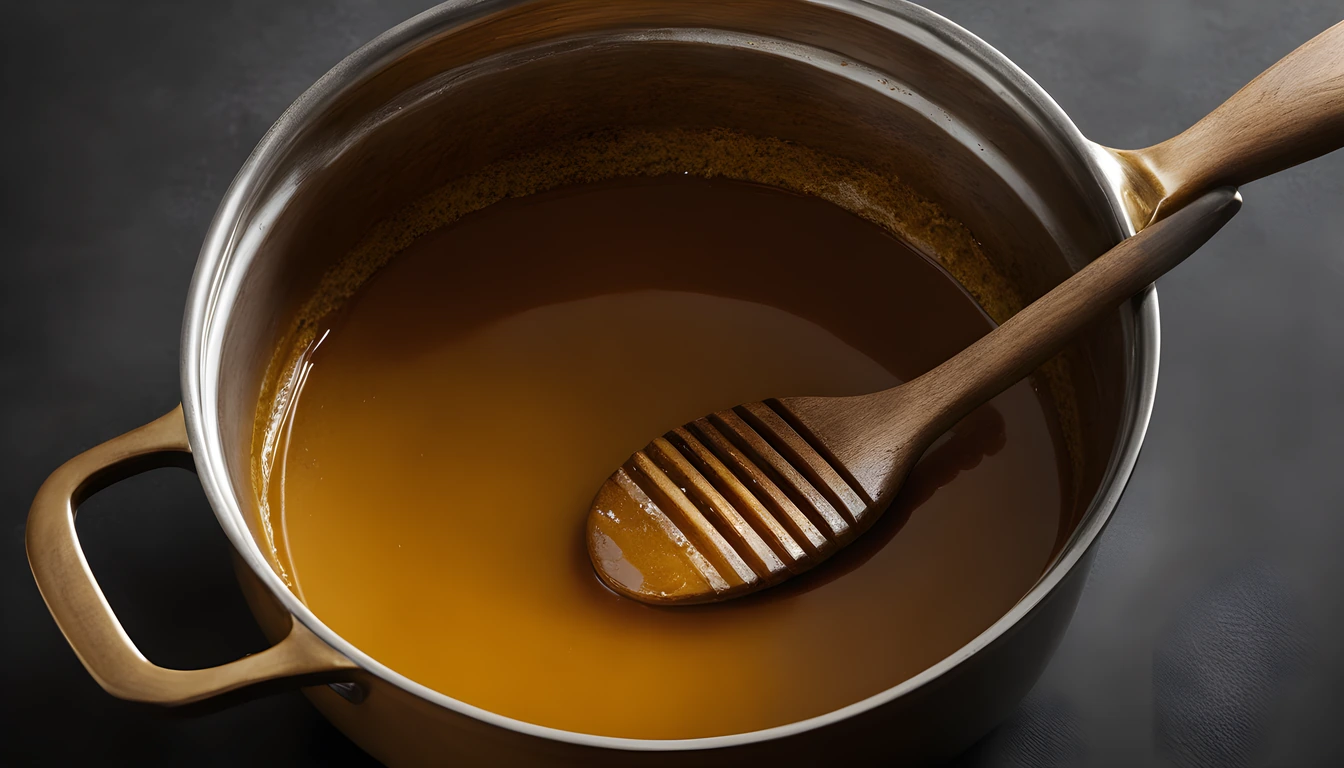
Honey and bourbon make a sweet, aromatic glaze, with yellow mustard and cider vinegar for tang. A small amount of brown sugar adds depth, then butter is whisked in off the heat for a smooth finish.
Brush thin layers over cooked ham or roasted vegetables near serving time. This recipe makes eight small glaze portions and uses a measured 80-proof bourbon input; it does not establish an alcohol-free result after simmering.
Recipe
Honey Bourbon Glaze with Yellow Mustard
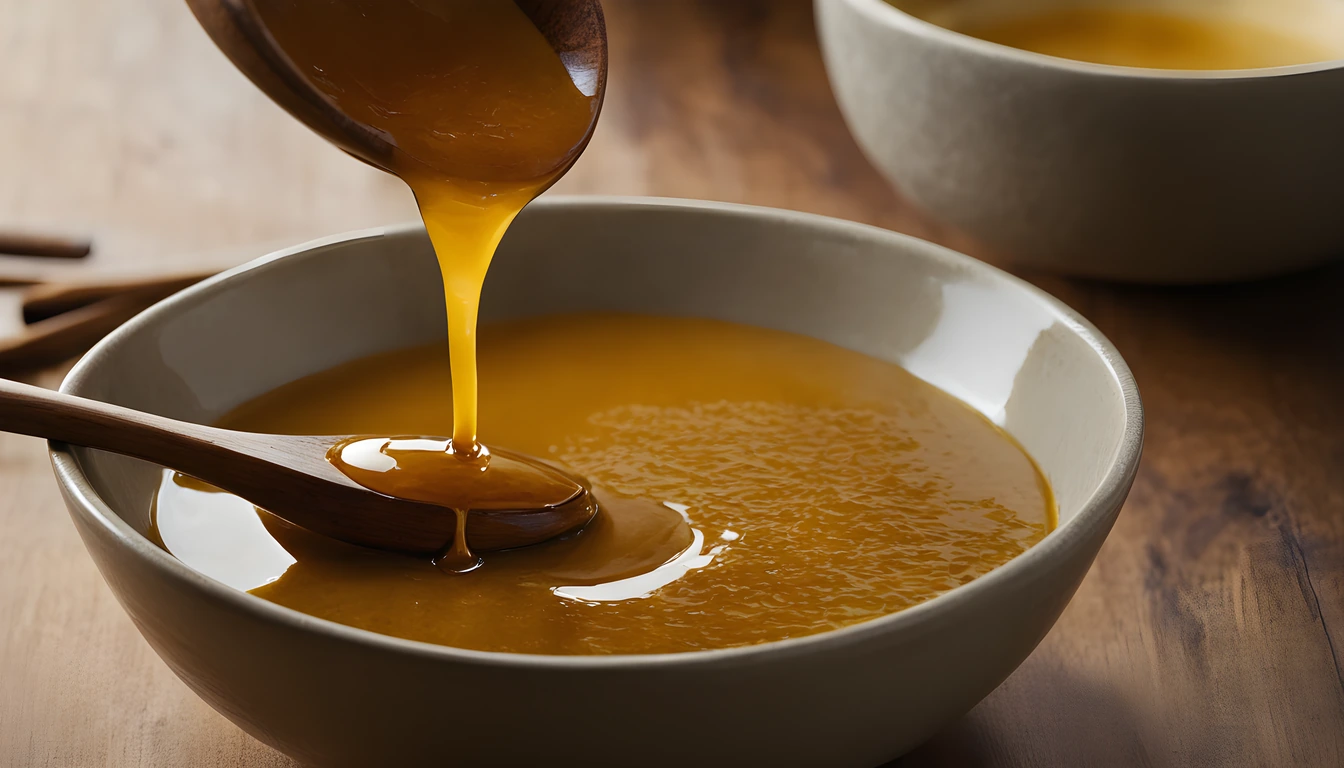
Honey, measured 80-proof bourbon and yellow mustard simmer into an amber finishing glaze. Brown sugar adds depth and butter gives a smooth finish; makes eight small portions.
8Ingredients
Yield: 8 servings
- 84 g honey
- 42 g 80-proof distilled spirit, using bourbon whiskey (40% ABV)
- 28 g brown sugar
- 14 g unsalted butter
- 15 g cider vinegar
- 10 g prepared yellow mustard
- 1 g table salt
- 0.5 g ground black pepper
Ingredient amounts scale; instructions show the original batch. Cooking times and pan sizes may need adjustment. Season to taste. Honey grams use US measures at 20°C and 17.5% moisture, a density estimate; weigh your honey for precision.
Instructions
- 1Combine away from flameMeasure the bourbon into a cool saucepan set away from any open flame. Add the cider vinegar, brown sugar, honey, mustard, salt, and pepper, then stir to combine.
- 2Simmer gentlySet the pan over medium-low heat and bring to a gentle simmer. Cook about 8 minutes, stirring often, until the glaze is smooth and lightly coats the back of a spoon. Do not flambé, and never pour bourbon from the bottle near a flame.
- 3Finish with butterPull the pan off the heat and whisk in the 14 g unsalted butter until glossy. Let the glaze stand 2 minutes to settle before brushing.
- 4Brush in thin late coatsBrush thin coats over already-cooked ham or roasted vegetables near the end of their time in the oven. Keep a clean serving portion aside before you start basting.
Estimated nutrition per serving
71.2 calories · 1.46 g fat · 12.22 g carbohydrate · 0.1 g protein · 64 mg sodium
Serving: 1 of 8 servings
Calculated from ingredient weights and USDA FoodData Central: 169640, 174815, 168833, 173430, 173469, 172234, 173468, 170931. Estimates use ingredient input weights; actual portions, brands and cooking losses vary. Omitted nutrient values are unavailable, not zero.
What this glaze is for
Use a few thin coats to give the food a sheen without leaving a heavy puddle of glaze. It can be brushed onto cooked ham near the end of its reheating schedule or tossed through roasted vegetables for the final minutes. Watch the color closely once the glaze is on a hot surface.
The glaze does not provide the cooking schedule for the food beneath it. Follow the complete ham or roast recipe for quantities, temperature and doneness; its ingredients are separate from this eight-portion sauce calculation.
Flavor intensity uses an editorial culinary scale: 1 is mild and 5 is bold. These are tasting suggestions, not laboratory measurements.
Sources: Using Honey in Cottage Foods (UC ANR); FoodSafety.gov: 4 Steps to Food Safety; FoodSafety.gov: Safe Minimum Internal Temperatures; USDA FoodData Central: broad 80-proof spirit reference.
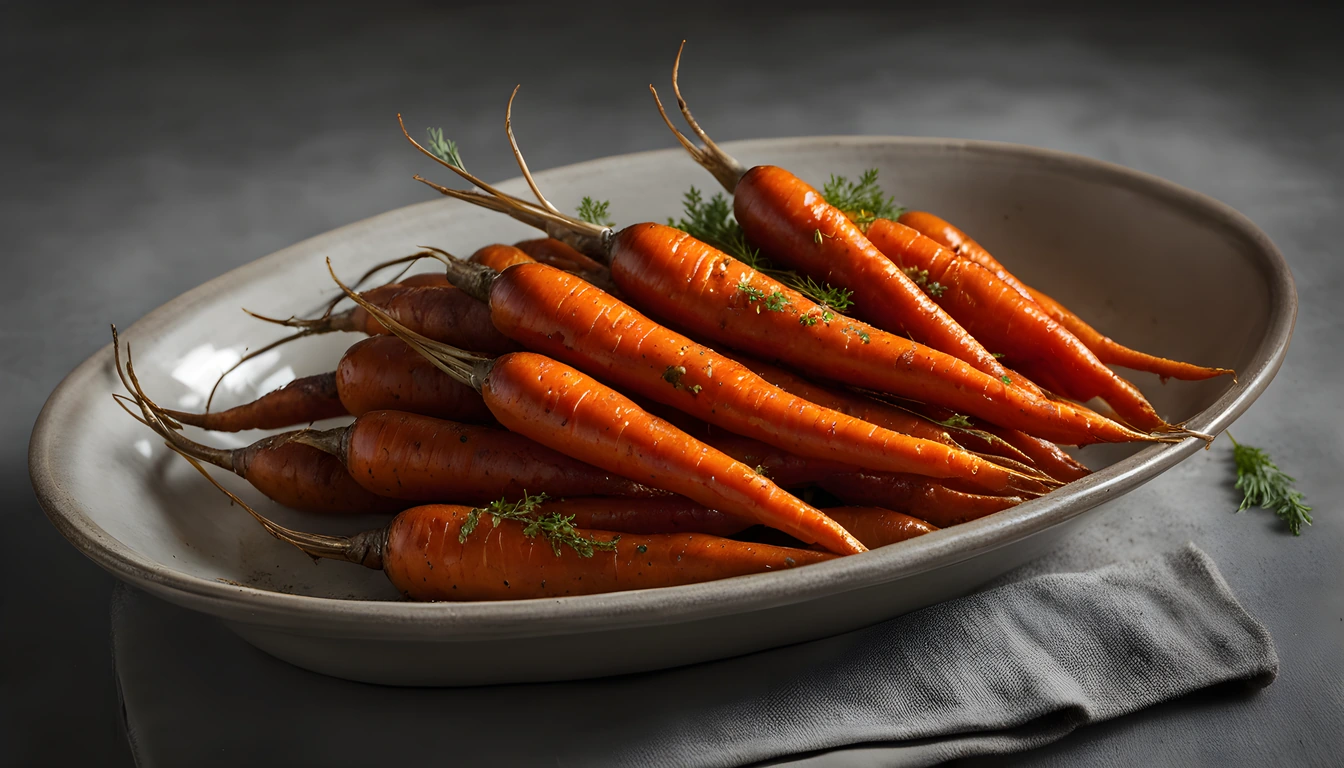
- Brush over roasted carrots, parsnips, or winter squash in the last few minutes of roasting.
- Use as a finishing coat on scored, already-cooked ham.
- Spoon sparingly over roasted pork loin at serving, not as a braise.
Pro Tip
Rewarm gently if the glaze becomes too thick to brush, and stir before applying another coat.
1 = mild, 5 = bold. Editorial pairing guidance, not laboratory measurements; jars vary.
- clover
- bourbon and mustard stay forward
- orange blossom
- brightens a ham glaze
- wildflower
- rounder, slightly floral
- buckwheat
- Dark honey aroma beside bourbon and mustard
Get the Honey Buyer's Cheat Sheet (free PDF)
16 varieties on one page — color, flavor, best use and what a fair price looks like — from the 304 honeys we track.
The Measured Bourbon Input
Use 42 g of bourbon at 80 proof, or 40% alcohol by volume. The USDA reference is a broad 80-proof distilled-spirit record that includes whiskey, not a bourbon-specific laboratory analysis. A different proof or sweetened flavored whiskey would change the ingredient estimate.
A short simmer does not show how much alcohol remains. No retention percentage has been measured or subtracted, and the nutrition calculation includes the full spirit input. Measure into the cool pan away from an open flame; the recipe has no flambé step.
Pro Tip
The 40% ABV refers to the bourbon before mixing, not the finished glaze.
Choosing the honey
Honey brings sweetness, flavor, and body, so the type matters more than the amount. Mild clover or orange blossom honey keeps the bourbon and mustard forward; buckwheat or wildflower pushes a darker, more assertive note. Crystallized honey is fine and simple to measure by weight.
The 84 g honey gives the glaze its main sweetness and floral aroma. The smaller 28 g brown-sugar portion brings a darker note beside the bourbon. Keep those written amounts for the base batch before adapting it to a particular food.
- Clover: mild, lets bourbon and mustard lead.
- Wildflower: rounder and slightly floral.
- Buckwheat: dark and strong; use if you want it to dominate.
Pro Tip
Weigh honey directly into the cool saucepan so none remains stuck in a measuring cup.
Storage and leftovers
Keep the clean, unused glaze in a shallow container and refrigerate within 2 hours. Use it within 3 days, and reheat leftovers to 165°F (74°C). Do not return a used basting brush or bowl to the clean container; that is how cross-contamination creeps in.
Treat the glaze as perishable once it has been out of the refrigerator, not as a shelf-stable jarred sauce. There is no jar shelf life for this recipe.
- Refrigerate unused clean glaze within 2 hours.
- Use within 3 days.
- Reheat any leftovers to 165°F.
- Never double-dip a used brush into the clean bowl.
Pro Tip
Spoon the amount you plan to baste into a separate small bowl before you start.
Reading the nutrition numbers
One serving is one-eighth of the finished glaze batch. The estimate includes all honey, sugar, butter, mustard and bourbon; it does not include ham or other food underneath. Actual sauce left on the pan or brush is unmeasured and has not been deducted.
These are ingredient-input estimates rather than measurements of the finished sauce. In particular, the amount of alcohol retained during simmering is unknown, so the calculation counts the full 42 g spirit input.
Pro Tip
Weigh the whole batch if you want to compare it against a spoonful portion.
Choosing the Honey
Use Clover honey or Wildflower honey or Buckwheat honey for the flavor described in this recipe. See our honey selection guide for other culinary choices.