What Makes Honey the Perfect Glaze
A glaze is a thin, glossy coating applied to food during the last phase of cooking. It adds shine, color, and a concentrated burst of flavor. And honey is arguably the best natural glazing ingredient available — better than sugar, maple syrup, or corn syrup.
Here's why: typical U.S. honey is 38.19% fructose and 31.28% glucose by mass (White JW Jr. 1978. Honey. Adv Food Res. 24:287–374). Fructose starts to caramelize at 110 °C / 230 °F; glucose and table sugar start at 160 °C / 320 °F (Belitz, Grosch, Schieberle, Food Chemistry). A honey glaze therefore browns earlier than a sucrose glaze — useful on a 325 °F Thanksgiving ham if you brush it late.
The result is a glossier finish, more complex flavor, and better browning than you'd get from a sugar-based glaze. Plus, raw honey brings trace minerals, antioxidant polyphenols, and flavor compounds unique to each variety — variables you can use to tailor every glaze to the dish.
The Basic Honey Glaze: 3 Ingredients, 3 Minutes
This foundational recipe works on virtually any protein or vegetable. It's the starting point for all six variations below.
- **Ingredients:** 3 tablespoons honey (any variety — wildflower $10-18 or clover $8-15 recommended); 1 tablespoon butter or olive oil; 1/2 tablespoon apple cider vinegar, lemon juice, or soy sauce; pinch of salt and black pepper.
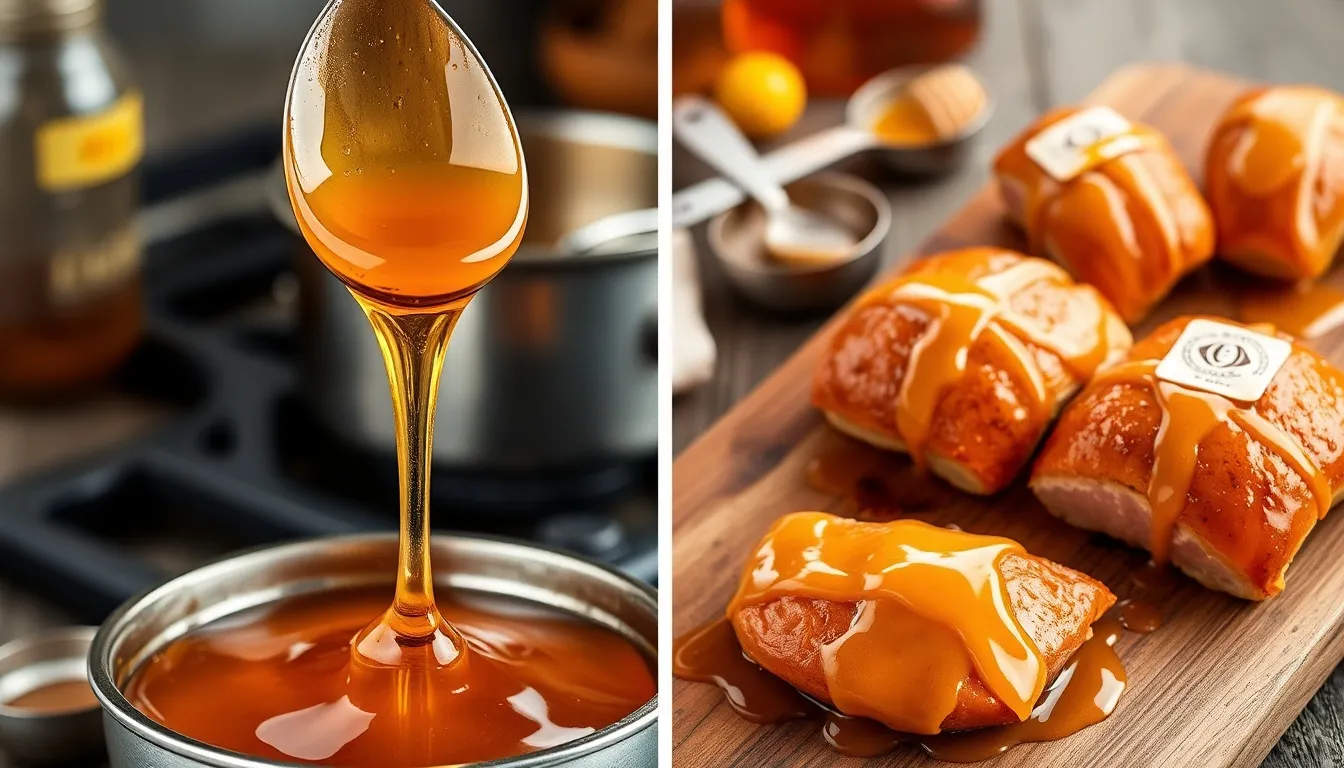
- **Step 1: Warm the honey** — Heat the honey in a small saucepan over low heat for 30 seconds, or microwave for 10 seconds, until it flows easily. This makes mixing faster and more even.
- **Step 2: Add fat and acid** — Stir in the butter (for richness) or olive oil (for lighter applications), plus your acid of choice. Vinegar adds tang, lemon juice adds brightness, soy sauce adds umami depth.
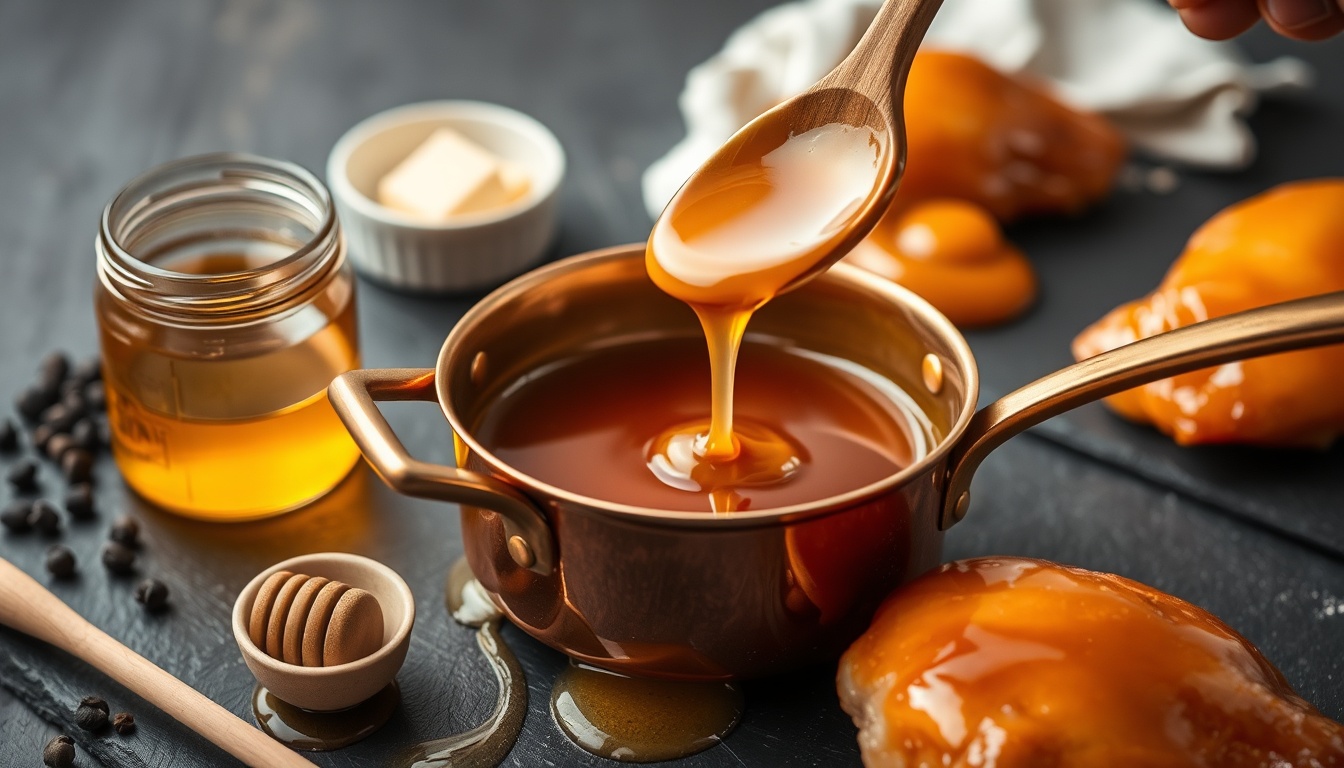
- **Step 3: Season and mix** — Add salt and pepper. Whisk until completely smooth and slightly warm. The glaze should coat the back of a spoon — thin enough to brush but thick enough to cling.
- **Step 4: Apply** — Brush onto food during the last 10-15 minutes of cooking. For high-heat roasting (400°F+), apply in the final 8-10 minutes to prevent burning. For lower temperatures (325-375°F), you can apply 15-20 minutes before the end.
Pro Tip
For a thicker, stickier glaze, simmer the mixture for 2-3 minutes over medium-low heat until it reduces by about a third. This concentrates the sugars and creates a more dramatic coating.
Get the Honey Buyer's Cheat Sheet (free PDF)
16 varieties on one page — color, flavor, best use and what a fair price looks like — from the 268 honeys we track.
Choosing the Best Honey for Glazing
The honey variety you use shapes the glaze's flavor profile. Since honey is the star ingredient, this choice matters more than in recipes where honey plays a supporting role.
- **Clover honey ($8-15)** — Mild and clean, letting other flavors (garlic, soy, herbs) take center stage. Best for: chicken, pork, vegetables, and any recipe where you want the glaze to enhance without competing.
- **Wildflower honey ($10-18)** — More complex with floral and herbal notes that add depth. Best for: roasted root vegetables, grilled chicken, salmon.
- **Buckwheat honey ($15-25)** — Dark, robust, with malty and molasses-like depth. Creates a dramatic, deeply caramelized glaze. Best for: smoked ham, ribs, dark-meat poultry, roasted squash.
- **Orange blossom honey ($12-20)** — Light citrus and floral notes. Best for: seafood (especially salmon and shrimp), duck, citrus-herb glazed chicken.
- Honey is still an added-sugar sweetener. Count the tablespoons you brush on.
- **Sourwood honey ($20-35)** — Caramel and anise notes with a tangy finish. Best for: pork tenderloin, sweet potatoes, butternut squash — its complexity shines on fall-forward dishes.
Pro Tip
As a general rule, match light honeys with lighter proteins (fish, chicken breast, tofu) and dark honeys with richer foods (ham, ribs, duck, root vegetables). The intensity should balance.
6 Honey Glaze Variations
Each variation builds on the base recipe with targeted additions for specific dishes.
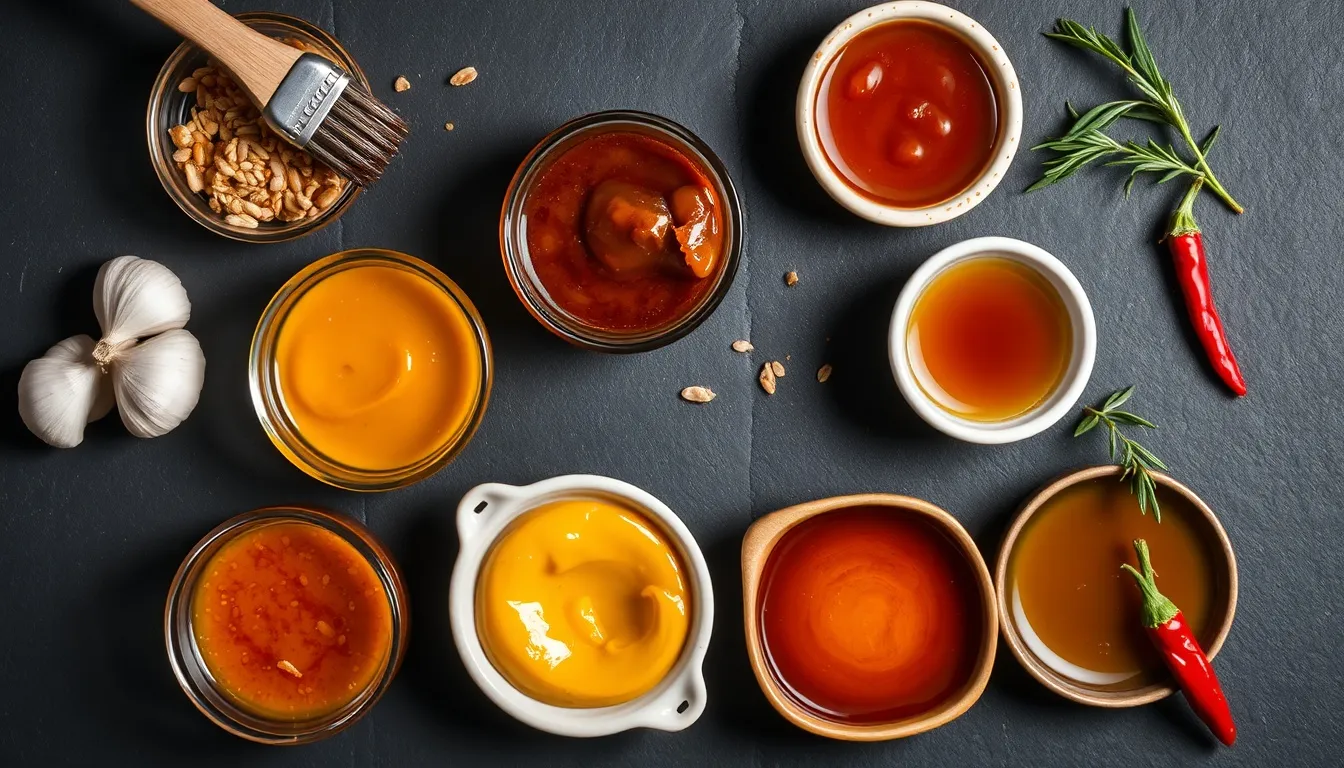
- **1. Honey garlic glaze** — Add 2 cloves minced garlic (or 1/2 teaspoon garlic powder) and substitute soy sauce for the vinegar. Simmer for 1 minute to soften the raw garlic edge. Best on: chicken thighs, salmon, shrimp, green beans.
- **2. Soy-ginger honey glaze** — Replace vinegar with 1 tablespoon soy sauce, add 1 teaspoon freshly grated ginger, and 1/2 teaspoon sesame oil. This Asian-inspired glaze brings umami, warmth, and nuttiness. Best on: salmon, pork belly, stir-fried vegetables, tofu.
- **3. Honey mustard glaze** — Replace the vinegar with 1 tablespoon Dijon mustard. The mustard adds sharp tang and acts as an emulsifier, creating an exceptionally smooth, clingy coating. For a more detailed version, see our honey mustard recipe. Best on: ham, pork tenderloin, chicken breasts, Brussels sprouts.
- **4. Balsamic honey glaze** — Replace vinegar with 1 tablespoon balsamic vinegar and add 1/2 teaspoon dried thyme or rosemary. The balsamic vinegar's complex sweetness layers beautifully with honey. Simmer 2-3 minutes to reduce slightly. Best on: roasted carrots, beets, chicken drumsticks, lamb chops.
- **5. Spicy honey glaze** — Add 1/2 teaspoon cayenne pepper, 1 teaspoon smoked paprika, and optionally 1 tablespoon of hot honey. The combination of sweet honey, smoky paprika, and cayenne heat creates a barbecue-adjacent glaze without the heaviness. Best on: ribs, wings, grilled chicken, sweet potato wedges.
- **6. Herb honey glaze** — Add 1 tablespoon each of finely chopped fresh rosemary and thyme (or 1 teaspoon each of dried). Replace butter with olive oil for a Mediterranean feel. Best on: lamb, roasted potatoes, whole roasted chicken, butternut squash.
How to Apply Honey Glaze: Technique Guide
Proper application technique is the difference between a beautifully glazed dish and a burnt, sticky mess. Timing and temperature are everything.
- **Oven-roasted meats (325-375°F)** — Apply the glaze 15-20 minutes before the meat is done. Brush a thin, even layer over the entire surface. For ham, score the surface in a diamond pattern first so the glaze seeps into the cuts. Apply a second coat 5 minutes before removing from the oven.
- **High-heat roasting (400-425°F)** — Apply 8-10 minutes before done. At higher temperatures, honey caramelizes faster and can cross into burning. Watch carefully and tent with foil if the edges darken too quickly.
- **Grilling** — Apply during the last 3-5 minutes only. Grill on direct heat for 1-2 minutes per side after glazing to get caramelized char marks. Move to indirect heat if flare-ups occur — the sugars in honey can ignite over open flame.
- **Roasted vegetables** — Toss vegetables with the glaze before roasting, or drizzle over the vegetables in the last 10 minutes. Root vegetables (carrots, parsnips, sweet potatoes) can handle early glazing because their moisture prevents burning. Leafy or thin vegetables (asparagus, green beans) should be glazed late.
- **Broiling** — Apply glaze and broil for 2-3 minutes on the middle rack, watching constantly. The broiler's intense overhead heat caramelizes honey rapidly. This is the fastest way to get a glossy finish on already-cooked food.
- **Pan-seared proteins** — Sear the meat first, then reduce heat to medium-low and add the glaze to the pan. Flip the protein to coat both sides and cook 1-2 minutes more until the glaze thickens and becomes sticky.
Pro Tip
Always keep extra glaze in reserve for serving. A thin drizzle of fresh glaze over the finished dish adds shine and a brighter honey flavor that cooking mutes.
The Science of Honey Glazing
Understanding the chemistry behind glazing helps you troubleshoot and improvise. Three processes make a honey glaze work.
**Caramelization:** Fructose in honey starts to brown at 230°F (110°C); glucose and table sugar at 320°F (160°C). That is why a honey glaze colors faster than a brown-sugar glaze. Keep it for the last minutes of cooking.
**Maillard reaction:** When the sugars in honey interact with the amino acids in meat proteins at 280-330°F, they produce melanoidins — brown pigments that contribute color, aroma, and savory-sweet complexity. This is why a honey-glazed protein tastes fundamentally different from one brushed with plain sugar water.
**Moisture evaporation:** As the glaze cooks, water evaporates and the sugar concentration increases. This is why the glaze becomes progressively stickier and more intense. It's also why thin, multiple coats work better than one thick layer — each coat concentrates before the next is applied, building up a multi-layered finish.
Storage and Make-Ahead Tips
Honey glaze stores well and can be prepared in advance.
- **Refrigerated base (2 weeks)** — The basic glaze and all variations keep refrigerated in an airtight jar for up to 2 weeks. Rewarm gently before using — 10 seconds in the microwave or a minute in a warm pan.
- **Batch preparation** — Make a triple batch of the base recipe and portion into separate containers. Customize each portion with different add-ins (garlic, ginger, mustard) on the day you cook.
- **Freezing (not recommended for liquid glaze)** — The emulsion can break upon thawing. Instead, store the base refrigerated and it will outlast most freezer timelines anyway.
- **Pre-glazed raw meat** — You can brush raw chicken, pork, or salmon with honey glaze up to 12 hours before cooking. Store covered in the refrigerator. The honey acts as a light brine, seasoning the surface as it sits.
Common Mistakes to Avoid
Glazing with honey is forgiving, but these mistakes can compromise the result.
- **Applying too early** — The most common error. Honey burns at sustained high heat. Apply glaze in the final phase of cooking — not at the beginning.
- **Using processed honey** — Ultra-filtered honey mixed with corn syrup produces a flat sweetness without the floral complexity that makes a great glaze. Use real honey for the best results.
- **Skipping the acid** — Without vinegar, lemon juice, or soy sauce, the glaze is one-dimensionally sweet. Acid provides essential flavor balance and helps the Maillard reaction proceed properly.
- **Too thick a coat** — A thick layer of glaze pools and burns in spots. Apply thin, even layers — multiple coats if desired — for uniform caramelization.
- **Not reserving glaze for serving** — The glaze that cooks on food concentrates and darkens. Fresh glaze drizzled on the finished dish adds brightness and visual shine. Always keep some aside.
- **Wrong honey for the dish** — Strong buckwheat honey on delicate fish will overpower it. Mild acacia on robust ribs will disappear. Match honey intensity to food intensity.