What Makes Sourwood Honey Special?
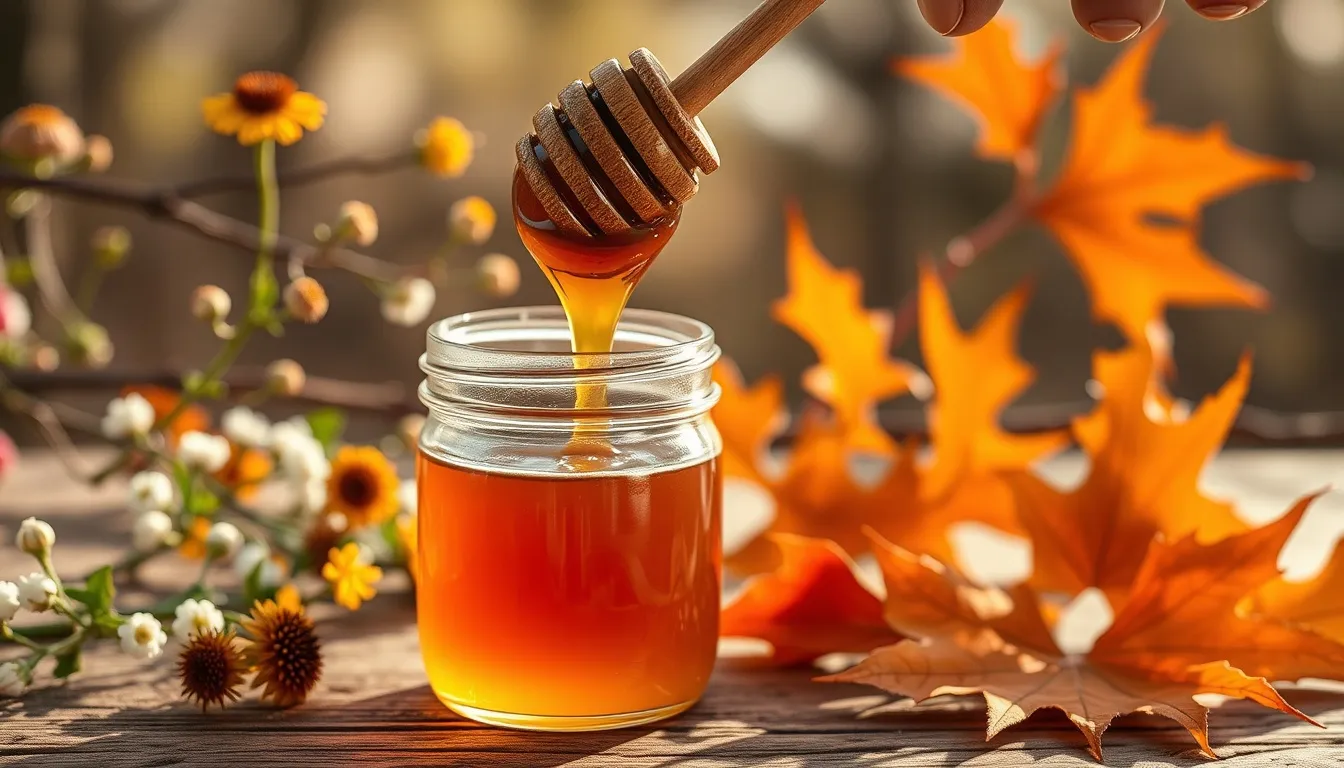
Sourwood honey is widely considered the finest honey produced in the United States. Harvested from the nectar of sourwood trees (Oxydendrum arboreum) that grow exclusively in the Appalachian Mountains — from southern Pennsylvania through Georgia — this monofloral honey has won more honey competitions than any other American variety. Its scarcity, distinctive flavor, and the narrow two-to-three-week harvest window make it one of the most sought-after and expensive honeys in North America.
The sourwood tree (named for its sour-tasting leaves, not its honey) blooms for just 2-3 weeks in mid-summer, typically late June through mid-July depending on altitude and latitude. Beekeepers must time their supers perfectly — placing empty honey supers just as sourwood blooms begin and removing them before bees start foraging on later-blooming plants like goldenrod. This precision harvesting and limited production explain why pure sourwood honey commands premium prices of $15-30 per pound.
Beyond its award-winning flavor, sourwood honey ($20-35/lb) has a nutritional and antioxidant profile that reflects its dark amber color. Like other medium-to-dark honeys, it contains higher concentrations of polyphenols and minerals than lighter varieties — though its specific compound profile has received less research attention than manuka ($35-60+/lb) or buckwheat ($15-25/lb, ORAC 16,000+). This guide covers what science tells us about sourwood honey's health properties, flavor, culinary uses, and how to ensure you're getting the real thing.
Flavor Profile: Why Sourwood Wins Competitions
Sourwood honey has a complex, layered flavor that sets it apart from most American honeys. Tasters describe it as having a buttery caramel base with hints of anise (licorice), gingerbread spice, and a distinctive tangy finish that develops after swallowing. Some detect notes of brown sugar, maple, or even a subtle smokiness. The flavor is full without being overpowering — rich enough to stand alone but balanced enough to complement food.
The color ranges from light amber to medium amber with distinctive reddish undertones — notably different from the golden color of clover ($8-15/lb) or the pale straw of acacia ($12-20/lb). Its texture is smooth and medium-bodied with a slow, syrupy pour that indicates high viscosity.
Sourwood honey crystallizes very slowly compared to most varieties — often remaining liquid for a year or more due to its relatively high fructose-to-glucose ratio (similar to tupelo ($25-45/lb) and acacia, though not as extreme). This slow crystallization, combined with its complex flavor and scarcity, explains why sourwood consistently wins "best in show" at national honey competitions including the Eastern Apicultural Society and North American Beekeeping Conference.
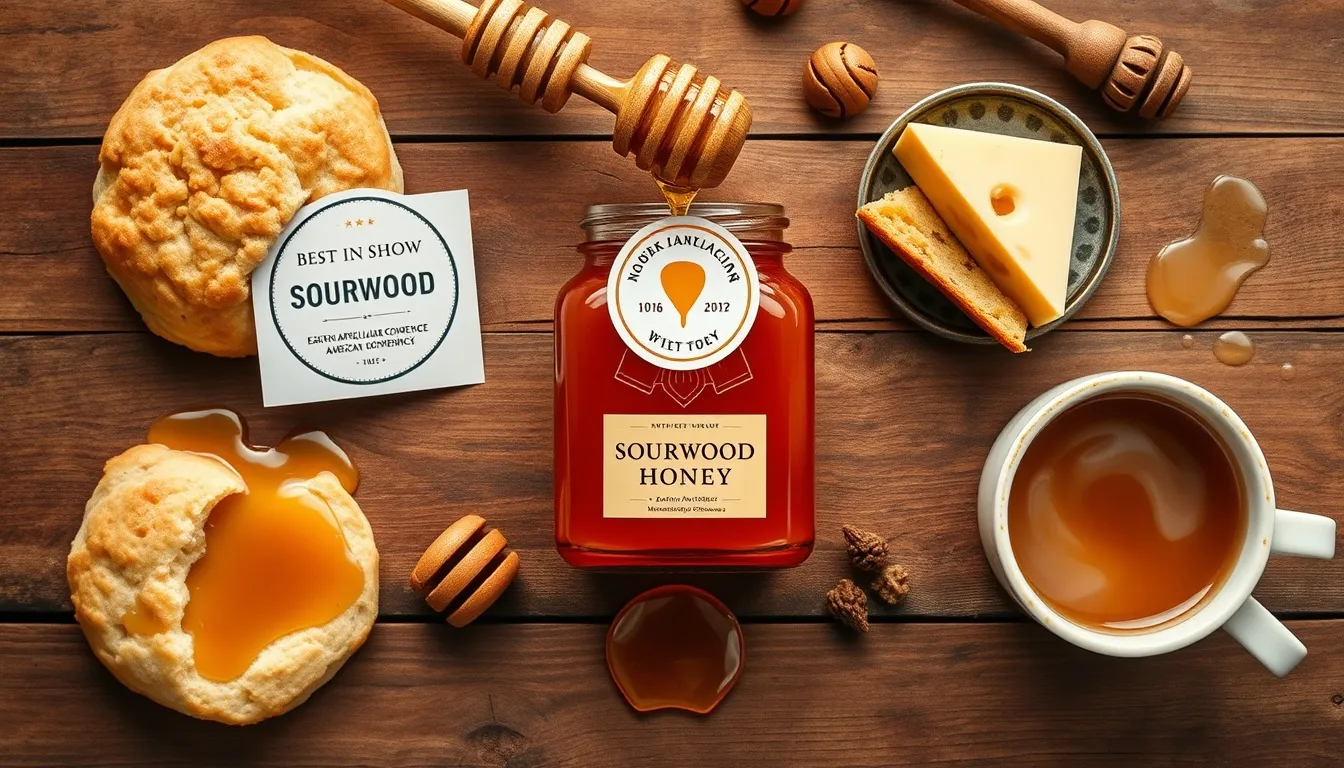
For tea pairing, sourwood honey complements black tea, chai, and oolong beautifully — its caramel-spice notes enhance rather than compete with bold tea flavors. It pairs well with biscuits, cornbread, blue cheese, walnuts, pears, and charcuterie. See our best honey for tea guide for more pairing recommendations.
Get the Honey Buyer's Cheat Sheet (free PDF)
16 varieties on one page — color, flavor, best use and what a fair price looks like — from the 268 honeys we track.
Antioxidant Content and Polyphenol Profile
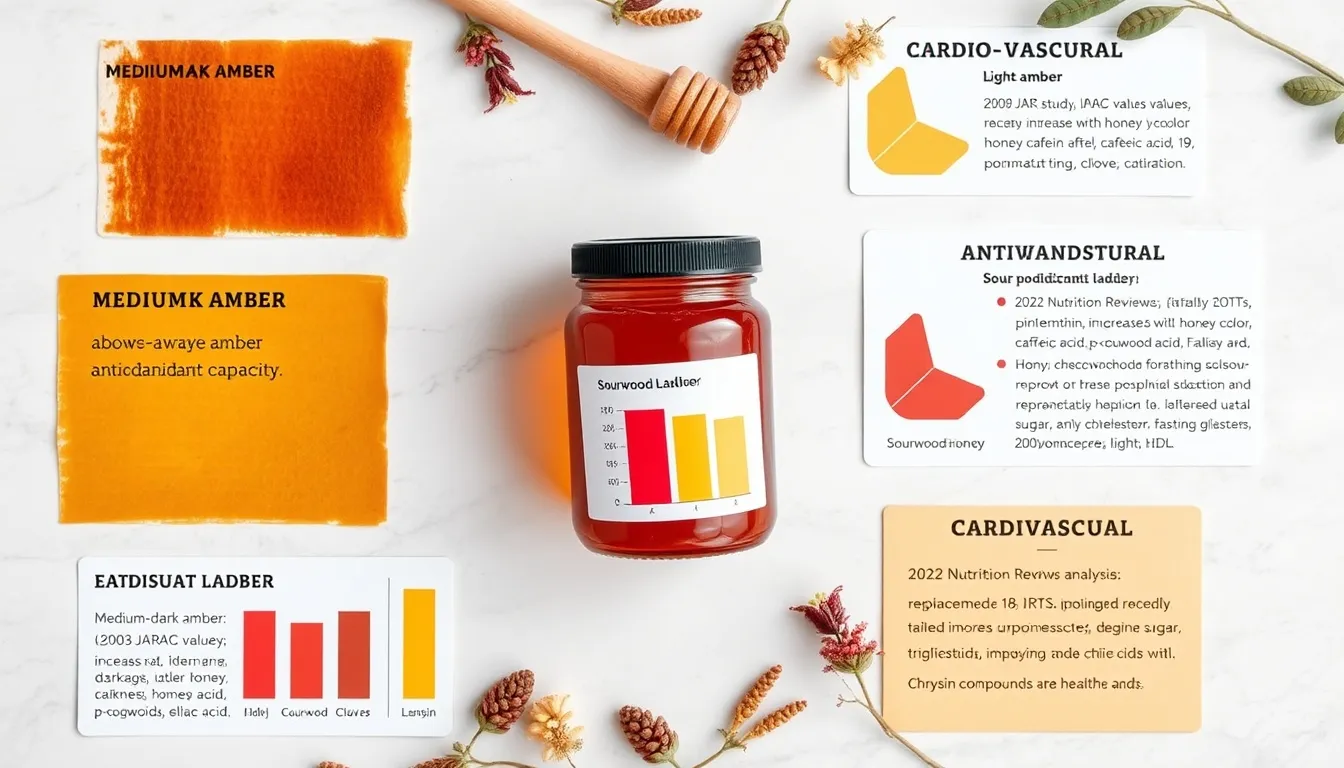
Honey's antioxidant capacity correlates strongly with color — dark honeys contain 3-9x more antioxidants than light varieties (Journal of Agricultural and Food Chemistry, 2004). Sourwood, as a medium-to-dark amber honey, falls in the middle-to-upper range of antioxidant activity among American monofloral honeys — higher than clover ($8-15/lb) and acacia ($12-20/lb) but lower than the darkest varieties like buckwheat ($15-25/lb, ORAC 16,000+).
Sourwood honey's polyphenol profile includes flavonoids such as pinocembrin, chrysin, and galangin — compounds common to many honeys — along with phenolic acids including caffeic acid, p-coumaric acid, and ellagic acid. These compounds contribute to the anti-inflammatory mechanisms documented across honey varieties: NF-κB pathway inhibition, COX-2 enzyme suppression, and reactive oxygen species scavenging.
While sourwood honey has not been the subject of variety-specific clinical trials (unlike manuka or buckwheat), the established relationship between honey color, polyphenol content, and antioxidant activity means sourwood's medium-dark color reliably indicates meaningful antioxidant capacity. A 2003 study in the Journal of Agricultural and Food Chemistry confirmed that the ORAC (Oxygen Radical Absorbance Capacity) values of honeys increased linearly with color darkness across 19 American honey samples.
For those specifically seeking the highest antioxidant honey, buckwheat honey ($15-25/lb) remains the documented leader among common varieties. But sourwood offers a significantly more palatable flavor profile (buckwheat is strongly malty/molasses-like, which many find overpowering) while still providing above-average antioxidant protection. It's a practical choice for people who want health benefits in a honey they'll actually enjoy eating daily.
Antimicrobial Properties
All raw honeys exhibit antimicrobial activity through multiple mechanisms: the glucose oxidase enzyme generates hydrogen peroxide, low pH (3.2-4.5) creates an acidic environment hostile to bacteria, high osmolarity draws water from bacterial cells, and polyphenols disrupt bacterial membrane integrity. These mechanisms give honey documented activity against over 60 bacterial species including MRSA, E. coli, and Pseudomonas — see our honey for immune system guide for the full evidence.
Sourwood honey's antimicrobial potency has not been isolated in published research the way manuka's methylglyoxal (MGO) activity has. However, its hydrogen peroxide pathway — the primary antimicrobial mechanism for non-manuka honeys — is preserved in raw sourwood honey and depends on the activity of glucose oxidase. This enzyme is heat-sensitive and degrades during pasteurization, which is why raw honey has stronger antimicrobial activity than processed honey.
For sore throat relief, sourwood honey is an excellent choice. Its viscous texture coats the throat effectively, the hydrogen peroxide provides local antimicrobial action, and its anti-inflammatory polyphenols help reduce mucosal swelling. Raw sourwood honey offers the cough-suppressing effects documented in the 2020 BMJ Evidence-Based Medicine systematic review, with a flavor that's genuinely pleasant to take.
For wound care, medical-grade manuka honey ($35-60+/lb for UMF 10+) remains the evidence-supported choice due to its non-peroxide MGO activity and FDA-cleared product availability. Sourwood should not be applied to open wounds without medical guidance, as raw honey (unlike medical-grade products) isn't sterile.
Digestive Health and Prebiotic Effects
Like other raw honeys, sourwood contains prebiotic oligosaccharides — fructo-oligosaccharides (FOS) and gluco-oligosaccharides (GOS) — that selectively feed beneficial Bifidobacterium and Lactobacillus bacteria in the colon. As our honey and gut health guide explains, these prebiotics stimulate short-chain fatty acid (SCFA) production, strengthen the intestinal barrier, and support the gut-associated lymphoid tissue (GALT) where 70% of immune cells reside.
Sourwood honey's smooth texture and mild acidity make it particularly well-suited for digestive applications. A tablespoon in warm water creates a soothing drink for acid reflux — the honey's viscous coating protects the esophageal lining while its polyphenols provide anti-inflammatory benefits to irritated tissue. For people with IBS or digestive sensitivity, sourwood's moderate sweetness and smooth texture are generally well-tolerated.
Amounts reported in the studies discussed here describe study protocols, not daily recommendations. Use the daily added-sugar guide to count honey with other added or free sugars.
For enhanced gut health, try combining sourwood honey with probiotic foods. A breakfast of Greek yogurt drizzled with sourwood honey creates a synbiotic combination — the honey feeds the yogurt's live cultures. Adding cinnamon brings additional antimicrobial and blood sugar regulation benefits.
Cardiovascular and Anti-Inflammatory Benefits
The cardiovascular benefits of honey are supported by robust clinical evidence. The 2022 Nutrition Reviews meta-analysis of 18 RCTs found honey consumption significantly reduced LDL cholesterol, triglycerides, fasting blood glucose, and C-reactive protein (an inflammation marker). While these trials used various honey types, the benefits were consistent across varieties — driven by the polyphenol compounds present in all raw honeys.
Sourwood honey's polyphenol content — including chrysin, pinocembrin, caffeic acid, and ellagic acid — contributes to the anti-inflammatory effects documented across honey varieties. These compounds inhibit the NF-κB inflammatory pathway (a master regulator of chronic inflammation), suppress COX-2 enzyme activity (the same target as ibuprofen, though far more mildly), and modulate nitric oxide production for vascular health.
Ellagic acid, one of sourwood honey's phenolic acids, has received particular research attention for cardiovascular protection. Studies have shown ellagic acid improves endothelial function, reduces LDL oxidation (the critical step in atherosclerotic plaque formation), and has antiplatelet effects. While the quantities in honey are modest compared to pomegranates or walnuts, they contribute to the overall polyphenol synergy that drives honey's cardiovascular benefits.
For people managing cholesterol or inflammatory markers, using raw sourwood honey as a substitute for refined sugar — rather than adding it on top of existing sugar intake — is consistent with how benefit was demonstrated in clinical trials. The key is substitution, not addition.
Sourwood Honey vs Other Premium Varieties
**Sourwood vs Manuka ($35-60+/lb):** Manuka has stronger documented antimicrobial activity (due to unique methylglyoxal) and more variety-specific clinical trials. Sourwood has a far more complex and pleasant flavor, costs significantly less ($20-35/lb vs $35-60+/lb), and is domestically produced. For daily health maintenance and culinary use, sourwood is the better choice. For wound care and targeted antimicrobial applications, manuka is more evidence-supported.
**Sourwood vs Buckwheat ($15-25/lb):** Buckwheat has the highest antioxidant content of common honeys (ORAC 16,000+, 3-9x more than lighter varieties) and the strongest cough suppression evidence (outperformed dextromethorphan in clinical trial). But buckwheat's aggressive malty/molasses flavor is polarizing. Sourwood offers a more universally appealing flavor with above-average (but not maximal) antioxidant content — a practical compromise between health benefits and palatability.
Diabetes note — Honey is a fast-acting carbohydrate, and no honey variety is medically preferred. Use the honey carbohydrate and label guide to compare serving-size total carbohydrate and added sugars within an individualized care plan.
**Sourwood vs Clover ($8-15/lb):** Clover is America's most common and affordable honey. Sourwood costs 2-3x more but offers significantly more flavor complexity, higher antioxidant content, and slower crystallization. Clover is the everyday workhorse; sourwood is for special occasions and discerning palates.
How to Identify Real Sourwood Honey
Sourwood honey's premium pricing ($15-30/lb) creates incentive for fraud. Because sourwood trees bloom alongside other summer flowers, beekeepers must carefully manage their hives to ensure sourwood purity. Some commercial "sourwood honey" is actually wildflower blend with only partial sourwood content. Here's how to verify authenticity:
**Geographic origin:** Genuine sourwood honey comes exclusively from the Appalachian region — primarily the mountains of North Carolina, Georgia, Tennessee, Virginia, and the Carolinas. North Carolina's Blue Ridge Mountains are the traditional sourwood heartland. If the label doesn't specify an Appalachian origin, be skeptical.
**Flavor test:** True sourwood honey has a distinctive caramel-anise-gingerbread flavor with a tangy, slightly sour aftertaste. If it tastes generically sweet without complexity or tang, it's likely a blend or mislabeled wildflower. The aftertaste is the key identifier — sourwood leaves a lingering spicy-tangy finish that other honeys don't replicate.
**Color:** Sourwood ranges from light amber to medium amber with reddish undertones. It should not be pale (suggests acacia or clover blend) or very dark (suggests buckwheat or goldenrod contamination). The reddish tint is a reliable visual indicator.
**Crystallization:** Pure sourwood crystallizes slowly — if your honey crystallizes within weeks, it may contain high-glucose honeys like clover or goldenrod mixed in. Genuine sourwood should remain liquid for months to a year.
**Buy direct:** The most reliable sourcing is directly from Appalachian beekeepers at farmers markets, local apiaries, or their websites. Ask when the honey was harvested (should be July) and whether they use dedicated sourwood supers. Reputable beekeepers in the region are proud of their sourwood and happy to discuss their harvesting practices. Online retailers like Savannah Bee Company, Bee & Flower, and local Appalachian co-ops are generally reliable.
Best Ways to Enjoy Sourwood Honey
Sourwood honey's complex flavor deserves to be showcased rather than hidden in recipes. Here are the best ways to enjoy it:
**Straight from the spoon:** The simplest and best way to appreciate sourwood's caramel-anise complexity. Take a tablespoon and let it coat your palate — notice how the flavor evolves from sweet caramel to spicy anise to tangy finish. This is why it wins competitions.
**On biscuits and cornbread:** The classic Southern pairing. Warm buttermilk biscuits or fresh cornbread with a drizzle of sourwood honey is a combination that's defined Appalachian food culture for generations. The honey's richness complements the butter and corn flavors perfectly.
**With cheese:** Sourwood's tangy-spicy profile pairs exceptionally well with sharp cheddar, aged gouda, blue cheese, and soft goat cheese. A cheese board with sourwood honey, walnuts, and sliced pears is an elegant appetizer or dessert.
**In black tea and chai:** Unlike delicate green tea, black tea and chai can stand up to sourwood's bold flavor. Add a tablespoon to a strong cup of Assam or English Breakfast, or drizzle into chai for a caramel-spice dimension. For honey tea pairing details, see our complete guide.
**As a glaze:** Sourwood's viscosity and complex sweetness make it an excellent glaze for roasted pork, chicken, or root vegetables. Brush it on during the last 10 minutes of roasting for a caramelized finish. It also works beautifully in vinaigrettes — whisk with balsamic vinegar, olive oil, and mustard for a dressing that showcases its unique flavor.
**For cough and cold relief:** Sourwood honey is a genuinely pleasant-tasting choice when using honey for a sore throat. Combine with warm water and lemon for a soothing warm drink, or enjoy it straight — its cough-suppressing effects are documented in clinical studies.
The Bottom Line
Sourwood honey occupies a unique position in the American honey market: it's a premium product that justifies its price through genuine flavor distinction rather than health marketing claims. Unlike manuka honey, which commands high prices based on clinical antimicrobial evidence, sourwood's premium reflects its scarcity, competition-winning flavor, and deep cultural roots in Appalachian food traditions.
Health-wise, sourwood offers the benefits common to all raw honeys — antioxidant polyphenols, prebiotic fiber, antimicrobial activity, and anti-inflammatory effects — at above-average potency due to its medium-dark color. It won't match buckwheat's antioxidant extremes or manuka's targeted antimicrobial power, but it delivers meaningful health benefits in a package that's genuinely delicious.
Sourwood honey also carries an environmental dimension worth considering. The sourwood tree blooms in a narrow 2-3 week summer window that is increasingly disrupted by Appalachian climate shifts — late frosts, extended droughts, and erratic spring temperatures can devastate an entire season's harvest. With a supply risk index of 80/100, sourwood is among the most climate-vulnerable American honey varieties. Purchasing sourwood honey directly from Appalachian beekeepers — especially through local honey sources and regional farmers markets — supports the mountain communities whose forest management practices preserve sourwood habitat. As World Environment Day (June 5) highlights, consumer choices about premium honeys have real conservation consequences for Appalachian forest ecosystems.
For everyday raw honey with excellent health benefits at a lower price point, wildflower ($10-18/lb) or buckwheat ($15-25/lb) are practical choices. But if you appreciate honey as a culinary ingredient — something to savor, pair with foods, and enjoy on its own — sourwood is America's finest. It's worth buying at least once, ideally direct from an Appalachian beekeeper, to experience what many consider the pinnacle of American honey.