About This Recipe
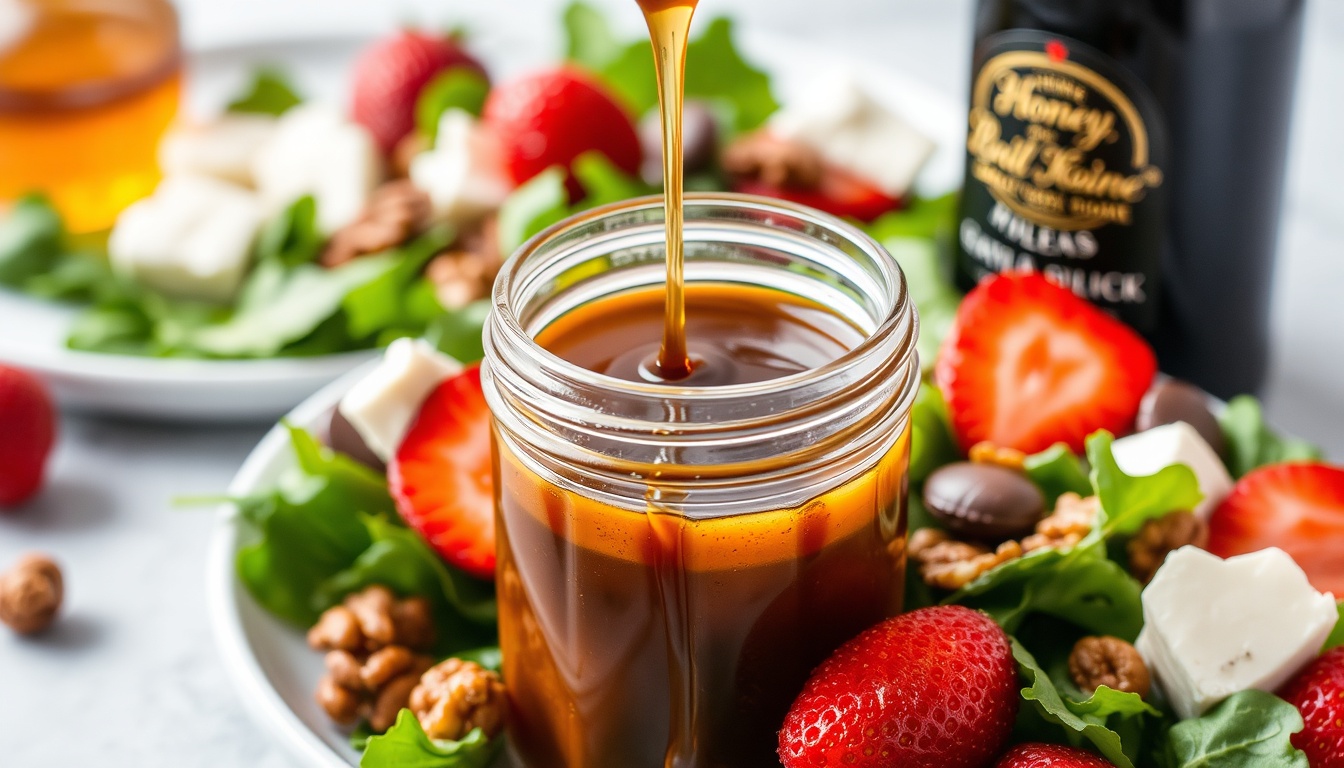
This honey mustard dressing is a pourable olive-oil vinaigrette. Whisk the honey into mustard and cider vinegar first, then add the oil in a thin stream. A little measured water loosens the mixture for salad. It makes eight portions of about 32 g, and a closed jar makes it easy to shake before serving.
Recipe
Honey Mustard Vinaigrette Dressing
Whisk honey, yellow mustard and cider vinegar into an olive-oil dressing. Makes eight measured portions, with water to loosen the emulsion.
7Ingredients
Yield: 8 servings
- 120 g olive oil
- 42 g honey
- 30 g prepared yellow mustard
- 30 g cider vinegar
- 30 g water
- 1 g table salt
- 0.5 g ground black pepper
Ingredient amounts scale; instructions show the original batch. Cooking times and pan sizes may need adjustment. Season to taste. Honey grams use US measures at 20°C and 17.5% moisture, a density estimate; weigh your honey for precision.
Instructions
- 1Dissolve the honeyIn a medium bowl, whisk the honey, yellow mustard, cider vinegar, water, salt and black pepper until smooth. Scrape any honey from the bottom and sides before adding oil.
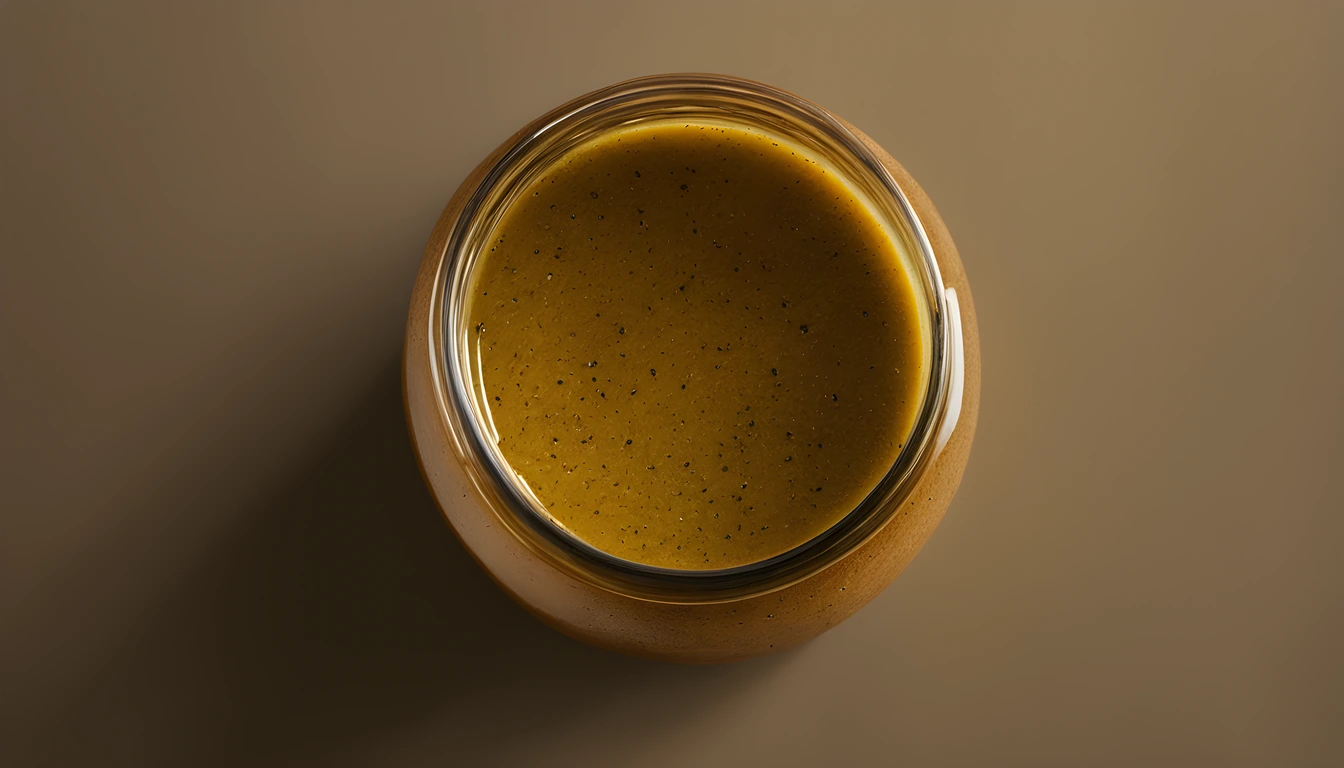
- 2Whisk in the oilWhisk continuously while adding the olive oil in a thin steady stream. Keep going until the dressing looks evenly combined and pours in a smooth ribbon. If it begins to separate, pause the pour and whisk the mixture together before continuing.
- 3Jar and portionScrape into a clean covered jar. The complete batch weighs about 253.5 g before bowl residue; divide it into eight equal portions, approximately 31.7 g each. Refrigerate if not serving immediately. Shake or whisk until combined before pouring, especially after chilling.
Estimated nutrition per serving
151.75 calories · 15.13 g fat · 4.62 g carbohydrate · 0.16 g protein · 90.61 mg sodium
Serving: 1 of 8 servings
Calculated from ingredient weights and USDA FoodData Central: 171413, 169640, 172234, 173469, 173647, 173468, 170931. Estimates use ingredient input weights; actual portions, brands and cooking losses vary. Omitted nutrient values are unavailable, not zero.
A Vinaigrette Rather Than a Dip
The olive oil is a substantial part of this formula. Honey and yellow mustard mix with cider vinegar and water before the oil is whisked in. The result is designed to spread over salad leaves rather than sit as a thick dipping sauce.
McCormick's vinaigrette method uses whisking and a covered jar, with a shake before serving. This version uses its own weighed balance and prepared yellow mustard. The separate honey mustard sauce is an oil-free base for dipping.
Flavor intensity uses an editorial culinary scale: 1 is mild and 5 is bold. These are tasting suggestions, not laboratory measurements.
Sources: UC Agriculture and Natural Resources: cooking with honey; USDA FoodData Central: Mustard, prepared, yellow; McCormick Kitchens: vinaigrette mixing and serving.
1 = mild, 5 = bold. Editorial pairing guidance, not laboratory measurements; jars vary.
- Clover
- Yellow mustard and cider vinegar
- Wildflower
- Olive oil vinaigrette
- Orange blossom
- A floral salad dressing
Get the Honey Buyer's Cheat Sheet (free PDF)
16 varieties on one page — color, flavor, best use and what a fair price looks like — from the 304 honeys we track.
Add the Oil Gradually
Start with the honey fully dispersed in the mustard mixture. A thin stream of oil and steady whisking help keep the dressing even. Scrape the bowl so the measured honey does not remain stuck under the whisk.
Some separation during storage is expected. Shake the closed jar until the texture is uniform again. If chilled olive oil looks cloudy or thick, let the closed jar stand briefly, then shake before using.
Choose a Mild Honey First
Clover lets the mustard and vinegar stay clear in the flavor. Wildflower gives the dressing more honey character. Use a honey you like with sharp salad ingredients; there is no need to choose a very dark one for this formula.
Toss a measured portion with your salad just before eating. The salad ingredients are separate from the estimate. For another way to use the pairing, see honey mustard chicken.
Divide the Whole Batch
Eight portions divide all 120 g oil and 42 g honey, along with the mustard, vinegar and seasoning. Weighing a portion is more consistent than calling every spoonful a tablespoon, since household spoons and pouring habits vary.
Keep the jar covered and refrigerated when it is not in use, and use a clean spoon. This is a fresh dressing, with no claim of a tested room-temperature shelf life. Honey mustard pretzels use the same flavor family in a baked snack.
Choosing the Honey
Use Clover Honey or Wildflower Honey for the flavor described in this recipe. See our honey selection guide for other culinary choices.