Why Homemade Honey Balsamic Dressing Is Worth the 5 Minutes
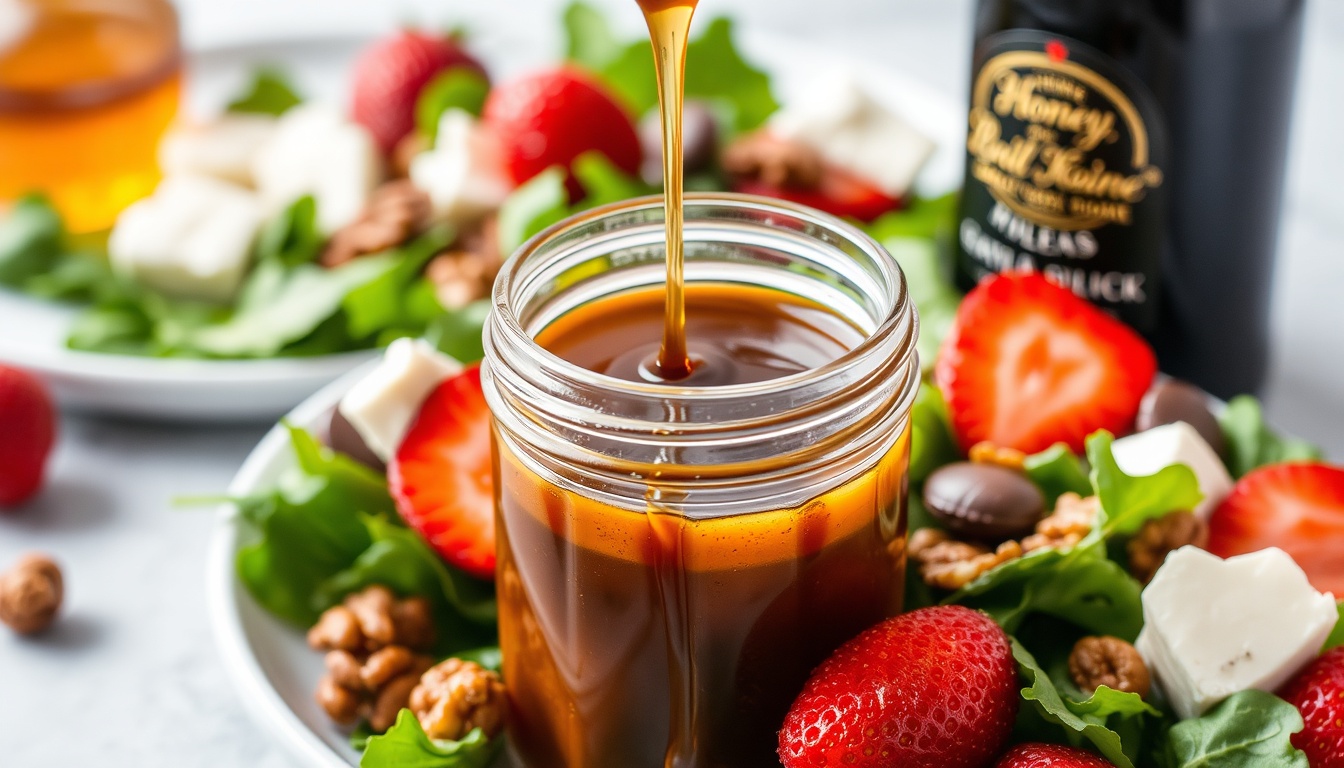
Honey balsamic dressing is one of the most versatile sauces in any kitchen — it works as a salad dressing, meat marinade, vegetable glaze, and dipping sauce. And while grocery stores stock dozens of balsamic vinaigrettes, homemade beats them all because you control the honey quality, the oil ratio, and the sweetness level.
Store-bought versions typically use corn syrup or sugar instead of real honey, low-quality oils, and artificial stabilizers. This recipe uses five core ingredients, takes under 5 minutes, and keeps for 2 weeks in the fridge — far longer than most homemade dressings because the honey and vinegar act as natural preservatives.
Once you master the basic ratio (3 parts oil, 1 part balsamic, 1 part honey), you can riff endlessly. We've included 6 tested variations below, from a creamy Dijon version to a spicy hot honey balsamic glaze.
Ingredients for Classic Honey Balsamic Dressing
Only 5 ingredients for the base recipe — everything else is optional enhancement.
- **Extra virgin olive oil:** 6 tablespoons (90ml) — use good quality since you'll taste it directly
- **Balsamic vinegar:** 2 tablespoons — aged balsamic (Modena IGP or better) makes a noticeable difference
- **Raw honey:** 2 tablespoons (40g) wildflower or clover honey — adjust to taste
- **Dijon mustard:** 1 teaspoon — acts as a natural emulsifier to keep oil and vinegar blended
- **Salt and pepper:** 1/4 teaspoon fine sea salt, freshly cracked black pepper to taste
- **Optional:** 1 small garlic clove (minced or microplaned), 1/2 teaspoon dried Italian herbs
Pro Tip
The quality of your balsamic vinegar matters more than any other ingredient. True aged balsamic from Modena has natural sweetness and complexity that cheap imitations lack — you may even need less honey.
Get the Honey Buyer's Cheat Sheet (free PDF)
16 varieties on one page — color, flavor, best use and what a fair price looks like — from the 304 honeys we track.
Step-by-Step Instructions
**Step 1: Warm the honey.** If your honey is thick or crystallized, microwave it for 10-15 seconds or set the jar in warm water. Liquid honey emulsifies more easily and blends smoothly with the vinegar.
**Step 2: Combine the base.** In a small bowl or jar, whisk together balsamic vinegar, honey, and Dijon mustard until smooth. The mustard's lecithin helps create a stable emulsion.
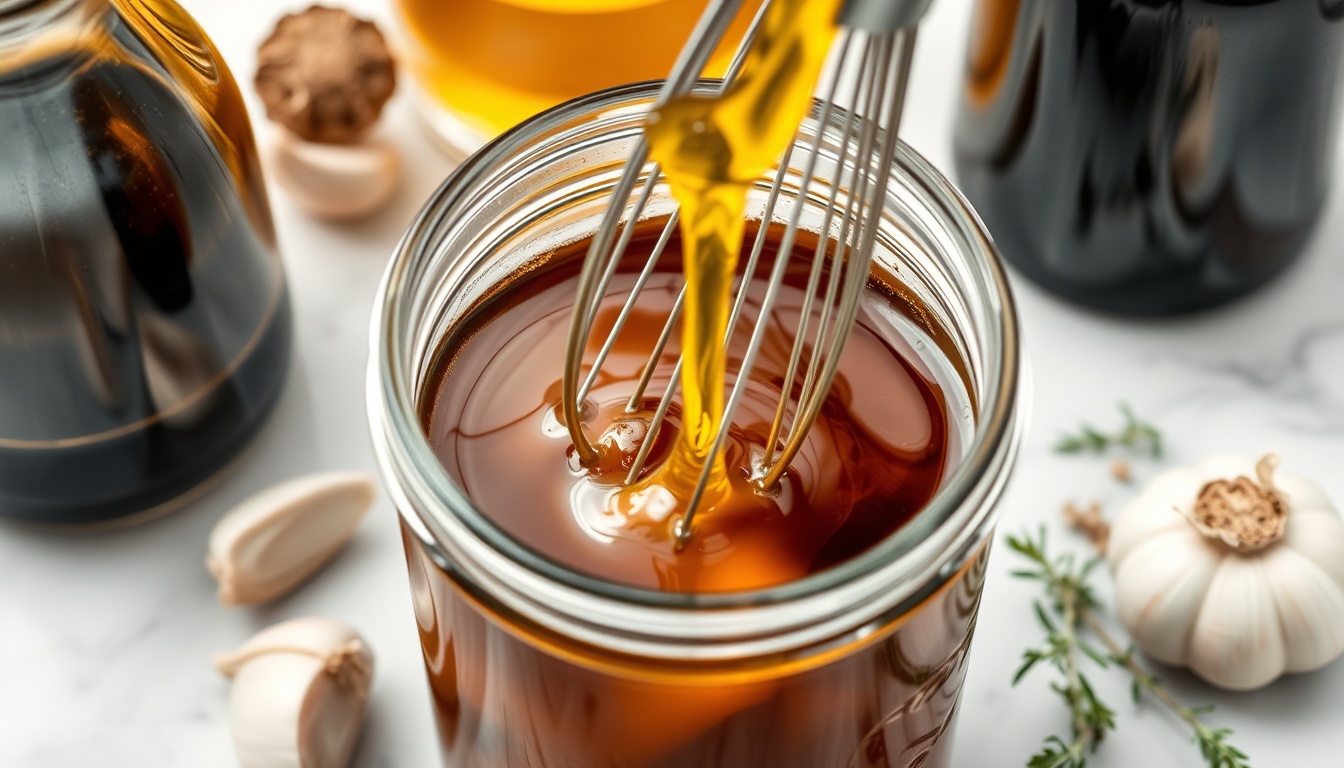
**Step 3: Stream in the oil.** While whisking constantly, slowly drizzle in the olive oil in a thin stream. This gradual addition creates a creamy, emulsified dressing rather than a separated oil-and-vinegar layer.
**Step 4: Season.** Add salt, pepper, and any optional additions (garlic, herbs). Whisk again to combine.
**Step 5: Taste and adjust.** Dip a leaf of lettuce in the dressing to taste. Too acidic? Add more honey. Too sweet? Add a splash more vinegar. Too thick? Thin with 1-2 teaspoons of water.
Pro Tip
For the easiest method, put everything in a mason jar, seal it, and shake vigorously for 30 seconds. The jar doubles as storage — label it with the date and keep it in the fridge.
The Science of Emulsification
Understanding why this works helps you troubleshoot and adapt the recipe:
Oil and vinegar naturally separate because water-based liquids and fats don't mix. Honey helps bridge this gap — its sugars are hygroscopic (attract water) while some of its compounds have mild surfactant properties. Dijon mustard's ground mustard seeds contain mucilage and lecithin, both powerful emulsifiers that wrap around tiny oil droplets and prevent them from merging back together.
This is why the slow-drizzle technique matters: you're breaking the oil into microscopic droplets while the mustard and honey keep them suspended. Rush it and you get a thin, separated dressing. Take your time and you get a thick, creamy vinaigrette that stays blended for days.
Even with perfect technique, the dressing will eventually separate slightly in the fridge. That's normal — just shake the jar before each use.
6 Flavor Variations
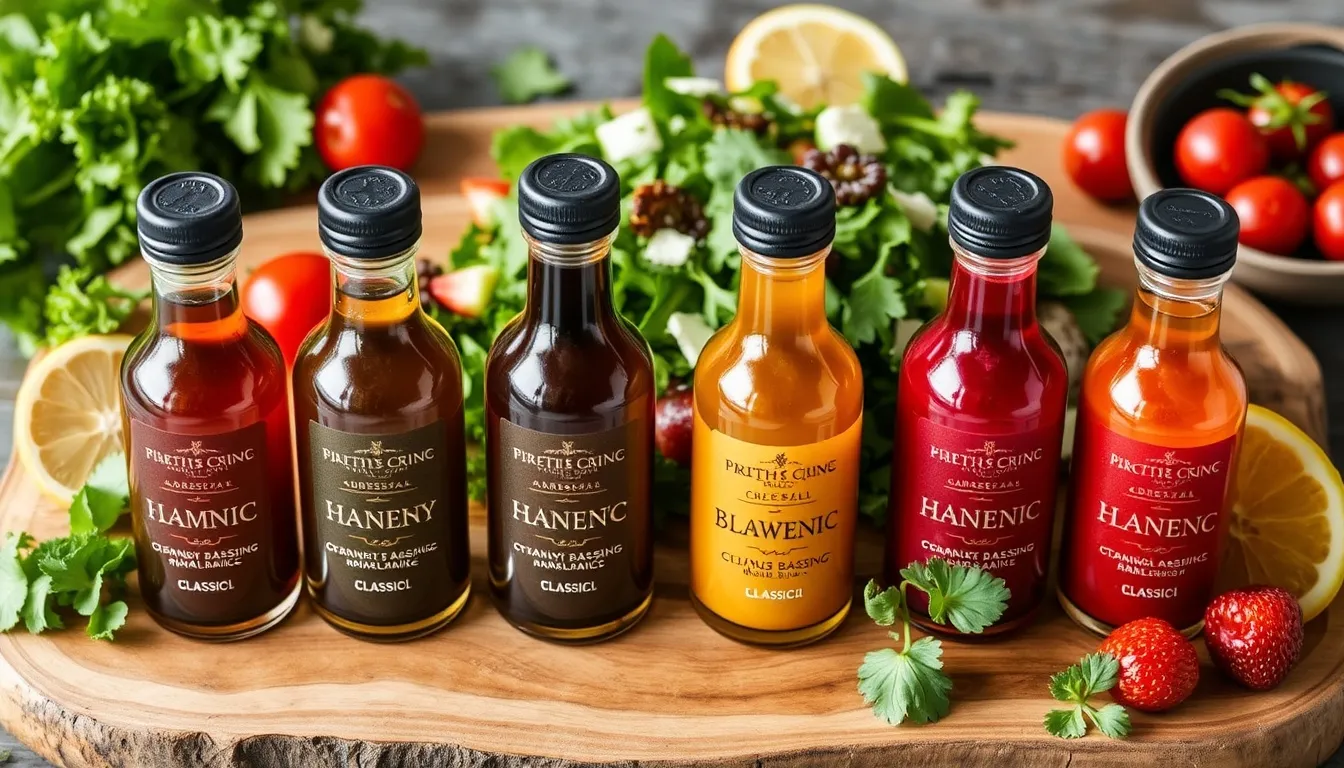
The base recipe is a canvas for dozens of flavors. Here are six we keep in regular rotation:
**1. Creamy Honey Balsamic.** Add 1 tablespoon mayonnaise or Greek yogurt to the base. Creates a rich, thick dressing perfect for heartier salads with grains or roasted vegetables.
**2. Honey Balsamic Herb Dressing.** Add 2 tablespoons finely chopped fresh herbs — basil, oregano, and thyme work best. Add them after emulsifying so they stay evenly distributed.
**3. Spicy Hot Honey Balsamic.** Replace regular honey with hot honey or add 1/2 teaspoon red pepper flakes and a pinch of cayenne. Sweet, tangy, and spicy — incredible on grilled chicken salads.
**4. Honey Balsamic Glaze.** Simmer the base dressing in a saucepan over medium heat for 5-7 minutes until reduced by half. Creates a thick, syrupy glaze for drizzling over roasted vegetables, grilled meats, or cheese boards.
**5. Raspberry Honey Balsamic.** Blend 1/4 cup fresh or thawed frozen raspberries into the base. Strain out seeds if desired. Beautiful pink color with a fruity tang that pairs perfectly with goat cheese salads.
**6. Honey Balsamic Marinade.** Double the vinegar to 4 tablespoons and add 2 minced garlic cloves plus 1 tablespoon fresh rosemary. Use as a marinade for chicken, pork, or salmon for 2-4 hours before grilling or roasting.
Which Honey Works Best
Since honey is a primary flavor here (not just a background sweetener), the variety you choose noticeably changes the result:
- **Wildflower honey** — The best all-purpose choice. Complex floral notes that complement balsamic's grape-based tang.
- **Clover honey** — Light and clean. Lets the balsamic vinegar lead. Good for delicate salads where you don't want honey to dominate.
- **Orange blossom honey** — Adds subtle citrus notes that brighten the dressing. Excellent with arugula and citrus salads.
- **Buckwheat honey** — Dark and robust. Creates an intensely flavored dressing that stands up to hearty winter salads with roasted beets, blue cheese, and walnuts.
- **Acacia honey** — Very neutral sweetness. Best when you want sweetness without additional honey character — lets the balsamic shine.
Pro Tip
For the glaze variation, darker honeys like buckwheat work particularly well because their molasses-like depth intensifies as the sauce reduces.
10 Ways to Use Honey Balsamic Dressing
This dressing goes far beyond green salads:
- **Green salads** — The classic. Toss with mixed greens, goat cheese, candied pecans, and dried cranberries.
- **Grain bowls** — Drizzle over quinoa, farro, or rice bowls with roasted vegetables and chickpeas.
- **Caprese upgrade** — Replace plain balsamic with honey balsamic on fresh mozzarella and tomato slices.
- **Roasted vegetable glaze** — Toss Brussels sprouts, carrots, or sweet potatoes in dressing before roasting.
- **Chicken marinade** — Marinate chicken breasts or thighs for 2-4 hours. Pairs well with honey mustard chicken.
- **Steak drizzle** — Reduce to a glaze and spoon over grilled steak for a restaurant-quality finish.
- **Bread dip** — Mix with more olive oil for a bread-dipping sauce at dinner parties.
- **Pizza drizzle** — Drizzle over flatbread pizzas with prosciutto, arugula, and parmesan.
- **Cheese boards** — Use as a dipping sauce alongside honeycomb and aged cheeses.
- **Pasta salad** — Toss with cold pasta, cherry tomatoes, fresh mozzarella, and basil.
Storage and Shelf Life
Honey balsamic dressing stores exceptionally well compared to other homemade dressings:
- **Fridge:** 2 weeks in a sealed glass jar. The honey and vinegar both have antimicrobial properties that extend shelf life.
- **Shake before use** — Some separation is normal. A 10-second shake re-emulsifies the dressing perfectly.
- **Room temperature:** The base dressing (without garlic or fresh herbs) can sit at room temp for 2-3 days, making it great for picnics. Add garlic or herbs? Keep it refrigerated.
- **Freezer:** Not recommended. The emulsion breaks permanently when frozen.
- **Batch it** — This recipe doubles or triples easily. Make a large batch and jar it for the week.
Pro Tip
If the olive oil solidifies in the fridge (totally normal), let the jar sit at room temperature for 10 minutes or run it under warm water before shaking.