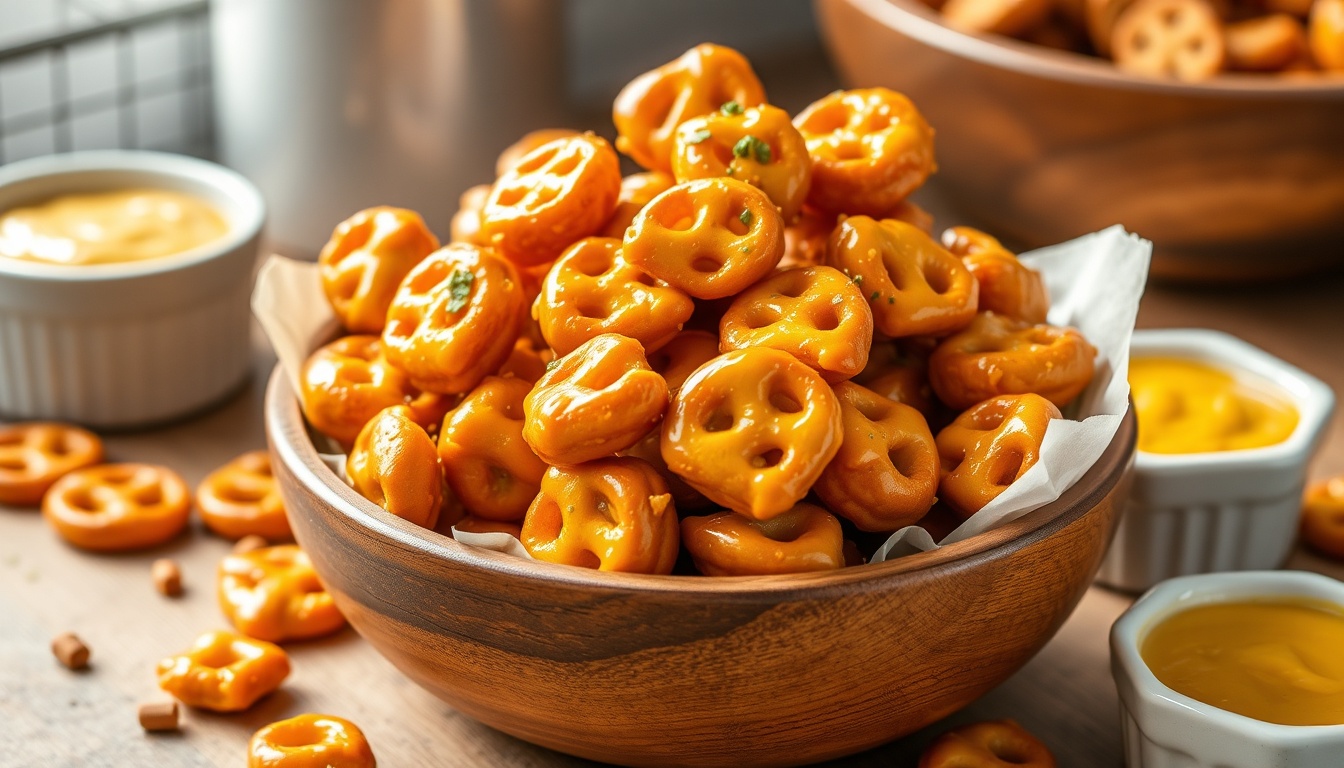
Why Honey Makes Better Seasoned Pretzels
Store-bought honey mustard pretzels use corn syrup and artificial flavoring. Homemade versions with real honey are a different experience entirely. Honey's fructose caramelizes at 230°F — a gentle temperature that creates a thin, crispy shell on each pretzel without burning. Corn syrup doesn't caramelize the same way, which is why store-bought versions rely on added sugar and maltodextrin to achieve crunch.
Real honey also brings over 180 aromatic compounds (floral, fruity, caramel notes) that interact with the mustard's vinegar and peppery allyl isothiocyanate to create a complex sweet-tangy-spicy flavor profile. Raw honey's trace enzymes continue working during the brief bake, developing nuanced flavors that processed sweeteners simply cannot replicate.
Choosing Your Mustard
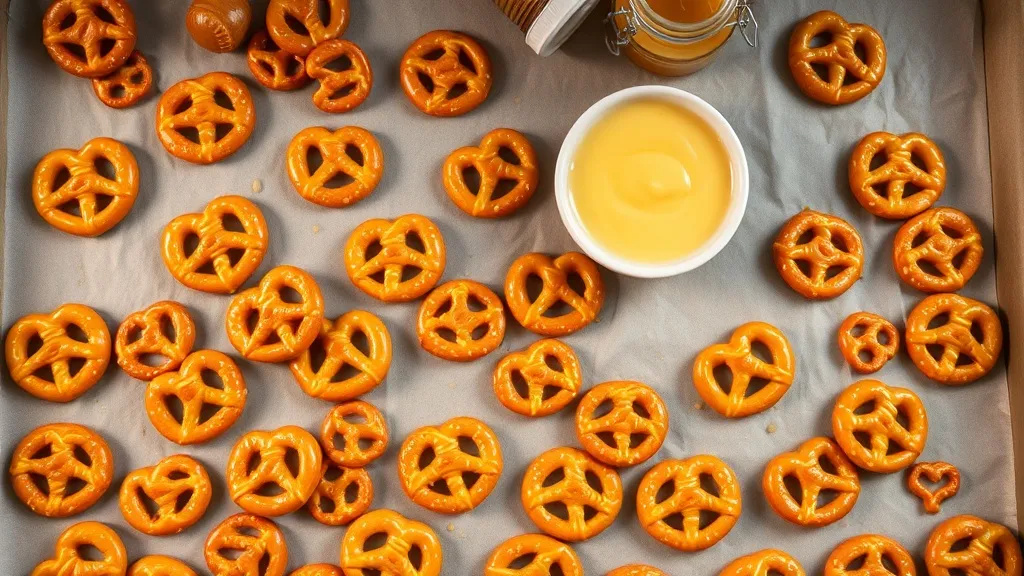
The recipe uses two mustards for a reason — each contributes something different:
- **Dijon mustard** — Provides sharp, complex heat from brown and black mustard seeds ground with verjuice. It is the backbone of the flavor. Maille, Grey Poupon, or any whole-grain Dijon works well.
- **Yellow mustard** — Adds tangy acidity and the classic "honey mustard" flavor that people expect. It smooths out the Dijon's sharpness. French's classic is ideal.
- **Whole-grain option** — Replace the Dijon with whole-grain mustard for visible mustard seed pops and a more rustic texture. The seeds add satisfying crunch between the pretzel and the honey glaze.
- **Hot mustard swap** — For a spicier batch, replace the yellow mustard with Chinese hot mustard or English mustard powder mixed with water. The heat pairs surprisingly well with the honey sweetness.
Pro Tip
Taste your glaze before tossing the pretzels. Mustard brands vary in salt and heat levels. Adjust honey up for sweeter pretzels, or add more Dijon for tangier ones.
Get the Honey Buyer's Cheat Sheet (free PDF)
16 varieties on one page — color, flavor, best use and what a fair price looks like — from the 304 honeys we track.
Best Honey Varieties for Honey Mustard Pretzels
Mild honeys work best here since the mustard provides plenty of flavor complexity:
- Clover honey — The classic choice. Clean, mild sweetness that lets the mustard flavor shine through. Widely available and affordable for large batches.
- Wildflower honey — Adds subtle floral complexity without overwhelming the mustard. The best all-around upgrade from clover.
- Acacia honey — Very mild and slow to crystallize, which makes it easy to work with. Creates the lightest, most delicate honey mustard coating.
- Orange blossom honey — Adds a citrus brightness that pairs surprisingly well with the mustard tang. Excellent for the everything bagel variation below.
- **Avoid for this recipe:** Buckwheat and manuka honeys are too bold and would compete with the mustard rather than complementing it.
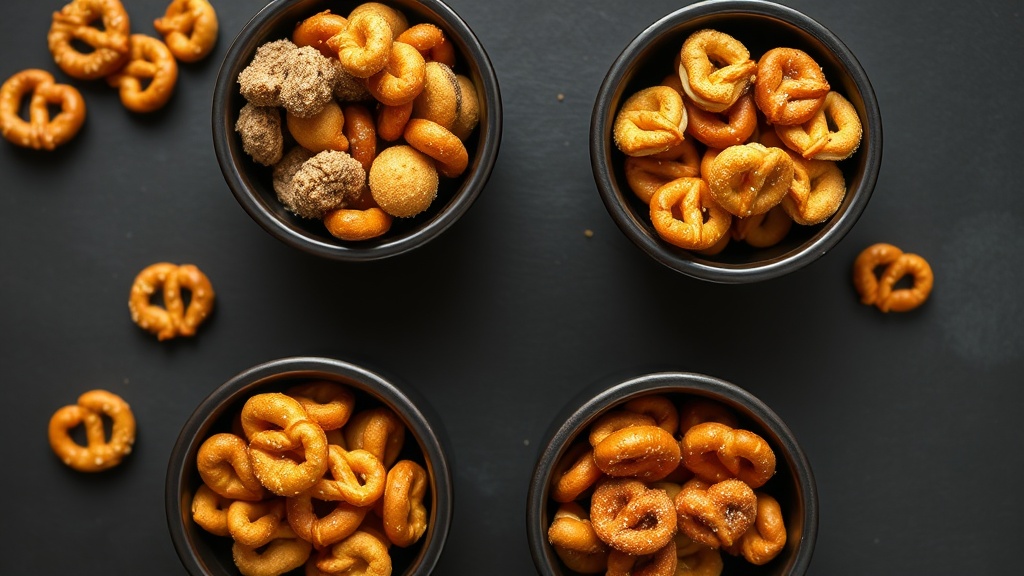
5 Seasoning Variations
Once you master the base recipe, try these flavor twists:
- **Everything bagel** — Sprinkle 2 tablespoons everything bagel seasoning over the pretzels right after baking, while the glaze is still tacky. The sesame, poppy, garlic, and onion stick to the honey mustard coating perfectly.
- **Ranch honey mustard** — Add 1 tablespoon dried ranch seasoning mix to the glaze. The buttermilk, dill, and chive flavors combined with honey mustard create an addictive party snack.
- **Spicy honey mustard** — Add 1/2 teaspoon cayenne pepper and 1 tablespoon honey sriracha sauce to the glaze. For extra heat, add a pinch of ghost pepper powder. Sweet, tangy, and fiery.
- **Honey mustard herb** — Add 1 tablespoon dried Italian seasoning and 1/2 teaspoon dried dill to the glaze. Toss with 2 tablespoons grated Parmesan right after baking. Savory and aromatic.
- **Cinnamon sugar honey mustard** — Reduce the mustard to 1 tablespoon total (Dijon only), increase honey to 4 tablespoons, and add 1 teaspoon cinnamon and 1 tablespoon sugar. A sweet-savory crossover that works surprisingly well. Skip the garlic and onion powder.
Tips for the Crunchiest Pretzels
The difference between soggy and crunchy honey mustard pretzels comes down to a few key details:
- **Low and slow** — 325°F is intentional. Higher temperatures brown the honey too fast on the outside while leaving the coating soft underneath. Lower heat gives the moisture time to evaporate and the honey time to caramelize evenly.
- **Single layer** — Overlapping pretzels trap steam between them, creating soft spots. Use two sheet pans if your pretzels don't fit in one layer.
- **Cool completely** — The coating feels tacky and soft right out of the oven. It needs a full 15 minutes to set into a hard, crunchy shell. Resist the urge to eat them hot (or don't — they are good warm too, just stickier).
- **Parchment paper** — Without it, the honey caramelizes directly onto the sheet pan and the pretzels stick badly. Silicone baking mats also work.
- **Don't over-stir** — Toss just enough to coat. Excessive stirring breaks small pretzels and knocks off the coating before it sets.
Storage and Gift Ideas
These pretzels store well and make excellent homemade gifts:
- **Airtight container** — Store at room temperature in a sealed container for up to 2 weeks. The honey coating acts as a natural preservative, keeping the pretzels fresh longer than uncoated ones.
- **Avoid humidity** — In humid climates, the honey coating can soften. Add a food-safe desiccant packet to the container or store in the fridge and re-crisp in a 300°F oven for 5 minutes before serving.
- **Mason jar gifts** — Layer the pretzels in wide-mouth mason jars with a ribbon and tag. Attach a small card with the recipe. Popular holiday, housewarming, or teacher appreciation gift.
- **Snack mix** — Combine with honey roasted almonds, honey roasted peanuts, dried cranberries, and white chocolate chips for a honey mustard trail mix.
- **Party platter** — Arrange in a bowl alongside a honey mustard dipping sauce for double honey mustard flavor.
Common Mistakes
Avoid these pitfalls for perfect honey mustard pretzels every time:
- **Oven too hot** — Temperatures above 350°F brown the honey coating too fast, creating bitter burnt spots before the interior dries out. Stick to 325°F.
- **Too much liquid** — If the glaze pools at the bottom of the bowl, you have used too much. The coating should be thin and even — thick patches will stay soft and chewy instead of crunchy.
- **Skipping the stir at 10 minutes** — The pretzels on the edges of the pan will brown faster. Stirring redistributes them for even coating.
- **Eating them hot** — The coating has not set yet. Wait 15 minutes for the honey to harden into a shell. If you eat them warm, they will be sticky and seem undercooked.
- **Using stale pretzels** — Start with fresh, crunchy pretzels. Stale pretzels absorb the moisture from the glaze and will not crisp up properly during baking.
- **Storing while still warm** — Sealing warm pretzels in a container traps steam and makes the coating go soft within hours.