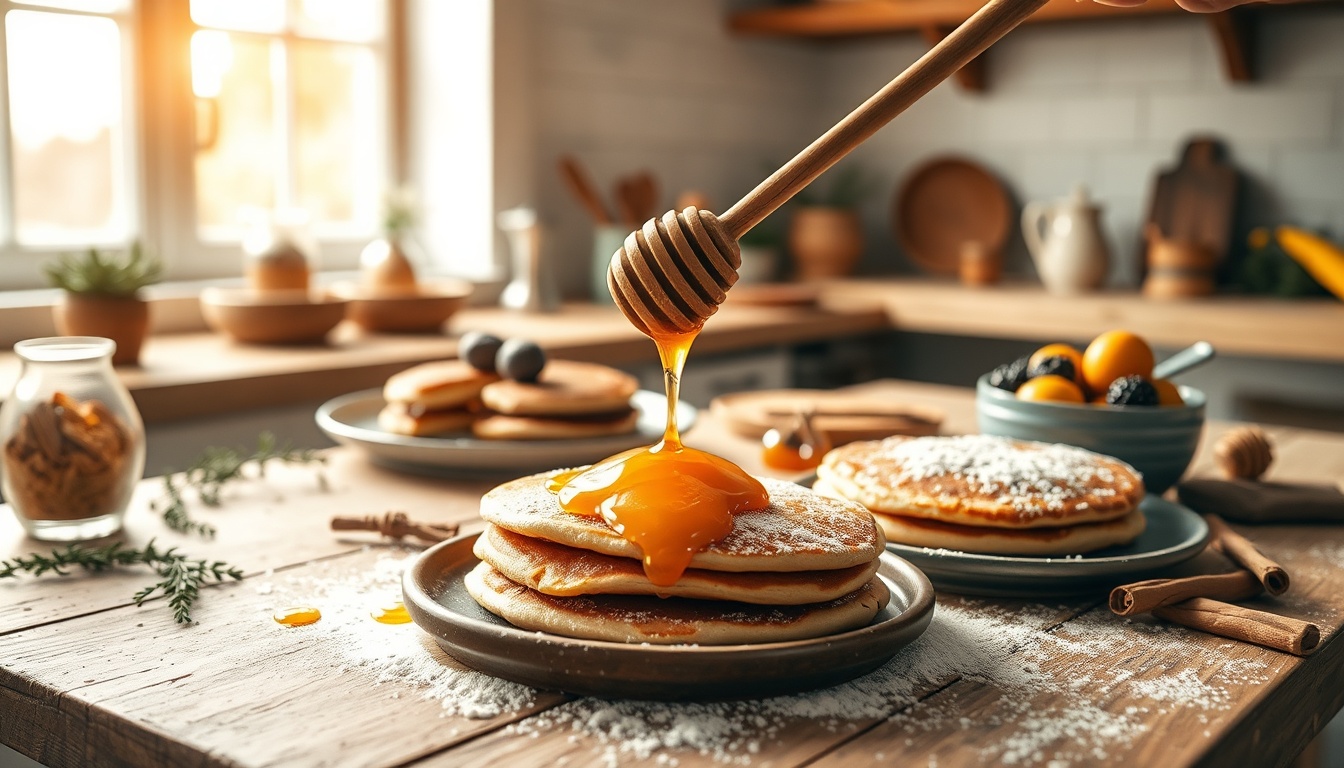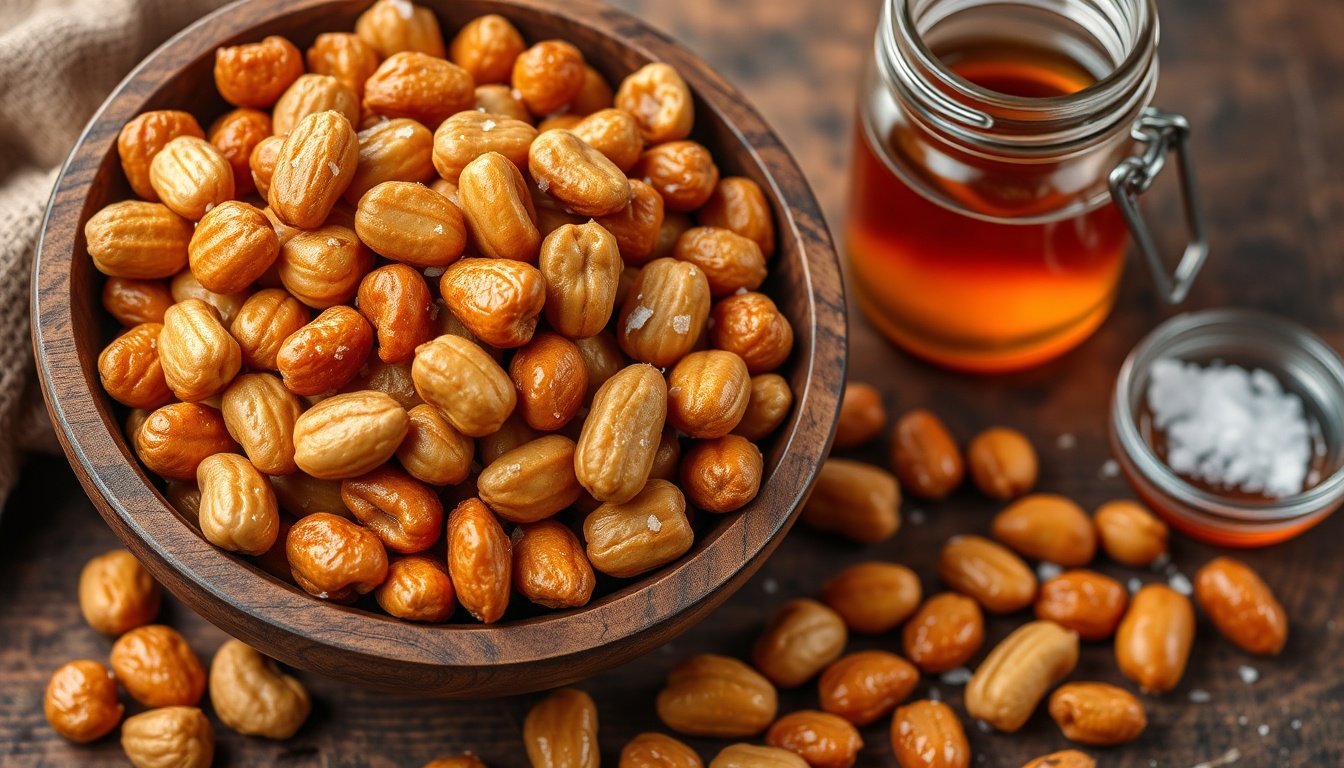
Why Homemade Honey Roasted Peanuts Beat Store-Bought
Store-bought honey roasted peanuts list corn syrup, sugar, and artificial flavors before honey even appears on the label. Homemade flips that ratio entirely — real honey is the primary sweetener, and you control exactly what goes in.
The difference in taste is striking. Real honey caramelizes differently than corn syrup, creating a deeper, more complex sweetness with floral notes that vary by honey type. And the crunch factor is better because you bake them fresh rather than coating pre-roasted nuts in a sugar shell.
They take 20 minutes, use 4 ingredients, and make your kitchen smell incredible. They're also the easiest edible gift you can make — package them in mason jars alongside honey butter or honey granola for a homemade gift basket.
Ingredients
Just four core ingredients. The simplicity is the point — you taste the peanuts and the honey, not a list of additives.
- **Raw peanuts:** 2 cups (280g) — raw, skin-on or blanched (NOT pre-roasted)
- **Honey:** 3 tablespoons (63g) raw honey — wildflower or clover recommended
- **Butter:** 1 tablespoon melted (or coconut oil for dairy-free/vegan)
- **Fine sea salt:** 3/4 teaspoon (add more to taste after baking)
- **Optional:** 1/4 teaspoon vanilla extract
Pro Tip
You must start with raw peanuts, not roasted. Pre-roasted peanuts will over-brown and burn before the honey has time to caramelize. Raw peanuts are in the baking aisle or bulk section of most grocery stores.
Get the Honey Buyer's Cheat Sheet (free PDF)
16 varieties on one page — color, flavor, best use and what a fair price looks like — from the 304 honeys we track.
Step-by-Step Instructions
**Step 1: Preheat and prep.** Preheat oven to 325°F (165°C). Line a rimmed baking sheet with parchment paper — this is non-negotiable. Honey will cement the peanuts to an unlined pan.
**Step 2: Coat the peanuts.** In a medium bowl, whisk together honey, melted butter, and salt. Add raw peanuts and toss until every nut is evenly coated. The mixture should look glossy, not pooling.
**Step 3: Spread in a single layer.** Pour the coated peanuts onto the prepared baking sheet and spread them into an even, single layer. Crowded peanuts steam instead of roasting.
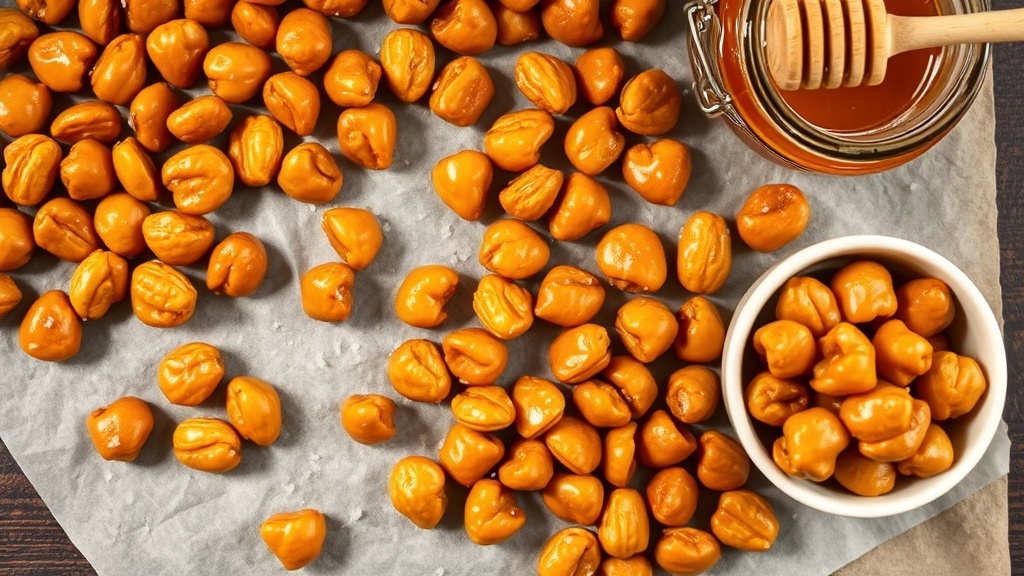
**Step 4: Bake with stirring.** Bake for 18-22 minutes total, stirring every 7 minutes to prevent hot spots and ensure even caramelization. The peanuts are done when they're golden brown and the honey coating looks dry and slightly bubbly.
**Step 5: Cool completely.** Remove from oven and sprinkle with additional flaky salt if desired. The peanuts will feel soft and sticky straight from the oven — this is normal. They crisp up dramatically as they cool, about 15-20 minutes. Don't touch them until fully cooled.
**Step 6: Break apart and store.** Once cooled, break any clusters apart with your hands. Store in an airtight container at room temperature.
Pro Tip
The peanuts go from perfectly golden to burnt in about 2 minutes. Set a timer for every 7-minute stir interval, and pull them when they're slightly lighter than your target color — carryover heat finishes the job.
The Science of the Perfect Crunch
Understanding why honey roasted peanuts crisp up helps you get consistent results every time:
Honey is about 17% water. During baking, that water evaporates, leaving behind a thin shell of caramelized sugars (primarily fructose and glucose) coating each peanut. Fructose caramelizes at a lower temperature (230°F/110°C) than table sugar (320°F/160°C), which is why the coating browns beautifully at 325°F without burning the peanuts inside.
The sticky-when-hot, crunchy-when-cool behavior is the same glass transition that makes honey granola cluster together — liquid caramelized sugars solidify into a crisp shell as they cool below about 150°F (65°C).
This is also why the 325°F temperature matters. Too high (375°F+) and the honey sugars burn before the peanuts roast through. Too low (275°F) and the water doesn't evaporate fast enough, leaving a chewy instead of crunchy coating.
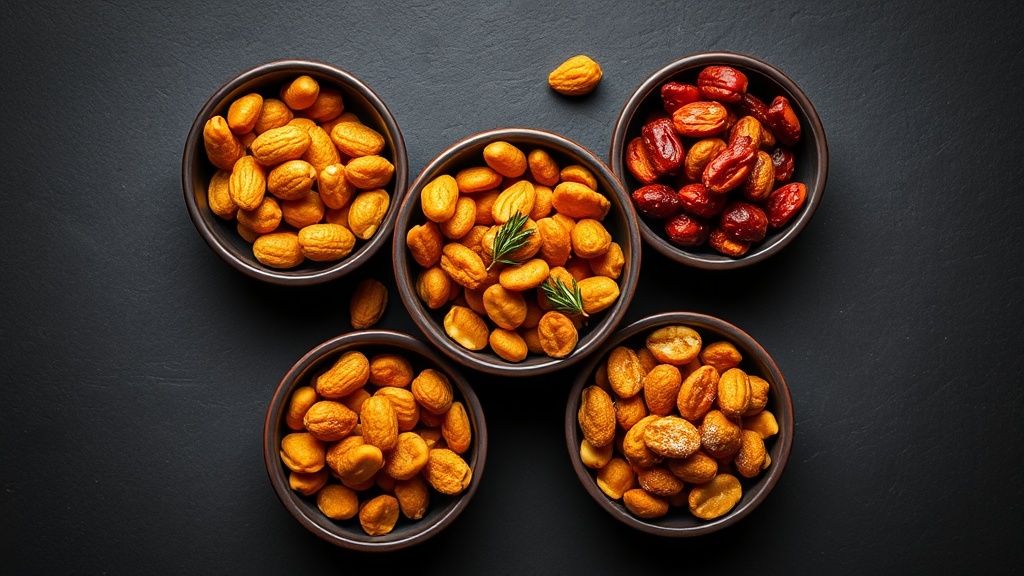
5 Spice Variations
The basic honey-salt version is perfect on its own, but these variations add another dimension:
**1. Honey Cinnamon Peanuts.** Add 1 teaspoon ground cinnamon and 1/4 teaspoon nutmeg to the honey mixture. Warm, cozy, and reminiscent of honey and cinnamon flavors that pair naturally.
**2. Spicy Honey Peanuts.** Add 1/2 teaspoon cayenne pepper and 1/4 teaspoon smoked paprika. The sweet-heat combination is addictive — similar to the appeal of hot honey. Increase cayenne to 1 teaspoon for serious heat.
**3. Honey Rosemary Peanuts.** Add 1 tablespoon finely minced fresh rosemary and 1/2 teaspoon cracked black pepper. Sophisticated and savory — perfect for cheese boards and cocktail hour.
**4. Honey Curry Peanuts.** Add 1 teaspoon curry powder, 1/4 teaspoon turmeric, and a pinch of cayenne. Warm, aromatic, and pairs well with beer. The turmeric and honey combination also has anti-inflammatory properties.
**5. Honey Garlic Peanuts.** Add 1 teaspoon garlic powder and 1/2 teaspoon onion powder. Savory umami crunch inspired by our honey garlic sauce. Add a splash of soy sauce for extra depth.
Which Honey Works Best
Since honey is one of only four ingredients, the variety has a noticeable impact on flavor:
- **Wildflower honey** — Best all-around choice. Complex floral notes that add depth without dominating.
- **Clover honey** — Light and clean. Produces the most neutral, crowd-pleasing result closest to store-bought flavor (but better).
- **Orange blossom honey** — Adds subtle citrus notes. Excellent with the cinnamon or rosemary variations.
- **Buckwheat honey** — Bold and molasses-like. Creates a darker, more caramel-forward flavor. Try it with the spicy variation.
- **Sourwood honey** — Buttery with a tangy finish. A premium choice that makes the peanuts taste noticeably special.
Pro Tip
Any raw honey works here — the heat of baking will destroy the enzymes anyway, so save your expensive manuka for applications where it stays raw. A good wildflower or clover is ideal.
Beyond Snacking: 8 Ways to Use Honey Roasted Peanuts
Once you have a batch, they're versatile far beyond the snack bowl:
- **Trail mix** — Combine with dried cranberries, dark chocolate chips, and coconut flakes
- **Salad topping** — Crush and sprinkle over spinach or kale salads for sweet-salty crunch
- **Ice cream topping** — Chop roughly and scatter over vanilla or honey ice cream
- **Yogurt bowl** — Mix into Greek yogurt with honey granola and fresh fruit
- **Stir-fry garnish** — Add whole or chopped to honey garlic shrimp or pad Thai
- **Cheese board** — Pair with blue cheese, aged cheddar, or brie alongside honeycomb
- **Baking mix-in** — Fold into honey banana bread or cookie dough
- **Gift jars** — Layer in mason jars with a ribbon for easy homemade gifts
Storage Guide
Proper storage keeps the crunch intact:
- **Room temperature:** Airtight container for up to 2 weeks. Glass jars or resealable bags with air squeezed out.
- **Don't refrigerate** — The humidity in the fridge makes the honey coating absorb moisture and turn chewy.
- **Freezer:** Up to 3 months in a freezer bag. They thaw in 10 minutes at room temperature and the crunch returns.
- **Humidity is the enemy** — If they lose crunch, spread on a baking sheet and re-bake at 300°F for 5-7 minutes. Cool completely.
- **Separate flavors** — If making multiple variations, store each separately. The spices can transfer between batches.
Common Mistakes to Avoid
A few pitfalls to watch for:
- **Using pre-roasted peanuts** — They'll burn. Always start with raw peanuts.
- **Skipping the parchment paper** — Caramelized honey becomes industrial-strength glue. You'll destroy the pan.
- **Stirring too often** — Every 7 minutes is enough. Constant stirring breaks the honey coating before it sets.
- **Testing crunch while hot** — They will feel soft and sticky from the oven. Wait 15-20 minutes. The crunch develops as they cool.
- **Overcrowding the pan** — Peanuts piled on top of each other steam instead of roast. Use a second pan if needed.
- **Too much honey** — More honey doesn't mean more flavor. It means a thick, chewy coating instead of a thin, crispy shell. The 3-tablespoon ratio is tested.