Why Honey Makes Better Oatmeal Cookies
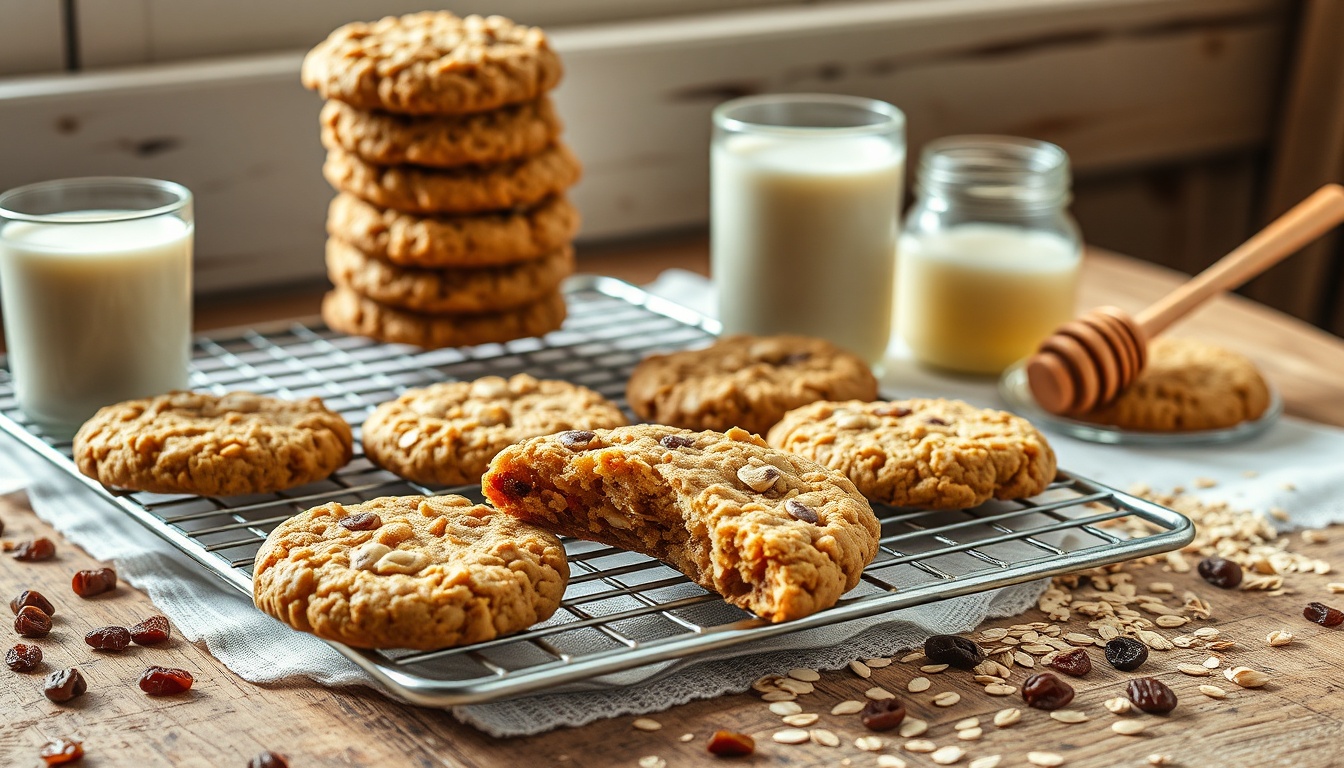
Honey does three things in cookies that sugar simply cannot. First, honey is hygroscopic — it actively draws moisture from the air, which is why honey oatmeal cookies stay chewy for days while sugar-based cookies go stale overnight. Second, honey's fructose caramelizes at a lower temperature than sucrose (around 230°F versus 320°F), producing deeper golden color and more complex caramel flavors. Third, honey's 200+ aromatic compounds add flavor complexity that white sugar can't match.
The result is a cookie that's chewier, more golden, more flavorful, and stays fresh longer than any sugar-based oatmeal cookie — with the bonus of eliminating refined sugar entirely.
This recipe makes about 24 cookies in under 30 minutes, uses one bowl, and requires no special equipment beyond a baking sheet.
Choosing the Best Honey for Cookies
Since honey replaces all the sugar in this recipe, the variety you choose genuinely shapes the cookie's flavor.
- **Wildflower honey** — Our top choice. Multi-floral complexity that adds depth and warmth, complementing the oats and cinnamon beautifully.
- **Clover honey** — Clean, mild sweetness that lets the oats and butter shine. The most crowd-pleasing option for kids and cookie-swap situations.
- **Orange blossom honey** — Citrus notes that create a surprisingly sophisticated cookie. Outstanding with the cranberry-walnut variation.
- **Buckwheat honey** — Bold, molasses-like depth for an intensely flavored, almost gingerbread-like cookie. Pairs beautifully with chocolate chips.
- **Sourwood honey** — Buttery, caramel notes that taste like the honey was made for oatmeal cookies. A premium choice if you can find it.
Pro Tip
For the best flavor, use a honey that you enjoy eating on its own. The baking process concentrates the honey's flavor rather than masking it, so low-quality honey produces low-quality cookies.
Get the Honey Buyer's Cheat Sheet (free PDF)
16 varieties on one page — color, flavor, best use and what a fair price looks like — from the 304 honeys we track.
The Complete Recipe: Honey Oatmeal Cookies
This recipe makes about 24 cookies. The dough comes together in one bowl and doesn't require chilling — you can go from ingredients to fresh cookies in under 30 minutes.
Ingredients
- 1/2 cup (170g) raw honey
- 1/2 cup (1 stick / 113g) unsalted butter, melted and slightly cooled
- 1 large egg
- 1 teaspoon vanilla extract
- 1 1/2 cups (135g) old-fashioned rolled oats (not instant)
- 1 cup (125g) all-purpose flour
- 1 teaspoon ground cinnamon
- 1/2 teaspoon baking soda
- 1/4 teaspoon salt
- Optional: 1 cup mix-ins (see variations below)
Step-by-Step Instructions
**Step 1: Preheat and prepare.** Preheat oven to 350°F (175°C). Line two baking sheets with parchment paper. No greasing needed — the butter in the dough prevents sticking.
**Step 2: Mix the wet ingredients.** In a large bowl, whisk together the melted butter and honey until smooth and emulsified. Add the egg and vanilla extract. Whisk until combined — the mixture should look glossy and uniform.
**Step 3: Add the dry ingredients.** Add the flour, oats, cinnamon, baking soda, and salt directly to the wet mixture. Stir with a wooden spoon or spatula until just combined — you should see no dry flour patches, but don't overmix or the cookies will be tough. The dough will be sticky and thick, wetter than a typical cookie dough. This is normal — honey adds more moisture than sugar.
**Step 4: Add mix-ins (optional).** Fold in your choice of mix-ins gently. See the 5 variations below for combinations.
**Step 5: Scoop and shape.** Using a tablespoon or small cookie scoop, drop rounded portions of dough onto the prepared baking sheets, spacing about 2 inches apart. These cookies spread moderately. Flatten each ball slightly with damp fingers — this ensures even baking since the sticky dough doesn't spread as uniformly as sugar-based dough.
**Step 6: Bake.** Bake for 10-12 minutes until the edges are golden brown but the centers still look slightly underdone. This is the key to chewy cookies — they firm up significantly as they cool. Honey's lower browning temperature means these cookies brown faster than sugar cookies, so check at 10 minutes.
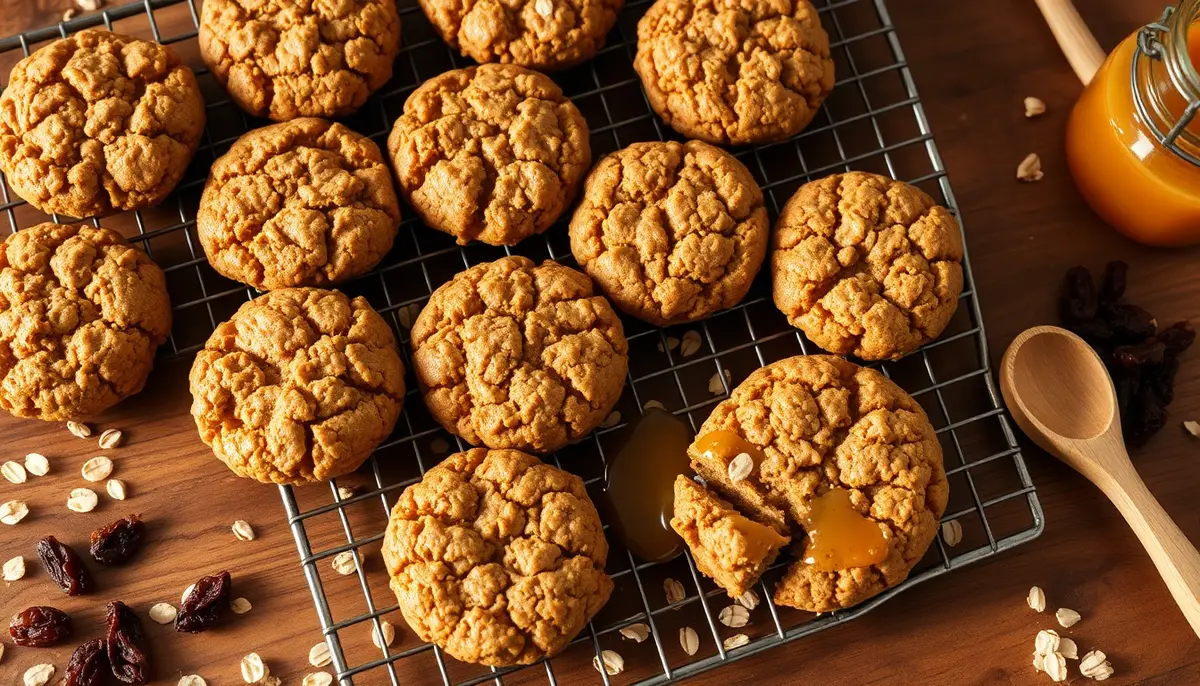
**Step 7: Cool.** Let the cookies cool on the baking sheet for 5 minutes (they're too soft to move immediately), then transfer to a wire rack. They'll firm up into perfectly chewy cookies as they cool.
Pro Tip
If the dough feels too wet to scoop, let it rest for 5 minutes — the oats will absorb moisture and the dough will become easier to handle. Don't add more flour, which would make the cookies dry and cakey.
5 Mix-In Variations
Start with the base recipe above and fold in one of these combinations at Step 4.
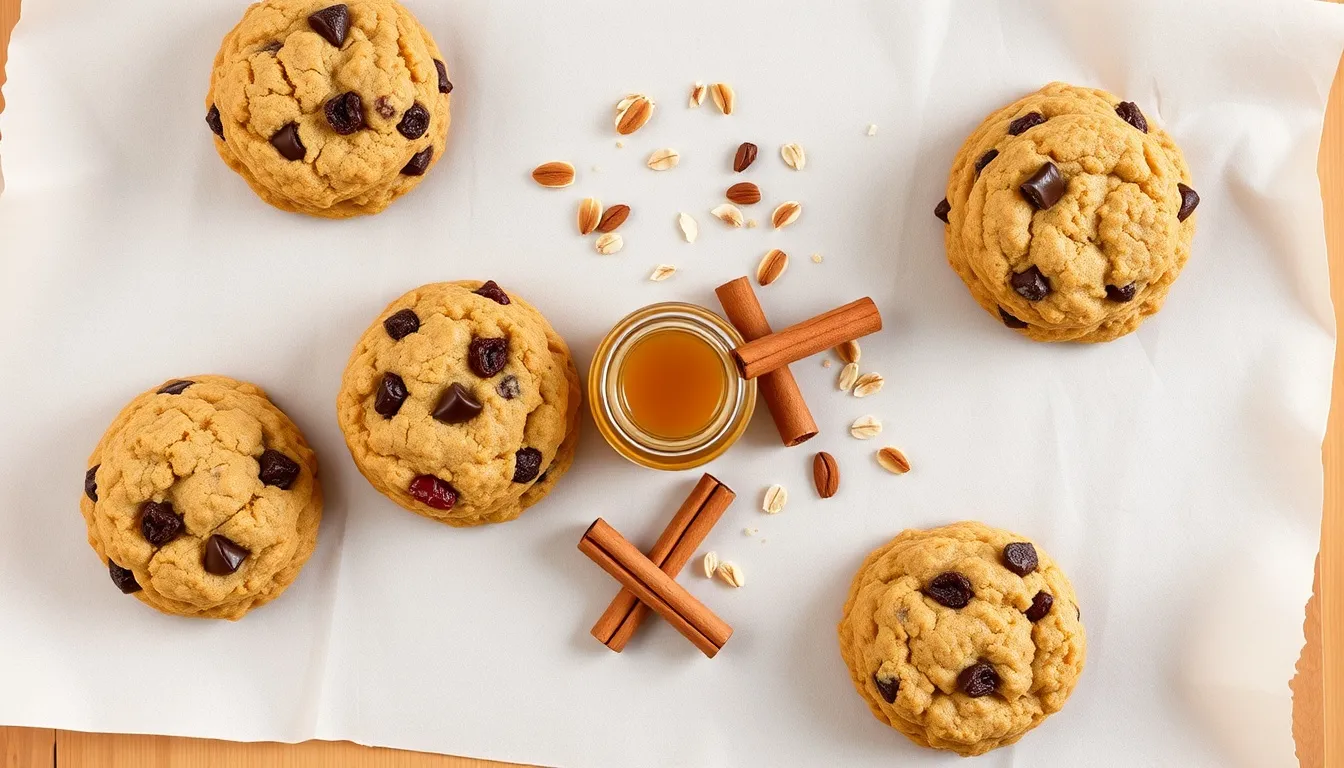
- **Chocolate Chip:** 3/4 cup dark chocolate chips (60-70% cacao) + 1/4 cup chopped walnuts. The slight bitterness of dark chocolate plays beautifully against honey's sweetness. Use buckwheat honey for maximum chocolate-cookie depth.
- **Cranberry Walnut:** 1/2 cup dried cranberries + 1/2 cup chopped toasted walnuts. Tart cranberries and earthy walnuts balance the honey's sweetness. Use orange blossom honey for a citrus undertone.
- **Apple Cinnamon:** 1/2 cup dried apple pieces (chopped small) + 1/4 cup raisins + extra 1/2 teaspoon cinnamon. Tastes like an apple pie cookie. Use wildflower honey for warm complexity.
- **Coconut Almond:** 1/2 cup unsweetened shredded coconut + 1/2 cup sliced almonds. Toast the coconut and almonds for 5 minutes at 350°F first for deeper flavor. Use acacia honey for delicate sweetness.
- **Peanut Butter Swirl:** Add 3 tablespoons natural peanut butter to the wet ingredients in Step 2. Mix in 1/2 cup chopped roasted peanuts at Step 4. Use clover honey for classic peanut-butter-and-honey flavor.
The Science of Baking with Honey
Understanding why honey behaves differently from sugar in baking helps you troubleshoot and adapt any cookie recipe. See our full honey baking conversion guide for detailed substitution ratios.
**Moisture content.** Honey is about 17% water, while sugar is dry. This extra moisture is why honey cookies are chewier and why the dough is stickier — it's not a mistake, it's the mechanism that produces the texture.
**Browning temperature.** Honey's fructose caramelizes at 230°F, much lower than sucrose's 320°F. This means honey cookies brown faster and more deeply — always check a minute or two early compared to sugar-based recipes.
**Acidity.** Honey is slightly acidic (pH 3.4-6.1), which is why the recipe uses baking soda rather than baking powder. The acid-base reaction produces carbon dioxide for lift and neutralizes any tang.
**Hygroscopic nature.** Honey actively absorbs moisture from the air. This is why honey cookies stay chewy for days when sugar cookies go stale — the honey keeps pulling moisture into the cookie. It also means storing them in an airtight container is important in humid climates to prevent them from becoming too soft.
Storage and Shelf Life
**Room temperature (5-7 days):** Store in an airtight container. Honey's hygroscopic properties keep these cookies chewy far longer than sugar-based cookies — expect them to taste freshly baked for nearly a week. Place a piece of parchment between layers to prevent sticking.
**Freezer (3 months):** Freeze baked, cooled cookies in a single layer on a baking sheet, then transfer to freezer bags. Thaw at room temperature for 20 minutes. Alternatively, freeze balls of raw dough on a baking sheet, then bag them — bake from frozen at 350°F for 13-15 minutes (add 2-3 minutes to the normal time).
**Shipping tip:** Honey oatmeal cookies are one of the best cookies for mailing because they stay chewy during transit while sugar cookies turn to crumbs. Wrap pairs back-to-back in plastic wrap, pack snugly in a tin with parchment paper between layers.
Common Mistakes and Fixes
- **Cookies are flat and greasy:** The butter was too hot when mixed with the honey. Let melted butter cool for 5 minutes before combining. Also check that your baking soda isn't expired — fresh baking soda provides the lift that keeps cookies from going flat.
- **Cookies are cakey instead of chewy:** Overmixed dough develops too much gluten. Stir until just combined and stop — a few small lumps are fine. Also make sure you're using old-fashioned rolled oats, not instant (which absorb too much moisture) or steel-cut (which stay too hard).
- **Cookies burned on the bottom:** Honey browns faster than sugar. Try 340°F instead of 350°F and move the baking sheet to the upper third of the oven. Use light-colored baking sheets — dark pans absorb more heat.
- **Cookies are too soft to pick up:** This is normal right out of the oven — they firm up during the 5-minute rest on the baking sheet. If they're still too soft after cooling, they were slightly underbaked. Next batch, add 1-2 minutes to the bake time.
- **Dough is impossibly sticky:** Normal for honey-based cookie dough. Wet your hands or use a damp cookie scoop. Don't add extra flour — it will make the cookies dry and dense.