Why Honey Cake Is Unlike Any Other Cake
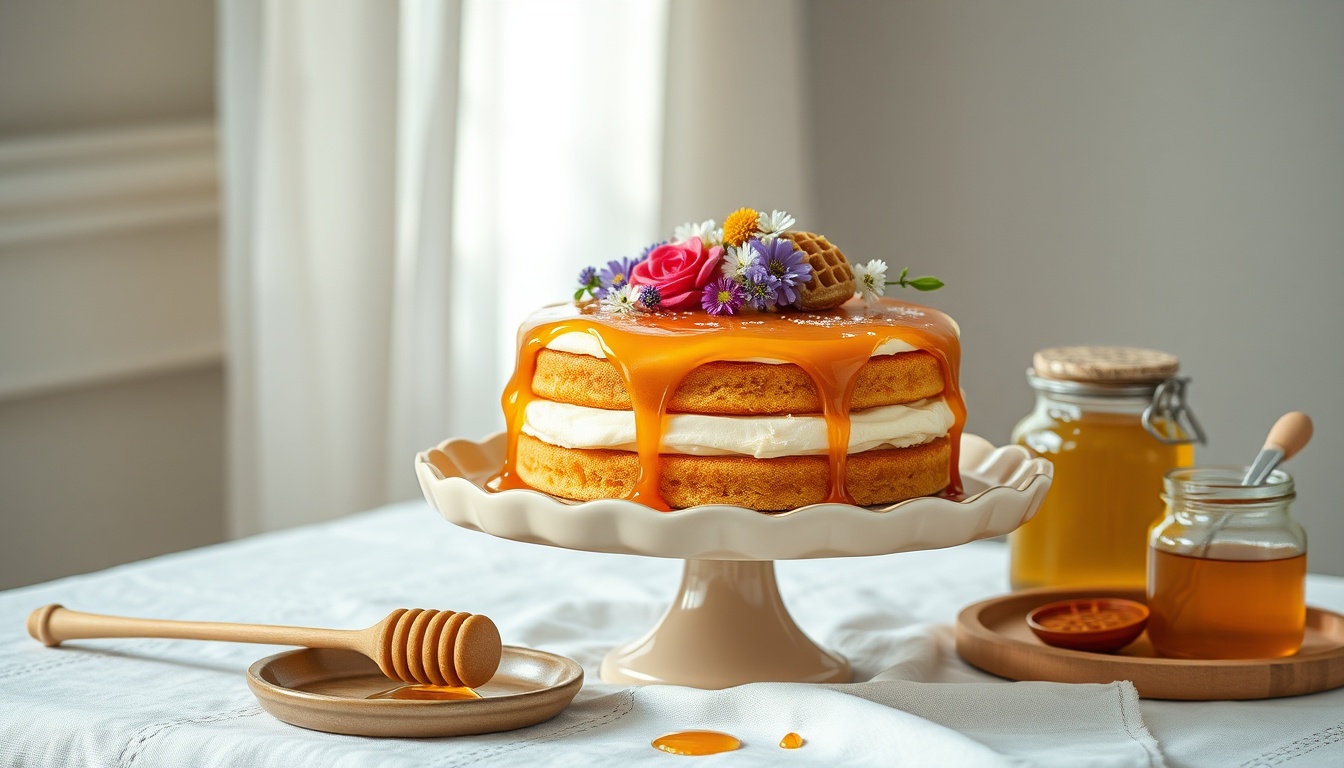
Honey cake stands apart from every other cake in your repertoire because honey does things that sugar simply cannot. As a humectant, honey actively draws moisture from the air into the crumb — meaning a honey cake actually gets *better* over the first 24-48 hours after baking, becoming more moist and more flavorful as the spices bloom.
This is the opposite of sugar-based cakes, which start drying out the moment they leave the oven. A well-wrapped honey cake stays perfectly moist for 5-7 days at room temperature and freezes beautifully for up to 3 months.
Honey cake has deep roots across many cultures. It is central to Jewish New Year (Rosh Hashanah) celebrations as a symbol of hope for a sweet year, and variations appear in European baking traditions from Russian medovik to German Honigkuchen. But you don't need a holiday to appreciate what honey does in a cake — the chemistry alone makes it worth baking year-round.
Choosing the Best Honey for Cake
The honey variety matters more in cake than in almost any other recipe, because honey is both the primary sweetener and a dominant flavor. You'll taste it in every bite.
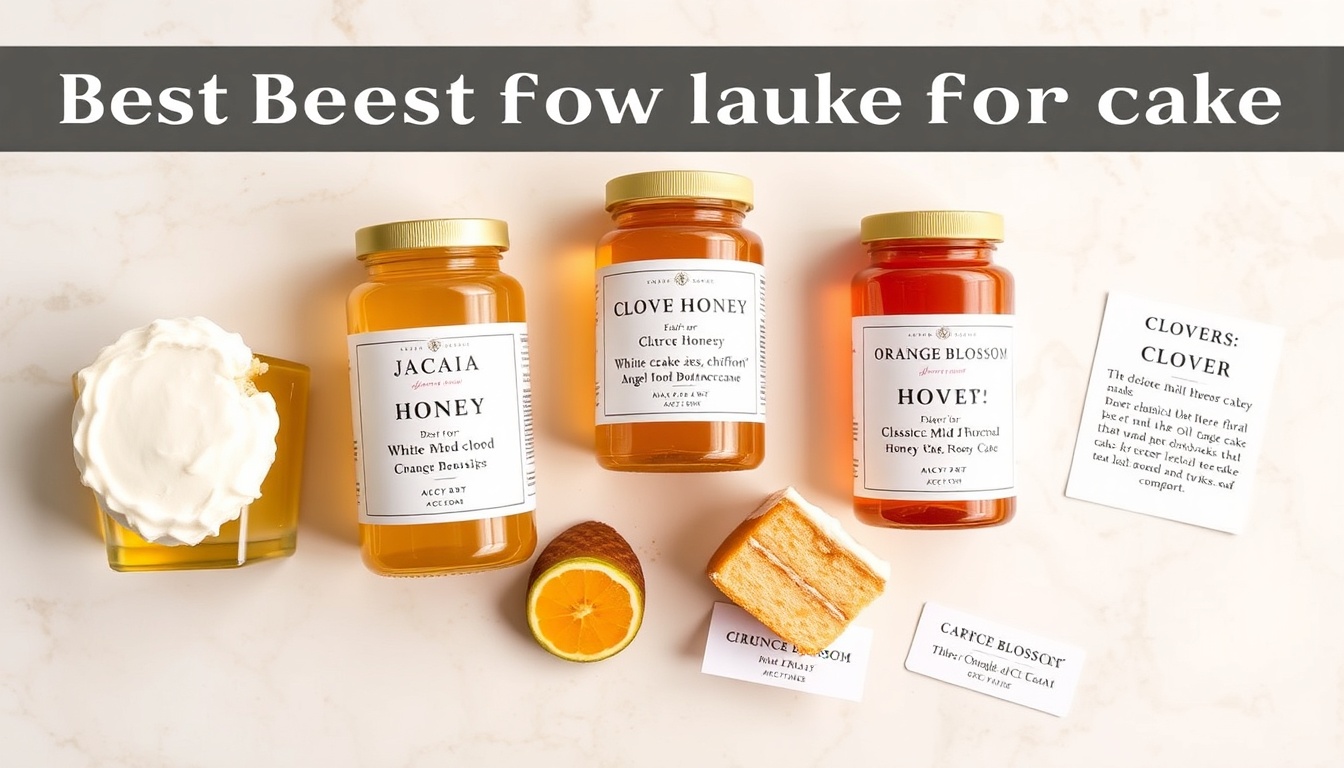
- **Wildflower honey ($13–24)** — Our top choice. Complex, multi-floral flavor that adds depth without overwhelming the spices. Produces the most interesting, nuanced cake.
- **Buckwheat honey ($9–23)** — Bold, molasses-like character with ORAC 16,000+ antioxidants. Creates the darkest, most intensely flavored honey cake. Outstanding for anyone who loves gingerbread-style baking.
- **Clover honey ($9–15)** — Clean, straightforward sweetness. The best choice if you want the warm spices (cinnamon, ginger, cloves) to be the star rather than the honey.
- **Orange blossom honey ($12–24)** — Subtle citrus notes that pair beautifully with the citrus glaze variation below. Produces a lighter, more fragrant cake.
- **Sourwood honey ($14–23)** — Buttery caramel undertones that make the cake taste like it came from a professional bakery. A premium choice worth the investment.
Pro Tip
Use liquid honey for accurate measuring. If your honey has crystallized, gently warm the jar in warm water first. Crystallized honey doesn't distribute evenly through batter.
Get the Honey Buyer's Cheat Sheet (free PDF)
16 varieties on one page — color, flavor, best use and what a fair price looks like — from the 304 honeys we track.
The Complete Recipe: Moist Honey Cake
This recipe makes one 9×5-inch loaf or one 9-inch round cake. Total time: 70 minutes (15 minutes prep, 55 minutes bake). The coffee in this recipe isn't optional — it deepens the honey flavor without adding a coffee taste.
Ingredients
- 3/4 cup (9 oz / 255g) raw honey
- 1/2 cup (100g) granulated sugar
- 1/3 cup (80ml) vegetable oil or melted coconut oil
- 2 large eggs, room temperature
- 1 teaspoon vanilla extract
- 1 1/2 cups (190g) all-purpose flour
- 1 1/2 teaspoons baking powder
- 1/2 teaspoon baking soda
- 1/4 teaspoon salt
- 1 teaspoon ground cinnamon
- 1/2 teaspoon ground ginger
- 1/4 teaspoon ground cloves
- 1/4 teaspoon ground allspice
- 1/2 cup (120ml) warm strong coffee or tea
Step-by-Step Instructions
**Step 1: Prep.** Preheat oven to 325°F (165°C). Grease and flour a 9×5-inch loaf pan or 9-inch round cake pan. Line the bottom with parchment paper. The lower temperature is important — honey browns faster than sugar due to its fructose content, and higher heat will over-brown the crust before the center bakes through.
**Step 2: Mix wet ingredients.** In a large bowl, whisk together honey, sugar, and oil until smooth. Add eggs one at a time, whisking well after each. Stir in vanilla extract. The mixture should be smooth and glossy.
**Step 3: Combine dry ingredients.** In a separate bowl, whisk together flour, baking powder, baking soda, salt, cinnamon, ginger, cloves, and allspice. Whisking the dry ingredients distributes the leavening and spices evenly — no sifting needed.
**Step 4: Alternate additions.** Add the dry ingredients to the wet mixture in three additions, alternating with the warm coffee in two additions (dry-wet-dry-wet-dry). Mix gently with a spatula or wooden spoon after each addition until just combined. Do not overmix — a few small lumps are fine. Overmixing develops gluten, producing a tough cake.
**Step 5: Bake.** Pour batter into the prepared pan. It will be thinner than typical cake batter — this is normal. Bake for 50-60 minutes (loaf pan) or 40-50 minutes (round pan) until a toothpick inserted in the center comes out clean and the top springs back when lightly pressed.
**Step 6: Cool and wrap.** Cool in the pan for 15 minutes, then turn out onto a wire rack. Once completely cool, wrap tightly in plastic wrap. The cake improves significantly over 24 hours as the honey draws moisture into the crumb and the spice flavors meld together.
Pro Tip
Resist cutting into the cake right away. Honey cake reaches its best flavor and texture after resting overnight. The crumb tightens, the spices bloom, and the honey moisture fully distributes. Day-two honey cake is noticeably better than day-one.
5 Variations
Each variation builds on the base recipe with small modifications. Start with the base recipe and make the noted changes.
- **Apple Honey Cake:** Fold 1 1/2 cups peeled, diced apple (Granny Smith or Honeycrisp) into the finished batter. Add 1/4 teaspoon extra cinnamon. The apple adds moisture pockets and a gentle tartness that balances the honey sweetness. Use wildflower honey ($13–24) for the best pairing.
- **Chocolate Honey Cake:** Replace 1/4 cup flour with 1/4 cup unsweetened cocoa powder. Add 1/2 cup dark chocolate chips folded into the batter. Use buckwheat honey ($9–23) for a deeply rich, almost truffle-like flavor. Reduce spices to just 1/2 teaspoon cinnamon.
- **Citrus Glaze Honey Cake:** Make the base recipe using orange blossom honey ($12–24). Add 1 tablespoon orange zest to the batter. After cooling, drizzle with a glaze made from 1 cup powdered sugar + 2 tablespoons fresh orange juice. Bright, fragrant, and beautiful.
- **Bundt Cake Version:** Double the entire recipe and bake in a well-greased bundt pan at 325°F for 55-65 minutes. The decorative shape makes it presentation-ready without frosting. Dust with powdered sugar or drizzle with honey after cooling.
- **Mini Loaves:** Divide the batter among 3-4 mini loaf pans (5.75×3 inches). Reduce baking time to 30-35 minutes. Perfect for gifting — wrap in parchment paper and tie with twine. Pair with a jar of infused honey or a specialty acacia honey ($9–16) for an impressive homemade gift.
The Science Behind Honey in Baking
Understanding why honey behaves differently from sugar helps you troubleshoot and adapt any recipe. There are four key chemistry differences.
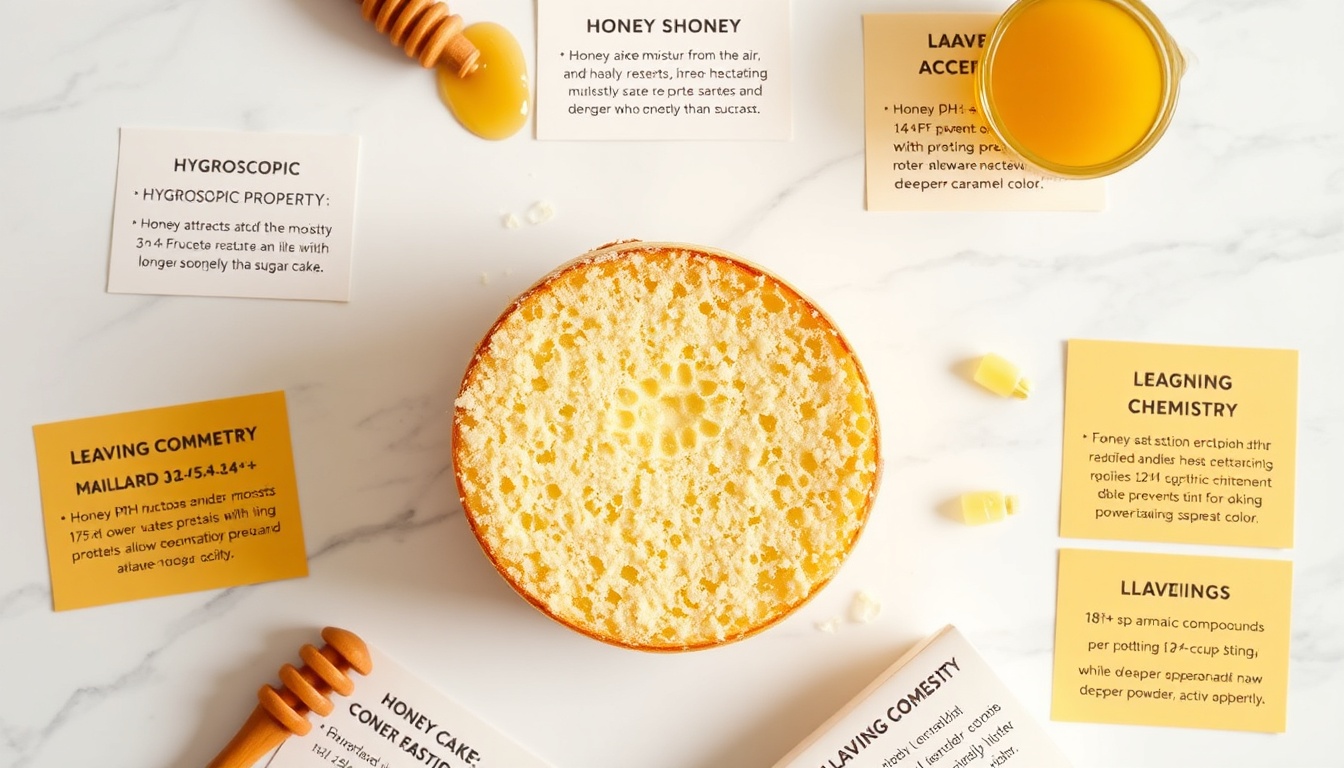
**Browning temperature.** Honey's fructose caramelizes at approximately 230°F (110°C) — much lower than sucrose's 340°F (170°C). This is why honey cakes brown faster and deeper than sugar cakes, and why the lower 325°F baking temperature is essential. At standard 350°F, the crust will over-brown before the interior bakes through.
**Moisture retention.** Honey is roughly 17-20% water and is hygroscopic (attracts moisture from the environment). In a cake, this means the crumb stays moist for days. It also means you need less additional liquid compared to a sugar-based recipe — the honey provides both sweetness and moisture.
**Acidity.** Honey has a pH of 3.4-6.1, making it mildly acidic. The baking soda in this recipe neutralizes that acidity while generating CO₂ for lift. If you skip the baking soda, the cake will be denser and slightly tangy. This is the same principle behind substituting honey for sugar in all baking.
**Flavor complexity.** Raw honey contains 200+ volatile aroma compounds, compared to sugar's essentially zero. When heated, these compounds undergo Maillard reactions with the proteins in eggs and flour, creating hundreds of new flavor molecules that give honey cake its distinctive deep, complex taste.
Storage and Make-Ahead Tips
**Room temperature (best for days 1-5):** Wrap tightly in plastic wrap and store at room temperature. Honey's hygroscopic properties keep the cake moist. It actually improves on days 2-3.
**Refrigerator (days 5-10):** If you need to keep the cake longer, refrigerate wrapped tightly. Bring to room temperature before serving — cold honey cake tastes less flavorful and has a firmer texture.
**Freezer (up to 3 months):** Wrap in plastic wrap, then aluminum foil. Thaw overnight at room temperature still wrapped — the condensation stays on the outside of the wrapping rather than soaking into the cake. Slice before freezing for easy individual portions.
**Make-ahead strategy:** Honey cake is the ideal make-ahead dessert. Bake 2-3 days before serving, wrap well, and store at room temperature. The resting time genuinely improves the cake — it's not just a consolation for being organized.
Nutrition: Honey Cake vs Regular Cake
A typical slice of this honey cake (1/10 of a loaf) contains roughly 250 calories, 8g fat, 42g carbohydrates, and 3g protein. Compare that to a similar slice of standard yellow cake with frosting at 350-400+ calories.
The nutritional advantage goes beyond calories. The raw honey in this recipe contributes trace polyphenol antioxidants, prebiotic oligosaccharides, and active enzymes — none of which are present in refined sugar. The warm spices (cinnamon, ginger, cloves) add their own bioactive compounds, including cinnamaldehyde's blood sugar modulating effects.
The amount used in this recipe or serving describes that preparation, not a daily recommendation. Use the daily added-sugar guide to count honey with other added or free sugars.