Why Honey-Roasted Almonds Beat Store-Bought
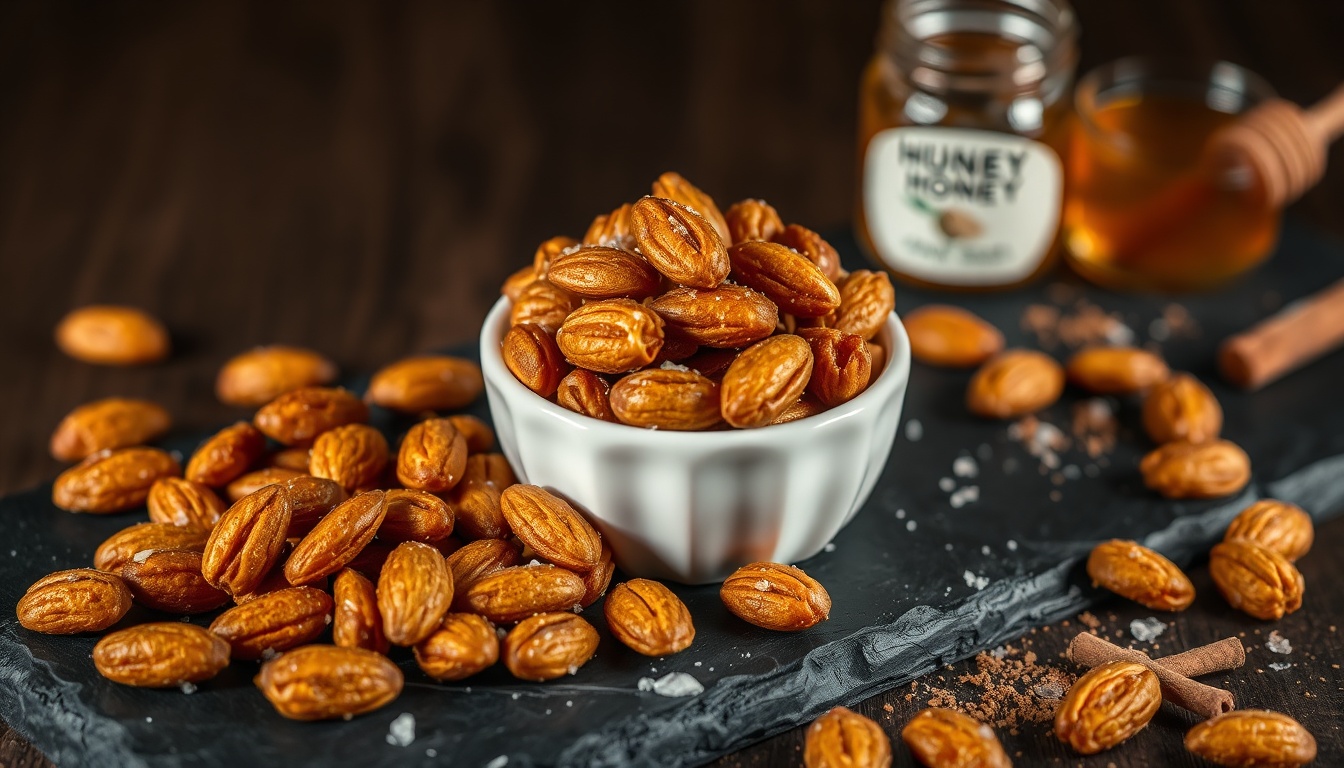
Store-bought honey roasted almonds contain corn syrup, maltodextrin, artificial flavors, and preservatives. The "honey" is usually the fourth or fifth ingredient — behind sugar and vegetable oil. Homemade honey roasted almonds use actual raw honey as the primary sweetener, and the difference in flavor is dramatic.
Real honey creates a thinner, crunchier coating that caramelizes in the oven to a deep amber glaze. The natural enzymes and aromatic compounds in raw honey produce complex caramel notes that refined sugar simply cannot match. You also control the sweetness level, salt balance, and add-ins — no surprises, no ingredient labels you cannot pronounce.
Homemade honey roasted almonds cost roughly half the price of premium store-bought brands. A pound of raw almonds plus a few tablespoons of honey yields the same amount you would pay $8-12 for at the grocery store.
Classic Honey Roasted Almonds: The Complete Recipe
This base recipe produces perfectly glazed, crunchy almonds every time. The key is low heat and frequent stirring to prevent burning.
- **Ingredients:** 2 cups (about 280g) raw whole almonds; 3 tablespoons raw honey (clover or wildflower); 1 tablespoon coconut oil or unsalted butter, melted; 1/2 teaspoon fine sea salt; 1/4 teaspoon vanilla extract (optional).
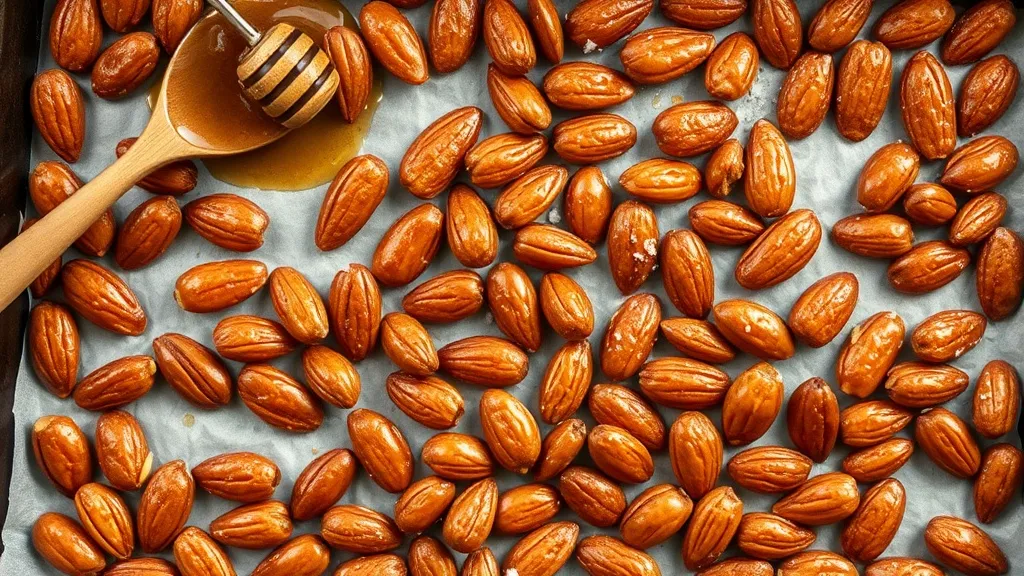
- **Step 1: Preheat and prepare** — Preheat oven to 325°F (165°C). Line a large rimmed baking sheet with parchment paper. The lower temperature is critical — higher heat burns the honey coating before the almonds toast through.
- **Step 2: Make the honey glaze** — In a medium bowl, whisk together the honey, melted coconut oil, salt, and vanilla until smooth. The oil helps the honey coat each almond evenly and promotes crispiness as it cools.
- **Step 3: Coat the almonds** — Add almonds to the bowl and toss thoroughly until every almond is evenly coated. Spread in a single layer on the prepared baking sheet. Almonds touching each other will not toast evenly.
- **Step 4: Bake with stirring** — Bake for 20-25 minutes total, stirring every 7-8 minutes. The almonds are done when the honey coating looks deep golden and the almonds smell nutty and toasted. They will still feel soft and sticky when hot — this is normal.
- **Step 5: Cool completely** — Sprinkle with a pinch more salt immediately after removing from oven. Let cool on the baking sheet for at least 30 minutes without touching. The honey coating hardens as it cools, creating the signature crunch. Break apart any clusters once fully cooled.
Pro Tip
Do not skip the parchment paper. Honey becomes an industrial adhesive when baked onto bare metal. If you do not have parchment, use a silicone baking mat. Foil works in a pinch but almonds may stick more.
Get the Honey Buyer's Cheat Sheet (free PDF)
16 varieties on one page — color, flavor, best use and what a fair price looks like — from the 304 honeys we track.
Choosing the Best Honey for Roasted Almonds
The honey variety you use affects both flavor and browning. Since the honey caramelizes during roasting, its characteristics concentrate and intensify.
- **Clover honey** — The all-purpose choice. Mild, clean sweetness that lets the toasted almond flavor dominate. Best for classic honey roasted almonds and gifting (broadest appeal).
- **Wildflower honey** — Slightly more complex than clover with floral undertones that add depth. Best for a more interesting flavor profile without overpowering the almonds.
- **Orange blossom honey** — Light citrus notes that pair beautifully with almonds. Best for the citrus variation below or any recipe where a fruity note is welcome.
- **Buckwheat honey** — Bold, malty, almost molasses-like. Creates deeply caramelized almonds with a rich, complex glaze. Best for dark honey lovers who want maximum flavor intensity.
- **Avoid crystallized honey** — Crystallized honey does not coat almonds evenly. If your honey has crystallized, gently warm it back to liquid before using.
6 Honey Roasted Almond Variations
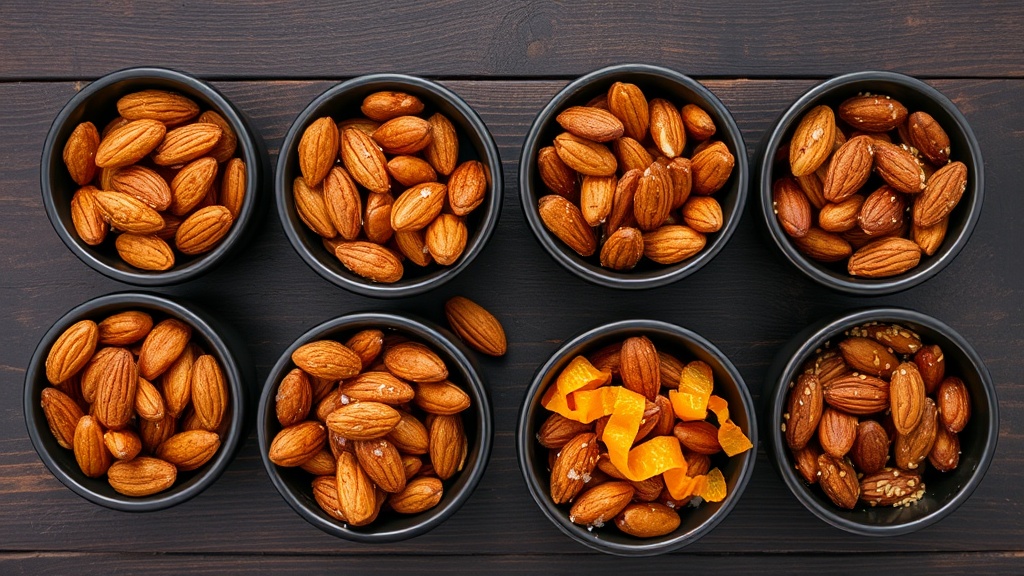
Each variation modifies the base recipe. All produce about 2 cups of roasted almonds.
- **1. Honey cinnamon almonds** — Add 1 teaspoon ground cinnamon and 1/4 teaspoon nutmeg to the honey glaze. Toss with an additional 1/2 teaspoon cinnamon-sugar after baking while still warm. The cinnamon-honey combination is classic for good reason.
- **2. Honey rosemary almonds** — Add 1 tablespoon finely chopped fresh rosemary to the honey glaze. Rosemary and honey is a sophisticated pairing that works as both a snack and a salad topper. Sprinkle with flaky sea salt after baking.
- **3. Spicy honey almonds** — Add 1/2 teaspoon cayenne pepper and 1/4 teaspoon smoked paprika to the glaze. For a hot honey version, use hot honey in place of regular honey. The heat-sweet combination is addictive.
- **4. Honey citrus almonds** — Use orange blossom honey and add 1 teaspoon fresh orange zest to the glaze. Toss with 1/2 teaspoon more zest after baking. Bright, fragrant, and unexpected.
- **5. Honey coconut almonds** — Replace coconut oil with virgin coconut oil (for stronger coconut flavor) and add 1/3 cup unsweetened shredded coconut to the almonds before baking. Toast the coconut alongside the almonds, stirring frequently as coconut browns fast.
- **6. Honey tamari almonds** — Replace the salt with 1 tablespoon tamari (or soy sauce) mixed into the honey glaze. The savory-sweet umami combination creates an almost teriyaki-like flavor. Excellent with beer or as a trail mix base.
The Science Behind Honey-Roasted Crunch
Understanding what happens during roasting helps you troubleshoot and adapt the recipe.
When honey heats above 320°F (160°C), its sugars undergo caramelization — fructose and glucose break down and recombine into hundreds of new flavor compounds (furanones, maltol, diacetyl). This is the same process that makes crème brûlée and toffee delicious. The lower oven temperature (325°F) keeps the honey just at the edge of caramelization, producing golden color and complex flavor without burning.
As the coated almonds cool, the caramelized honey undergoes glass transition — it shifts from a pliable, sticky state to a hard, brittle shell. This is the crunch. Humidity is the enemy of glass transition: if your almonds lose their crunch, it means moisture in the air has softened the sugar glass. This is why airtight storage is essential.
The fat in the recipe (coconut oil or butter) serves two purposes: it helps the honey spread into a thin, even film around each almond, and it promotes heat transfer for even browning. Without fat, the honey pools and creates thick, chewy patches instead of a thin, crispy shell.
Storage, Gifting, and Serving Ideas
Honey roasted almonds keep well and make excellent gifts. Proper storage preserves the crunch.
- **Airtight container at room temperature (2-3 weeks)** — Store in a glass jar or sealed container once fully cooled. Do not refrigerate — the moisture causes the honey coating to become sticky and lose its crunch.
- **Freezer (3 months)** — Spread cooled almonds in a single layer on a baking sheet, freeze for 1 hour, then transfer to a freezer bag. They thaw in minutes at room temperature and stay crunchy.
- **Gift jars** — Layer almonds in mason jars with a ribbon for a simple, impressive homemade gift. Include a small label with the flavor variant. These are especially popular for holiday gifting and party favors.
- **Salad topper** — Roughly chop and add to green salads, grain bowls, or yogurt parfaits for crunch and protein. The honey rosemary variation is particularly good on salads.
- **Cheese board addition** — Serve alongside aged cheddar, Gouda, or blue cheese. The sweetness of the honey glaze contrasts with salty and funky cheeses perfectly.
- **Trail mix base** — Combine with dried fruit, dark chocolate chips, and seeds for homemade trail mix or granola. The honey cinnamon variation works especially well here.
Common Mistakes and Fixes
Honey roasted almonds are simple but a few common errors can ruin a batch.
- **Almonds burned but still pale inside** — Oven temperature was too high. Drop to 325°F and stir every 7 minutes. Honey burns quickly above 350°F while the almond interior stays raw.
- **Coating is chewy, not crunchy** — Either the almonds were not cooled completely before storing, or they were stored in a humid environment. Recrisp by spreading on a baking sheet and baking at 300°F for 5-8 minutes. Cool completely before storing in an airtight container.
- **Almonds stuck together in a slab** — Spread in a single layer before baking and stir every 7-8 minutes during baking. If they still cluster, break apart gently once fully cooled — the clusters actually make great snacking pieces.
- **Coating slid off the almonds** — The honey glaze was not mixed with fat. The oil or butter is essential for adhesion. Also ensure almonds are dry before coating — any surface moisture prevents the glaze from sticking.
- **Almonds taste bland** — Salt is critical. Under-salted honey almonds taste one-dimensional. Add a generous pinch of flaky sea salt immediately after baking when the coating is still tacky enough to hold it.