About This Recipe
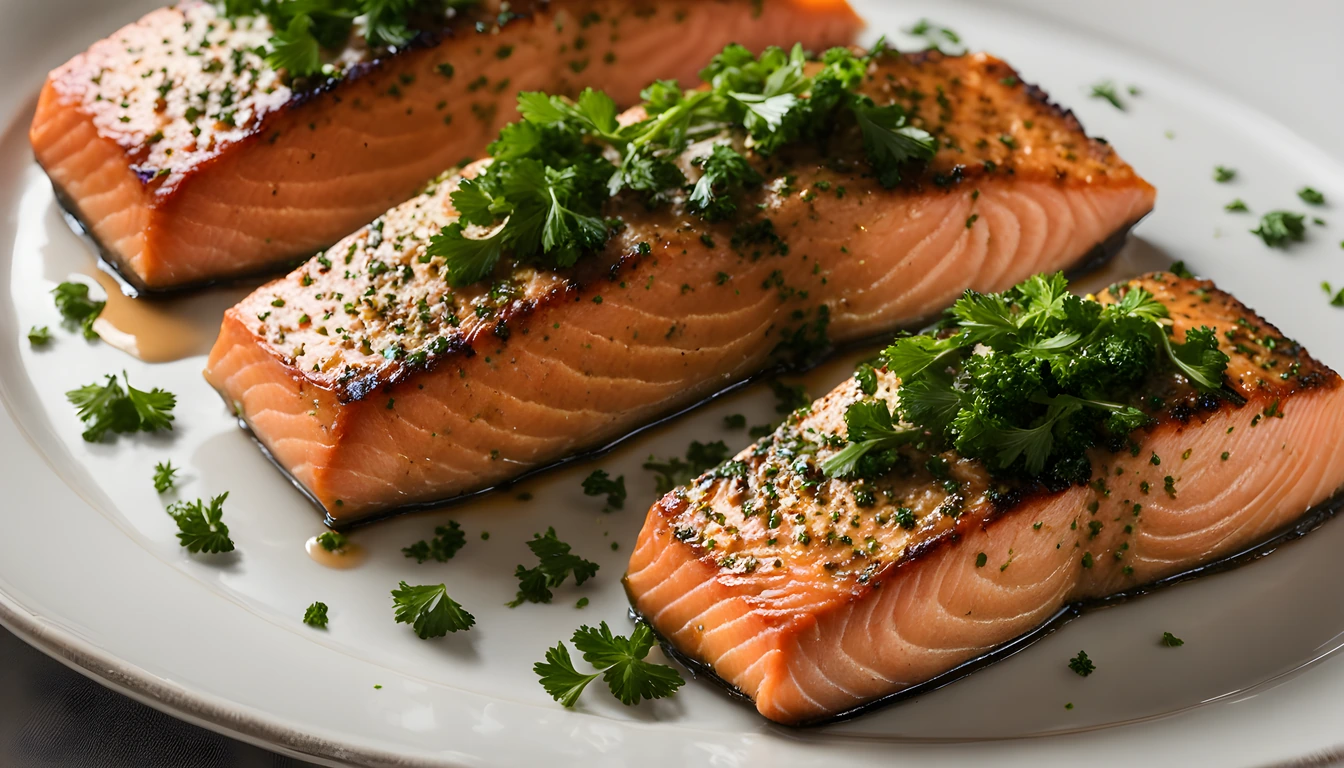
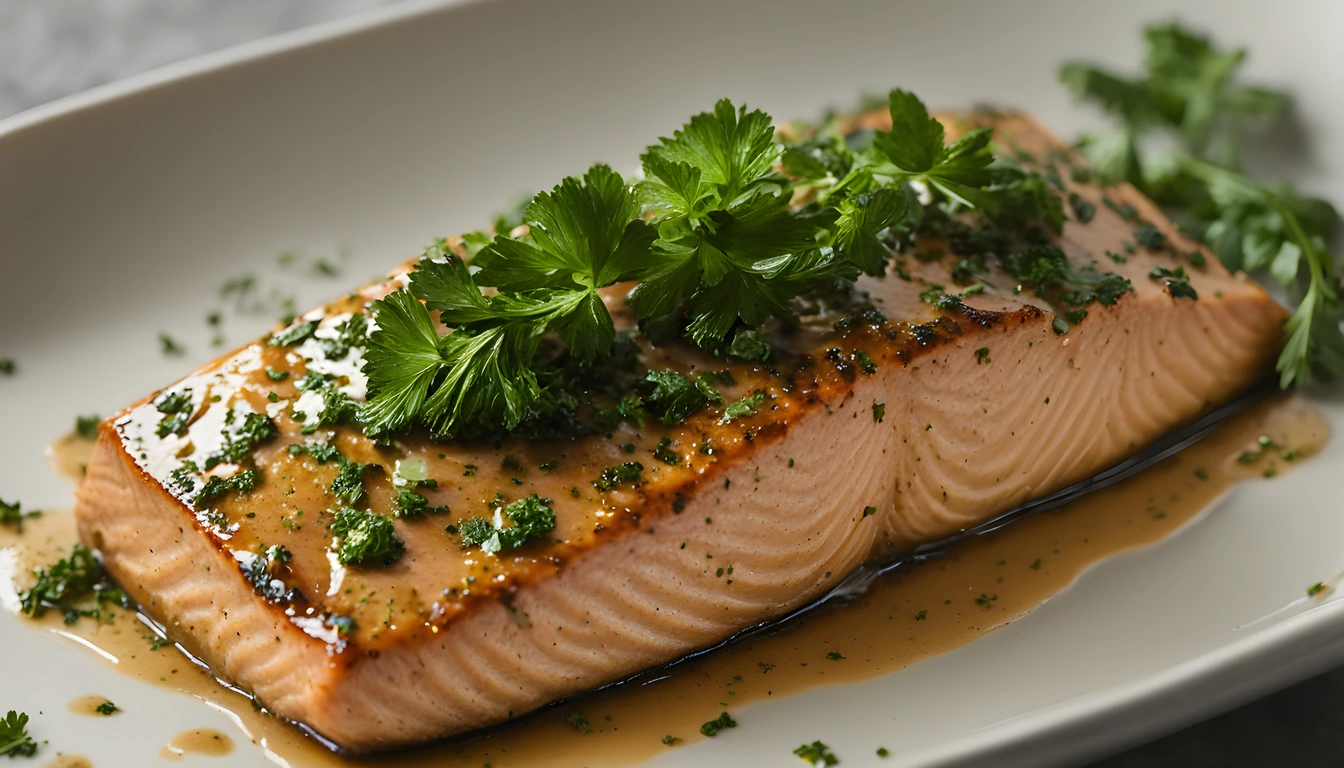
Honey and prepared yellow mustard make a simple coating for baked salmon. The fish starts in the oven before the glaze is brushed on, giving the honey less time to darken. Use four similar-sized boneless portions and check the thickest part with a thermometer; the clock is only a guide.
Recipe
Baked Honey Mustard Salmon
Bake four salmon portions with a measured honey and yellow-mustard glaze. Includes a thermometer endpoint and raw edible-fillet weights.
9Ingredients
Yield: 4 servings
- 600 g raw Atlantic farmed salmon, boneless and skinless, in four portions
- 42 g honey
- 30 g prepared yellow mustard
- 15 g fresh lemon juice
- 14 g olive oil, divided
- 3 g garlic, finely grated
- 2 g table salt
- 0.5 g ground black pepper
- 4 g fresh parsley, chopped
Ingredient amounts scale; instructions show the original batch. Cooking times and pan sizes may need adjustment. Season to taste. Honey grams use US measures at 20°C and 17.5% moisture, a density estimate; weigh your honey for precision.
Instructions
- 1Heat the oven and prepare the fishHeat the oven to 375 F (190 C). Use 5 g of the olive oil to coat a shallow baking dish. Pat the four 150 g salmon portions dry, check for pin bones and arrange with space between them. Sprinkle with the salt and pepper.
- 2Mix the measured glazeStir the honey, prepared yellow mustard, lemon juice, grated garlic and remaining 9 g olive oil together. Make the mixture before touching the raw fish; keep the bowl and brushing utensil separate from anything used to serve the finished salmon.
- 3Bake, then brushBake the unglazed fish for 8 minutes. Brush the complete measured glaze over the fish, scraping the bowl well. Return to the oven for about 10 to 14 minutes, until the thickest part of each portion reaches 145 F (63 C). Check earlier for a thin fillet and continue longer if needed. Do not use color alone as the endpoint.
- 4Rest and serveLet stand for 3 minutes. Scatter the measured parsley over the portions and spoon the cooked pan glaze onto the fish. Serve one fillet portion per person. The 35-minute total allows 10 minutes preparation, up to 22 minutes baking and the brief rest; thicker fish can need longer.
Estimated nutrition per serving
381.98 calories · 23.88 g fat · 9.74 g carbohydrate · 31.02 g protein · 366.24 mg sodium
Serving: 1 of 4 servings
Calculated from ingredient weights and USDA FoodData Central: 175167, 169640, 172234, 167747, 171413, 169230, 173468, 170931, 170416. Estimates use ingredient input weights; actual portions, brands and cooking losses vary. Omitted nutrient values are unavailable, not zero.
Add the Honey Glaze Partway Through
Honey can darken before a thick piece of fish finishes cooking. Baking the salmon briefly before brushing gives the coating less oven time. Use a shallow dish, with enough room for heat to reach the sides of each portion.
The Alaska Seafood Marketing Institute states a 145 F endpoint for cooked salmon. Use that temperature in the thickest part here. The timing and the yellow-mustard glaze are this recipe's own formula, rather than a claim that the source tested it.
Flavor intensity uses an editorial culinary scale: 1 is mild and 5 is bold. These are tasting suggestions, not laboratory measurements.
Sources: UC Agriculture and Natural Resources: cooking with honey; USDA FoodData Central: Fish, salmon, Atlantic, farmed, raw; Alaska Seafood Marketing Institute: salmon cooking endpoint.
1 = mild, 5 = bold. Editorial pairing guidance, not laboratory measurements; jars vary.
- Clover
- Yellow mustard and salmon
- Wildflower
- Lemon, garlic and salmon
- Orange blossom
- A floral mustard glaze
Get the Honey Buyer's Cheat Sheet (free PDF)
16 varieties on one page — color, flavor, best use and what a fair price looks like — from the 304 honeys we track.
Use Yellow Mustard for This Version
Prepared yellow mustard gives the coating its sharpness and golden color. Dijon has a different flavor and formulation, so it is a deliberate variation rather than the ingredient used in this estimate. Clover honey keeps the glaze mild; wildflower brings a stronger honey note.
For a dip made without oil, see the separate honey mustard sauce. This baked dish uses a smaller measured coating on the fish, with lemon and garlic.
Keep Raw and Finished Utensils Separate
Make the glaze before handling the raw salmon. Once a brush has touched the raw fish, keep it away from the cooked portions and serving plates. The full glaze in this method goes onto the fish during baking.
There is no uncooked finishing spoonful from that bowl. Spoon the cooked pan juices onto each serving instead. The parsley is a measured ingredient, added after the fish leaves the oven.
Portions and the Estimate
The salmon weight is 600 g of raw edible flesh, after skin and bones are removed. It is divided into four 150 g starting portions. The estimate uses the USDA raw Atlantic farmed salmon record and includes every measured glaze ingredient and the parsley.
Pan residue and cooking moisture vary, so the estimate does not invent a marinade-uptake fraction or a cooked weight. For other flavor directions, try honey garlic salmon or honey miso salmon.
Choosing the Honey
Use Clover Honey or Wildflower Honey for the flavor described in this recipe. See our honey selection guide for other culinary choices.