Best Honey for Glazed Salmon
Discover the right honey varieties for honey-glazed salmon — from weeknight-friendly clover to restaurant-quality wildflower and buckwheat glazes.
Quick Answer
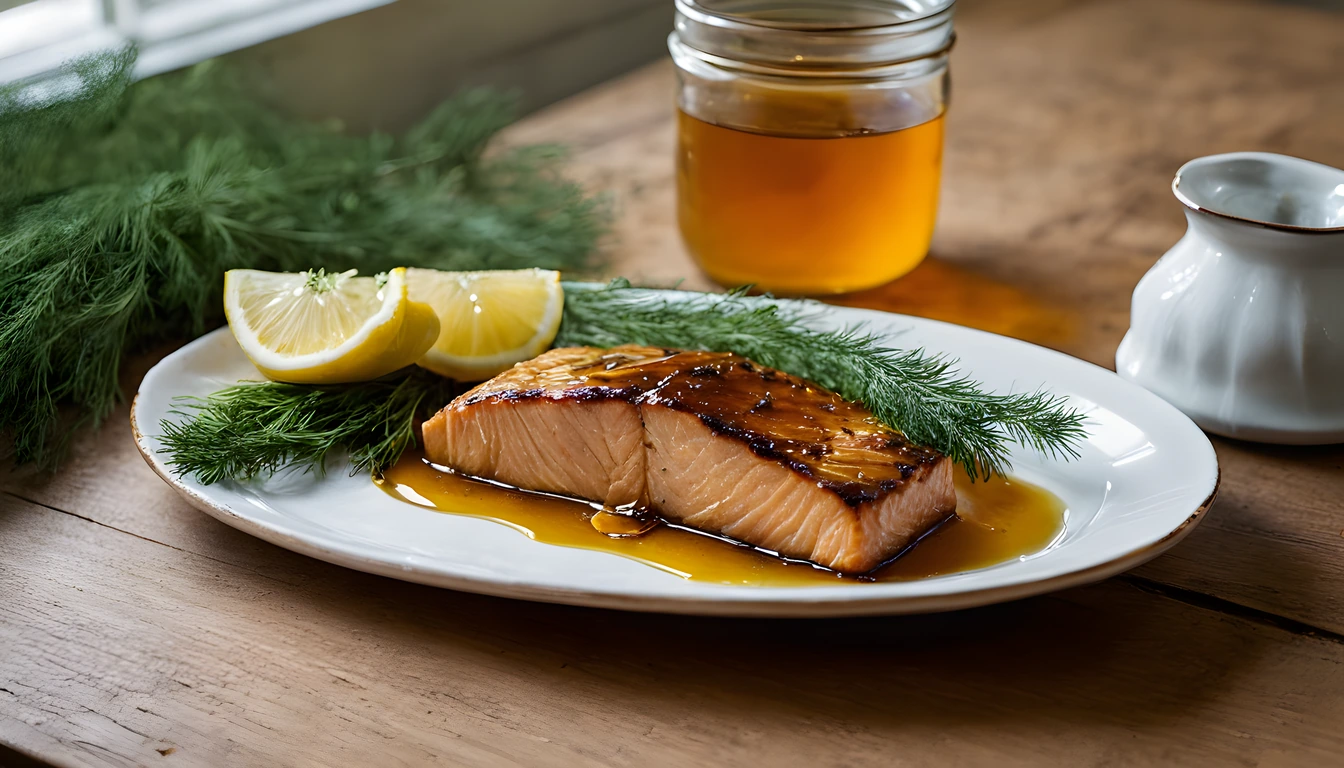
Wildflower honey is the best all-around glaze for salmon — its multi-floral complexity complements salmon's richness without overpowering it. For weeknight cooking, clover honey dissolves easily in soy-ginger-honey glazes and browns reliably. For bold, molasses-like depth that stands up to grilled or smoked salmon, buckwheat honey is the top choice. Orange blossom honey adds citrus lift that pairs beautifully with miso-glazed salmon. Acacia honey is the light choice for a finishing drizzle after the salmon comes off the heat.
What to Look For
Choose a honey that matches the salmon preparation. For high-heat broiling or grilling, use a honey with strong flavor — it will not disappear under the heat. For low-temperature glazes or finishing drizzles, use lighter honey (clover, orange blossom, acacia) for delicate citrus or sweet-soy profiles. Liquid honey is easier to whisk into glazes; if your honey is crystallized, gently re-liquefy it in a warm water bath. Always combine honey with acid (vinegar, citrus) and salt (soy sauce, miso) when glazing — this balances the sweetness and helps the glaze caramelize without burning.
Relevant Honey Varieties
Its multi-floral complexity adds depth to honey-soy-glazed salmon without competing with the fish. Holds up well under high-heat broiling and creates the glossy, lacquered finish restaurant glazes are known for.
View honey varietyThe weeknight-glaze standard. Its mild flavor and easy dissolving make it ideal for quick soy-ginger-honey glazes. Reliable browning and predictable sweetness for salmon that needs to be on the table in 20 minutes.
View honey varietyBold, malty, and molasses-like — the right choice for grilled, smoked, or roasted salmon where lighter honeys would disappear. Its dark color creates dramatic lacquered crusts under high heat.
View honey varietyIts delicate citrus character complements miso-glazed salmon and teriyaki-style preparations. The bright floral notes lift the rich fattiness of salmon without competing with soy or miso flavors.
View honey varietyVery mild and slow to crystallize, so it stays pourable for a last-minute drizzle over salmon that is already cooked, where a stronger honey would mask the fish.
View honey varietyGet the Honey Buyer's Cheat Sheet (free PDF)
16 varieties on one page — color, flavor, best use and what a fair price looks like — from the 304 honeys we track.
How to Use
For weeknight glazed salmon, whisk 2 tablespoons clover honey with 1 tablespoon soy sauce, 1 teaspoon grated ginger, and 1 minced garlic clove. Brush on salmon during the last 3-4 minutes of cooking. For restaurant-style lacquered salmon, reduce 1/4 cup wildflower honey with 2 tablespoons rice vinegar, 1 tablespoon soy sauce, and 1 teaspoon sesame oil until syrupy, then brush on in multiple thin layers during the final minutes. For grilled salmon, use buckwheat honey combined with smoked paprika and chipotle for a bold glaze. Always finish with a fresh squeeze of lemon or lime to brighten the glaze.
What to Avoid
Do not apply honey at the start of high-heat cooking — it will burn before the salmon is done. Always add honey glazes in the last 3-5 minutes of cooking. Avoid ultra-light honeys (white clover from generic sources) for bold grilled salmon — they will not register against the smoke and char. Do not use raw unfiltered honey if the glaze needs to be perfectly smooth — fine particles can make glazes gritty. Avoid glazing salmon with honey only (no acid or salt) — pure honey glaze will read as dessert-sweet rather than savory.
Frequently Asked Questions
What kind of honey is best for salmon glaze?
How do you make honey glazed salmon without burning it?
Can honey go with teriyaki salmon?
Does honey go with smoked salmon?
What is the difference between honey glaze and teriyaki?
Related Honey Comparisons
Edited by Sam French · Raw Honey Guide Editorial Team
Sam French is the founding editor of Raw Honey Guide. This is an editorial guide, not a medical review.
Last updated: