Why Honey and Miso Work Together
Honey miso is one of the most effective glazes in cooking because it combines two fermented flavor powerhouses in a single sauce.
Honey brings fructose that caramelizes at a lower temperature than table sugar, creating that lacquered, glossy finish on the salmon. It also contributes floral complexity — over 180 aromatic compounds that change based on the variety you use.
Miso paste contributes glutamate, the amino acid responsible for umami. White miso (shiro miso) has the mildest, sweetest profile, making it the best match for honey. The combination creates a flavor that is simultaneously sweet, savory, salty, and slightly funky — far more interesting than either ingredient alone.
Together, they form a glaze that caramelizes into a thin, sticky crust under the broiler while keeping the salmon moist underneath. The honey draws moisture to the surface (it is hygroscopic), which prevents the fish from drying out during high-heat cooking.
Choosing the Right Salmon
The cut and quality of salmon matters as much as the glaze.
- Skin-on fillets are essential for this recipe. The skin protects the bottom of the fillet from direct heat, acts as a barrier that keeps the fish moist, and peels off easily after cooking if you prefer not to eat it
- Wild-caught sockeye or king salmon have deeper flavor and firmer texture that stands up well to the bold miso glaze. Sockeye is leaner and more affordable; king is fattier and more luxurious
- Farm-raised Atlantic salmon works well if wild-caught is unavailable. It has a milder flavor and higher fat content, which means it stays moist even if slightly overcooked. The fattiness pairs nicely with the salty-sweet glaze
- Aim for fillets about 1 inch thick at the thickest point. Thinner fillets (under 3/4 inch) overcook too fast under the broiler. If your fillets taper at one end, tuck the thin tail under to create even thickness
- Bring salmon to room temperature for 10 minutes before cooking. Cold fish cooks unevenly — the outside overcooks before the center warms through
Pro Tip
Check for pin bones by running your finger along the center of the fillet from head to tail. Pull out any bones with tweezers or needle-nose pliers before glazing.
Get the Honey Buyer's Cheat Sheet (free PDF)
16 varieties on one page — color, flavor, best use and what a fair price looks like — from the 304 honeys we track.
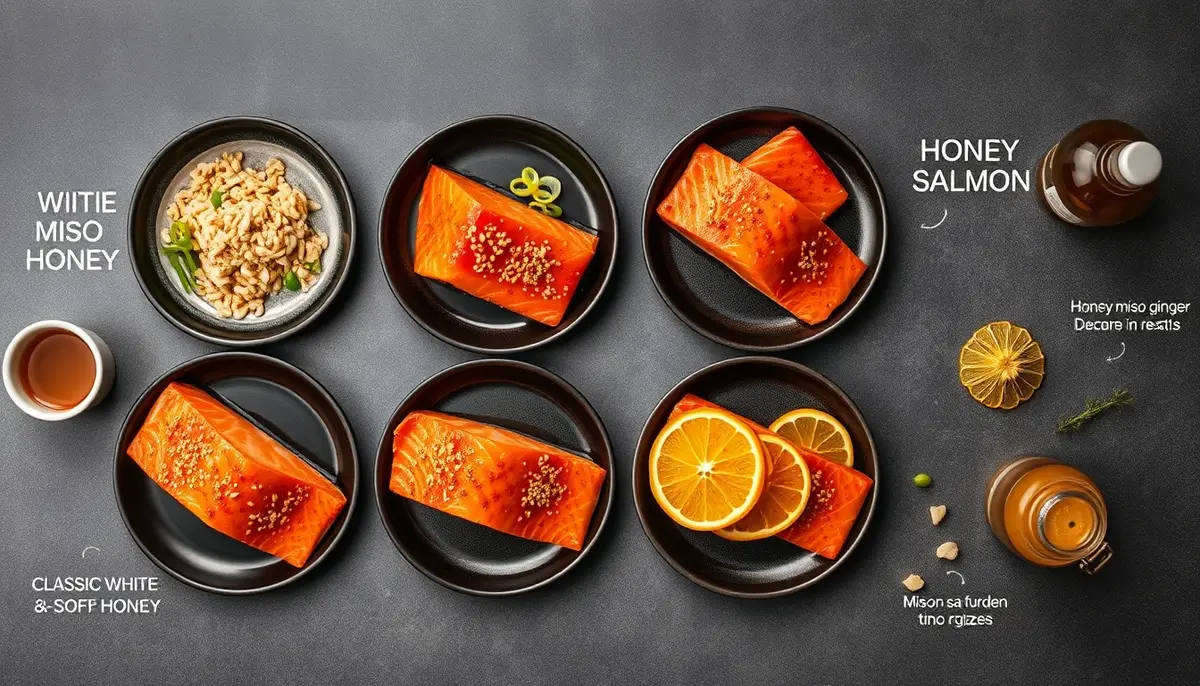
4 Flavor Variations
The base honey miso glaze is versatile. Each variation shifts the flavor profile while keeping the caramelized finish.
- Honey miso with yuzu — Replace the rice vinegar with 1 tablespoon fresh yuzu juice (or a mix of lemon and grapefruit juice). Adds a bright, floral citrus note that cuts through the richness of the salmon. Best with orange blossom honey for layered citrus flavor
- Spicy honey miso — Add 1 tablespoon gochujang (Korean chili paste) and reduce soy sauce to 2 teaspoons. The gochujang adds fermented heat that builds slowly. Garnish with thinly sliced fresh chilies. For extra heat, use hot honey instead of regular honey
- Maple-miso with honey finish — Replace half the honey with pure maple syrup in the base glaze. Cook as directed, then drizzle raw honey over the finished salmon just before serving. The cooked maple-miso creates the crust while the raw honey adds bright, uncooked sweetness on top
- Honey miso with black sesame — Add 1 tablespoon black sesame paste (or tahini) to the glaze. The sesame adds a nutty, slightly bitter depth that complements the sweet miso. Garnish with both black and white sesame seeds for visual contrast
Best Honey Varieties for Miso Salmon
Since honey is a primary flavor in the glaze, the variety you choose noticeably affects the result.
- Clover honey — clean, neutral sweetness that lets the miso flavor dominate. The safest choice if you want a classic honey miso balance. Works well with all four variations
- Wildflower honey — adds subtle floral complexity that makes the glaze taste more layered. Regional wildflower honeys can add unique character — a Pacific Northwest wildflower honey with the salmon creates a true terroir pairing
- Acacia honey — very light and mild with a clean sweetness that never competes with the miso. Good choice if you want the umami to lead and the sweetness to play a supporting role
- Buckwheat honey — bold, molasses-like depth that creates a darker, more intensely flavored glaze. Pairs best with the spicy variation and king salmon. Not for those who prefer delicate flavors, but buckwheat honey enthusiasts will love the result
- Manuka honey — adds a distinctive medicinal-herbal note that is polarizing but interesting. The high methylglyoxal content means it caramelizes slightly differently. Use UMF-rated manuka for the most distinctive flavor
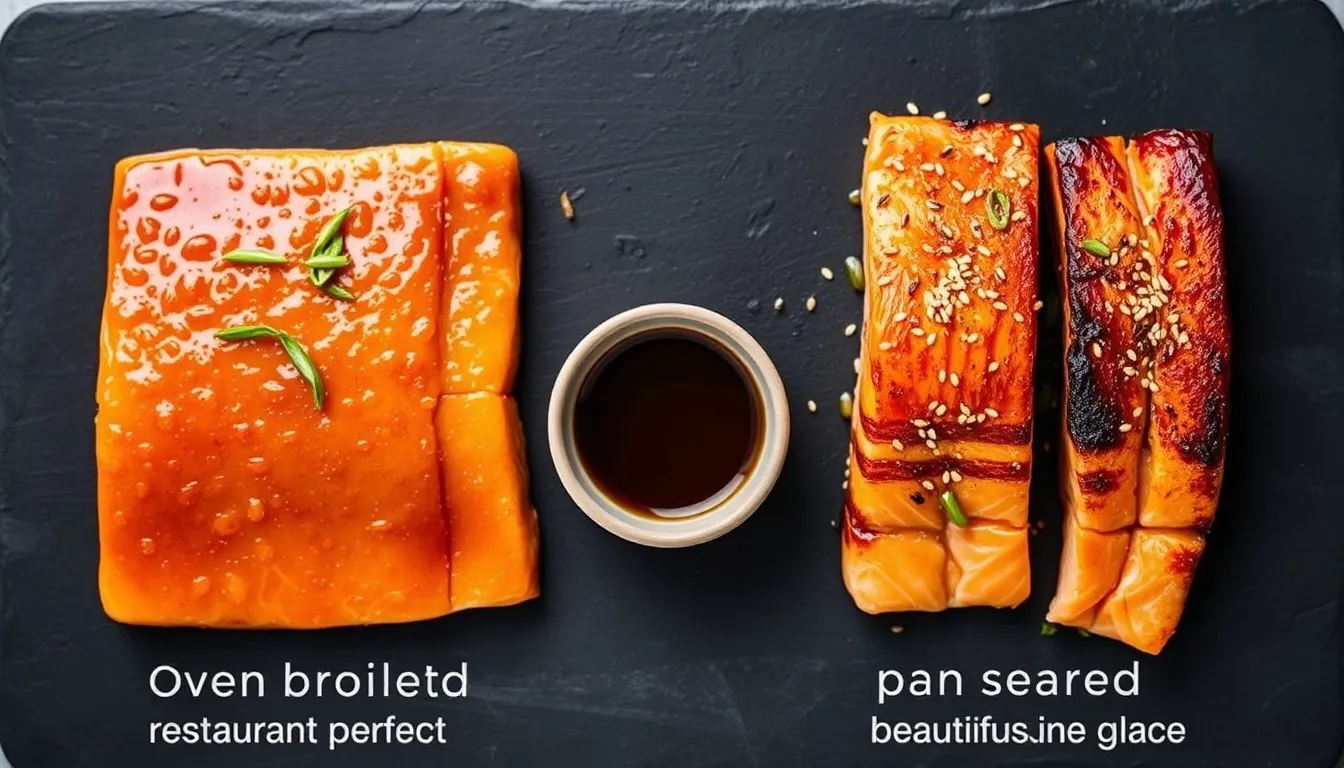
Oven-Baked vs. Pan-Seared Method
The broiler method in the main recipe is fastest, but two other methods produce excellent results.
- Oven-baked method (most hands-off): Preheat oven to 400°F. Glaze the salmon and bake for 12-15 minutes until the internal temperature reaches 125°F for medium (it will carry over to 130°F while resting). For caramelization, switch to broil for the last 2-3 minutes. This method is more forgiving than straight broiling because the lower temperature gives you a wider window before overcooking
- Pan-seared method (crispiest skin): Heat 1 tablespoon neutral oil in an oven-safe skillet over medium-high heat. Sear the salmon skin-side down for 4 minutes until the skin is crispy. Flip, spoon the glaze over the top, and transfer the skillet to a 400°F oven for 6-8 minutes. The skin gets crackling-crispy while the glaze caramelizes on top
- Air fryer method (quickest): Set the air fryer to 400°F. Place glazed salmon in the basket skin-side down. Cook for 8-10 minutes, applying the second coat of glaze at the 5-minute mark. The circulating hot air creates excellent caramelization. Check for doneness at 8 minutes since air fryers run hot
Pro Tip
Internal temperature is the most reliable doneness indicator. 120°F for rare, 125°F for medium-rare, 130°F for medium, and 140°F for well-done. The salmon continues cooking for 5°F after you remove it from the heat.
What to Serve with Honey Miso Salmon
The rich, sweet-savory glaze pairs best with sides that provide contrast in texture and brightness.
- Steamed jasmine or short-grain rice — absorbs the extra glaze that pools on the plate. A squeeze of lemon and a drizzle of sesame oil over the rice elevates it from plain to restaurant-quality
- Quick pickled cucumbers — slice a cucumber thin, toss with rice vinegar, a pinch of sugar, salt, and sesame seeds. The acidity and crunch cuts through the richness of the salmon perfectly
- Stir-fried bok choy or broccolini — cook quickly in sesame oil with garlic until just wilted. The bitter greens balance the sweet glaze
- Soba or udon noodles — toss cold soba noodles with a light sesame dressing for a complete Japanese-inspired meal. Or serve warm udon in dashi broth alongside the salmon
- Honey garlic green beans — the garlic flavor echoes the glaze while the crisp-tender beans add textural contrast
- Edamame salad — shelled edamame with shaved radish, carrot ribbons, and a rice vinegar dressing. Light, fresh, and protein-rich
Storing and Reheating Leftovers
Honey miso salmon reheats better than most fish thanks to the protective glaze.
- Store glazed salmon in an airtight container in the refrigerator for up to 3 days. The miso acts as a mild preservative due to its salt content
- Reheat gently in a 300°F oven for 8-10 minutes. Low temperature prevents the fish from drying out and the glaze from burning. Cover loosely with foil for the first 5 minutes, then uncover to re-crisp the glaze
- Do not microwave if you can avoid it — microwaves heat unevenly and can make the fish rubbery while the glaze becomes sticky. If you must microwave, use 50% power for 1-2 minutes
- Cold honey miso salmon is excellent flaked over rice bowls, salads, or grain bowls. The glaze works as a built-in dressing. Add avocado, edamame, and a drizzle of soy sauce for a quick poke-style bowl
- The glaze itself keeps for 2 weeks refrigerated in a sealed jar. Make a double batch and use it throughout the week on chicken, tofu, or roasted vegetables
Common Mistakes to Avoid
Honey miso salmon is simple, but a few errors can undermine the results.
- Using red or dark miso — darker misos are saltier and more pungent, which can overpower the honey and make the glaze taste one-dimensionally salty. White (shiro) miso has the sweetness and mild funk that complements honey. If you only have red miso, reduce it by half and increase the honey slightly
- Skipping the paper towel step — wet salmon steams instead of caramelizing. The glaze slides off moist fish and pools on the pan instead of forming a crust. Always pat completely dry before glazing
- Broiling too close to the element — 6-8 inches is the right distance. Closer than that and the honey sugars burn before the salmon cooks through. If your broiler runs hot, drop to the middle rack position
- Over-marinating in miso — unlike many marinades, miso continues to "cook" the fish through salt and enzyme action, similar to a cure. More than 30 minutes in the fridge can make the surface mushy. The 10-minute room-temperature rest in this recipe is plenty
- Opening the oven door repeatedly — every time you open the broiler, you lose heat and the glaze stops caramelizing. Check once at the 8-minute mark, apply the second glaze, and then watch through the oven window until done