Why Honey Ginger Stir Fry Works So Well
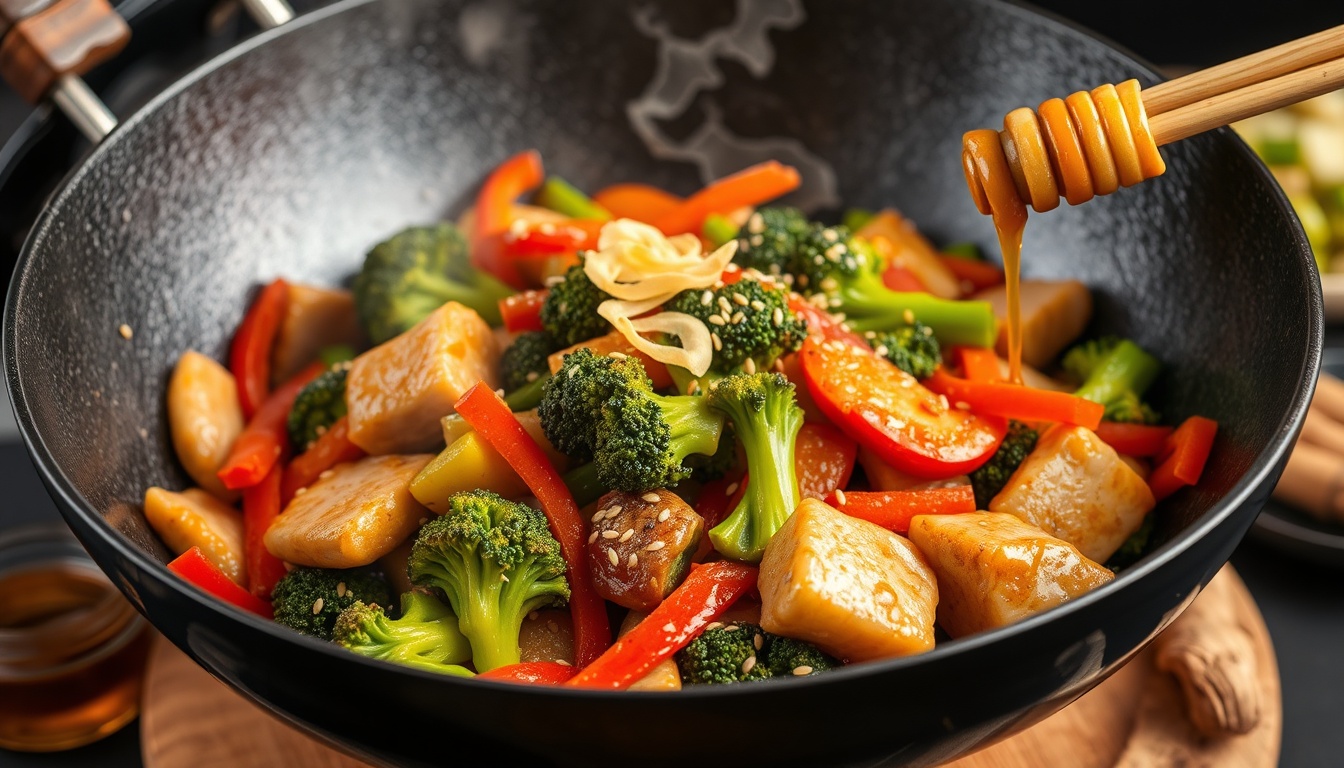
The combination of honey and fresh ginger is one of the most effective flavor pairings in cooking. Ginger's sharp, peppery heat is the perfect counterpoint to honey's floral sweetness, and when they hit a screaming-hot wok together, the fructose in honey caramelizes into a sticky glaze that coats every piece of protein and vegetable.
Most store-bought stir fry sauces rely on corn syrup and artificial flavors for sweetness. Using raw honey instead produces a more complex, layered flavor — honey's 180+ aromatic compounds create depth that no processed sweetener can match. The result is a stir fry that tastes like it came from a wok station at your favorite restaurant.
This recipe is designed around the honey ginger sauce, which works with any protein and any combination of vegetables. Master the sauce and you have dozens of weeknight dinners at your fingertips — each one ready in about 20 minutes.
The Honey Ginger Stir Fry Sauce
This versatile sauce is the foundation for every variation. Mix it before you start cooking — stir frying moves fast and there's no time to measure once the wok is hot.
- **Sauce ingredients:** 3 tablespoons raw honey; 2 tablespoons soy sauce (or tamari for gluten-free); 1 tablespoon fresh ginger, finely grated; 3 cloves garlic, minced; 1 tablespoon rice vinegar; 1 tablespoon sesame oil; 1 tablespoon cornstarch dissolved in 2 tablespoons water (slurry); pinch of red pepper flakes (optional).
- **Why each ingredient matters:** Honey provides the sweet base and caramelization. Soy sauce adds umami and saltiness. Fresh ginger brings sharp heat and aromatic depth. Garlic rounds out the aromatics. Rice vinegar provides acidity that balances the sweetness. Sesame oil adds nutty richness. Cornstarch slurry thickens the sauce so it clings to every piece.
Pro Tip
Always use fresh ginger, not dried. Fresh ginger has volatile oils (gingerols) that create a bright, spicy kick that dried ginger simply cannot replicate. Grate it on a microplane for the finest texture — it dissolves into the sauce rather than leaving fibrous chunks.
Get the Honey Buyer's Cheat Sheet (free PDF)
16 varieties on one page — color, flavor, best use and what a fair price looks like — from the 304 honeys we track.
How to Make Honey Ginger Stir Fry
The key to a great stir fry is extreme heat and working in batches. Overcrowding the pan drops the temperature and steams the food instead of searing it.
- **Step 1: Prep everything first** — Cut protein into bite-sized pieces. Chop vegetables. Mix the sauce. Have everything within arm's reach. Once cooking starts, it moves fast — the entire cook time is about 6-8 minutes.
- **Step 2: Cook the protein** — Heat 1 tablespoon vegetable oil in a wok or large skillet over high heat until it just begins to smoke. Add protein in a single layer (work in batches if needed). Cook without stirring for 1-2 minutes until seared, then toss and cook 1-2 minutes more. Remove and set aside.
- **Step 3: Cook the vegetables** — Add another tablespoon of oil. Add harder vegetables first (broccoli, carrots, bell peppers) and cook 2-3 minutes, tossing frequently. Add softer vegetables (snap peas, mushrooms, baby corn) and cook 1 minute more. Everything should be tender-crisp, not soft.
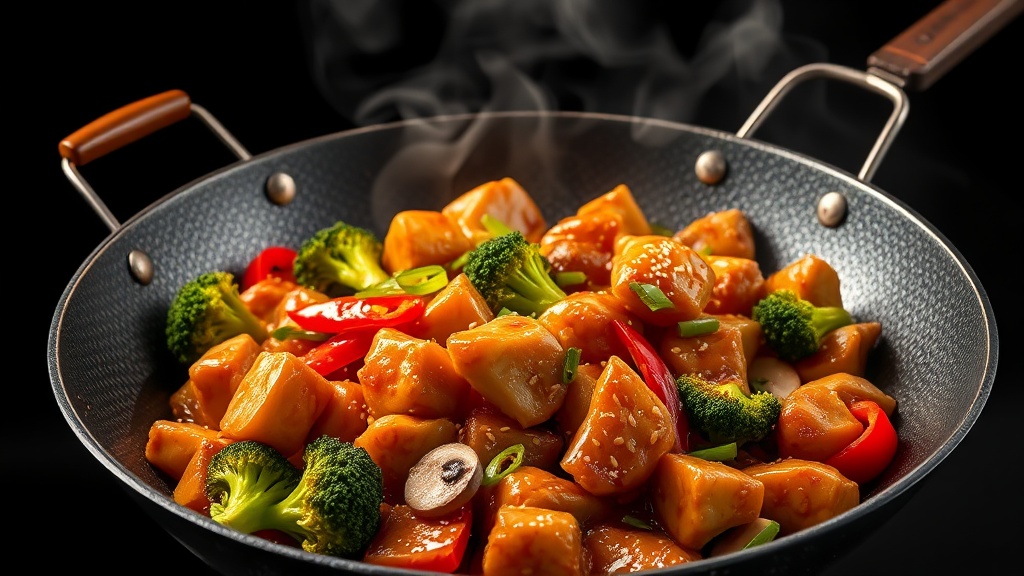
- **Step 4: Combine and sauce** — Return the protein to the wok. Give the sauce a stir (cornstarch settles), then pour it over everything. Toss constantly for 60-90 seconds until the sauce thickens and coats all the pieces in a glossy, sticky glaze.
- **Step 5: Finish and serve** — Remove from heat. Garnish with sesame seeds and sliced scallions. Serve immediately over rice or noodles.
5 Protein Options
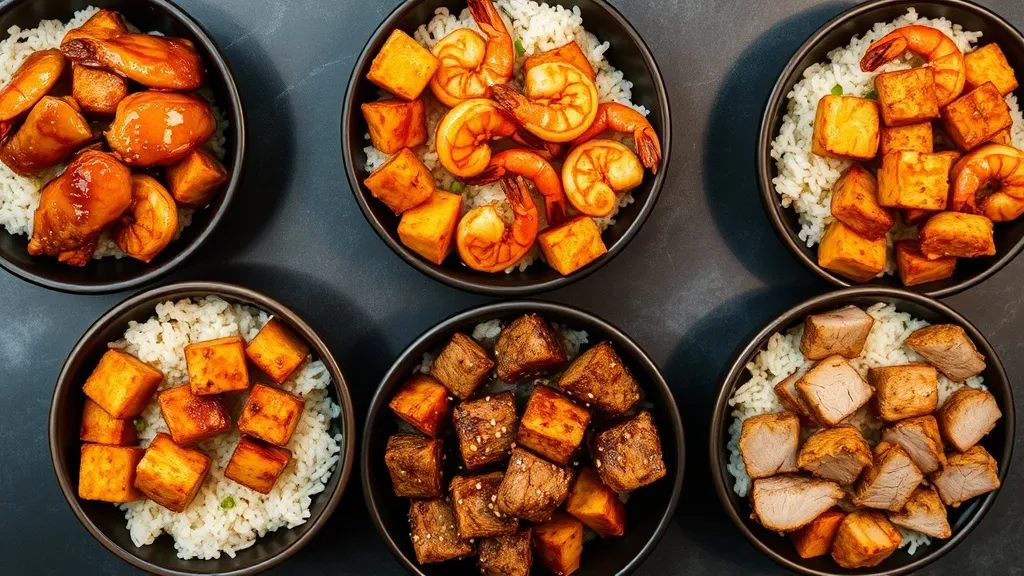
The honey ginger sauce works with virtually any protein. Here are the 5 best options with specific prep and cooking tips for each.
- **1. Chicken** — Use boneless, skinless thighs for the juiciest result (breast works but dries out faster). Cut into 1-inch pieces. For extra tenderness, toss with 1 tablespoon soy sauce and 1 teaspoon cornstarch for 10 minutes before cooking — a technique called velveting. Cook 3-4 minutes total.
- **2. Shrimp** — Use large or extra-large shrimp, peeled and deveined. Pat completely dry for the best sear. Cook just 1-2 minutes per side until pink and curled — shrimp cook fast and turn rubbery if overdone. The honey ginger glaze on seared shrimp is spectacular.
- **3. Beef** — Use flank steak or sirloin, sliced thin against the grain. For the most tender result, freeze the steak for 20 minutes before slicing — it firms up just enough for paper-thin cuts. Sear hard for 1 minute per side. Don't overcook — beef should be slightly pink inside.
- **4. Tofu** — Use extra-firm tofu, pressed for 15 minutes and cut into 3/4-inch cubes. Toss with cornstarch before cooking for the crispiest exterior. Cook 2-3 minutes per side until golden on all surfaces. The honey garlic tofu technique of cornstarch coating works perfectly here.
- **5. Pork** — Use pork tenderloin, sliced into thin medallions or cut into strips. Pork tenderloin is lean but tender, and the honey ginger sauce adds the moisture and fat it needs. Cook 2-3 minutes total, flipping once.
Best Vegetables for Honey Ginger Stir Fry
Choose 3-4 vegetables for variety in color, texture, and flavor. Add them to the wok in order of cooking time — hardest first, softest last.
- **Hard vegetables (cook first, 2-3 min):** Broccoli florets, sliced carrots, bell pepper strips, cauliflower florets, green beans.
- **Medium vegetables (add second, 1-2 min):** Snap peas, zucchini, baby corn, asparagus, cabbage.
- **Soft vegetables (add last, 30-60 sec):** Bean sprouts, spinach, mushrooms, snow peas, scallions.
- **Classic combination:** Broccoli + red bell pepper + snap peas + mushrooms. This gives you crunch, sweetness, and umami with vibrant color contrast.
Choosing the Best Honey for Stir Fry
The honey variety impacts the finished flavor, though any variety will produce a good result.
- **Wildflower honey** — The best all-around choice. Complex floral notes complement ginger's warmth without overpowering it.
- **Clover honey** — Mild and clean, letting the ginger and garlic shine. The most versatile option.
- **Orange blossom honey** — Citrus notes add brightness that pairs especially well with shrimp and chicken.
- **Buckwheat honey** — Dark and malty, creates the boldest, most intense stir fry. Best with beef and pork.
- **Acacia honey** — Delicate and light, lets the fresh ginger flavor dominate. Ideal for a more subtle, elegant stir fry.
Serving Suggestions
The sticky honey ginger sauce is designed to be served over something that absorbs it.
- **Steamed jasmine rice** — The classic pairing. Fluffy, fragrant rice absorbs the sauce perfectly.
- **Honey garlic noodles** — Lo mein or udon noodles tossed in a complementary honey garlic butter sauce.
- **Brown rice or quinoa** — For a more nutritious base with added fiber and protein.
- **Cauliflower rice** — A low-carb alternative that still absorbs the sauce well.
- **Rice noodles** — Thin rice vermicelli or wide pad Thai noodles for a lighter option.
- **Lettuce wraps** — Butter lettuce cups filled with stir fry for a fresh, crunchy, low-carb meal.
Storage and Meal Prep
Honey ginger stir fry is excellent for meal prep, with a few tips for the best reheated results.
- **Refrigerator (4 days)** — Store protein and vegetables together in the sauce in airtight containers. Keep rice or noodles separate to prevent sogginess. Reheat in a hot skillet or wok (not the microwave) to maintain texture.
- **Freezer (2 months)** — Freeze the sauced protein and vegetables together. Thaw overnight in the refrigerator. The vegetables will be slightly softer after freezing but the sauce retains its flavor.
- **Meal prep hack** — Make a double batch of the honey ginger sauce on Sunday (it keeps 2 weeks refrigerated). Throughout the week, cook fresh protein and vegetables in 10 minutes, then add the pre-made sauce for a 15-minute dinner.
- **Sauce-only freezing** — Freeze individual portions of the sauce in ice cube trays. Pop out a few cubes and melt them in a hot wok for an instant honey ginger stir fry sauce any night of the week.
Common Mistakes to Avoid
Stir frying is simple once you know the technique, but a few common errors can produce soggy, steamed results instead of the crispy, wok-charred stir fry you want.
- **Not getting the pan hot enough** — The wok or skillet should be smoking before you add oil and food. High heat is what creates the smoky, charred flavor (called wok hei) that defines great stir fry.
- **Overcrowding the pan** — Cook protein and vegetables in batches. Too much food at once drops the temperature and releases steam, producing a watery, limp stir fry instead of a seared, crispy one.
- **Adding the sauce too early** — Cook the protein and vegetables first, then add the sauce in the last 60-90 seconds. Adding it early results in boiled food sitting in liquid.
- **Skipping the cornstarch slurry** — Without the slurry, the sauce stays thin and watery. The cornstarch is what creates that glossy, clingy coating.
- **Using dried ginger** — Fresh ginger is essential. Dried ginger has a completely different flavor profile — warm and powdery rather than bright and sharp.
- **Cutting unevenly** — Cut all protein and vegetables to roughly the same size so they cook at the same rate.